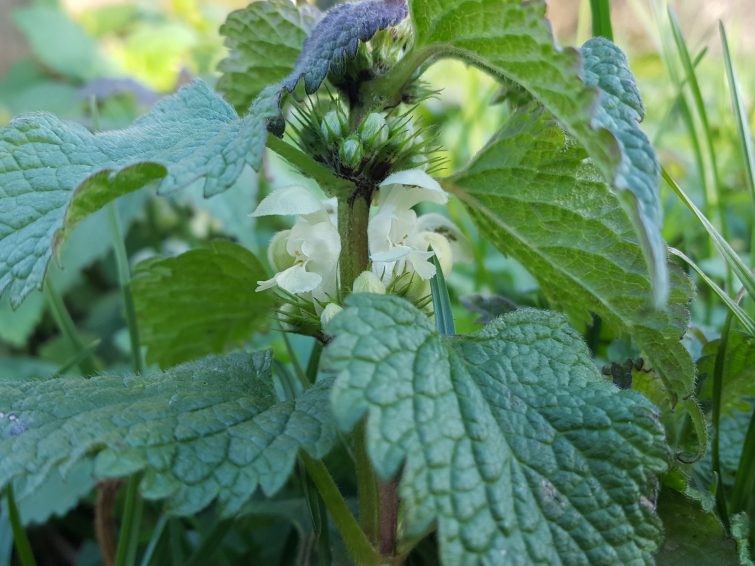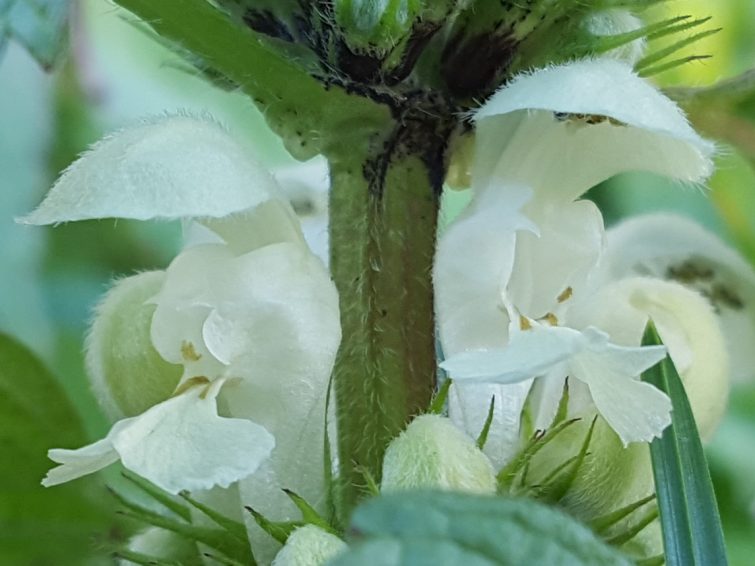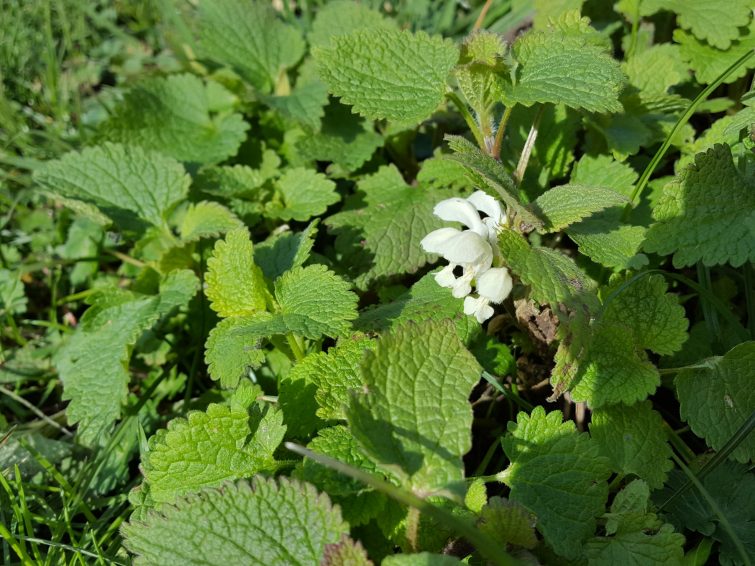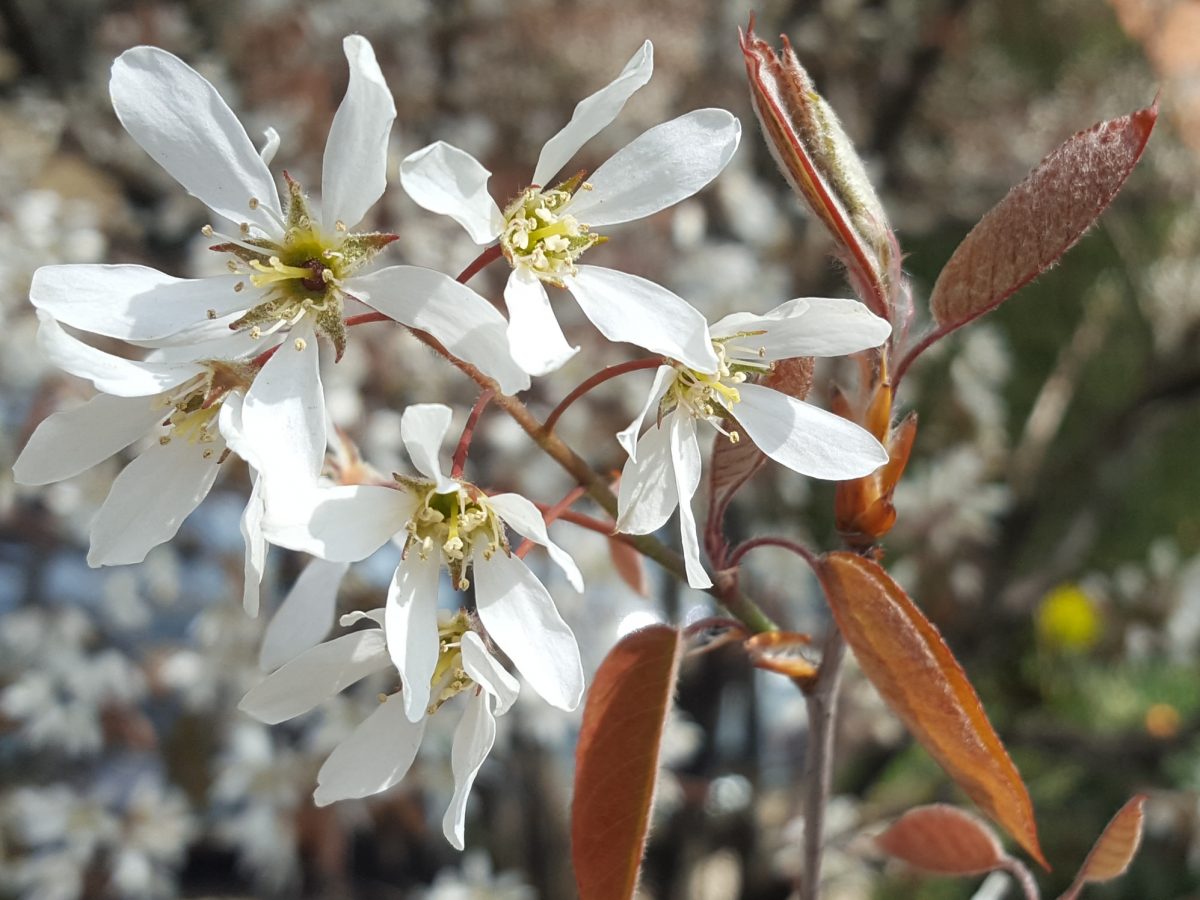
Foraging Juneberry (Amelanchier lamarckii) Rosaceae family.

UK guide to foraging Juneberry. Learn to identify, then discover its food, medicine, and other uses.

For those of you living in rural areas, foraging Juneberry might well be something you haven’t done before. This small tree / shrub is a plant that you will find much more in towns and cities, where it is valued as an amenity plant in parks and gardens.

This is definitely one of the lesser-known Rose family fruiting trees. Now is the time to find it in its full spring splendour, and to get to know this beautiful tree. Before you know it, there will be exquisite cherry / almond tasting berries to pick.

What’s in a name?

This plant is one of around 20 in the genus Amelanchier. As you can guess from its common name, the juneberry is a tree that usually bears fruit ready to pick in and around mid summer solstice.

The generic part of the scientific name Amelanchier is adapted from the French for ‘medlar’ – ‘Amelancier’. The fruit-bearing medlar tree (Mespilus germanica) is a close relative.

The specific part of the name lamarckii is in honour of the French naturalist, Jean-Baptiste Lamarck (1744 – 1829).

Our English common name Juneberry points to the month when the juicy berries begin to be ripe enough for harvesting. In North America the plant is often called saskatoon, or shadbush.

Botanical description

A few of the following technical terms may be new to you. If so, then simply pop over to our foragers glossary for help.

Juneberry is a relatively small tree or shrub that will reach a maximum height of 6 – 10 metres.

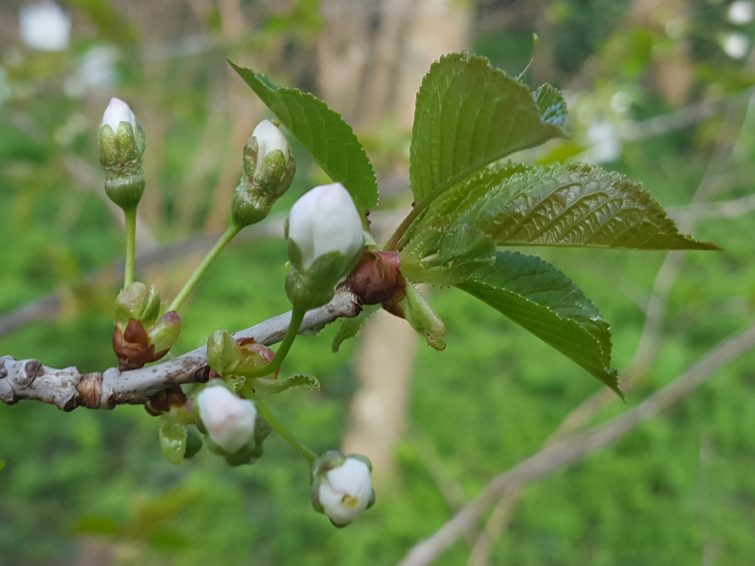
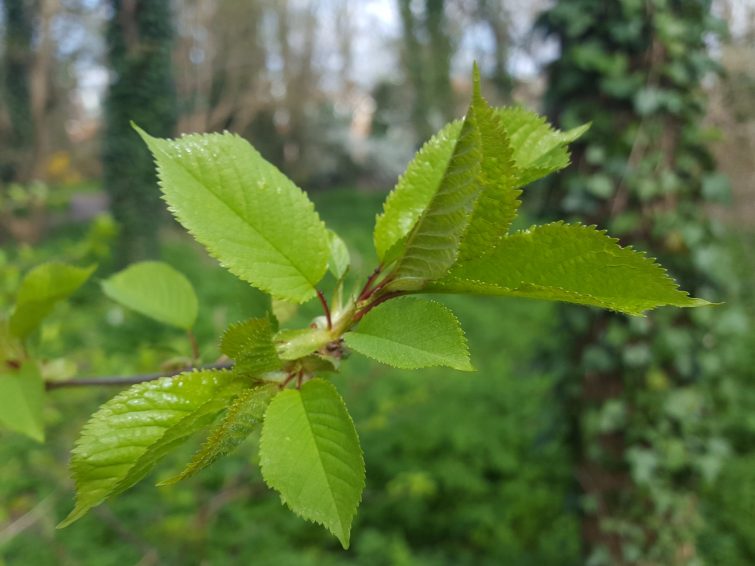
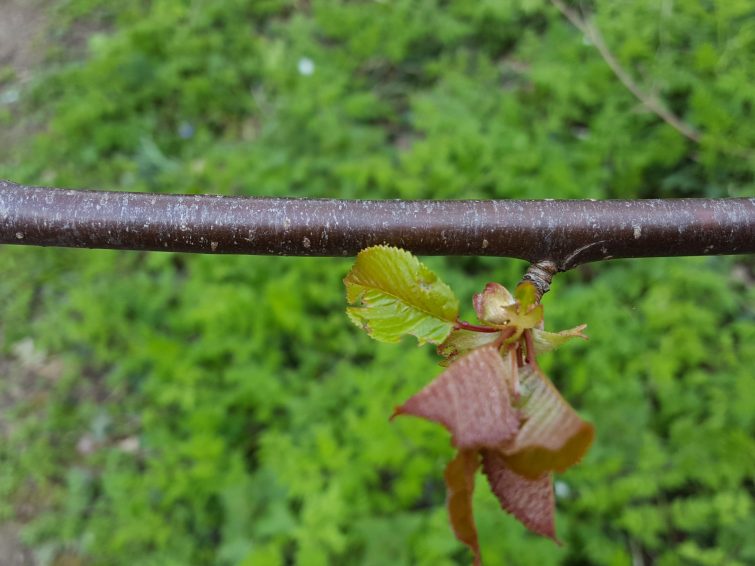
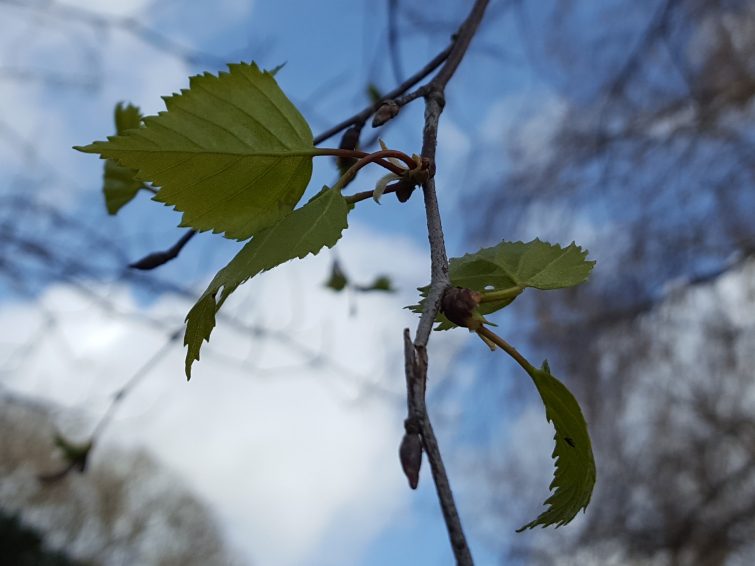
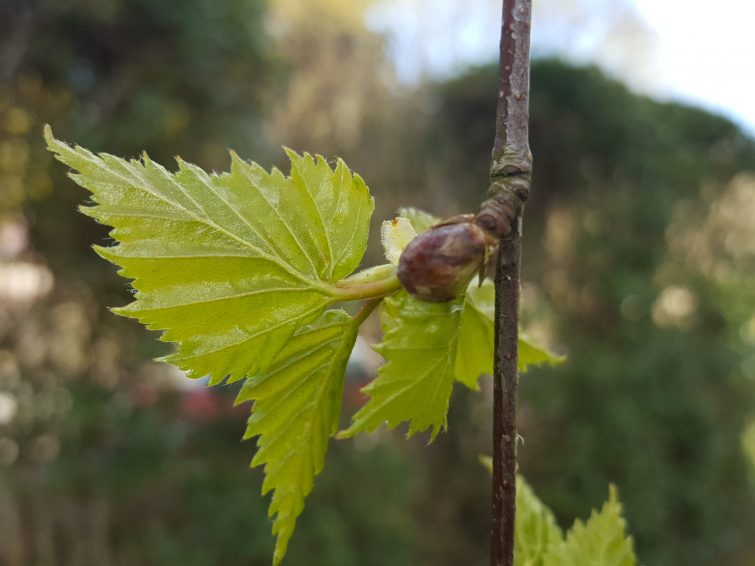
Leaves:  The leaves are easily recognised. They are obovate to oblong-shaped, with a small pointy tip. Some leaves appear in small groups from buds that also contain the flowers. Foliage also appears from buds without flowers.
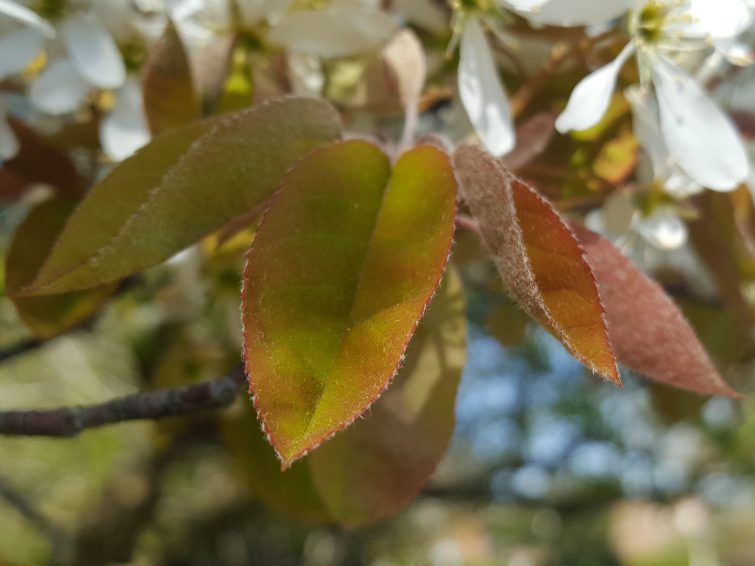
The changeable colours of jJuneberry leaves in late April
The changeable colours of Juneberry leaves in late April.

The leaves provide changeable interest during spring and autumn. Firstly by appearing a rich bronze colour in the spring, then turning grey-green in the summer before developing red – purple tones in the autumn during senescence.
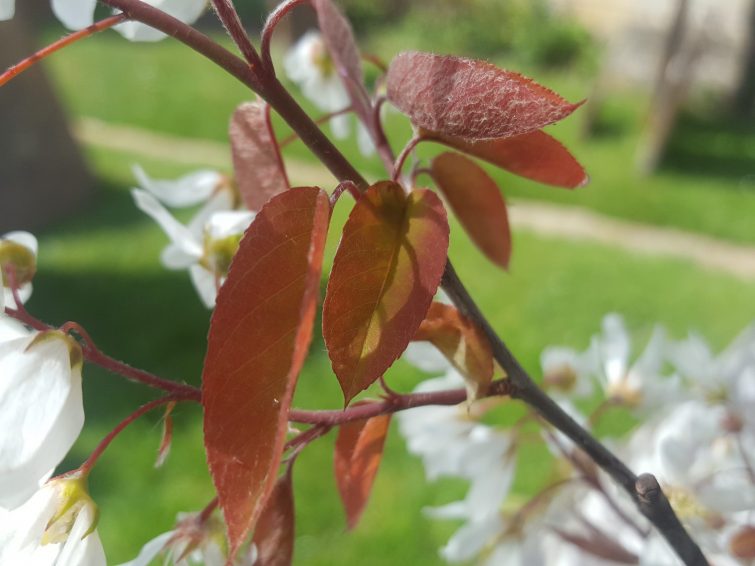
Downy hairs cover the leaves, which are folded and creased when young.
Silky hairs cover the undersides of juneberry’s bronze new leaves.

Like many rose plants, the leaves are quite creased and folded when very young. The white silky hairs on the leaf undersides soon go. They are hairless above.
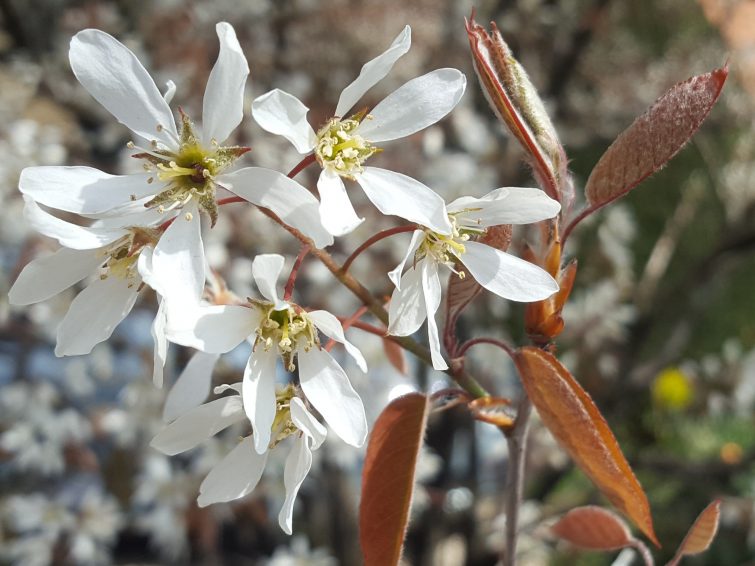
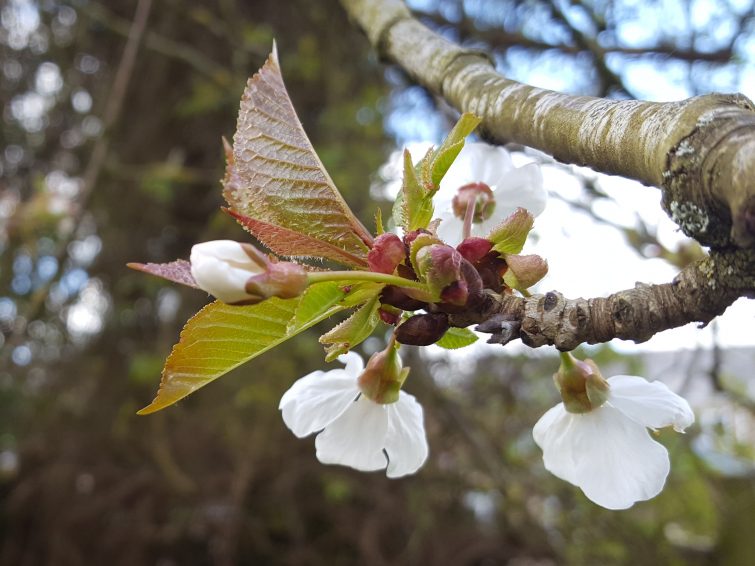
Juneberry in bloom during mid April makes for a stunning display, hence another common name - 'snowy mespilus'.
Juneberry in bloom during mid April makes for a stunning display.

The leaf margins are serrate with anywhere from 17-36 teeth each side.

Petiole: From 1 – 3.5 cm. They can often be around half the size of the leaf.

Roots: This plant has a shallow root system.

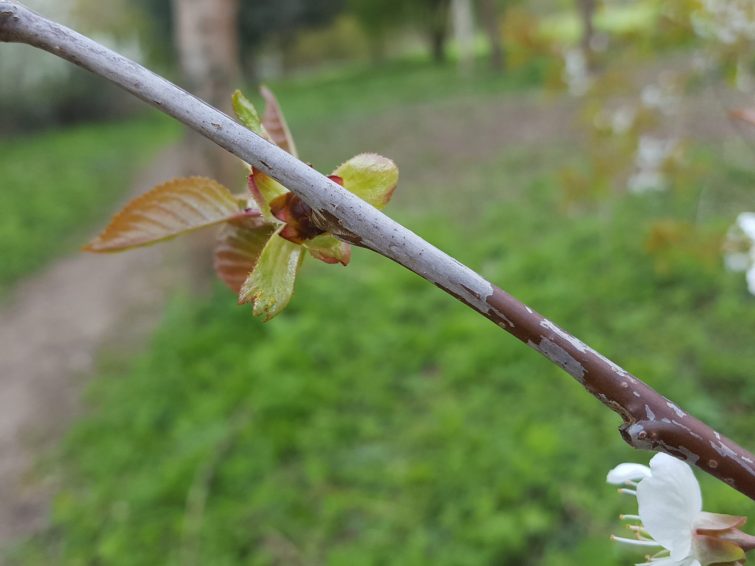
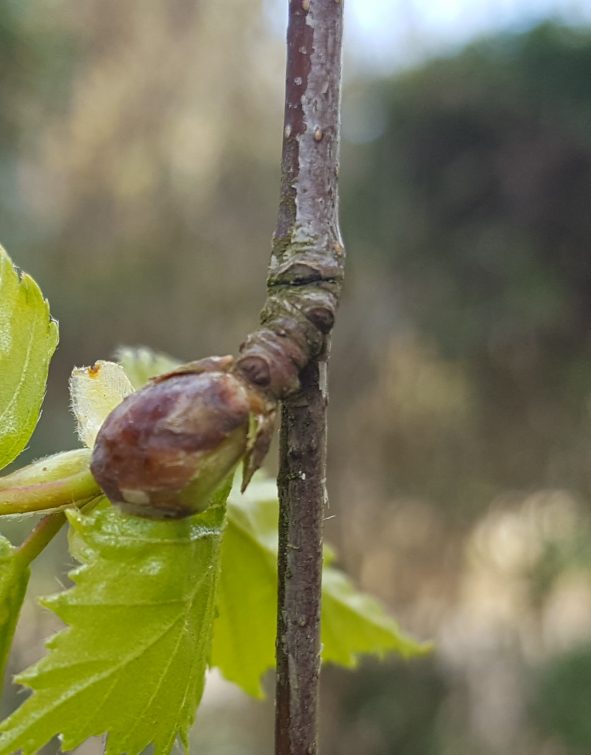
Twigs: These are a red-brown colour and sparsley dotted with lenticels. The twigs are quite thin, around 3 – 4 mm diameter. They are never thorny.

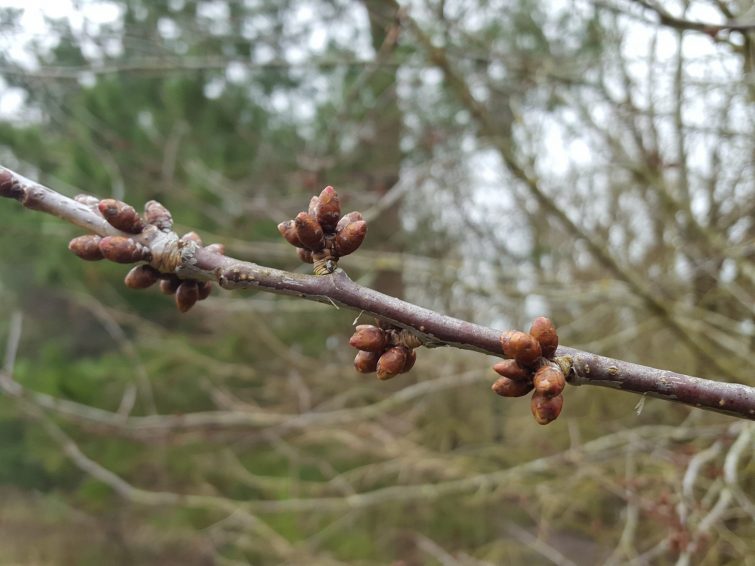
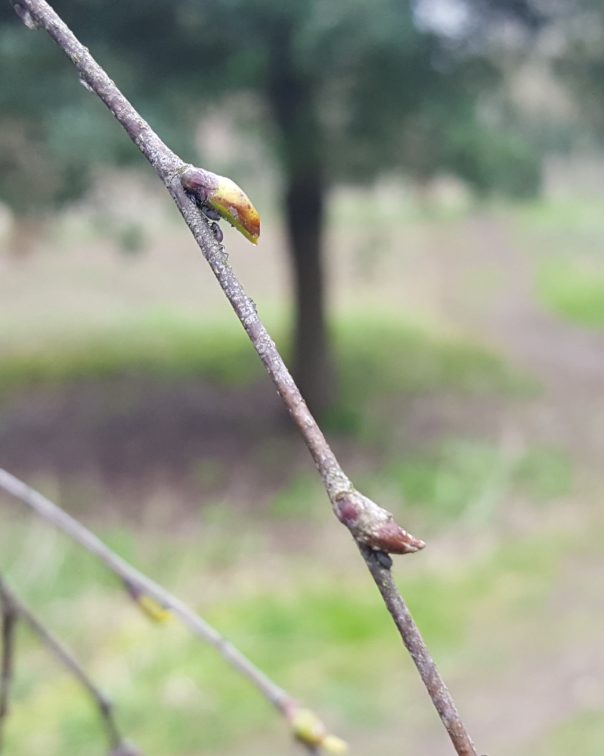
Buds: The buds are approximately 6 – 10 mm, alternately spaced, and chestnut brown to purple-ish coloured.

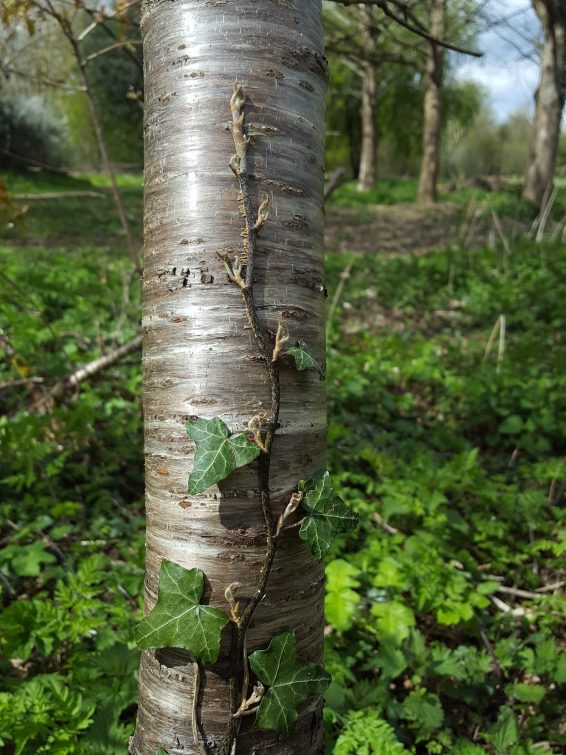
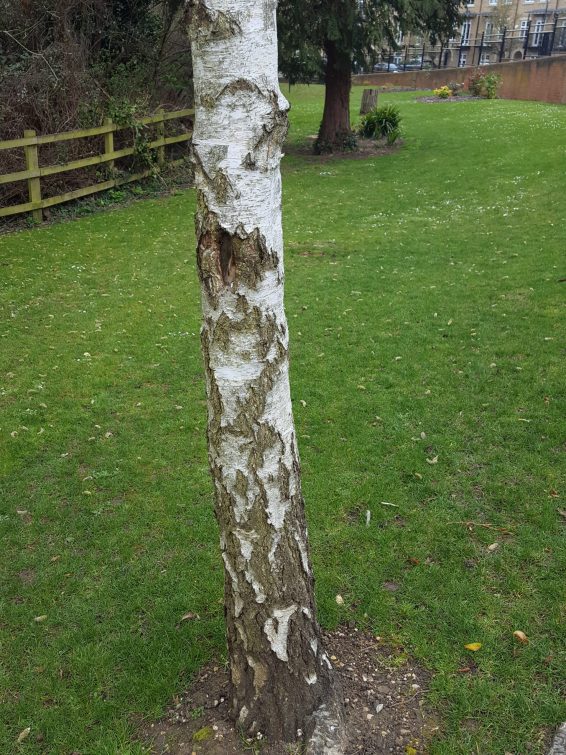
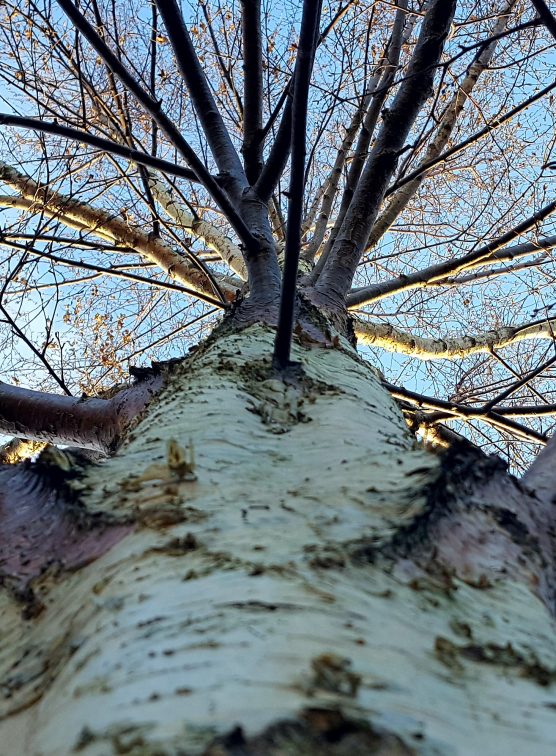
Bark: Smooth with slightly wavering shallow lines running down the branches and main trunk.
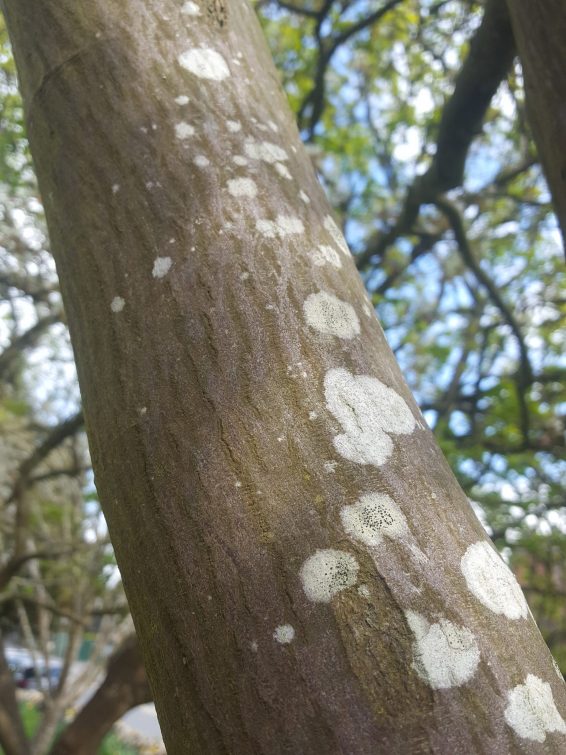
Juneberry branches and trunks are brown with wavy lines
Juneberry branches and trunks are brown with wavy lines.

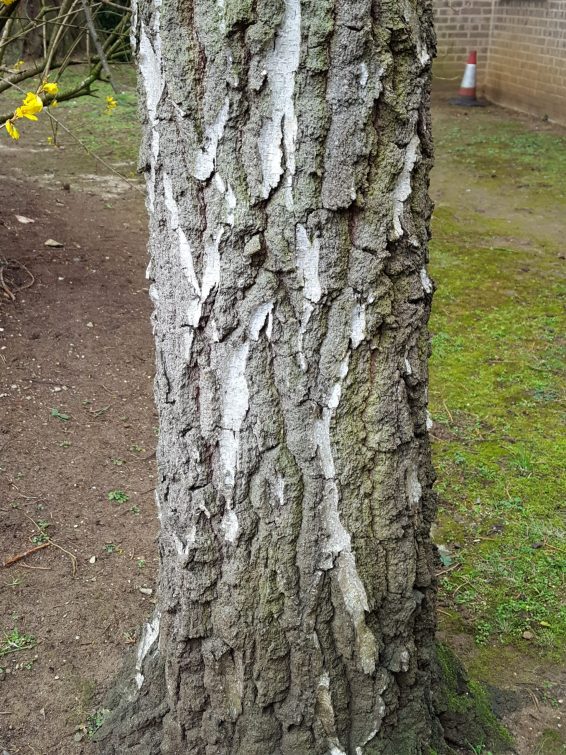
Mature bark develops small flaky-looking fissures towards the base.
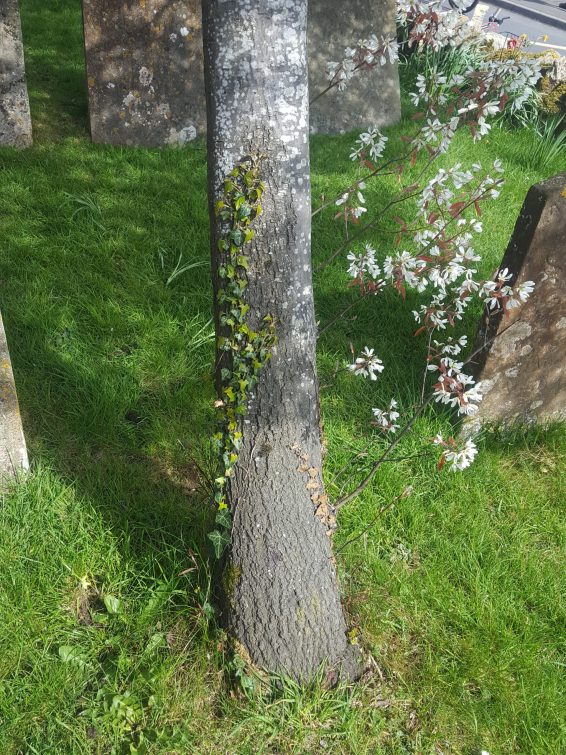
Juneberry trunks can throw up suckers from the base, and eventually develop narrow fissures.

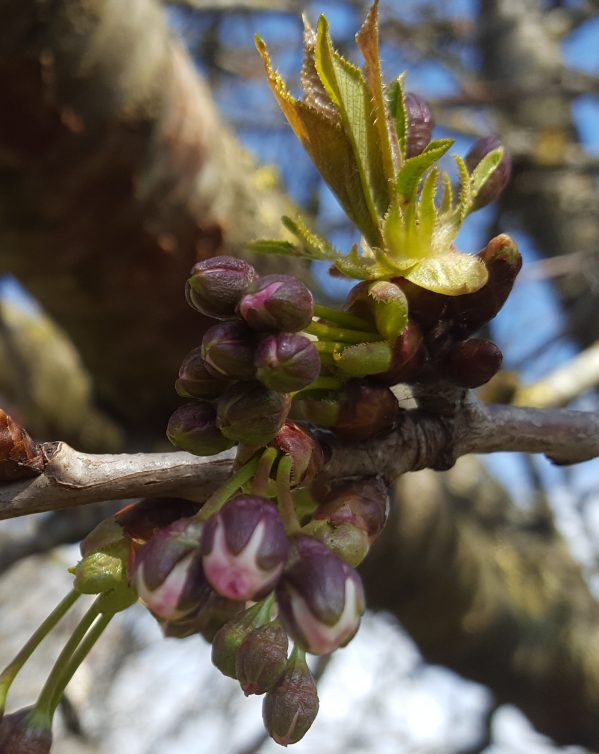
Flowers: Quite large, approximately 35 – 40 mm diameter. Each bloom has a hairy, five-pointed, purple-tinged green calyx. Their five, narrow, oblong white petals are often bent or curved, producing a somewhat untidy look about them.
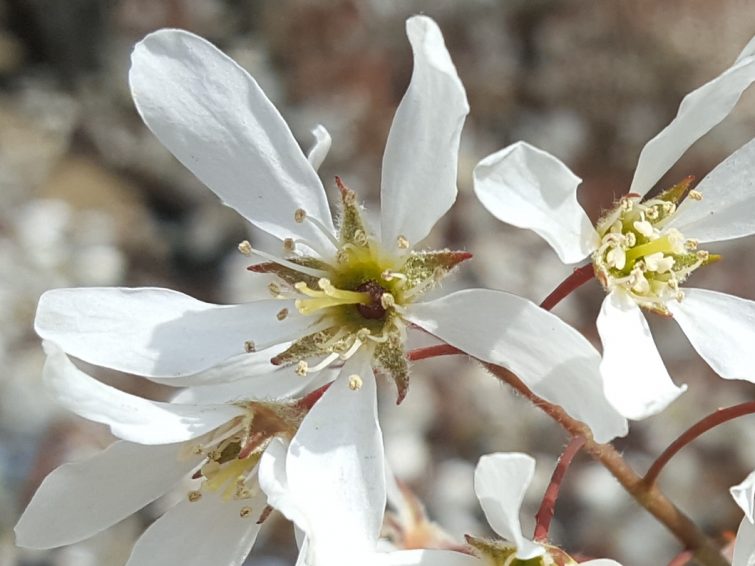
The five-lobed stigma surrounded by a mass of stamens
The flowers have a five-lobed stigma surrounded by numerous stamens.

The centre of the flower has a single five-part stigma surrounded by a number of creamy white-tipped stamens.

Flowering season: The flowers open en massé during April, producing a stunning display.
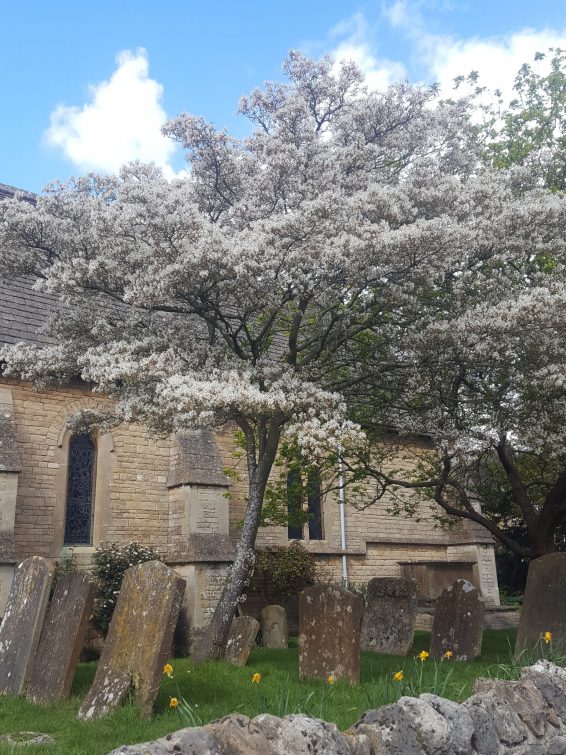
Juneberry in full flower enjoying April's sunshine at St Peters church yard, Wolvercote.
Juneberry in full flower at St Peter’s church yard, Wolvercote.

Fruits: In small clusters towards the tips of the twigs. The dark purple pome fruits help tell us that this plant is in the apple ‘tribe’.

The ‘berries’ are generaĺly seen with the remains of the 5-pointed calyx visible on the fruit, like apples. The fruits each contain between 4 – 10 seeds.

Habitats: The plant was first brought here around the mid 18th century. It was recorded naturalised in the wild here a century later. It prefers sandy soils and open woodland, occurring within oak and birch woods.

This map from the BSBI shows the extent of its naturalisation here in the UK, and likely areas to look in when foraging Juneberry. This small tree is still mostly found as a planted specimen, although bird sown plants are increasingly found.

Parts used: Fruits

Edible uses: The fruits are perfect for snacking straight off the tree. They are ideal for baking, jamming, and infusing into booze, most perfectly into gin.

Medicinal uses: The juice of the fruits are a mild laxative and tonic. A decoction of the inner bark has historically been used in North America to treat sore eyes. Either from excessive exposure to the sun or from snow blindness.

The fruits are reportedly high in both vitamins and trace elements, as well as being rich in various health-boosting polyphenols and antioxidants. As we know, eating a rainbow coloured diet is a sure-fire way of getting the essential phyto nutrients our body needs to stay healthy and ward off illness.

Harvesting: The berries are ripe towards the end of June and beginning of July. When you are thinking of going out foraging Juneberry, its worth being aware that birds tend to get to the plant before us, just as the fruits begin to turn their darker shades. As ever, there are always other foragers to watch out for that want your harvest!

Other notes: This plant is now being grown commercially in the famous fruit growing area of Worcestershire. 

If you like this article and want to learn more about identifying our wild edible plants then simply head over to my how to identify plants in a day article.

This fast track article, in two parts, presents ten of the most important plant families for foragers in Britain to get to know.

If you have any questions about Britain’s wild plants, then do not hesitate to contact me. Happy foraging!
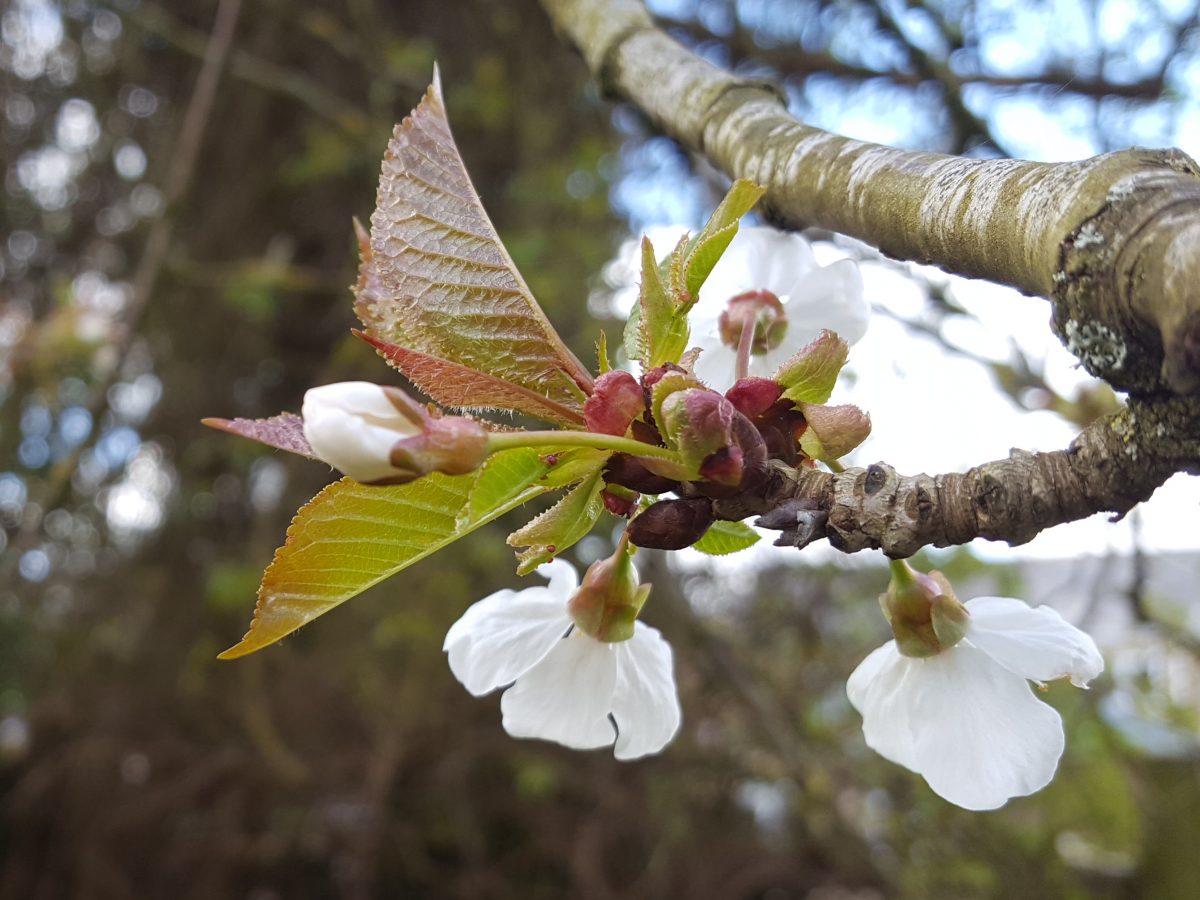
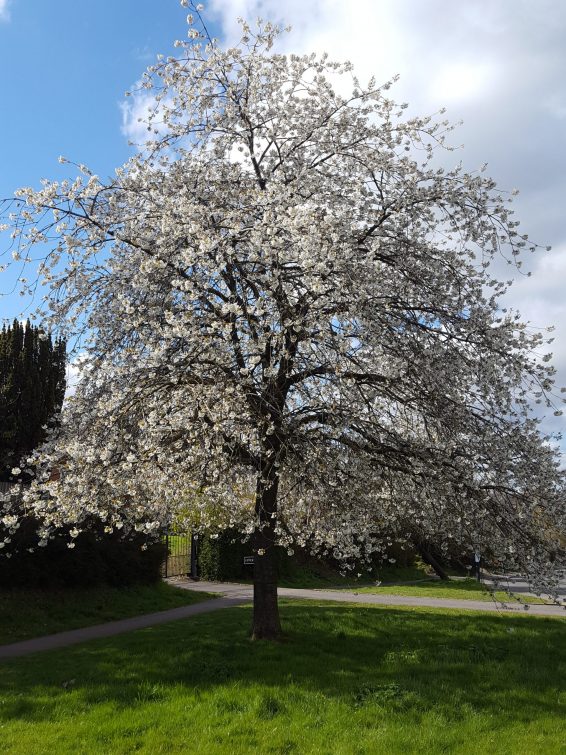
Foraging wild cherry (Prunus avium) Rosaceae family

UK guide to foraging wild cherry. Learn to identify, then discover its food and medicinal uses.

Most people who have ever tried foraging wild cherry can testify to it being be a bit of a lottery. This is because when you come across a new tree, you never know whether the fruit will be sweet or bitter until you try one! But if you persevere, thankfully it won’t take long to find decent tasting specimens.

Also commonly called ‘Gean’, our wild cherry can grow up to be a tall tree (up to 30 metres). It is an integral part of our woodlands, especially with Beech, and it’s widely planted as an amenity specimen.

Wild cherry is widely planted in our towns and cities, and easily found as an amenity specimen.
Wild cherry is widely planted and easily found as an amenity specimen.

Whats in a name?

The generic part of the scientific name Prunus, as all who have read my article on Blackthorn will know, comes from the Latin word, prune – for plum.

The specific part avium, has two distinct meanings. The Latin word avium means wilderness or wayside. Whereas the old Latin word avis, means bird. Interestingly, we have another cherry tree that we commonly call the ‘bird cherry’ – Prunus padus.

Our common name ‘cherry’ has its roots in the old French word for the fruit – cherise.


Botanical description

Occasional technical words are used here. Please refer to the foragers glossary for help.

Leaves: Wild cherry has obovate-elliptical leaves, which are anywhere from 6 – 16  x  5 – 8 cm, with a pointy tip. They are shiny-looking when very young.

Wild cherry leaves are shiny looking when first opened
Wild cherry leaves are shiny looking when first opened, and always have a pointy tip.

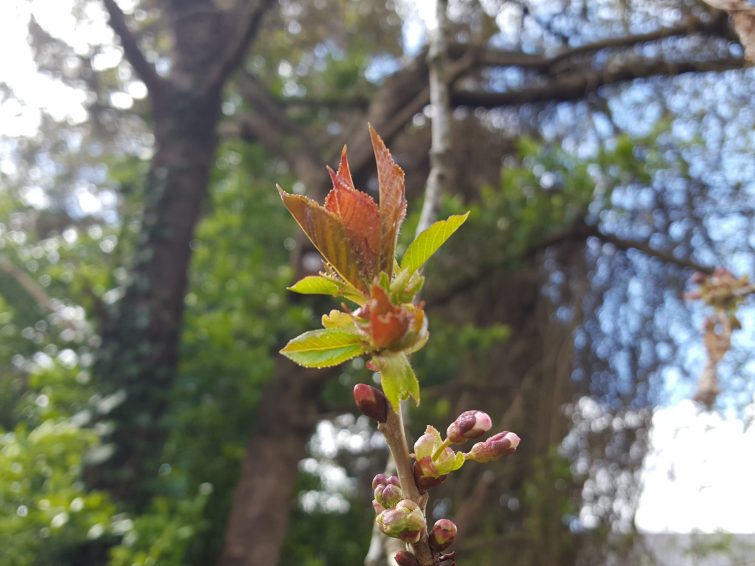
On emerging, the leaves often appear copper-coloured. They turn a darker green within a few days.

It is common to see the new leaves copper-coloured when first opening
It is common to see new wild cherry leaves copper-coloured when first opening.

Hairs are present on the leaf below. Leaf margins are twice-serrated, with appriximately 40 -55 teeth each side.

leaf margins are twice-serrated and the petioles are quite long.
Wild cherry leaf margins are twice-serrated and the petioles have small stipules.

Petioles: Quite long, 2.5 – 5 cm. Two – four red glands at the top. There are linear-shaped stipules at the base (6 – 12 mm). These will soon wither away.

Twigs and branches: New twigs are usually 6 – 8 mm diameter, and hairless. The young twigs have a waxy pruinose covering at first, before losing this layer in their third year.

Young wild cherry twigs are usually covered in a purpleish pruinose covering that soon goes, leaving a red-brown bark.
Young wild cherry twigs are usually covered in a white-ish pruinose coating.

By the second or third year, the bark develops a rich red- brown colour, eventually turning a grey-brown colour with age. The twigs and branches are dotted with lenticels.

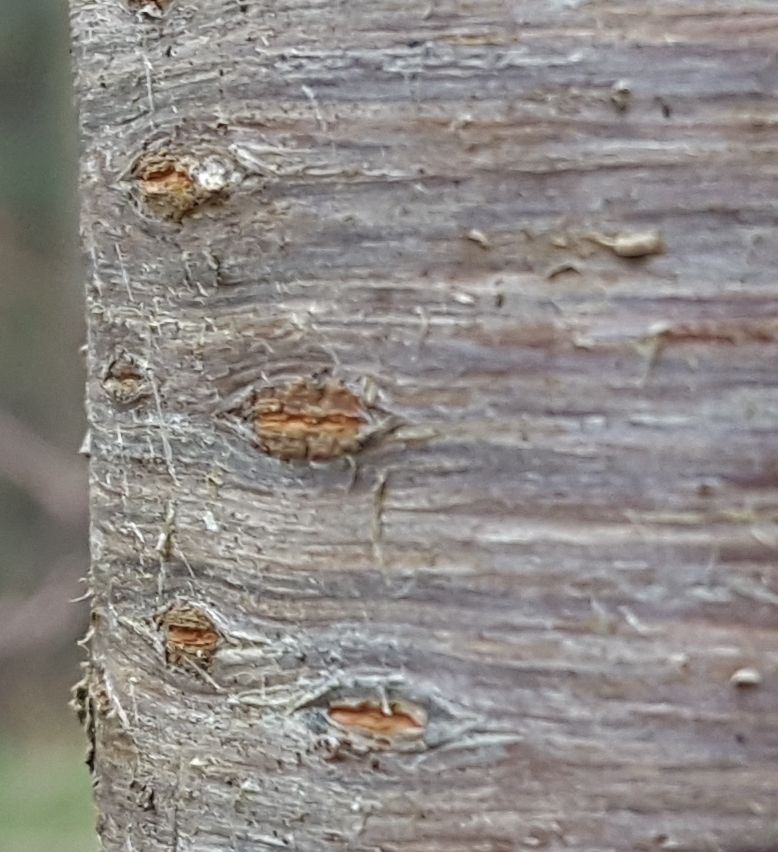
Older wild cherry branches develop a red-brown colour with numerous lenticels.

Buds: Brown and hairless, they appear in dense clusters (up to 9 per cluster) at the end of twigs. Ovoid, with acute tips.

Wild cherry buds are oval shaped, brown and scaly and clustered
Buds are oval shaped, brown and scaly, and clustered.

Bark: Shiny, red-brown coloured, and peeling on mature trees.

The trunk of wild cherry is straight and without suckers at the base. Mature bark peels
The trunk of wild cherry is straight, has peeling bark, and no suckers at the base.

As the tree ages, the lenticels make a series of striped bands.

Trunk: Usually straight. Not suckering at the base like other Prunus species. When old, the bark at the base develops angled fissures.

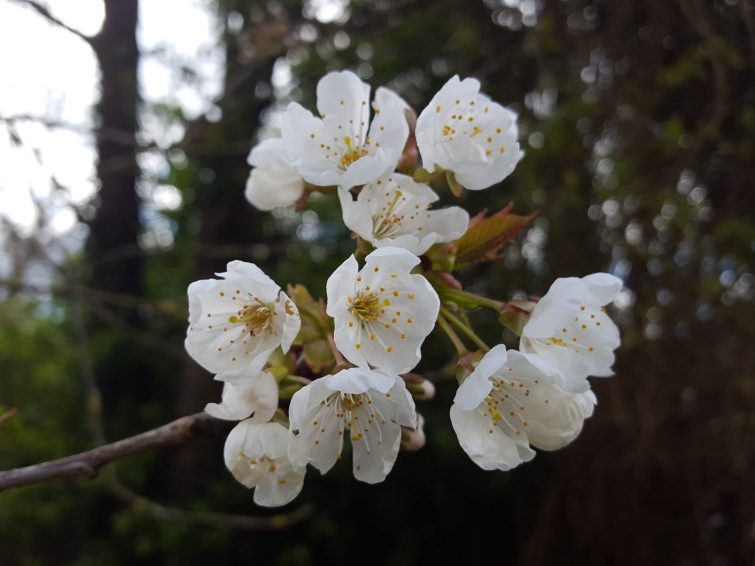
Flowers: The flower buds are in clusters at the tips of branches, and found right back along the branch.

New buds bursting, revealing their five purple-tinged bracts.

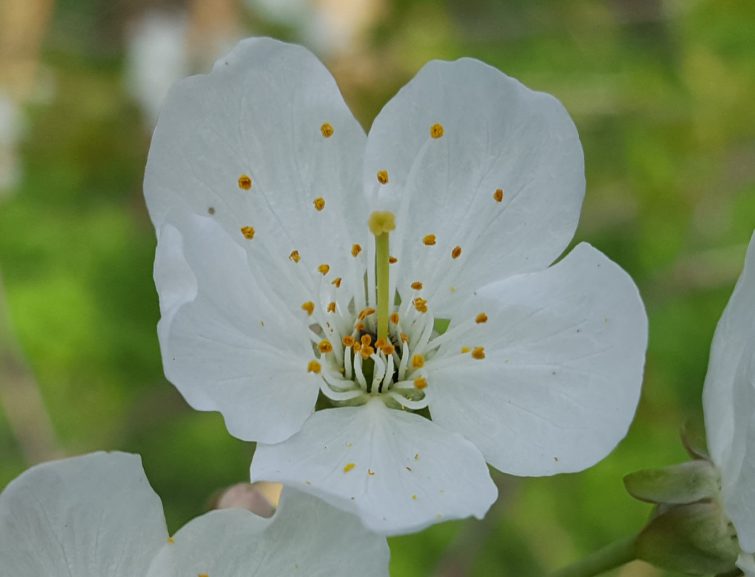
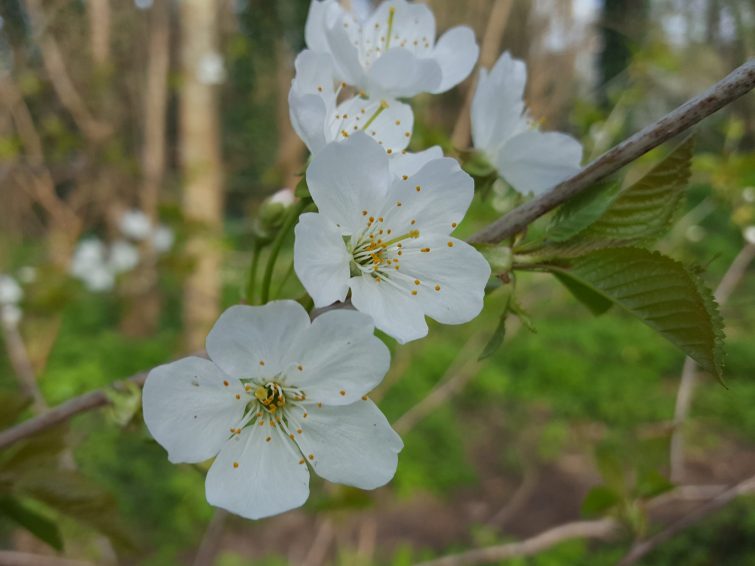
The flowers have 5 purple-green bracts and 5 white petals, often notched. In the centre of the flower are a mass of yellow-tipped stamens.

Notched white petals and a mass of yellow tipped stamens
Wild cherry blossom with its notched white petals and a mass of yellow tipped stamens.

The flowers can be larger (up to 25 mm) than either blackthorn or cherry plum flowers, especially in shadier spots.

The wild cherry flowers open during April in most parts of the UK.

Flowering season: From early April into early May, dependent on where you live in Britain.

Typical wild cherry flower arrangement at the end of a twig
Typical wild cherry flower arrangement at the end of a twig.

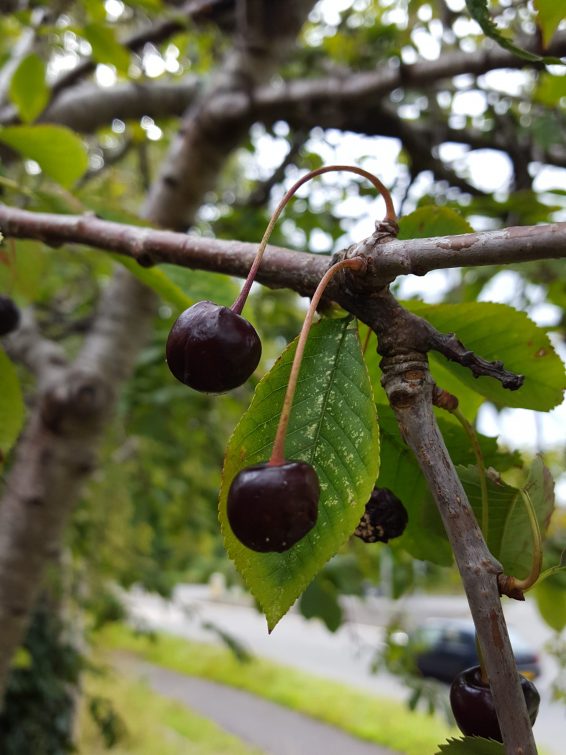
Fruits: These are round and about 12 mm across. Their stone fruits can be red, purple or black coloured.

Small black cherry fruits in early July. These were very bitter!

Habitats: Woodlands, old hedgerows, parks and gardens.

Parts used: Young leaves, flowers and ripe fruits.

Harvesting: If you can, then spread some sort of sheet under the tree and gently shake the branches. The plant should rain down fruit. If you have to collect by hand, it will soon become obvious which ones are ripe, as they literally come away as you begin to grip them in your fingers. Learn more of these tips and tricks with my quick-to-read harvesting guide.

Wild cherry lenticels in winter looking like open lips.

Edible uses: I like the sun-warmed fruits plucked straight from the tree.  I adore them added to rich chocolate sponge cakes in a black forest style. They are suitable for all manner of jams, compote and pie fillings. I havent made glacé cherries with them yet but I bet they would be lovely. Infused into a decent brandy they make an excellent liqueur.

In China, people go foraging for wild cherry to harvest young leaves for preserving in salt.
In China, people go foraging for wild cherry leaves, for preserving in salt.

The young leaves can be eaten, either by salting and pickling, as are found in traditional Chinese cookery, or through soaking in a sugar syrup for a leafy confection.

Medicinal uses: This plant is not as well known in herbal medicine as its sister tree, the Japanese cherry (Prunus serrulata). It is conceivable that the fruit stalks may be used in a similar way, as a remedy for cystisis.

Other notes: Wild cherry wood has been used for centuries in furniture making and in making cask barrels. The wood is also valued for use as a veneer.

If you have found this article interesting and would like to know more about identifying wild plants, then take your time to read our guide to starting out foraging as well as our definitive guide on how to identify plants in a day.

Next up, another fantastic edible Rose family tree, the Juneberry.

Until then, happy foraging!


Foraging for brooklime (Veronica beccabunga) Plantaginaceae family

A UK guide to foraging for brooklime. Learn to identify, then discover its food, medicine and other uses.

There are certain plants I like to go foraging for, such as brooklime, that are never in the forefront of my mind when I leave home. Out of around 300 edible plants that I know, some of these will only ever come in to my mind a few times each year as and when I run into them.

When I do randomly catch up with this plant, it’s usually in the spring, and at different locations each time. It’s as pleasant a feeling as when bumping into an old friend.

Before we get down to the business of I/D, it’s worth pointing you to my two part article on how to identify plants in a day! Beginners would also do well to spend five minutes reading this guide to starting out foraging.

Other essential reading here is my guide to Britain’s poisonous plants. Learning them helps you to leave them alone!

What’s in a name?

The generic part Veronica is the name given to around 500 species! Veronica is the Latin word for an older Greek name ‘Berenice‘. This name was familiarised by the ancient Greek Ptolomy family (circa 400 B.C.)

The word was originally spelt Pherenike and joins two words: ‘phero’ meaning to bear, to bring, or to carry; and ‘nike’ meaning victory. So the Greeks thought the speedwells ‘bring victory’.

Beccabunga! The specific part of the name sounds like a cry from the Teenage Mutant Ninja Turtles. This word is apparantly derived from the old Germanic phrase ‘bachbunge‘ which means  ‘brook-bunch’, or ‘a bunch of flowers from a brook’. Languages related to German, such as Danish, also reveal a similar phrase ‘bekkebunge’ meaning the same thing.

The common name brooklime was previously spelt brooklem. This name is from two older cojoined English words ‘brokelemke’.

The word Broke describes a marshy area, bog, or stream. The final part lemeke is a middle English word for speedwell. This itself comes from an older English word ‘hleomoce’ – speedwell.

Botanical description

If you come across difficult words here, simply refer to our foragers glossary.

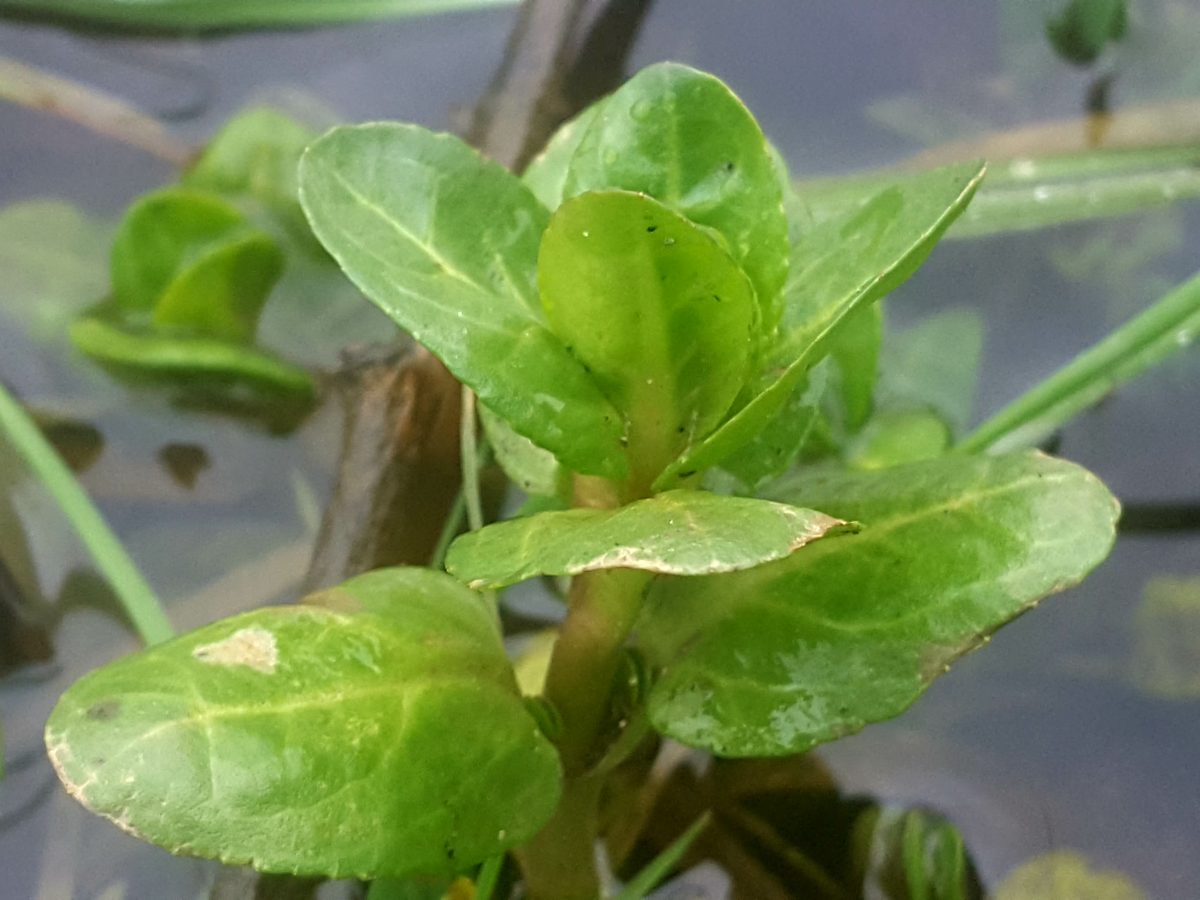
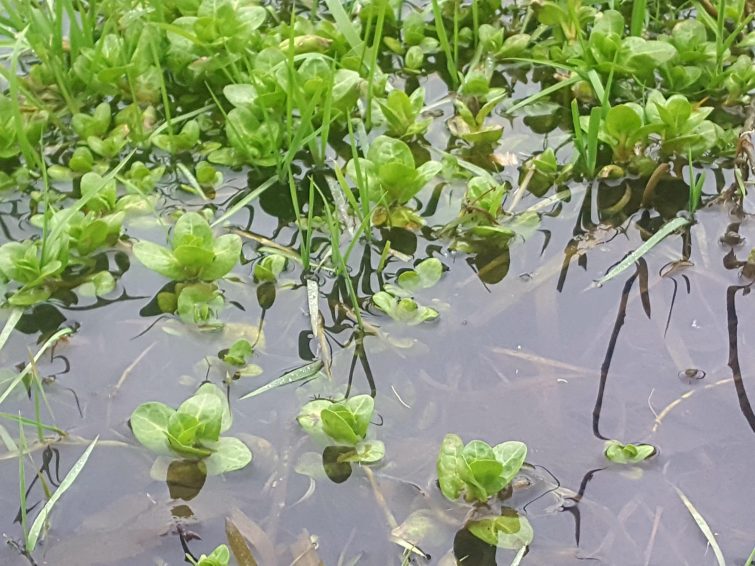
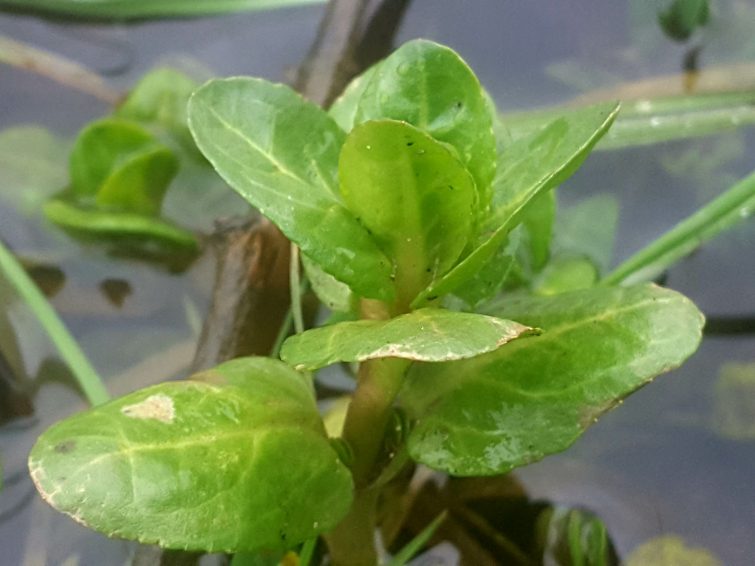
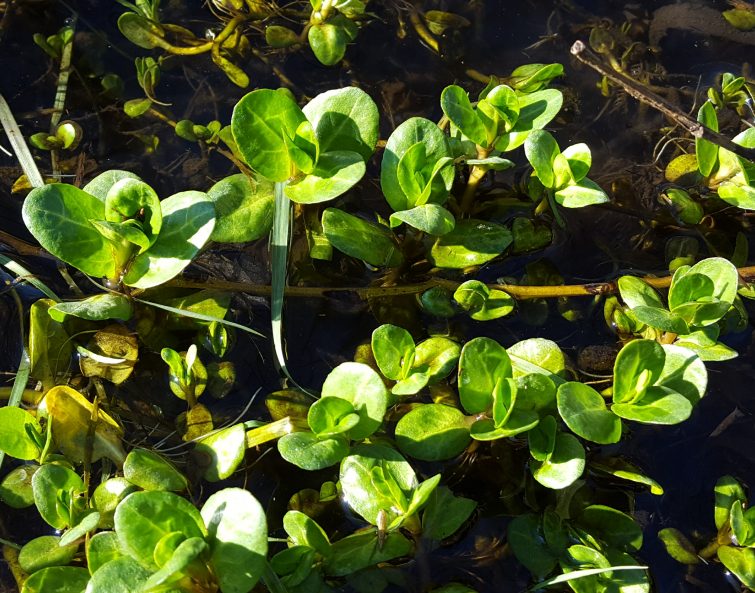
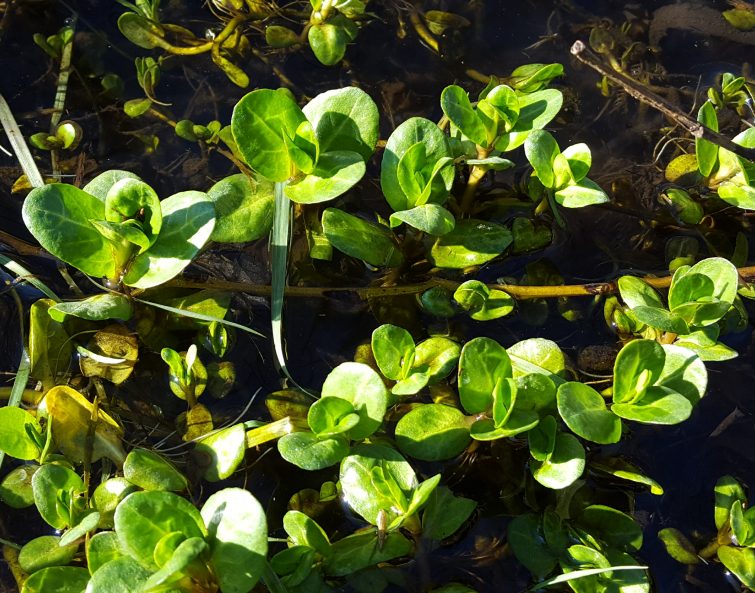
Leaves: Small, glossy-looking, round to oval-shaped leaves. They are hairless, and in opposite pairs. When foraging for brooklime you could potentially mistake the plant for watermint.  Your nose knows! Brooklime has whiteish veins visible on the surface of its fleshy leaves.

All leaves are borne on stems. Just the top few leaves are generally visible over the winter months.

Petioles: Very small if at all. The leaves are mostly sessile and clasping the stems

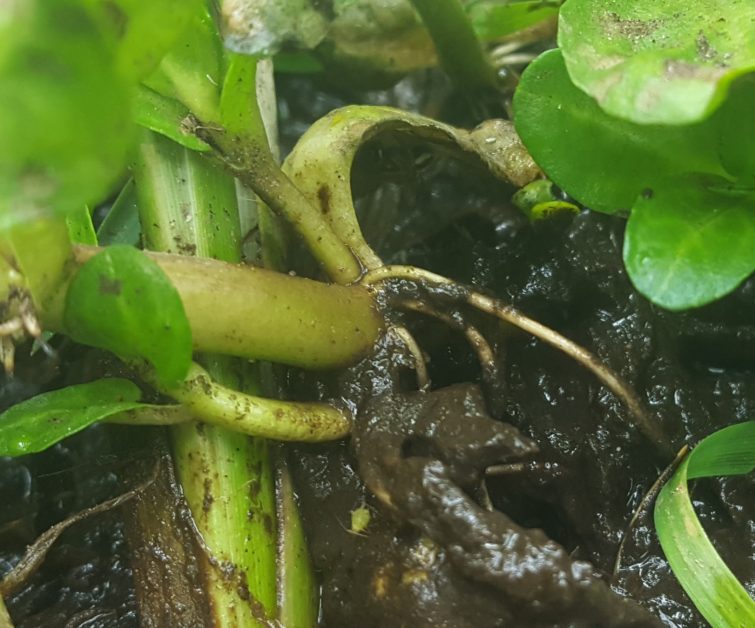
Roots: The creeping rhizomes ensure that brooklime always appears with numerous stems.

Stem: Round, branched above.  Will grow up to around 60 cm high. The stem produces roots where underwater.

Flowers: Classic speedwell flowers. Four petals with one a different colour and shade to the others. Four anthers surround the two-part stigma.

Flowering season: Like many of its fast growing relatives, brooklime flowers quite early in the season. In the UK it comes into flower during late April and blooms through May and into June.

Fruits: Numerous tiny seeds are contained in a two-part seed capsule.

Habitats: This plant is adapted to grow in and around water. You can go foraging for brooklime in most of Britain. You can find it in and by shallow streams and brooks.  It prefers damp and marshy settings where the water is slow moving. It also grows happily in regularly waterlogged woodland paths.

Parts used: Leaves. Young stem shoots. Flowers.

Harvesting: Start to collect the new ones as they begin to appear in March. Pinch off, or use scissors. For the young stems, simply cut off the top 10 cm or so. Get more foraging tips and tricks with my harvesting guide.

Edible uses: The leaves are more than suitable for all manner of salads and sandwiches. Layer the leaves in dishes like Lasagne. The flowers make a pretty garnish. Steam the young stem shoots.  It is best used with other strong tasting herbs to compliment its bitter flavour.

Medicinal uses: In the past, Brooklime was used for a number of conditions, like many other Veronica species. Most of the former claims are not backed up by science.

The herb was chiefly employed as a remedy to prevent scurvy. Brooklime does have high concentrations of Vitamin C, as well as containing flavonoids and phenolic compounds, all useful to prevent chronic diseases.

Other notes: Possibly the easiest of the Veronica species to identify, and partly because of its habitat. This genus was recently reclassified as part of the plantain family.

More plant species coming soon. Happy foraging!
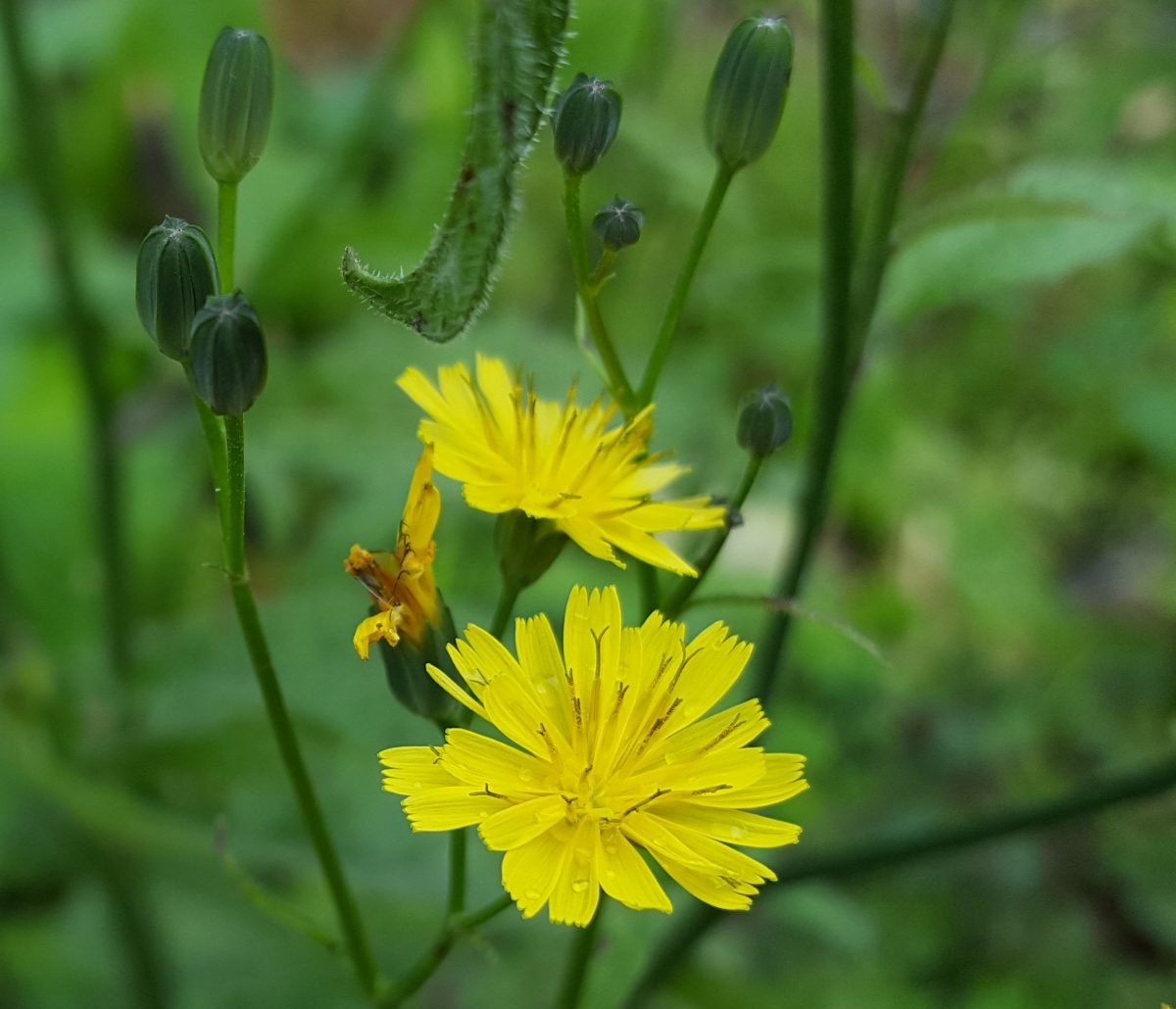


UK Guide to Foraging Nipplewort for Microgreens (Lapsana communis) Asteraceae family

UK guide to foraging nipplewort. Learn to identify, then discover its food, medicine and other uses.

Learn all about foraging nipplewort. In this article you will discover how to identify it, the origins of its name, its historical uses, and what we can do with the plant in a 21st century kitchen.

Nipplewort is an easy plant for beginner foragers. It is usually available all year to study, and not many plants look like it! This is one of many thousand daisy family plants.

What’s in a name?

If I mention about foraging nipplewort when I’m leading a wild food walk, it will likely raise smiles and sniggers. It’s just one of those words. Plants like arsesmart and bastard cabbage similarly make people grin.

From my web research, the generic part Lapsana is attributed to a name the ancient Greek physician Dioscorides gave to certain edible mustard plants with similar lyre-shaped leaves. Quite why this name stuck I cannot fathom. I feel there is more to the origins of this name than I have uncovered.

The species epithet communis  alludes to the sheer numbers of plants that will germinate and grow together, given half a chance.

The English common name nipplewort is beleived to be due to the shape of the flower buds.

Botanical description

If you come across any difficult words, simply pop over to our foragers glossary for answers.

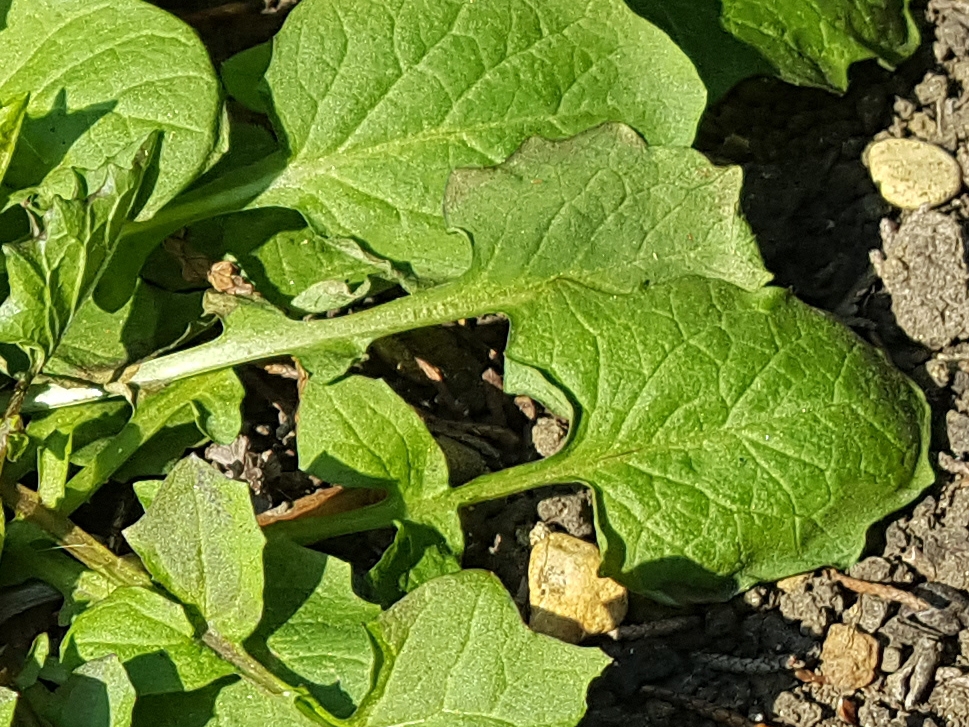
Leaves: Light green and mostly hairy leaves. Lyrate-pinnatifid shaped. Basal leaves grow to 15 cm long and often pinnately-lobed.

The leaves on established plants grow as rosettes, though in the summer, plants can bolt early.

The baby seedlings have large elliptical seed leaves. Their first true leaf comes without lobes.


On mature plants the terminal lobe is much larger than the 1 – 3 pairs of lateral lobes below it.

Nipplewort’s leaf shape does give it a similar appearance to charlock (Sinapsis arvensis), although this plant contains no pungent aromatics. The margins are generally sinuate-toothed, though entire on some specimens.

Petioles: Solid and up to 5 cm long on basal leaves.

Roots: This plant has a long thin, white taproot.

Stems: These are green, hollow, hairy towards the base, solid and weakly ridged. The branched stems can reach up to 100 cm high.

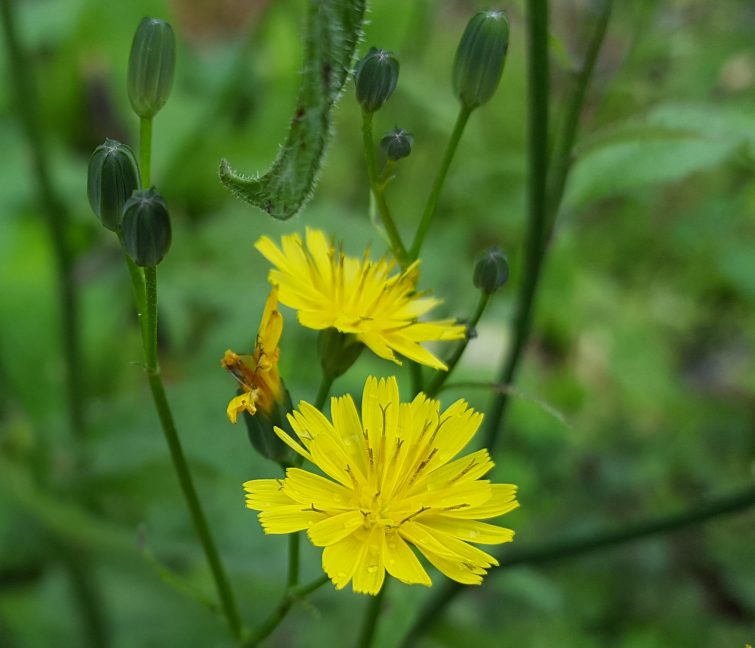
Flowers: Small yellow composite flowers are typically 15 – 20 mm across. Each flower produces around 15 notched ray florets, and just a few disc florets.

Flowering season: One of a number of plants that will regularly flower well into our milder winters. Its main flowering period is from June to October.

Fruits: Tiny achene fruits, attached to white pappus hairs.

Habitats: The plant has a habit of quickly germinating on all manner of disturbed soils. When you’re out foraging nipplewort you will occasionally find it in woodland clearances and shady hedge banks. As this map shows, you can see this plant in all of England and Wales, as well as low-lying areas of Eastern and South West Scotland.

Parts used: Whole seedlings, young leaves, mature leaves.

Harvesting: Pick whole seedlings with scissors and put straight into an airtight and preferably humid container. I love those clasp-sealing bags lined with foil. With added damp newspaper, these bags will keep leaves really fresh. Many more tips and tricks are found in my harvesting guide.

Edible uses: My favourite reason to go foraging nipplewort is for seedling microgreen salad. Young leaves can be used in salads as well but the hairyness means they’re better cooked as a spinach.

Medicinal uses: Scant medicinal evidence exists althoigh a lot of anecdotal references are abailable online. The plant is said to have an overall calming effect, reportedly helps the kidney function, and can help stop the flow of milk when breastfeeding mums want to wean.

With so many medicinal plants to choose from in this country, I feel happy enough to ignore this plant when looking for medicinal herbs!

Other notes: Although not one of my go-to edible plants, this makes a handy addition to spring salads. I will always try and make a point of harvesting nipplewort microgreens when found in large numbers.

More plant species are coming soon. Happy foraging!
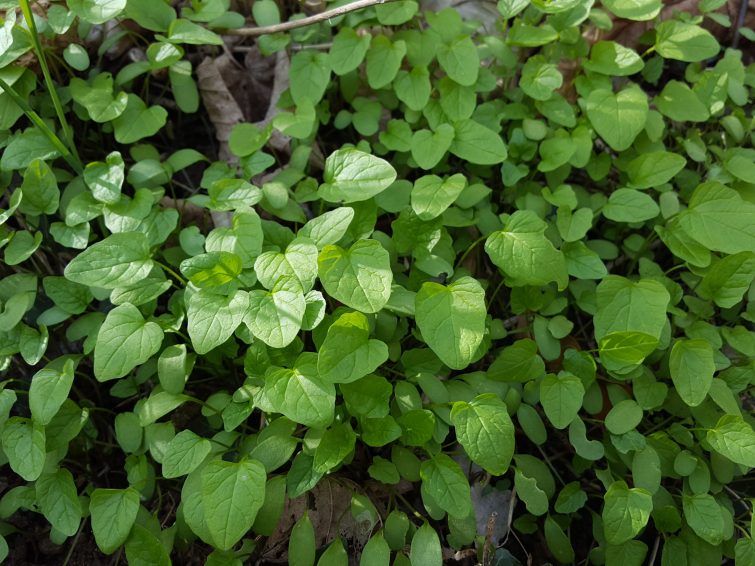
Foraging in April for Britain’s tastiest wild food

Discover some of the best wild food plants and fungi with this UK guide to April foraging

Foraging in April suddenly means abundance. Only a while ago in January and February, we were on a limited winter palate of mostly green leaves. Then we began to see a steady increase of delicious wild plants in March.

Now we have longer and warmer days, April explodes everywhere with vigorous renewed growth. It brings a feast of new shoots, leaves, stems, flowers, and flavours. This is just what we need as our bodies fully awaken after a sedate winter.

To help you confidently and safely identify wild food plants, this website offers a range of resources to help complete beginners, including  the basic tools to go out foraging with success.

You can discover how to identify plants in a day with a really simple-to-use plant I/D method. Learn also to be a mindful and responsible forager when you go out collecting. Have a look at my harvesting tips and tricks before you go.

Knowing our poisonous plants  is more important than knowing the edibles. This guide to Britain’s poisonous plants, will help you stay safe. A revised edition will soon be essential reading on my upcoming online courses.

Get to know these nine great edible plants and one deadly poison when you’re foraging in April.

The following list is just a handful of the plants available to you when you go foraging in April. It also includes one deadly poisonous species that almost all active foragers will be seeing now and will want to know.

So let’s take a look at a few of my favourite wild foods that I go foraging for in April. They are in no partucular order.


Sea purslane (Atriplex portulacoides a.k.a Halimione portulacoides) Chenopodiaceae family

Sea purslane can be harvested anytime but puts on new growth in April and May.

This woody perennial is one of my all time favourite wild food plants. It’s abundant and evergreen, with crunchy, salty, oval leaves. Foraging for sea purslane this April makes a great excuse to visit our estuaries and coastlines.

This is a fantastic plant to use raw, cooked, or preserved through pickling; either in lacto-fermented brine or vinegar.


Flowering currant (Ribes sanguineum) Grossulariaceae family

The flowering currant will be smelt in the air first when you are foraging in April
You can often smell the flowering currant on the air first when foraging in April.

The flowering currant is a delightful spring plant to harvest, as my recently published article reveals.


Hemlock (Conium maculatum) Apiaceae family

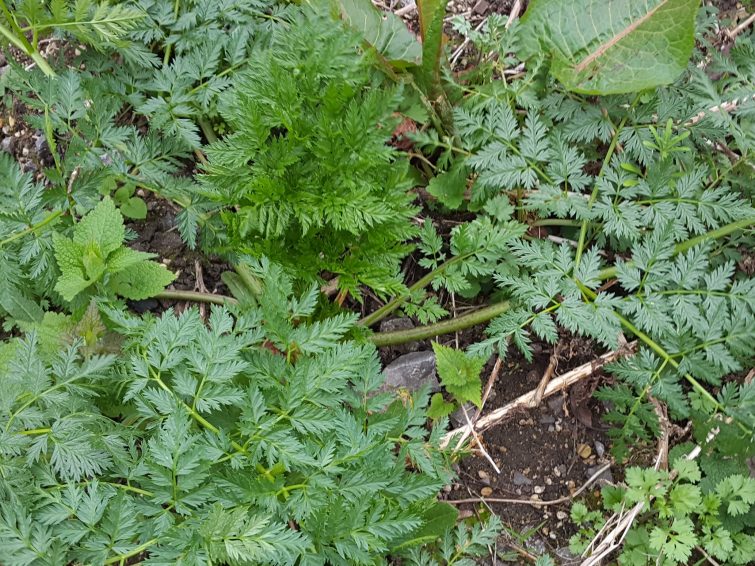
Hemlock leaf rosettes are large and fern-like. They are a common sight on wastegrounds.
Hemlock’s fern-like leaves form large rosettes on wastegrounds during April.

Knowing this plant is vital! Hemlock grows in much of Britain and should be easily found in most of our towns and cities. It loves riverbanks, roadsides and waysides as well as wastegrounds.

I can vouch for its extreme bitterness and the nasty sensation of microscopic skin-piercing crystals playing havoc inside my mouth. All this from a misidentified nibble!

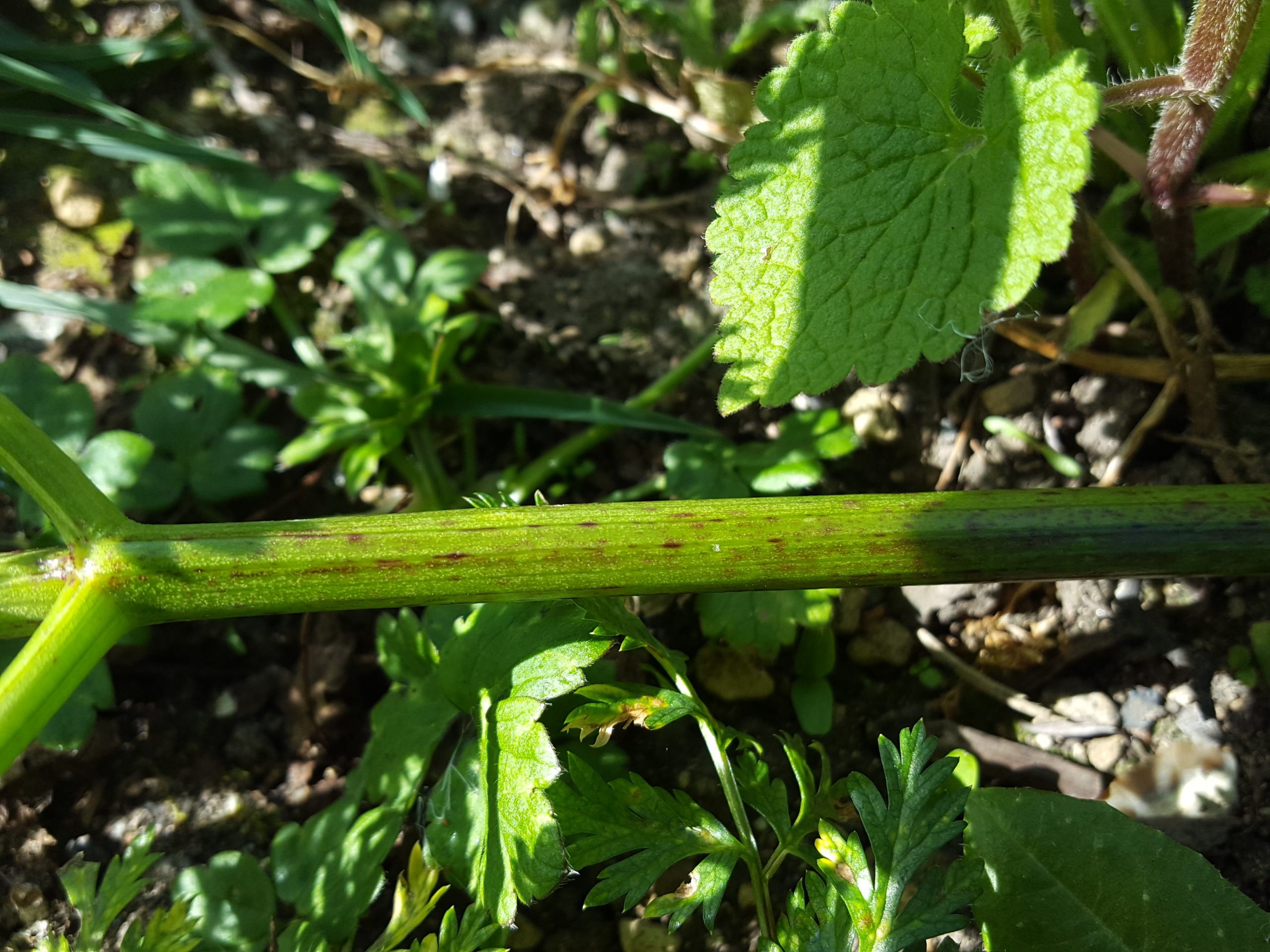
This particular carrot family herb is being covered in full soon, to allow full comparison with other carrot family herbs including fools parsley, the Japanese hedge parsley or wild chervil. Hemlock is a large plant, in and out of flower. It is hairless, and with red purple-spots on its stems and leaf stalks.

The leaf stalks are a short cut to identifying numerous plants such as hemlock. This plant has red-purple spots and no hairs.
Hemlock has hairless, red-purple spotted leaf stalks. The leaves can reach 50 cm plus.

Hemlock can reach 2 metres high with small lacy looking flowers that appear from late May or early June. The fern-like foliage has a rank smell, which is often described  as similar to mouse urine. I’ve lived near to stands of hemlock and they definitely have a feotid stink. If in doubt about I/D, check the leaf stalk out!


Hop shoots (Humulus lupulus) Cannabaceae family

Hops shoots are a great find when you are foraging in April, although only really available in the southern half of Britain. The tender shoots need little cooking.
Hops is generally known for the flowers that flavour beer. It’s also a great edible!

A riverside and hedgerow plant mainly. Known in other lands  as ‘willow wolf foot’ due to its habit of clambering up and over various willow species that are found alongside streams and rivers.

Hop shoots are best picked when just emerging in early April.
Tender hop shoots are best picked when emerging in early April. They need little cooking.

This plant has a creeping underground network of rhizome roots. It can establish large perennial rootstocks. These are able to send forth numerous new stems each April. Pick the top 10 – 15 cm of the shoots. They are great fried in oil or butter for 2 – 3 minutes.


Hoary cress (Lepidium draba) Brassicaceae family

Hoary cress can be almost invisible until its almost about to flower
The tender stem, broccoli-like florets of hoary cress can suddenly become visible in grasslands during April.

This firey-tasting brassica family plant seems to appear put of nowhere. Where established, the creeping rhizomes send up numerous leafy stems which quickly form the mini ‘broccoli’ florets. Cut and use the top 10 – 15 cm of the tender stem.


Rock samphire (Crithmum maritimum) Apiaceae family

Rock samphire is a great sea vegetable. It has a distinctive leaf and is uniquely aromatic.

Only found by the sea. This tasty plant has distinctive-looking, and uniquely aromatic leaves. The plant was previously discussed in this full length article.


Travellers joy (Clematis vitalba) Ranunculaceae family

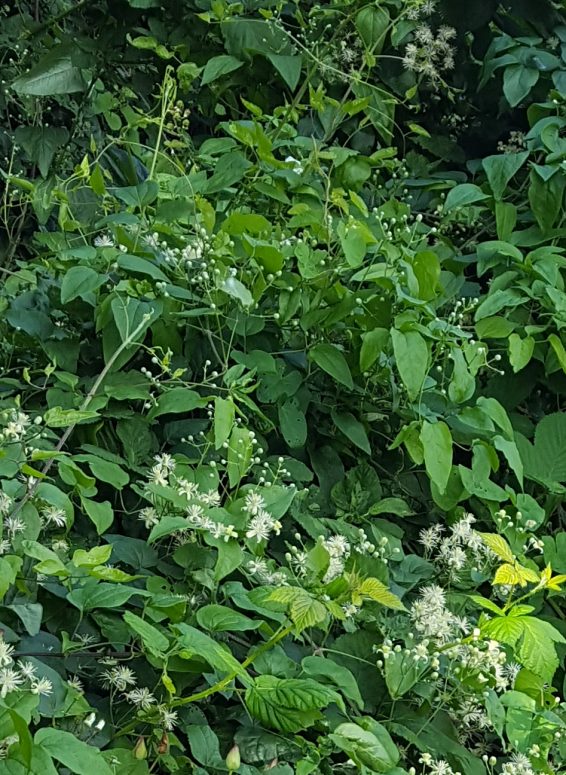
Travellers joy is a perennial plant and will produce abundant new shoots during April.
Travellers joy last August. The same plant will produce abundant new shoots in April.

The new shoots from Traveller’s joy are a lesser known wild food, possibly because the plant has many references to it being poisonous. This plant, like a lot of buttercup family plants, contains the irritant compound protoanenomin. So it is definitely toxic raw. Fresh plants can cause burning sensations.

When cooked for 90 seconds in boiling water however, the compound breaks down. The result is a fresh-tasting spring vegetable, full of a sweet asparagus and pea-like flavour.


Salad burnett (Sanguisorba minor) Rosaceae family

Salad burnet offers foragers great flavour for salads.

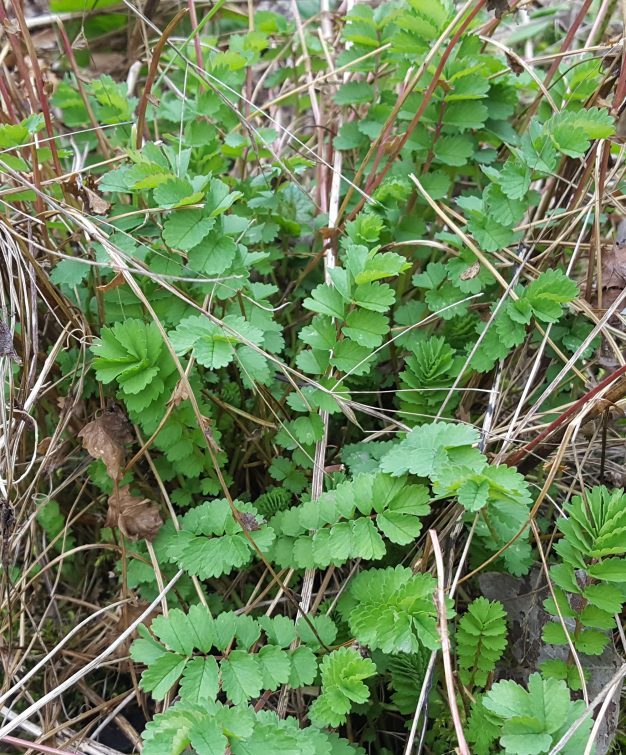
A small pinnate-leaved herb with a big flavour! Find it in grasslands and on wastegrounds, especially on light alkaline soils. When you crush the leaves, it gives off a characteristic cucumber aroma. Pick the leaflets off the stem before eating.


Brooklime (Veronica beccabunga) Plantaginaceae family

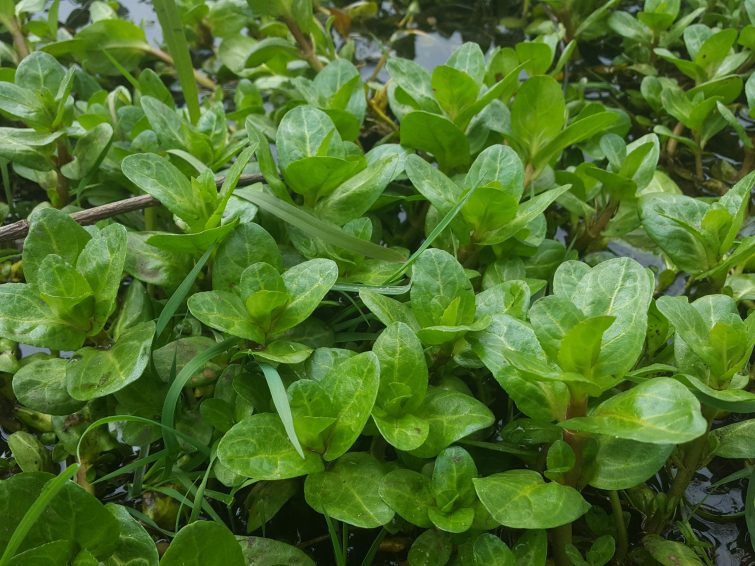
Brooklime begins to produce lots of young juicy salad leaves in April.

First prize in the best scientific name of the week. Its name sounds like a character in a children’s story. This succulent salad leaf can be harvested from many settings where there is slow flowing water. It is a lovely addition to salads and sandwiches.

Brooklime has round, fleshy leaves that could initially be confused for watermint. The two plants share similar habitats and will grow amongst each other. You will quickly discover which plant you have by smelling the leaves. Remember to engage all your senses while foraging!


Mushroom of the month. Fungi foraging in April.

By the end of the month, if you are determined and lucky enough, you can find the first of the new season mushrooms!

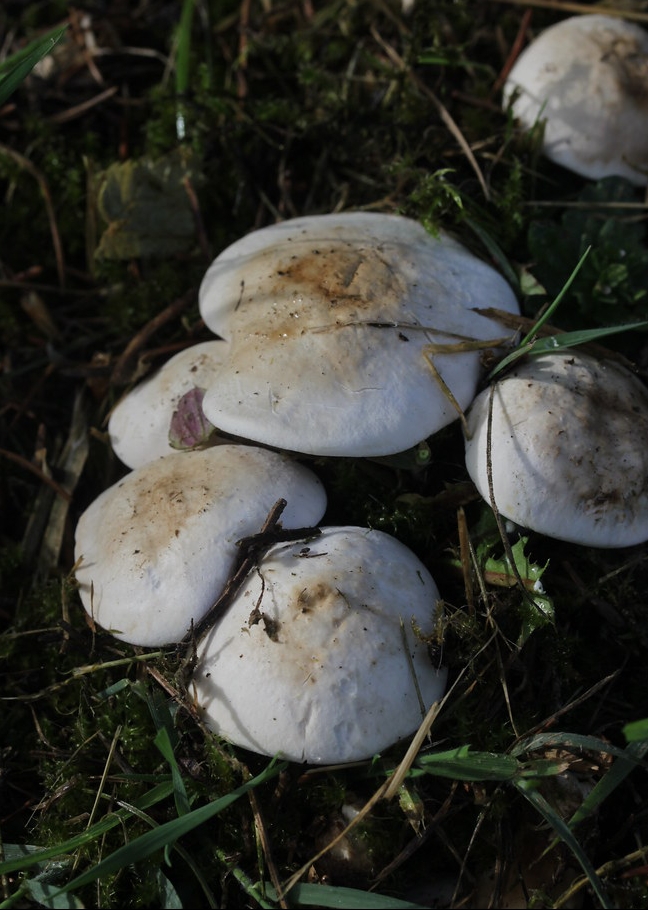
St. George’s mushrooms appear around April 23rd. Very few other fungi are this early.

The St George’s mushroom (Calocybe gambosa) is a tasty April foraging treat.  Its name is is due to the timing of its appearance, being first found around the 23rd April.

These stubby little mushrooms have a variable cap colour depending on how young they are when picked. I’ve seen them creamy-white to a light yellow-brown. They have an irregular cap, approximately 6 – 12 cm wide. Left for a few hours, the fruiting caps will produce a white spore print.

They are found in grasslands, where this is not too regularly or vigorously mowed.  Very few other mushrooms are around at this time of year so positive I/D is not difficult.

So that’s plenty to fill your April foraging adventures. If you have any foraging questions then simply contact me here.

With thanks for the St. George’s Mushroom (Calocybe gambosa) photo by Björn S… is licensed under CC BY-SA 2.0

Happy foraging!
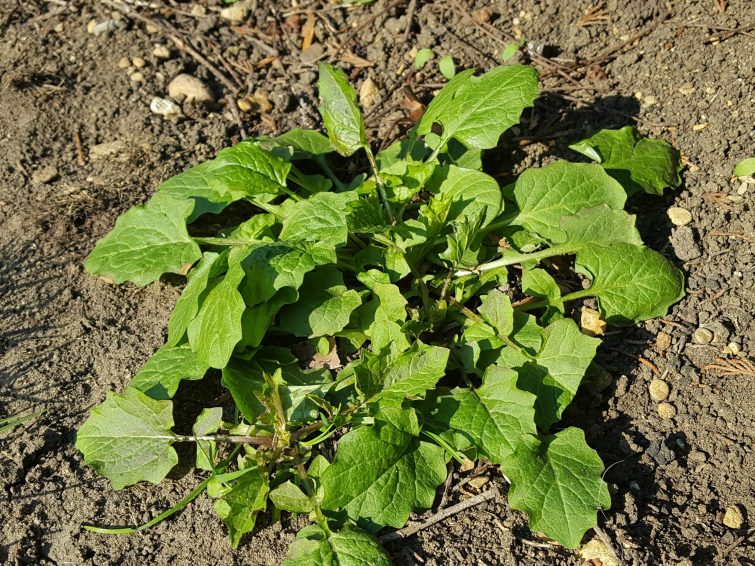
 

Foraging for silver birch (Betula pendula) Betulaceae family

UK guide to foraging for silver birch. Learn to identify, then discover its food, medicine and many other uses.

Foraging for silver birch has been a regular feature of human life for pretty much as long as we have walked the planet.

We know that both the neanderthals and ancient Homo sapiens hunter gatherers used birch tar to fasten arrow heads, no matter how they stumbled on acquiring the knowledge. Archeologists have confirmed this type of activity was occurring approximately 200,000 years ago.

Modern humans have been foraging for silver birch for 200,000 years!!!
Modern humans have been foraging for silver birch for ever!

It seems to me that ever since humans learnt to exploit its abundant resources, birches have played a major role in our colonising of the planet.

What’s in a name?

Considering this plant has been used for such a long time, it may not be a surprise to learn that the name ‘birch’ is a suitably ancient word.

The scientific part of the name Betula stems from a Gaullish word for the various birch plants – betua. This word is beleived to be derived from an older word betuyā; which comes from an ancient proto-Celtic language.

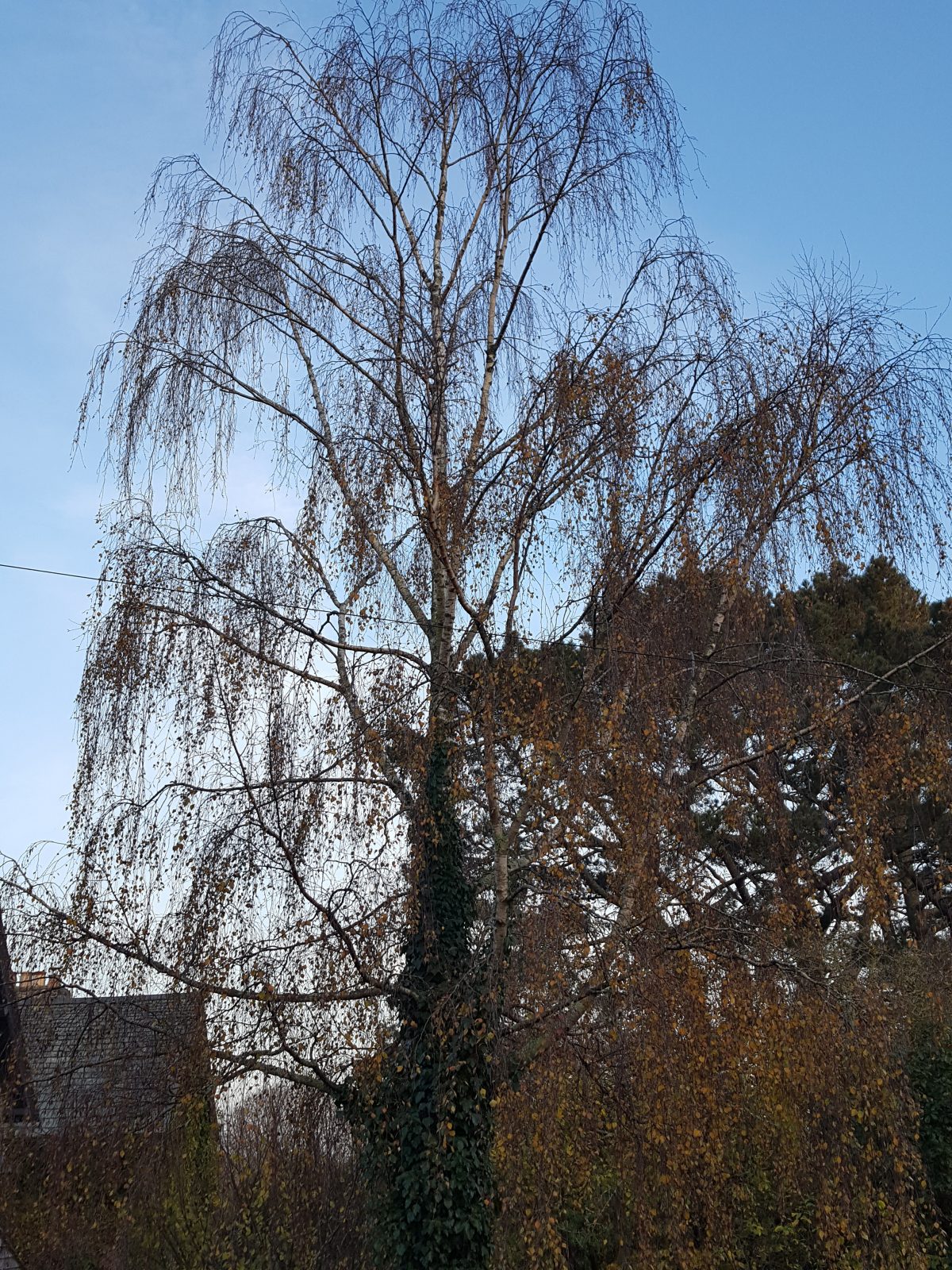
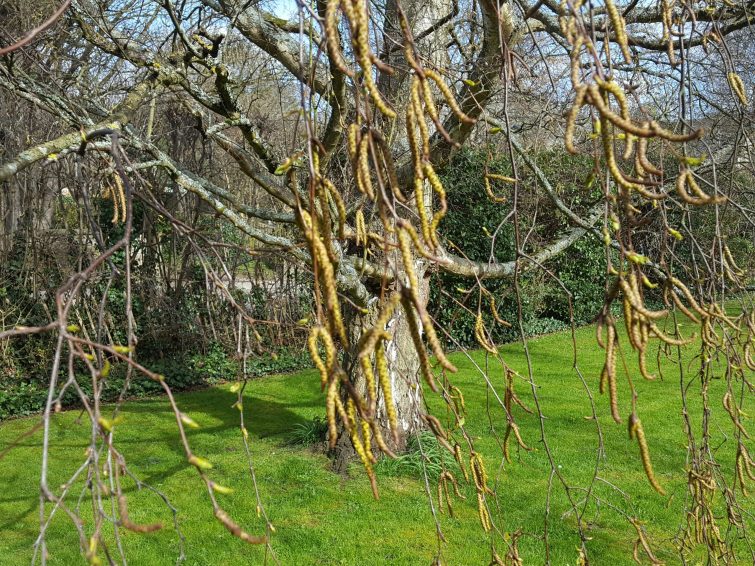
The drooping, pendulous branches are a tell-tale feature of silver birch.
The drooping, pendulous branches easily sway on the wind, giving a pleasing animated effect.

The specific part of the name pendula, usefully describes the instantly recognisable, drooping habit.

Its English common name ‘silver birch’, obviously tells us about the silver-white colour of the bark. Its worth noting that this bark colour is also found on a number of other species in its genus, such as the widely-planted white birch (Betula alba).

Botanical description

If you come across any unfamiliar words, try the foragers glossary of terms. It contains almost all that a budding gastronomical-botanist needs!

Silver birch is another really well-known plant. In fact, it could easily be argued that the plant hardly needs a description. Well, that’s true when you see it as a mature tree, and also until you study another common British native birch species, the downy birch (Betula pubescens).

Silver birch will commonly be found planted in shared gardens.
Silver birch and other birch species are widely planted in gardens.

As a younger sapling tree, silvee birch can be more difficult to identify. When we go out foraging for silver birch though, we are looking for mature trees. In terms of their uses though, the birches can all be used in similar ways, so I/D to the species is mostly academic. However, lets take a look at the I/D  features of this elegant tree, a plant that can grow to 25 – 30 metres in suitable settings.

Leaves: These tend to appear in April, but exactly when will depend on where you are foraging. The silver birch have triangular-ovate leaves. They sometimes have a flattened base and always come with a pointy tip. The small leaves are alternately spaced, and up to 6 cm long and 5 cm wide.

Distinctive shiny green, triangular-ovate leaves
The new leaf buds open in April, revealing triangular-ovate leaves.

The shiny green leaves contain essential oil glands on both sides. The leaf margins are minutely and doubly serrated. In autumn the leaves turn, to give a glorious yellow glow.

The leaf margins have a double serrated pattern
Silver birch leaves with raised veins below and double-serrated margins.

Petioles: Approximately 10 – 20 mm long. Generally around 2 mm wide and channeled.

Twigs: A shiny red-brown colour. The new twigs are round, smooth and reasonably straight, with numerous light brown lenticels.

The new twigs on silver birch are a red-brown colour, developing the silver colour as it gets older.
The young silver birch twigs are a red-brown colour to begin with.

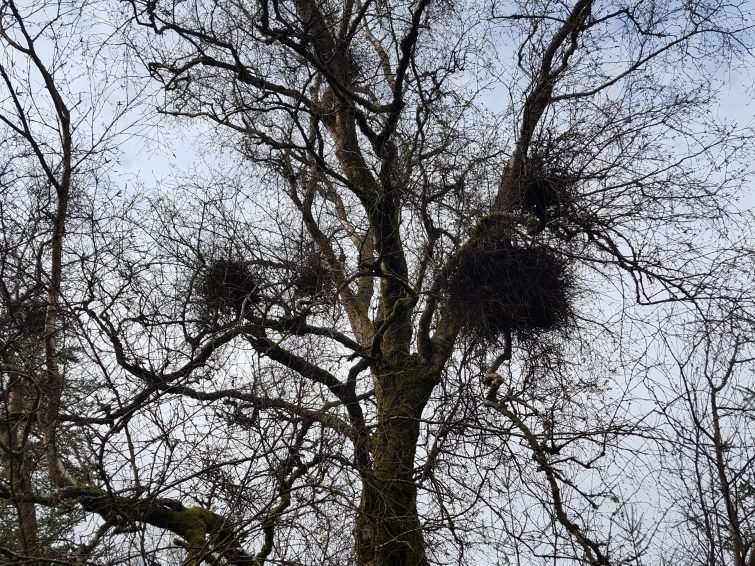
After staring up into birch canopies for a while, you will start to notice that certain specimens produce a mass of stems here and there. It looks a little like a rooks nest. What you are seeing is an infection commonly caused by a fungus Taphrina betulina. This microscopic parasite makes the plant produce a mass of densely-packed stems. These are known as ‘witches brooms’.

Witches brooms are created from a fungal infection causing the over-production of stems.
Witches brooms are caused by a microscopic fungal infection.

Although unsightly, this does not affect the plant too much. Owners of trees could prune them out during March.

Buds: The 6 mm long buds are also alternate. They typically have between 4 and 7 scales. These are green-brown, thin, and occasionally found with hairs.

Sulver birch has straight brown young twigs with alternate buds and numerous lenticels.
Young silver birch twigs are more or less straight, brown-red and with alternate buds.

Bark: The bark is initially brown but with age the plant soon develops its silver -white colour. Silver birch will often be found with peeling bark.

As the tree ages, the bark peels and changes in form at the base.

In contrast, when you come across a downy birch, you will find a smooth silver -white bark, almost all the way down the trunk. Downy birch will be covered here in due course. Numerous lenticels stud the bark of silver birch, aiding its survival in the coldest boreal forests of the arctic circle.


Trunk: Usually straight, with the lower branches discarded. The upper trunks are the classic silver-white colour. The lower trunk develops a rugged diamond pattern of grey-black angled fissures.

The diamond shaped grey black fissures of a city living silver birch.

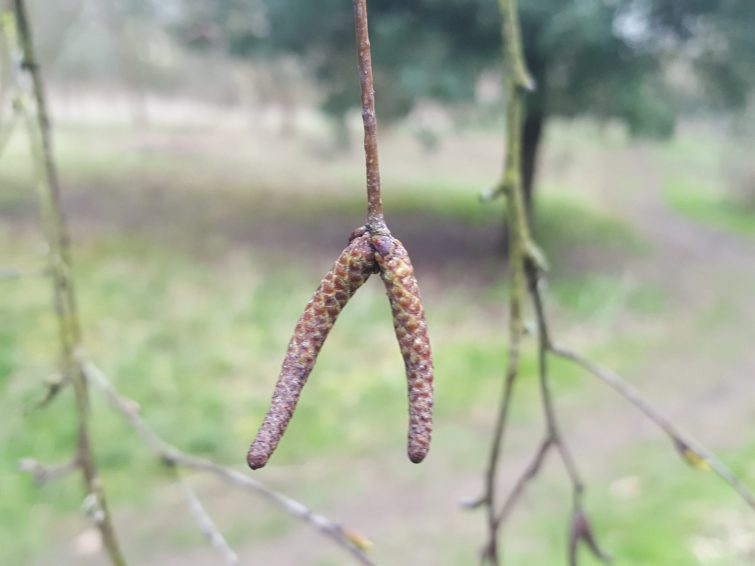
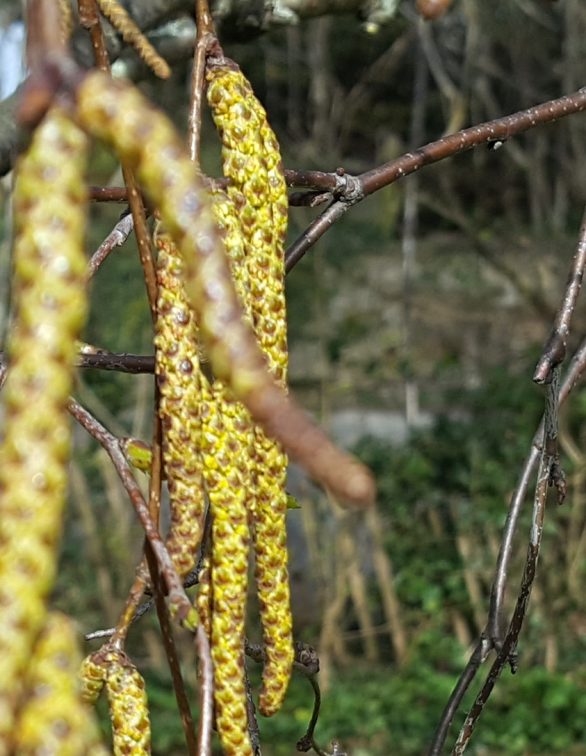
Flowers: The immature male catkins (25 – 30 mm) hang in large numbers all autumn and winter.

Immature silver birch ‘catkins’ contain hundreds of tiny male flowers.

They begin to stretch, colour up and open in late April. The female flowers appear with the new leaf shoots.

Elongated yellow-red birch catkins about to release pollen. Late March in Oxford.

Flowering season: April into May.

Silver birch catkins make a lovely display in the sunshine, against blue skies during April.
Silver birch catkins make a lovely display against blue skies during April.

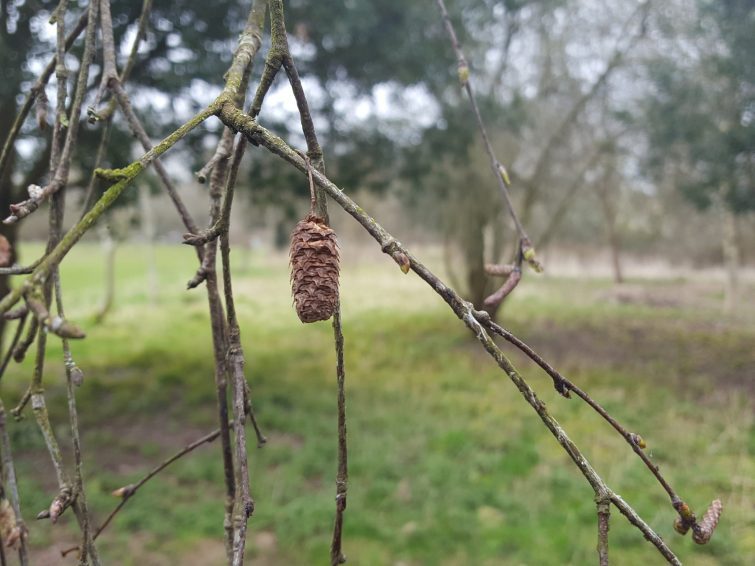
Fruits: The stubby cigar-shaped fruits ripen in the summer before it disperses thousands of seeds.

Cigar-shaped, female fruiting 'cones' persist on the tree into the next year.
Cigar-shaped, female fruiting ‘cones’ persist on the tree into the next year.

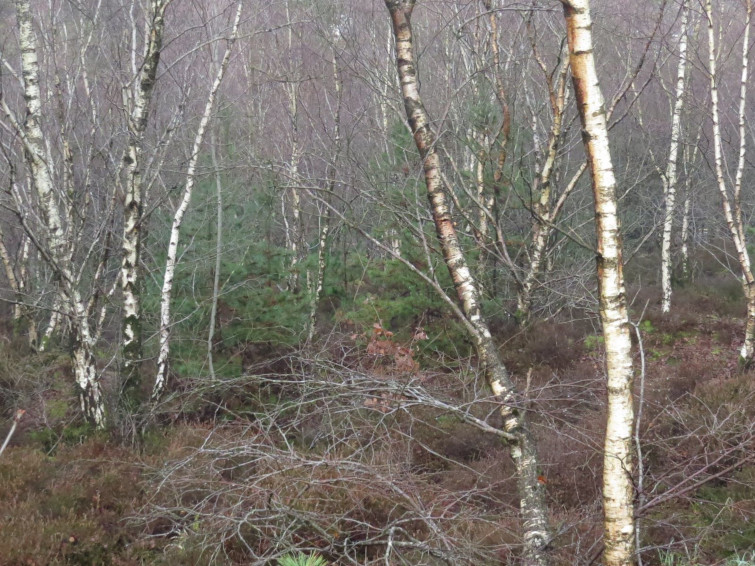
Habitats: Silver birch and its brother, downy birch, are the first trees to recolonise cleared land. These are both known as woodland pioneer species. After the last Ice age, Birch forests covered the land.

These days you can find silver birch all over the UK, both wild and planted. You see them on their own, or in large stands in newer woodlands. They are known to be a regular component of mixed woodland, especially on free-draining acidic soils. They are widely planted in parks and gardens, and as an amenity tree. This brilliant online resource has a map that shows the extent of its distribution.

Silver birch is a short lived pioneer plant, creating new woodland eco systems.
Silver birch is a pioneer plant and the creator of new woodlands.

Parts used: So much of this plant is useful, whether it’s the sap, distilled sap, new twigs with leaves, the inner bark, outer bark, or the various processed material able to be gleaned from these products.

Harvesting: Tapping sap: This can only be harvested before the leaves are open, and is best attempted during mid March.

Please don’t drill holes, but snip off a suitable-sized branch instead. It’s far less invasive to the plant and close to replicating the natural wind-shedding of lower, less productive branches. The fantastic Fergus the forager makes the compelling case here for not drilling holes. I strongly recommend you read this informative article.

Edible uses: The sap can be drunk as it is, or reduced into a dark coloured syrup. You will need approximately 90-100 litres of sap to make 1 litre of syrup! The sap can also be fermented into birch wine.

Leaves and new twigs with the leaves have been used in cooking to add a subtle minty flavour to peas or new potatoes.

Medicinal uses:  The leaves contain essential oils including volatile derivatives of methyl salacylates. In Arctic countries such as Finland, people lightly beat the leafy twigs onto the body befor a sauna. This bundle of birch twigs is known in Finnish as a ‘vihta‘ or in English as a birch whisk.

The use of the twigs is known to open up the pores of the skin, and to promote blood circulation. It helps relax muscles and joints after strenuous physical activity.

The sap contains a wide range of health-boosting minerals and trace elements. It is now commercially produced and popular across the globe.

Other notes: Bushcrafters will regularly go foraging for silver birch because they are likely to know of its many uses. Let’s just leave it with Ray Mears to show you one of them, the birch bark canoe.

And a quick reminder that you can use many of the Betula species in the same ways. As ever, this does not disregard the personal need to test your tolerance on any new wild food plant you put in your body.

While you are here, beginner foragers may want to get to know Britains poisonous plants. It’s always a good time to boost your  plant I/D confidence.

And if you want to take your foraging to the next level, then you will want to read how to identify plants in a day!

This simple to learn, fast-track method of identifying plants can quickly help your plant I/D skills.

More plant species coming soon. Happy foraging!
 

Foraging the flowering currant (Ribes sanguineum) Grossulariaceae family

UK foraging guide to identifying the aromatic flowering currant. Discover its food, medicine and other uses.

I can remember the day around 12 years ago that I first positively identified and tasted the drooping red-coloured flowers of the flowering currant. As I handled the leaves and flowers, its beautiful aroma engulfed me, and I immediately christened it the ‘thyme n sage’ currant. This is now a plant that is always on my early spring foraging radar.

The flowering currant was first brought to Britain during the 1820’s and subsequently recorded in the wild here by 1916.

The flowering currant originates in North America and was brought here in 1826
The flowering currant was first brought to Britain from North America in 1826.

What’s in a name?

The first part of the scientific  name Ribes, is beleived to be an old Arabic word for rhubarb – ‘rebās’. The Romans adopted the name and changed it to the word we know today.

It is thought that the sharp and sour taste of the berries led the ancient Arabs to bestow the name onto this group of woody shrubs.

The specific part of the name – sanguineum comes from the old Latin word ‘sanguis’, meaning blood. This obviously refers to the flower colour.

Botanical description

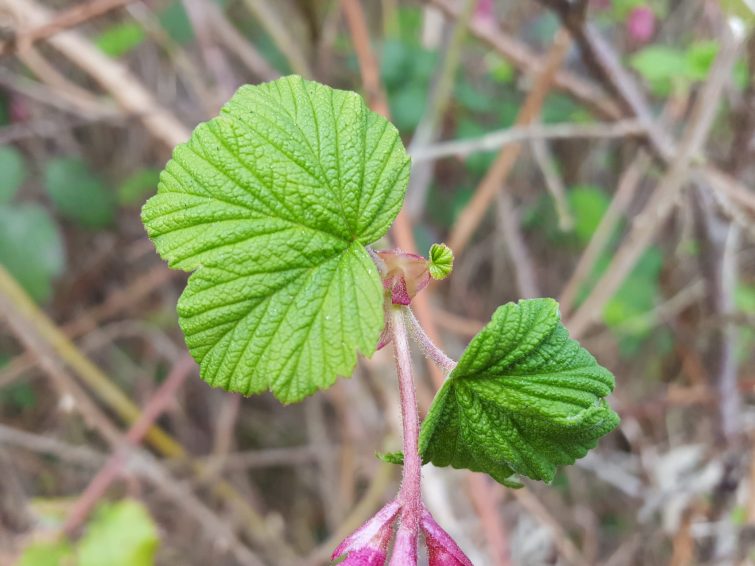
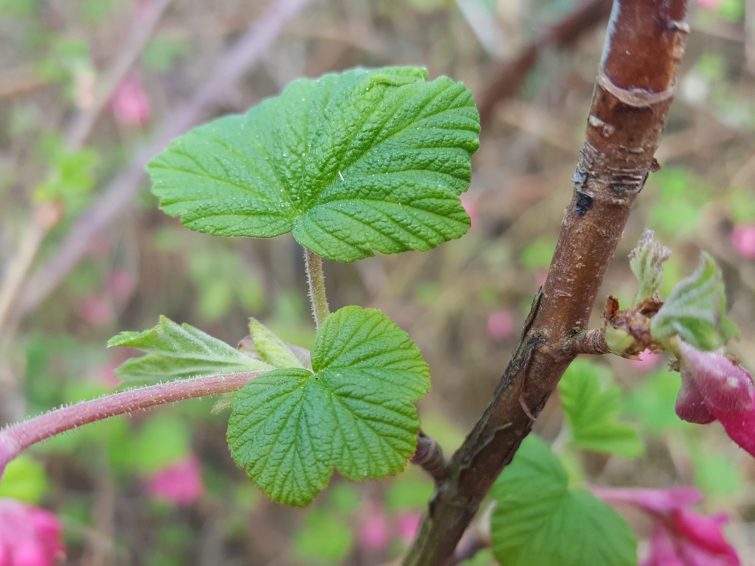
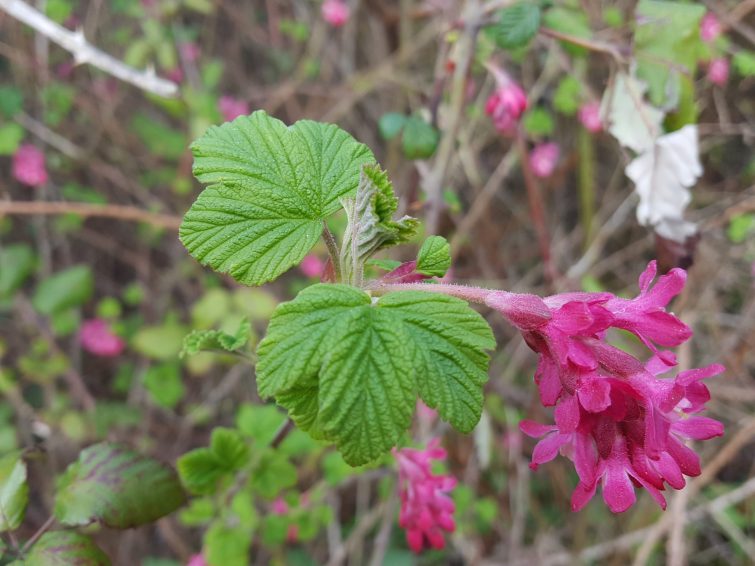
Leaves: The emerging leaves are initially folded. They soon become palmately-lobed. The margins are serrated and the leaves are usually wider than long. Downy hairs are present on the undersides. The mature leaves are a dull green colour.

Like many of its relatives, the flowering currant has palmately-lobed leaves.
Flowering currant produces alternately spaced, palmately-lobed leaves.

The leaves are generally around 4 – 10 cm wide and are alternately spaced on the stem. Typically 3 – 5 lobes per leaf.

Both the leaves and flowers are full of fruity aromatics
Both the leaves and flowers of the flowering currant are full of fruity aromatics.

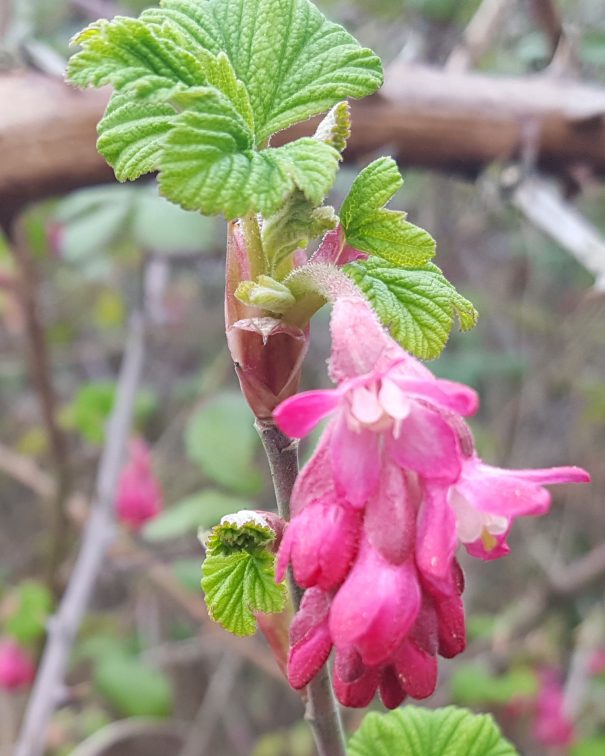
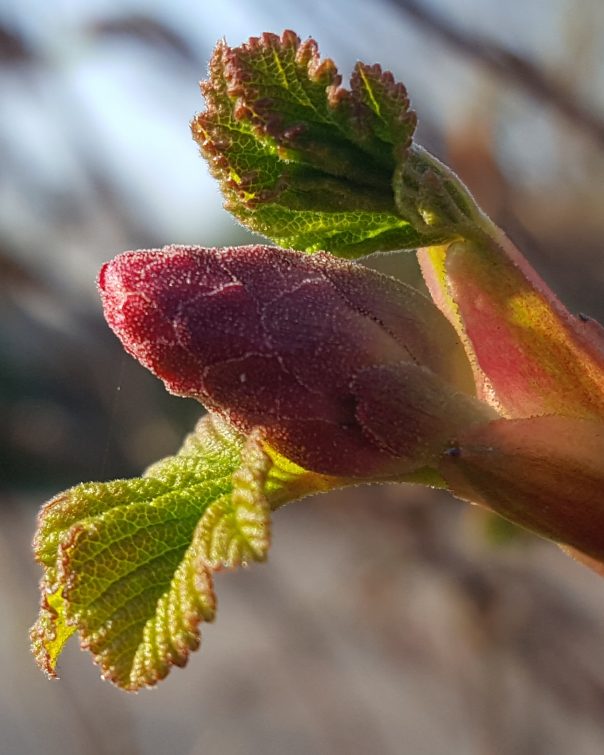
On hot days you can smell the fruity aromatics, especially when you crush a leaf. The leaf buds open with the flower buds.

The flowering currant is noticeable for it opening its flowers and leaves at the same time
The flowering currant opens its, leaves and flowers at the same time.

Petioles: These are generally 1 – 3 cm long.

Roots: An initial tap root develops numerous lateral branches, and can send up sucker stems.

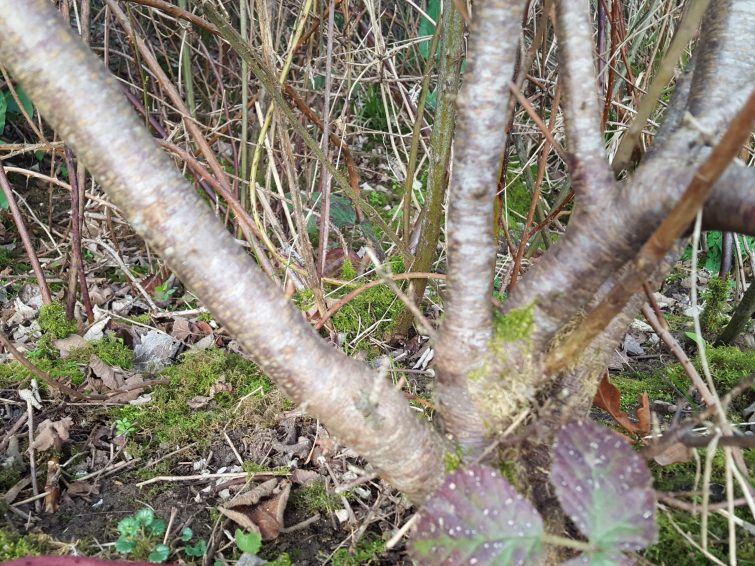
Mature flowering currant have shiny brown bark with small, thin bands of lenticels
The mature bark on old flowering currant stems is shiny with thin bands of lenticels.

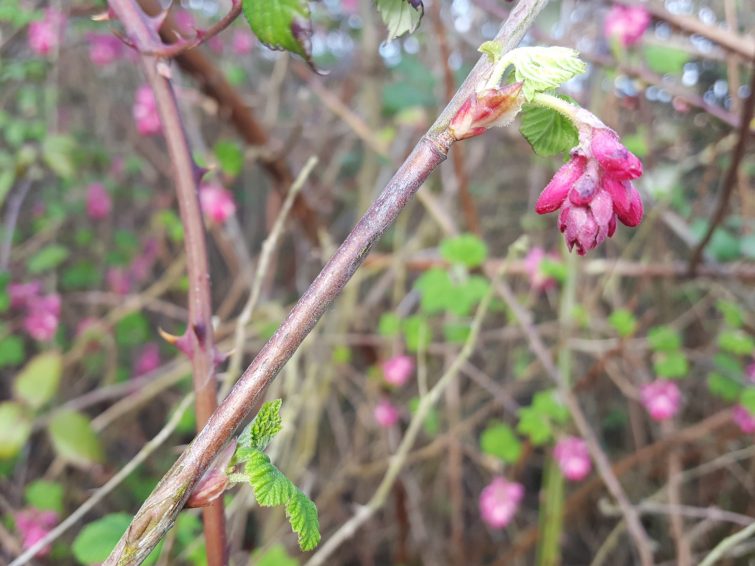
Stems: Initially a reddish brown colour, brown, then becoming a dark purple-brown. The stems have a few light brown lenticels. This plant can easily reach 2 metres high and can spread by the same distance.

New flowering currant stems are a red brown colour
The new stems of flowering currant are a red-brown colour.

Buds: These are quite thin, not clustered, spindle-shaped and scaly. Typically around 15 mm long.

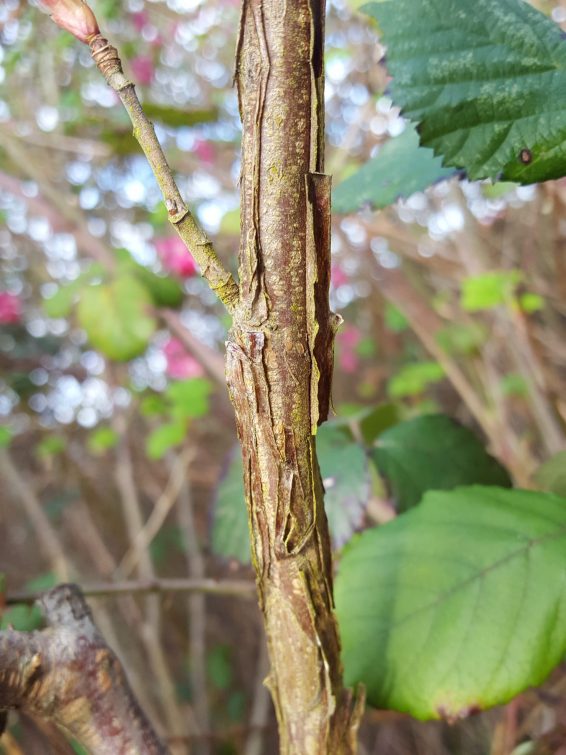
Bark: The older stems and branches show the flaky, peeling outer-skin weathering away. Mature specimens have brown bark with increasing bands of lenticels.

Before completely maturing, the stem bark begins to flake and peel away.
Before the stems fully mature, the outer skin begins to flake and peel away.

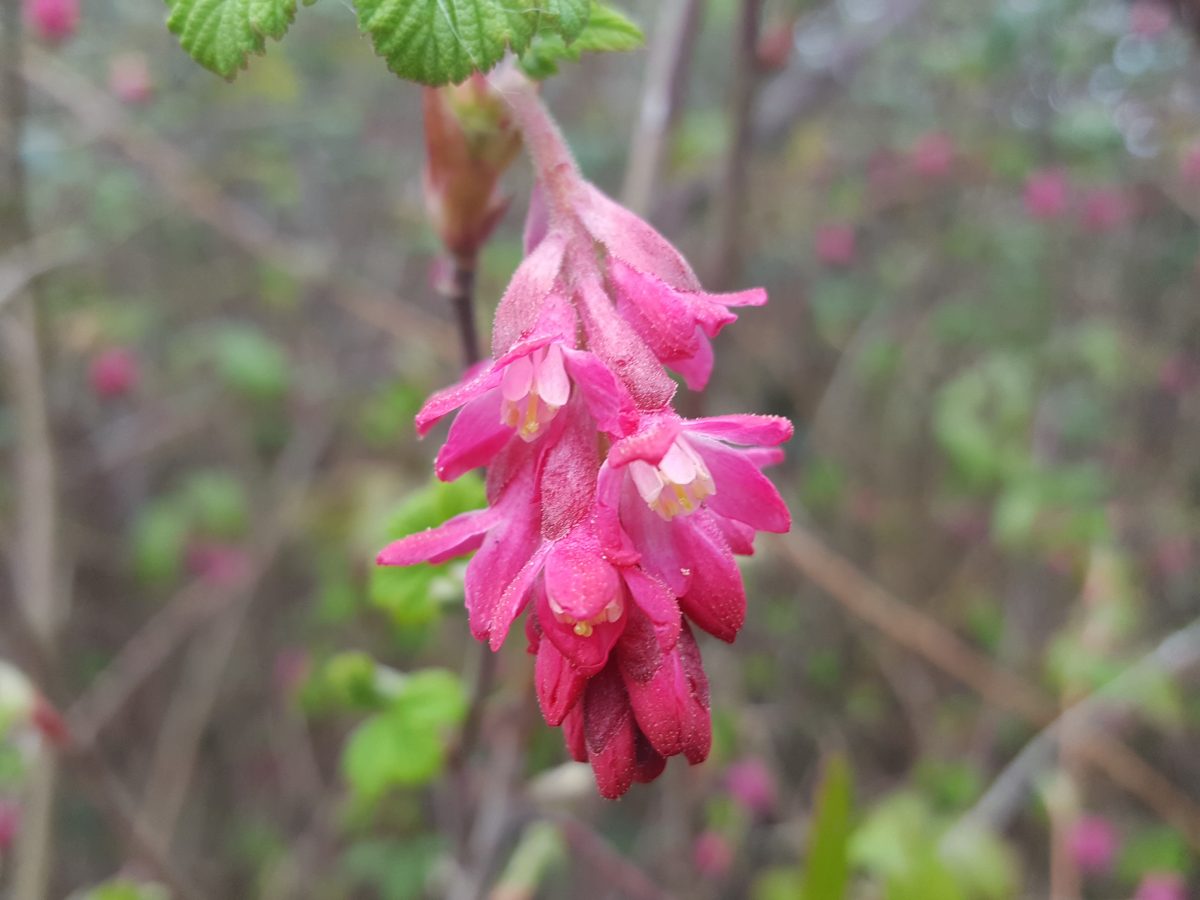
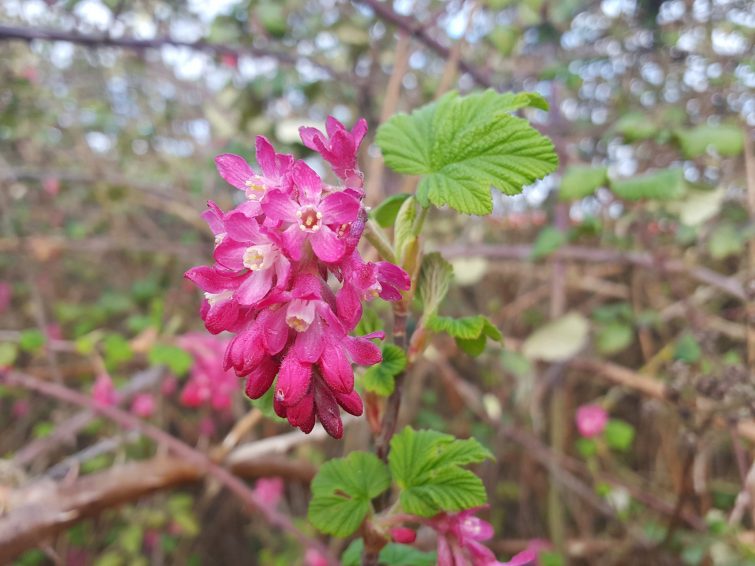
Flowers: Numerous drooping racemes with clusters of pink-red flowers. Each flower has 5  petals per flower. There are typically around 18 – 24 flowers per raceme.

Flowering season: From around the spring equinox, but for only a few weeks. Flowering is mostly done and dusted by mid to late April.

The flowering currant begins to bloom during mid March and will be done by mid to late April in Oxfordshire
The flowering currant in bloom during mid March in Oxfordshire.

Fruits: Round, dark purple to black-coloured fruits with hairs, similar in looks to small gooseberries. Approximately 10 – 12 mm across. Birds love them. I don’t think they are as tasty as blackcurrants or gooeseberries.

Habitats: Widely planted in parks and gardens, and happy enough here to escape and become naturalised in woodlands, hedgerows and wasteground. It has a scattered UK distribution as this BSBI map shows.

Parts used: Leaves, flowers, fruits.

The leaves and flowers of the flowering currant can be used in making cordials, sorbets and the like.
The leaves and flowers can be harvested in the spring for their scent.

Harvesting: Pinch off leaves, discarding the petiole. Pinch off or cut off the flowering clusters on the stalk. The fruits are juicy and will come away in your fingers with little effort when ripe. Lots more harvesting tips and tricks can be found in my short harvesting guide.

Edible uses: Leaves and flowers can be infused into water and made into sugar syrup or cordials. You can also flavour vinegars with the flowers or just use them in salads or as an impressive garnish. Fruits can be used in jam making or added to the traditional German Christmas treat, rumtopf.

Other notes: As urban foragers may meet this plant mostly in parks and gardens, it is worth remembering that you need to get to know about any pesticide use that the local maintenance crew might use, before you go picking. Safety first!

More plants are coming soon. Happy foraging!


Foraging Edible Magnolia Flowers – The Worlds Oldest!

Foraging guide to identifying and using edible Magnolia flowers

When you go foraging for edible Magnolia flowers, you will hold in your hand something that has been on this planet for 100 million years! This is the world’s oldest flowering plant.

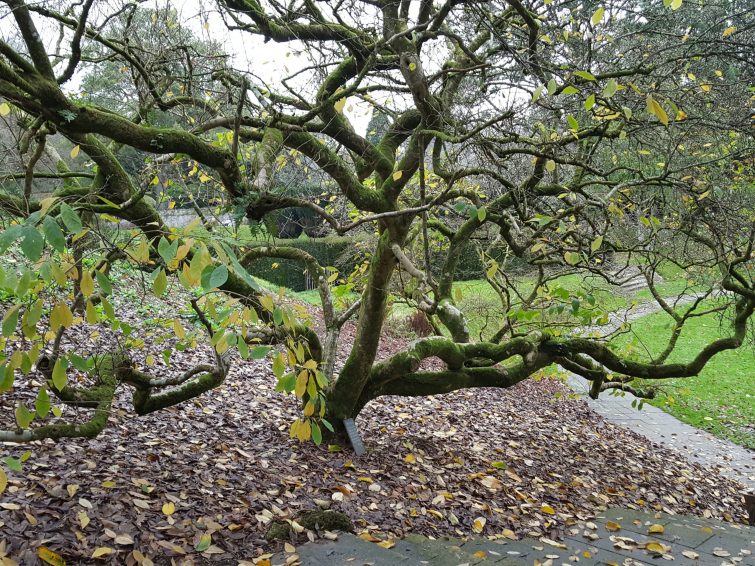
This sprawling old Magnolia in Dartington Gardens, South Devon produces lots of edible flowers in spring
This sprawling old Magnolia in Dartington Gardens, in Devon produces lots of edible flowers in spring.

The various Magnolia species are special plants with no doubt. Although not in any way a wild or naturalised plant here, they are plentiful enough and interesting enough for foragers.

Their gorgeous, showy flowers evolved before bees appeared on the planet! Fossil records have proved that these trees existed in different sub-tropical regions approximately 100 million years ago, and were initially pollinated by beetles.

Given how much energy and nutrients that these large flowers need, it is of no surprise that our more recently evolved large trees have dramatically reduced the size, while increasing the numbers of flowers (see any catkin). Rather than rely on insects, many trees now use wind as their chief pollination method.

There are approximately 210 species of deciduous and evergreen shrubs and trees in the genus. Magnolia trees are known to be native in the Americas and sub-tropical Asia.

Edible use of Magnolia flowers has long occured in their natural range. Research from ethnobotanical records provides us with patchy knowledge regarding the total numbers of species used. In summary, only a small number of the Magnolia flowers have documented use as food.

You can only really find edible Magnolia flowers in parks and gardens
Magnolia flowers are only really found in parks and gardens.

The species listed here are reported to be edible from a range of ethnobotanical sources, so for all you owners of Magnolia plants, you will need to know the species before experimenting with them.

List of Edible Magnolia flowers

I’m not a garden owner or a Magnolia connessieur, but I am a plant hunter, researcher and avid photographer. So this list is not the end of the story. Photos of the species, when positively identified, will appear here in due course.


Magnolia coco (evergreen)

First grown in the UK in the 1780’s. This small shrub / tree grows to about 3 – 5 metres high. Flowers are found at the end of branches and not from the leaf axils.


Magnolia denudata

This deciduous shrub or small tree has fragrant, mid-size flowers approximately 8 cm long. Also known as the lily tree or Yulan Magnolia, this species can grow to a height of 9 or 10 metres. Regularly referred to as the prettiest of all the Magnolia species.


Magnolia grandiflora (evergreen)

Very large flowerbuds and flowers. This is a plant that will be seen trained up walls.


Magnolia hypoleuca (syn M ovata)

A deciduous tree that can reach more than 25 metres. Commonly called the whitebark Magnolia, this plant is hardy enough to be grown in most parts of the UK.


Magnolia kobus

A small and slender deciduous tree that grows to around 10 metres. Does not produce flowers until it reaches 12 – 15 years old.


Magnolia mexicana

This is a large evergreen tree that can reach between 25 – 30 metres high. The flowers have been used extensively as medicine for heart conditions, in thier native range. It is said the flowers mimic the actions of compounds from the well-known heart medicine foxglove (Digitalis purpurea).


Magnolia pterocarpa (evergreen)

A tall tree that can reach 20 – 25 metres high. The flowers generally open in April and are typically 12.5 – 15 cm across.


Magnolia x soulangeana

This hybrid Magnolia is probably the one you will find most often here in the UK.

What’s in a name?

Named after the French Botanist Pierre Magnol. I wonder if he ever ate the edible Flowers?
Did Pierre Magnol know these flowers are edible?

Magnolia is one of a number of plants that has the same scientific name as its commonly used English name.

For me, the etymology of rhe name is disappointing because the name was simply given in honour of the French botanist and physician Pierre Magnol (1638 – 1715). Surely he tried eating them?

Botanical description

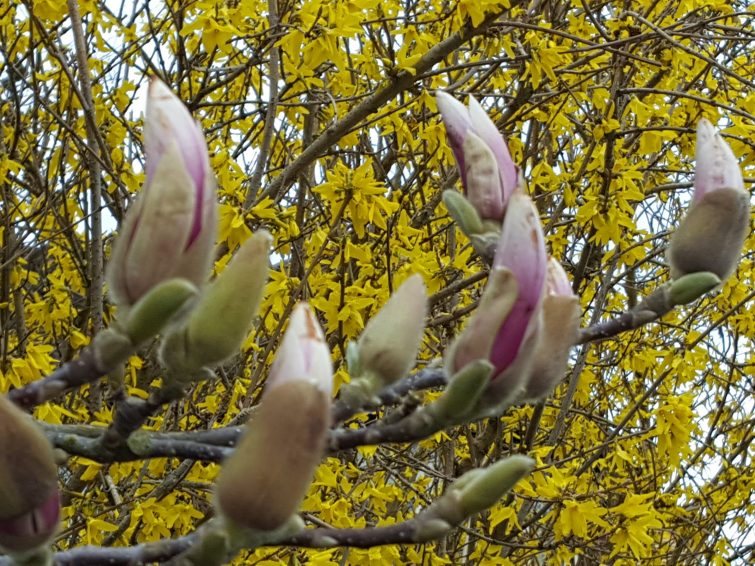
Unlike many of our native trees, Magnolia are easiest to identify from their flower buds.
Unlike many trees, Magnolia are easiest to identify from their winter display of flower buds.

The deciduous Magnolia trees happen to be more distinctive and therefore easier to identify when they’re in bud and flower. The shape, size and smell are key. From my experience of foraging in Britain, nothing else looks like them. Should you need it though, my foragers glossary of terms will help.

Leaves: Most species have elliptical to oval-shaped leaves. They are usually a glossy green and often with a waxy cuticle layer and entire margins.

Petioles: Anywhere from 1 – 5 cm dependent on species.

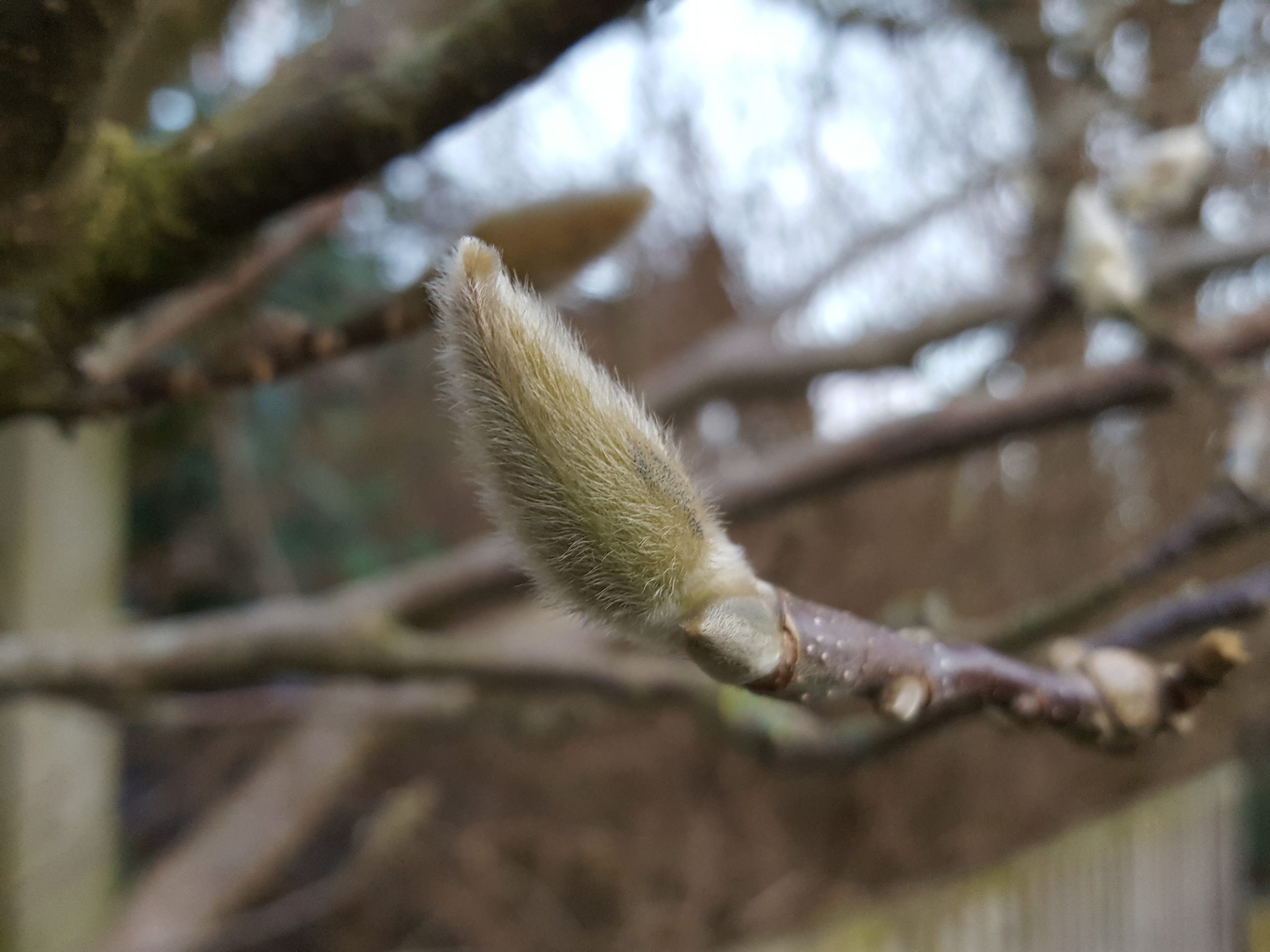
Twigs: Young new twigs are red-brown or green coloured depending if it’s deciduous or evergreen. The twigs can be initially downy hairy when very young.

Young Magnlia twigs can often be covered with pubescent hairs. These soon go as the branch matures.
Young Magnolia twigs can often be covered with downy, pubescent hairs.

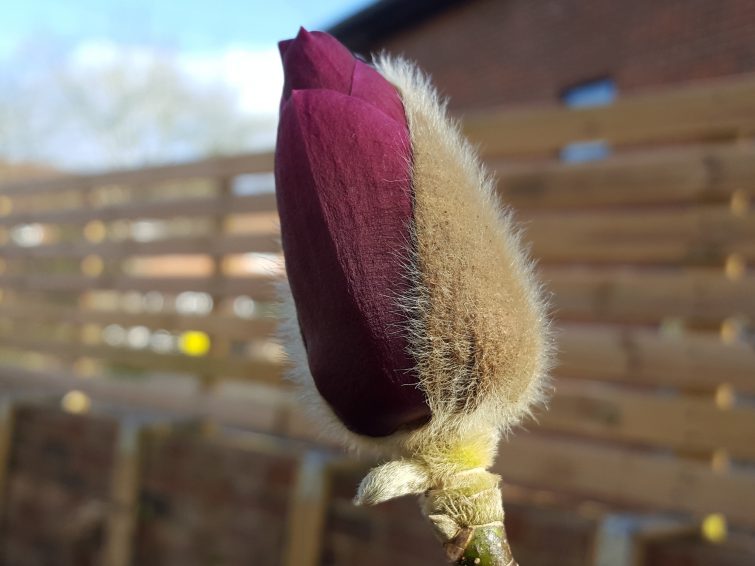
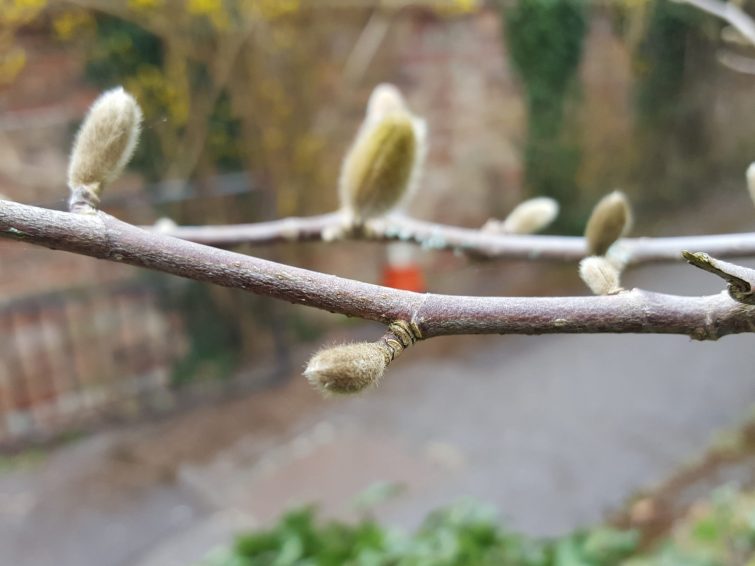
Buds: Large, yellow-brown, and more or less oblong to oval-shaped. They have a slightly curved and pointy tip and are covered in soft downy hairs. Some species have small buds, while others including Magnolia grandiflora, have large buds, around 5 -8 cm long.

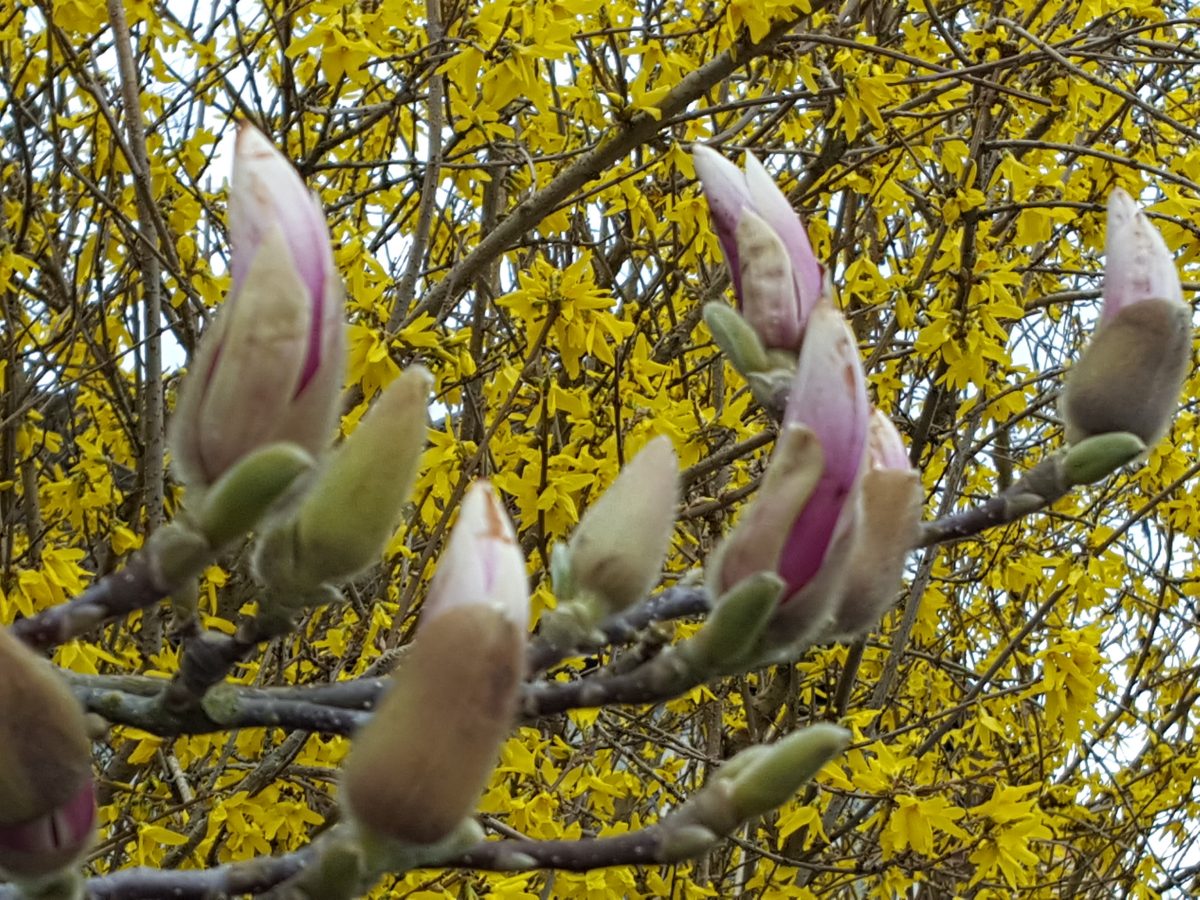
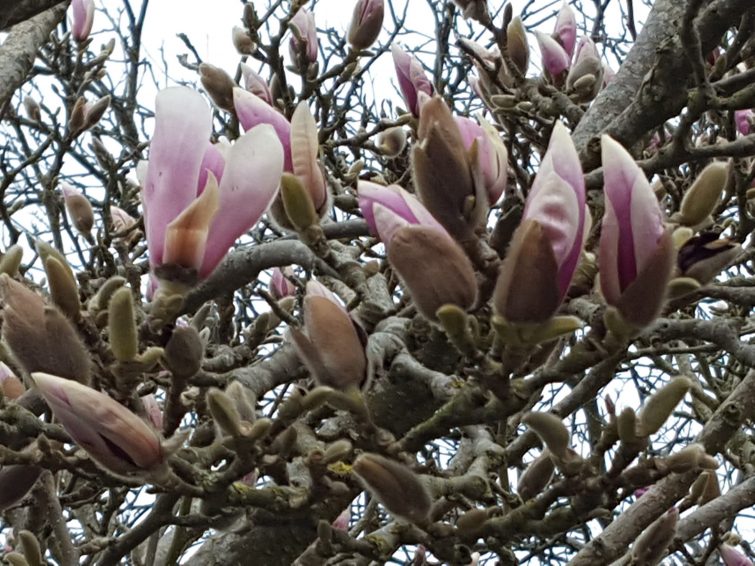
The yellow-brown flowerbuds burst open in late March with fragrant edible flowers.
The yellow-brown flowerbuds begin to burst open with fragrant edible flowers.

Branches and trunk: The younger branches have a pinkish tinge to their smooth grey-green bark.  Numerous light brown lenticels can be seen all over the bark.

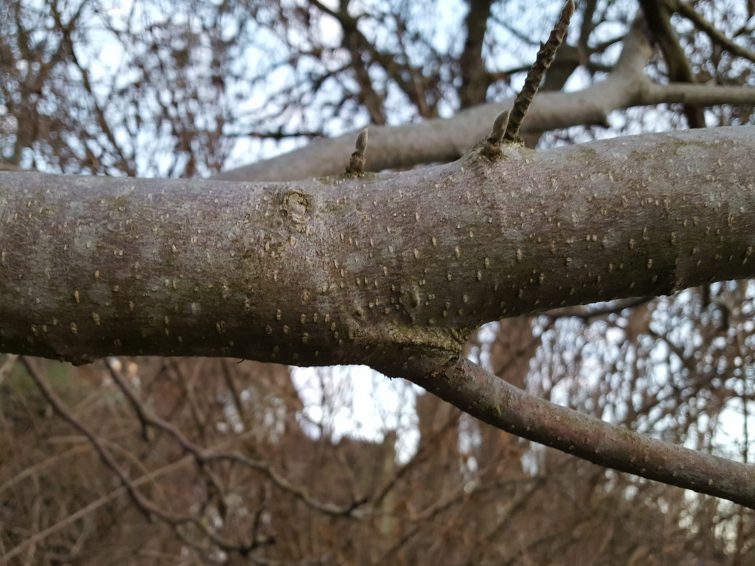
Some deciduous Magnolia species show white spotting on the grey bark, with their tiny bands of brown lenticels.
Some Magnolia species show white spotting with their tiny bands of brown lenticels.

Mature bark: Mostly grey and smooth with occasional whiteish spotting. Some species develop a warty appearance.

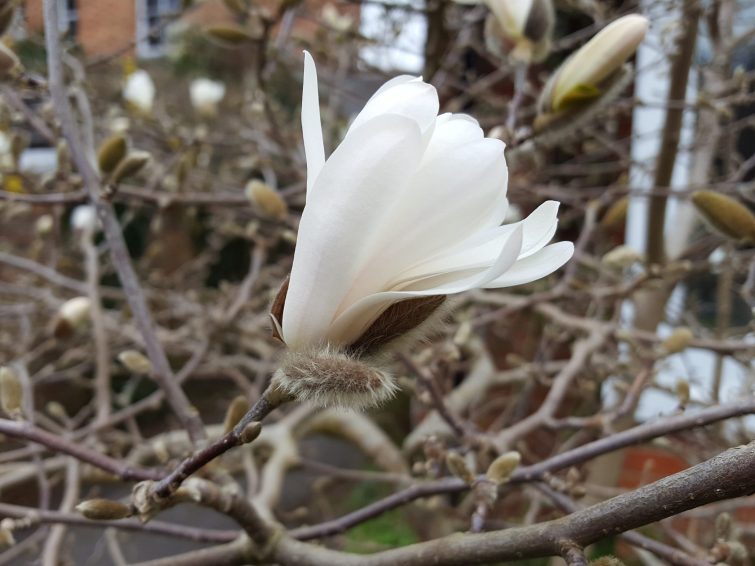
Flowers: Huge, showy flowers, typically with 9 large pink-white coloured tepals.

Most Magnolia species come into bloom around spring equinox and flower right through April.
Most Magnolia species begin to bloom around spring equinox.

Flowering season: From around the spring equinox in March, through April and into May. The various species of Magnolia all come into flower with stunning effect.

Fruits: Conical, scaly and often described as like a pine-cone.

Habitats: This plant is only found in the British Isles in parks and gardens and as amenity plantings.

Parts used: Young flower buds. Flowers.

Harvesting: Snip off the flower buds just below the base. For open flowers, the kindest thing to so is to remove individual ‘petals’ from a number of different flowers.

Edible uses: The buds can be pickled as they are. Or made into sugar syrups, cordials and steeped in honey. They can be dried in a dehydrator and powdered. Try them finely chopped and sprinkled over salads. Flower petals can also be pickled and again made into cordials or vinegars.

Other notes: A quick reminder to always test your tolerance with any new wild food plant. Toxicity was previously discussed in this article on Britain’s poisonous plants. Beginner foragers can also add to or hone skills here.

More plants coming soon! Happy Foraging!
Foraging ivy-leaved toadflax (Cymbalaria muralis) Plantaginaceae family

Foraging guide to ivy-leaved toadflax. Learn to identify, then discover its food and medicinal uses.

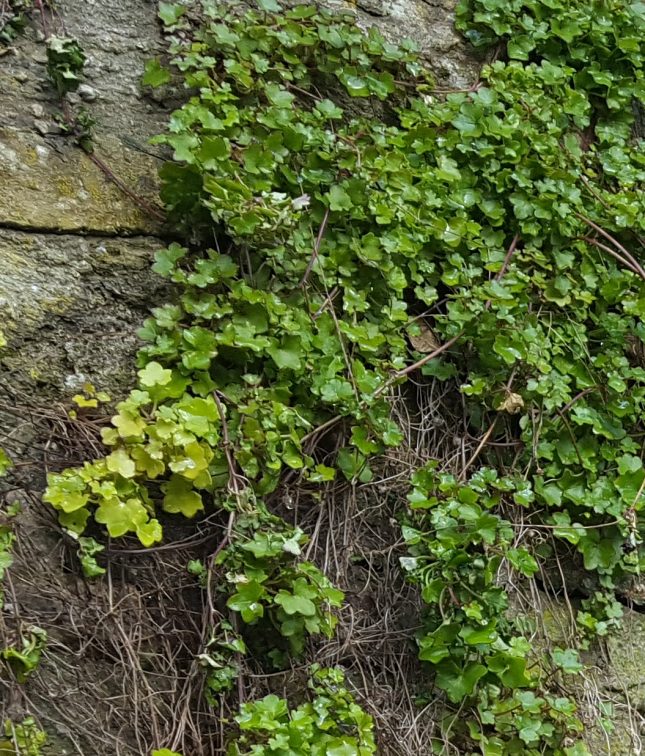
Ivy-leaved toadflax is another wild edible plant that’s super-easy to identify. Only a handful of other plants will ever be seen growing where it loves to grow.

It was brought to Britain at the turn of the 16th century, and then reportedly escaped the walls of Oxford botanical gardens not long after.

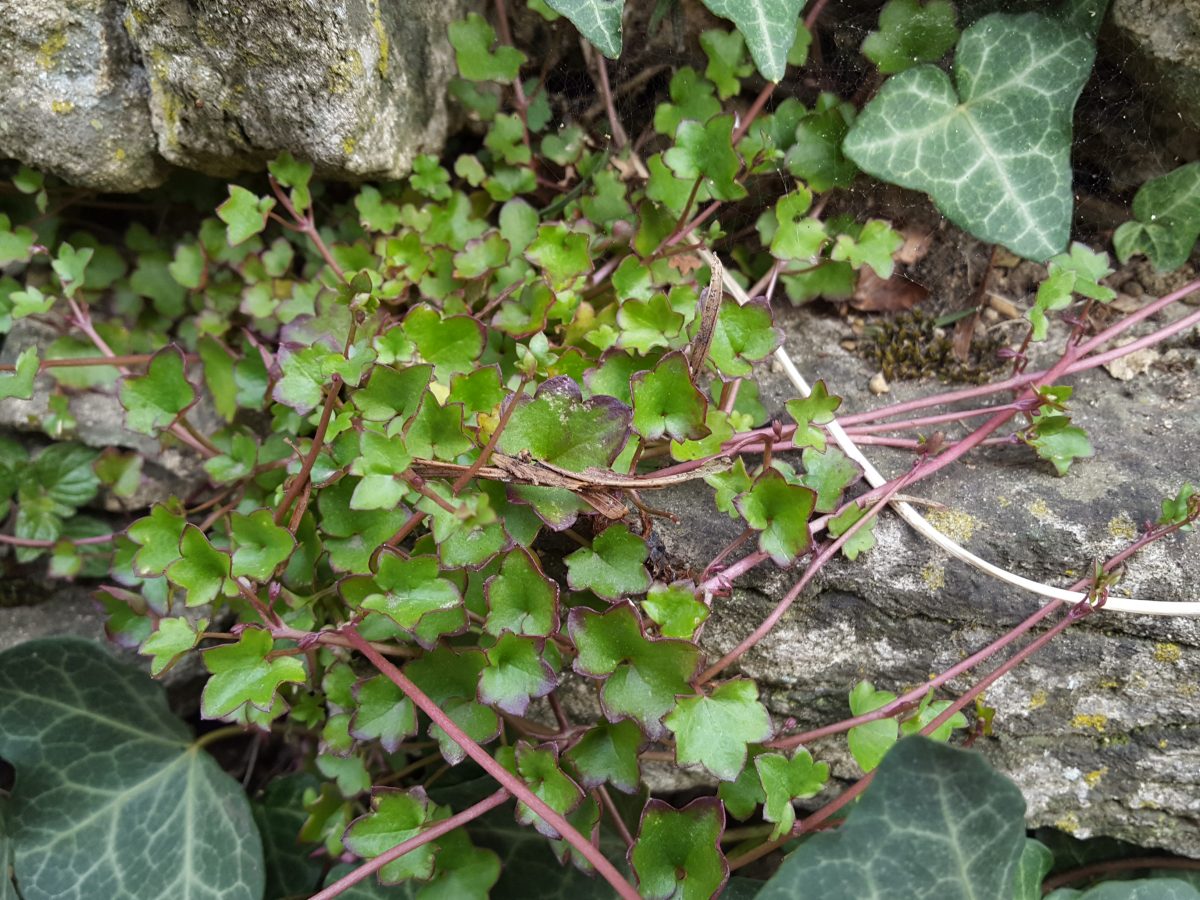
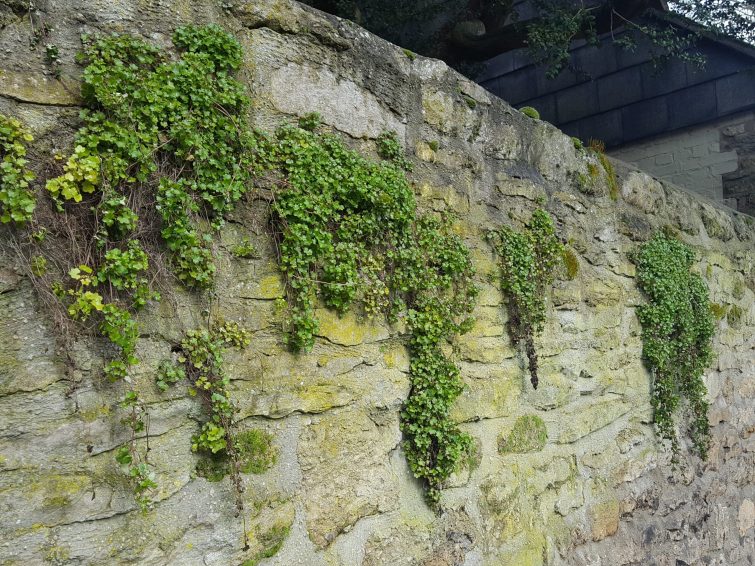
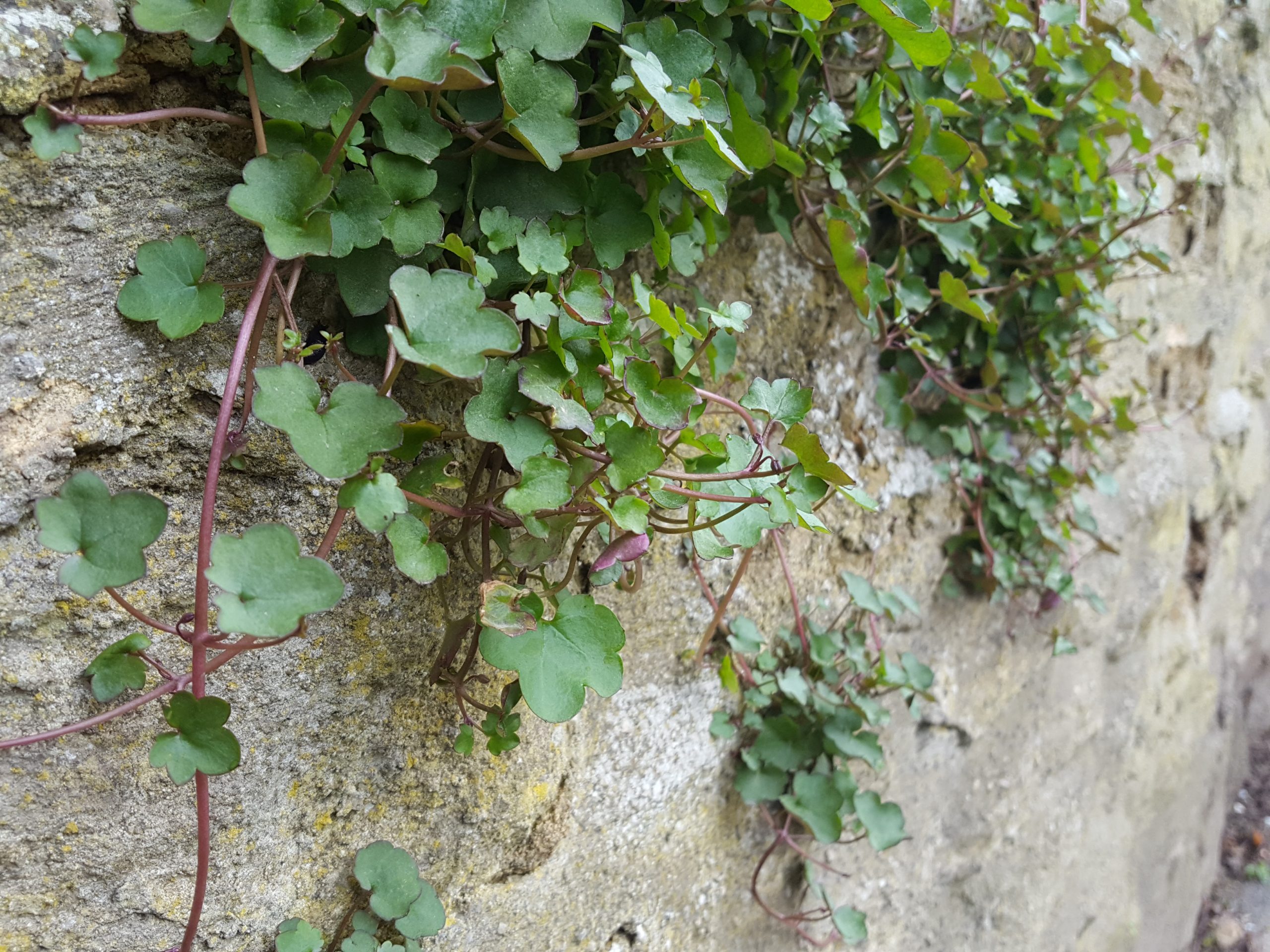
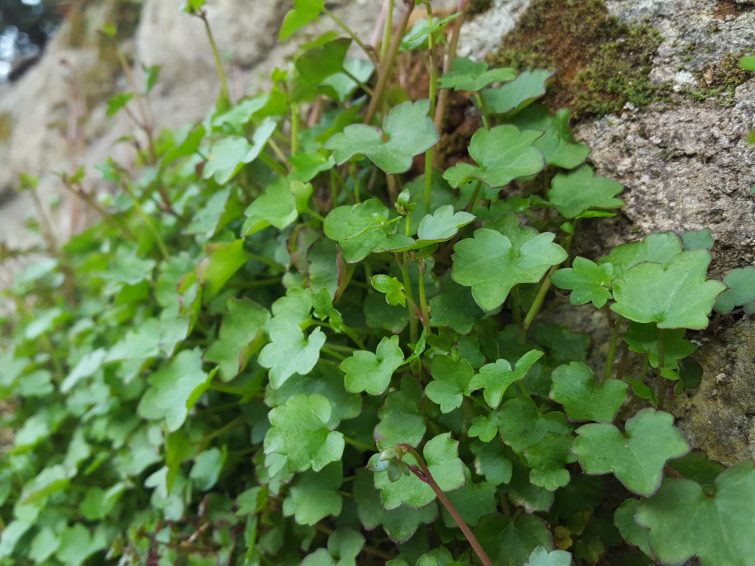
Ivy-leaved toadflax thriving on a wall in Oxford, which give rise to another common name - Oxford ivy
Ivy-leaved toadflax, more than happy on a wall near the botanic garden in Oxford.

The plant has found a good life here, prefering to grow where most species simply can’t survive. I’m pretty sure you know this herb already, becuase it decorates so many of our old stone and brick walls up and down the land.

What’s in a name?

The first part of its common English name tells us to expect to see ivy-like, lobed foliage. The plant displays a very similar leaf shape and growth habit, if in minature, to our common ivy (Hedera helix).

It's easy to see why ivy leVed toadflax got its name as it looks and grows like its namesake
The diminutive plant is like a minature of its namesake ivy, and they often live side by side.

The second part – toadflax, points to the toadflax-style, lobed flowers. Until recently, ivy-leaved toadflax shared the same family as other toadflax and snapdragon species, within the foxglove (Scrophulariaceae) family. DNA technologies have now allowed scientists to understand the relationships between species more closely, and not to just rely on flower structures and similarities of form.

The Greeks thought the shape of the leaf resembled a musical cymbal and named it Kymbalon
The shape of the leaf apparantly led the ancient Greeks to name the plant after a cymbal.

The generic part of the scientific name Cymbalaria, comes from the old Greek word ‘kymbalon’  – meaning a musical cymbal, in reference to the relatively flat and roundish shape of the leaves.

It certainly lives like it says it does. Cymbalaria muralis means cymbals decorating walls
Cymbalaria muralis tells us where it lives, decorating walls up and down Britain.

The specific epithet muralis literally translates from the Latin as ‘to decorate walls’. Doesn’t it just!

Other common names include Oxford weed, Oxford ivy, Kenilworth ivy, wandering sailer, and mother of thousands. I particularly love the evocative French common name of ‘Ruine de Rome‘.

Botanical description to identify ivy-leaved toadflax

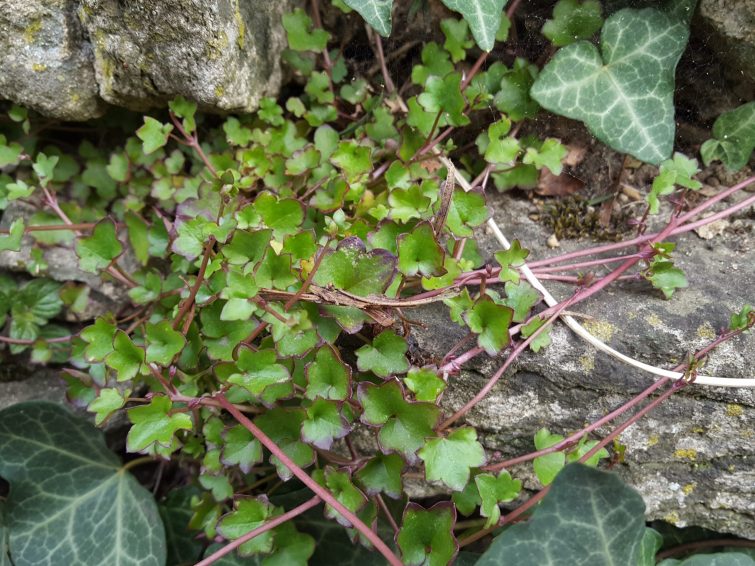
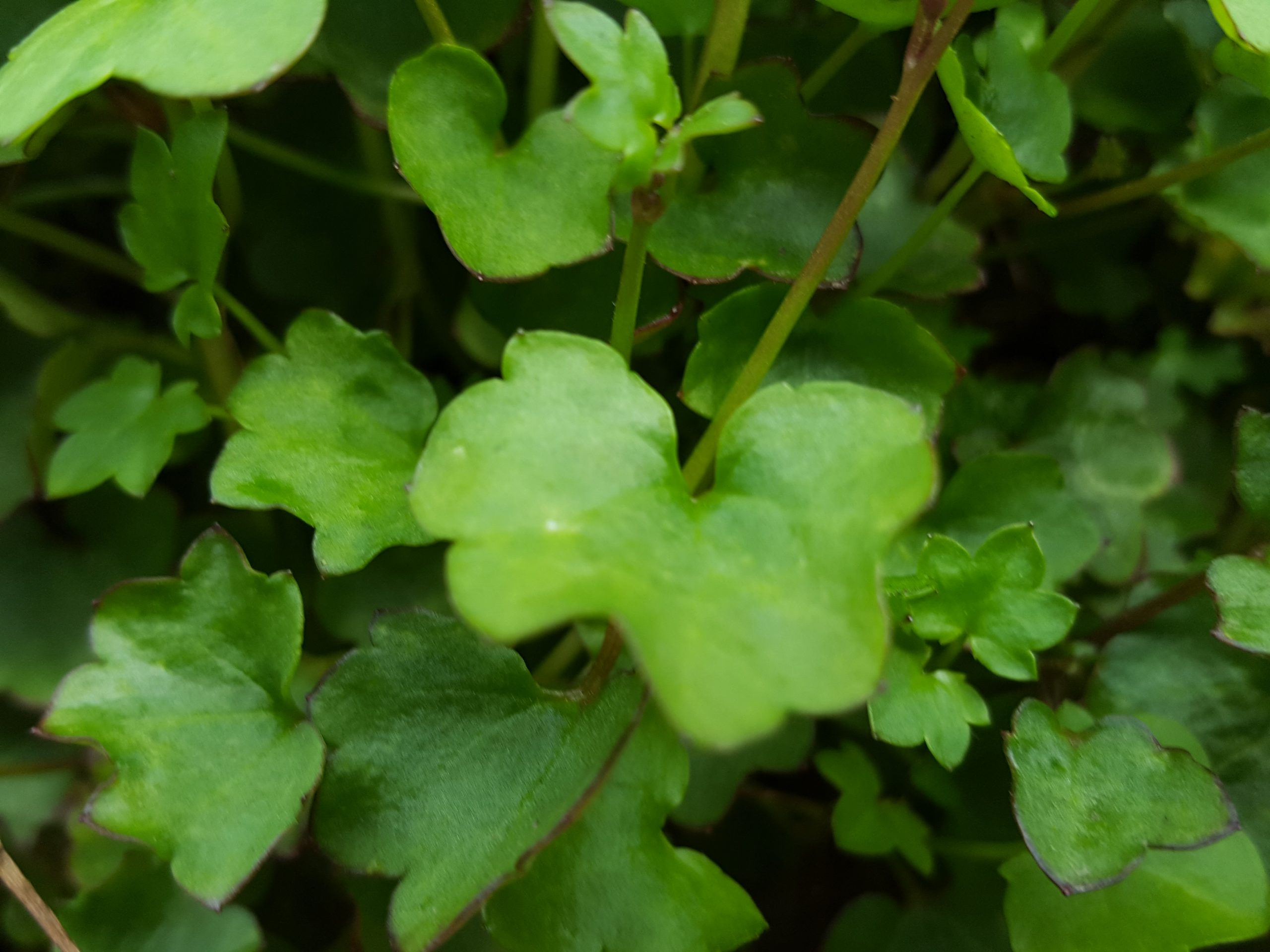
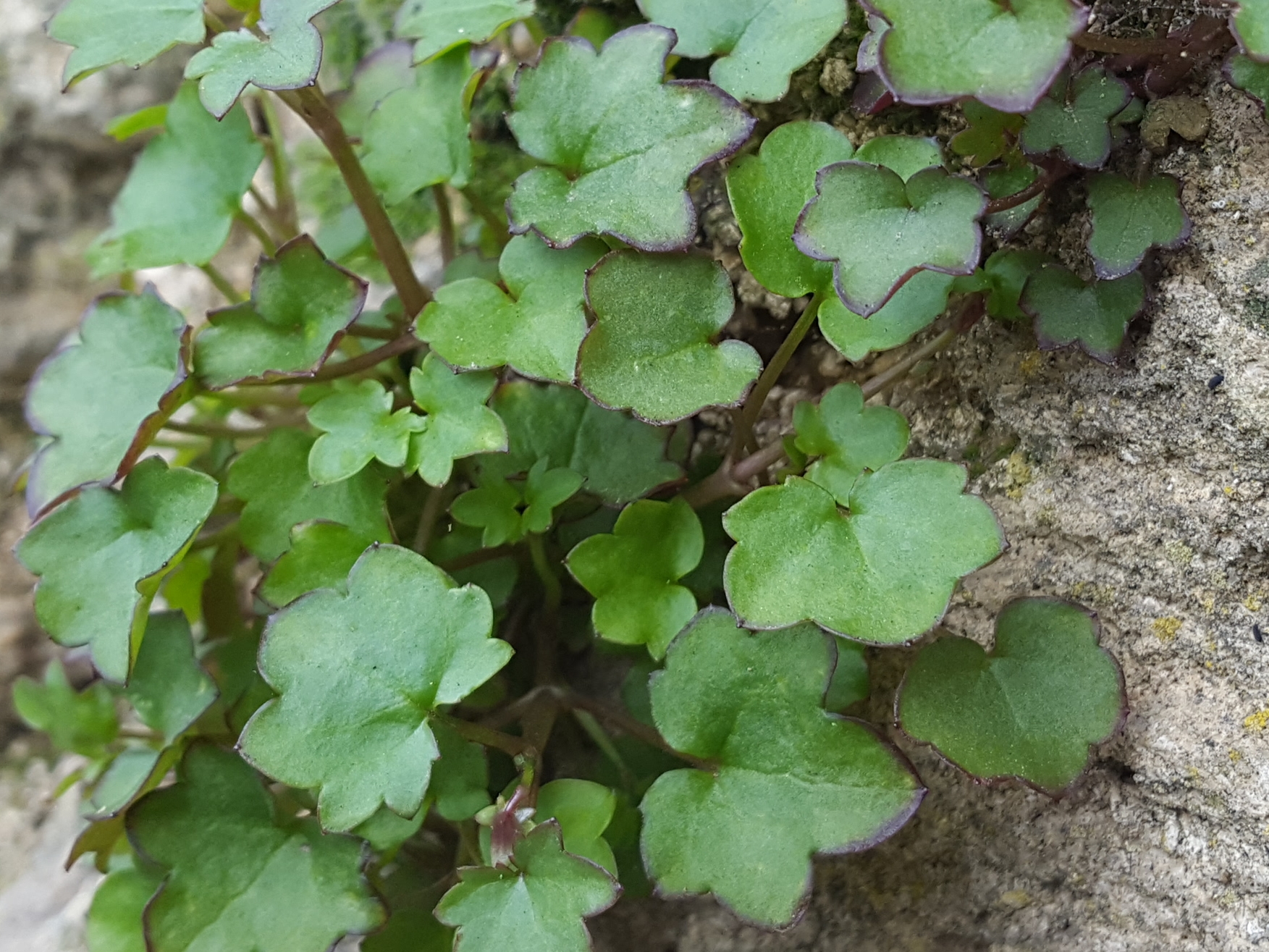
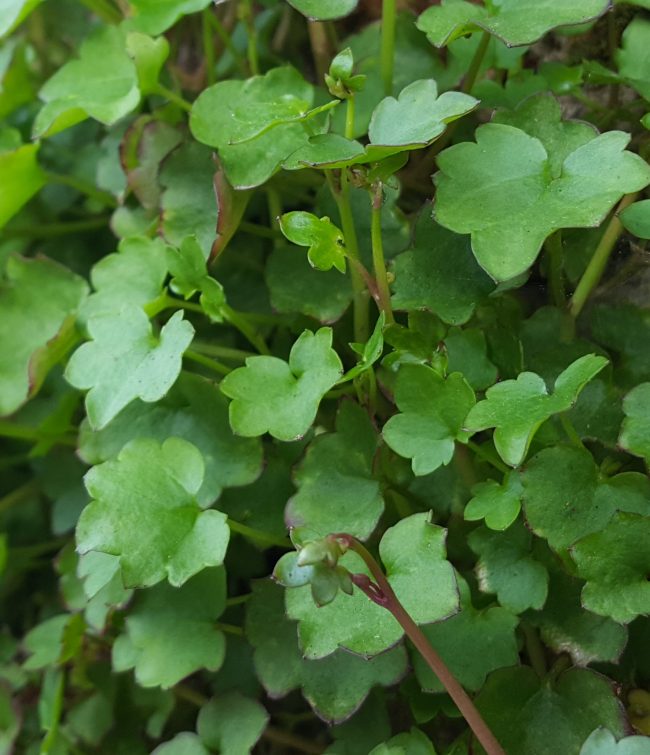
Leaves: Small, glossy, dark-green and often looking palmately-lobed in appearance. They grow in oppositely-spaced pairs, on thin, trailing stems. Each leaf has between 3 – 7 lobes. The leaves are approximately 1 – 3 cm long and 1.5 -4 cm wide. They are also found with red margins.

The glossy, thick and hairless leaves have between 3 and 7 leaf lobes.
The glossy, almost succulent leaves have anywhere from 3 – 7 leaf lobes.

Petioles: These are generally around 2 cm long.

Roots: Fibrous roots.

Stems: The vegetative stems are thin, trailing and often red-flushed. They can reach up to 40 – 50 cm long. The stems root at the nodes, enabling the plant to rapidly establish and thrive.

Once established, ivy leaved toadflax starts producing trailing stems which root at the node.
Its trailing stems will quickly take root and help the plants to spread.

The flower stems are shorter, often red-coloured, and produce copious amounts of green and pointy flower buds.

One of many new flowering stems about to send forth a multitude offlowers
New flowering stems begin to show in mid March, soon to send out flowers.

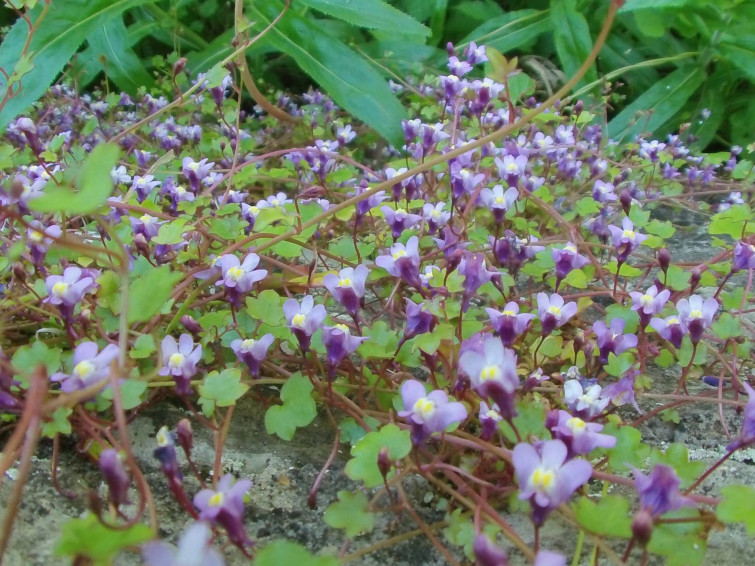
Flowers: Mini snapdragon-like flowers with spurs. They have a yellow central patch, with mauve to purple and occasional white  colour on the lobes of the corolla. The flowers are usually held only 2 cm or so away from the wall they grow upon.

Ivy -leaved toadflax can be found in full bloom during April, May, and June

Flowering season: As soon as it really starts to warm in April and May, this plant can explode with masses of flowers. See them all through the summer into early autumn.

Fruits: Small globular-shaped capsules (0.4 cm across) develop after pollination. The capsules contain around 50 small seeds.

Habitats: Ivy-leaved toadflax loves old stone and brick walls and any suitable rocky or stony setting, including some shingle beaches. It can be found on any of these suitable sites up to around 450 metres.

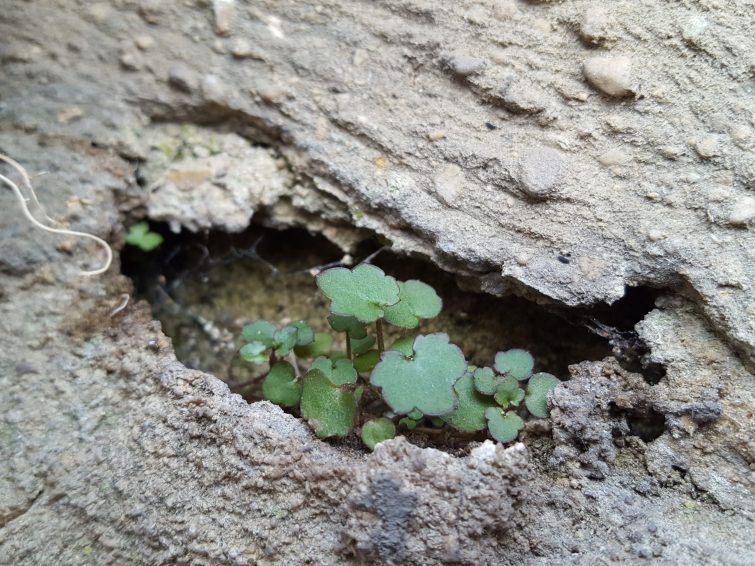
A baby ivy-leaved toadflax finding a perfect shelteted crack in a wall. Soon this hole will disappear behind the foliage
A baby plant will quickly cover this suitable hole in a wall with its foliage.

Parts used: Leaves and flowers.

Harvesting: Pinch off the leaves or cut a few of the trailing stems from different plants and pick them off. Pinch out the multi-coloured flowers as soon as you find them in April throughout the summer.

For more harvesting tips and tricks about all manner of plants, head over to this short guide.

Edible uses: Leaves can be used raw in salads, or cooked for 30 – 60 seconds in boiling water like fresh peas. I choose plants from shadier spots, and only really use the plant occasionaly in winter and spring, becuase they tend to be too bitter for my palate.

The scented flowers make a pretty garnish and addition to salads. You can put them into ice cubes…if you have that sort of magic power.

New leaves in early spring from ivy-leaved toadflax are acceptable in salads.
The best leaves to eat are new spring ones, preferably on shady walls.

Medicinal use: There are reports of ivy-leaved toadflax being used as a vulnerary herb to staunch wounds. We have so many plants offering this type of medicinal action  here in Britain, that I prefer to use them instead.

Other notes: It’s always best to choose the cleanest sites away from busy roads when foraging in urban environments.

Always, always, always, treble check your harvests, especially those of you just starting out on wild food and medicinal plant adventures.

And while we’re on safety, if you haven’t seen them already, then take advantage of this guide to Britain’s poisonous plants.

Coming up soon…More medicinal and edible wild plants that are easy to find, identify and use!

Happy Foraging!


Foraging Guide to White Dead Nettle (Lamium album) Lamiaceae Family

Identify white dead nettle with the UK’s only comprehensive plant I / D and foraging guide.

White dead nettle ticks many boxes for the forager. It’s easy to identify, available most of the year and abundant. It’s a fantastic wild plant source of Vitamin A, and one of the few plants that can give you a real sweet hit on the move, plus it can be a fun plant to play with!

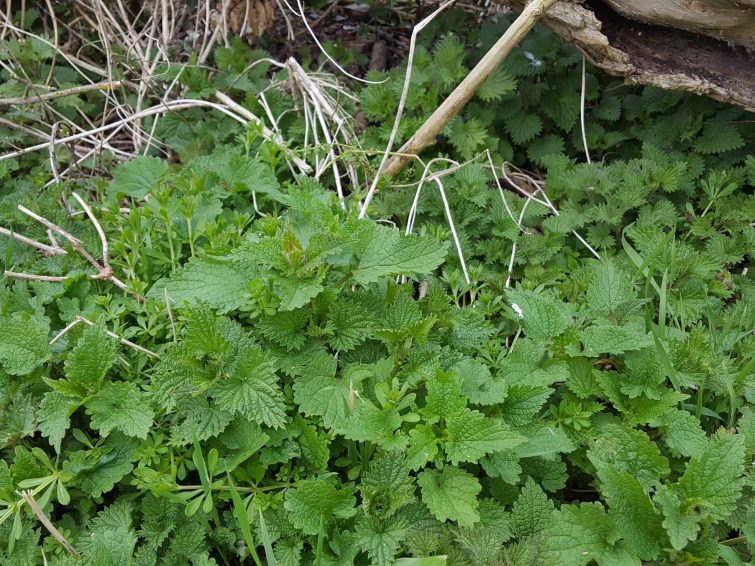
At first glance, and from peripheral vision, it looks almost identical to nettles. So much so, that on my foraging walks people regularly draw a sharp breath when I pluck and handle this downy soft herb in front of them!

White dead nettle is possibly the most frequently found UK species from the aromatic mint family (Lamiaceae). There are 40 or so annuals and herbaceous perennials in the genus.

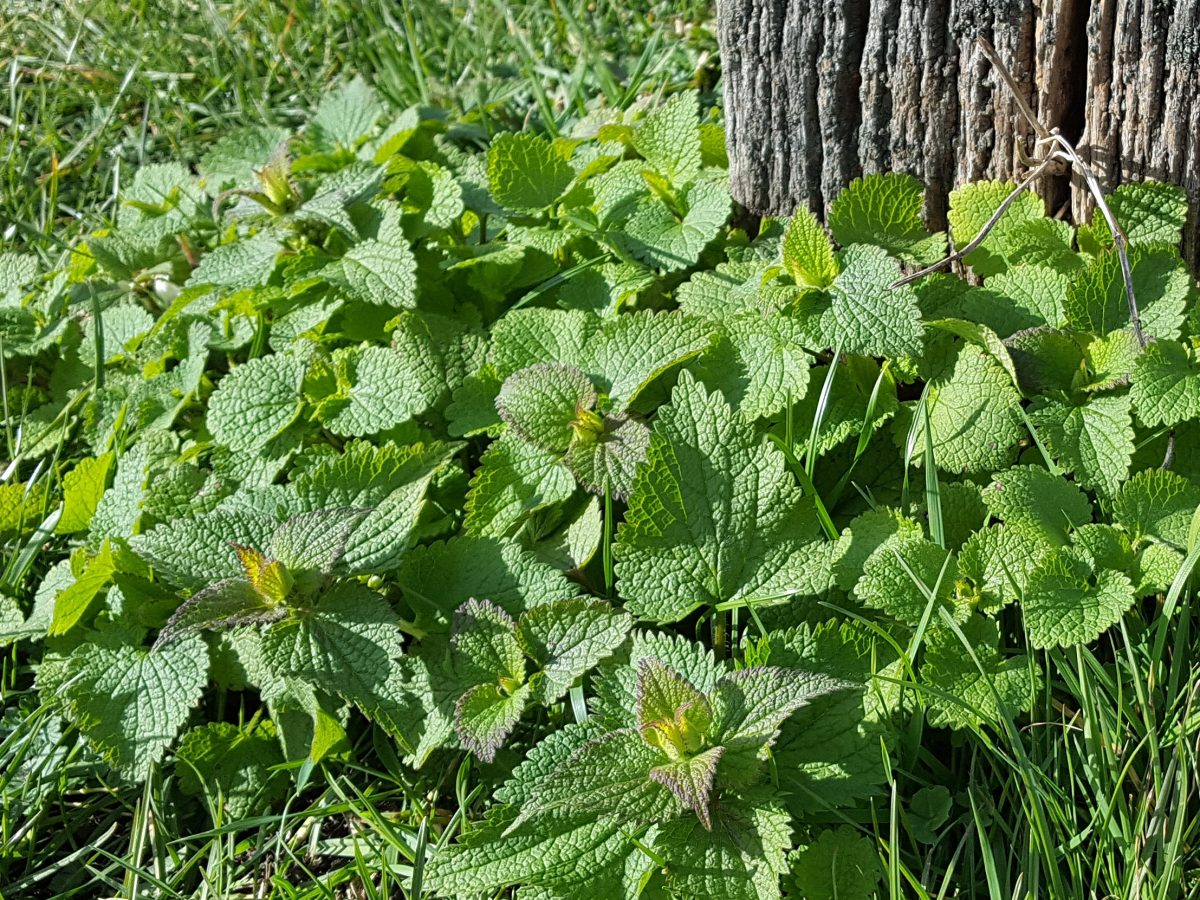
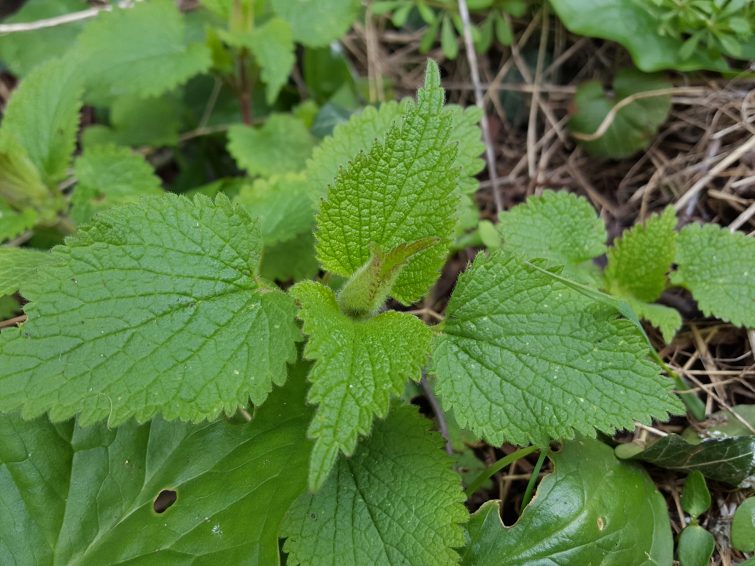
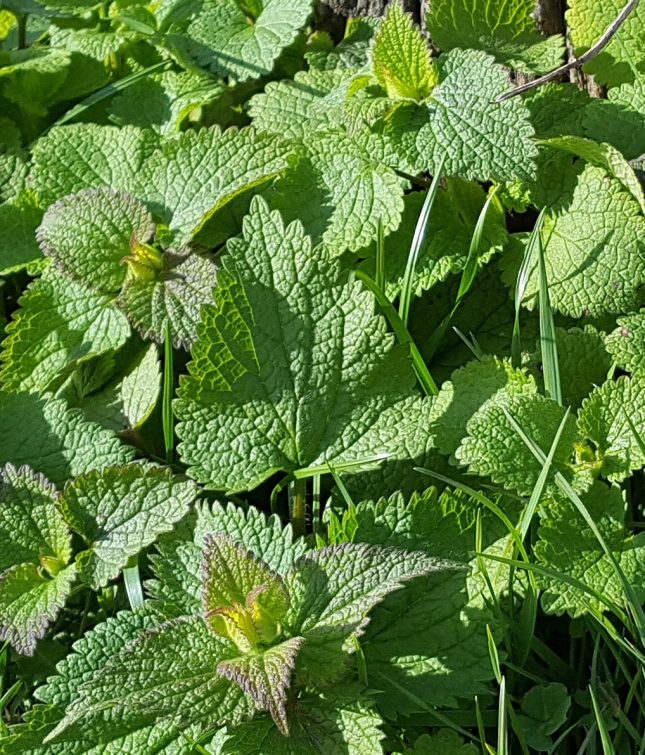
The rolled new leaves of white dead nettle. They are often red-tinged. This compares to the stinging nettle, which doesnt display these characteristics.
White dead nettle is frequently found in most lowland areas of the UK.

What’s in a name?

The generic part of the scientific name Lamium, comes from the old Greek word ‘lamia’, which translates as ‘swallower’. This word came from the Greek word ‘laimos’, meaning ‘throat’. If you want to know more about why the word lamia was used to describe man-eating monsters, female vampires and mermaids, click here.

The Roman’s proceeded to latinise the word to Lamium and used it to describe a group of similar-looking herbaceous plants. The genus also includes the previously discussed red dead-nettle.

The specific part of the name – album, means white. This of course, points to the colour of the flowers.

The English common name ‘dead nettle’ refers to its striking similarity with the unrelated stinging nettle (Urtica dioica – Urticaceae family). These two species are regularly found together. The hairs on white dead nettle are without stings, hence the ‘dead’ name.

White dead nettle evolved to look similar to stinging nettle, but thankfully its hairs do not sting!
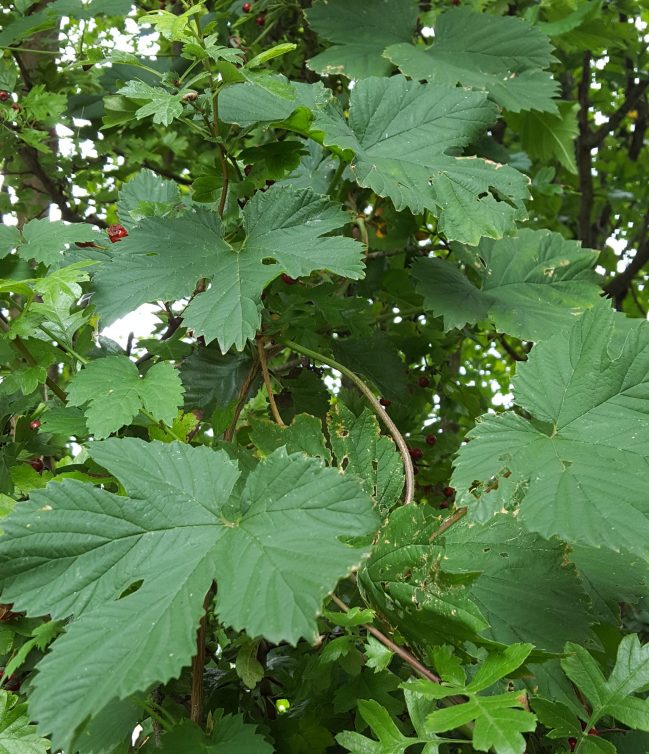
White dead nettle is regularly found with stinging nettle; a plant it mimics well.

Botanical description

Warning! Occasional botanical language is used here, so you may need to refer to my handy glossary of terms.
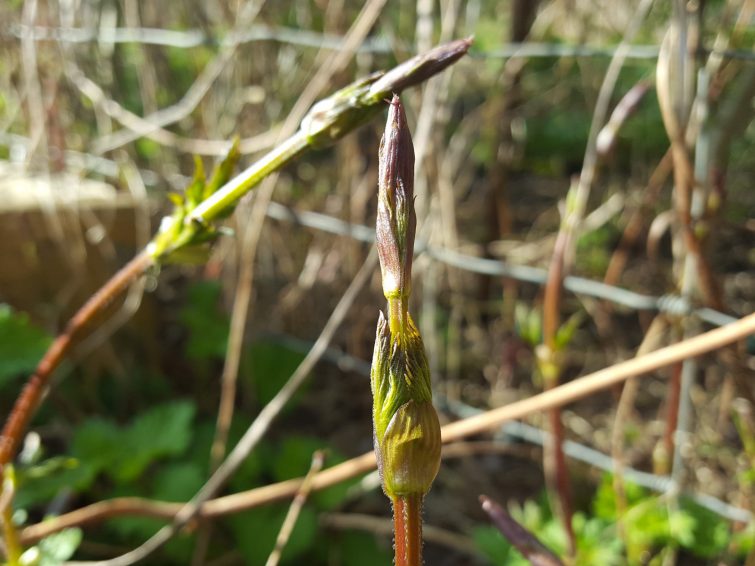
You won’t actually have to worry about botany much because this is a plant that’s really easy to identify by feel, smell and place. It really hardly requires a description of appearance at all. But here you go anyway!
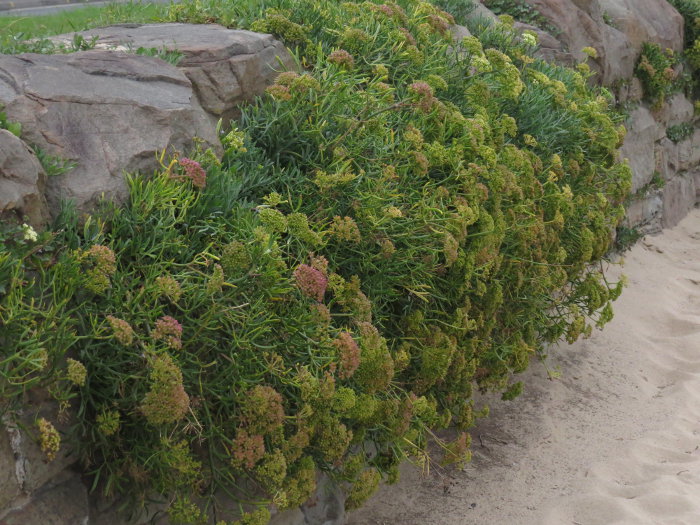
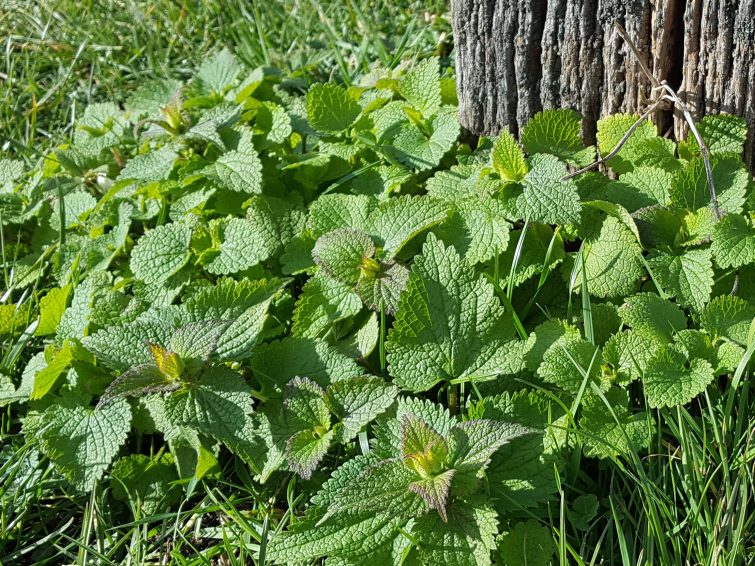
Leaves: SImple, hairy, heart-shaped leaves approximately 8 cm long and 5 cm wide. The aromatic leaves grow in opposite pairs. New growth at the top is often red-tinged. This colouring can sometimes be a result of colder weather.

White dead nettle leaves have a wrinkly appearance and are often flushed with red during colder periods.
White dead nettle leaves, often flushed red in colder weather.

The wrinkly leaves have crenate- serrated margins. Veins are raised below. You don’t find the leaves growing as a rosette, but rather as small clumps of very short stems, with just the very top leaves.

Early spring sun encourages the overwintering white dead nettle stems to grow new leaves, soon ready to flower
Early spring sun encourages the overwintering stems to grow and quickly flower.

Petioles: These can reach anywhere from 1- 5 cm long. They can be red-coloured.

Roots: Creeping rhizomes and stolon roots.

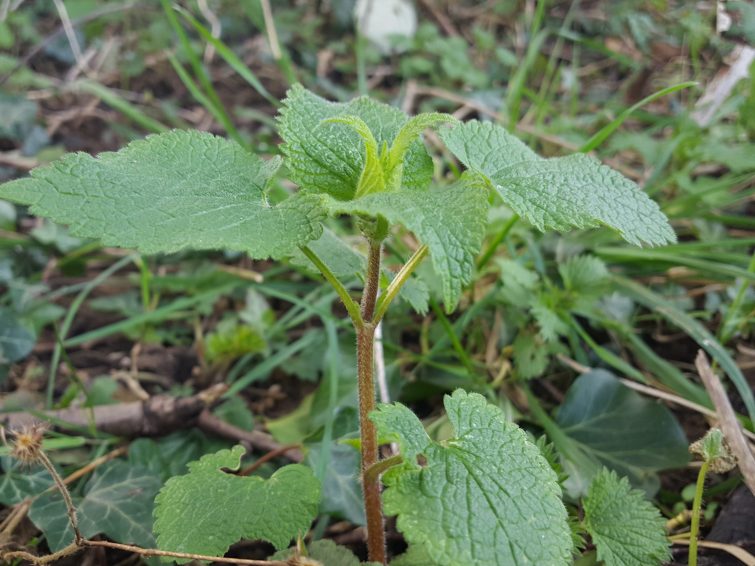
Stems: Square, hollow and hairy, typically reaching around 30 – 40 cm high. The stems are green or red coloured. They are easy to snap. Compare them with the stems of stinging nettle which are solid, fibrous and tough as old rope.

White dead nettle stems can show red colours as well as green.
White dead nettle can display red coloured stems as well as green.

Flowers: These come in whorls. Flowers are two-lipped, white, and appear in the leaf axils towards the top of the stems.

Whorls of pointy calyxs swell with the new white flowers
Whorls of flowers in the leaf axils swell with the new white flowers.

The flowers have petal-lobes that are fused into a distinctive hooded, corolla tube, held in a five-pointed calyx tube. Essential oil glands are present on the calyx.

The hooded two-lipped flowers are a prefect enticement for pollinating insects.

A sweet nectary lies at the very base of the corolla tube. My earliest plant-munching memories involves sucking the nectar from the base of these flowers.

Flowering season: You can spot the new season’s blooms appearing from early March after milder winters (almost every year now). It’s in full show all over the place by April.

Its easy to identify plants in the mint family, as they all produce a two-lipped flower, simple leaves and square stems
White dead nettle is great for learning the key family patterns of all mint family plants.

Fruits: Four small brown nutlets, in the base of the calyx.

Habitats: White dead nettle grows in much of the British Isles. You will find it in hedgerows and hedgebanks, dotted about in new woodland, wastegrounds and rough ground, as well as by roadsides, and in parks and gardens. This is one of numerous plants that are close attandents of human habitation.

Parts used: Leaves, flowering tops, flowers.

Harvesting: You can harvest the new leaves from February onwards. Pinch them off, or use scissors or a small knife. In urban areas, the mower and strimmer will provide fresh new growth at different times during the year, so just treat them in your mind ike cut-and-come-again salads.

Edible uses: Chopped leaves can be used as a pot herb. Add them to omelettes and frittata. The whole leaf can be cooked like spinach, and added to numerous dishes, say as a filling with mushrooms and ricotta cheese, in ravioli.

Like so many of our wild plants, It is much more packed with nutrients than cultivated vegetables. White dead nettle is loaded with Vitamin A and C  and rich in a number of minerals including calcium, potassium, phosphorus, and magnesium.

The flowers are a lovely wayside nibble, if you get there before the bees! It’s a pretty enough addition to salads and easily gathered in numbers. Country winemakers have traditionally made use of the sweet, nectar-rich flowers.
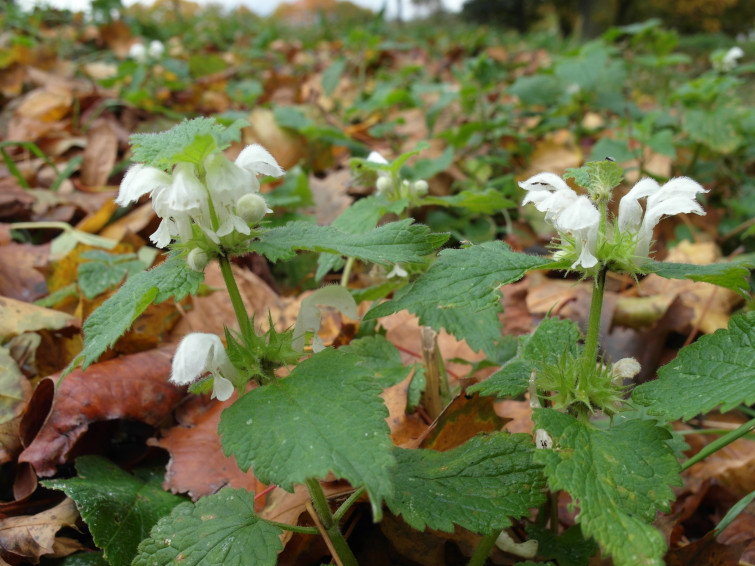
Medicinal uses: This is a plant with a long history of medicinal use. As with all plants that contain essential oils, white dead nettle leaves and flowering tops are antiseptic. The softness reveals its demulcent qualities. The bitters make it a digestive aid, and the tannins always provide astringency.

It has traditionally been used as a wound staunching herb, and as a general uterine tonic, especially useful for internal uterine bleeding and for excessive menstrual flow.

Other notes: A number of its relatives will be found in many of the same habitats. These include red dead-nettle, yellow archangel (Lamium galeobdolon), the not-so-frequently found henbit dead-nettle (Lamium amplexicaule) and the various, often invasive plants in the closely-related Lamiastrum genus. You can use any of them as food in pretty much the same way.

Coming soon is our guide to April’s foraging highlights.  Don’t forget that I’m happy to answer any of your foraging questions, right here.

Happy foraging!