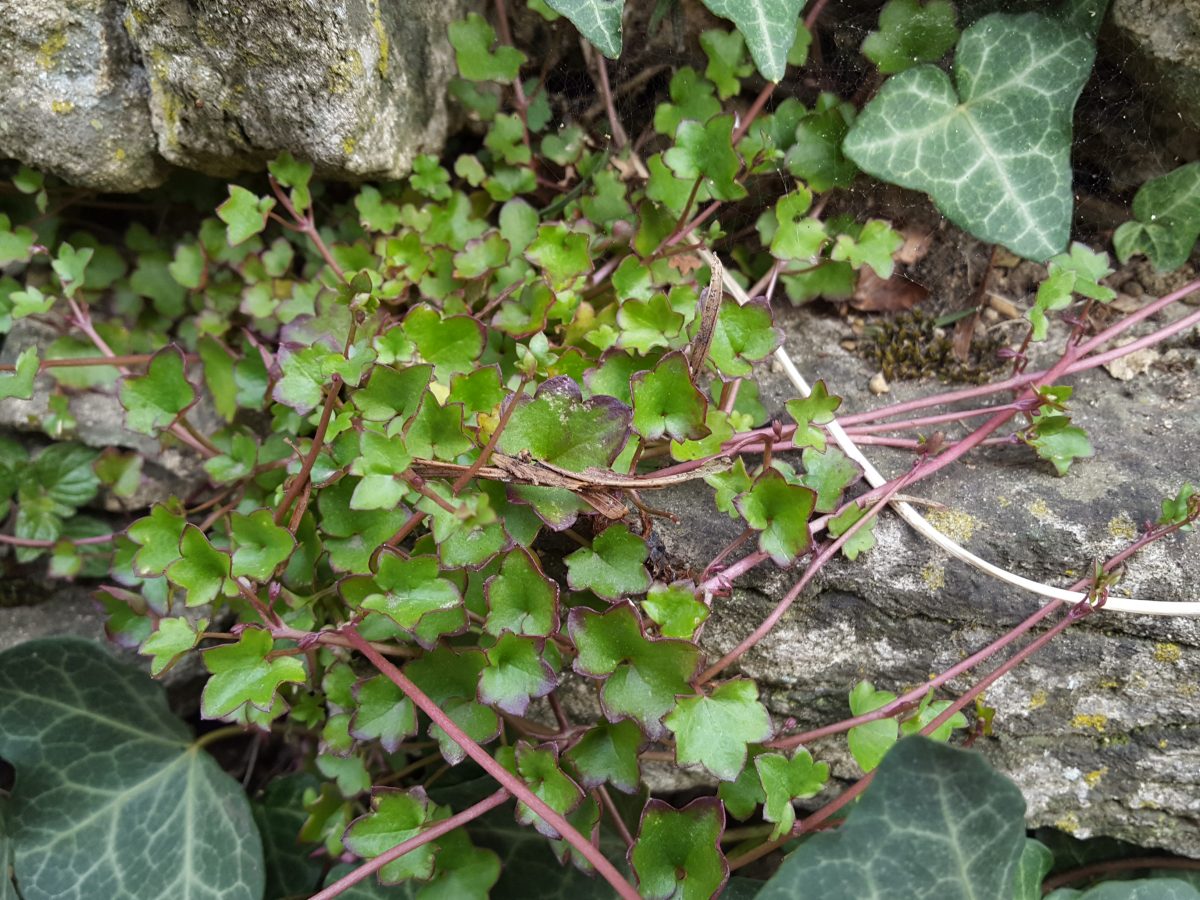
Foraging guide to ivy-leaved toadflax. Learn to identify, then discover its food and medicinal uses.
Ivy-leaved toadflax is another wild edible plant that’s super-easy to identify. Only a handful of other plants will ever be seen growing where it loves to grow.
It was brought to Britain at the turn of the 16th century, and then reportedly escaped the walls of Oxford botanical gardens not long after.
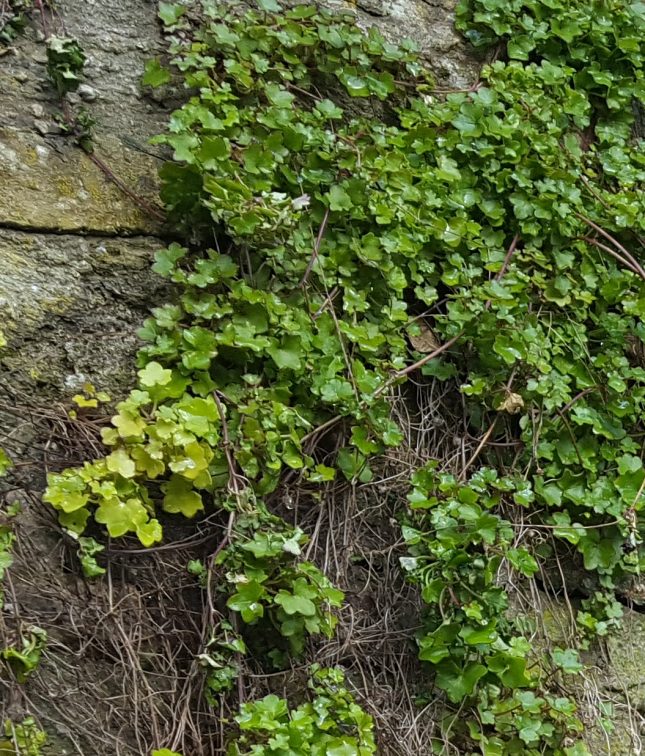
The plant has found a good life here, prefering to grow where most species simply can’t survive. I’m pretty sure you know this herb already, becuase it decorates so many of our old stone and brick walls up and down the land.
What’s in a name?
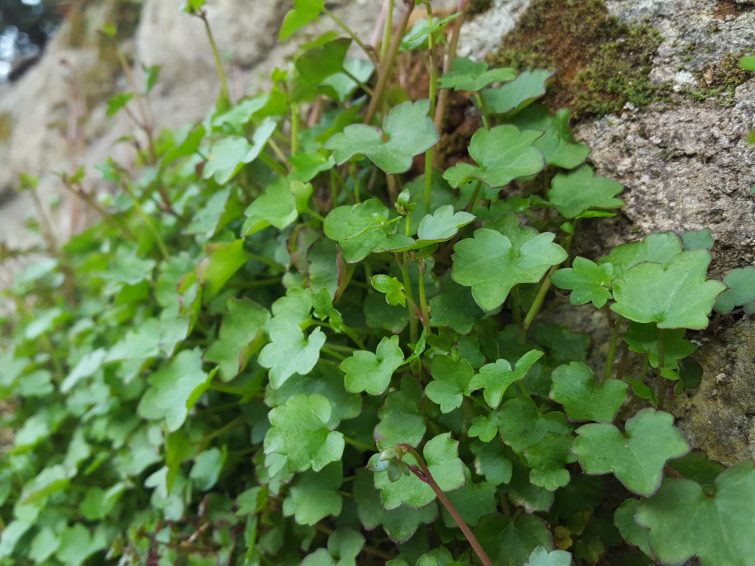
The first part of its common English name tells us to expect to see ivy-like, lobed foliage. The plant displays a very similar leaf shape and growth habit, if in minature, to our common ivy (Hedera helix).
The second part – toadflax, points to the toadflax-style, lobed flowers. Until recently, ivy-leaved toadflax shared the same family as other toadflax and snapdragon species, within the foxglove (Scrophulariaceae) family. DNA technologies have now allowed scientists to understand the relationships between species more closely, and not to just rely on flower structures and similarities of form.
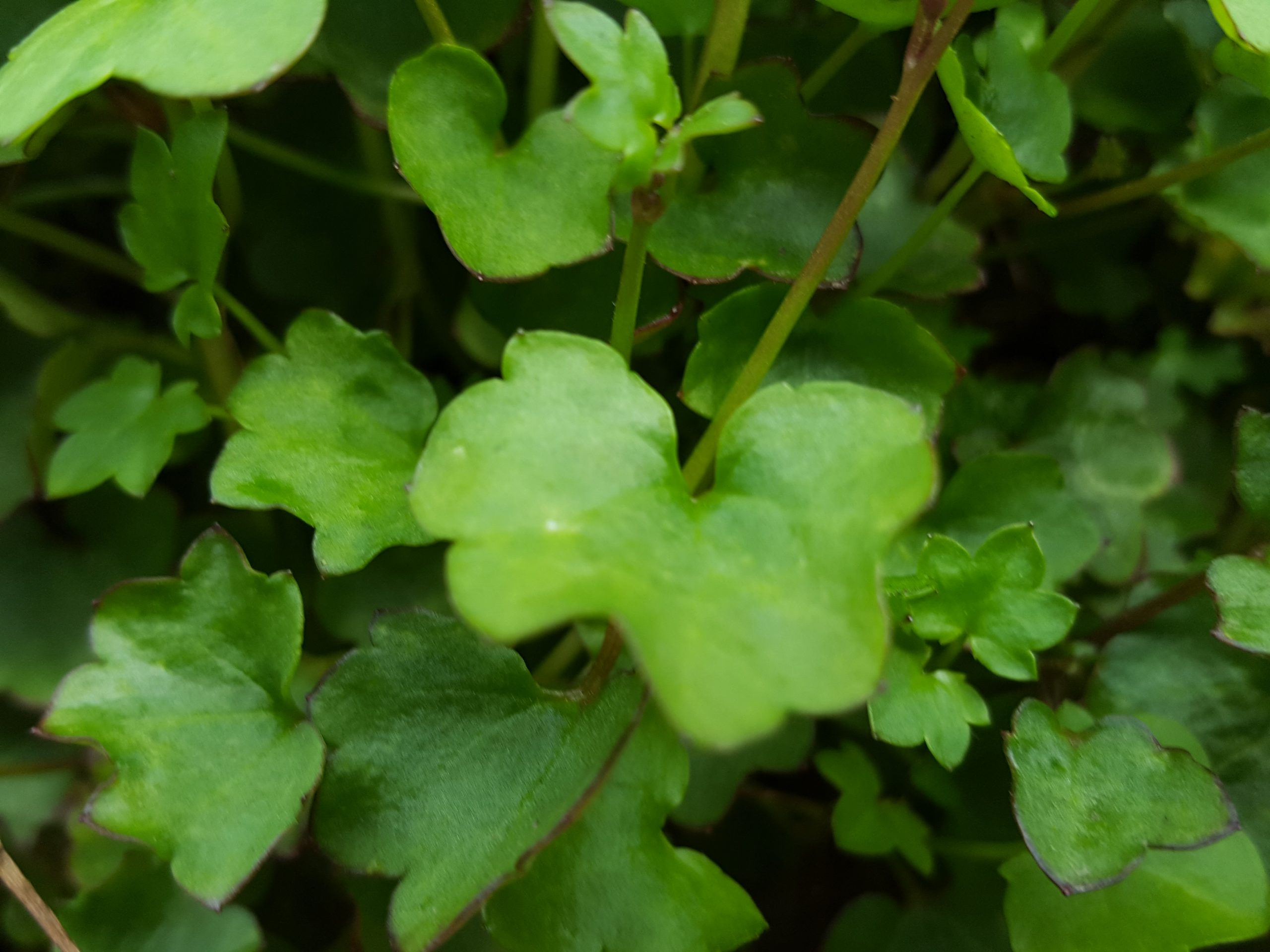
The generic part of the scientific name Cymbalaria, comes from the old Greek word ‘kymbalon’ – meaning a musical cymbal, in reference to the relatively flat and roundish shape of the leaves.
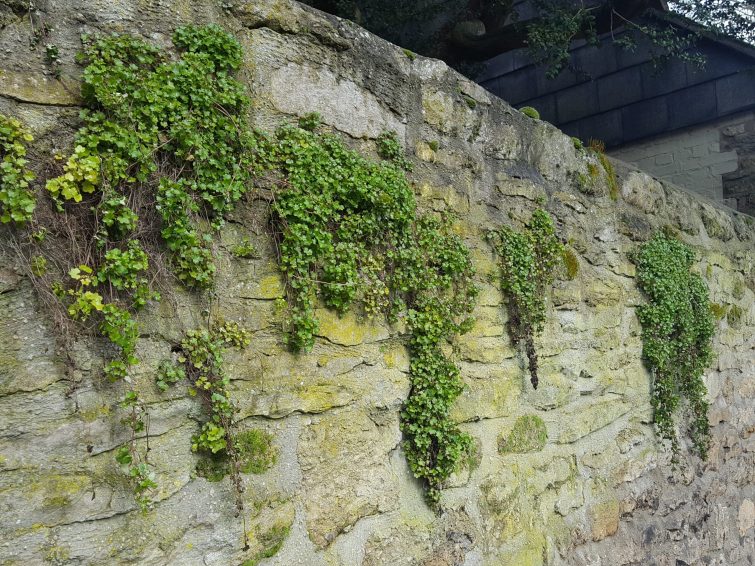
The specific epithet muralis literally translates from the Latin as ‘to decorate walls’. Doesn’t it just!
Other common names include Oxford weed, Oxford ivy, Kenilworth ivy, wandering sailer, and mother of thousands. I particularly love the evocative French common name of ‘Ruine de Rome‘.
Botanical description to identify ivy-leaved toadflax
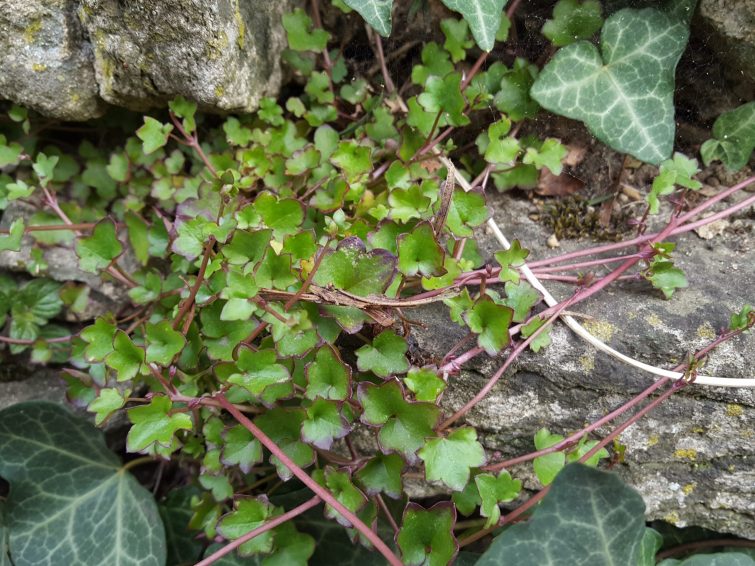
Leaves: Small, glossy, dark-green and often looking palmately-lobed in appearance. They grow in oppositely-spaced pairs, on thin, trailing stems. Each leaf has between 3 – 7 lobes. The leaves are approximately 1 – 3 cm long and 1.5 -4 cm wide. They are also found with red margins.
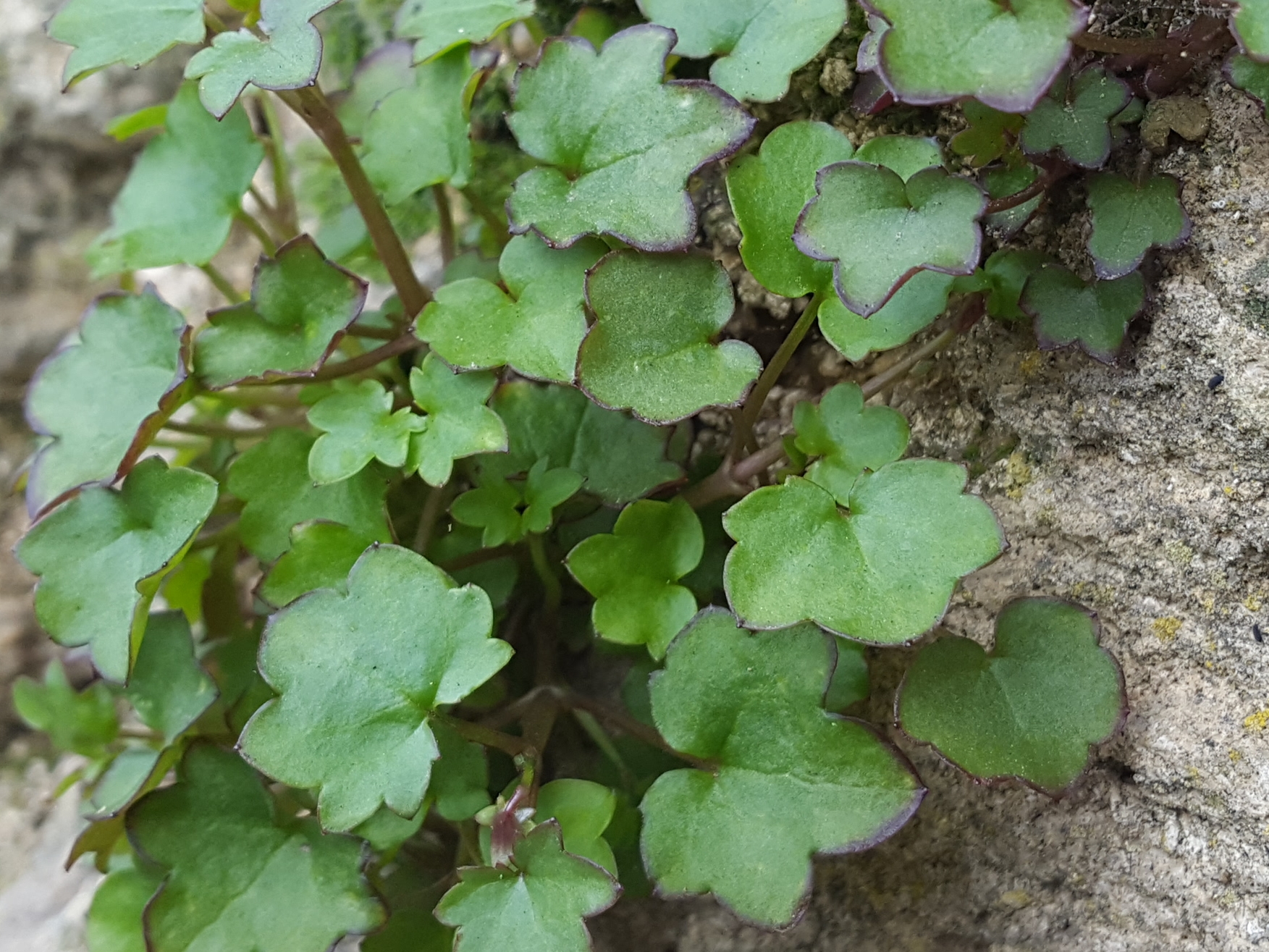
Petioles: These are generally around 2 cm long.
Roots: Fibrous roots.
Stems: The vegetative stems are thin, trailing and often red-flushed. They can reach up to 40 – 50 cm long. The stems root at the nodes, enabling the plant to rapidly establish and thrive.
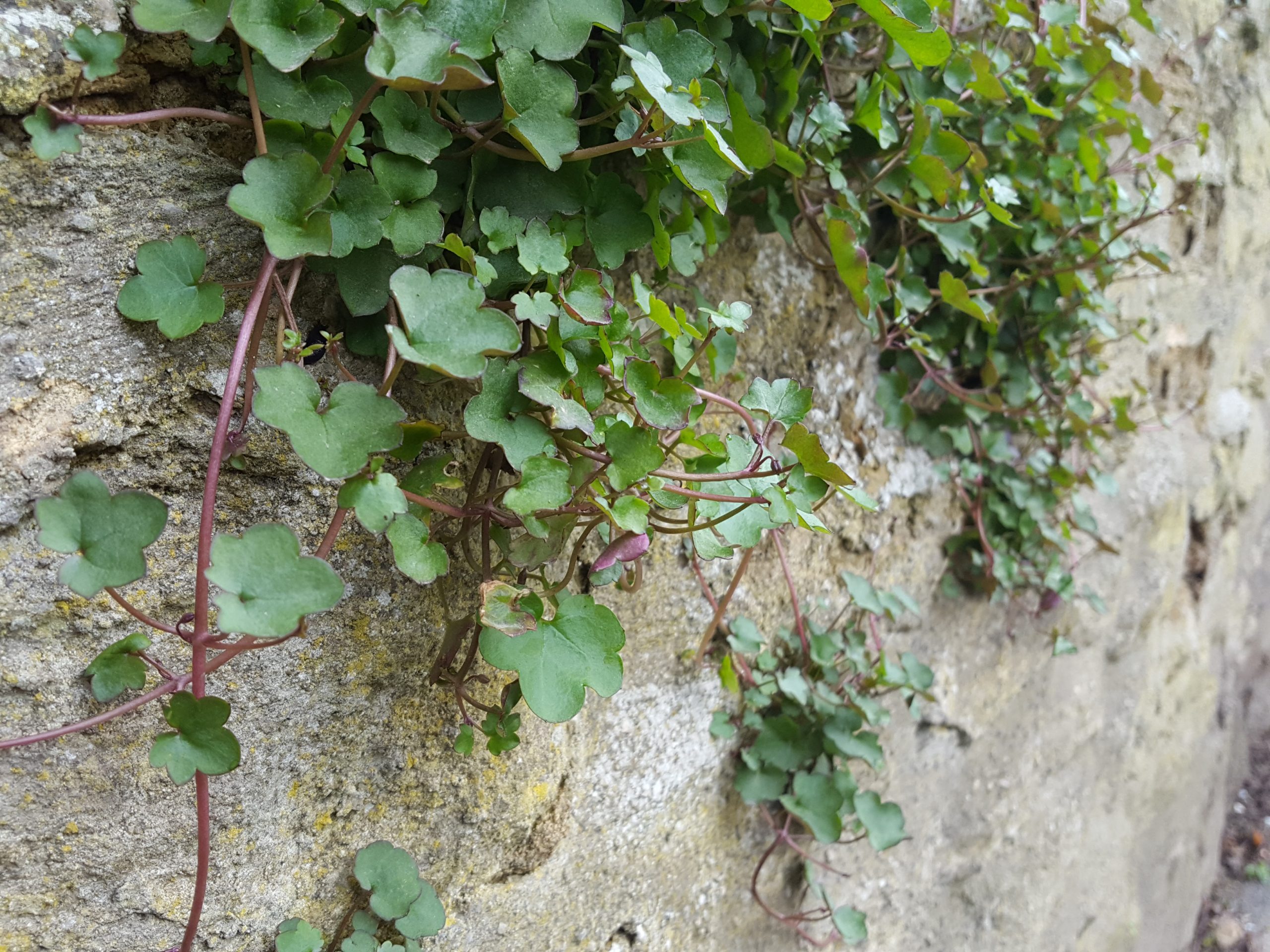
The flower stems are shorter, often red-coloured, and produce copious amounts of green and pointy flower buds.
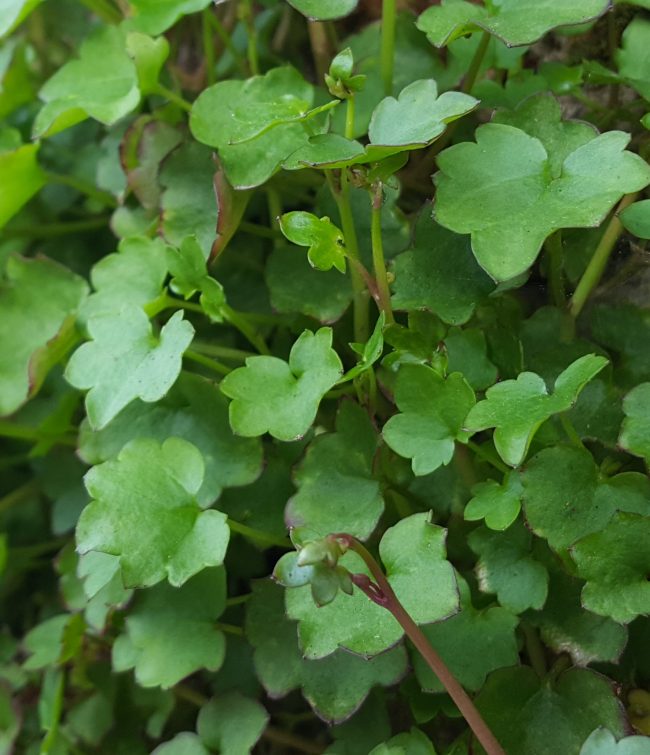
Flowers: Mini snapdragon-like flowers with spurs. They have a yellow central patch, with mauve to purple and occasional white colour on the lobes of the corolla. The flowers are usually held only 2 cm or so away from the wall they grow upon.
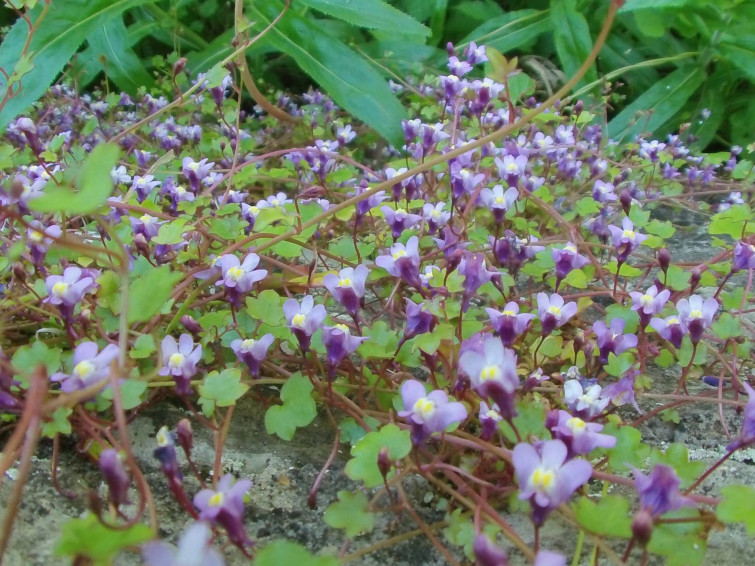
Flowering season: As soon as it really starts to warm in April and May, this plant can explode with masses of flowers. See them all through the summer into early autumn.
Fruits: Small globular-shaped capsules (0.4 cm across) develop after pollination. The capsules contain around 50 small seeds.
Habitats: Ivy-leaved toadflax loves old stone and brick walls and any suitable rocky or stony setting, including some shingle beaches. It can be found on any of these suitable sites up to around 450 metres.
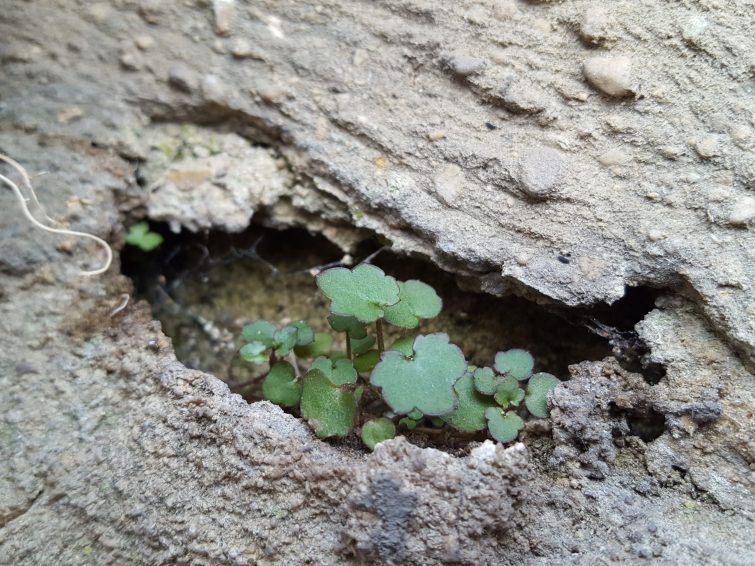
Parts used: Leaves and flowers.
Harvesting: Pinch off the leaves or cut a few of the trailing stems from different plants and pick them off. Pinch out the multi-coloured flowers as soon as you find them in April throughout the summer.
For more harvesting tips and tricks about all manner of plants, head over to this short guide.
Edible uses: Leaves can be used raw in salads, or cooked for 30 – 60 seconds in boiling water like fresh peas. I choose plants from shadier spots, and only really use the plant occasionaly in winter and spring, becuase they tend to be too bitter for my palate.
The scented flowers make a pretty garnish and addition to salads. You can put them into ice cubes…if you have that sort of magic power.
Medicinal use: There are reports of ivy-leaved toadflax being used as a vulnerary herb to staunch wounds. We have so many plants offering this type of medicinal action here in Britain, that I prefer to use them instead.
Other notes: It’s always best to choose the cleanest sites away from busy roads when foraging in urban environments.
Always, always, always, treble check your harvests, especially those of you just starting out on wild food and medicinal plant adventures.
And while we’re on safety, if you haven’t seen them already, then take advantage of this guide to Britain’s poisonous plants.
Coming up soon…More medicinal and edible wild plants that are easy to find, identify and use!
Happy Foraging!