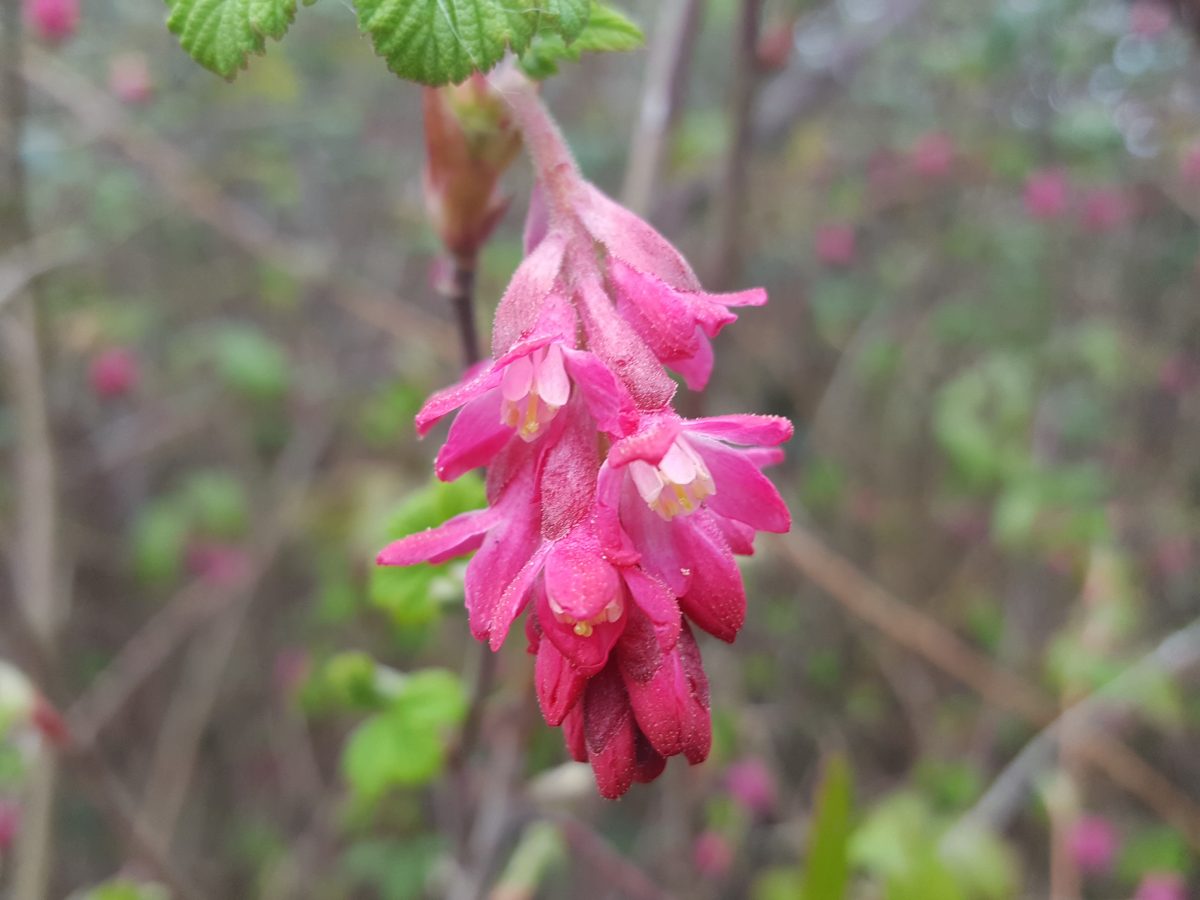
UK foraging guide to identifying the aromatic flowering currant. Discover its food, medicine and other uses.
I can remember the day around 12 years ago that I first positively identified and tasted the drooping red-coloured flowers of the flowering currant. As I handled the leaves and flowers, its beautiful aroma engulfed me, and I immediately christened it the ‘thyme n sage’ currant. This is now a plant that is always on my early spring foraging radar.
The flowering currant was first brought to Britain during the 1820’s and subsequently recorded in the wild here by 1916.
What’s in a name?
The first part of the scientific name Ribes, is beleived to be an old Arabic word for rhubarb – ‘rebās’. The Romans adopted the name and changed it to the word we know today.
It is thought that the sharp and sour taste of the berries led the ancient Arabs to bestow the name onto this group of woody shrubs.
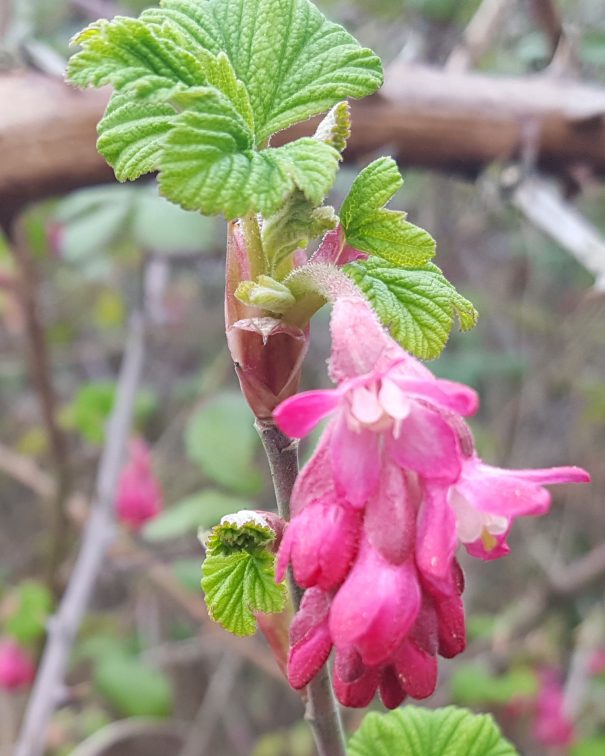
The specific part of the name – sanguineum comes from the old Latin word ‘sanguis’, meaning blood. This obviously refers to the flower colour.
Botanical description
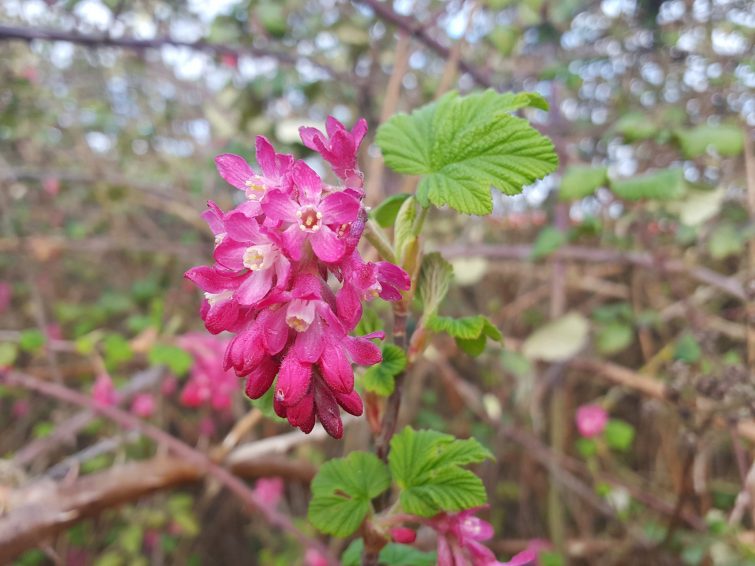
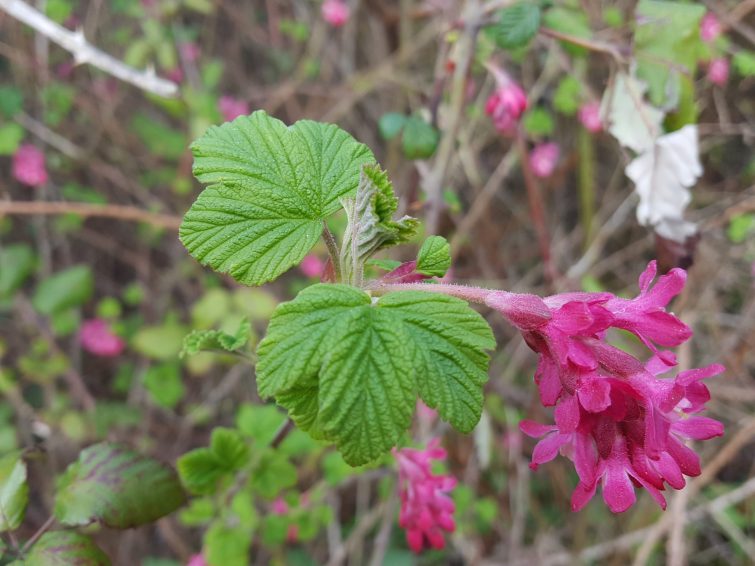
Leaves: The emerging leaves are initially folded. They soon become palmately-lobed. The margins are serrated and the leaves are usually wider than long. Downy hairs are present on the undersides. The mature leaves are a dull green colour.
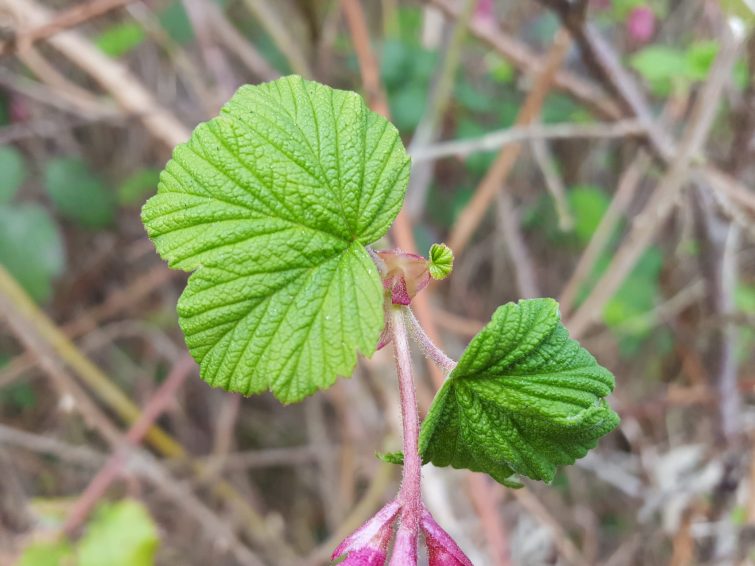
The leaves are generally around 4 – 10 cm wide and are alternately spaced on the stem. Typically 3 – 5 lobes per leaf.
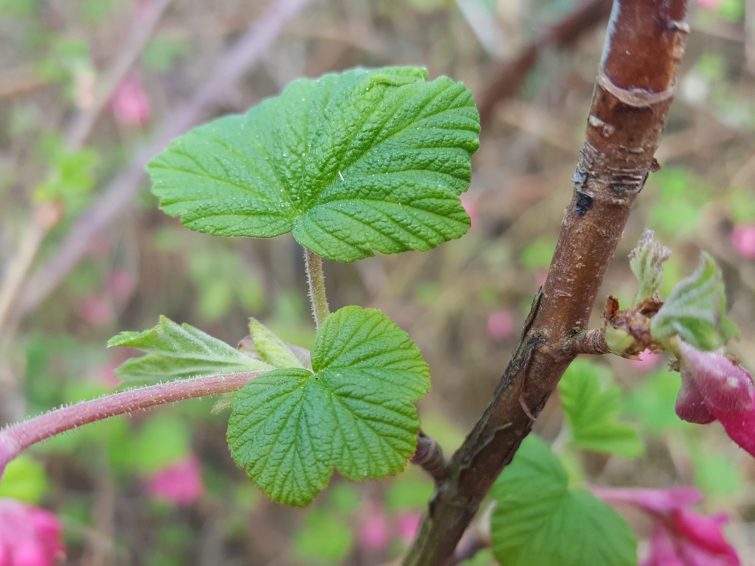
On hot days you can smell the fruity aromatics, especially when you crush a leaf. The leaf buds open with the flower buds.
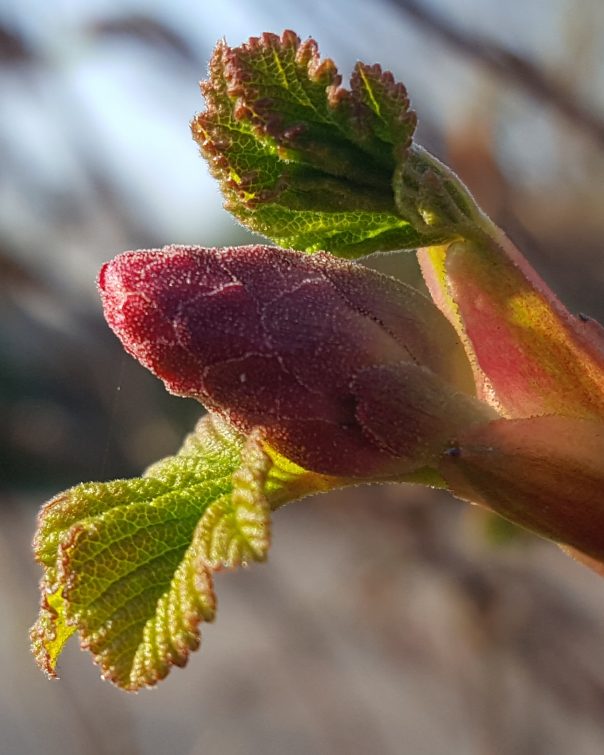
Petioles: These are generally 1 – 3 cm long.
Roots: An initial tap root develops numerous lateral branches, and can send up sucker stems.
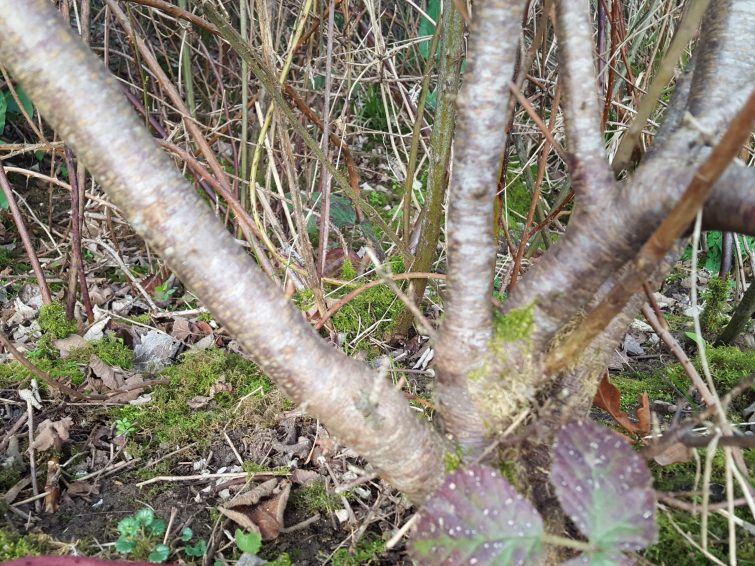
Stems: Initially a reddish brown colour, brown, then becoming a dark purple-brown. The stems have a few light brown lenticels. This plant can easily reach 2 metres high and can spread by the same distance.
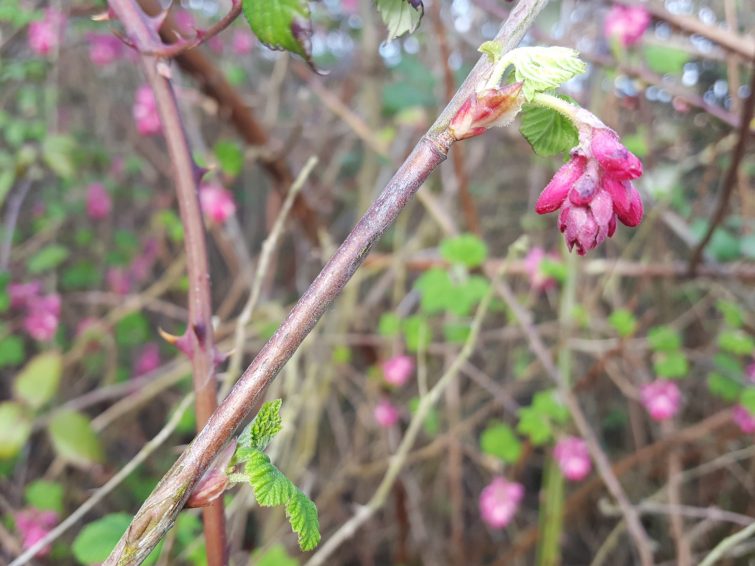
Buds: These are quite thin, not clustered, spindle-shaped and scaly. Typically around 15 mm long.
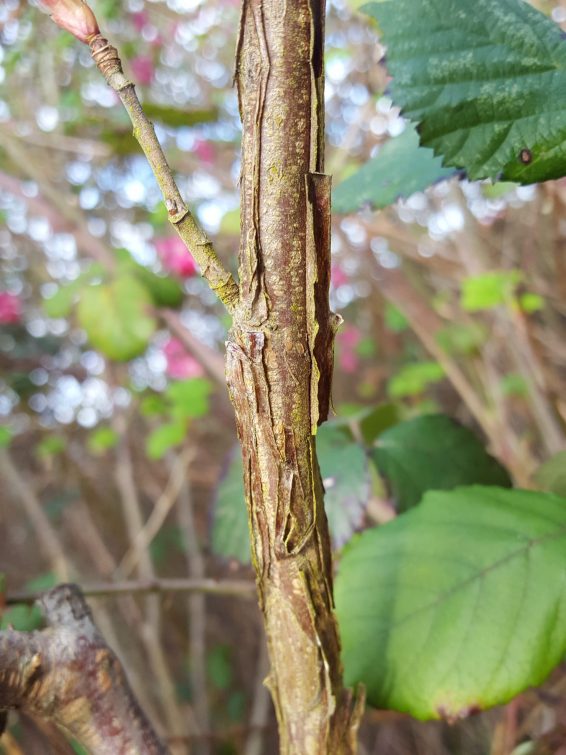
Bark: The older stems and branches show the flaky, peeling outer-skin weathering away. Mature specimens have brown bark with increasing bands of lenticels.
Flowers: Numerous drooping racemes with clusters of pink-red flowers. Each flower has 5 petals per flower. There are typically around 18 – 24 flowers per raceme.
Flowering season: From around the spring equinox, but for only a few weeks. Flowering is mostly done and dusted by mid to late April.
Fruits: Round, dark purple to black-coloured fruits with hairs, similar in looks to small gooseberries. Approximately 10 – 12 mm across. Birds love them. I don’t think they are as tasty as blackcurrants or gooeseberries.
Habitats: Widely planted in parks and gardens, and happy enough here to escape and become naturalised in woodlands, hedgerows and wasteground. It has a scattered UK distribution as this BSBI map shows.
Parts used: Leaves, flowers, fruits.
Harvesting: Pinch off leaves, discarding the petiole. Pinch off or cut off the flowering clusters on the stalk. The fruits are juicy and will come away in your fingers with little effort when ripe. Lots more harvesting tips and tricks can be found in my short harvesting guide.
Edible uses: Leaves and flowers can be infused into water and made into sugar syrup or cordials. You can also flavour vinegars with the flowers or just use them in salads or as an impressive garnish. Fruits can be used in jam making or added to the traditional German Christmas treat, rumtopf.
Other notes: As urban foragers may meet this plant mostly in parks and gardens, it is worth remembering that you need to get to know about any pesticide use that the local maintenance crew might use, before you go picking. Safety first!
More plants are coming soon. Happy foraging!