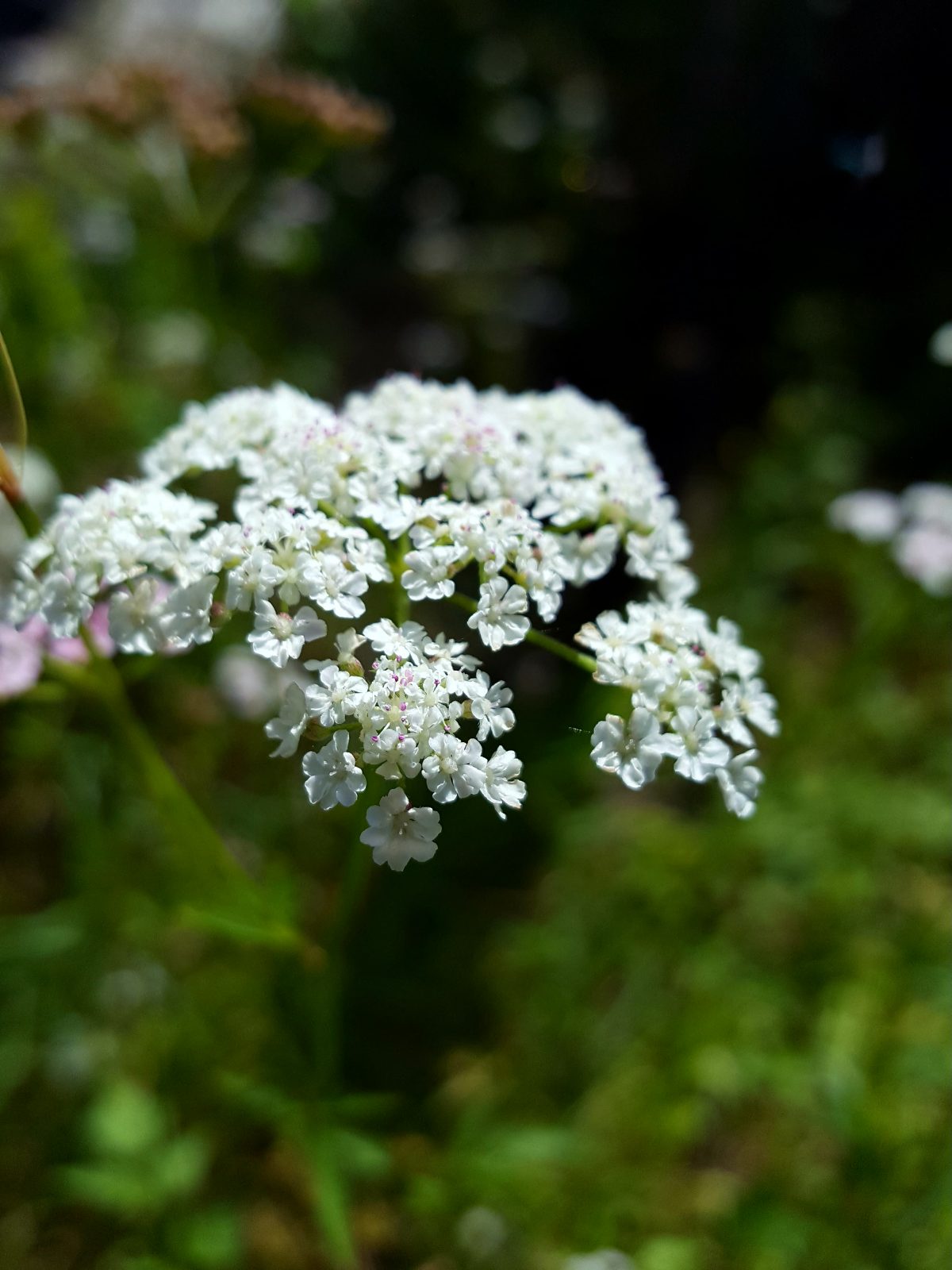
Learn how to confidently identify, and go foraging for, Japanese hedge parsley (Torilis japonica) Apiaceae.
I love meeting and identifying new plants, and the Japanese hedge parsley was a real coup. I admit to being a plant junkie, and like all junkies I get a hit of dopamine in the anticipation of reward, and then endorphins and other molecules like serotonin when I find a new plant and eventually get a positive I/D. It’s characterised often by joy, excitement, contentment and sometimes relief.
When it comes to these sometimes excruciatingly enigmatic carrot family plants, well, as my previous article on wild chervil showed, it will take close observation and patience to successfully negotiate through the lacy-flowered mists our minds make.
So, you can appreciate the extra joy I felt on finally identifying this plant. I knew it was a plant that I had been seeing around for quite a few years but had made the mistake of ignoring, and giving cursory looks, assuming it was one of two other plants I already knew. Classic rookie error!
This website is designed to hopefully prevent you from making my mistakes, especially if you are a new visitor here, or just starting out.
As well as the beginners guide, and a discusion on urban wild foods, there is an extensive guide to Britain’s poisonous plants.
While for herbal medicine students and practitioners, this overview of medicinal plant constituents and actions, with plant examples, can help with your plant chemistry studies.
What’s in a name ?
The generic name Torilis reportedly gets its name from a Latin word for ‘obscure’. This plant from the Far East does not have the historical associations of the old Mediterranean civiliasations, hence its etymology being scarce.
The origins of the specific part of its botanical name – japonica, surely needs no explanation!
The name ‘parsley’ comes from the old medieval French word ‘peresil’. This was derived from the ancient Latin, Petroselinum, which was itself took straight from the ancient Greek, Petroselinon. ‘Petros’ means rock or stone, and ‘selinon’ means celery.
One of its other common names, ‘upright hedge parsley’, attempts to distinguish it from closely-related plants with similar-looking leaves, but different stems.
Japanese hedge parsley botanical description
Finding words here you don’t know? Our glossary will help untie your tongue and hold your hand, through what may seem like at first, to be a botanical word storm!
Leaves: Feathery-looking and triangular-shaped. A little rough and hairy when touched. Typically the compound-pinnate leaves at the base of the plant are bigger than 10 cm long.
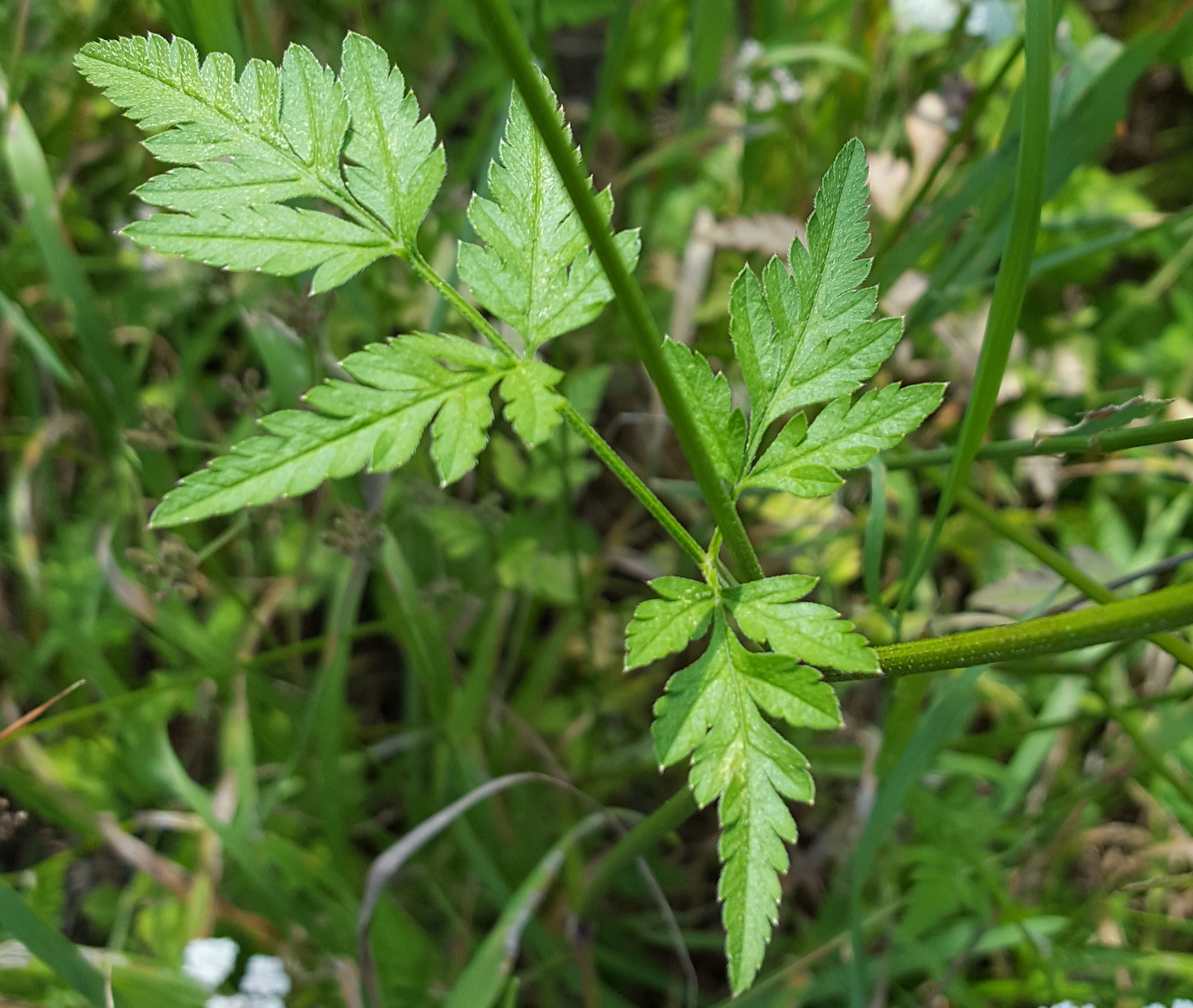
The leaves are known to be anywhere from 1-3 times pinnate. Although the larger basal ones are usually 2-3 times pinnate.
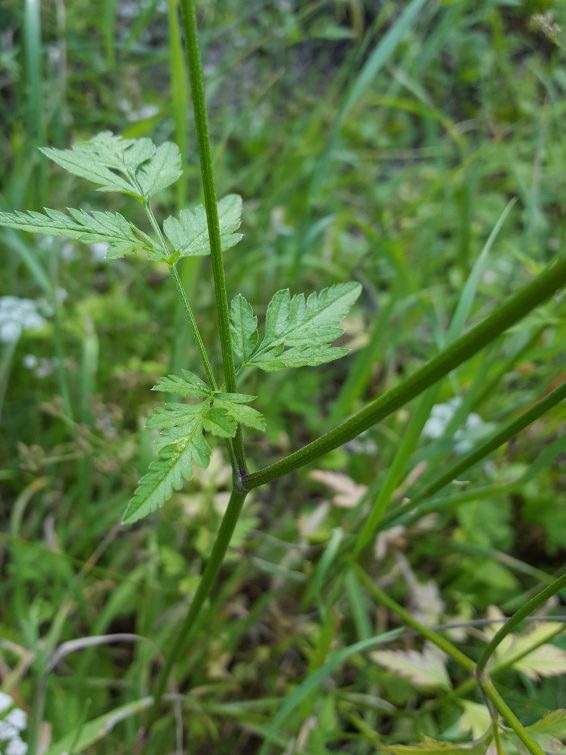
The ovate to lanceolate-shaped leaflets (1-3 cm) are hairy above; lobed, with serrate margins.
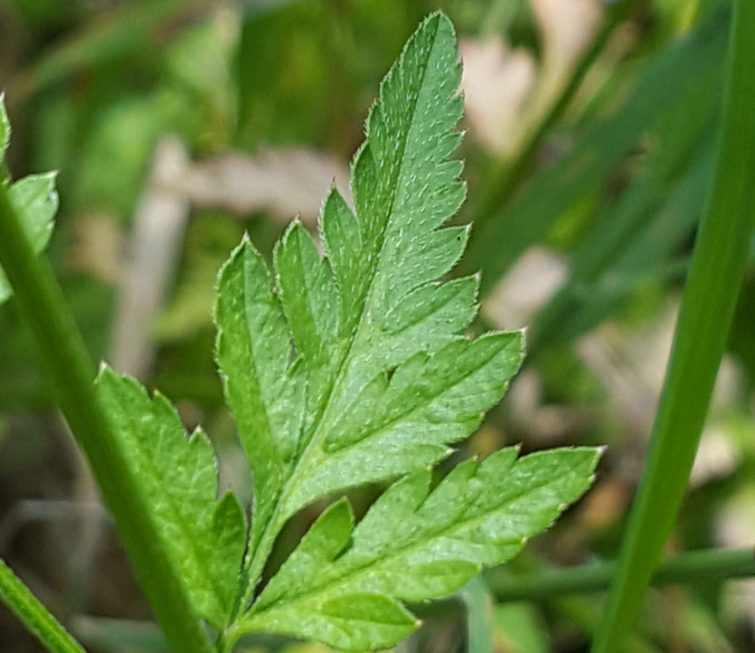
Petioles: Hairy, sheathed at the base. Solid. Channeled.
Roots: A long tapering tap root.
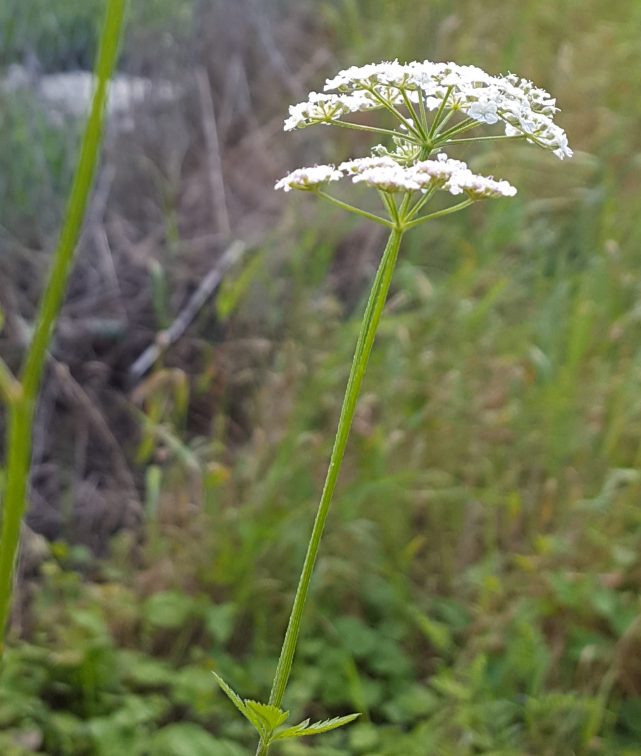
Stems: Compared to wild chervil, these are reasonably thin, and can appear with only one main stem. You can find them growing up to around 1 m high, depending on whether its unlucky enough to meet the mower. The stems are covered in small adpressed hairs.
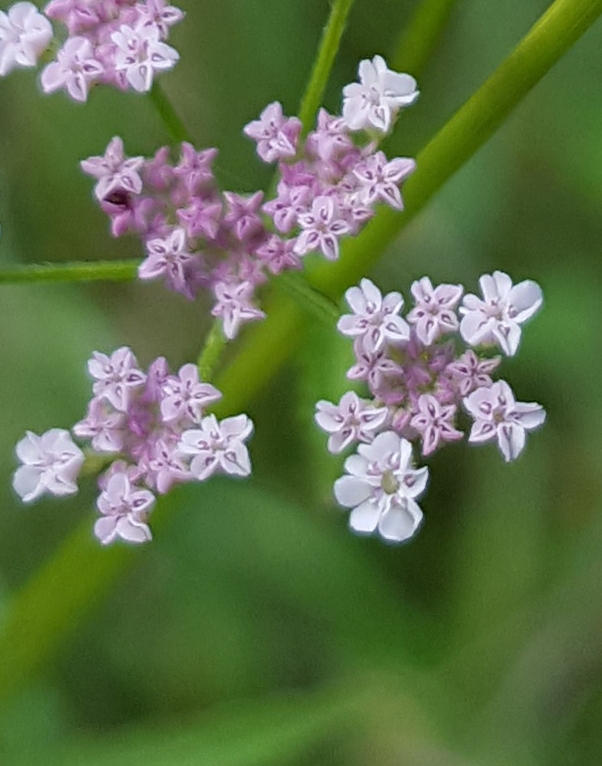
Flowers: Small, white-flowered compound umbels. Usually 20-50 mm across. There are usually bracts underneath the compound umbel.
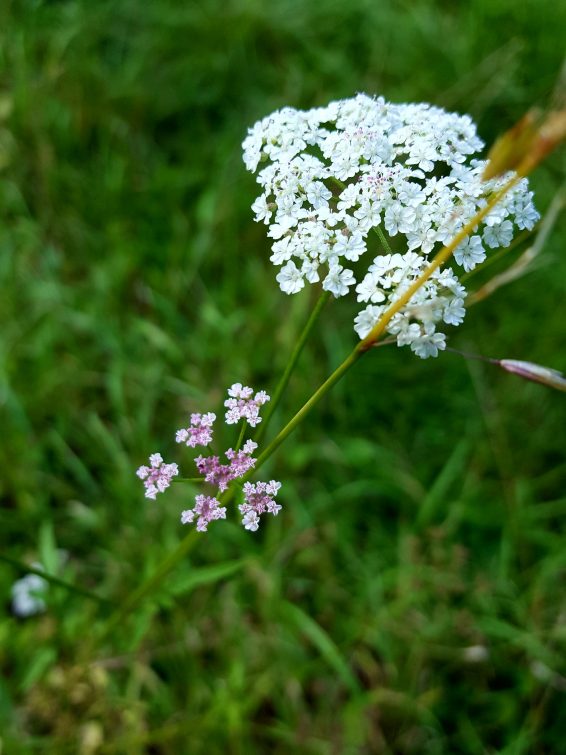
The petal lobes are wide and somewhat frilly to look at. Petals can initially be flushed pink on opening. Red-pink tipped stamens surround the stigma on the central rays of the inflorescence.
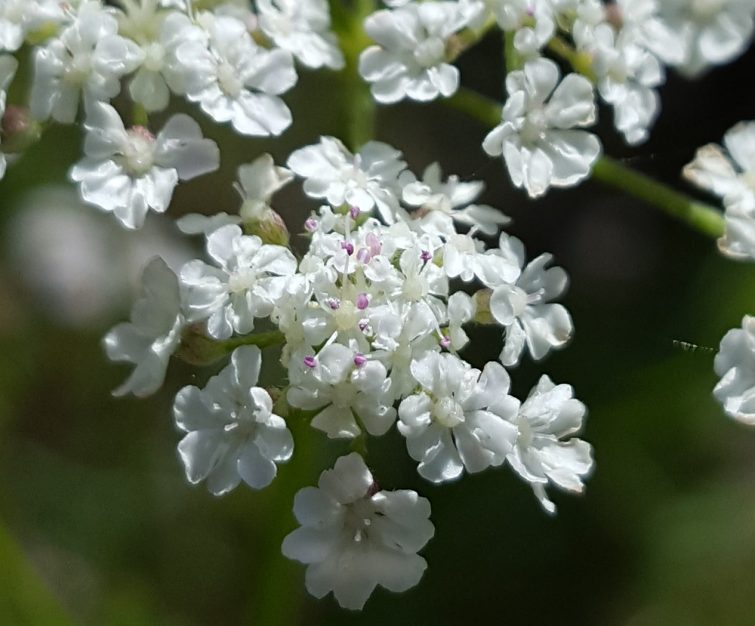
Flowering season: From July into September. My favourite UK wild flower field guide, from Blamey, Fitter and Fitter, mentions Japanese hedge parsley as being the last of our most common white-flowered hedgerow umbellifers to bloom in the summer. It follows wild chervil and the purple-spotted, coarsley-hairy stems of the rough chervil (Chaerophyllum temulum).
Fruits: A dry schizocarp that splits into two oval fruits, covered in short, hooked hairs.
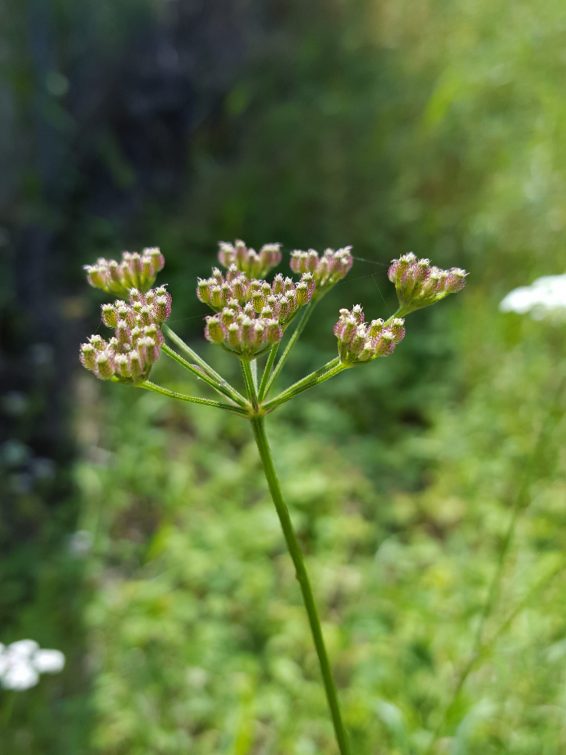
Habitats: Hedgerows, woodland edges, and suitable sites on neutral to alkaline soils.
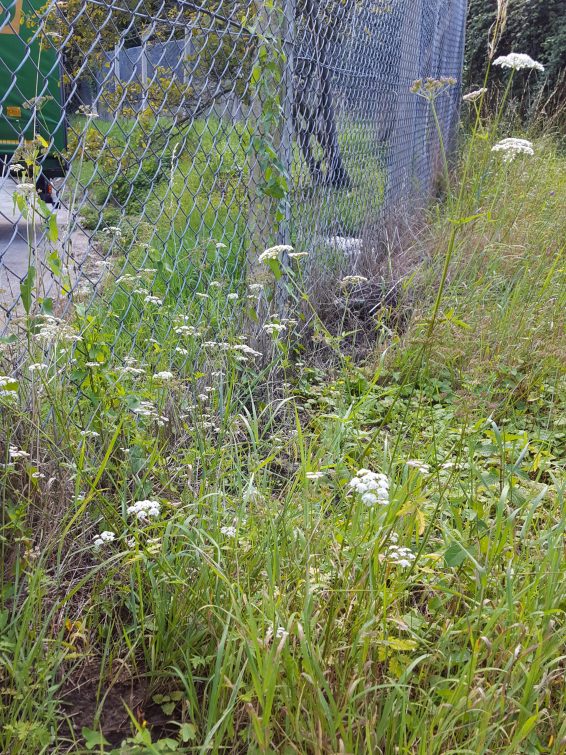
This is a lowland plant that won’t be found at altitudes above 400 metres. To see its geographic range here in the UK, just follow this link.
Parts used: Leaves. Roots, Fruits.
Medicinal uses: This is a plant well-used for centuries in traditional Chinese medicine. It has been prescribed for dysentery, fever, haemorrhoids, and uterine tumours. The juice of the root is often used. I can’t find much reported use for the plant as a herbal medicine in western herbal systems. I suppose this isn’t surprising for an exotic species.
However, an interesting aromatic sesquiterpene molecule called ‘torilin’ can be extracted from the fruits. This compound has shown anti-tumour activity against a number of cancers.
It is also a potent inhibitor of the enzyme 5-alpha reductase. Now then. All boys and men should listen up right here, because it’s this particular enzyme (as we age), that’s responsible for converting testosterone (good hormone) into dihydrotestosterone (bad hormone).
This can potentially result in prostate enlargement and possible prostate cancer, as I discuss in my article on nettles. Not surprisingly, Torilin is subject to ongoing research. All males are wise to do theirs.
Harvesting: For food use, take the whole leaf away from where the petiole meets the stem. Strip the leaflets off before using. For other plant parts, you might want to make use of all the tips and techniques discussed in my harvesting guide.
Other notes: There are two other ‘hedge-parsley’ species growing in the wild here in Britain. These are the knotted hedge parsley (Torilis nodosa), and the spreading hedge parsley (Torilis arvensis).
In certain states of North America, this plant is considered an invasive weed. Because I am yet to experiment much with the plant, I haven’t discovered how versatile or how viable a wild food crop this could be. We know enough already to value to it as a medicine. It feels to me like this plant has more secrets to unveil.
If you have any questions about Britain’s wild plant guides, do not hesitate to drop me a line.
Happy foraging!