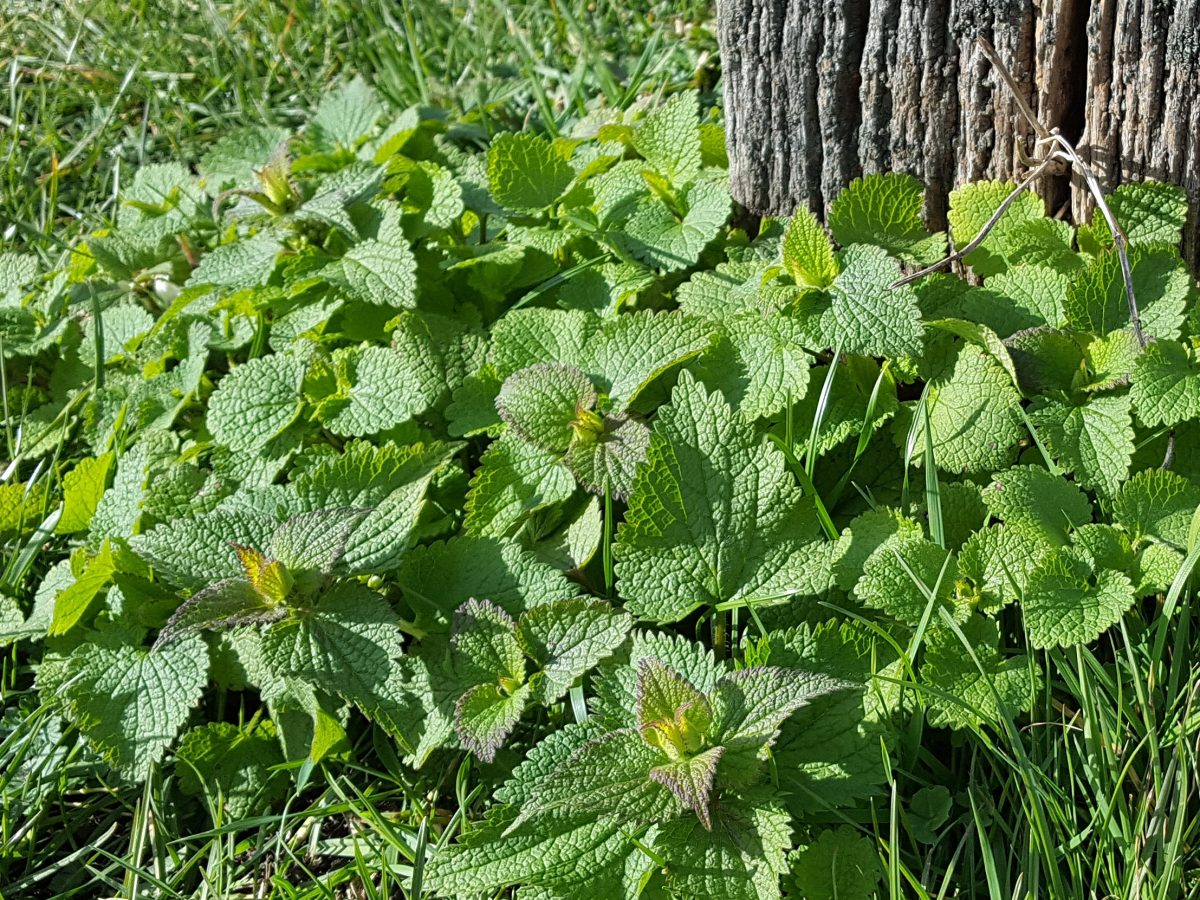
Identify white dead nettle with the UK’s only comprehensive plant I / D and foraging guide.
White dead nettle ticks many boxes for the forager. It’s easy to identify, available most of the year and abundant. It’s a fantastic wild plant source of Vitamin A, and one of the few plants that can give you a real sweet hit on the move, plus it can be a fun plant to play with!
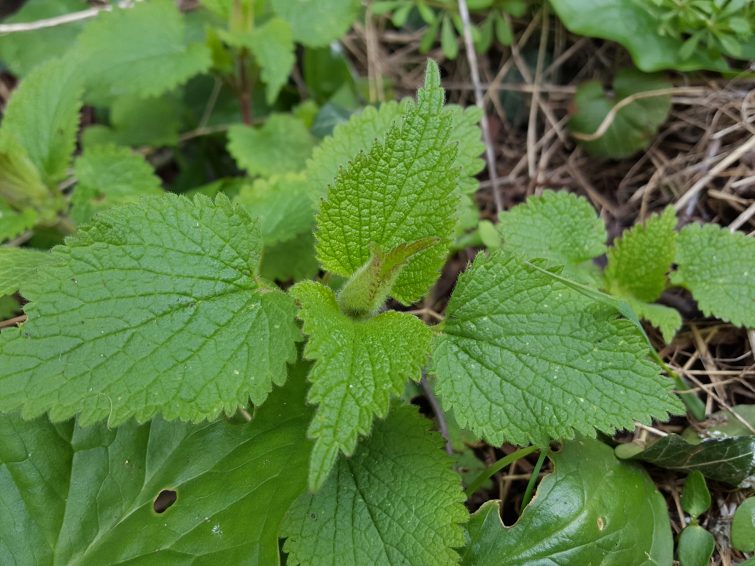
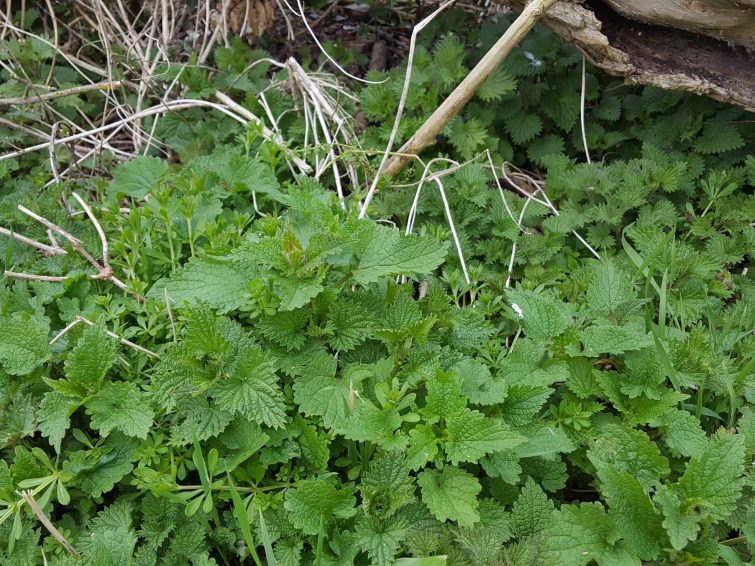
At first glance, and from peripheral vision, it looks almost identical to nettles. So much so, that on my foraging walks people regularly draw a sharp breath when I pluck and handle this downy soft herb in front of them!
White dead nettle is possibly the most frequently found UK species from the aromatic mint family (Lamiaceae). There are 40 or so annuals and herbaceous perennials in the genus.
What’s in a name?
The generic part of the scientific name Lamium, comes from the old Greek word ‘lamia’, which translates as ‘swallower’. This word came from the Greek word ‘laimos’, meaning ‘throat’. If you want to know more about why the word lamia was used to describe man-eating monsters, female vampires and mermaids, click here.
The Roman’s proceeded to latinise the word to Lamium and used it to describe a group of similar-looking herbaceous plants. The genus also includes the previously discussed red dead-nettle.
The specific part of the name – album, means white. This of course, points to the colour of the flowers.
The English common name ‘dead nettle’ refers to its striking similarity with the unrelated stinging nettle (Urtica dioica – Urticaceae family). These two species are regularly found together. The hairs on white dead nettle are without stings, hence the ‘dead’ name.
Botanical description
Warning! Occasional botanical language is used here, so you may need to refer to my handy glossary of terms.
You won’t actually have to worry about botany much because this is a plant that’s really easy to identify by feel, smell and place. It really hardly requires a description of appearance at all. But here you go anyway!
Leaves: SImple, hairy, heart-shaped leaves approximately 8 cm long and 5 cm wide. The aromatic leaves grow in opposite pairs. New growth at the top is often red-tinged. This colouring can sometimes be a result of colder weather.
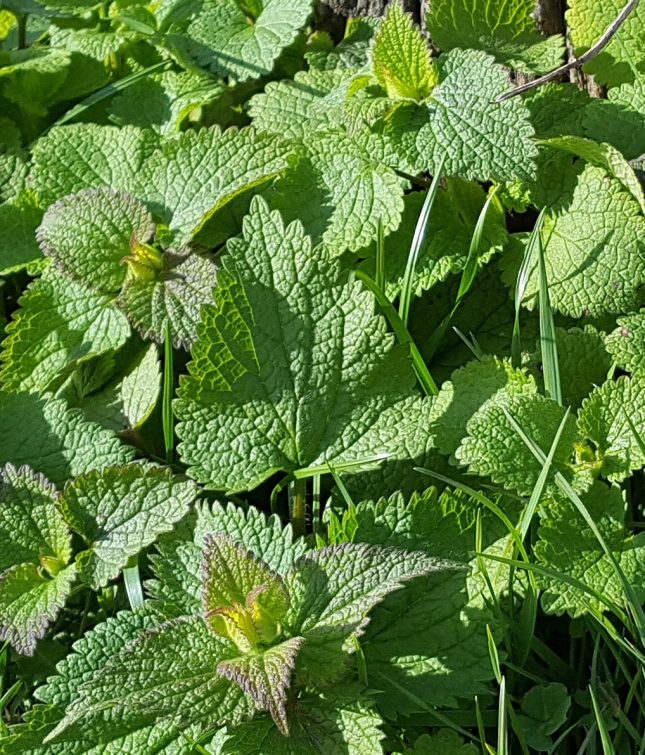
The wrinkly leaves have crenate- serrated margins. Veins are raised below. You don’t find the leaves growing as a rosette, but rather as small clumps of very short stems, with just the very top leaves.
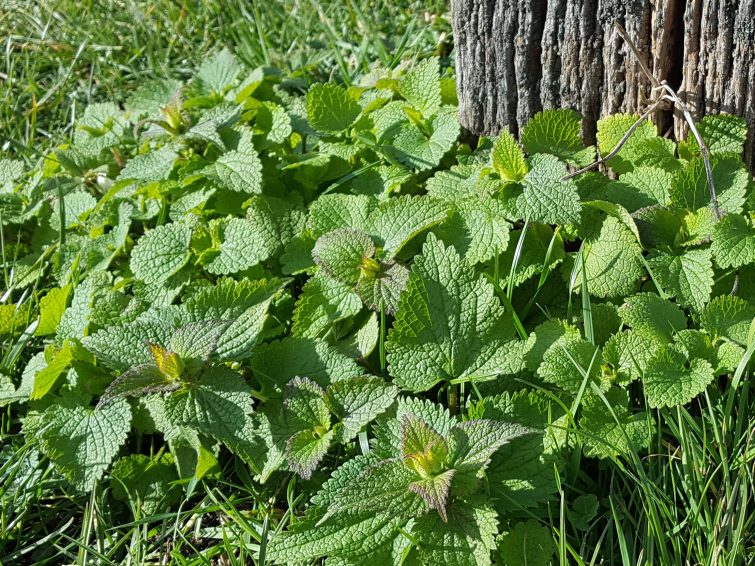
Petioles: These can reach anywhere from 1- 5 cm long. They can be red-coloured.
Roots: Creeping rhizomes and stolon roots.
Stems: Square, hollow and hairy, typically reaching around 30 – 40 cm high. The stems are green or red coloured. They are easy to snap. Compare them with the stems of stinging nettle which are solid, fibrous and tough as old rope.
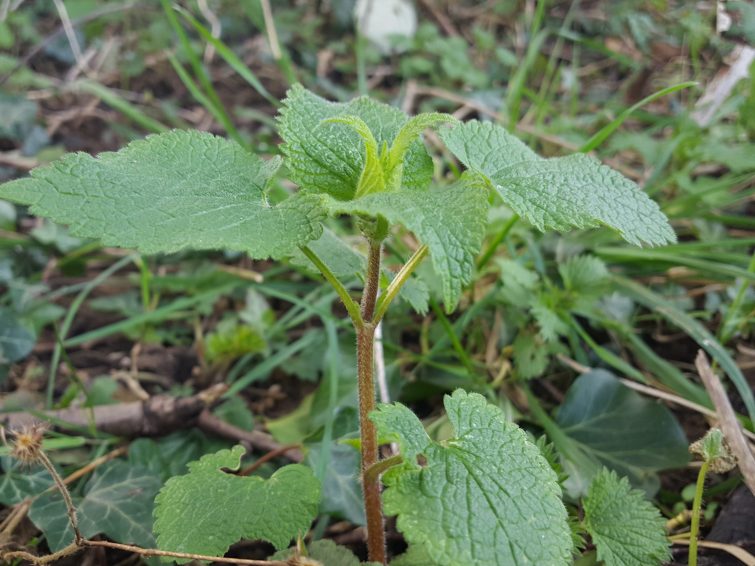
Flowers: These come in whorls. Flowers are two-lipped, white, and appear in the leaf axils towards the top of the stems.
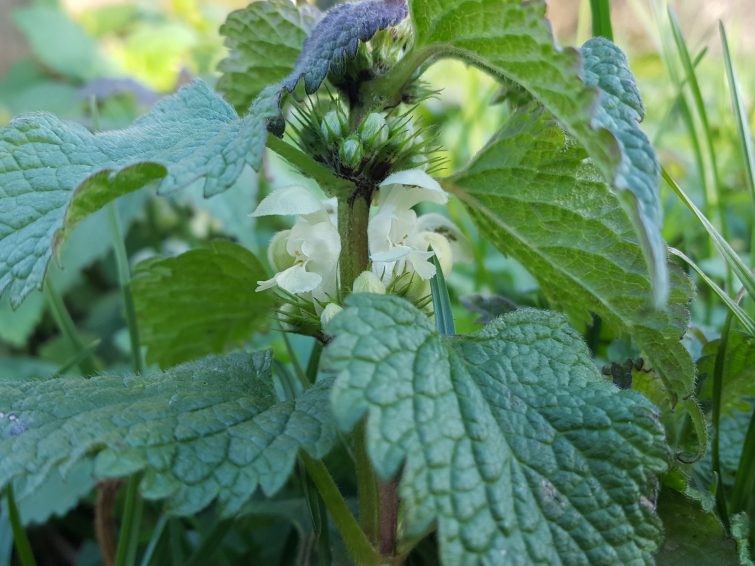
The flowers have petal-lobes that are fused into a distinctive hooded, corolla tube, held in a five-pointed calyx tube. Essential oil glands are present on the calyx.
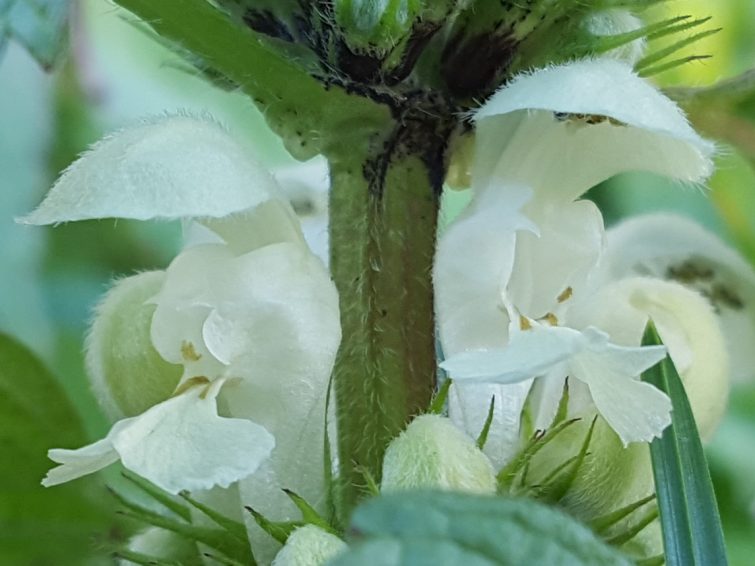
A sweet nectary lies at the very base of the corolla tube. My earliest plant-munching memories involves sucking the nectar from the base of these flowers.
Flowering season: You can spot the new season’s blooms appearing from early March after milder winters (almost every year now). It’s in full show all over the place by April.
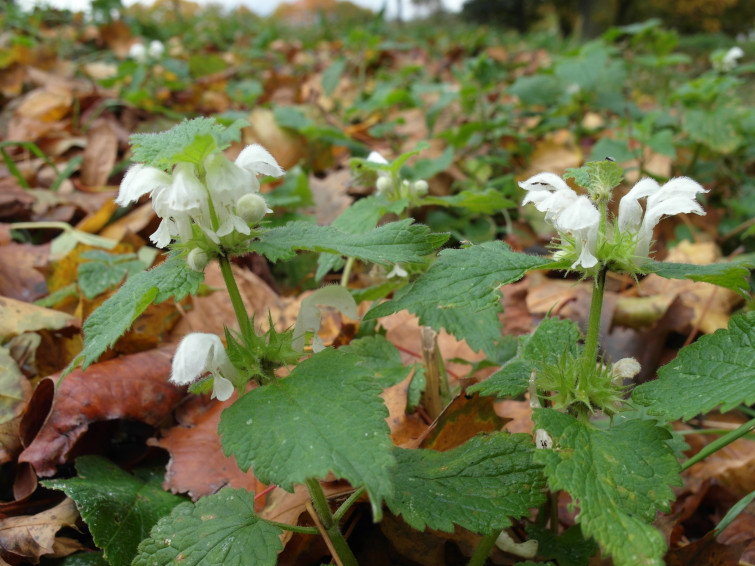
Fruits: Four small brown nutlets, in the base of the calyx.
Habitats: White dead nettle grows in much of the British Isles. You will find it in hedgerows and hedgebanks, dotted about in new woodland, wastegrounds and rough ground, as well as by roadsides, and in parks and gardens. This is one of numerous plants that are close attandents of human habitation.
Parts used: Leaves, flowering tops, flowers.
Harvesting: You can harvest the new leaves from February onwards. Pinch them off, or use scissors or a small knife. In urban areas, the mower and strimmer will provide fresh new growth at different times during the year, so just treat them in your mind ike cut-and-come-again salads.
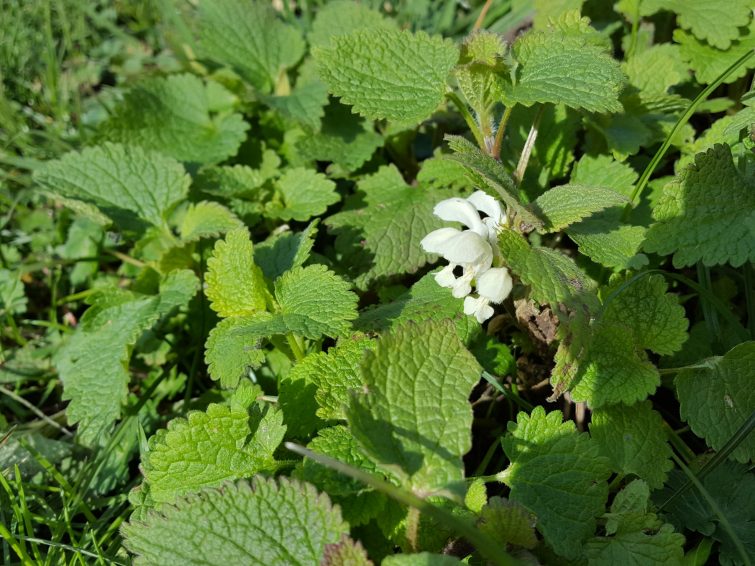
Edible uses: Chopped leaves can be used as a pot herb. Add them to omelettes and frittata. The whole leaf can be cooked like spinach, and added to numerous dishes, say as a filling with mushrooms and ricotta cheese, in ravioli.
Like so many of our wild plants, It is much more packed with nutrients than cultivated vegetables. White dead nettle is loaded with Vitamin A and C and rich in a number of minerals including calcium, potassium, phosphorus, and magnesium.
The flowers are a lovely wayside nibble, if you get there before the bees! It’s a pretty enough addition to salads and easily gathered in numbers. Country winemakers have traditionally made use of the sweet, nectar-rich flowers.
Medicinal uses: This is a plant with a long history of medicinal use. As with all plants that contain essential oils, white dead nettle leaves and flowering tops are antiseptic. The softness reveals its demulcent qualities. The bitters make it a digestive aid, and the tannins always provide astringency.
It has traditionally been used as a wound staunching herb, and as a general uterine tonic, especially useful for internal uterine bleeding and for excessive menstrual flow.
Other notes: A number of its relatives will be found in many of the same habitats. These include red dead-nettle, yellow archangel (Lamium galeobdolon), the not-so-frequently found henbit dead-nettle (Lamium amplexicaule) and the various, often invasive plants in the closely-related Lamiastrum genus. You can use any of them as food in pretty much the same way.
Coming soon is our guide to April’s foraging highlights. Don’t forget that I’m happy to answer any of your foraging questions, right here.
Happy foraging!