- Learn how to identify plants in a day with the easy-to-remember ‘plant patterns’ method.
- The how of ‘how to identify plants’
- What are plant families? Sounds Greek to me
- Other things to consider when learning how to identify plants
- Britain’s 12 most common families of interest to foragers (Part 1 of 2)
- 1) Apiaceae (carrot family)
- 2) Asteraceae (daisy family)
- 3) Brassicaceae (mustard family)
- Chenopodiaceae (beetroot family)
- 4) Fabaceae (pea family)
- 6) Lamiaceae (mint family)
Learn how to identify plants in a day with the easy-to-remember ‘plant patterns’ method.
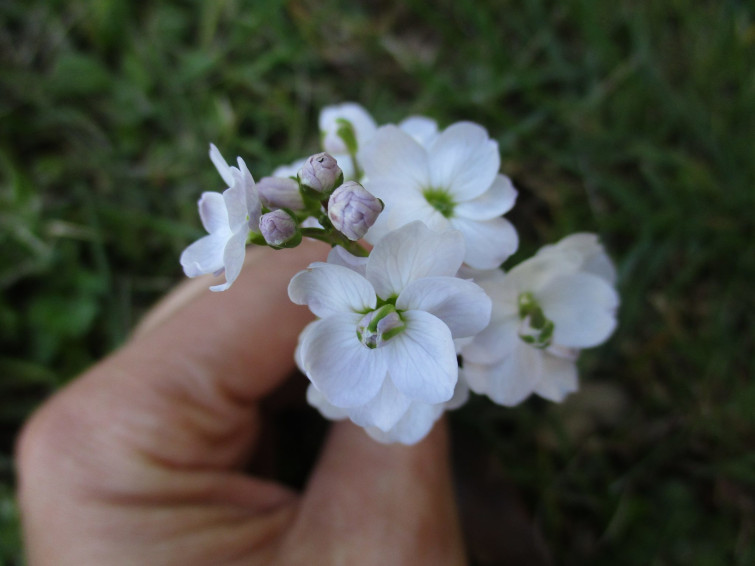
Use the family keywords to identify hundreds of Britain’s wild plants!
By reading this guide to 12 of Britain’s common plant families, you can learn how to identify plants in one day!
More plants than you thought possible to know will soon be revealed, by using the simple tools below!
The how of ‘how to identify plants’
All you need to do is remember a few simple keywords and phrases which describe the observable patterns that these 12 plant families display in nature.
When you have remembered these few keywords, you have the basic tools to identify more than 400 plants in Britain! Just so you know the full extent of the power of this identification method, worldwide these twelve families contain approximately 35,000 plant species.
The headline for this page could be ‘learn how to identify 35,000 plants!’ That’s no joke, but simply the power of knowing and recognising plants by the patterns they produce.
 So, here I present common plants from 12 of the most common plant families. All are easily found examples of around 400 really similar and closely related plant species.
Using the keywords below, and referring to the glossary you can start learning how to identify plants quicker than you ever believed imaginable. The beginners guide covers a few necessities and is best read before this.
It is no exaggeration to say that my own plant identification skills would have come on leaps and bounds in the very early days, if I had comprehended the significance of distilling what seems like long-winded botanical descriptions found in early flower key field guides, down into a few keywords to describe these repeating family features and patterns!
What are plant families? Sounds Greek to me
Since the mid 18th century, all living organisms have been given a name made up of two parts. This ‘binomial’ system is widely attributed to the famous Swedish scientist Carl Linnaeus (1707-1778).
This scientific system is a mixture of classical Greek and Latin, and uses Latinised name endings. In fact, the Latinised names tend to tell us a lot about the organism, and nearly 300 years later, still provides a simple and information-rich system that adds a whole extra level of knowledge about a species.
A quick look at some of the common wildlife here in Britain will show that a few well-known animals have familiar names. Everyone with an interest in animal wildlife or plants may already know or recognise a few of these.
Black rats are scientifically called Rattus rattus. Dogs are known as Canis lupus. Cats are called Felis catus. The tiny house mouse is known as Mus musculus. Our smallest bird, the little ‘jenny’ wren is Troglodytes troglodytes. Swans are called Cygnus olor. The donkey is Equus asinus, and brilliantly for anyone who liked table football in the seventies and early eighties, the bird of prey known as the hobby is Falco subbuteo.
The first part of the scientific name is the Genus. This word is the old Latin word that means ‘origin’, ‘type’ ‘group’ or ‘race’. The second part is the species, which is an old Latin word meaning ‘a particular kind, sort or type’.
Let’s look at the popular garden and medicinal plant genus Echinaceae, commonly grouped together as the ‘purple coneflowers’.
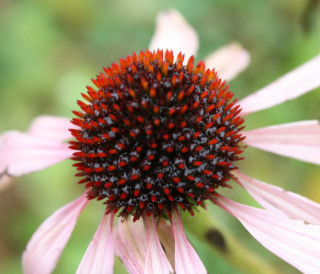
There are just 10 plant species placed in this genus. Ten extremely similar plants, that each display at least one specific characteristic, which defines them as separate from the other nine. For example, Echinacea purpurea has oval leaves and purple flowers and is noticeably different to the narrow leaves and pink-mauve flowers of Echinacea angustifolium.
A large number of our wild and garden plants, are commonly called by their scientific names. Think of Agapanthus, Alfalfa, Aster, Calendula, Chrysanthemum, Clematis, Cotoneaster, Digitalis, Echinacea, Wisteria, etc.
Just like in our Echinacea example, where similar but different species are brought together into a genus, by using the same logic and patterns (the most important ones are the floral structures), we can now place the closely related genera (plural) into a larger order – the plant ‘family’.
From the list above, the plant species in the Aster, Calendula, Chrysanthemum, and Echincaeae genera all display the same flowering structures and are therefore all grouped together in the daisy family or what we scientifically call the Asteraceae family.
See, it’s really not that daunting!
Today in Britain, depending on where you roam, you could meet any one of over 3,000 plant species, of which around 1,500 are native to the UK. John Poland and Eric Clement’s excellent book ‘The Vegetative Key to the British Flora’ documents all 3000 or so species.
However, as you will have noticed, even if only subconsciously, there are a far smaller number of plants that you are generally encountering in the wild, be this in town or country. You know, the plants that seem to pop up everywhere; those constant companions; those bloody weeds!
Other things to consider when learning how to identify plants
Plant patterns aren’t just what we can observe through the flower patterns and leaf patterns though. One of the most important plant patterns is often unknowable until we engage our sense of smell.
Plant chemistry and plant constituents are vital in helping us understand and know plants, It is often the smell of a plant that can be a clinching factor in positively identifying.
 Lastly, it’s going to become more apparent and more important to you the longer you are foraging, to get to know the habitats where you are meeting the plants.
The place you are walking or foraging in massively influences which plant species you are going to meet. No bog plants like living on sand dunes after all!
As well as showing you how to identify plants here in the UK, it is just as important that I guide you through the poisonous plants that are found on these isles.
Use the glossary of terms, designed to help you fast-track your understanding of botany and foraging.
Britain’s 12 most common families of interest to foragers (Part 1 of 2)
The following 12 plant families are chosen, because aside from the grasses (Poaceae), sedges (Cyperaceae), and Orchids (Orchidaceae), these are the most common and therefore the most important ones for foragers to start with.
Apiaceae (carrot), Asteraceae (daisy), Brassicaceae (mustard), Chenopodiaceae (beetroot), Fabaceae (pea), Lamiaceae (Mint), Liliaceae (garlic), Polygonaceae (dock), Ranunculaceae (buttercup), Rosaceae (rose), Schropulariaceae (foxglove), Solonaceae (nightshade).
The essential tools to show you how to identify plants in a day, are the highlighted keywords and phrases These are the basic building blocks for the foundation of your understanding
1) Apiaceae (carrot family)
This is a family of annuals, biennials, and herbaceous perennials. This is without doubt the most important plant family for a forager to know! Some wonderful foods, powerful medicines, and deadly poisonous plants are found in the carrot family! There are approximately 3,600 species in 430 genera. 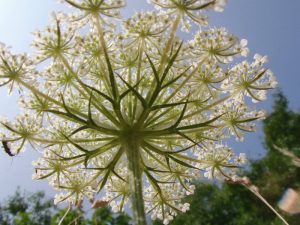
The most noticeable pattern is the characteristic compound umbel flowers. Have a close look at any carrot family plant next time you see one in flower. You will notice the set of flower stalks emanating from a central point, very much like an umbrella.
This inflorescence is called an umbel, hence the former family sobriquet of Umbelliferae. At the end of each of the stalks is a second umbel arrangement. Unlike a true umbel, therefore, each compound umbel is always made up from smaller individual umbels.
Every individual flower boasts 5 petals, 5 stamens, 2 stigmas and an inferior ovary.
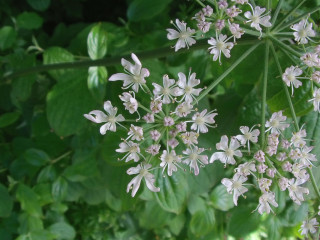
The carrot family plants found here have white flowers generally, with a few yellow species. Occasionally the white flowers emerge with a pinkish tinge, and very occasionally the flowers are blue (Eringyium maritimum – sea holly).
The leaves of this family are typically in an overall triangular shape. Most plants have repeatedly pinnate leaves.
To the eye, some of these plants suggest a fern-like appearance. You can see this on sweet cicely (Myrrhis odorata), hemlock (Conium maculatum) and caraway (Carum carvi) to name a few. Most have leaflets that are lobed, often deeply lobed.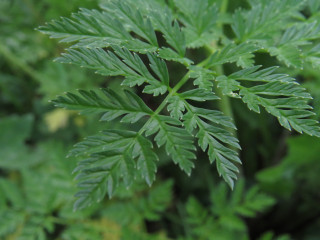
More often than not, carrot family plants have hollow stems, although the wild carrot (Daucus carota), together with a few other plants have solid, pith-filled stems. The plants produce alternately spaced leaves on the flower stems.
When it comes to identifying individual species, the shape of the petioles as well as the arrangement and number of vascular bundles in the leaf stalk will assist tremendously in determining who’s who!
The flowers are symmetrical. Some species will produce larger outer petals in their flowers, though many species will produce five equal-sized petals. The density and diversity of the shapes of the umbels become apparent with any amount of time spent studying them.
The fruits of the carrot family are technically schizocarps – dry fruits that split on maturity, into two separate parts. We colloquially call them seeds. A number of the family are strongly aromatic and have found use in the kitchen for millennia.
2) Asteraceae (daisy family)
One of the largest plant families, with approximately 1,100 genera and 30,000 species! This is a family of annuals, herbaceous perennials, shrubs and trees.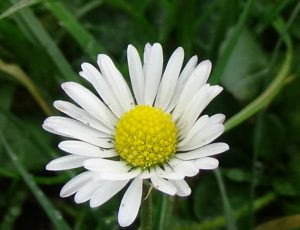
These plants are distinguished by composite flower heads borne on a single stem, as displayed by the sunflower (Helianthus annum).
What appears to be one big flower is actually a multitude of tiny individual flowers.
The petal-like appendages observed on many composite flower heads are technically ray florets. At the base of these florets you will find the usual floral reproductive structures.
The ray florets surround a circular array of numerous small individual flowers known as disk florets, which have no petals.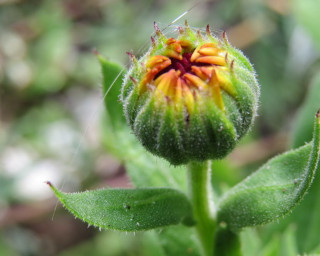
The individual flowers are formed of a corolla tube. Many of the species in this family have flowers subtended by a group of overlapping leaf-like bracts, which in the thistle tribe is known as an involucre.
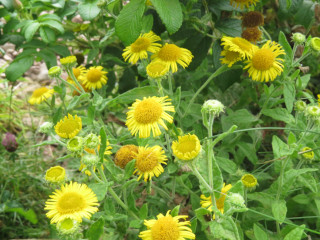
Typically, the flowers of wild family members found in Britain will have yellow or white ray florets, and yellow or white disk florets. Occasionally orange and blue colours will also be found, i.e. Chichorium intybus (Chicory).
Daisy family chemistry is fascinating. Some members of the family are aromatic, such as chamomile and mugwort; while others are not.
 One prevalent class of compounds found in the daisy family are sesquiterpenes. These aromatic molecules are somewhat volatile, though not as readily as monoterpenes.
Plants with high concentrations of sesquiterpenes, often attached to lactones, such as dandelion, wormwood, and others, will also impart bitterness.
This plant family are known for producing and storing their carbohydrate in the form of inulin, rather than starch.
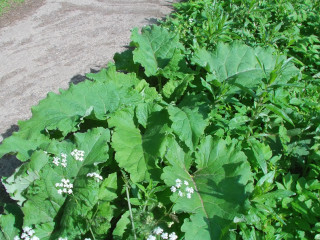
Inula helenium (Elecampagne), Jerusalem artichokes (Helianthus tuberosum), and greater burdock (Arctium lappa) are three plants known for their high concentrations of inulin.
The leaves of the daisy family have no stipules. Many unusual foods such as the tuberous rooted Dhalia spp come from this family.
3) Brassicaceae (mustard family)
Believed to contain around 370 genera and approximately 4000 species of annuals; biennials; and herbaceous perennials.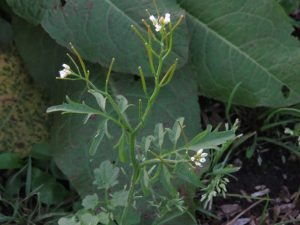
These plants are recognised by the flowers displaying the shape of a cross (hence their previous family name and the term ‘cruciferous plants’).
Large numbers of the mustard family populate our towns and country. They are typically quick growing and populate wasteground and disturbed soils,
Their flowers have 4 free petals and 4 free sepals. Most Brassica family plants will show six stamens (sometimes four). At the base of the flower will be a superior ovary.
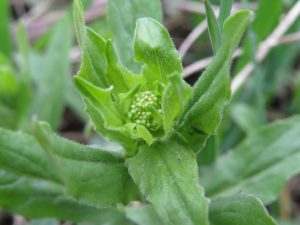 Just before flowering, you can begin to notice a familiar miniature ‘broccoli’ like flower bud on Brassica family plants. This will be apparent on almost all members of the family.
Well known Brassica family plants include shepherd’s purse (Capsella bursa pastoris), mustard (Brassica spp), radish, (Raphanus spp), and bittercress species such as ladies smock (Cardamine pratensis).
Compare this family to the poppy family which also have four petals, a superior ovary, but many stamens; or even some ‘potentilla species’ from the rose family, which again, have 4 free petals and many stamens. The willow-herb tribe from the evening primrose family (Onagraceae) also have 4 petals, but with an inferior ovary. 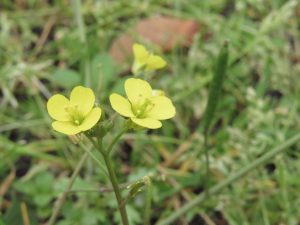
The Mustard family plants generate a range of seed pods with a seam. These eventually split open to reveal spherical seeds.
In terms of their chemistry, species in this family often produce acrid, sulphurous compounds, giving them their characteristic hot, peppery taste. For foragers then, this is another of our finest edible plant families.
Chenopodiaceae (beetroot family)
Annuals; biennials; herbaceous perennials; shrubs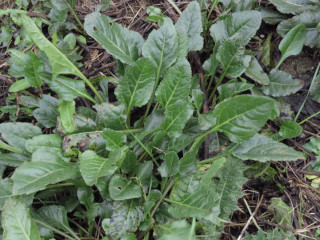
Although now widely placed into the Amaranth family, you will find reference to the Chenopodiaceae family in many books.
There are approximately 2000 species and 165 genera in the Amaranthaceae family.
The Chenopodiaceae subfamily are also known as the goosefoots.
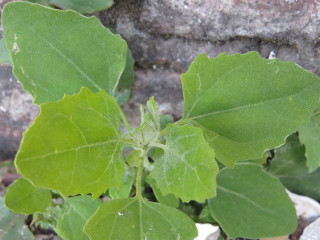 They are characterised by their tiny, individually inconspicuous flowers, often on branched stems.
All members of this sub-family are edible, including Beetroot (Beta vulgaris), samphire (Salicornia spp), and qunioa (Chenopodium quinoa).
The dusty pollen betrays them as true flowers. Most family members have roughly triangular-shaped leaves, often covered with a coating of shiny dusty dots.
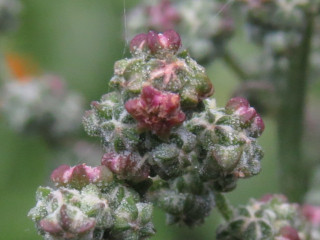 When eaten raw they are often mealy to taste, and are reasonably high in oxalic acid.
If you spot a weedy plant in your area or garden without any obvious flowers, then it is likely one of the beetroot family.
4) Fabaceae (pea family)
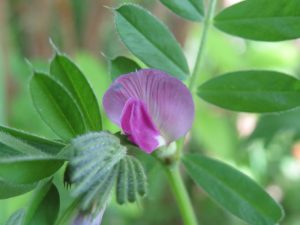 This is another large and well-known family of plants. It consists of mostly biennials and herbaceous perennials. A number of species are economically valuable and have been eaten for millennia. As such, this family can be said to have widely contributed to Human evolution.
Around 600 genera and more than 13,000 species have been documented from this family of leguminous, nitrogen-fixing plants. Within larger plant families such as this one, various collections of similar-looking genera are usefully placed into a number of ‘tribes’.
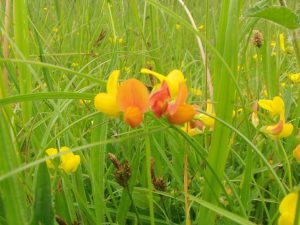
Therefore we can talk about the ‘clover tribe’ of trifoliate or trefoil species, and the mostly pinnate-leaved vetches and peas from the ‘liquorice tribe’. These tribes and a few others all share a similar flower structure, so are further grouped together as the pea sub-family.
The major identification feature to look out for is the symmetrical, irregular flowers, which are distinctive by the unique shape and appearance. From the large garden pea (Pisum spp) and bean (Phaseolus spp) to the tiny flowers of wild clovers (Trifolium spp), all these plants show the same floral form.
Each has a ‘banner’ petal (one petal with two lobes looking like two fused petals). This is found behind two ‘wing’ petals; with a further two petals (usually fused together) appearing as a ‘keel’ at the base. 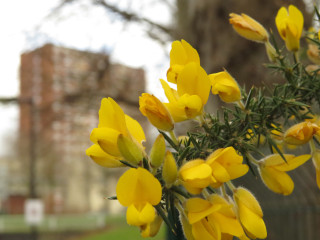
At the base of the flower are 5 sepals, fused together creating a calyx tube. The flowers contain 10 stamens, one style, and a superior ovary.
Typically the fruits of the pea family are set in a pod that splits upwards along the seam.
Species of interest to British foragers include alfalfa (Medicago sativa), the various clovers (Trifolium spp), a number of vetches (Vicia spp), the locust trees (Acacia spp), gorse (Ilex europaeus), and the sea pea (Lathyrus japonicus).
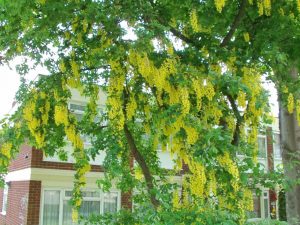
A number of plants in this family are toxic, including the Laburnum tree (Laburnum anagyroides). Some species require careful preparation before consuming.
6) Lamiaceae (mint family)
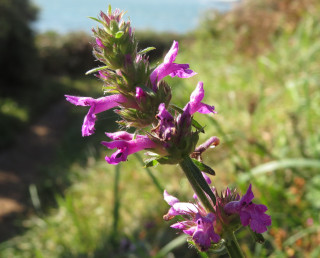 This is a family of annuals, biennials, herbaceous perennials; shrubs. The mint family is one of the most well recognised and commonly used plant families in the world.
Just about everyone knows some of these plants, and use them almost every day in the kitchen or bathroom. The mint family contains around 3,300 species in approximately 230 genera.
All plants in this family have square stems.
Leaves are simple, and always opposite each on the stems. The leaves appear at right angles to the previous pair. 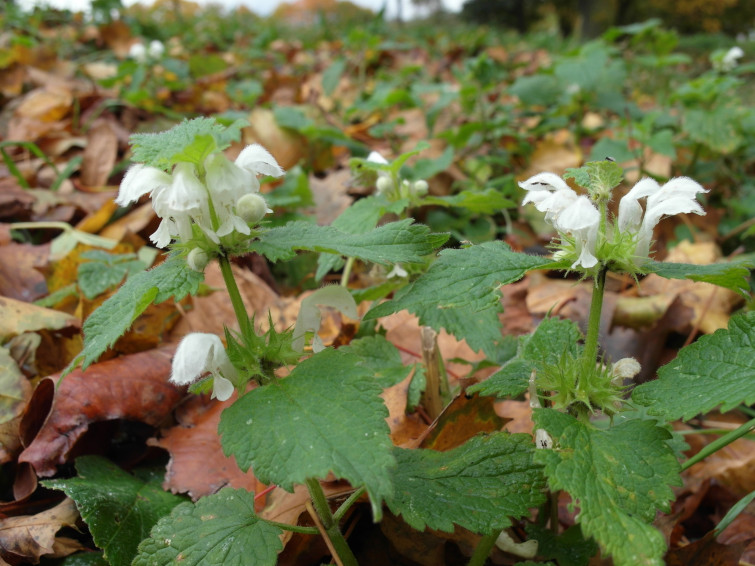
Many members of this family are aromatic. The flowers consist of 5 united sepals (the calyx) subtending 5 united petal lobes.
These flowers are two-lipped. Many species will be very aromatic and produce flower buds covered in essential oil glands. When you look closely at these trichome glands, you will see they are mushroom or pin-shaped.
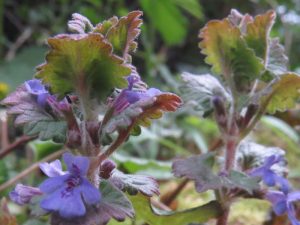
Both lips of the flower are lobed; with 2 upper lobes and 3 lower lobes. They can be pronounced and wholly irregular lobes, as found on rosemary, or smaller more regularly lobed as will be found on marjoram.
The Flowers have between 2-4 stamens.
All in this family have a superior ovary. The fruits are small and often referred to as nutlets. Typically you will see four nutlets at the base of the calyx.
Many of these plants have creeping underground stems (stolons), or creeping overground stems (runners). 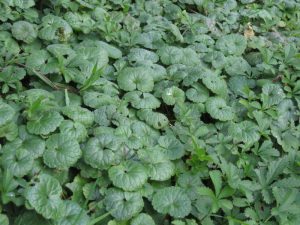
These adaptations help the plants quickly establish, colonise, and reproduce after injury, disturbance or grazing because the stems evolved to produce shoots and roots from every node on the stem.
Part two of how to identify plants in a day will be online soon. If you have any questions please do not hesitate to contact me here. Happy foraging!