UK guide to foraging wild cherry. Learn to identify, then discover its food and medicinal uses.
Most people who have ever tried foraging wild cherry can testify to it being be a bit of a lottery. This is because when you come across a new tree, you never know whether the fruit will be sweet or bitter until you try one! But if you persevere, thankfully it won’t take long to find decent tasting specimens.
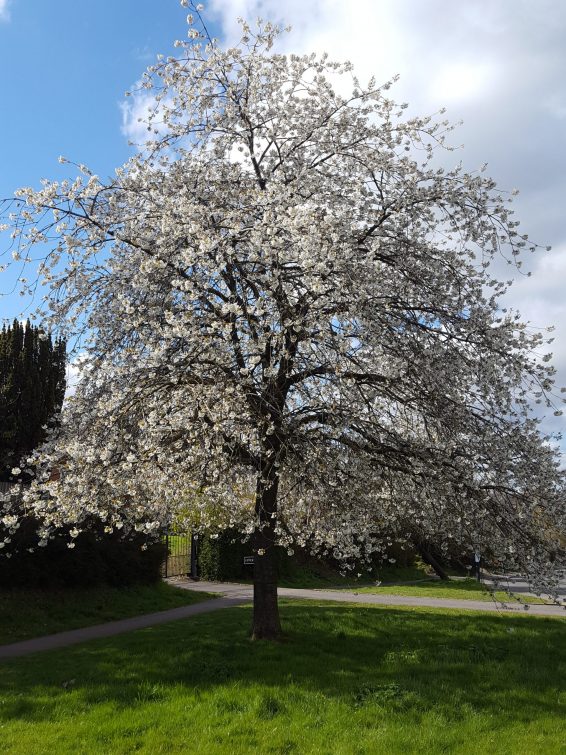
Also commonly called ‘Gean’, our wild cherry can grow up to be a tall tree (up to 30 metres). It is an integral part of our woodlands, especially with Beech, and it’s widely planted as an amenity specimen.
Whats in a name?
The generic part of the scientific name Prunus, as all who have read my article on Blackthorn will know, comes from the Latin word, prune – for plum.
The specific part avium, has two distinct meanings. The Latin word avium means wilderness or wayside. Whereas the old Latin word avis, means bird. Interestingly, we have another cherry tree that we commonly call the ‘bird cherry’ – Prunus padus.
Our common name ‘cherry’ has its roots in the old French word for the fruit – cherise.
Botanical description
Occasional technical words are used here. Please refer to the foragers glossary for help.
Leaves: Wild cherry has obovate-elliptical leaves, which are anywhere from 6 – 16 x 5 – 8 cm, with a pointy tip. They are shiny-looking when very young.
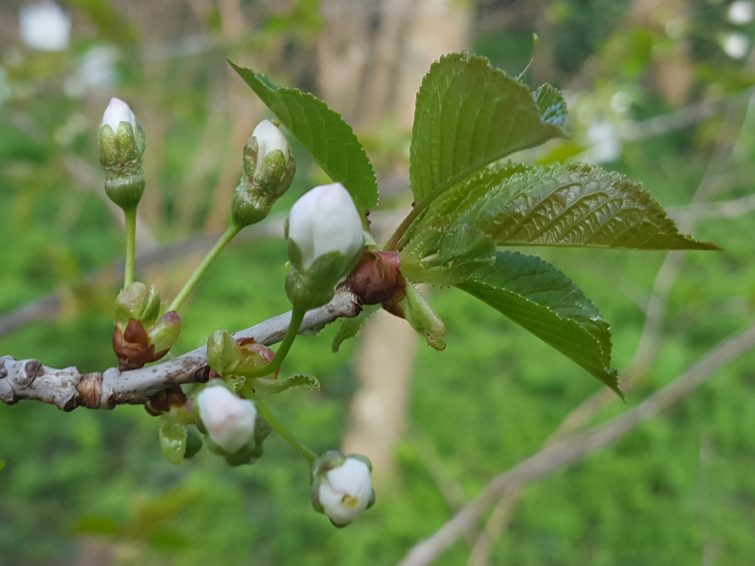
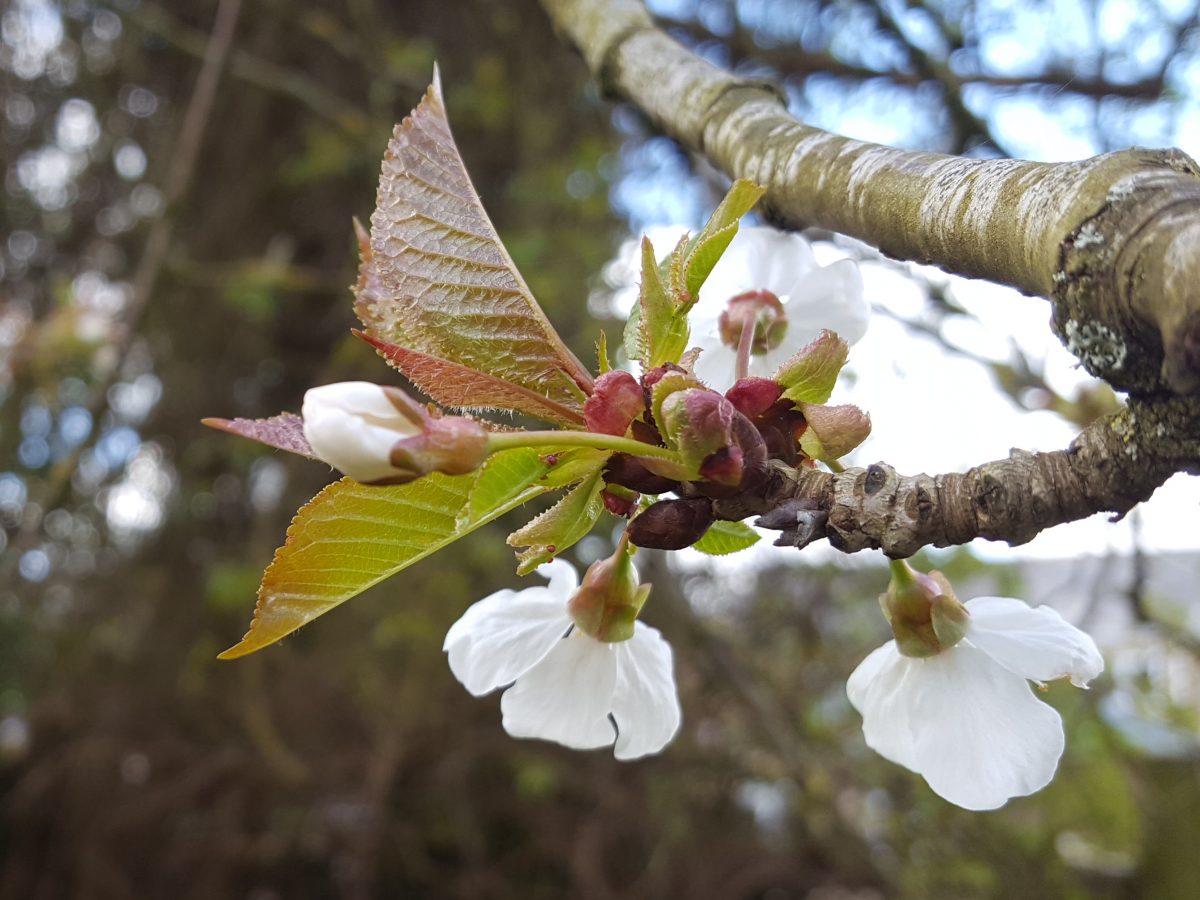
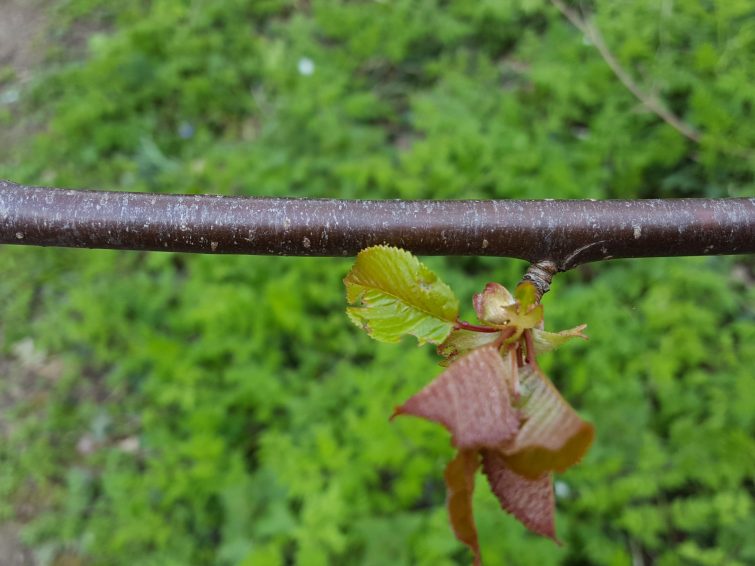
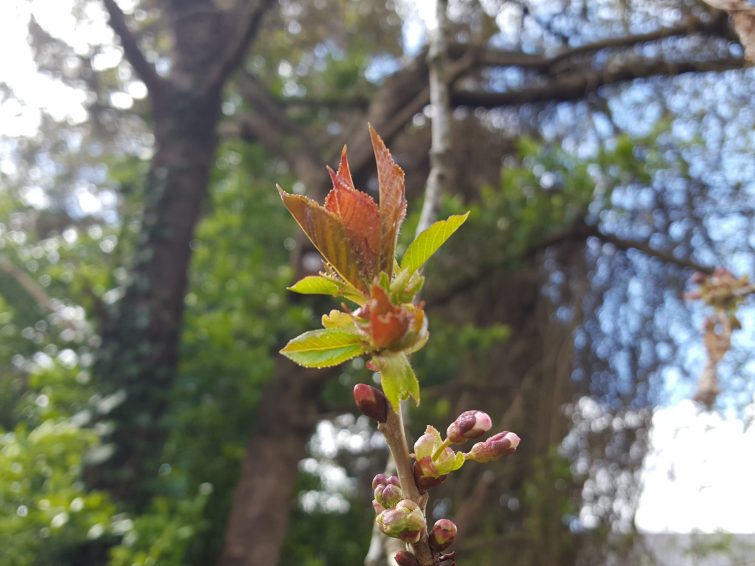
On emerging, the leaves often appear copper-coloured. They turn a darker green within a few days.
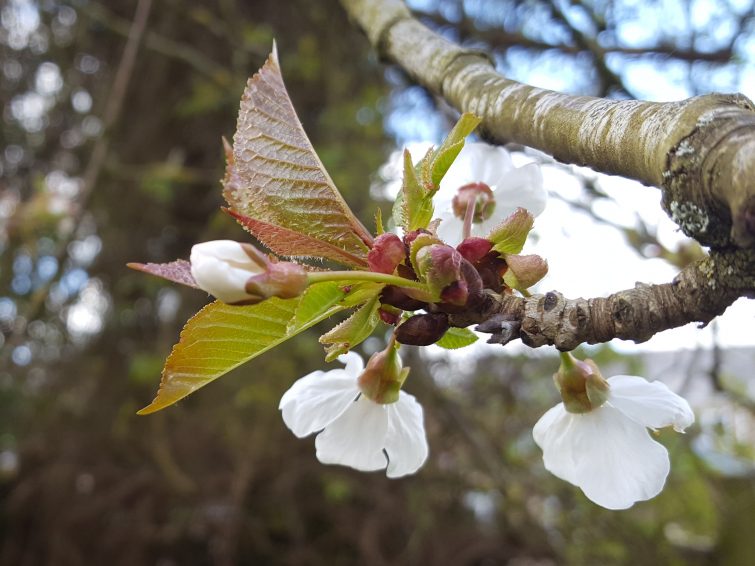
Hairs are present on the leaf below. Leaf margins are twice-serrated, with appriximately 40 -55 teeth each side.
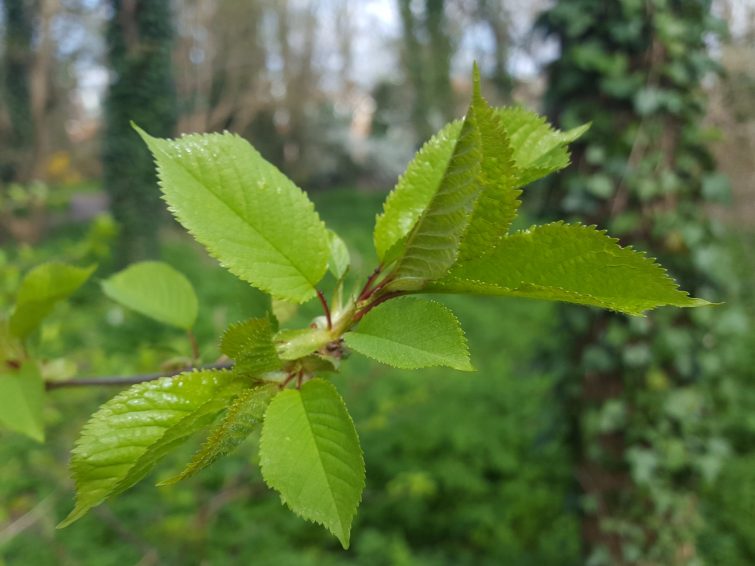
Petioles: Quite long, 2.5 – 5 cm. Two – four red glands at the top. There are linear-shaped stipules at the base (6 – 12 mm). These will soon wither away.
Twigs and branches: New twigs are usually 6 – 8 mm diameter, and hairless. The young twigs have a waxy pruinose covering at first, before losing this layer in their third year.
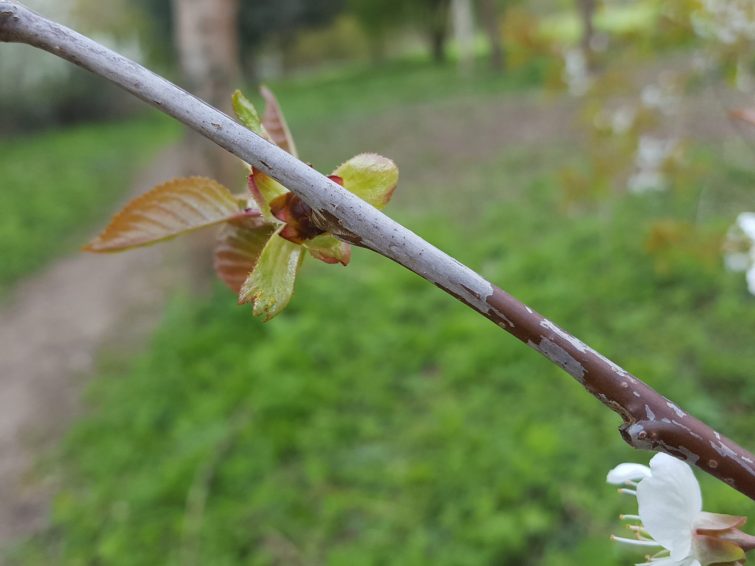
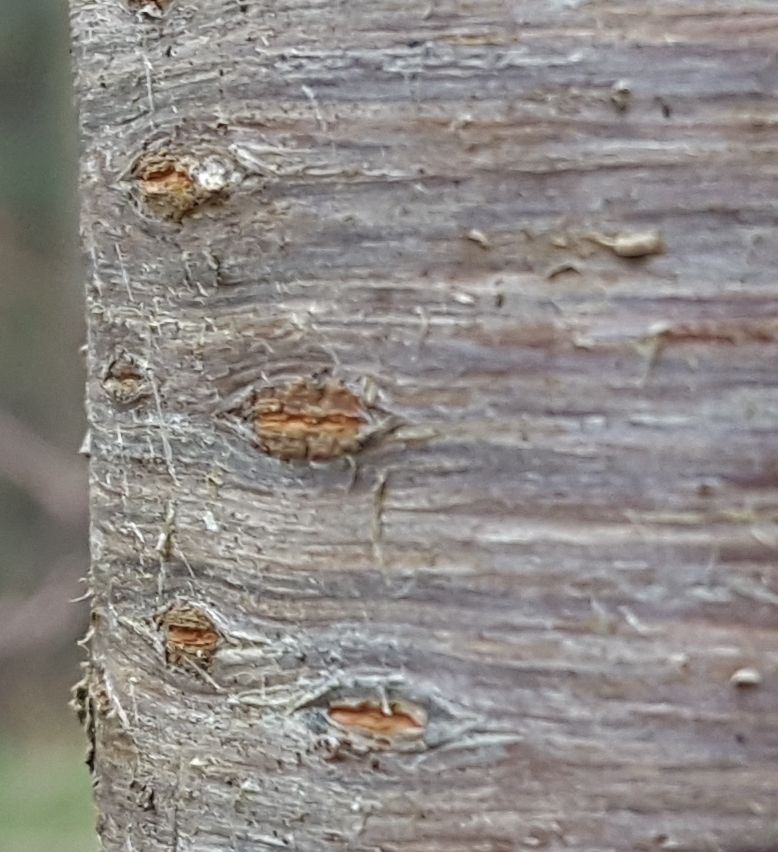
By the second or third year, the bark develops a rich red- brown colour, eventually turning a grey-brown colour with age. The twigs and branches are dotted with lenticels.
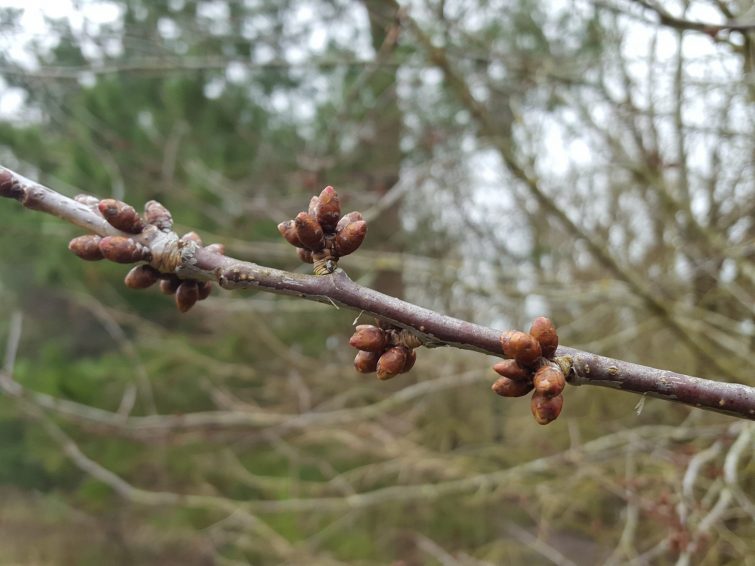
Buds: Brown and hairless, they appear in dense clusters (up to 9 per cluster) at the end of twigs. Ovoid, with acute tips.
Bark: Shiny, red-brown coloured, and peeling on mature trees.
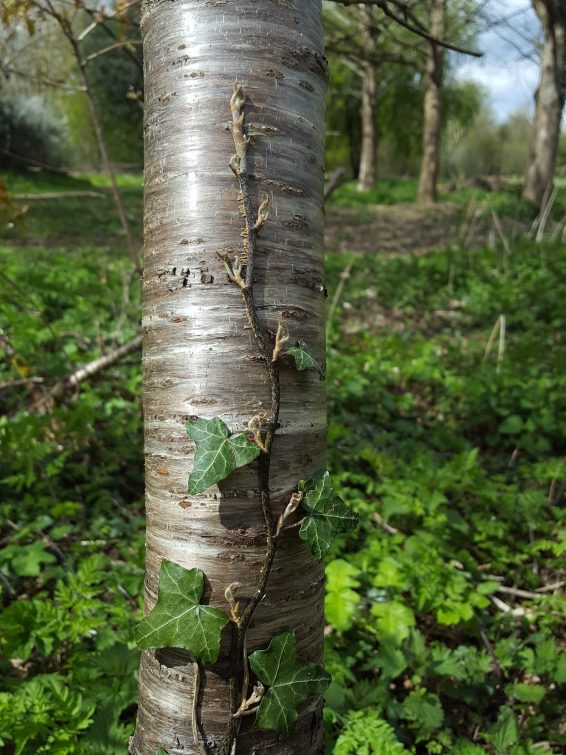
As the tree ages, the lenticels make a series of striped bands.
Trunk: Usually straight. Not suckering at the base like other Prunus species. When old, the bark at the base develops angled fissures.
Flowers: The flower buds are in clusters at the tips of branches, and found right back along the branch.
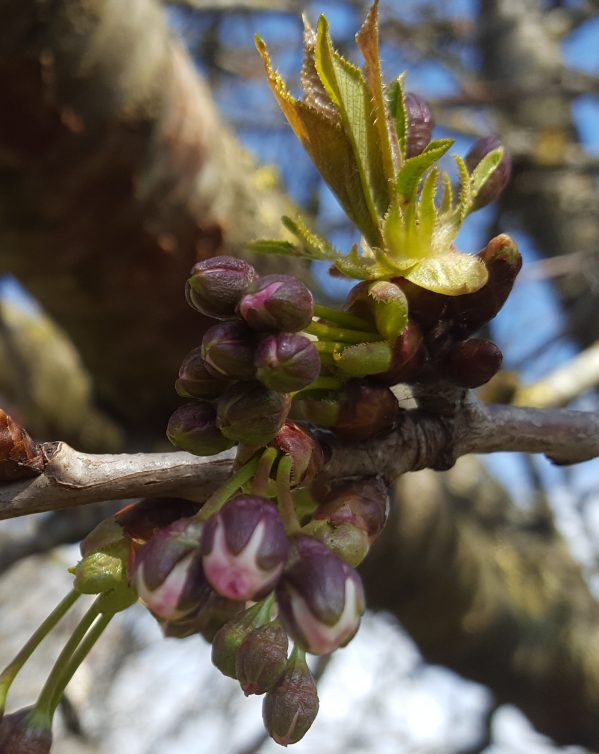
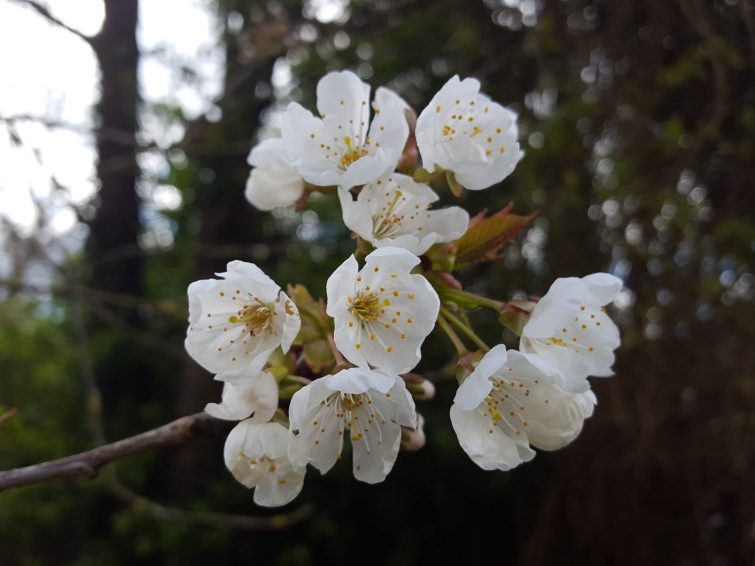
The flowers have 5 purple-green bracts and 5 white petals, often notched. In the centre of the flower are a mass of yellow-tipped stamens.
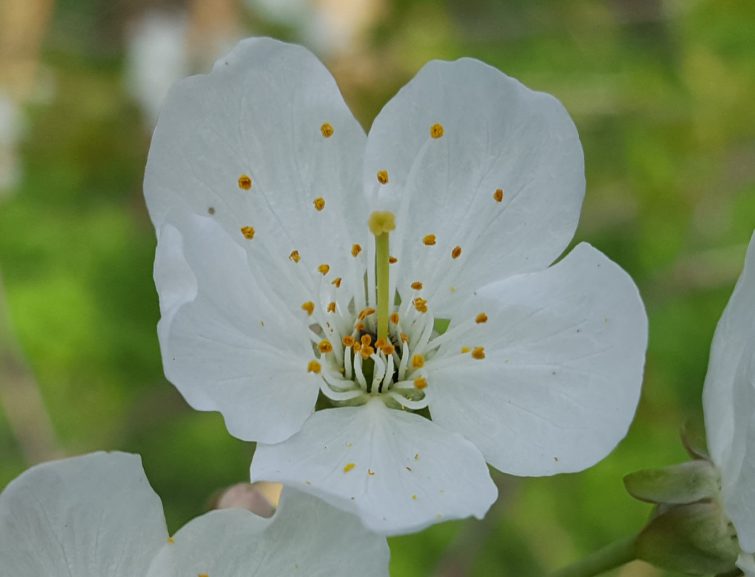
The flowers can be larger (up to 25 mm) than either blackthorn or cherry plum flowers, especially in shadier spots.
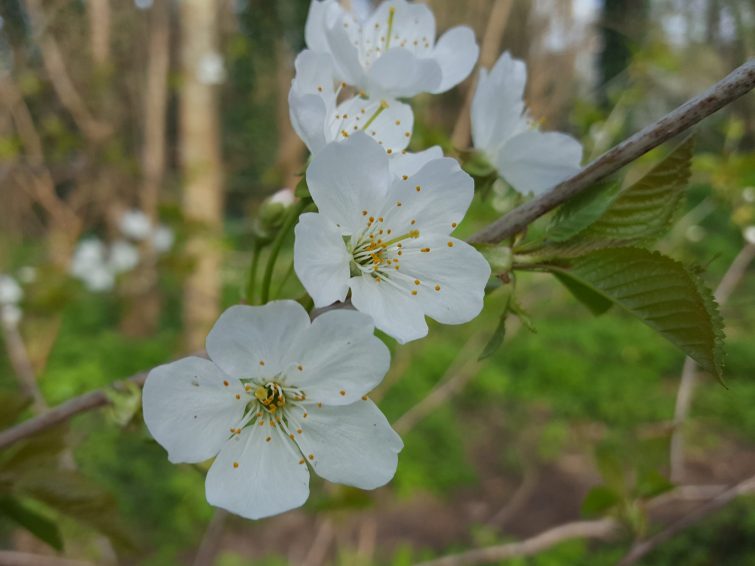
Flowering season: From early April into early May, dependent on where you live in Britain.
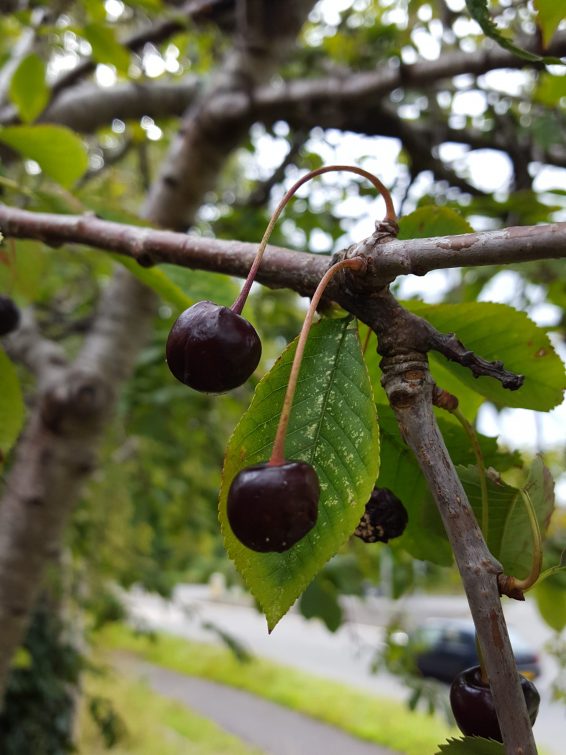
Fruits: These are round and about 12 mm across. Their stone fruits can be red, purple or black coloured.
Habitats: Woodlands, old hedgerows, parks and gardens.
Parts used: Young leaves, flowers and ripe fruits.
Harvesting: If you can, then spread some sort of sheet under the tree and gently shake the branches. The plant should rain down fruit. If you have to collect by hand, it will soon become obvious which ones are ripe, as they literally come away as you begin to grip them in your fingers. Learn more of these tips and tricks with my quick-to-read harvesting guide.
Edible uses: I like the sun-warmed fruits plucked straight from the tree. I adore them added to rich chocolate sponge cakes in a black forest style. They are suitable for all manner of jams, compote and pie fillings. I havent made glacé cherries with them yet but I bet they would be lovely. Infused into a decent brandy they make an excellent liqueur.
The young leaves can be eaten, either by salting and pickling, as are found in traditional Chinese cookery, or through soaking in a sugar syrup for a leafy confection.
Medicinal uses: This plant is not as well known in herbal medicine as its sister tree, the Japanese cherry (Prunus serrulata). It is conceivable that the fruit stalks may be used in a similar way, as a remedy for cystisis.
Other notes: Wild cherry wood has been used for centuries in furniture making and in making cask barrels. The wood is also valued for use as a veneer.
If you have found this article interesting and would like to know more about identifying wild plants, then take your time to read our guide to starting out foraging as well as our definitive guide on how to identify plants in a day.
Next up, another fantastic edible Rose family tree, the Juneberry.
Until then, happy foraging!