Discover Britain’s tastiest edible wild plants with our guide to foraging in May.
It can seem ironic that having gone so many months with scarce pickings, we can almost be overwhelmed during the (hopefully) sunny days when foraging in May.
So what to focus on? Depending on your location, the answer to this question will be different. Literally hundreds of plants, and their various parts, are now available to harvest when you are out foraging in these longer days. Take your pick!
Nature’s increasing fertility, reaches a glorious climax this month. At this zenith of fecund expansion, foragers will begin to gently shift focus from abundant leaves and leaf shoots, to new tender flower stems, flower buds, flowers, fruits, seed pods, immature, and mature seed.
Because of this I feel both enormous relief and joy at the beginning of summer. I don’t doubt that these are the very same feelings and emotions felt by my hunter gatherer ancestors, and all of my direct relatives who came before me.
At this time of year I still keep a keen eye out for the occasional carpets of seed leaves, regularly produced from a number of different species.
The late spring sees the mass germination of various ‘goosefoot’ species from the Chenopodium and Atriplex genera and the continual opportunities to harvest microgreens of many species.
Estuary mud-flats, stream and river banks, waste-grounds and various neglected areas of cultivation will always be worth visiting when you are out foraging in May.
Ten wild edible plants to get to know when out foraging in May.
Before going out picking, it’s advisable to hone your poisonous plant knowledge. Anyone just starting out foraging, can quickly get up to speed with some of these basic tips and tricks.
Remember your responsibilities when harvesting wild plants. Ensure and enable the survival of the plant and plant populations, being mindful of the wider ecology you are working within, and are a part of.
You can also find some of these plants in March and April, and into June and beyond. Enjoy!
Sea arrow grass / Sea coriander (Triglochin maritima) Juncaginaceae family.
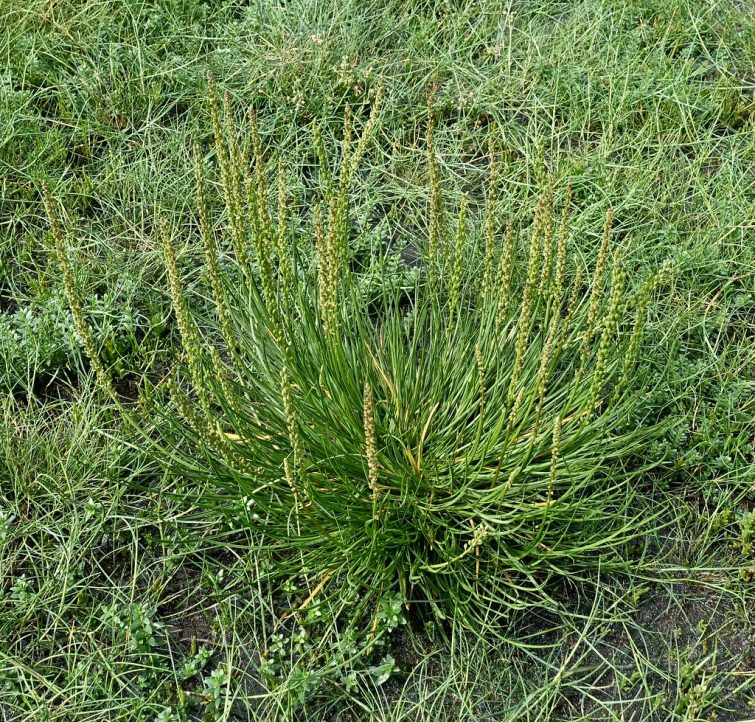
This estuary-loving plant looks somewhat like clumps of dark green chives dotted about on the salt marsh. Just as it’s relatively new secondary common name implies, the leaves taste strongly of coriander.
There are potential issues with cyanide-based cyanogenic glycoside content in sea coriander, although no adverse reactions to eating this plant have been reported. Occasional use of the younger parts in the spring and summer is completely fine. Watch my youtube video on estuaries and salt marsh.
Ash (Fraxinus excelsior) Oleaceae family.
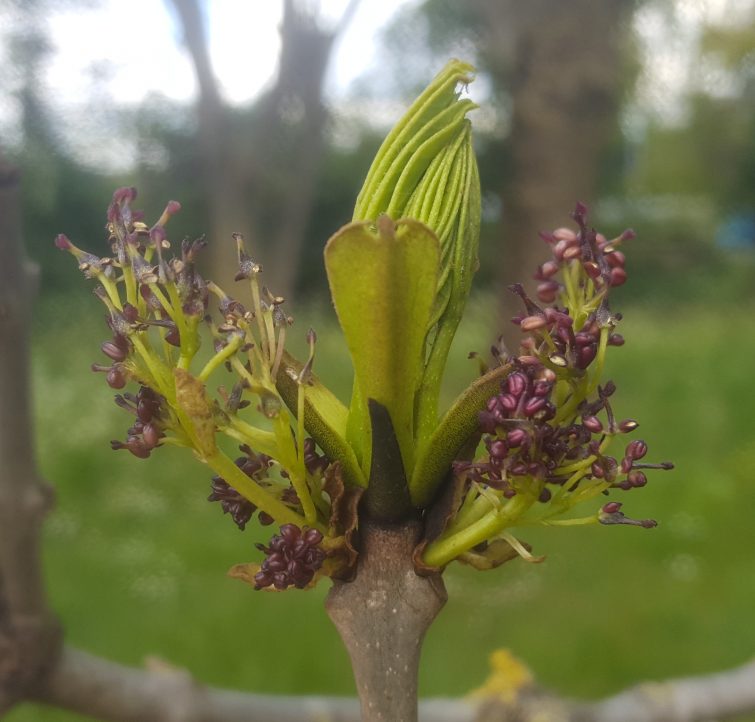
Ash is the last of our native trees to come into leaf. It comes into flower before the leaf buds burst.
The fruits from this tree, also known as ‘keys’, are another great reason to go out foraging in late May. They are edible only when young and green, and made palatable and tasty only with preparation.
Harvesting ash keys are another of my favourite harvests when foraging in May. Ash is related to the olive tree, and similarly needs a few stages of simple processing. Bring to the boil in salt water, change the water and repeat. Then place into a spiced vinegar to mature for at least three months. Six is better. The texture of the flesh is just like olives!
Rosy garlic (Allium roseum) Liliaceae family.
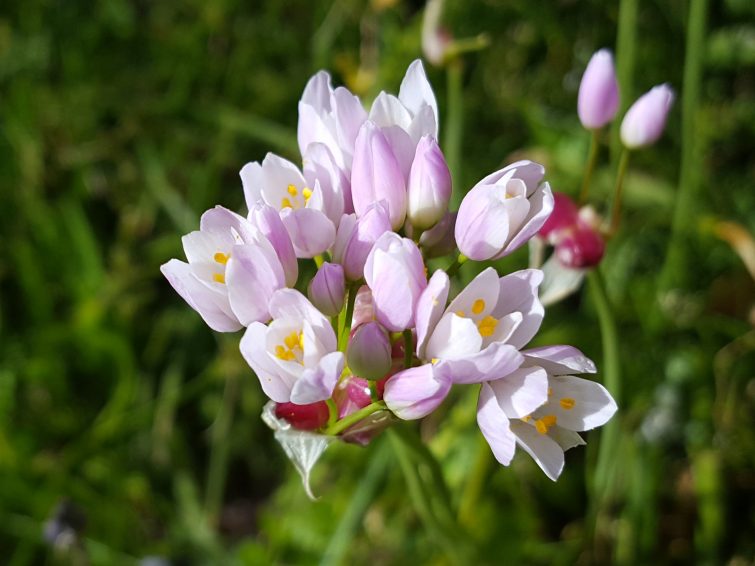
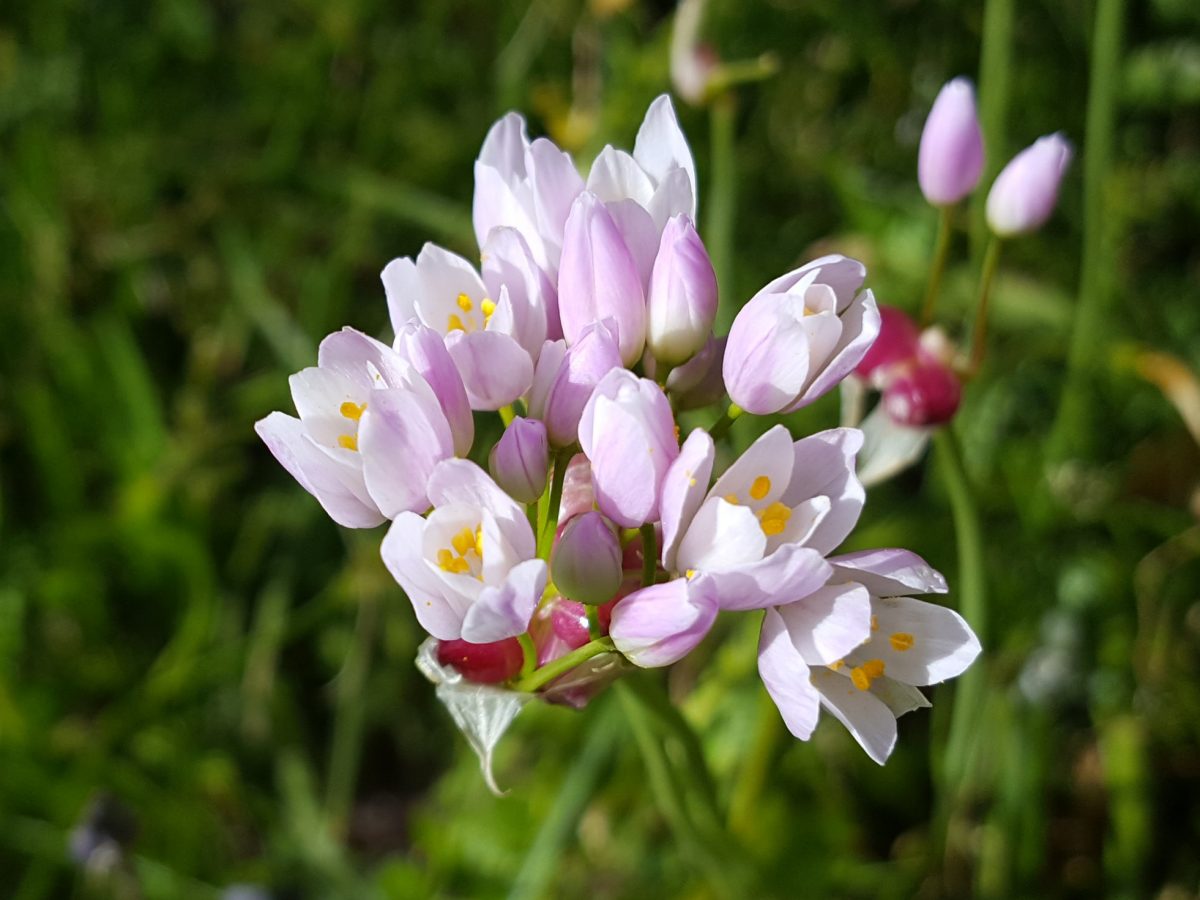
This stunning-looking garlic relative was brought here into cultivation in 1752 and was first recorded in the wild in 1837. It loves rocky slopes, wastegrounds, roadsides, hedgebanks and various coastal settings.
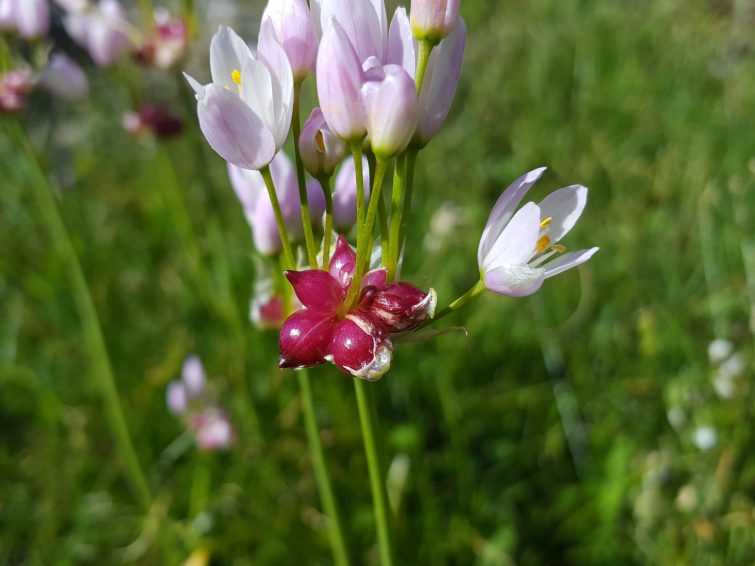
There are two varieties growing here. One of them (var bulbiferum) has pink-red bulbils at the base of the umbel in place of some of the gorgeous pink flowers. All parts of the plant are edible.
Oaks (Quercus robur / Q.praetaria) Fagaceae family.
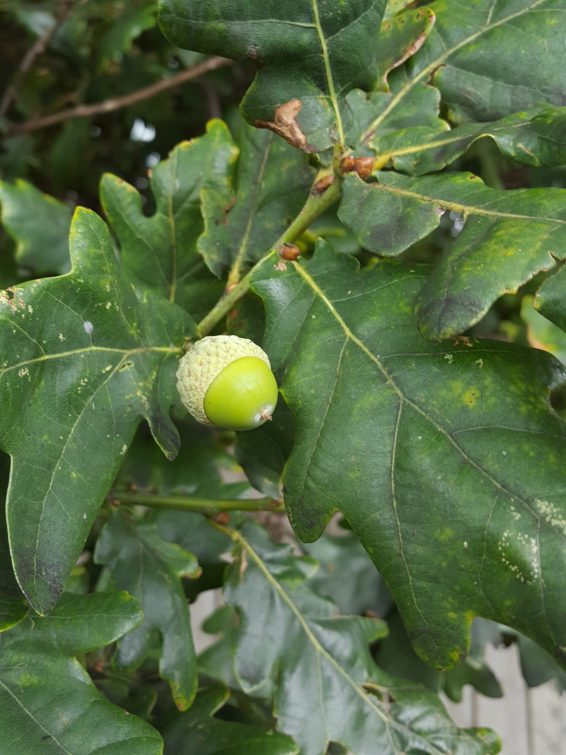
Oaks can be used for food or medicine. The tannin-rich acorns from these trees has been used as a ‘fall-back’ famine food. The young leaves, with added raisins, make a good dry wine.
Depending on which species you use, it is possible to extract an oil from acorns or grind them into flour. Our two native oaks (Q.robur and Q.petraea) are suitable for processing into flour.
The holly oak (aka holm oak and evergreen oak) produces acorns with very low tannin levels compared to other oaks, and doesn’t require as much processing to make them edible. They are not as suitable for flour as our native species, due to their fat content, so are used for oil.
Lime tree (Tilia vulgaris) Tiliaceae family.
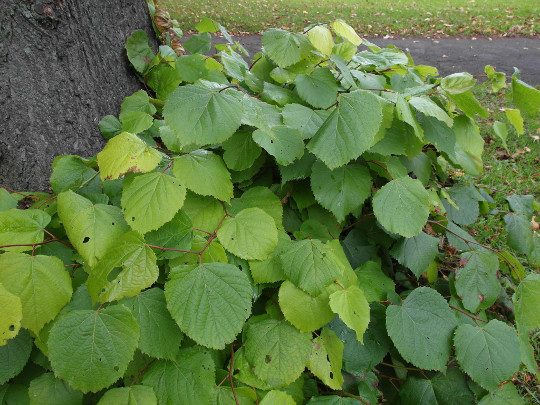
During mid May, these trees now produce large amounts of tasty leaves for salads. Hot on the heels of the leaves appearing, come masses of fragrant, calming flowers for teas and herbal medicines. The various lime trees were covered last year in this detailed article.
Honeysuckles / woodbine (Lonicera periclymenum) Caprifoliaceae family.
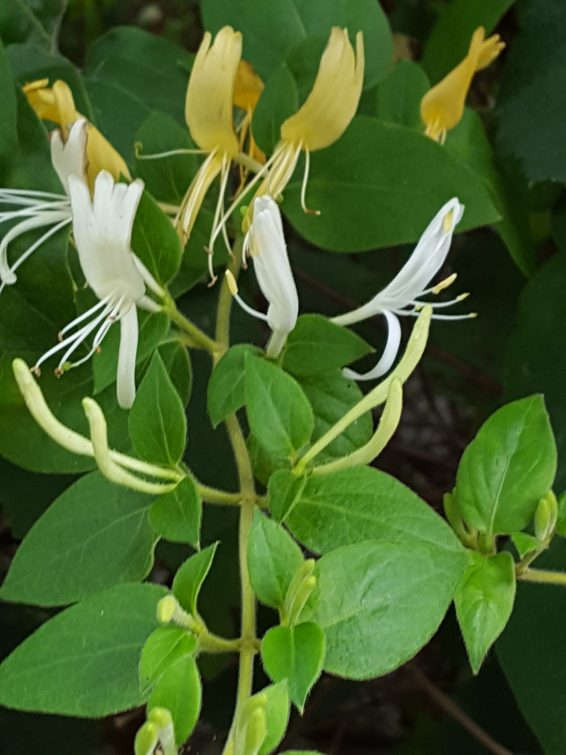
Lonicera species are climbing, trailing plants, with exotic looking flowers, full of honeyed scent. These plants are related to the elder and the Guelder rose. You can find our native honeysuckle in hedgerows and woodlands all over Britain, except on the fens and on higher peaks.
Together with the white dead nettle, honeysuckle are the flowers of my childhood. During spring and early summer, I would run out into the back garden to gorge on the nectar at the base of the flowers.
Dog rose and Japanese rose (Rosa canina and Rosa rugosa) Rosaceae family.
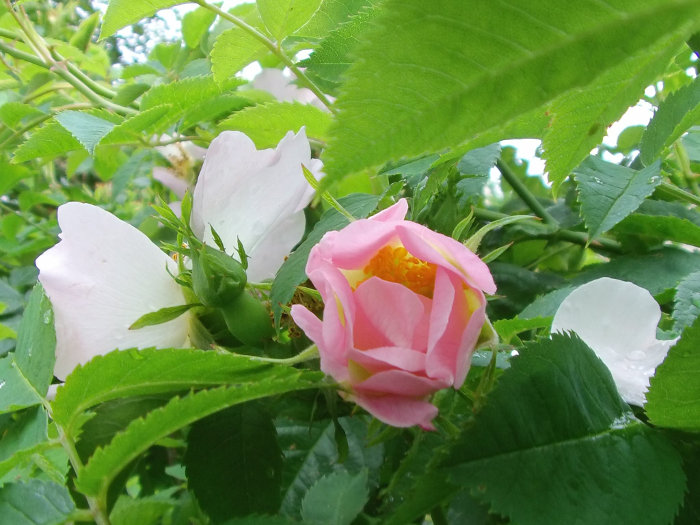
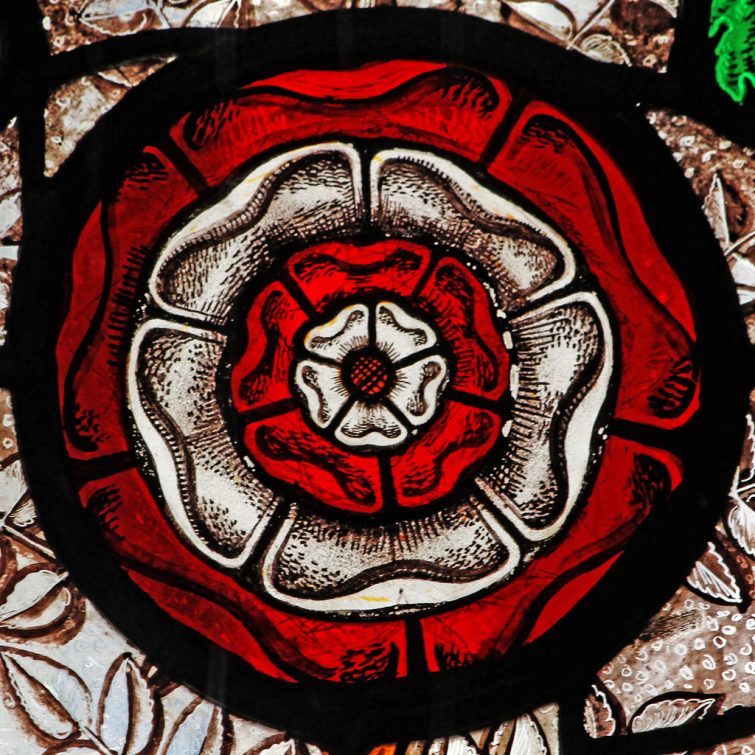
These are two abundant roses, whether you live in town or country. The dog rose is a quintessential English flower. Their flowers were laid down into our national consciousness through the imposition of the Tudor dynasty (1485 – 1605).
The first Tudor was Henry Tudor, who defeated Richard 3rd at Bosworth field. After Henry created his fiction of changing the date of his coronation to insist he wasn’t usurping, he then set about merging the emblems of the two previously feuding aristocratic houses, the famous white and red roses of York and Lancaster.
Right now, the two main species of interest for me are the dog rose and Japanese rose. From May through into June, their short-lived beauty is a feast for the senses.
In the countryside, an array of subtle pinks and apple-whites from Rosa canina adorm the hedges on sunny late spring days. Contrast the dog rose flowers flowers with the larger, and often garish blooms of the schedule 9 invasive plant – Japanese rose (Rosa rugosa).
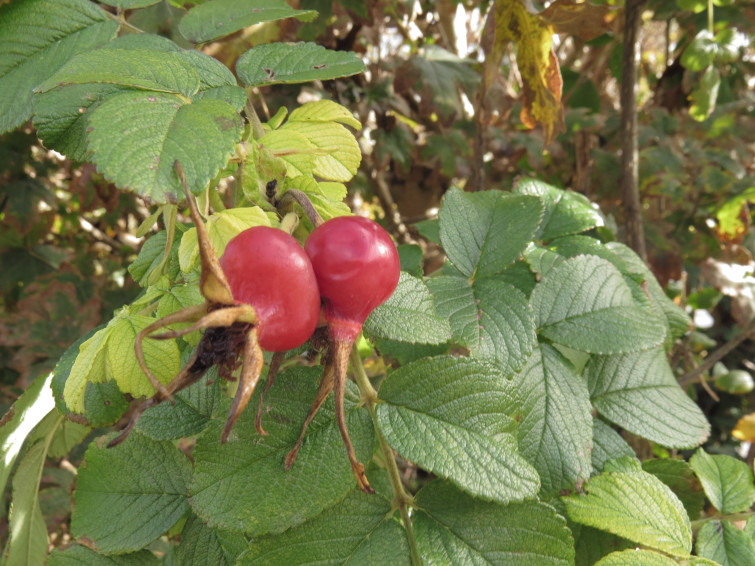
This vigorous, suckering species comes into flower earlier than the dog rose. Their large, almost tomato-shaped fruit are ready in August, well before the hips of our native dog rose. The Japanese rose is planted a lot in our parks and gardens, and also around buildings in towns and cities. It will also be found naturalised in hedges.
Three-cornered leek (Allium triquetrum) Liliaceae family.
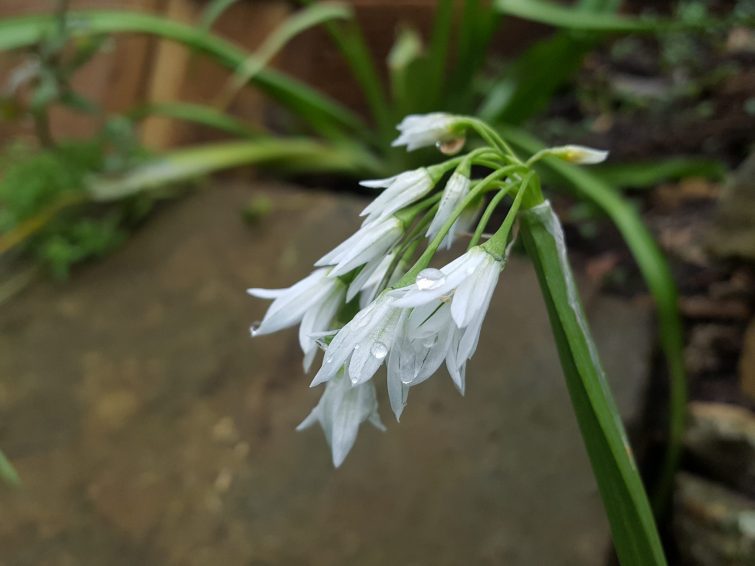
This plant is worth another mention after inclusion in November’s foraging guide. Right now you can collect the fantastic little ‘garlic peas’ from this invasive plant. Look out for the flower stalks bending over and notice the spent petals drooping around the swelling seed pod. The seed pods are edible when green and young. When mature and black they are hard and inedible.
The small, green seed pods are a superb wild food, with a lovely sweet garlic taste. The cunchy pods are perfect for scattering through salads. They are great for pickling, be this in vinegar, or even better, lacto-fermented in a salt brine.
Buckshorn plantain (Plantago coronopus) Plantaginaceae family.
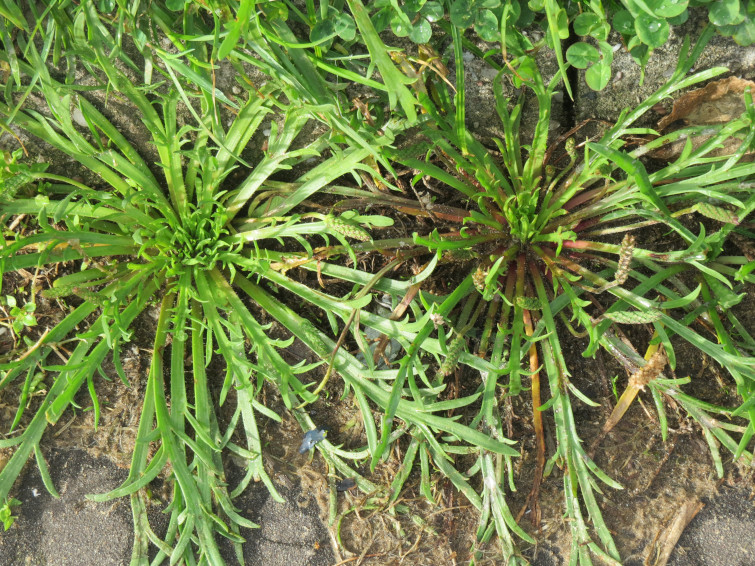
The leaves and flower buds of this salad plant are available now. It loves estuaries and coastal settings. The est specimens offer a salty succulence. Their flavour is heavily influenced by whatever micro-climate they find themselves in.
Ribwort plantain (Plantago lanceloata) Plantaginaceae family.
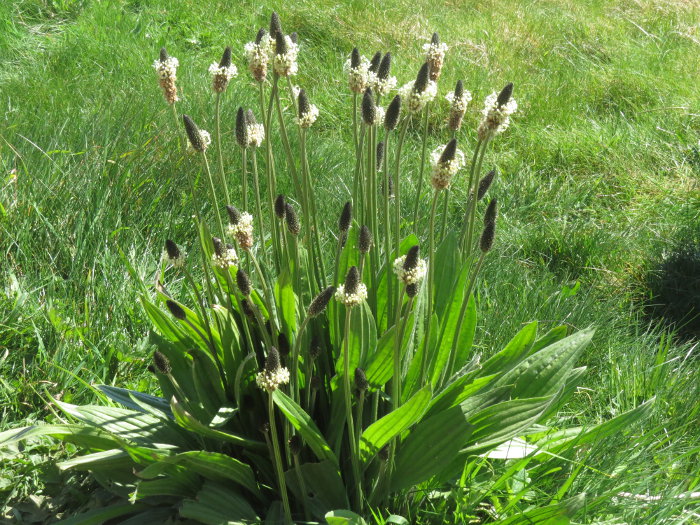
A superb medicinal herb, now offering a profusion of leaves, and flower ‘buds’. It was previously covered in my article on the extraordinarily helpful plantains.
Mushroom Foraging in May
Morels (Morchella species)
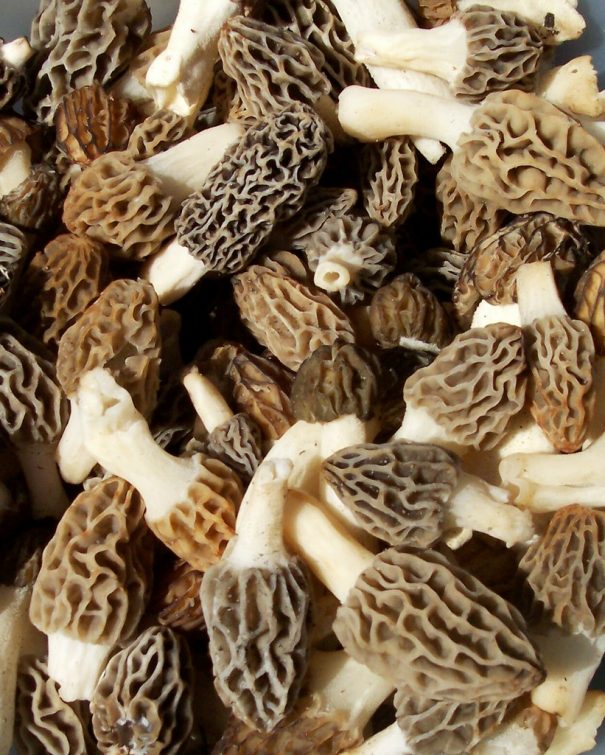
Morels are very distinctive looking mushrooms. They are highly prized in Europe and North America. Make sure you can spot the differences between true Morels and the very poisonous false morels (Verpa bohemica).
Because the ridged and pitted appearance of the true morels and false morels is similar, you will need to examine the inside of the fungus to make sure you know which is which.
The true morels have caps that are attached to the stem. They true morels are hollow inside, while the false morel has a cap that hangs free, and have cotton-like fibres inside.
Hopefully this article is tickling your wild food tastebuds. More seasonal guides are coming soon! Happy foraging!
* Photo credits for “Morel Mushrooms” by ~flutterby~ is licensed under CC BY-NC-ND 2.0
And for “Sea Arrow Grass, Triglochin maritima” by nz_willowherb is licensed under CC BY-NC 2.0