How to identify plants in a day, with these easy-to-remember plant patterns.
The second and final part of our simple-to-use plant identification guide will show you how to identify plants in a day!
This guide includes another six common plant families. They are the lily, rose, buttercup, dock, foxglove and nightshade families, which are all of importance to budding foragers.
In part one of the ‘how to identify plants in a day’ guide, we looked at the reasoning behind using observable plant patterns, and discussed the plant naming system designed in the 18th century and still used today, which gives every living organism on the planet a two-part name.
We have previously covered plants from the carrot, daisy, beetroot, mustard, pea, and mint families. Remember that the family keywords and phrases are in bold.
Six plant families that you can identify in a day!
Liliaceae (garlic family)
This is a large, varied, and often showy family of herbaceous bulbous plants. Worldwide, there are reportedly 250 genera and 3700 species. Many of the plants we grow as ornamentals and many different flowers used in floristry, are Lilies.
This family, just like with other families, can be usefully split into sub-families; each one a smaller collection of similar genera. You may see reference in books to the ‘asparagus sub-family’, the ‘onion sub-family’, the ‘lily sub-family’ etc.
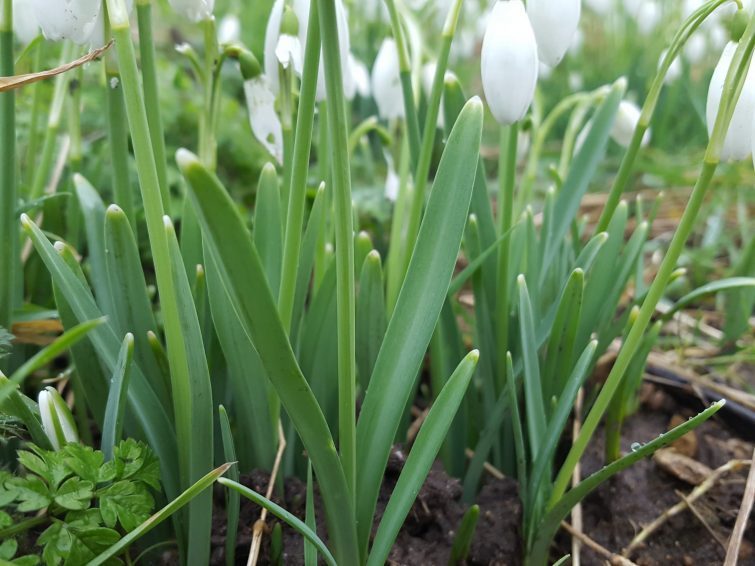
The majority of this family produce narrow leaves. Almost all plants in the family display leaves with parallel veins.
Lily family plants produce leaves that are simple and entire. Their foliage is often alternately arranged on the stem. Whorls of leaves are commonly found also.
The lily inflorescence is comprised of symmetrical, regular flowers, typically revealing their six indistinguishable sepals and petals (often collectively called tepals).
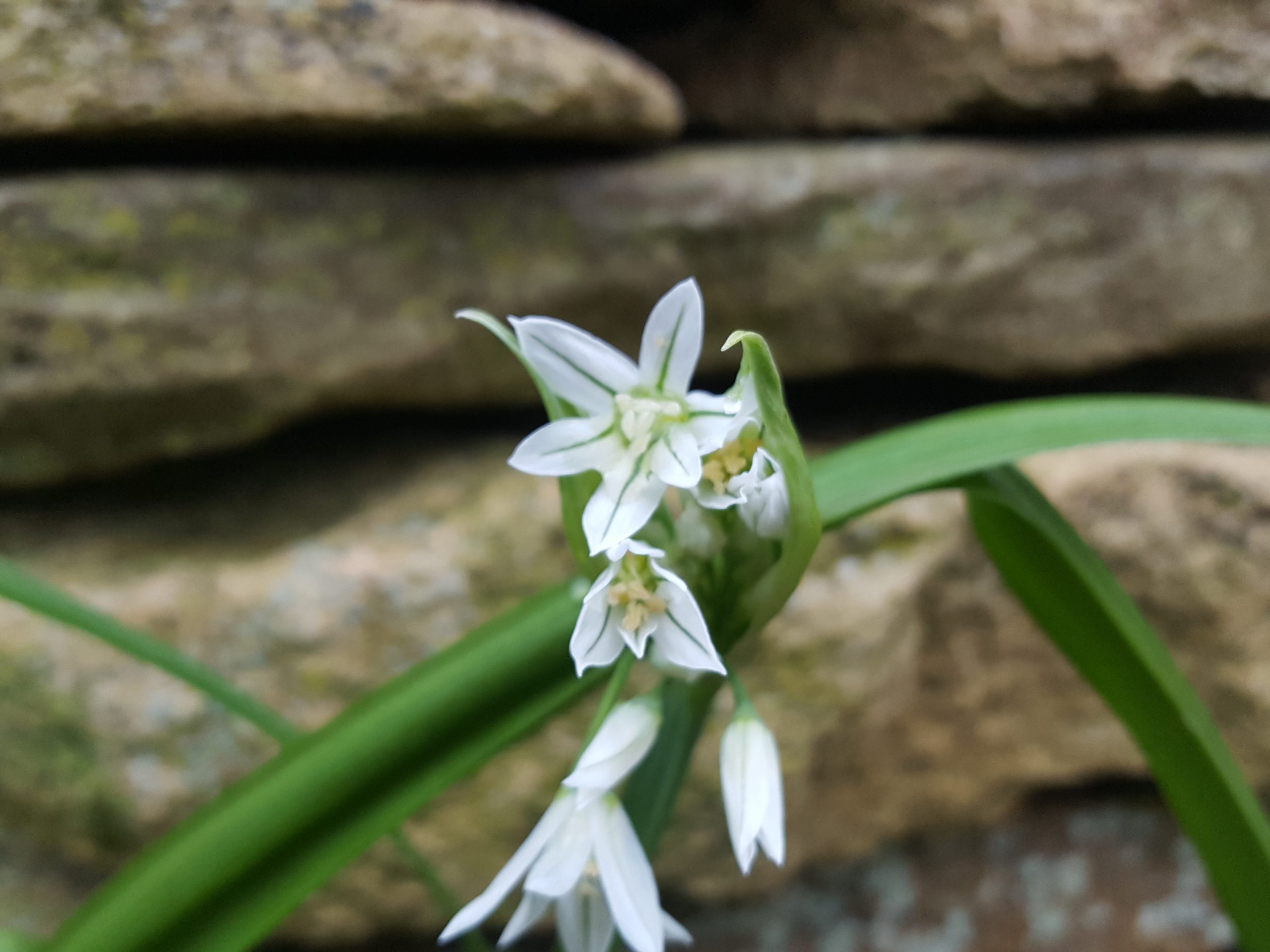
The petals and sepals always occur in groups of 3 and are generally of the same shape, size, and colour. The flowers usually have 6 stamens, while the fused styles (pistil) are topped by a 3-segment stigma.
Occasionally you could mistake lilly plants for similar-looking flowers in the Iris family. However, the Iris family only have three stamens and their leaves are seen to be growing from the base of the plant in a flat plane. Certain genera in the lilly family contain an inferior ovary whilst others have a superior ovary.
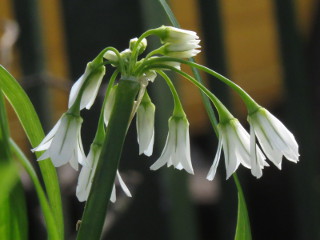
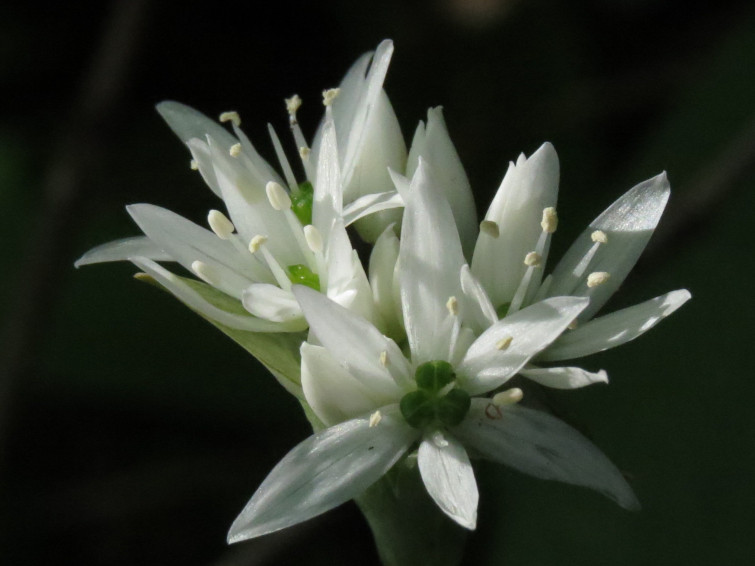
Plant species of interest to the forager include the completely edible onion sub-family. This contains a number of different garlics, leeks, onions, and chive relatives, of which many are obviously well-known in the kitchen already
You may well be familiar with these onion family plants found in Britain: Ramsons (Allium ursinum), three-cornered leek (Allium triquetrum), rosy garlic (Allium roseum), and crow garlic (Allium vineale).
There are a few othe notable edible species in the lily family that can be found in Britain. These include: Asparagus (Asparagus officinalis), the ‘Bath asparagus’ (Ornithogalum pyrenaicum), the Century plant (Agave species), and yucca’s (Yucca species).
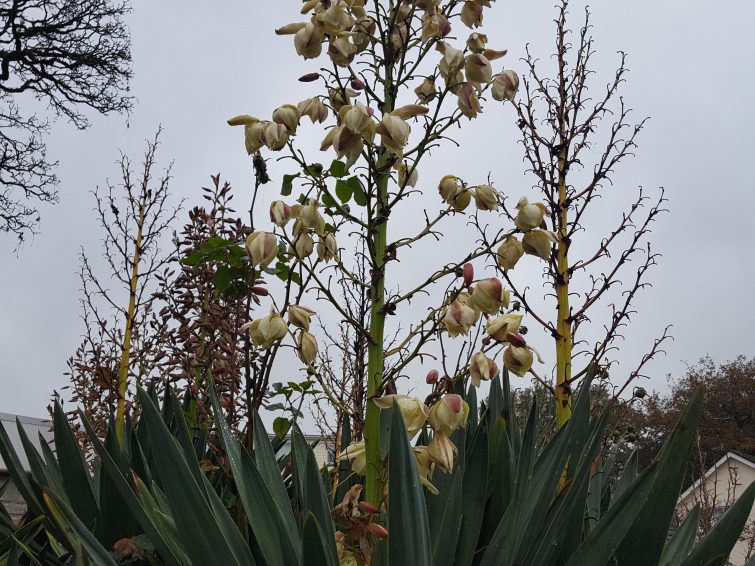
Many of the lily plants you will see in the wild will be toxic to us. Although most of these plants are unlikely to kill you, they can potentially make you very sick.
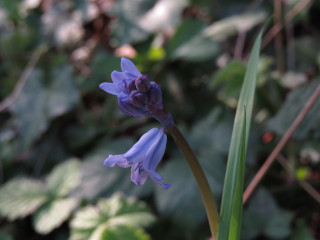
Some of these poisonous plants found in Britain include the snowdrop (Galanthus species) and the bluebell (Hyacinthoides non-scripta). The autumn crocus aka Meadow saffron (Colchicum autumnale) is potentially very poisonous. Ingestion has been fatal, as this medical paper reveals.
Grape hyacinths (Muscari species) are interesting because as Green Deene from Eat the weeds mentions, certain species of them are edible, but many are not. This is reportedly also true with the day lilies (Hemerocallis species).
Rosaceae (rose family)
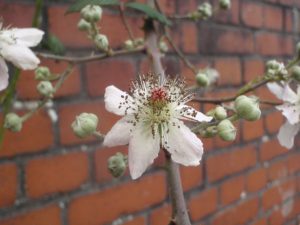
Worldwide, this family contains approximately 4,000 species in just 91 genera. Most of the species are herbaceous and woody perennials, shrubs and trees.
They are also usefully split into ‘tribes’, especially the woody species, such as the cherry tribe of stone fruits, the rose tribe of shrubs, and the pome-fruited apple tribe of trees.
These well-known plants typically have five separate petals in their flowers with numerous stamens, as in the brambles (Rubus spp) or apples (Malus spp).
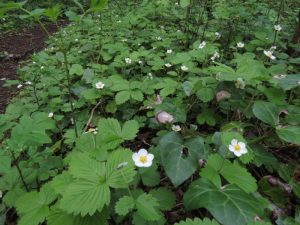
Some members of the family have petals in groups of four, as found on the salad burnet, lady’s mantle, and some cinquefoil species. Always remember that where there’s a botanical law, it will likely be broken!
The rose family produce alternate leaves, which are characteristically oval in shape, and more often than not with serrated margins.
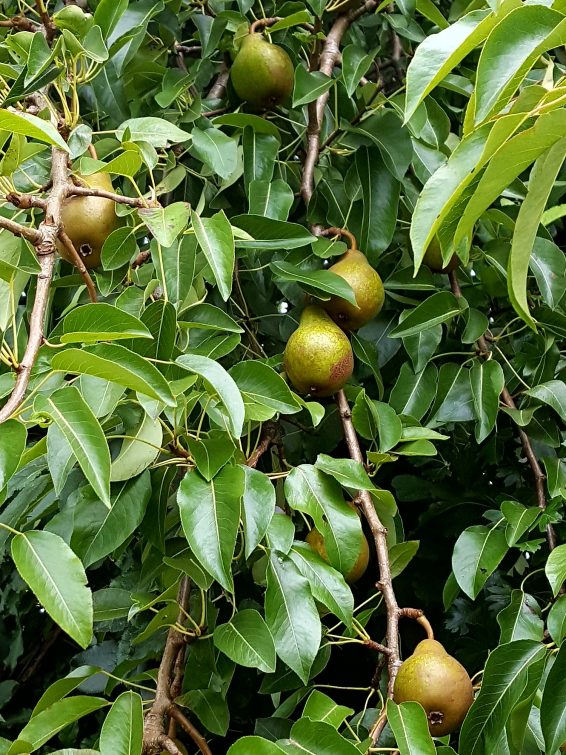
Many in this family are known for having tiny leaf-like growths on the stems known as stipules.
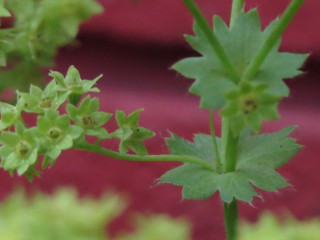
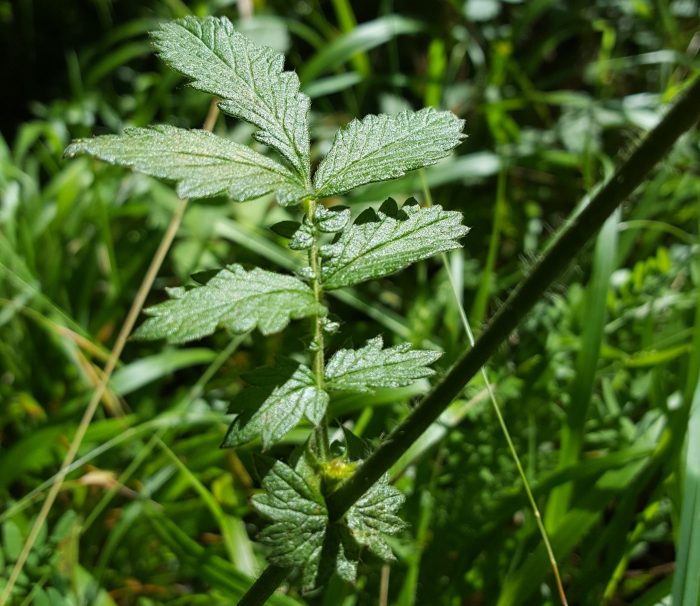
Certain plants, like meadowsweet (Filipendula ulmaria) and agrimony (Agrimonia eupatoria), will have small leaf-like growths visible on the mid-ribs. These are intercalary leaves, and not true leaves.
Some rose plants have simple leaves, such as the cherry. Others have compound leaves (brambles). A number of species have pinnate leaves, including meadowsweet and the rowan tree (Sorbus aucuparia).
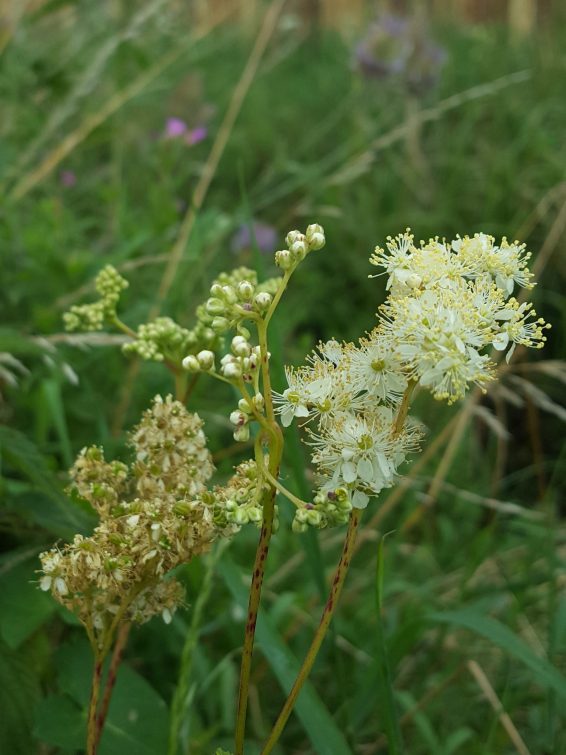
Herbaceous plants tend to produce their fruits as achenes, arising on either a fleshy or dry receptacle, as in the strawberry (Fragraria vesca), wood avens, or the various cinquefoils (Potentilla species).
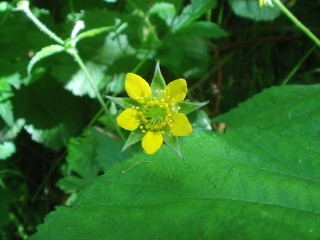
Medicinally the rose family plants are known for their astringency, due to the tannin content. This makes them good wound herbs, especially for excessive bleeding, internally or during heavy menstrual periods.
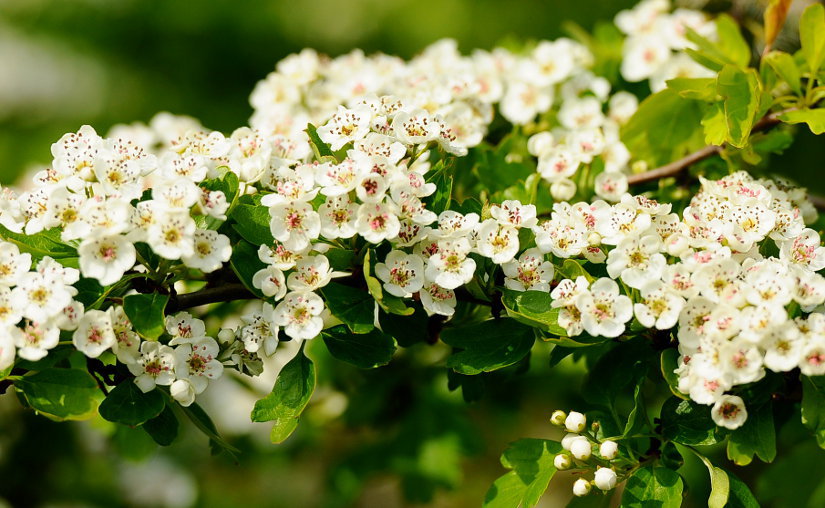
Some plants will have cyanide compounds present in leaves and fruit. These cyanogenic glycosides are medicinally valuable in small concentrations and are responsible for the almond scent and flavour in a number of the rose family, including apples, hawthorns and the Prunus genus of trees.
Polygonaceae (dock family)
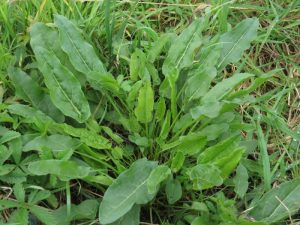
Another plant family full of edibles, the dock family is formed of approximately 48 genera, containing 1200 species of annuals and herbaceous perennials.
Aside from the well known and ubiquitous docks (Rumex spp), this family includes buckwheat (Fagopyrum esculentum), Japanese knotweed (Fallopia japonica), common sorrel (Rumex acetosa), and rhubarb (Rheum rhabarbarum).
This latter plant reminds us that just because one part of a plant is edible, does not mean that other parts of the same plant are edible!
The dock family plants all have simple leaves with un-toothed (entire) margins.
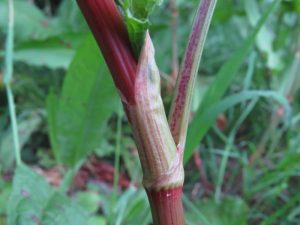
The stems are often swollen at the nodes, a family trait giving rise to the name of Polygonaceae (literally meaning ‘many-knees’).
The papery sheath will wither with age so younger specimens should be used for identification.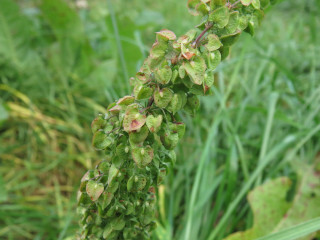
These plants are known for having individually small, occasionally pink, often simply green, triangular/heart-shaped flowers without petals, borne in clusters on long acutely-angled stalks.
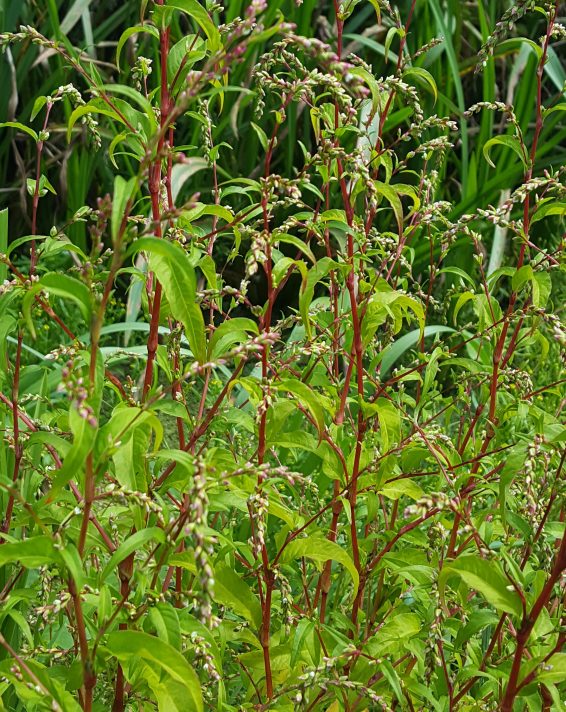
Many species will contain the substance oxalic acid, which imparts a distinctive sour, acidic taste.
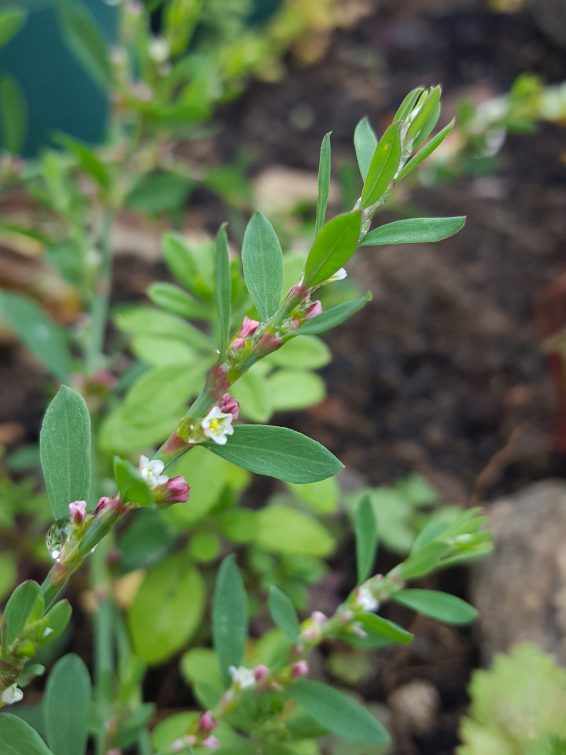
The dangers of oxalic acid were discussed in a previous article on Britain’s poisonous plants. Students of herbal medicine may want to browse my extensive overview of medicinal plant constituents and actions, found right here.
Ranunculaceae (buttercup family)
The plants in this plant family are notoriously tricky to define. This group of herbaceous perennials has been called the most ancient of the plant families. This is due to its floral arrangement and structures, in contrast to the daisy family, which is understood to be the most recently evolved plant family.
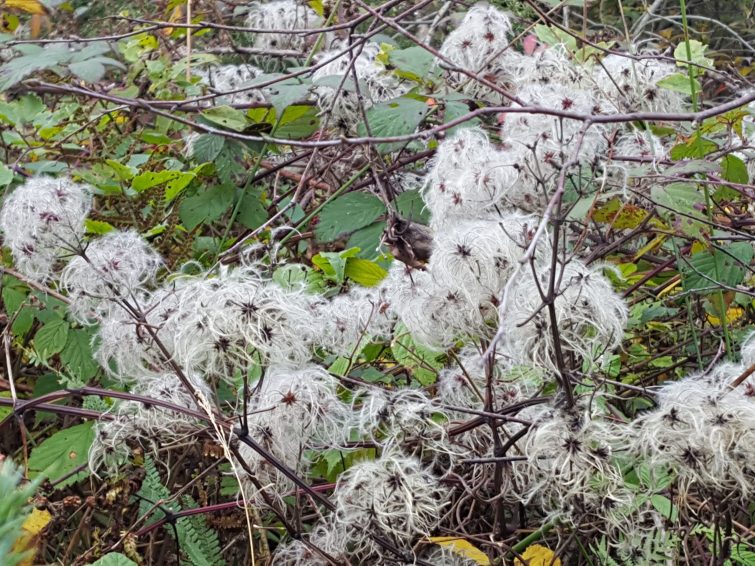
Within this family, there are approximately 2,000 species in 43 genera worldwide. Edible plants of interest to foragers include the lesser celandine, old man’s beard, and granny’s bonnet (Aquilegia vulgaris). All will require cooking to make them safe to eat.
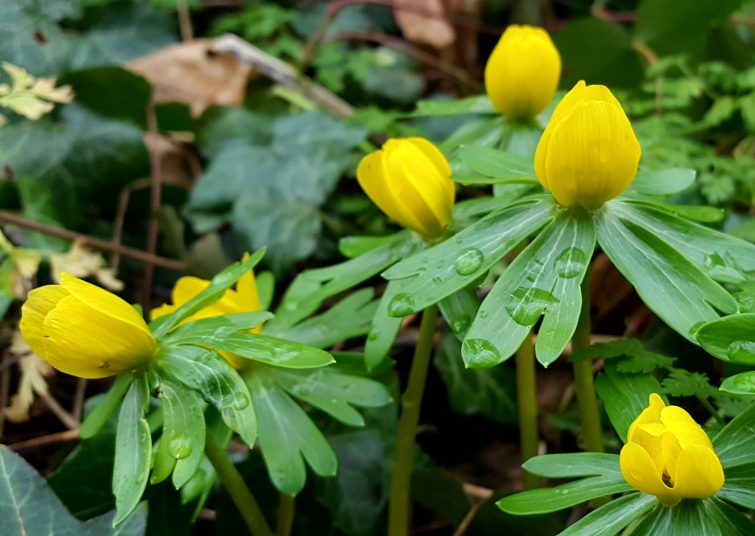
It has been written that the lack of a noticeable pattern is the most identifiable pattern of this family!
Buttercup flowers can have anything from 3-15 sepals and 0-23 actual petals. Most buttercups have bisexual flowers.
The buttercups have their petals attached below a superior ovary. Many buttercup plants are toxic to humans. A major property of the buttercups is the bitter, acrid taste they impart if nibbled on.
The Aconitum and Delphinium genera contain very toxic terpene alkaloid molecules. These substances act upon the central nervous system and are both known to kill if eaten. Aconite, a.k.a monkshood, can even make you sick from handling the roots without gloves!
Scrophulariaceae (foxglove family)
This is a family of annuals, biennials and herbaceous perennials. Some of these plants are quite similar to the mint family.
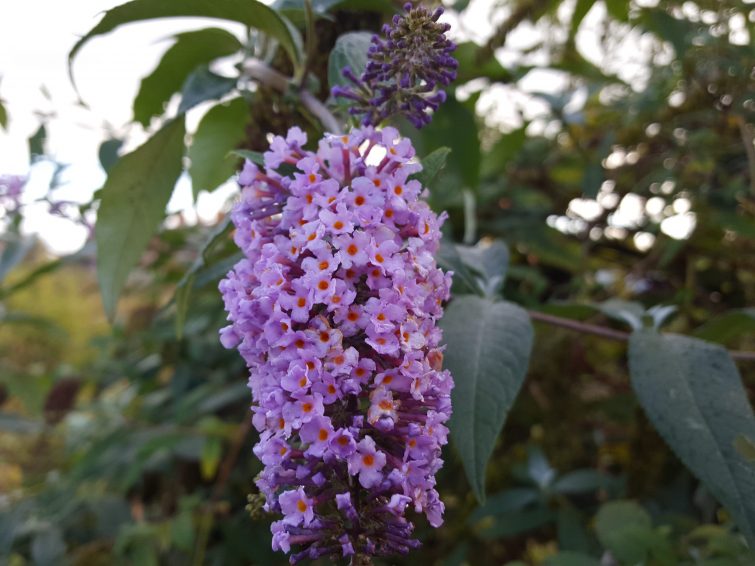
The bisexual flowers are mostly irregular. They have 4 or 5 sepals, often at least partially united, with 4 or 5 petals united as a tube.
The tube is usually 2-lipped with 2 lobes above and 3 lobes below.
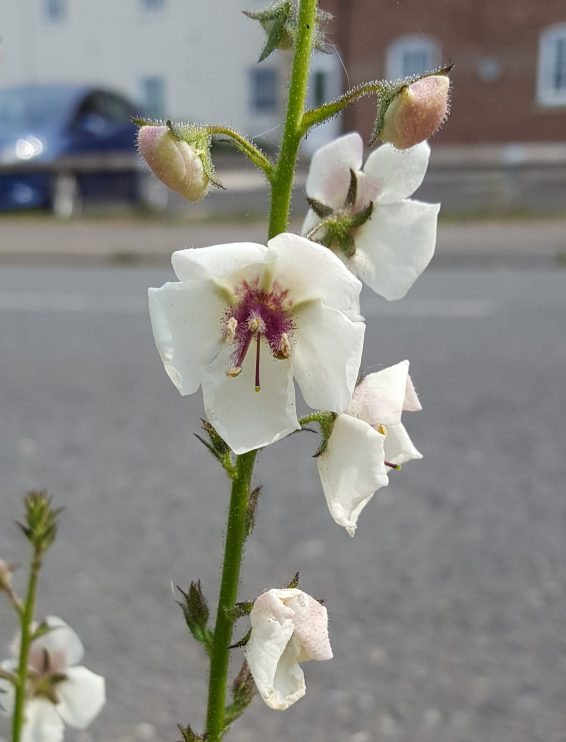
There are usually 4 stamens in 2 pairs, but a fifth stamen is present in some.
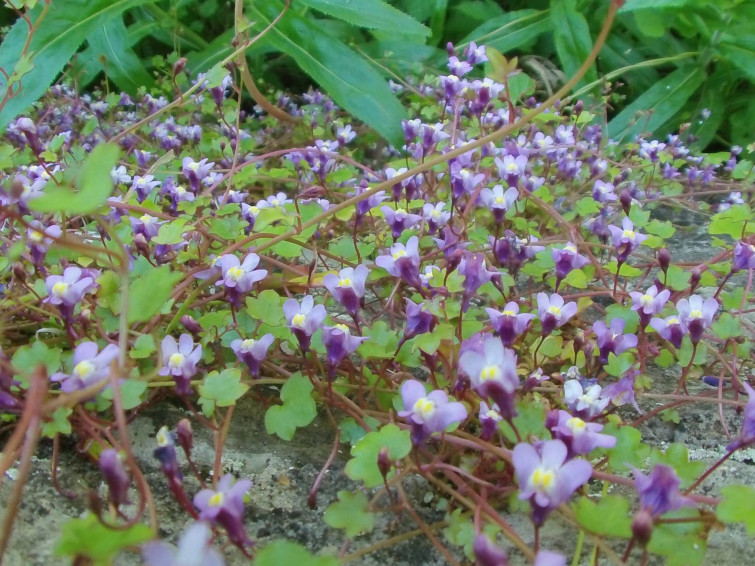
The fruits are a many-seeded capsule rather than nutlets as in the mint family. Well-known plants from this family include the foxglove (Digitalis purpurea), speedwells (Veronica spp), Buddleja, ivy leaved toadflax, and the great mullein (Verbascum thapsus).
Solonaceae (nightshade family)
This family has been included for foraging safety, because it contains some poisonous and deadly poisonous plants you best get to know!
This is the family of chili peppers, tomato’s, and potatoes. These are all poisonous if you eat the wrong plant part. The most famous of our wild nightshade plants is possibly the annual plant, deadly nightshade (Atropa belladonna).
The most common of our nightshades is bittersweet, also known as woody nightshade.
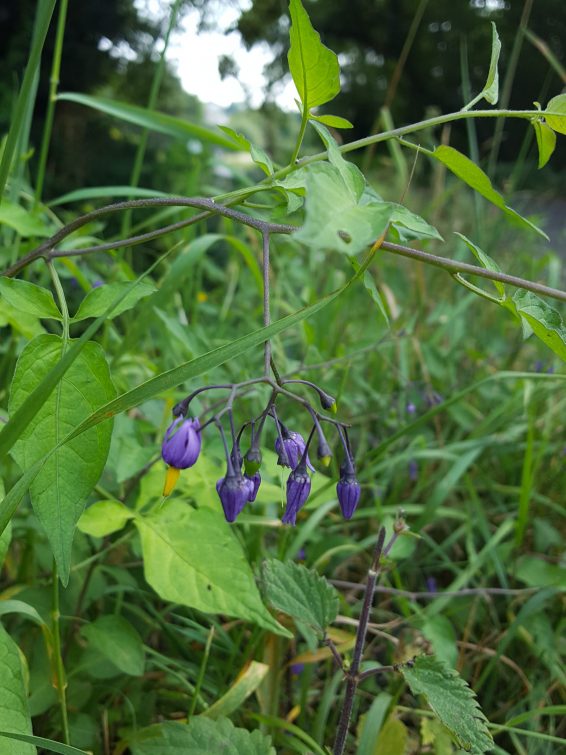
Many of the plants contain the toxic alkaloid solanine which can potentially kill. Most plants in the family are distinctive-looking, with the flowers having 5 united sepals, 5 united petals and 5 stamens. On many species you will see a protruding column of anthers.
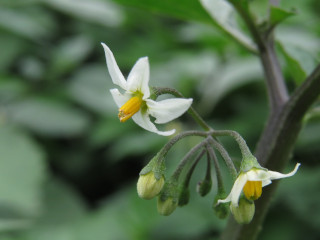
The leaves are usually a dark green colour. They appear alternately on the stem. Most plants have leaves with petioles. The wild nightshade plants in this country have simple leaves, often with lobes at the base.
One other plant of interest is the goni berry (Lycium barbara). This plant has been growing wild in the UK since the late18th cemtury. Its purple and yellow flowers are found dotted around on vigorous thrusting stems in Southern England stems. The well-known red and almost oblong-shaped berries soon follow.
I hope that these two articles have begun to show how simple plant identification can be when you boil it all down to the keywords and phrases.
Coming up soon here in the spring, is an exciting opportunity to get personal one-to-one mentoring and foraging tuition. Watch this space!
Happy foraging!