Britain’s poisonous plants: To learn them is to leave them!
To know Britain’s poisonous plants, you have first got to get your hands on a field guide. This or be guided by someone who knows their onions.
When starting out on your foraging adventures, plant identification books should always, always be used.
Safety is paramount. If in doubt, leave it out! Wild Plant Guides gives you a glossary of terms. This is a helpful friend. So pay it a visit!
What is a poison?
The British Medical Association defines a poison as “a substance that, in relatively small amounts, disrupts the structure and/or function of cells”. You can read more about the various substances and classes of molecules in this summary of medicinal plant constituents.
The subject of toxicity is an interesting yet by no means simple one. Simplicity would demand an answer to the question…What constitutes a poison?
A famous name in medieval alchemical science – Phillip Theophrastus Bombastus von Hohenheim, better known as ‘Paracelsus’ (1493-1541), recognised that…
“it depends only on the dose whether a poison is a poison or not”!
Certain modern drugs, notably many anti-cancer agents (whether natural products or synthetics), are principally used because of their toxicity. The yew tree is a striking example here. A killer tree turned life-saver.
A number of our cultivated plants that we can safely consume in normal dietary amounts are potentially toxic, if consumed in larger quantities.
We all know of at least some of the health benefits from eating regular amounts of cabbage or broccoli. However, the knowledge that excessive consumption of cabbages, kale and cauliflowers (all are cultivated varieties bred from the wild cabbage, Brassica oleraceae) can lead to swollen thyroid glands is not so widespread.
There are documented cases of rural communities reliant on brassica’s as staple foods, inducing thyroid-related illnesses from over-eating cabbage and cabbage relatives.
The medicinally valuable glucosilinates are widespread in members of the brassica’s, and are toxic in large amounts. However, in reality it is impossible to eat enough in one sitting.
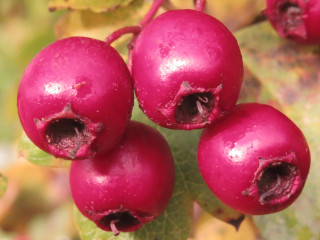
Within the fruits of many rose family members, such as hawthorn, are minute amounts of arsenic-based cyanogenic glycosides (in the form of prussic acid – hydrogen cyanide).
Arsenic is known to be deadly poisonous. However, the concentrations are usually so low that they have beneficial medicinal effects.
Different plant parts will hold various concentrations of poisonous compounds. Typically the fruits, seeds and roots will contain considerably higher amounts of toxins than the leaves and stems.
Some plants will really let you know by their smell that they are inedible. For example, the scent of elder leaves are unpleasant to me and do not in anyway invite eating.
Britain’s poisonous plants are found in many common plant families.
The dock family
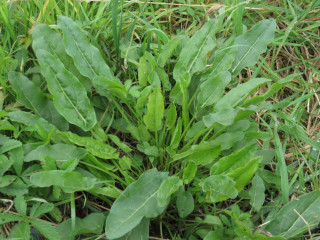
Although these are edible, there is a need to point out the risks of eating plants with oxalic acid (see medicinal chemistry), the major constituent of sorrel (Rumex acetosa).
Oxalic acid is a ubiquitous plant constituent. High oxalate consumption can lead to kidney stones or gout. As a foraged or cultivated vegetable consumed every now and again however, this plant, or indeed the family as a whole, presents little danger.
Oxalic acid is also present in high concentrations in Rhubarb (Rheum spp), and in many other plants in this family.
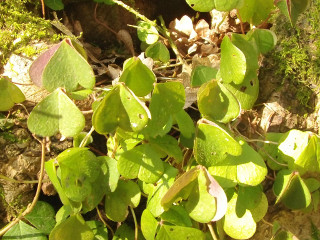
Oxalis species
Oxalis acid also appears in unrelated plants in high concentrations too. It’s presence in our native wood sorrel and other members of the genus Oxalis, inspired its scientific name Oxalis acetosa.
Be sure to wash the leaves of the dock family because they can have chrysophanic acid on the surface which can make the tongue numb. This property apparently gave them the common name of ‘smartweed’ in North America, as when eaten raw they could make the tongue smart!
The lily family
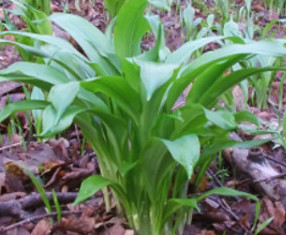
A number of bulbous plants in this family are edible and medicinal (Allium spp). Yet many more are not. Examples from our flora include bluebells (Endyion non-scriptus syn Hyacinthoides non scriptus) and true hyacinths (Muscari spp). Both contain toxic substances.
Alliums are toxic to our skin in large amounts. You will find the bulb garlic (Allium sativum) or their derivatives listed in CoSHH (Control of substances hazardous to health) manuals.
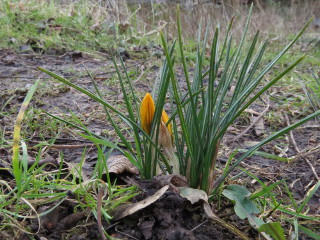
The very beautiful, but poisonous autumn crocus (Colchicum autumnale), is found in damp meadows and woodland, especially in a belt of central England from North Dorset up to Shropshire and across to Oxfordshire.
Closely related plants in the Narcissus genus (Amaryllidaceae family) are also toxic, though a substance found in daffodils is known to help with types of dementia.
The gorgeous, spring-flowering ‘snakeshead’ fritillary (Fritillaria meleagris), is poisonous due to its alkaloids.
These plants are usually quite rare in the wild now, and very easy to identify with their striking snakeskin pattern, so present no real danger of mistaken picking in reality.
During flowering it should be unlikely to mistake it for edible or medicinal species. Fritillaries do not offer us food or medicine but are a treat for the eyes when stumbling upon them.
The pea family.
These plants, or more specifically the seeds, are often inedible when mature and raw. The ornamental laburnum tree (Laburnum anagyroides) has extremely poisonous seeds.
Many of the whole-foods commonly we commonly eat are seeds of this family. These include the soya bean (Glycine max) and kidney beans (Phaseolus spp) amongst others.
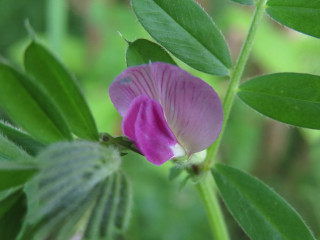
Some of these plants contain trypsin inhibitors and other enzyme inhibiting substances which can interfere with our digestion and metabolism.
It would take a hell of a lot of the plant material to harm us in practice, so as with many of these ‘toxic’ substances, there is no real practical issue.
Our common wild legumes, including the Vicia (vetches) and Lathyrus (sweet pea )genera, are known to contain trypsin inhibitors.
We have the clover tribe of plants to thank for the rat-poison warfarin.
The nightshade family
Aside from mostly being very pretty to look at, this family supplies us with a range of different foods, medicines, hallucinogens, and outright nerve toxins.
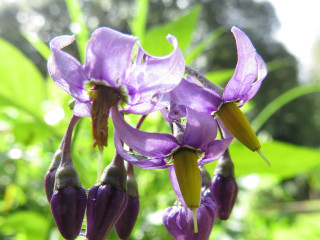
A common nightshade family toxin is the alkaloid substance solanine. This is a central nervous system toxin and causes dizziness, nausea, diarrhoea, and potentially delirium, shortness of breath, and coma.
The well-known vegetable aubergine (Solanum melongena), is toxic unless cooked. All parts of the potato (Solanum tuberosum) except for the tubers (unless green) contain solanine.
When foraging, we need to become familiar with the following poisonous plants:
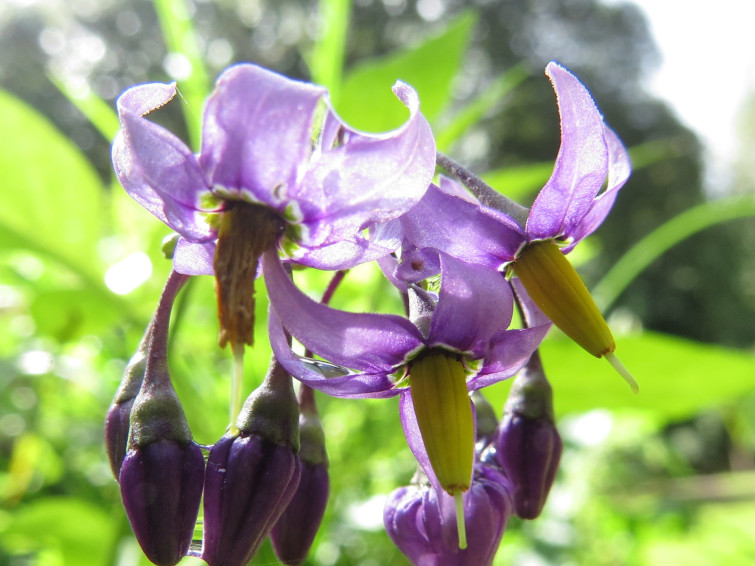
Bittersweet (Solanum dulcamara); populates lanes and hedges throughout Britain. It has a twining, sprawling habit, decorated by its 8-10 cm oval leaves which often have two smaller pointed leaves at the base.
From June to September the purple and yellow-coloured flowers are scattered in amongst the green leaves of the hedge and are followed by increasingly noticeable scarlet berries in the autumn. These shiny red berries look enticing, but are to be left for the birds!
The ‘deadly nightshade’ (Atropa belladonna) can be fatal if consumed. luckily, yet is reasonably rare outside SouthEast England.
Deadly nightshade can be identified by its pointed, 20 cm long oval leaves, and its distinctive flower and fruit. The flowers are produced singularly, or in pairs, and are bell-shaped with more or less parallel sides and blunt lobes.
The corolla is striped, with a brown-purple or green hue and is succeeded by the solitary, shiny black berry. The fruit sits with the five-pointed calyx noticeably persisting behind it. This calyx/berry arrangement is happily unlike any edible berry and should not easily be misidentified for one.
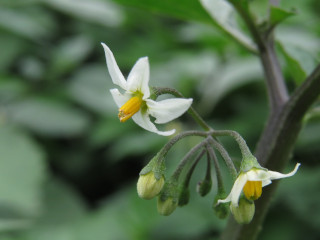
The black nightshade (Solanum nigrum), is a common weed of agricultural fields and gardens alike and probably our most common nightshade. The green berries are poisonous, containing solanine, although the ripe black berries are edible.
The leaves of black nightshade also contain variable amounts of solanine but this is destroyed by boiling so they can make an acceptable wild green. The leaves also contain the amino acid methionine, which is rarely found in plants.
Both henbane (Hyoscyamus niger) and the thorn apple (Datura stramonium) are used in herbal medicine practice, and both are controlled under schedule 3 due to their toxicity.
These plants are therefore not advised to be used by unqualified people. Henbane has no resemblance to any edible species found wild in Britain, therefore is not of any real concern to the forager.
Datura on the other hand, although pretty uncommon, could be mistaken for one of the not uncommon beetroot family – the ‘maple goosefoot’ (Chenopodium hybridum).
With a similar shape and outline to their leaves, confusion is not impossible even though the foliage of the goosefoot does not smell like Datura. It is safest to avoid picking the maple goosefoot altogether, just in case.
The buttercup family
The vast majority of this family are quite unpalatable and poisonous to us. Have a nibble of a buttercup leaf and spit it out. They taste acrid, bitter and nasty and do not invite eating!
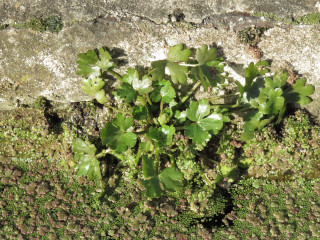
Indeed, one of the most powerful toxins known to man is in this family.
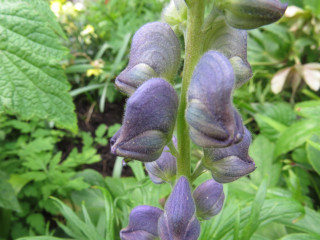
The monkshood, also known as wolfbane (Aconitum napellus), has a long historical use as a poison, especially as an arrow poison.
It contains the deadly poison aconitine, present in large concentrations in the roots.
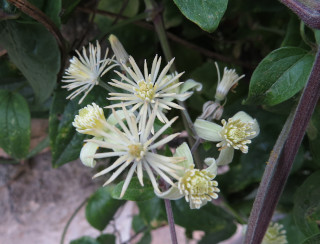
The very common climbing-vine known as ‘travellers joy’ or ‘old man’s beard’ (Clematis vitalba), is rare for our buttercup damily in that it has only four petals not five.
This plant has also been documented as poisonous in some books, without noting that the young tips are edible with cooking.
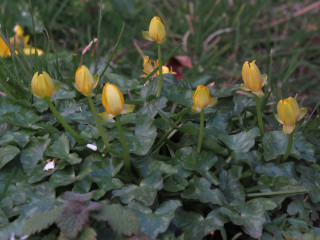
When cooked, the irritant compound protoanemonin, common to many buttercup family plants, is broken down. This knowledge when used allows us to use plants like lesser celandine (Ranunculus ficaria syn Ficaria verna).
The other common name of this latter plant, ‘pilewort’, will tell you its primary medicinal use!
The carrot family
The following are all documented as poisonous by the Royal Botanic Gardens at Kew.
A number of these poisonous plants contain powerful nerve toxins. hemlock (Conium maculatum) and water dropwort hemlock (Oenanthe crocata) are both deadly poisonous.
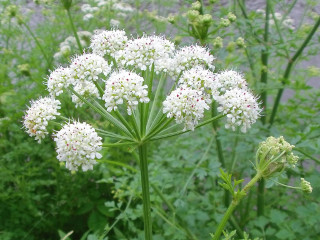
For the beginner they can appear very similar to a number of other edible carrot family plants. This, then, is one of the overarching issues when foraging for umbellifers.
The two plants look quite distinct from each other but both look incredibly similar to tasty edible relatives.
This is why etreme care and caution should always be exercised when foraging for the carrot family. Avoid foraging for umbellifers next to waterways until you know them really well, for this is where a number of the poisonous ones live.
Let’s face it, no one wants to look silly by writhing in a hedge after mistaking hemlock for one of the numerous other similar looking umbellifers!
Hemlock contains the extremely poisonous alkaloid, and nerve toxin, coniine. As a very inexperienced, naïve and reckless forager many years ago,
I discovered this plant in my mouth seconds after misidentifying it from a peripheral glance as wild chervil, whilst strolling and nibbling on a mixed hedgerow salad (please, don’t ever be this stupid).
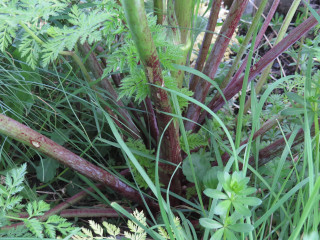
Its bitterness rapidly turned into unpleasant sensations akin to stinging needles erupting throughout my mouth and I quickly spat it out. Thankfully, I had pinched off only the top inch or so and had yet to swallow, so got away with a short, sharp, shock!
Many carrot family plants are documented as recording a range of photo-sensitive, dermatological effects. These are due to photo-toxic furanocoumarin molecules.
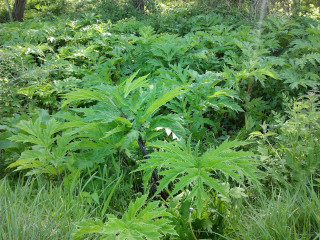
If sap from the stems (produced in profusion when flowering) comes into contact with your skin under the sunlight or U.V light, then mild blistering can occur, and in the case of giant hogweed, 3rd-degree burns!
As you will see from the following list, some of our common vegetables are included.
- Apium graveolens – celery
- Angelica sylvestris – wild angelica
- Anthriscus sylvestris – wild chervil / cow parsley
- Daucus carota – wild carrot
- Foeniculum vulgare – wild fennel
- Heracleum mantegazzianum – giant hogweed
- Heracleum sphondylium – hogweed
- Pastinaca sativa –wild parsnip
- Petroselinum crispum – parsley
- Thapsia garganica – drias plant
.
It needs to be stressed here that the giant hogweed is by far the plant most commonly documented as responsible for the most severe reactions. The others produce much milder effects, which not everyone experiences to the same degree, if at all.
The concentrations of furanocoumarins present, degree of sunlight, and an individual’s constitution will all play a part in reactions experienced following exposure to the sap under sunlight.
I know a farmer who has suffered mild burns from cutting down flowering parsnips in the summer sunshine.
I happily eat raw, peeled, wild chervil stems in the spring sunshine and do not have any problems from handling the plants.
Wearing gloves and harvesting on overcast days or out of direct sunlight is the answer if you are in any doubt. A number of plant families including the spurge (Euphorbiaceae) and citrus (Rutaceae) families also exhibit similar photo-toxic effects.
For safety, I do not touch giant hogweed at all much. The ‘drias plant’ I have not yet met.
A few more of Britain’s poisonous plants to know
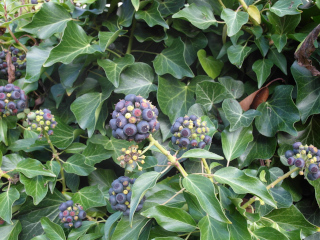
Our native evergreen climber, the common ivy (Hedera helix) produces poisonous berries from November. These are initially green then turn black, often lasting through winters.
These berries contain the toxic substance hederin. It was formerly used as a purgative medicine, but one considered too strong for safe self-medicating. Leave this one for the pigeons!
The dogwood (Cornus sanguinea) is a common hedgerow plant of the Cornaceae family. The masses of white spring flowers give rise to black berries in the autumn.
They may seem appealing, but leave them alone! There is an edible Cornus that occasionally will be found in the wild – Cornus mas – the Cornellian cherry.
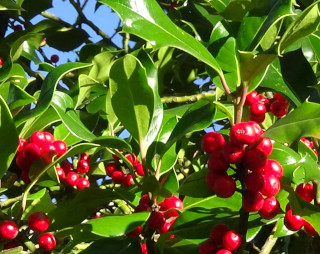
The red berries of Holly, the well-known evergreen tree, contain the toxin ilicin in the berries. As little as two of these may induce nausea.
The same advice goes for two previously used strong purgatives, the buckthorn (Rhamnus catharticus), and the alder buckthorn (Frangula alnus). Both shrubs carry black fruits in the autumn following flowering.
Buckthorn’s broadly elliptical leaves are noticeable for their curving vein patterns. Their small and green flowers have four petals and are borne in clusters at the base of the upper leaves.
Alder buckthorn is thorn-less and also displays small flower clusters. The small white flowers contain five petals, and give rise to a black berry which is red until ripe. Both plants are found occasionally in hedgerows in Britain (although rarer in Scotland).
Look-a-like plants
The perils of similar-looking yet unrelated species needs a mention at this point. The common ‘lords and ladies’ (Arum maculatum), has often been mistaken for two popularly foraged plants; sorrel and wild garlic (Allium ursinum).
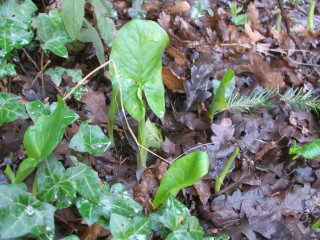
I heard from a forager friend that should you try and eat the leaf from the lords and ladies, a sensation akin to the one I described for hemlock will ensue.
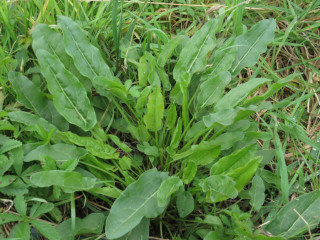
The Arum leaves contain toxic calcium oxalate crystals. Note that this compound is different to oxalic acid, present in the sorrel and prevalent in other members of the dock family.
Both the common sorrel and lords and ladies have a relatively similar shape to their leaves, especially when small, although their leaf vein patterns are unlike. The favourite habitats are also completely different.
Sorrel loves meadows, fields and other grassy areas, whilst lords and ladies is a natural woodland species and hardly ever extends from the protection given by woodlands, roadside verges, hedges, and darker edges of fields.
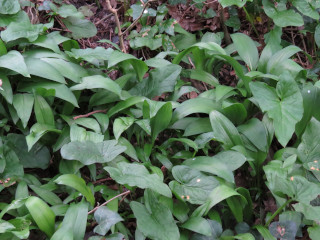
Beginners reading this may already be aware of the similarity between very young wild garlic leaves and any emerging lords and ladies leaves. The two plants often share woodland and other habitats.
Arum does not have parallel veins like wild garlic, and its prominent basal lobes are distinctive, as are the arrow-shape leaves. Compare these to the broadly-elliptical leaves of wild garlic
While its true that wild garlic tends to emerge after the lords and ladies is already up, and that the two plants soon display noticeable differences in leaf shape and detail, care should always be taken when you are first foraging.
If the leaves are too small for you to be sure of positive identification, move on. This advice goes for any plant!
Sorrel has another potential lookalike with similar habitata, the meadow resident, field bindweed (Convolvulus arvensis). This plant has similarly-shaped leaves to sorrel.
However, it’s striking, raspberry ripple striped flowers, and creeping sprawling habit, are completely different to sorrel.
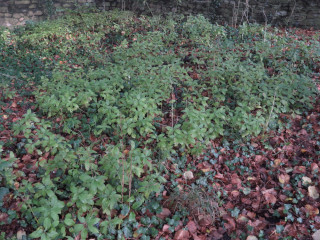
Another common poisonous member of our woodlands is the perennial herb, ‘dogs mercury’ (Mercurialis perennis – Euphorbiaceae). This poisonous plant can carpet some woodlands and hedge-banks. It is a sign of ancient woodland.
Dog’s mercury can slightly resemble a nettle when in flower. It also has white, thin, and wiry clusters of flowers appearing from its upper leaf axils.
The rare, but pretty yellow-flowers on birthwort (Aristolochia clematis) contain the highly toxic compound aristolochic acid, which is known to cause renal failure.
Our only native member of the Cucurbitaceae family – Bryonia dioica, or ‘white bryony’, is also documented as a poisonous plant. Its palmate leaves could be mistaken for hops. Both plants share similar habitats.
The classic pumpkin family characteristic are shown in bryony’s spiraling, wrap-around, spring-like tendrils. These help the plant get into the light. The dainty white flowers can be seen dotted in the hedgerows during the summer months if looking closely.
The roots and berries are toxic. An alkaloid, bryonicine, is partly responsible. The young downy shoots stretching up from the soil could be mistaken for hogweed reaching for the light. Red berries follow the flowers.
The unrelated ‘black bryony’(Tamus communis) is the only species in the yam family to grow wild here in Britain.
Another of our hedgerow climbers, this plant is notable for its dark glossy-green, heart-shaped leaves and scarlet berries. This yam family (Diosceraea) species has been documented as a poisonous plant in some books but edible in others.
I have eaten the young tips, which similar to travellers joy, will need cooking to render the toxins present, harmless. The berries are certainly poisonous, but the root reportedly could be eaten if you are prepared to treat it in all number of ways first through boiling and such like. Hmmm, not for me.
I hope you are not now thinking that the land is awash with harmful plants. The reality on the ground is that only four of our poisonous plants here in Britain are likely to be confused with similar-looking edible or medicinal species.
These are hemlock, water hemlock, foxglove, and the yew tree. Both plants are dealt with elsewhere on these pages.
The yew tree does not offer the typical coniferous aroma from its foliage. Nor does it produce the typical cones. Instead, bright red aril fruits (the common vernacular is berries) become noticeable in late summer/autumn.
Its fleshy and edible fruits distinguish it from many similar evergreens, as does its growth form, which is more typical of a deciduous tree than a coniferous tree.
Remember that all other parts of the yew could kill you, including the seed, so remember to spit it out if eating the berries!
If you liked this, then check out the Seasonal foraging guides
Happy foraging!