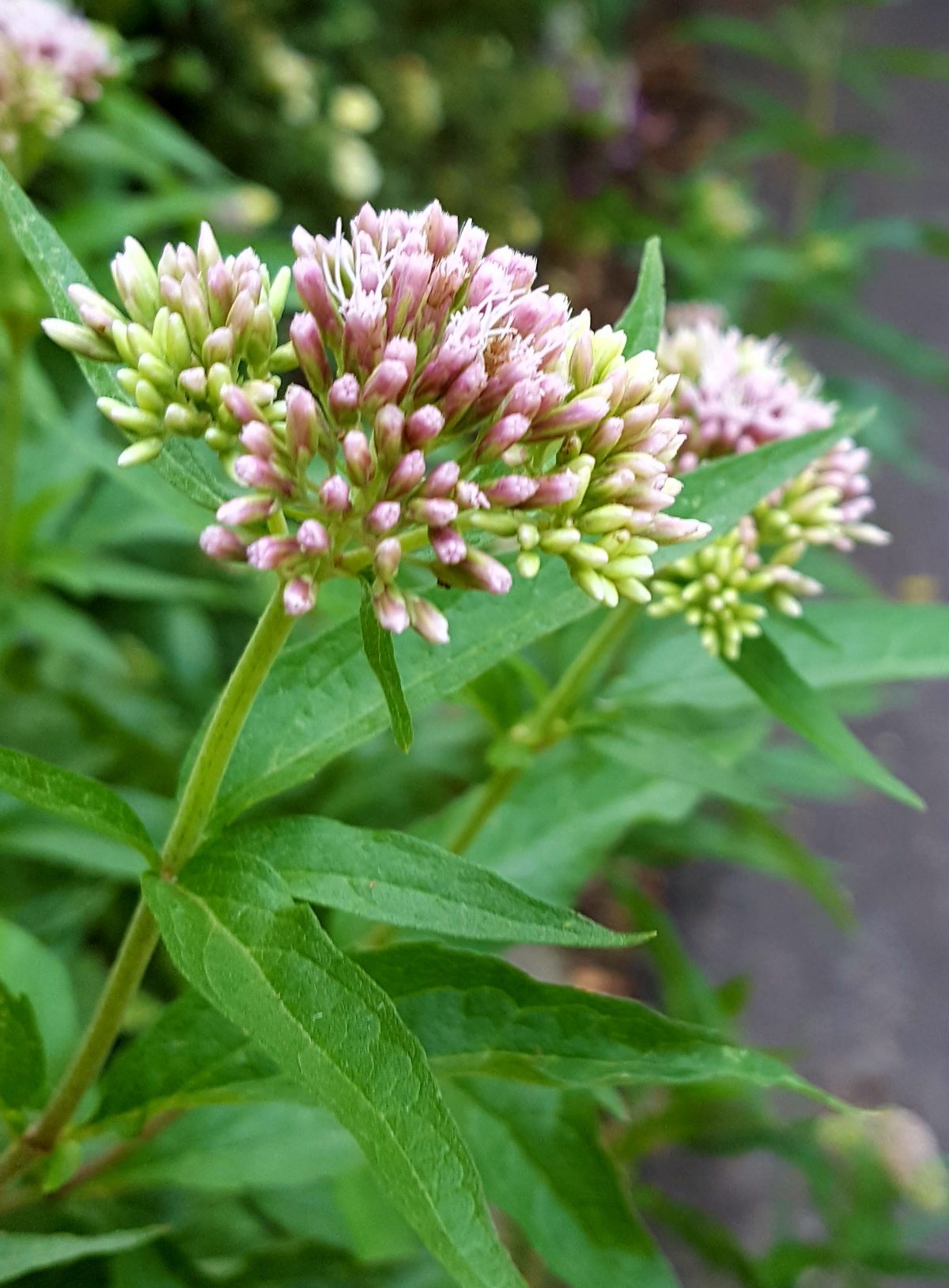
Learn how to confidently identify hemp agrimony (Eupatorium cannabinum)Asteraceae.
Discover how to safely and confidently identify hemp agrimony, and learn about its historical and traditional medicinal use.
If you are new to plant identification and foraging, this guide to starting out will be worth a read. You can also find out all about Britain’s poisonous plants here too!
In this latest wild plant guide, I will take you through the key I/D features and characteristics, helping you to positively identify hemp agrimony when you are out and about foraging. This plant is pretty easy to successfully I/D, because no other herb on these islands really looks like it at all!
Hemp agrimony belongs to the genus Eupatorium in the large Asteraceae family of daisies, dandelions and sunflowers. At the last reckoning, the daisy family has more than 32,000 species in 1,900 genera!
What’s in a name?
The generic part of the scientific name Eupatorium, is named after the ancient ruler of Anatolia, Mithridates IV Eupator Dionysus (120 – 63 BC), King of Pontus. He is said to have used one of the Eupatorium herbs against serpent bites and their poison.
The specific name cannabinum alludes to the similarity of its leaf shape to Cannabis / hemp.
So it’s easy to see why the plant has the word hemp in its common name. Quite why this particular herb was also called agrimony, I am yet to discover or grasp! It’s not like the two plants are related or that the flowers are similar. Perhaps the tops of common agrimony leaves could be argued to look a little like hemp agrimony. That would be the plant naming crew stretching things a bit…
You can also find reference to ‘raspberries and cream’ in certain herb books. This points to the colours of the flower buds as they begin to open.
Hemp agrimony botanical description
Don’t let the occasional unfamiar technical word stop you from getting to know plants on a deeper level. Use this forager’s glossary!
Leaves: From 5 – 20 cm. With 3 to 5 lobes per leaf. Some leaves will be found at the base of the plant, but like many herbaceous perennial plants, the leaves appears each year with the new stems. These will quickly begin to rise up.
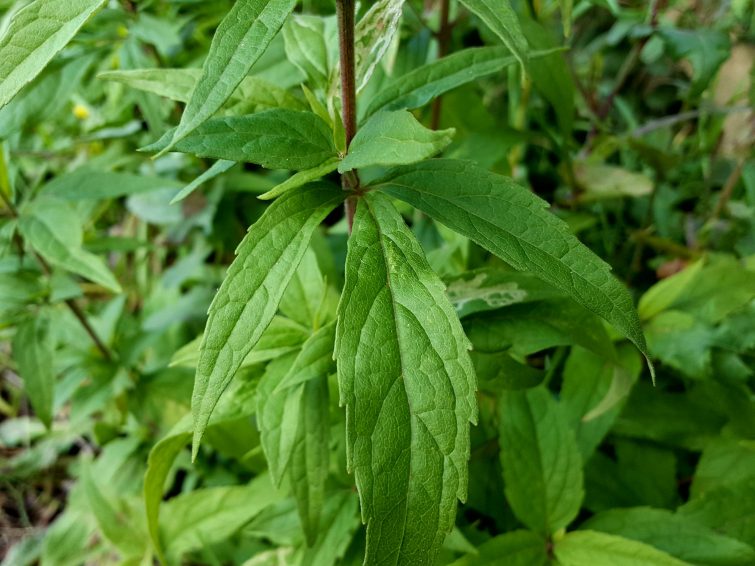
The darkish green leaves do look a little like hemp (Cannabis sativa). The leaflet lobes are elliptic to oblanceolate-shaped, net- veined, and hairy. If you look at the underside of the leaf, you will see raised secondary veins.
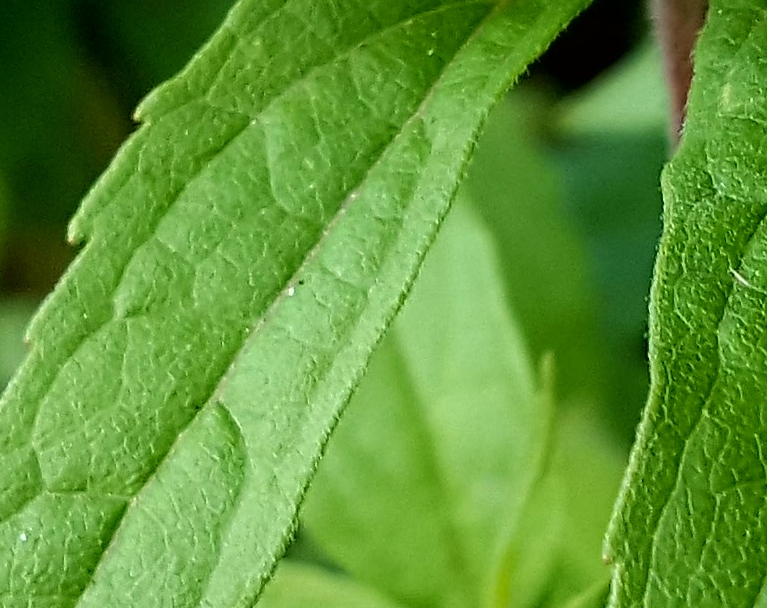
With a lens or with your camera zoom, you can find small hairs on the serrated margins. The teeth are tipped with white hydathodes.
Petioles: This is small and flat, if present at all. Around 1 cm long. The stem leaves are pretty much sessile.
Roots: Hemp agrimony grows on short, slowly spreading rhizomes, producing clumps of stems.
Stems: These start to appear from April, and the plant is generally seen with numerous purplish-coloured stems. This herb can make sizeable stands.
Flowers: Hemp agrimony delivers a pretty spray of frothy pink flowers. Although it doesn’t look like a typical daisy family plant, this plant produces masses of very small, terminal, composite flowers.
This is technically known as a ‘corymb’ type of inflorescence. To the eye, the domed mass of flowers look a little like Valerian, or one of the umbellifer plants. But thankfully for foragers here in Britain, only the carrot family produce a compound umbel inflorescence.
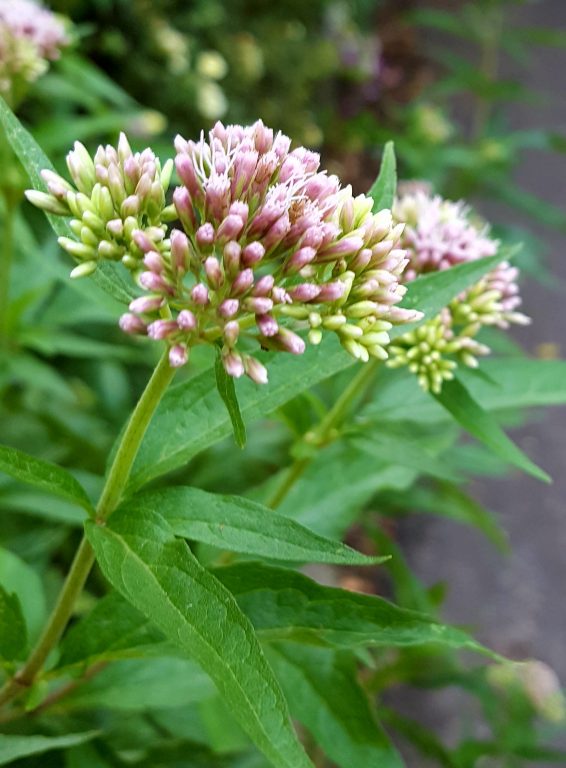
Wih good eyes or a hand lens you should see that around six tiny pink-purple florets are found in each of the numerous flower buds. Long, tapering, purple-tipped bracts surround the disc florets. Ray florets – typically seen in this family – are absent. Long white styles stretch out of the flower soon after opening.
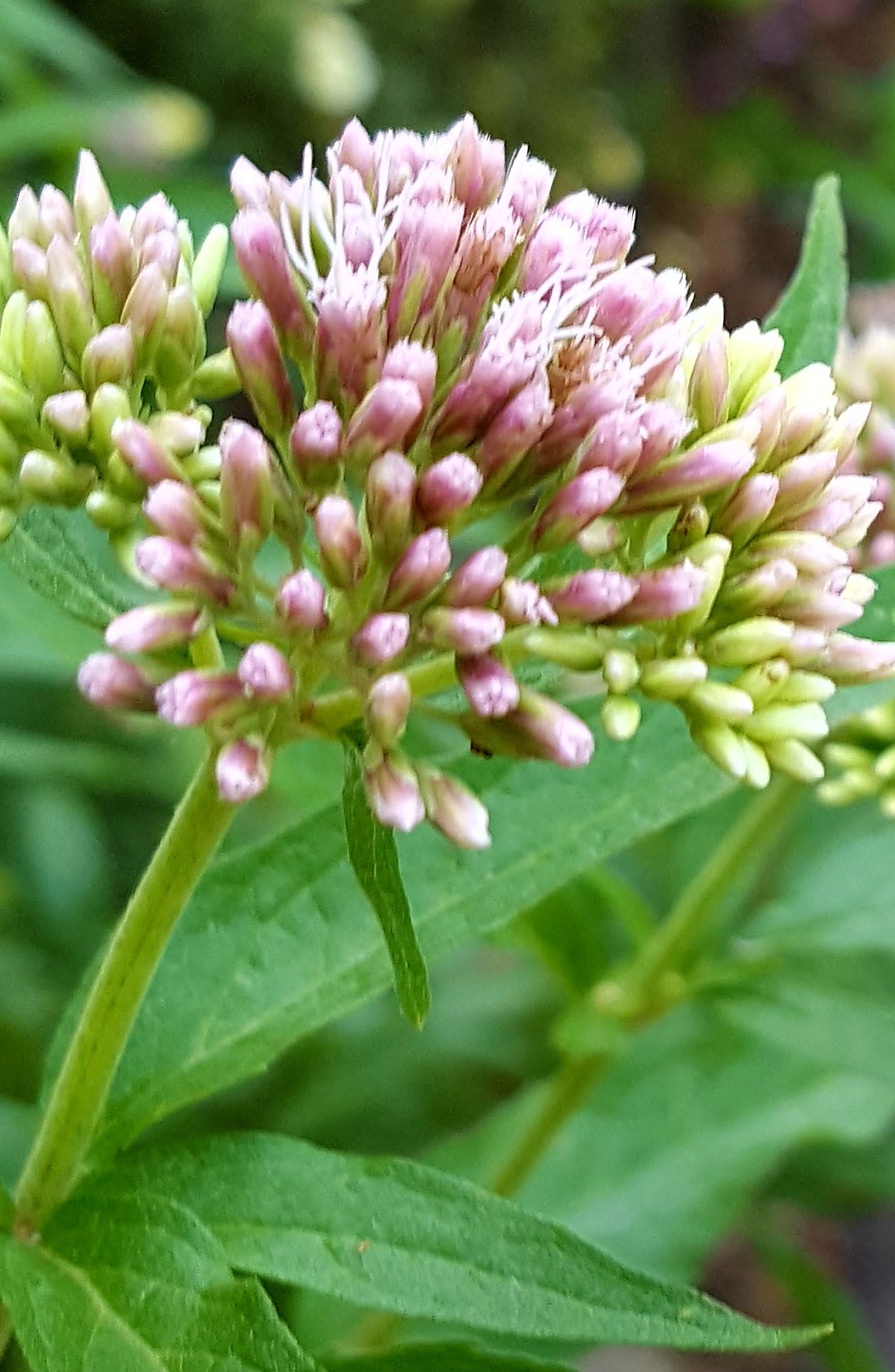 Flowering season: Nowadays I tend to see the plant coming into flower in June, although the field guides continue to say July to September. As we know, plants can flower at any time, as wild chervil and hogweed will tell you.
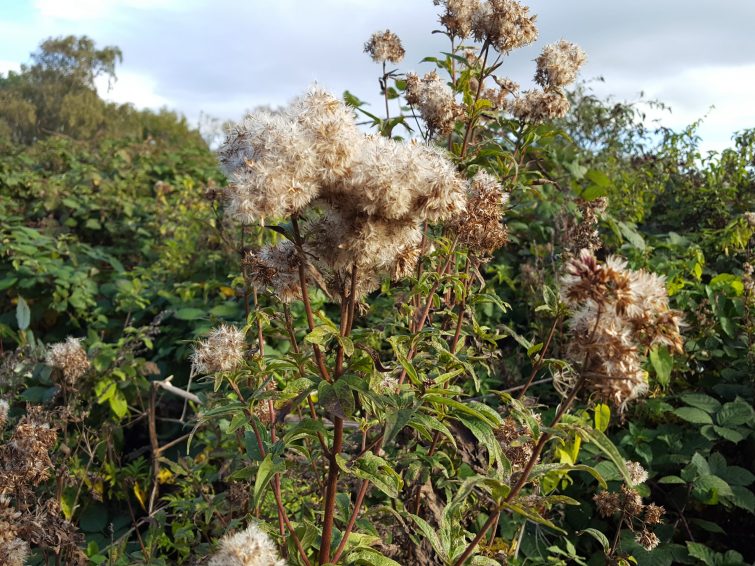
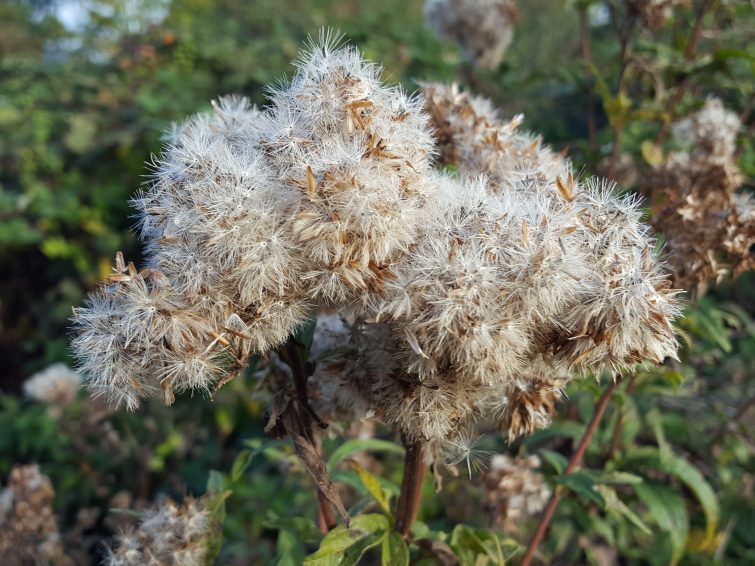
Fruits: The fruit is a tiny achene (2-3 mm long) attached to white pappus hairs (approximately 5 mm long). This method of dispersal is common to many dandelion family plants, and familiar to just about anyone who has blown fairy clocks!
Habitats: This is a lowland plant that prefers neutral or alkaline soils. It won’t be found above altitudes of 350 metres or so. Hemp agrimony particularly loves damp settings by streams, rivers, canals, ponds, and in fen meadows, but will freely populate wastegrounds. It can also be found in some dry woodland settings.
Parts used: The above ground parts are used for medicine.
Medicinal uses: Hemp agrimony and other Eupatorium species have been used as medicine across the world for more than 2,000 years.
An essential oil is found in the leaves, roots and flowering tops. The plant’s chief uses are as a bitter and digestive tonic herb. Herbalist say its actions stimulate and increase bile secretion, and stimulate removal of waste products from the kidneys.
If you want to know more about our medicinal plants and their actions, just pop over to this extensive overview of medicinal plant constituents.
Harvesting: Like many medicinal and aromatic plants, hemp agrimony flowers are best harvested just before opening. The leaves can also be gathered. I harvest the top portion of rhe stem and use that. You may want to read this harvesting guide and get a sack full of handy tips and tricks.
Other notes: Its North American close cousin, boneset (Eupatorium perfoliatum), is more widely used as a medicine by Western herbalists. It can easily be grown here.
It will be found easily enough in towns and cities, alongside many other interesting and useful plants for the urban forager.
Next up is one of the wild flowering treats of winter…
Happy foraging!