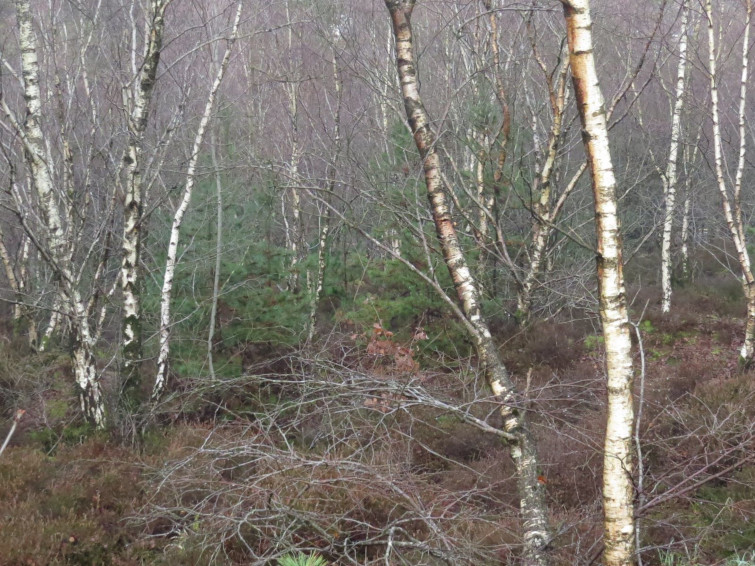
Your at-a-glance wild food guide to foraging in December.
Nine wild plants to get to know when foraging in December
When you consider the plants and fungi mentioned in my other winter foraging articles for January, February, and November, we are looking at a substantial larder of more than 30 species up and down the UK. And this is before any of the plentiful seaweeds or shellfish are taken into account.
Leaves, seeds, and roots can all potentially be collected this month. Certainly in Southern England anyway.
Other areas further North are more likely to endure proper winter weather. As ever, no guarantees exist. For tips on harvesting, head on over to this page here.
Nine wild plants easily found when foraging in December
In no particular order…
Wood sorrel (Oxalis acetosa)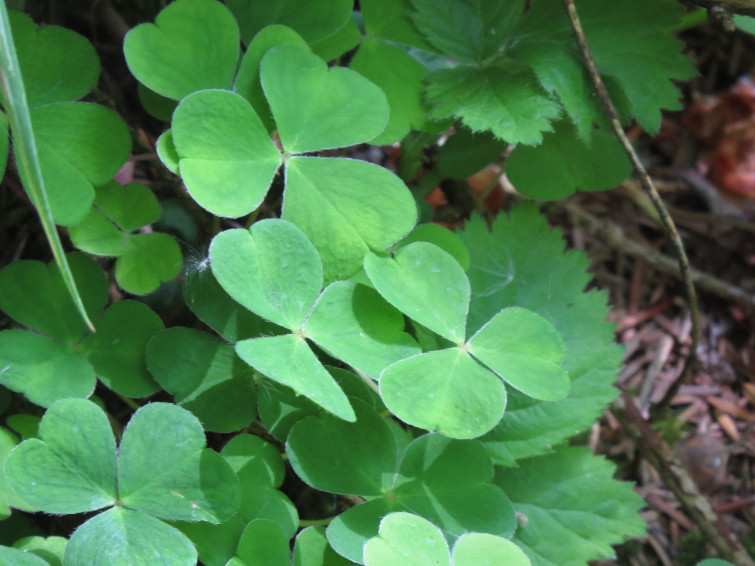
Wood sorrel is easily overlooked, either because of its similar habit and form to our various clover species, or its small size.
It frequents various woodlands, but I can see it easier amongst the pine plantation woodlands we have, in Southern England at least, where it enjoys life in dappled sunny patches, large and small,
The lovely acidic leaves are a refreshing wayside nibble or carefully gathered and added to salads.
Note the heart-shaped leaves that set’s it apart from the numerous clovers. If you look closely you will see a second heart-shaped imprint in the wood sorrel leaf.
This plant is delicate, so take care not to yank the roots up when harvesting. The usual caveats for eating plants high in oxalic acid apply.
This plant constituent can be toxic to some people, typically those with kidney stones, as readers of this website will already know. Click those links to get up to speed.
Cyclymen (Cyclamen hederfolium)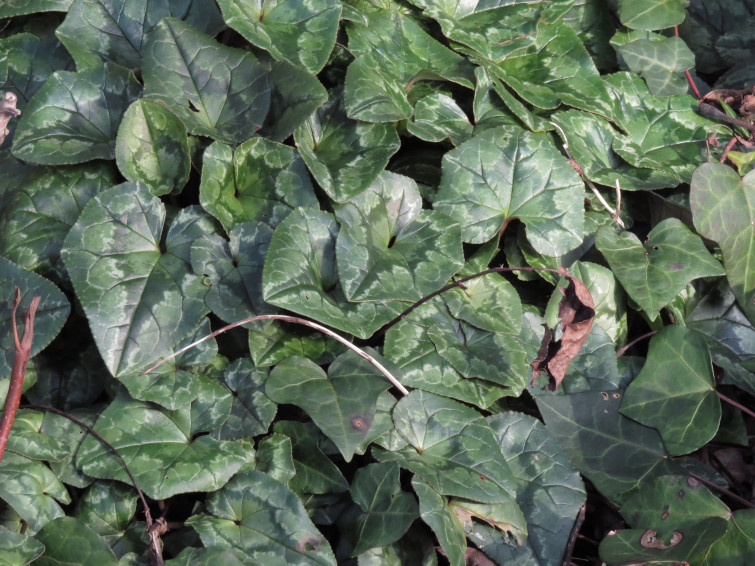
Not an edible plant, but one you cannot fail to notice when regularly out foraging in December and the winter months.
For the ravers of the nineties, and the maths students of today, have a good look at the middle of the leaves and see if you recognise the shape in the centre.
Some leaves clearly show more than a passing representation to the Mandelbrot set. This genius piece of mathematics revealed that nature has an unending fractal essence.
Crow garlic (Allium vineale)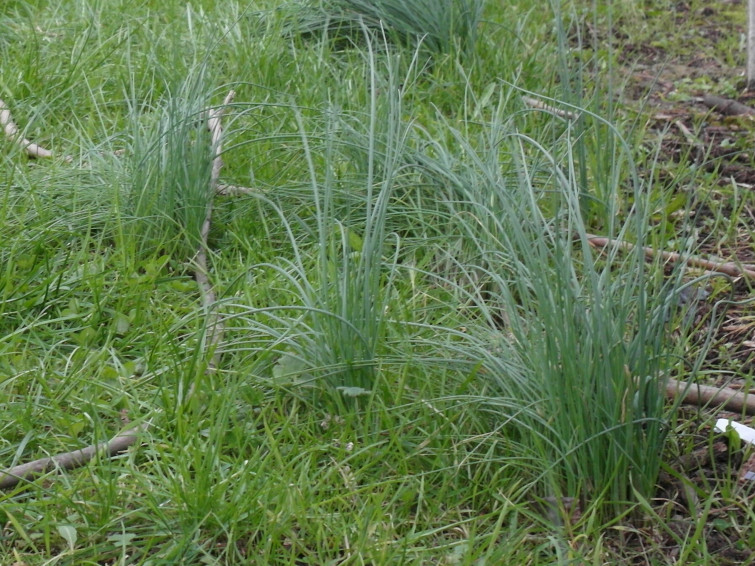
Like pretty much all of them, this is another really tasty member of the Allium tribe of plants.
The new leaves are easy to spot amongst grasses,,
because of their blue-green colour. These semi-cylindrical leaves begin appearing from around late October to early November in grassy sites.
Just like its relatives, all other parts are edible and available to harvest all year round. Definitely one on my radar!
Dandelion (Taraxacum officinale) 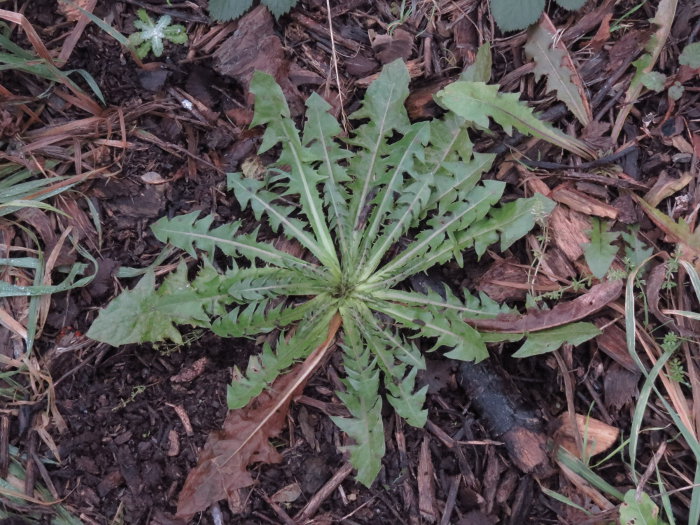
Known by everyone. But hardly anyone has eaten the roots as a vegetable, and very little information exists online, as far as I can tell, about its use as root vegetable!
The simplest method of use is to find the biggest of them, leach the roots in water for 24 hrs, then slice it half top to tail, par-boil and roast. Oh…my…days!
When I was teaching in the Isle of Man, I asked a four-year-old girl – who obviously 100% knew the plant she was pointing at was dandelion – how she knew the plant she was pointing at was dandelion. She answered simply, “because its dandelion”.
I’m convinced we have a knowledge of plants deeply hardwired into our human brains.
We know all of these different green shapes in the haze of the hedgerow very well. It’s remembering them. Refiring synapses in the brain.
Daisy (Bellis perennis) 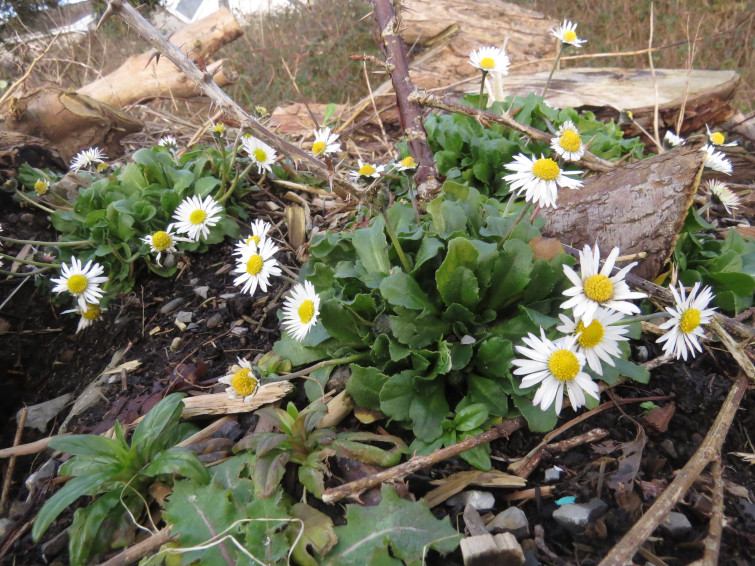
Like dandelion, this little plant is known by all and is present through winter in small rosettes. The younger leaves have a savoury taste to them, but not as much flavour as the ox-eye daisy.
Not many daisy plants will flower in winter but the odd exception to the rule will always be found.
Still, it is there all year and one you could add to salads whenever you want. Daisy leaves are also an old traditional herbal remedy for treating bruises. Simply make into a salve.
Wintercress (Barbarea vulgaris)
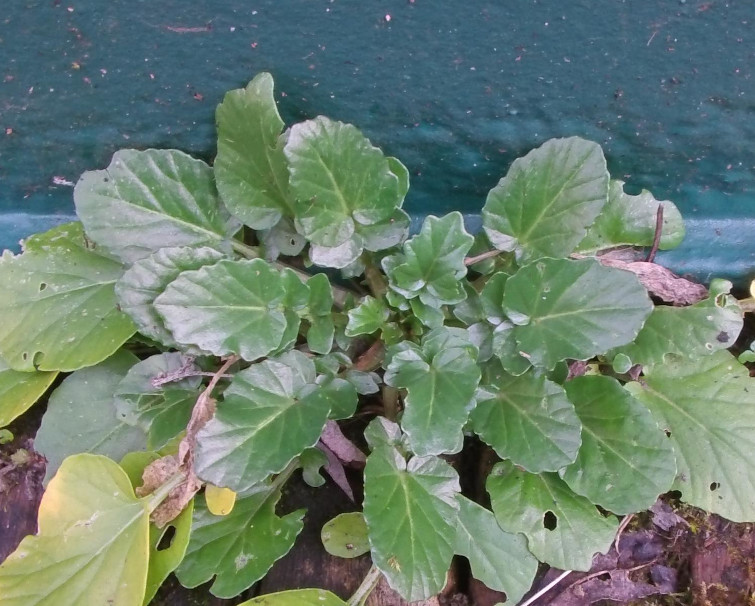
One of four Barbarea species to grow in Britain. Dark green leaves grow throughout the winter as rosettes. Flowers appear in mid-spring onwards.
The leaves taste bitter and mustard-like. You can reduce both by cooking it like spinach. Personally, I want all its medicinal benefits, so I use the younger leaves raw in salads.
My favourite parts, as with many brassicas, are the tasty and tender new flowering tops, and the flowers.
Bay leaves (Laurus nobilis)
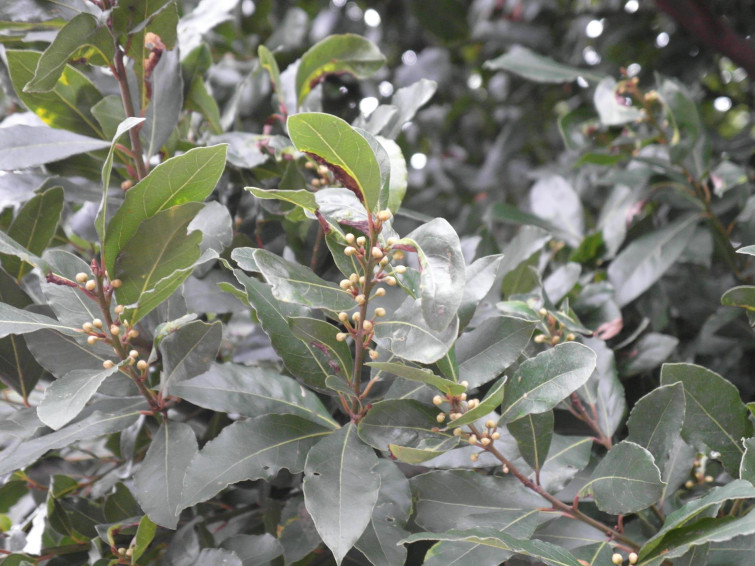
Not strictly wild, but it’s widely planted and growing happily in so many places here in Britain. This is especially so in the urban environment.
This makes it super easy to find. You will see the bay tree out-muscling their original intended homes, bursting out through garden fences and walls from the suckers that appear from its base.
So really, why ever buy this quintessential ingredient for curries, soups and stews this winter? The best results are from dried leaves.
Ground ivy (Glechoma hederaceae)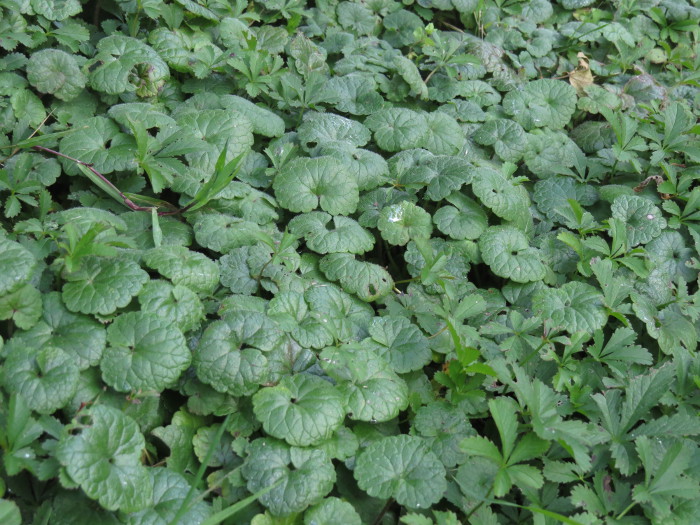
This lovely semi-evergreen plant has been previously discussed here in its own full-length article. All you need to know here is that you need to know the plant!
Hedge mustard (Sisymbrium officinale)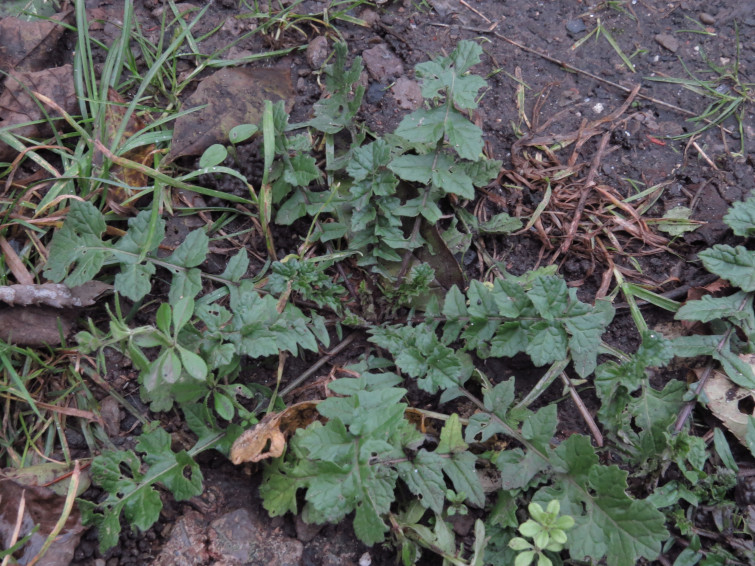
Before the arrival of horseradish this was the go-to chest remedy in a lot of Britain. It took me a few years of wandering to finally know all stages of the plant.
Its leaf form changes considerably over the life cycle, from the pinnately-lobed leaves found in the rosette, to the very thin stem leaves.
The yellow flowers are tiny, approximately 3 mm across. The seed pods are quite long and thin and are held close to the stem, giving rise to a tangled wire appearance.
Fungi Foraging in December
Few edible fungi can be found when foraging in December, but for me, the wood blewit and field blewit are two of the best edible mushrooms I eat all year, so I look forward to seeing them in grassland and woodland settings.
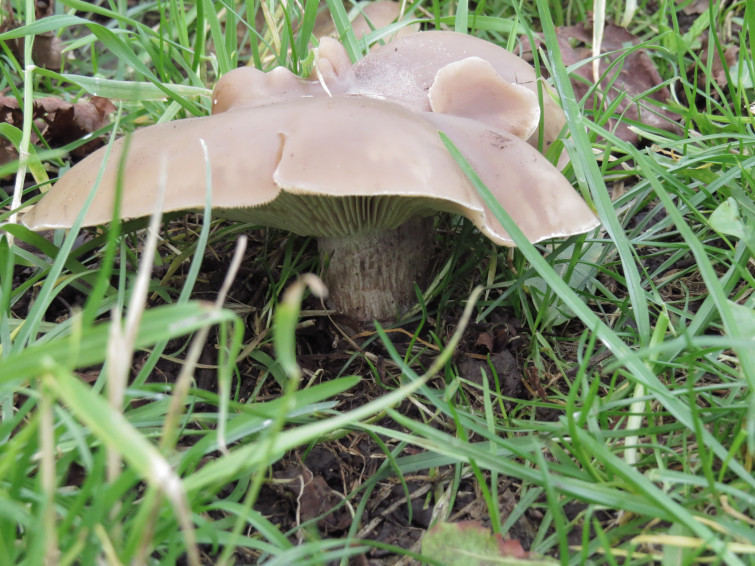
These are two of the hardiest mushrooms you can find. The first time a friend of mine showed me them in Croydon, we harvested them in the frost with a sheet of ice on the cap!
These are great for making hearty mushroom tagliatelle or using in mushroom soups. They are strong flavoured, meaty textured, and juicy.
They take a good few minutes to fry, and anyway, I prefer other less juicy mushrooms for that.
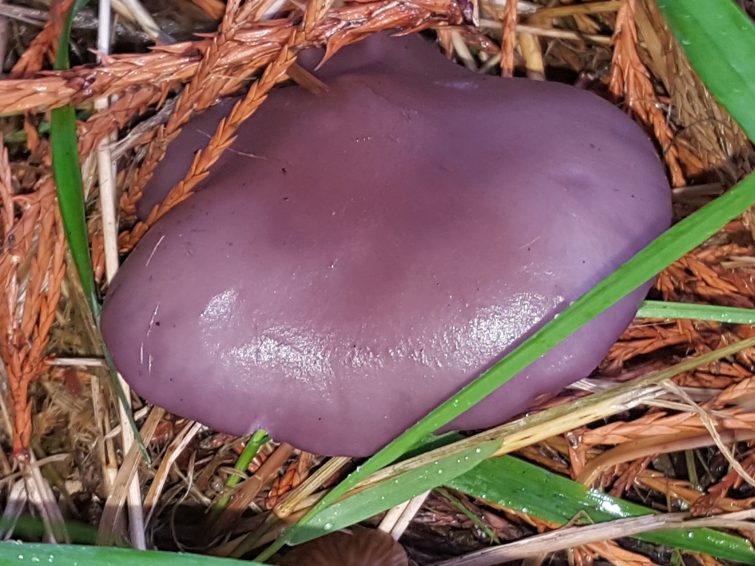 Field blewits (Clitocybe saeva synonym Lepista saeva) are around 8-12 cm wide and only around 5-6 cm high on average.
They will show distinctive blue-mauve colouring on the stipe, especially when young. Their close-spaced gills are a mauve colour. Another common name for this mushroom is ‘Blue leg’.
Wood blewits (Clitocybe nuda synonym Lepista nuda) are generally taller, around 10 cm on average, and with pretty much the same size cap, although typically this one is lilac to mauve-coloured when young.
Both blewits will have a similar colour spore print, ranging from an off-white to pink.
The lookalike Cortinarius species can have ‘cobwebs’ around the veil on the cap, and will produce a rusty brown spore colour and often smell unpleasant. Always, always, cross-reference your initial positive identification.
More plants and mushrooms are coming through in January.
Happy foraging!