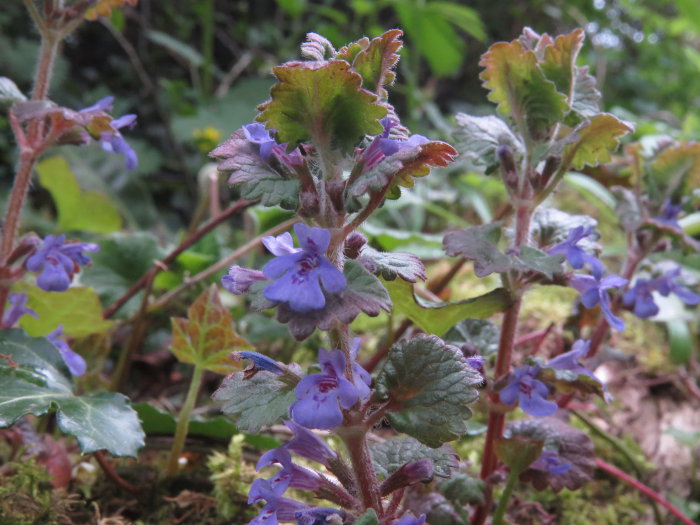
 Foraging for Ground Ivy /Alehoof / Creeping charlie. The BEST plant remedy to soothe away nettles stings.
Ground ivy is a beautiful and useful herb. Partly due to its size, it is too often overlooked. It is the best remedy for nettle stings I have discovered, bar none. Read on to find out more!
Even with its gorgeous blue-purple flowers, remarkable healing powers, and intriguing scent, this plant produces mixed feelings from gardeners.
Ground ivy is notorious for a rapidly creeping habit, which soon helps it take over where it’s not wanted. Each node on the creeping stems can produce leaves and roots.
During the spring you will find relatively large patches of land adorned with splashes of blue-purple, often lower than the tops of the grasses it finds itself in.
Ground ivy quick botanical description
This is a perennial plant and another useful member of the large and mostly aromatic mint family.
Leaves: 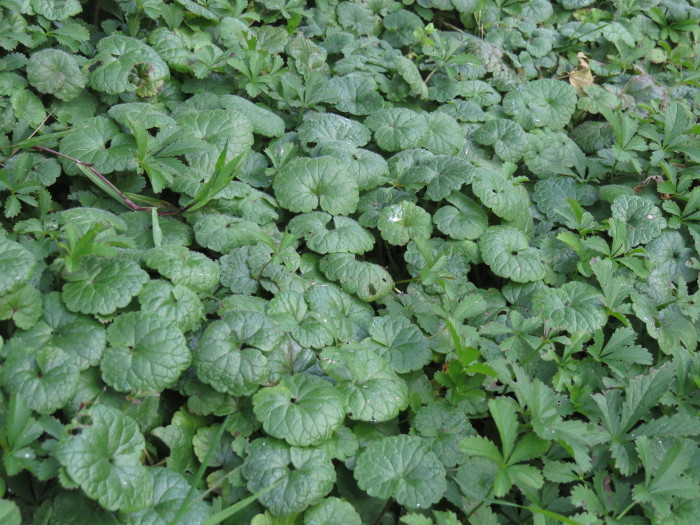
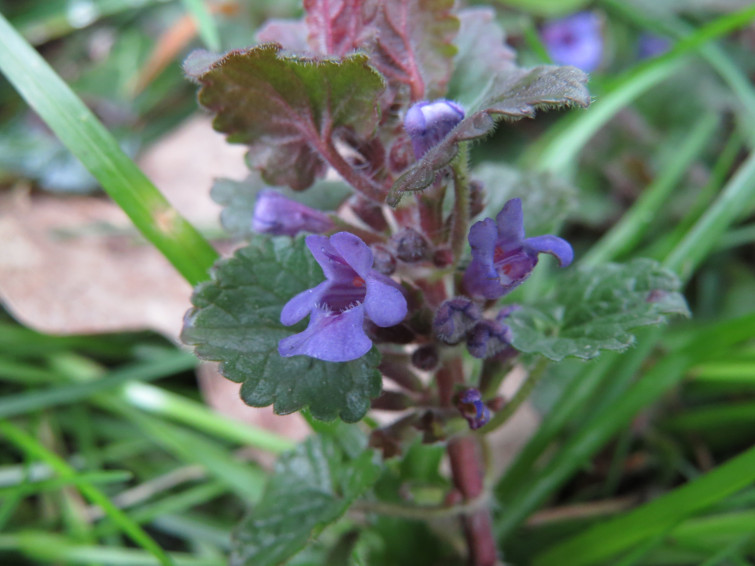
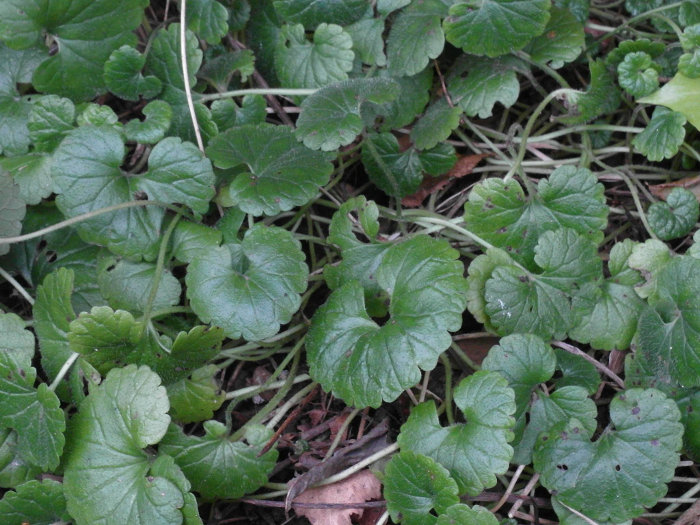
The kidney-shaped, deep green leaves are often found slightly undulating at the margins, with essential oil glands on the undersides. The margins are crenated.
Its upper leaf surface has a covering of very small downy-bristly hairs. The leaves can often be a slight purple hue, depending on soil, site, and time of year. Ground ivy can be found in all but the harshest, snowiest, winters
Petioles: The leaves are borne on long petioles.
Stems: 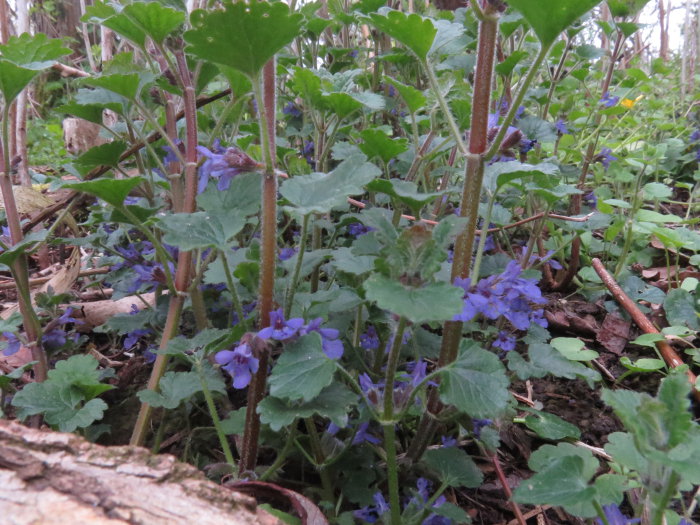
These begin to rise up a few weeks before flowering. They are short, square, producing smaller leaves and soon producing flower buds. It rarely reaches much above 8-10 inches high.
It’s trailing habit comes from the quickly spreading runners, similar to those found on strawberry, but with two leaves at every node.
This adaptation makes ground ivy an exceptional coloniser of bare soil and darker, shady areas of the garden.
A similar method of growth is employed by mints (Mentha) but their stems are found just under the soil surface, carrying the same capacity to root and shoot at every node.
Flowers: 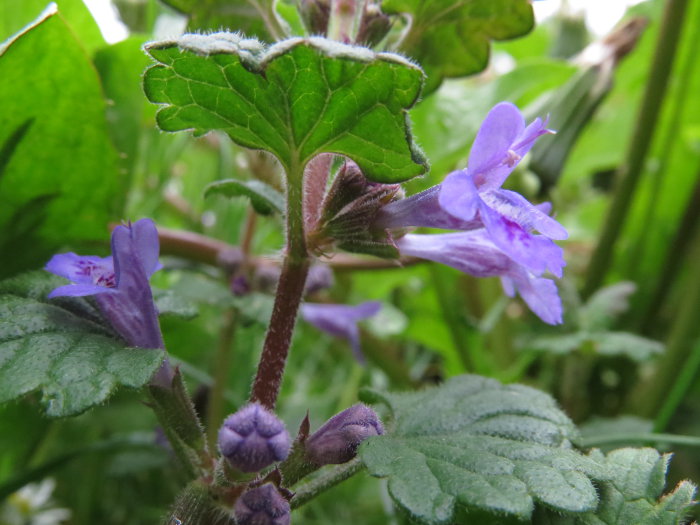
Although only a small wee thing, ground ivy makes a big impression on the eye when in flower.
The flowers appear from leaf axils. Long blue-purple, two-lipped corolla tubes come from a five-pointed calyx.
Flowering season: Depending on how mild the winter has been, and where you are in the country, it’s possible to find ground ivy in flower from March.
Habitats to look in when foraging for ground ivy
You can find it in a number of settings up and down the land. Ground ivy loves field edges, hedgerows, woodlands and grassy banks, whether they are sunny or shady, which somewhat depends on where in the country it is growing. 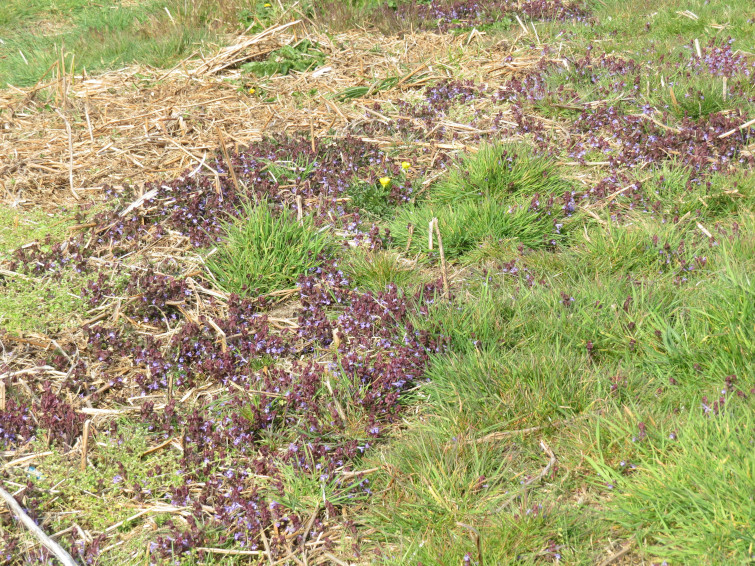
It is not particularly fussy about soils so has been found in more than 85% of the British Isles, aside from the extreme North and North West of Scotland.
Parts used – Leaves and flowering tops.
Harvest – Just before flowering is best, though leaves and flowers can be taken for medicinal or culinary use at any time.
Key constituents – Amino-acids, flavonol glycosides (including rutin, isoquercitrin). Flavone glycosides (inc luteolin), Sitosterol, saponin, tannin, wax, volatile oil (inc linalool, limonene, menthone, terpineol, alpha-pinene, pulegone, rosmarinic acid.
Actions – mild expectorant, anti-catarrhal, vulnerary, diuretic, astringent.
Discover more about the actions of medicinal plant constituents in my article here.
Traditional uses – Many herbal authors of old, such as John Gerard (circa 1597), noted its use and action on the mucus membranes, thus employing the plant as an expectorant and a cure for colds.
Ground ivy’s aromatics really remind me of sage or thyme and mint. I love the scent, but they’re not everyone’s cup of tea.
Its chemistry has been quite extensively documented. The essential oil plays a major part in ground ivy’s therapeutic ability.
The astringent activity is reportedly due to rosmarinic acid, whilst terpineol is known to be antiseptic. Astringency and anti-inflammatory actions of ground ivy are usually associated with the tannins and flavonoid fractions.
The monoterpene pulegone is the abortifacient agent responsible for the actions of Pennyroyal (Mentha pulegium). In pennyroyal, pulegone is found at concentrations of 1-2%.
However, it is not present in ground ivy at high enough concentrations (0.03-0.06%) to be considered harmful by practitioners.
The terpene-rich volatile oil of this plant indicates it will be an irritant to the mucous membranes of the stomach as well as other parts of the gastro-intestinal tract and kidneys.
Irritation is not necessarily harmful because the C.N.S is kick-started into producing responses we desire from it.
More detailed information about medicinal plant constituents and their actions will be found in a previous article here.
 Ground ivy soothes away nettle stings like no other plant I’ve met
Without question, this plant is the best antidote I know of for treating nettle stings.
Simply crush and squeeze the leaves between your thumb and the other palm of your hands. Rub the expressed juice on the afflicted area.
Rub the mashed plant material on vigorously and you will soon sense the stinging sensation disappearing.
I have a hunch that it’s the thicker, less volatile, sesquiterpenes in the essential oil that are partly responsible for alleviating and soothing the reaction to the nettle stings.
These thicker oils need temperatures around 60 degrees centigrade to begin degrading / distilling / evaporating. The temperatures reached whenrubbing
As a food, ground ivy makes a good addition to pies, soups or broths. Both stuffing mixes for roast meats, and my wild salsa verde are enhanced with some chopped ground ivy. Flowers can be added to salads.
Its aromatic and bitter leaves could be used in salads, but I think they a) require a good dressing, and b) need finely chopping before mixing in, because of their strong flavour. 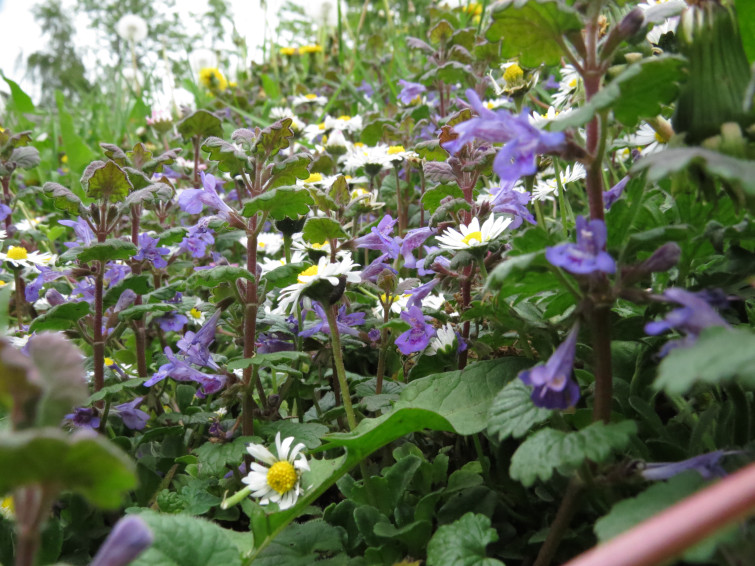
This plant would have been especially welcome to our ancestors, and even more so in the late winter to early spring period, when fresh new leaves are scarce.
For the home brewer ground ivy is well worth foraging during spring. Formerly known as alehoof, the plant lends an aromatic bitterness and has renowned abilities to clarify ale, for which it was once popularly used.
At a glance, ground ivy could superficially be mistaken for purple dead nettle (Lamium purpureum) and henbit dead nettle (Lamium amplexicaule).
Both of these two relatives from the mint family are edible, if not tasty, so this wouldn’t be the worst mistake you could make.
For more information on wild harvesting our medicines and foods, head on over to this article.
Happy foraging!