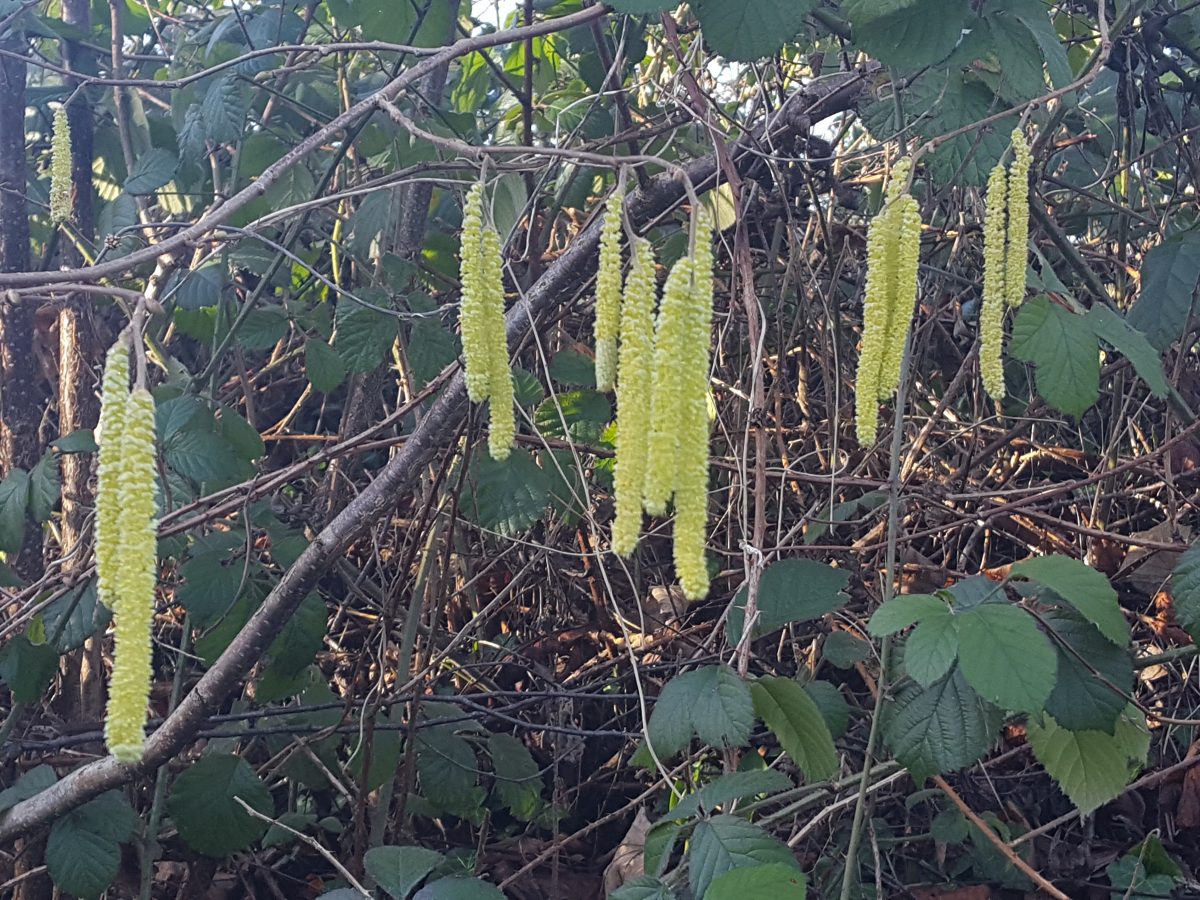
Ten tasty wild foods to find when foraging in January
Foraging in January? Well yes of course! That is if you’re not snowed in! When it’s not sub-zero, there is a surpisingly substantial wild larder available to us here in Britain. That is, if we can wrestle ourselves away from the arm chair and go foraging in January.
We have a range of seaweeds and seasonal seafood that can be found here in Britain during the winter, as well as many plants and the occasional choice mushroom. We just have to engage all the senses, know where too look, and to look a little harder!
With surprisingly little effort, once you can identify the plants and places where they live, you can quickly gather ingredients that make your food come alive with the wild, even in the depths of winter.
Plant I/D can be fast tracked by using the ‘family patterns’ method as set out in the ‘How to identify plants in a day parts one and two.
If you are starting out on your foraging adventures, then my at-a-glance harvesting charts can help you time your forays when you are foraging in January.
The seasonal charts feature 80 or so species, and are alphabetically listed and colour-coded, for seven different plant parts. They are available as a download. Contact me for details.
Some of these plants are also used in herbal medicine. Check out our plant chemistry page for more insights into medicinal plant constituents and actions.
Nine easy-to-find wild plants to look for in January.
Wild celery. (Apium graveolens).
Mainly available from river and estuary habitats, plus ditches on water meadows. Get to know this plant well in my full-length, wild celery forager’s identification guide.
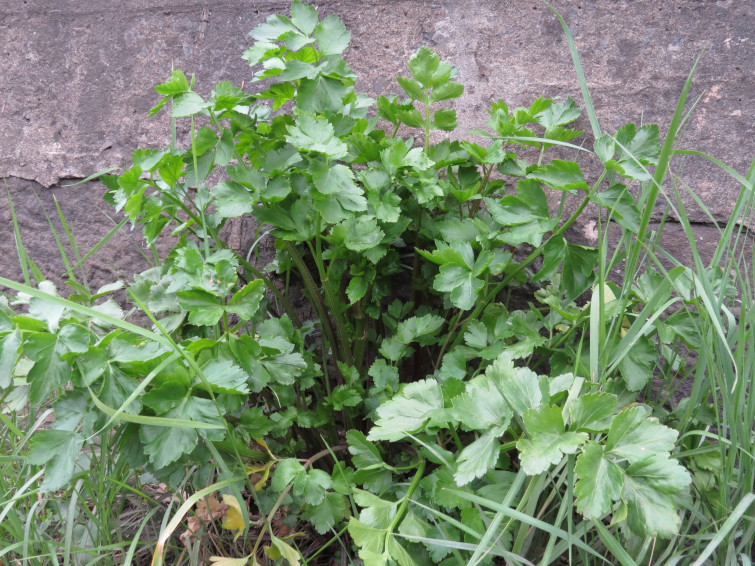
You can forage for leaves and leaf-stalks now, and may still find some of last year’s seeds available (ready for mixing with salt).
The wild celery will taste much stronger than any blanched, shop-bought stuff. It offers fantastic flavouring for casseroles and soups. Great for a wild bloody mary cocktail!
Corn salad / lambs lettuce / Mache. (Valerianella locusta).
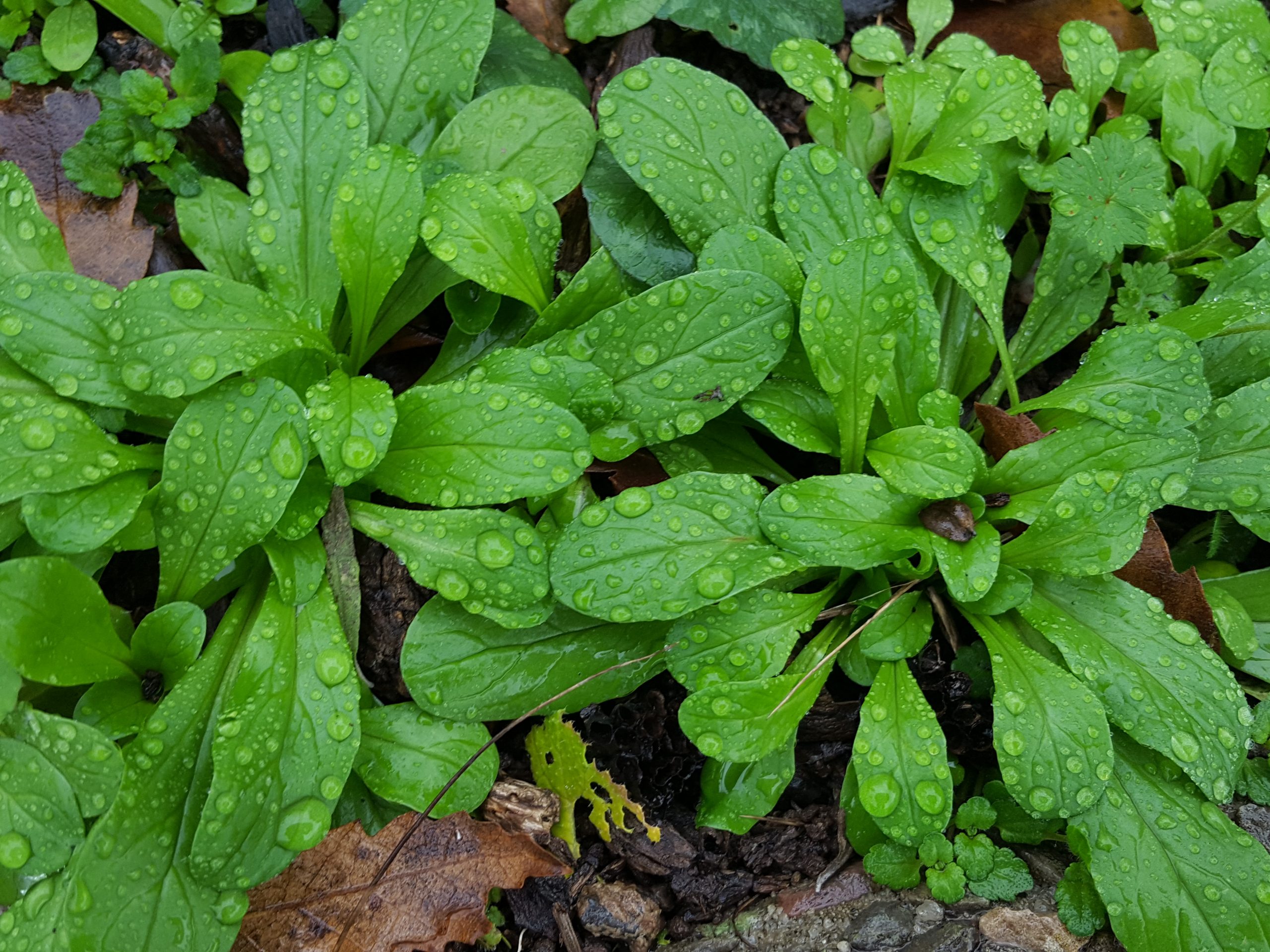
This is one of those plants that its sometimes easier to walk past than see, partly because it looks a little like the various common forget-me-not’s. I have covered corn salad at length in this previous article.
Shepherds purse (Capsella bursa-pastoris).
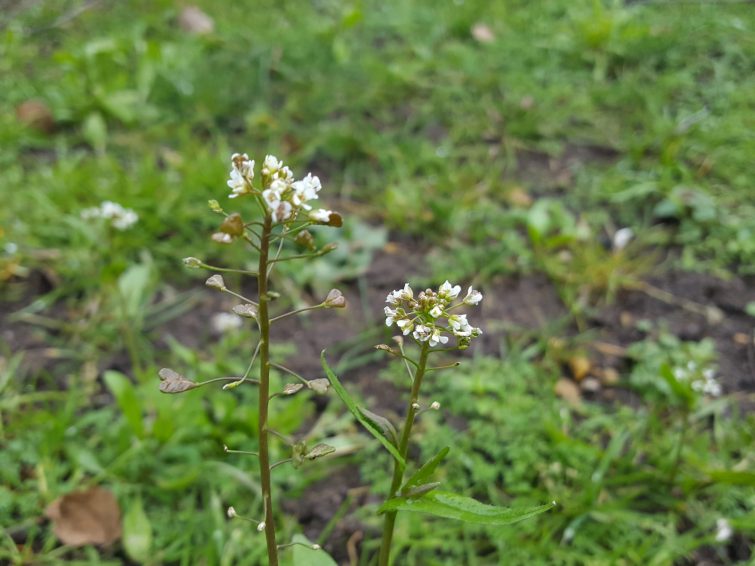
One of a few different brassica family plants featured this month. This plant is a variable-looking annual species found throughout the UK. As my full-length article says, the flowering tops and leaves of shepherd’s purse are worth picking for stir fries. Sometimes the plant produces pinnately-lobed leaves, other times its leaves are almost entire.
Assistance with any confusing botanical terms can be found in the glossary for foragers.
Common sorrel. (Rumex acetosa).
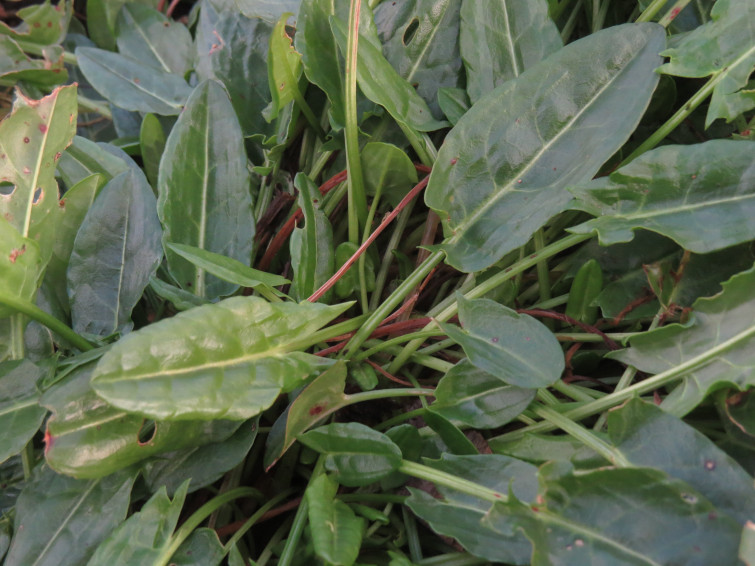
A really lovely addition to any salad. A remarkably thirst-quenching and refreshing herb, great to find on warmer days when foraging in January. The sharp, tart flavour of sorrel marries exceptionally well with fish. Follow the link if you want to know more on sorrel and other edible docks!
Sow thistles. (Sonchus species)
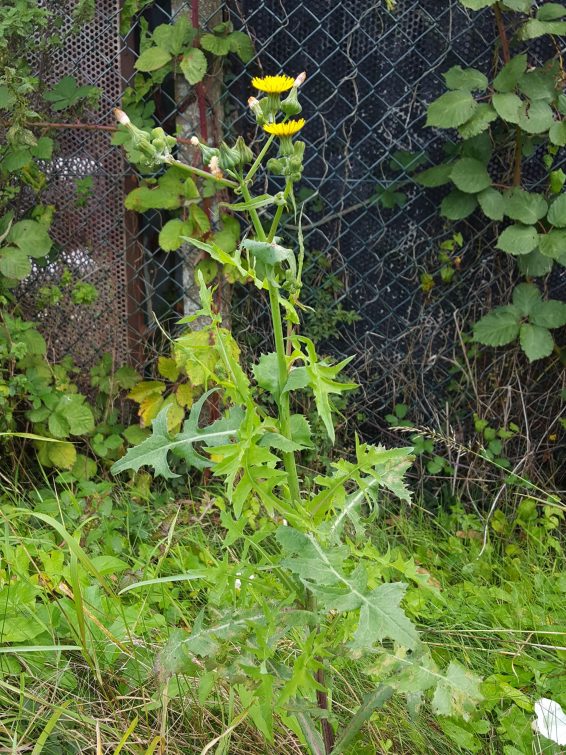
The different sow thistles are plentiful plants found in numerous settings. The various species give us edible leaves, stems, flower buds, and flowers, almost all year round.
The base of the leaves on the perennial and smooth sow thistles can taste a little salty. The flower buds have a surprisingly nutty taste when young, tight and firm. The stems are great when peeled and plonked into a pickle vinegar, or served raw in salads and coated in a tangy vinaigrette. A few days continued frost will knock plants back, but until then…
Winter purslane (Claytonia sibirica).
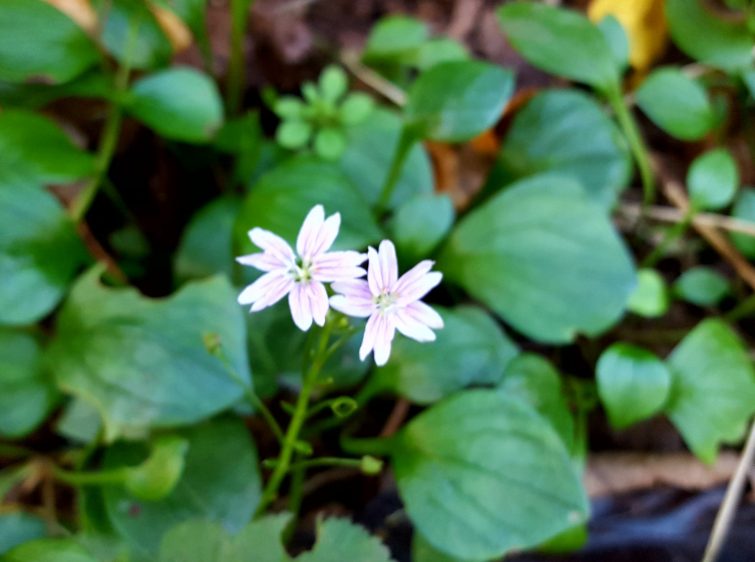
Also known as pink purslane, this succulent leaf offers lovely earthy flavours to salads. The plant was previously covered in-depth here in this plant identification guide.
Jack-by-the-hedge. (Alliaria petiolata).
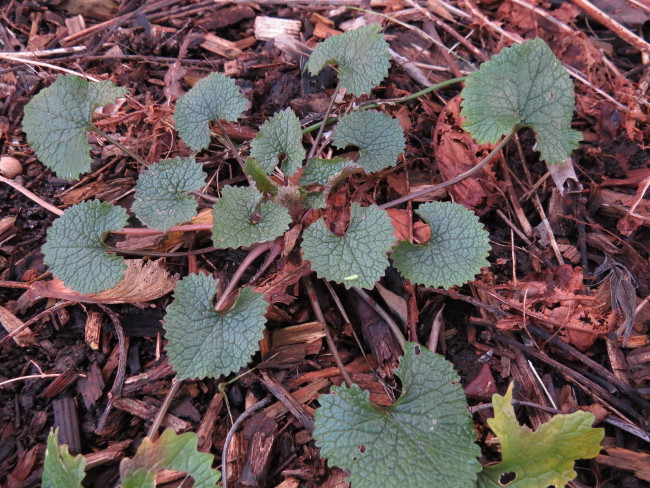
This brilliant brassica family plant will be found growing as basal rosettes when you are out foraging in January. Sometimes you will find large populations. You can learn all about the plant we also call garlic mustard, in my forager’s guide.
Magnolia flower buds (Magnolia species).
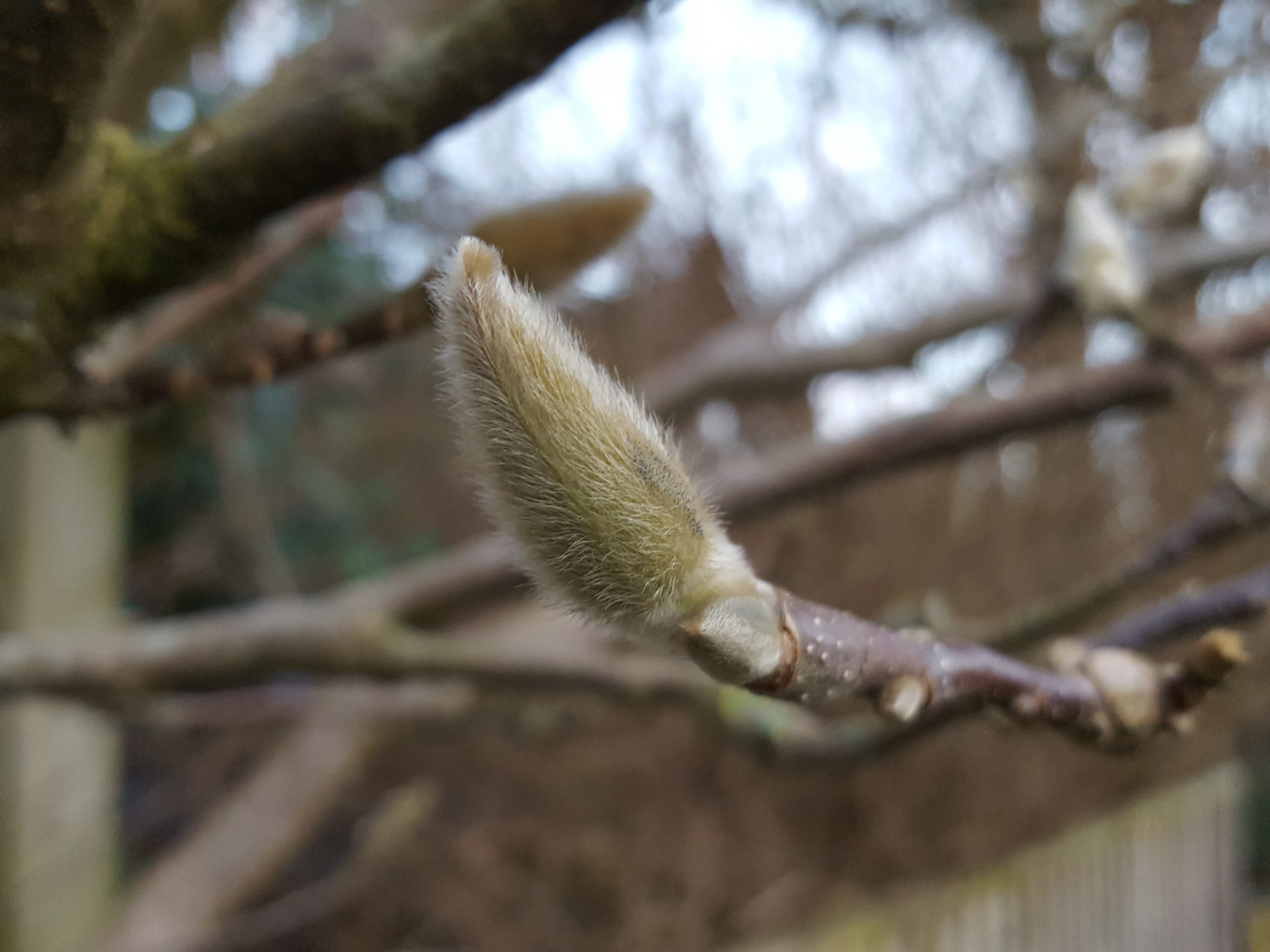
Various Magnolia species have documented edible use. The flower buds have a crunchy lemon flavoured zing about them and can be pickled or dried. Do your research on the species and / or follow the rules of testing your tolerance.
Lime tree buds (Tilia vulgaris et al).
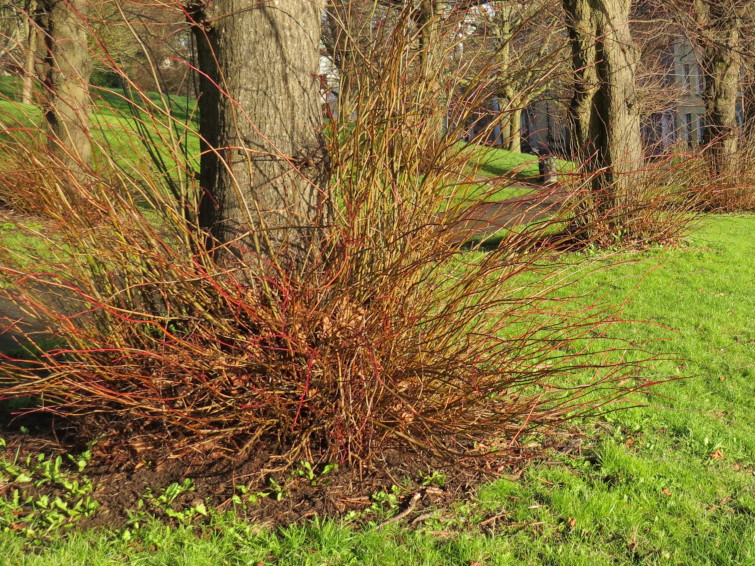
A common tree of parks and gardens, lime tree buds are another favourite wayside nibble when I’m out foraging in January. The most commonly found species is the ‘common’ or ‘European’ lime. This particular species produces numerous suckers from the base of the trunk from which the buds can be easily picked during the winter.
Mushroom foraging in January.
Velvet Shanks – Flammulina velutipes.
There are few mushrooms we can find in January, let alone eat. This clump-forming winter mushroom will actually be stimulated into fruiting by cold and frosty weather.
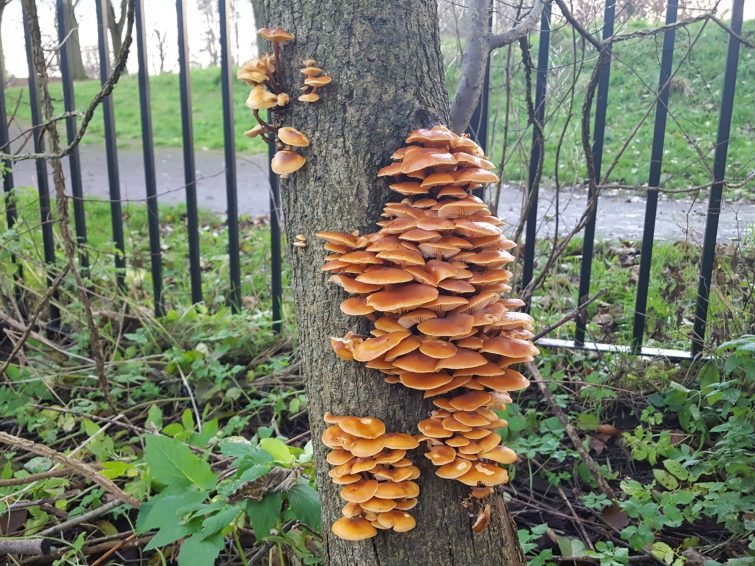
Its slimy, shiny-looking cap is typically a two-toned brown, lighter at the edges.
The stem (or stipe), has a soft dark brown covering, especially towards the base, and feels velvety, hence its common name.
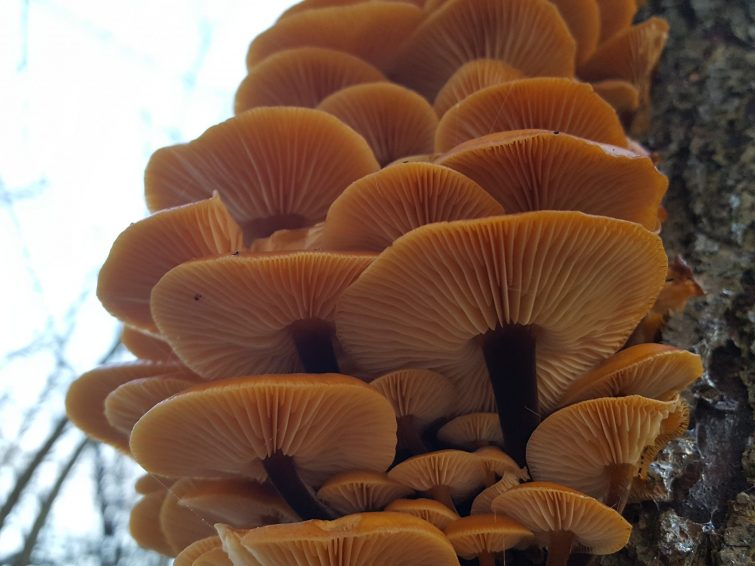
It has creamy white gills, that are well spaced, not crowded. The spores are white (helping to safely I/D this mushroom and distinguish it from a couple of the poisonous lookalikes). It loves to grow on cut and damaged Elm and willow. I first met it, and still mostly see it, on willow.
These mushrooms are delicious served simply on buttered toast. Its flesh is somewhat sweet, nutty and meaty.
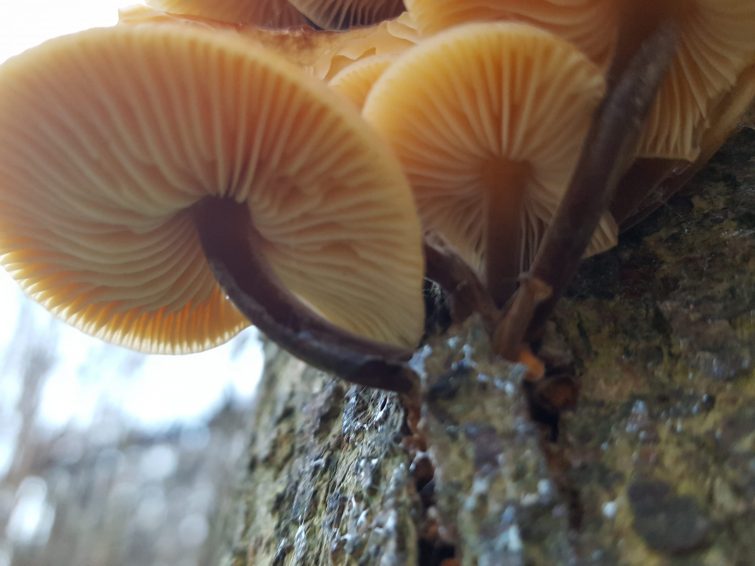
You may have already eaten velvet shanks under the different Japanese name of ‘enoki’. These cultivated, porcelain-white clumps of shop bought fungi are basically forced velvet shanks, grown in appropriate conditions, but no light.
More monthly wild food guides are coming. Until then, happy foraging!