Eat your greens! A guide to foraging for Shepherd’s purse in the UK
Capsella bursa-pastoris. Shepherd’s purse Brassicaceae
Shepherd’s purse is a remarkable edible and medicinal herb in many ways. This plant grows so quickly in numerous settings that, with sharp eyes, we can generally find it all year round.
This is a small herb with a big part to play in medicine. As a weedy annual plant it is not difficult to find. This distribution map shows which areas of the country you can find it in.
What’s in a name?
Shepherd’s purse is the only member of the genus Capsella and is native to temperate zones in Europe, and now naturalised in North America and parts of Asia.
The scientific specific name bursa-pastoris literally means ‘shepherds purse’ in Latin, and has been derived from the distinctive heart-shaped seed pods, which are similar in shape to traditional shepherds purses, made from the scrotum of a goat.
Favourite habitats?
This can depend on whether you live in town or country, as your particular area will influence its most likely habitats! Shepherds purse plant will be easily found growing in all lowland settings up to around 750 metres.
It is one of many ephemeral weeds that are common to our gardens, cultivated fields, roadsides, and waste-grounds.
It thrives in these areas, and will always be found in our sadly undermaintained parks. You can’t help noticing it germinating away on disturbed soils in times of drought.
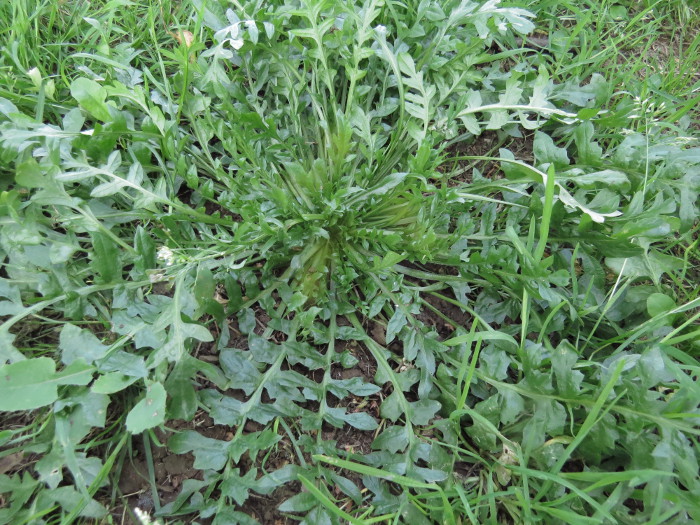
Some of these plants are really quick growing; and only need a few weeks to complete their life cycle, from germination to setting seed. So, you will often see shepherds purse in both its rosette and flowering form nearby each other.
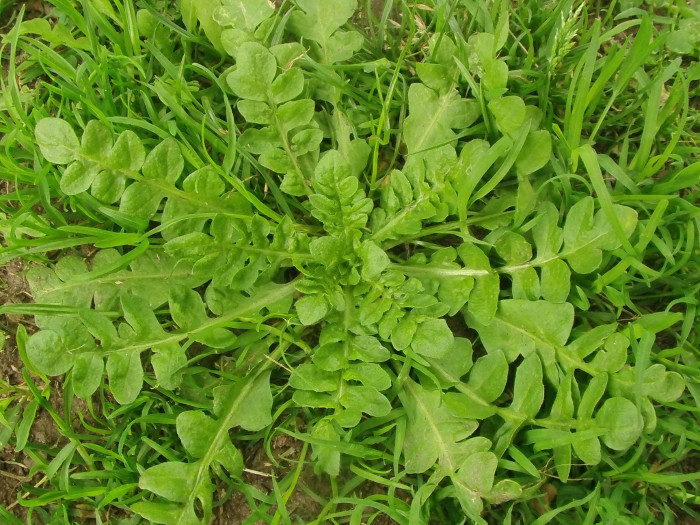
Shepherd’s purse initially grows as a rosette of pinnately-lobed leaves. (typically up to 15 cm long). It then quickly produces its flowering stalks to around 40 cm high.
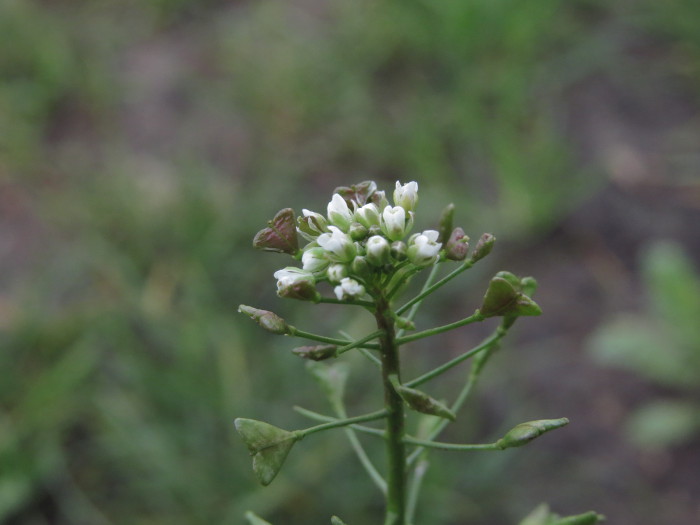
The flowering stem has alternate leaves, found clasping the stem, with basal lobes. The raceme inflorescence is a sparsely branched and loose.
The flowering stems bear tiny (2.5 mm across) white flowers on 1-2 cm long horizontal stalks. Its flower stem continues to grow as the first seeds are ripening.
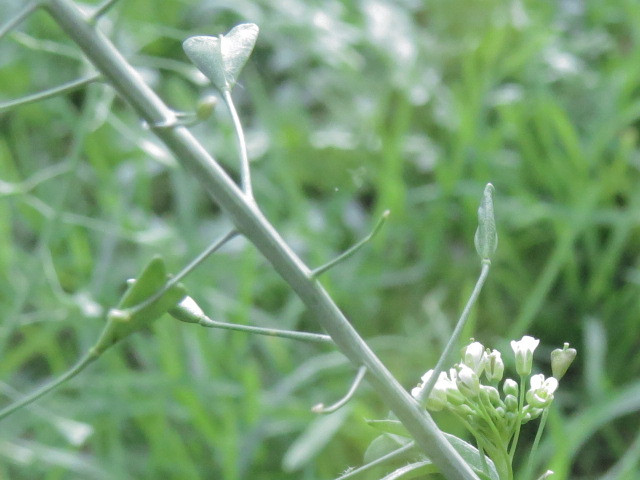
The flowers consist of four petals, six stamens and two carpels, which quickly give rise to the distinctive heart-shaped fruit. Looking closely, you can see a seam running from top to bottom, splitting the pod in two.
Over on the plant family patterns page, you can find more details about these easy-to-remember patterns of the brassica family, as well as other plant family patterns of importance to foragers.
When ripe, the pod releases two seeds, which can happily lie dormant for many years before germinating. One plant can produce up to 1000 seeds!
If moistened, the seeds produce a sticky gel which is known to adhere and trap small aquatic animals, before dissolving them. This possibly provides fertiliser for the emerging shoots from germinating seeds.
Parts used: All parts can be used,
Harvest: As and when required.
Key constituents: Amino-acids (including tyramine, histamine, choline, acetylcholine); flavonoids (rutin); saponins; tannins; glucosilinate (sinigrin); carotenoids; Vitamin C; volatile oil (including camphor).
This guide to our medicinal plant constituents and actions will be helpful if you want to know more about herbal medicines
Actions: Diuretic, haemostatic, astringent, urinary anti-septic, mild anti-lithic, hypotensive, circulatory-stimulant.
 Pharmacology and uses: Shepherds purse is available almost all year round, so this is one of the plants to cherish for offering us regular, ongoing chances to harvest medicine and food.
This unassuming and often overlooked little plant has created quite a reputation for itself as a chief plant remedy for women. All of the plant can be used.
The Brassica family are renowned not only for their excellent nutrient profile but also for their medicinal compounds. Certain molecules found in the plant family, are being currently researched by pharmaceutical companies for medicinal use.
These include di-indolemethane, indole-3-carbinol, and some of the isothiocyanates, such as sulphoraphane. You can read more about the common medicinal plant constituents and their actions here.
The compounds formerly known as the mustard oil glycosides – the glucosilantes – are now known to be useful cancer preventative agents. It is from these molecules that we get isothiocyanates.
The seeds of shepherd’s purse are rubefacient and vesicant due to these compounds.
The ongoing research by pharmaceutical companies will likely reinforce what we already knew – that eating your cabbage family greens can prevent illness and disease! As foragers, we have a superb array of brassica greens freely available for 365 days a year…
Amongst its primary medicinal uses are for treating blood in the urine, as well as for gravel in the kidneys and excessive bleeding from the womb.
During World War 1, Shepherd’s purse was reportedly used as a styptic to reduce and prevent bleeding when preferred drugs from goldenseal and ergot ran out. It works by contracting tissue, hence its use in arresting bleeding.
The plant is now known to reduce capillary and blood vessel permeability. Shepherd’s purse is considered by many herbalists as one of the best remedies for stopping haemorrhages of all kinds, including: lungs, stomach, the kidneys (especially), and for the uterus – specifically where uterine cramps and colic are associated with it.
It can contract tissue and arrest bleeding and haemorrhage. The leaves of shepherd’s purse have been traditionally employed to combat menorrhagia, as well as finding use in treating diarrhoea, and acute catarrhal cystitis.
Before the E.U Traditional Medicinal Product Directive 2004/24/EC the German herbal medicine Commission E approved this plant to treat premenstrual syndrome and mild menstrual irregularities such as menorrhagia.
A decoction of the roots can be successfully used in cases of diarrhoea, haemorrhoids, and dysentery. It has been locally used as a vulnerary for nose bleeds. For this, you can simply apply the juice of the plant onto cotton wool.
Culpepper knew centuries ago that it helps to stop bleeding from wounds, inward or outward, and…“if bound to the wrists, or soles of the feet, it helps the jaundice”.
He also states that “…the herb made into poultice, helps inflammations, and the juice dropped into the ears heals the pains, noise and matterings thereof “.
And that “A good ointment may be made of it for all wounds, especially wounds in the head”.
As a food this plant has been used for thousands of years. It is still cultivated in China and other parts of the Far East and often used in stir-fries.
The leaves are unsurprisingly slightly peppery and hot to taste, and somewhat salty, which may well be accentuated when found by the coast.
The young leaves and the young flowering tops are a lovely salad addition and garnish, working well with vegetarian and fish dishes.
If you are new to foraging then our beginner’s guide will introduce you to many foragers tips and tricks, while this harvesting guide can help you get best results from your foraging quests.
Urban foragers might be surprised by how much they can forage, while all foragers can stay safe by brushing up on our poisonous plants.