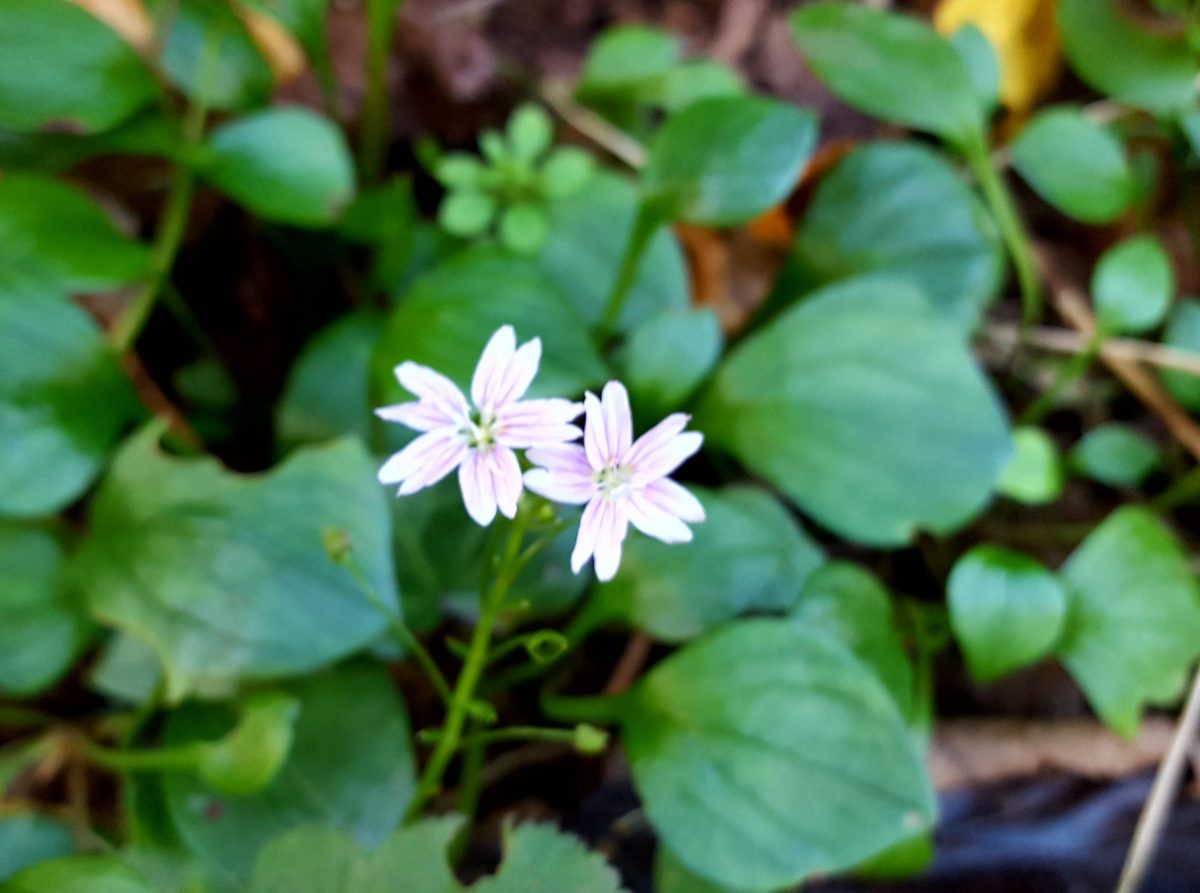
Leanr how to find and identify the tasty salad plant, Winter purslane (Claytonia sibirica) Portulacaceae family
Foraging for winter purslane was unheard of in Britain only 250 years ago. This plant arrived with a number of other really useful plants from North America, in the toings and froings of empire.
Collectively, these imported edibles make me wonder if there has ever been a better time to be a forager in the UK.
Even as recently as 100 years ago, there would have been far less of this particular tasty wild food than we find today. This then, is a relatively recent and welcome introduction to our naturalised flora as far as I am concerned.
The plant is known to be annual or a short lived perennial. It is not frost hardy which explains its love of the South West Atlantic coastal counties.
Winter purslane is now a very popular garden plant and a regular ingredient in commercial salad bags. Its earthy-tasting, fleshy leaves are a really great eat, and one that readers in the west of Britain should be delighted that they can now find relatively easily.
Putting aside the discussion of exotic species in the landscape and the abilities of our native plants to compete and exist alongside winter purslane, we foragers can only ever deal with the reality of the situation on the ground, so I accept what’s what when I cant change things, and embrace any and all wild edible and medicinal plants I find.
What’s in a name?
The generic name Claytonia was given to these plants in honour of the new world colonialist, botanist and plant collector- John Clayton (1695 – 1773).
The species epithet sibirica refers to the Asian north wrst where it is likely winter purslane was first recored by Western botanists.
This plant is also known as ‘pink purslane’, or ‘miner’s lettuce’, and is sometimes mistakenly called the ‘spring beauty’. That particular name is more correctly given to its closely related cousin, which is also known as ‘Blinks’ or the ‘perfoliate purslane’. (Claytonia perfoliata).
Winter purslane was reportedly first cultivated here in the 1760’s. The first record of it in the wild here was in 1838. It’s spread has been rapid since then, and it is now naturalised in many settings throughout the island.
Botanical description
Don’t forget that I have made a big fat glossary of terms to help you if you get stuck with the technical terminology
Leaves: Winter purslane leaves are quite an unusual shape. They look like a wide spatular, and botanists know these leaves as ovate-rhombic.
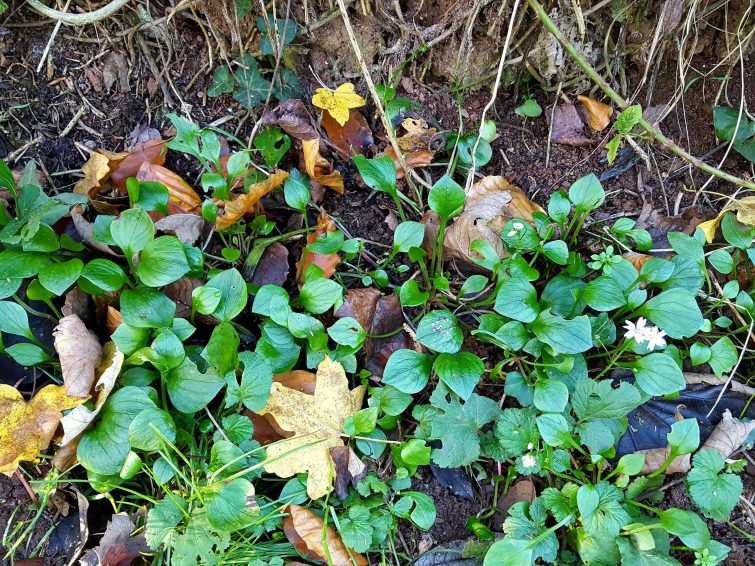
The apex of the leaf is acuminate, with a tiny white hydathode at the tip, that will darken with age. Shiny dark green above but paler underneath. and at the base. Fleshy, hairless.
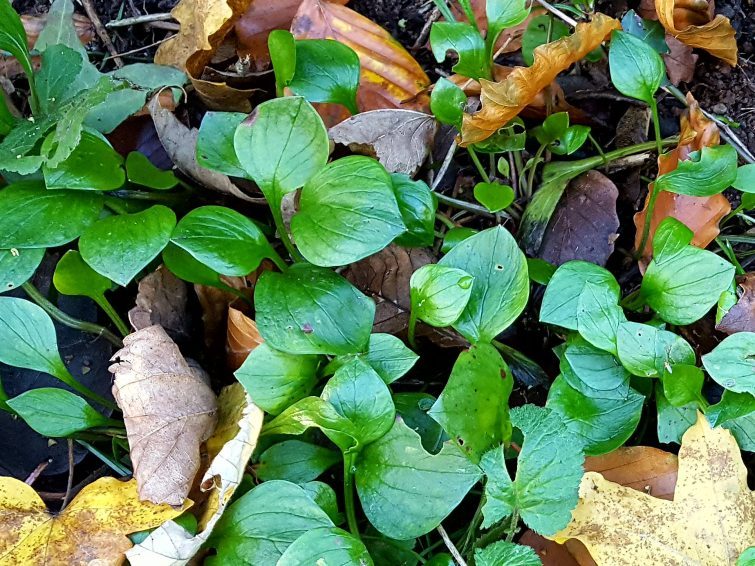
Petiole: This is more or less flattened and solid. Sometimes weakly sheathing at the base. Approximately 8 cm long.
Roots: Winter purslane has a slender roots and can also produce small rhizomes and stolons.
Stems: These can be erect or spreading, and are usually thin and brittle. The stem leaves are sessile, but are never perfoliate.
Flowers: The flowers are borne on elongated cymes and each flower is found on long drooping flower stalks. Its pink-white flowers have five petals (12 mm) with noticable notches at the apex. The petals typically show fine striations.
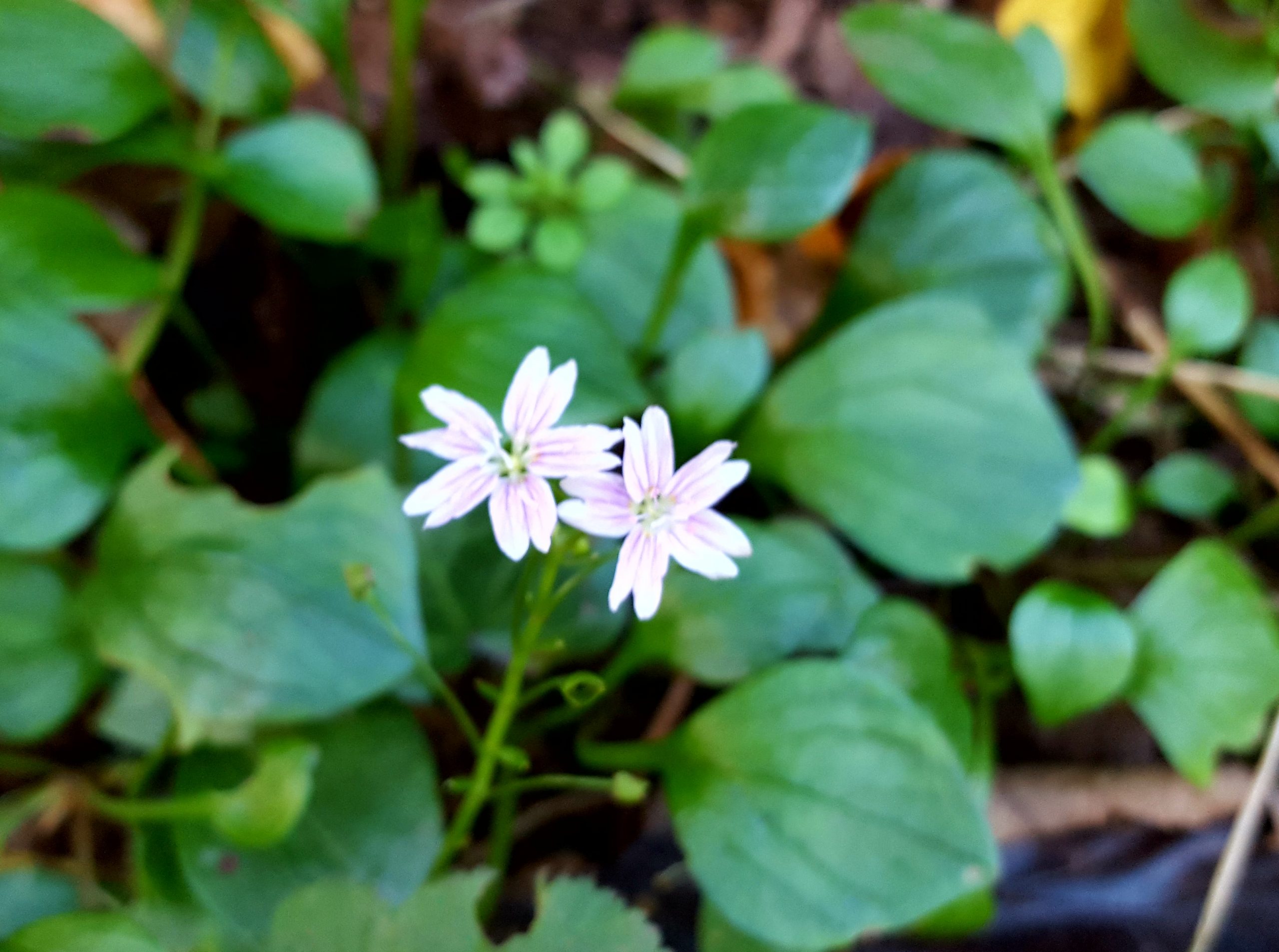
Flowering season: Late March through into early May.
Fruits: Egg-shaped seed with an elaiosome attached. The elaiosome is a protein and lipid-rich structure attached to some seeds, which attracts ants to help disperse them!
Habitats: This plant is still extending its range here in Britain, which helps to demonstate how long it takes for ecologies to fully adapt to an exotic alien plant. It will only be after its geographical spread plateaus that we can analyse its impact on the rest of the ecosystem.
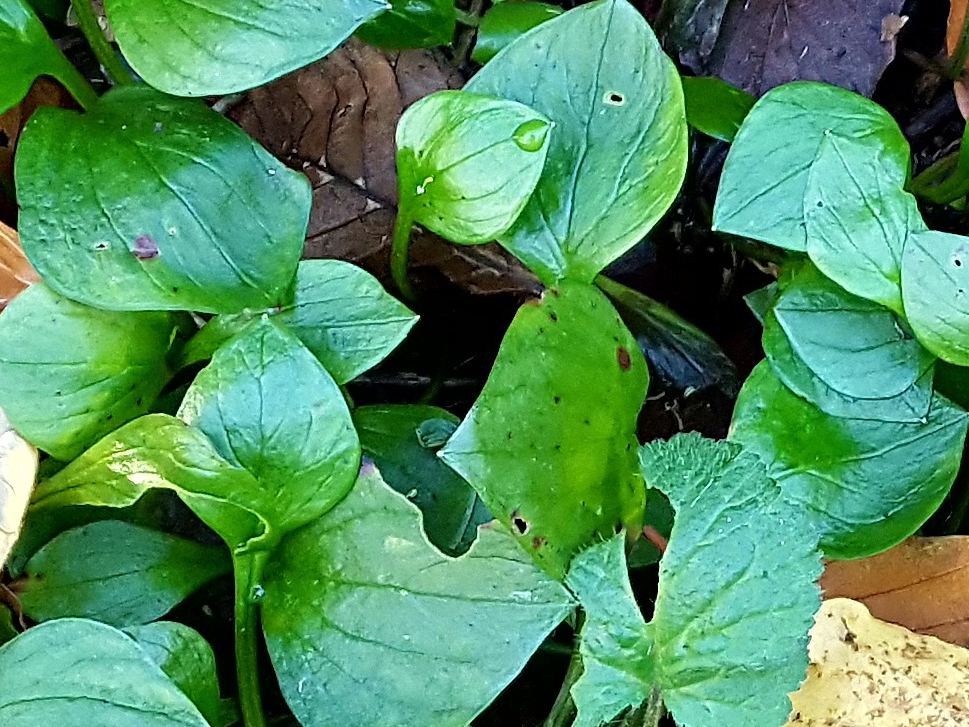
It finds a home wherever it finds suitable dampness. It will spread wirh speed in areas where it also has warmth.
Harvesting: The best time to go foraging for winter purslane leaves is before the plant comes into flower. This could be early, mid, or late spring, dependent on your location. You can learn more about harvesting our wild plants here.
Parts used: Leaves, young flowering tops, flowers.
Other notes: One of a few plants to have the common name of ‘purslane’. Winter purslane is not rated to the tadty estuary plant sea purslane. It must purely be a reference to the succulence on the leaf.
Morw articles to help ypur plant idemtification coming soon .
If you have liked this article and nowcwant to know more about getting started foraging then my articles for beginners will be morw than useful. If you want practical help identifying plants then please read this article on how to identify plants in a day!
Happy foraging!