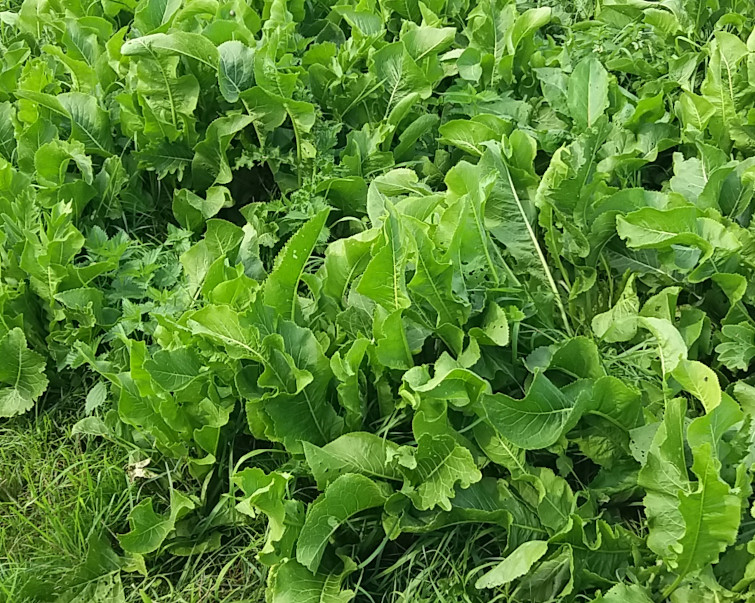
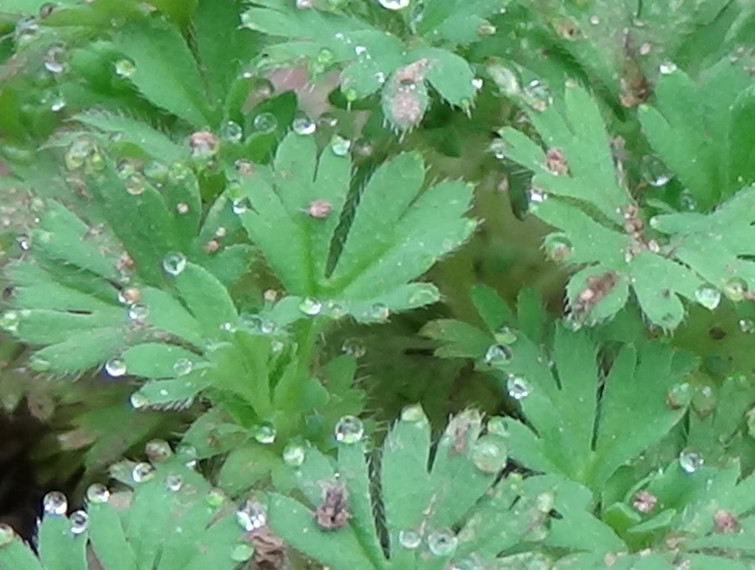
Foraging wild lettuce

Discover how you can get a great night’s sleep from foraging wild lettuce!

Wild Lettuce (Lactuca virosa) and Prickly Lettuce Lactuca serriola) Asteraceae

Foraging for wild lettuce can help you get a good night’s rest. For various sleep -related problems, our two main wild lettuce species are some of the most helpful remedies you can find in Britain.

This article reveals some of the science behind why foraging wild lettuce can help your sleep, and therefore your health.

The wild lettuce plants are also some of the easiest herbs to find if you are living in town. When you are foraging wild lettuce in larger urban areas, you will often see both. 
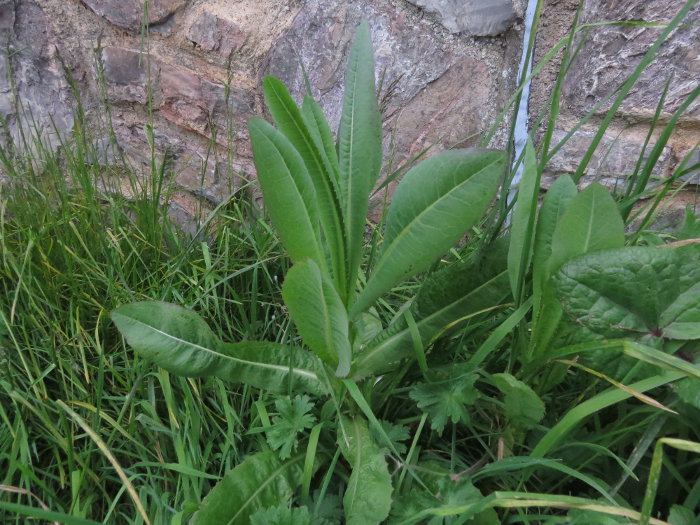
 

The major difference between the two species under discussion here is the leaf shape. Both plants can be used, but it’s good to know the differences.

What’s in a name?

Our wild lettuce plants are the ancestors of the common garden lettuces (Lactuca sativa).

There are around 100 species in the genus. We have two main Lactuca species in the wild here in Britain.

The generic name Lactuca comes from the Latin word lac – meaning milk. All lettuces produce lots of milky white latex when cut.

The species name virosa, is an interesting one, as it is a Latin word for poisonous. This name is given to a few very poisonous organisms such as Circuta virosa (cowbane) and Amanita virosa (destroying angel).

This I can understand, because these are deadly poisonous, whereas the wild lettuce is, well, it will put you to sleep, but no more than that. Maybe the extremely bitter latex suggested toxicity to our ancestors.

The species name serriola could refer to the serrations on the leaf and the way they line up. It’s common name ‘prickly lettuce’ explains itself.

Identifying wild lettuce herbs

Leaves:
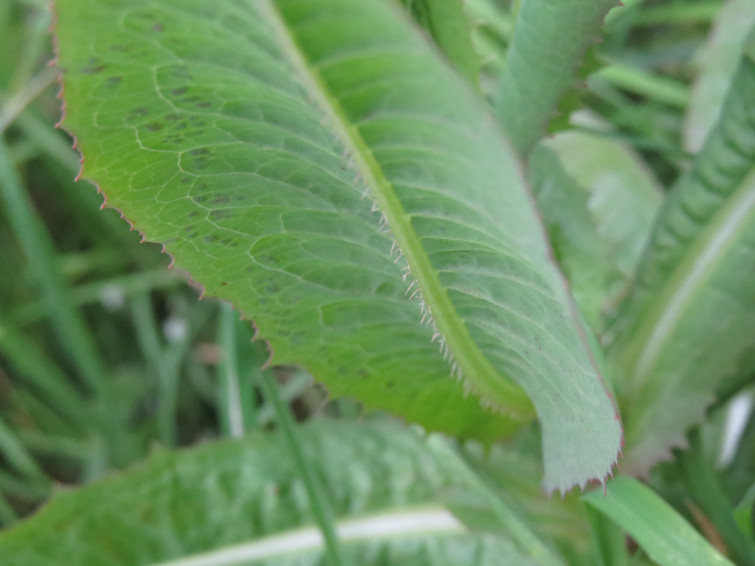
The main feature to look for when identifying wild lettuce is the single line of prickles running along the underside of the leaf.

Lactuca virosa has sessile, oblong-lanceolate shaped, and waxy grey-green coloured leaves.

The prickly lettuce (L.serriola) has pinnately-lobed leaves, deeply cut to the middle flange of the leaf on either side of the midrib.

The leaves of both species are usually found with undulating margins and can grow to 25 cm long.

Often, the leaves are found standing quite erect in their rosette, although as the plant prepares for flowering, they are found clasping the flowering stem, resulting in an almost arrow-like base to the leaf.

Petioles: Short to sessile. Stem leaves have clasping  basal leaves.
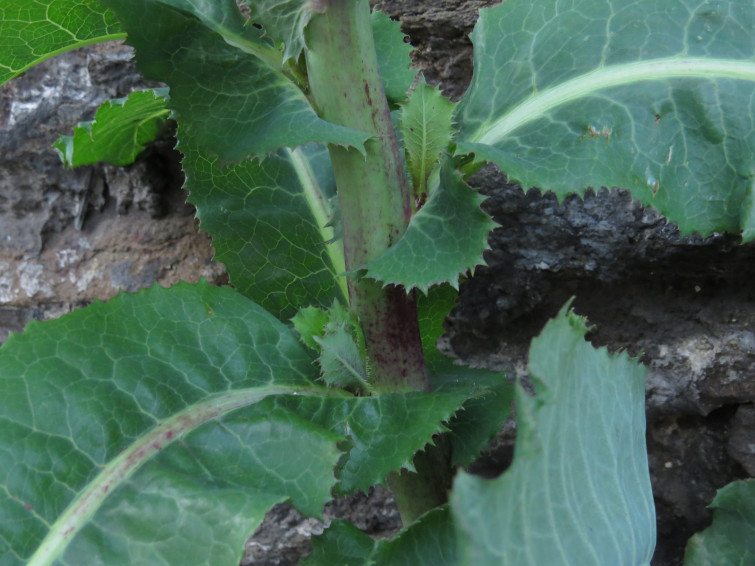

Stems: By mid-summer, this gives rise to its many-branched flowering stems. The stems are round and hollow (as are many herbaceous biennials and perennials).

The stems are typically found with purple-spotting. Stem leaves are alternately-spaced.
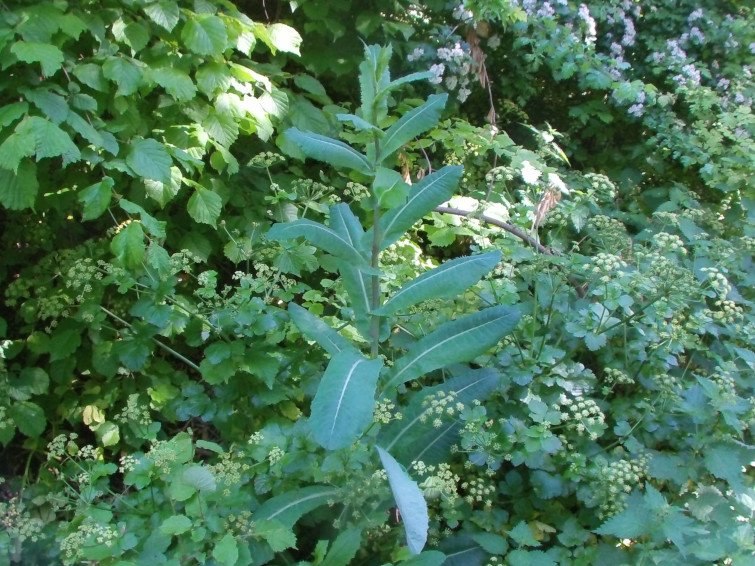
Flowers: The inflorescence is borne on the branched upper portion of the flowering stem.

They are composite flowers, and individually about 11-13 mm wide, with 7-12 yellow ray florets rising from a narrow involucre (8-12 mm long). In flower, the plant can reach heights of up to 200 cm.
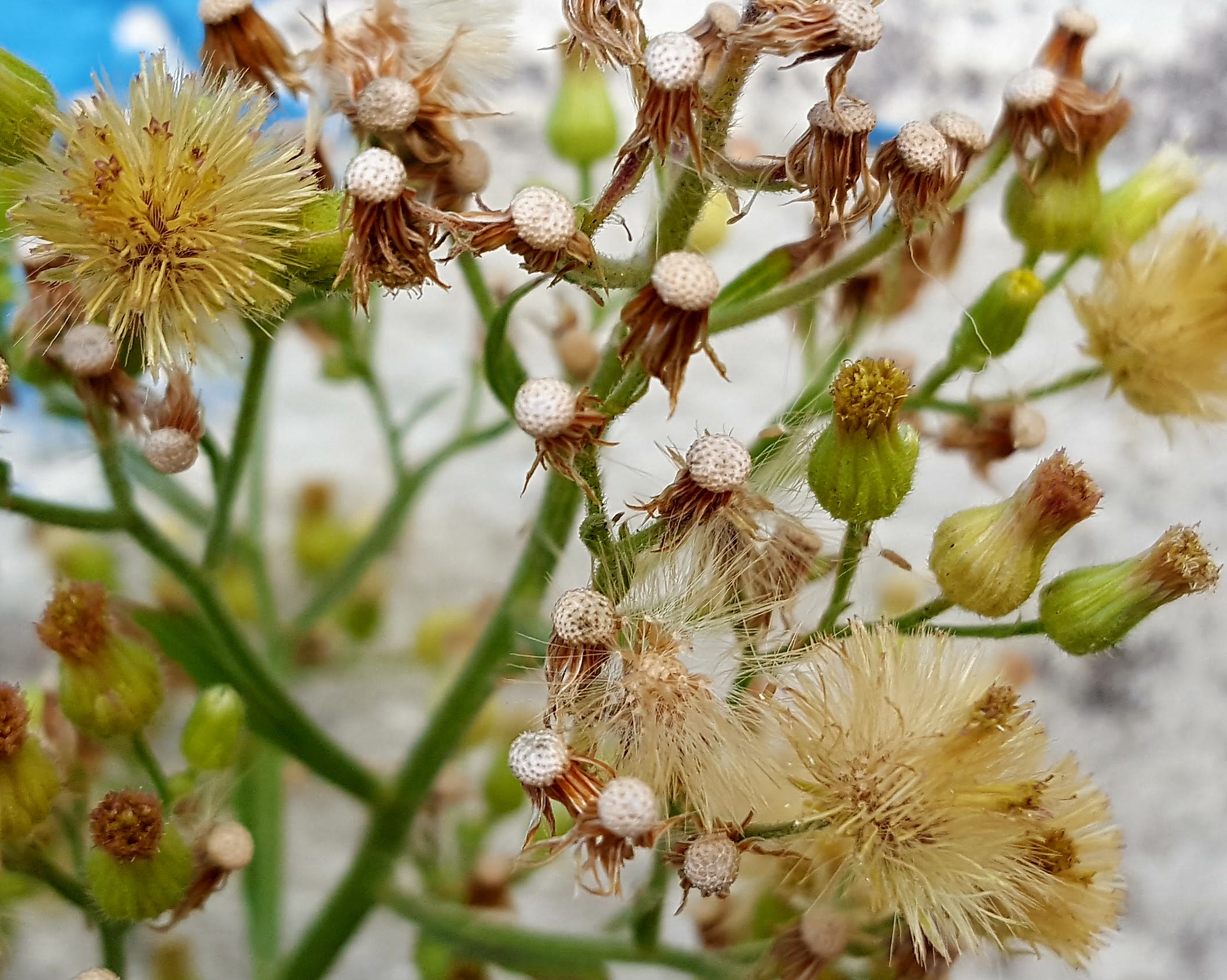
Flowering season: The flowers are on show from July onwards and are superseded by a white, hairy pappus, which spreads the tiny seeds far and wide on the wind.

Habitats to look in when foraging wild lettuce

Foraging wild lettuce is easy in the urban environment. Here, they get an easy foothold into any part of the urban jungle.

A quick look at these two distribution maps of Lactuca virosa and Lactuca serriola will show how widespread the plants are and if they are found in your area.

Take a look around in the spring and summer and you will see the wild lettuce appearing in many places.
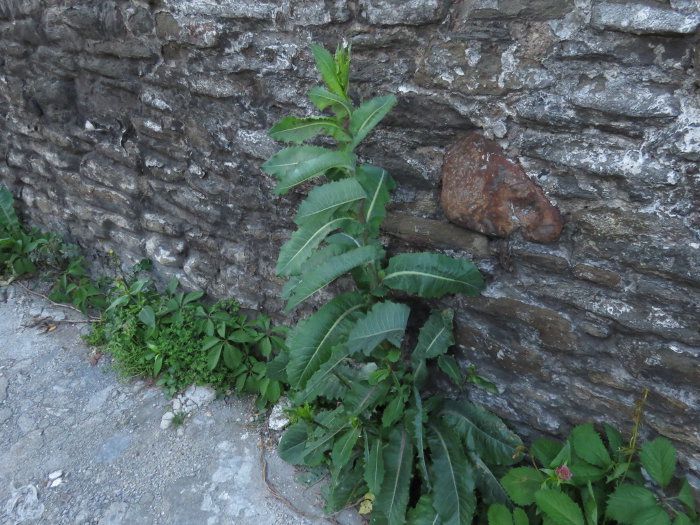
It loves growing out of the bases of walls, pavement cracks or crevices, kerbstones, road-sides, waste-ground and disturbed soils.
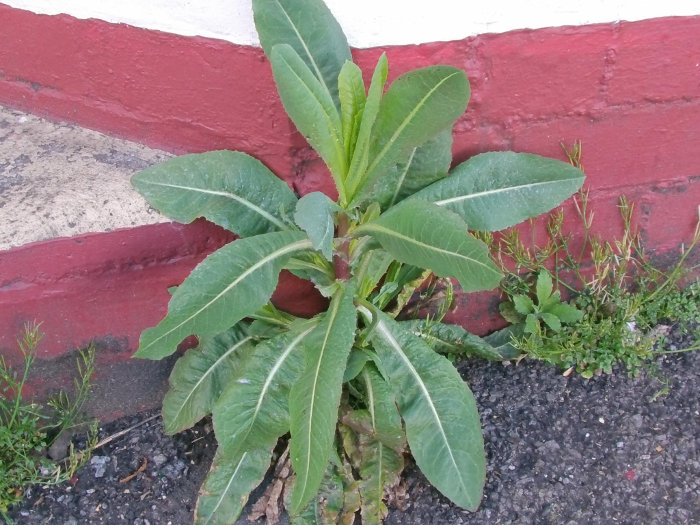
This seems to point to the conditions of its origins, believed to be Asia, where it would be most happy in the sun and on poorer, free-draining soils.

Parts used: Leaves, flower-buds, latex.

Harvest:  Best just before the flowers open. Active constituents are in higher concentrations at this time, in comparison to material from younger plants. Learn more tips, tricks, and techniques in this harvesting wild plants article.

Key constituents:  Sesquiterpene lactones known collectively as ‘lacturcarium’ (including lactupicrin and lactucerin); also contains the coumarin glucoside (aesculin); flavonoids (including apigenin, luteolin, quercetin and glycosides); proteins; sugars; resins; alkaloids.

Actions:  Anti-tussive, sedative, relaxant, bitter.

Pharmacology and uses:  Wild lettuces are best known for their relaxant and sedative actions. 

Wild lettuce was one of a number of plants formerly used in a well-known anaesthetic recipe, employed before surgery during the middle ages (12th – 15th centuries).

An alcoholic extract of wild lettuce will show sedative properties, causing a reduction in motor activity and behaviour.

However, the compound lactucarium does not pass readily through the blood-brain barrier, and it is thought the effects may arise from peripheral and visceral actions below the neck, rather than above it.

Lactucarium has been used successfully in the treatment of morphine addiction because it has similar, if milder, anodyne-sedative effects.

The compound lactucarium is a mixture of a number of substances and was also reportedly used to adulterate opium. This and its latex, gave rise to the nickname – ‘lettuce opium’. It does not contain opiate molecules (only found in Papaver species)

Discover lots more about medicinal plant constituents and their actions in this must-read article.

Wild lettuce has been used successfully for treating both nervous excitability and insomnia.

Scientific evidence regarding its abilities to assist with chronic and acute coughs are still thin on the ground.

Even though there is a lack of published scientific papers, I still think its effectiveness can also be measured through its repeated traditional use by herbalists for hundreds of years. 

We need to always remember that science still doesn’t hold anything like all the answers.

Wild lettuce was in a number of cough remedies before full implementation of the E.U traditional herbal medicinal product directive 2004/24/E.C. although how many it appears in now, I’m unsure.

The fact that the plant is so easily found, means it’s really simple to go out foraging wild lettuce and make your own.

The sleep-inducing qualities of lettuce were immortalised in Beatrix potter’s children’s books starring Peter Rabbit.

In the tales, Peter’s mum used to give him lettuce to eat last thing at night, for its soporific qualities.

A number of herbal books will also testify to the gentle sleep-inducing powers of eating lettuce last thing at night.

The wild lettuce is a much stronger sedative than the cultivated varieties and can often be found in sleep-inducing herbal preparations, combined with hops, valerian, lime flowers, and passionflower. 

Toxicity has generally been regarded as low, but there are cases of people who have eaten large quantities of wild lettuce, then presenting themselves to hospitals suffering from various manifestations of wild lettuce toxicity.

These included: a decreased level of consciousness, agitation, dry mucosa, mydriatic pupils (pupils dilating), urinary retention, and hypoactive bowel sounds.

As ever with plants from the daisy family, as ever there is a warning for people who suffer allergic reactions to other members of this large plant family. 

More from our A-Z weeders digest coming soon! Happy foraging!
 

Foraging for Coltsfoot (Tussilago farfara)

Foraging for coltsfoot – An ancient herbal medicine for the lungs

Tussilago farfara – Coltsfoot. Asteraceae family

We have gone foraging for coltsfoot for thousands of years. It’s a small herb with a big reputation, which is detailed below.

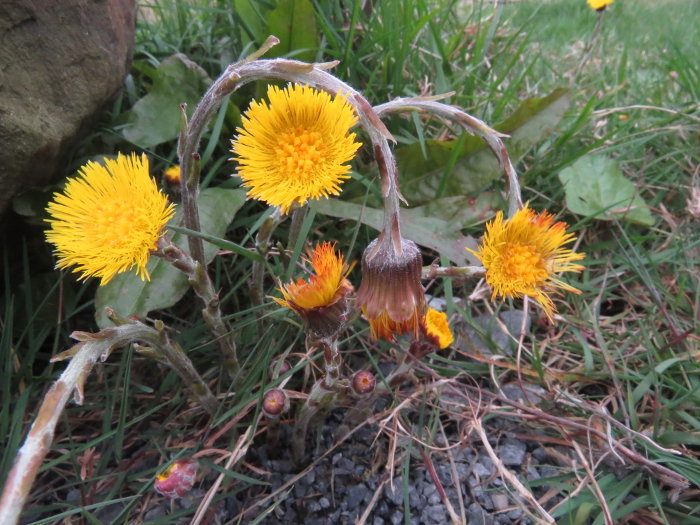
Coltsfoot is a small, creeping perennial herb, notable for its habit of producing beautiful yellow, dandelion-like flowers in late winter and early spring before its leaves appear.

As a result of this floral phenomenon, the ancient Latin name given to it by botanists of the renaissance period was Filius ante patrem, which means ‘the son before the father’.

We know from Roman times that this herb was one of our ‘go-to’ remedies for respiratory disorders.

Such was its prominence, if you were to walk into an apothecary in the 17th and 18th Century, you would recognise this flower immediately from the picture on the signage outside.

The ancient apothecary physicians used this flower as the emblem for their shops, and it is still used by many herbalists today. 

What’s in a name?

This plant is one of 15 different species in the genus. Many scientific plant names contain clues as to a plant’s origins, or its favourite habitat, and sometimes to a plant’s main actions or uses. 

The generic name Tussilago offers the hint towards its medicinal use. It has the same root word as tussive, relating to coughing.

It has been a popular anti-tussive (cough reflex inhibitor) herb for centuries and recent research is backing up some of the ancient claims.

The specific name farfara, is apparently derived from the ancient name for the white poplar tree (farfarus) whose leaf colour and form resembles coltsfoot somewhat.

Our ancestors obviously thought coltsfoot looked like the foot of an animal.

Coltsfoot botanical description

This is a hardy plant, native to Europe, West Asia, and North Africa. It re-emerges each year from a rootstock of stout, scaly, white (ish) rhizomes. These give rise firstly to its yellow flowers, before the long-stalked, somewhat hoof-shaped, sea-green leaves appear.

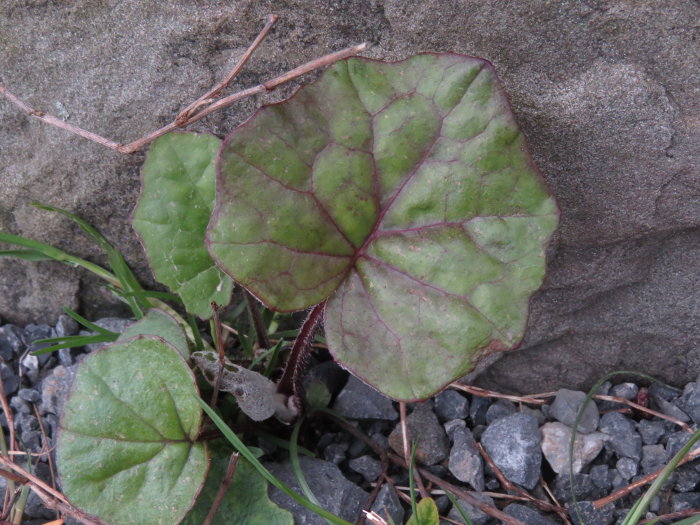
Leaves: The broadly kidney-shaped leaves will typically grow somewhere between 10-25 cm long. They have a few, small angular teeth on somewhat undulating margins. 

The leaf surface when young are  covered with loose, white, woolly hairs, but those on the upper surface will fall off as the leaf quickly grows and expands.
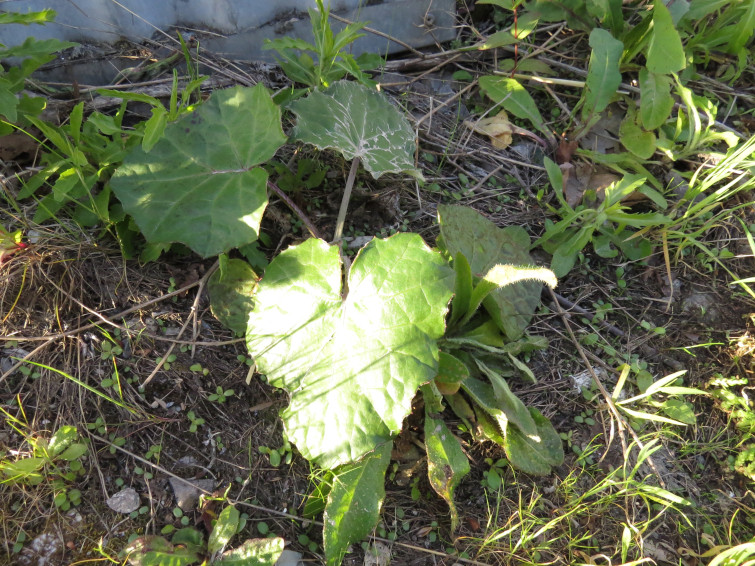
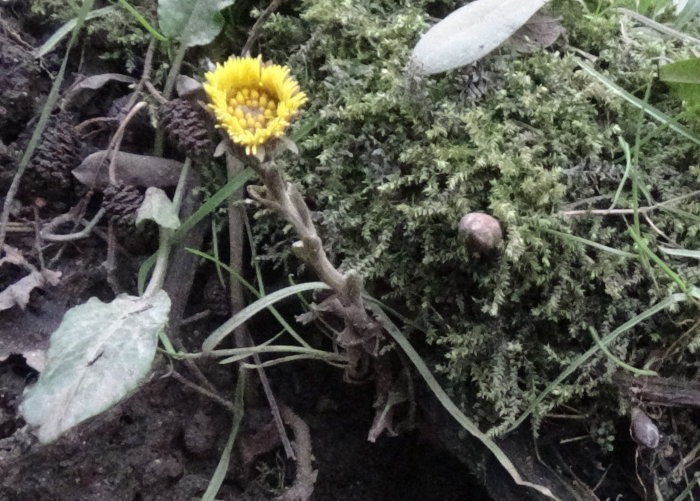
The broad leaves have angled, sometimes pink-tinged, main veins, running away from the central vein, akin to its relative burdock. They are thicker than many other plant leaves and soft to the touch.

Petiole: Long, to approximately 20 cm. Channeled and initially covered in downy hairs.

Stems: This plant is unusal in that it produces separate stem organs from its rootstock for flowering, which have no leaves.

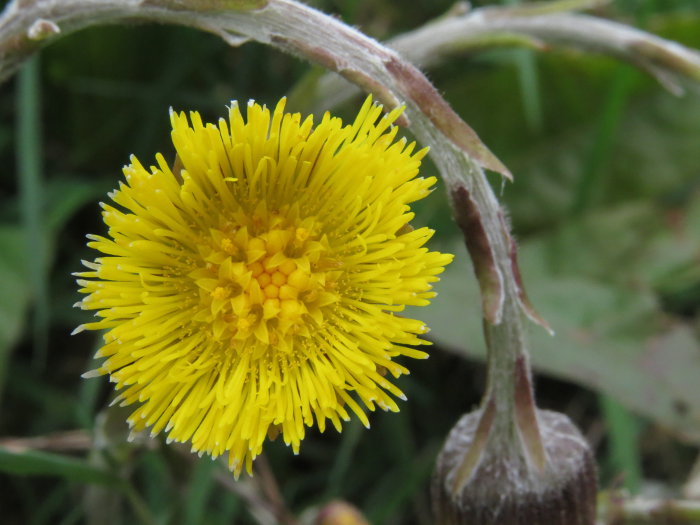
Flowers: Coltsfoot’s composite flowers are pretty similar in appearance to the dandelion at first glance, although the flower stems are quickly seen to be different.

Coltsfoot’s terminal flowering stems are scaly and slightly woolly (unlike the dandelion), topped with striking yellow flower heads. 

These striking blooms consist of yellow disc florets and yellow linear ray florets (unlike dandelion which has ray florets only).

The flowers will generally grow to no more than 20-25 cm high, and always appear before the leaves have emerged. 

As with many of the daisy family plants, coltsfoot produces a spherical seed head of tiny fruits (achenes), attached to downy white, silky, pappus hairs.

Goldfinches were known to line their nests with these soft hairs, as were the Highland peoples of Scotland, who reportedly suffed mattresses and pillows with them.

Habitats to look in when foraging for coltsfoot

This plant used to grow abundantly throughout England. Yet it can still easily be found on a range of sites up to altitudes of 950 metres.

These include waste-grounds, along the sides of railway banks, on cliffs and dunes, and occasionally on roadsides. It grows as well in wet ground as in dry situations.

Coltsfoot loves life by the sea. On the Jurassic Coast in Dorset for example, and repeated on much of our coastline, this plant grows in reasonably large populations.

Nowadays however, with the ever increasing development in 21st century Britain, its abundance has been curtailed somewhat, especially in urban areas.

So, when foraging coltsfoot, you will find it still thrives in towns, in any place that remains a little wild, rough, and unkempt.

Coltsfoot Lookalikes

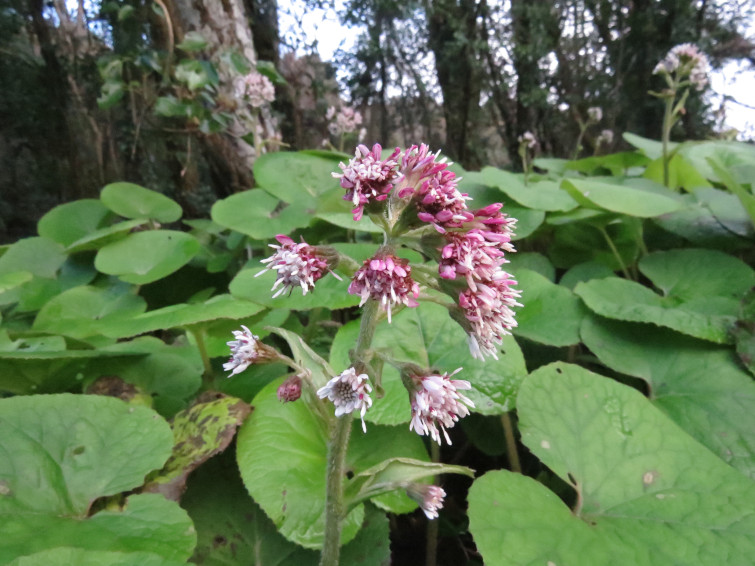
Be sure it is not the young leaves of Butterbur (Petasites officinalis, syn P.vulgaris syn P.hybridus), or the winter heliotrope (Petasites fragrans) you are collecting by mistake when you are foraging coltsfoot!

Both of the Petasites  resemble coltsfoot in flowering habit and leaf shape, although butterbur is less likely to be mistaken when mature, because its leaves are so much larger than coltsfoot’s.
Both of the Petasites species have more rounded leaves, and without the slightly angled and toothed margins or the white downy fuzz. Butterbur can frequently be found dominating areas of canal and river banks.

Winter heliotrope will similarly be found in large carpeting expanses, be this at the edges of woodlands or hedgebanks, as well as other shady spots.


Parts used Leaves and flowers (the flowers were formerly much used, but not so today as you will shortly discover).

Harvest Leaves: when fully-grown. Flowers just before opening. Get up to speed on all my harvesting techniques and tips in this previous article.

Key constituents Flowers: mucilage; flavonoids (rutin, carotene); taraxanathin; pyrrolizidine alkaloids (senkirkine, senecionine, tussilagine). Leaves: mucilage; flavonols (quercetin, kaempferol and their glycosides); tannins; inulin; phytosterols (sitosterol, stigmasterol, taraxasterol); sesquiterpene (tussilagone); zinc.

Actions Expectorant, anti-tussive, demulcent, anti-catarrhal, anti-inflammatory. Discover more about medicinal plant constituents and actions in our overview of plant chemistry.

Pharmacology and uses Coltsfoot was formerly a prized pulmonary tonic and curative against emphysema, chronic bronchitis and whooping cough. 

Culpepper mentions that  “…the fresh leaves, or juice, or syrup thereof, is good for a bad, dry cough, or wheezing and shortness of breath”.

This is also true of other soft leaved plants, such as mallows (Malva spp) and mullein (Verbascum thapsus). It’s something worth remembering when out and about foraging…namely, that soft-to-the-touch leaves, usually mean a soft and demulcent medicinal action when taken internally.

Previously, this meant that many people smoked the flowers to help with coughs. The ancients of Greece and Rome were known to advises this, including Dioscorides, Galen and Pliny.

We now know that this method is not the best way forward, although you can still find coltsfoot in a number of herbal ‘tobacco’ blends.

Just like its relative elecampagne (Inula helenium), the roots and flowers of coltsfoot have been used to make a cough sweet.

Boiled in honey or sugar syrup, a type of ‘rock’ made with coltsfoot was once a popular remedy to alleviate coughs and asthma, which was especially useful to people who almost unfailingly were to sit in dusty churches for a few hours, at least once a week.

The overall anti-inflammatory action of coltsfoot is reportedly similar to the pharmaceutical drug indometacin.

The water-soluble polysaccharides are partly responsible for the anti-inflammatory action, as they are in a number of other species in the daisy family.

The trace element zinc, reportedly found in reasonabaly high amounts in coltsfoot, also adds to the anti inflammatory action. 

The alkaloid tussilagine has been demonstrated as an effective cardiovascular and respiratory stimulant.

However, as with a number of plants containing the pyrrolizidine alkaloids, liver toxicity from chronic low exposure has been demonstrated in tests, albeit mainly on rats.

Further to this, pregnant women are known to pass on toxic pyrrolizidine compounds to their unborn child, resulting in at least one reported case of fatal, hepatic veno-occlusive disease.

This death was of a newborn infant whose mother had regularly taken cups of herbal tea containing coltsfoot and a Senecio species (a genus also known to contain pyrrolizidine alkaloids).

It is now believed the budding flowers of coltsfoot contain the highest concentrations of these compounds, so current advice from pharmacologists is usually that only the leaves should now be used in a tea, and not for prolonged use.

Coltsfoot has been shown to be anti-bacterial against bacteria including Staphylococcus aureus, Proteus spp and Psuedomonas aeruginosa.

It is also a mild diuretic and has been used to treat cystitis. There are no documented adverse drug reactions recorded for coltsfoot.

People have been foraging for coltsfoot to add to the pot for millennia. Coltsfoot leaves are reported in many ethnobotanical studies as being widely used as a vegetable.

The downy leaves can be simmered and blended with onion and potato into a thick soup, or the leaves can be steamed like spinach, then served with a knob of butter.

Some authors have said the leaves have a liquorice flavour. I do detect a sweetness in coltsfoot leaves, but liquorice is pushing the description somewhat. Well, to my smokers palate at least.

Other notes

Coltsfoot has been classed as an invasive plant not suitable for garden cultivation by the RHS.

You, like me, may think that invasiveness and rapid colonising of bare soil is a valuable asset in the medicinal herb gardener’s fight against weeds.

If I had a medium-large medicine garden, then this plant, along with other effective ground-covering medicinal species, such as ground ivy (Glechoma hederaceae), would be a most welcome and valued addition, boosting my medicine cabinet.

Lots more information on foraging wild plants and mushrooms are soon to be available on our monthly foraging guides.

For all of you new to foraging, you might want to hop over and take a look at the introductory article on starting out foraging. While you’re here, you can also get to know Britain’s poisonous and toxic plants.  

New plant species posts in our A-Z weeders digest are coming soon! Happy foraging!


Ground Ivy (Glechoma hederaceae) Lamiaceae family

Foraging for Ground Ivy /Alehoof / Creeping charlie. The BEST plant remedy to soothe away nettles stings.
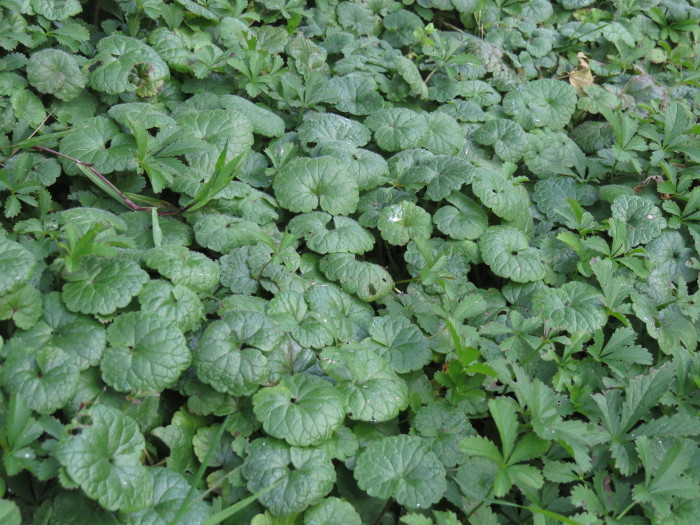
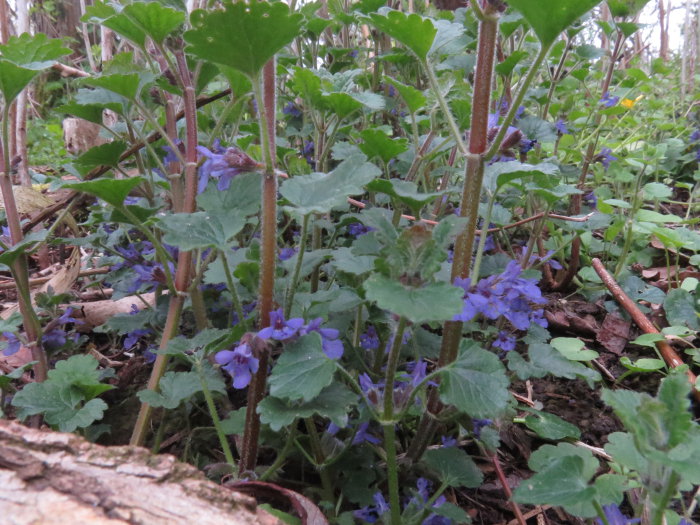
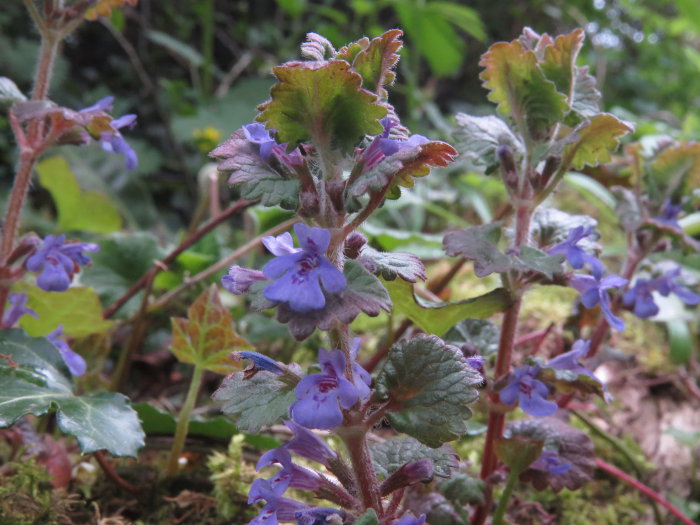
Ground ivy is a beautiful and useful herb. Partly due to its size, it is too often overlooked. It is the best remedy for nettle stings I have discovered, bar none. Read on to find out more!

Even with its gorgeous blue-purple flowers, remarkable healing powers, and intriguing scent, this plant produces mixed feelings from gardeners. 

Ground ivy is notorious for a rapidly creeping habit, which soon helps it take over where it’s not wanted. Each node on the creeping stems can produce leaves and roots.

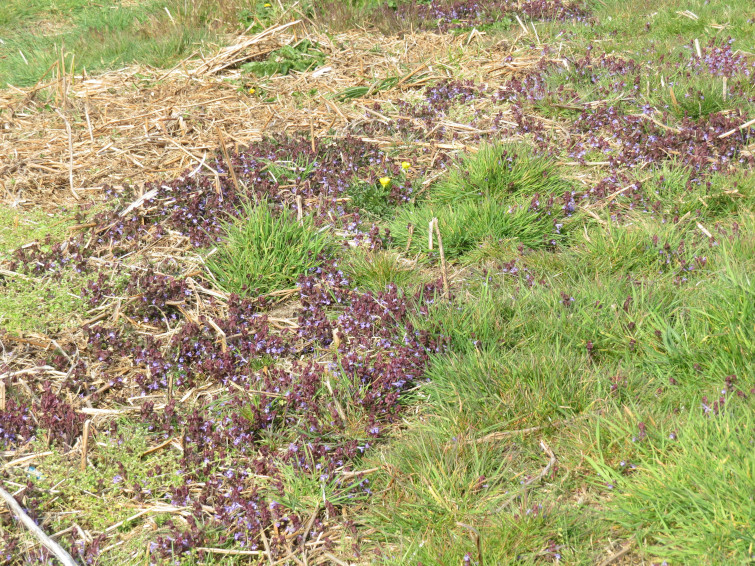
During the spring you will find relatively large patches of land adorned with splashes of blue-purple, often lower than the tops of the grasses it finds itself in.

Ground ivy quick botanical description 

This is a perennial plant and another useful member of the large and mostly aromatic mint family.

Leaves:

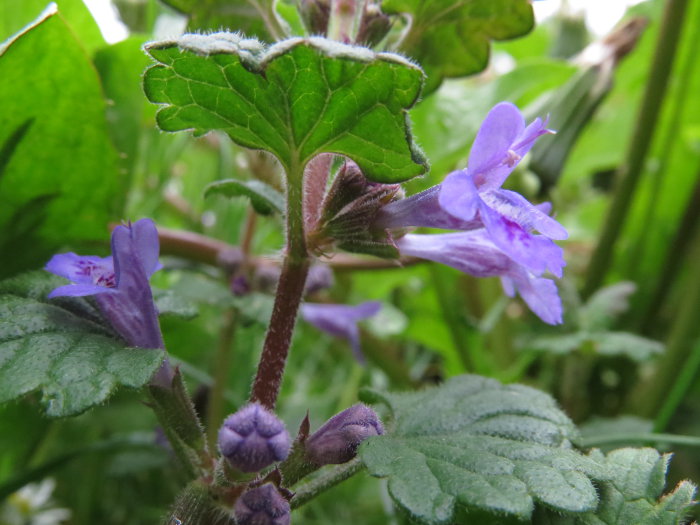
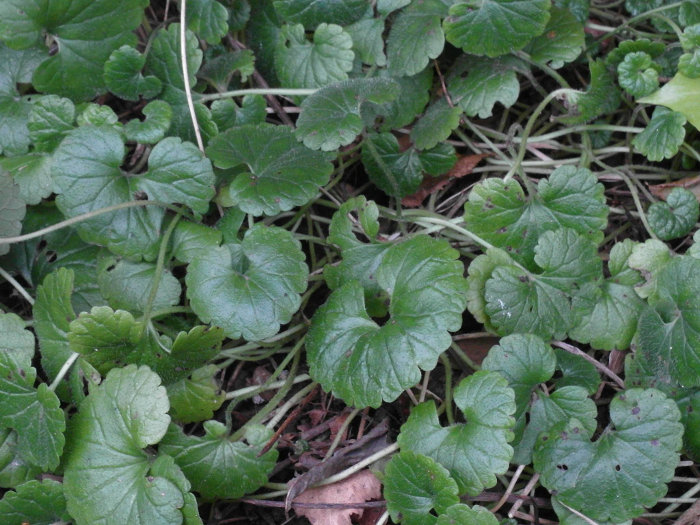
The kidney-shaped, deep green leaves are often found slightly undulating at the margins, with essential oil glands on the undersides. The margins are crenated.

Its upper leaf surface has a covering of very small downy-bristly hairs. The leaves can often be a slight purple hue, depending on soil, site, and time of year. Ground ivy can be found in all but the harshest, snowiest, winters

Petioles: The leaves are borne on long petioles. 

Stems:

These begin to rise up a few weeks before flowering. They are short, square, producing smaller leaves and soon producing flower buds. It rarely reaches much above 8-10 inches high.

It’s trailing habit comes from the quickly spreading runners, similar to those found on strawberry, but with two leaves at every node.

This adaptation makes ground ivy an exceptional coloniser of bare soil and darker, shady areas of the garden.

A similar method of growth is employed by mints (Mentha) but their stems are found just under the soil surface, carrying the same capacity to root and shoot at every node.

Flowers:

Although only a small wee thing, ground ivy makes a big impression on the eye when in flower.

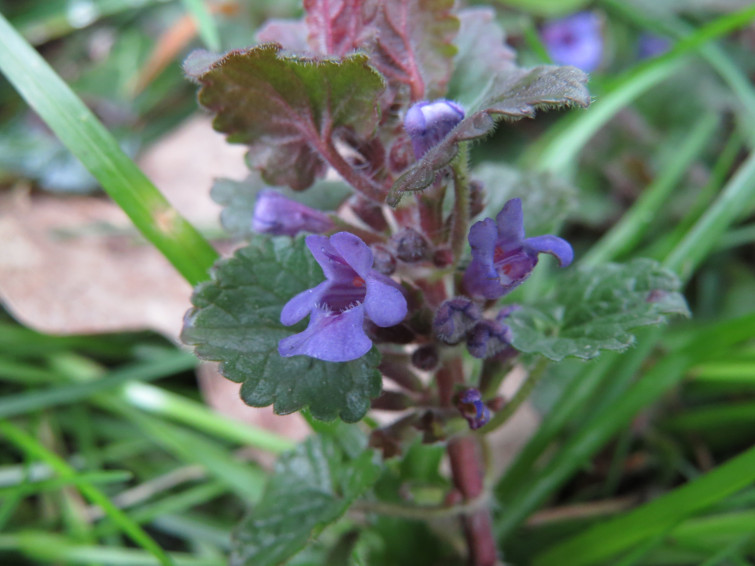
The flowers appear from leaf axils. Long blue-purple, two-lipped corolla tubes come from a five-pointed calyx. 

Flowering season: Depending on how mild the winter has been, and where you are in the country, it’s possible to find ground ivy in flower from March.

Habitats to look in when foraging for ground ivy

You can find it in a number of settings up and down the land. Ground ivy loves field edges, hedgerows, woodlands and grassy banks, whether they are sunny or shady, which somewhat depends on where in the country it is growing.

It is not particularly fussy about soils so has been found in more than 85% of the British Isles, aside from the extreme North and North West of Scotland.

Parts used – Leaves and flowering tops.

Harvest – Just before flowering is best, though leaves and flowers can be taken for medicinal or culinary use at any time.

Key constituents – Amino-acids, flavonol glycosides (including rutin, isoquercitrin). Flavone glycosides (inc luteolin), Sitosterol, saponin, tannin, wax, volatile oil (inc linalool, limonene, menthone, terpineol, alpha-pinene, pulegone, rosmarinic acid.

Actions – mild expectorant, anti-catarrhal, vulnerary, diuretic, astringent.

Discover more about the actions of medicinal  plant constituents in my article here.

Traditional uses – Many herbal authors of old, such as John Gerard (circa 1597), noted its use and action on the mucus membranes, thus employing the plant as an expectorant and a cure for colds.

Ground ivy’s aromatics really remind me of sage or thyme and mint. I love the scent, but they’re not everyone’s cup of tea.

Its chemistry has been quite extensively documented. The essential oil plays a major part in ground ivy’s therapeutic ability.

The astringent activity is reportedly due to rosmarinic acid, whilst terpineol is known to be antiseptic. Astringency and anti-inflammatory actions of ground ivy are usually associated with the tannins and flavonoid fractions.

The monoterpene pulegone is the abortifacient agent responsible for the actions of Pennyroyal (Mentha pulegium). In pennyroyal, pulegone is found at concentrations of 1-2%.

However, it is not present in ground ivy at high enough concentrations (0.03-0.06%) to be considered harmful by practitioners.

The terpene-rich volatile oil of this plant indicates it will be an irritant to the mucous membranes of the stomach as well as other parts of the gastro-intestinal tract and kidneys.

Irritation is not necessarily harmful because the C.N.S is kick-started into producing responses we desire from it.

More detailed information about medicinal plant constituents and their actions will be found in a previous article here.

Ground ivy soothes away nettle stings like no other plant I’ve met
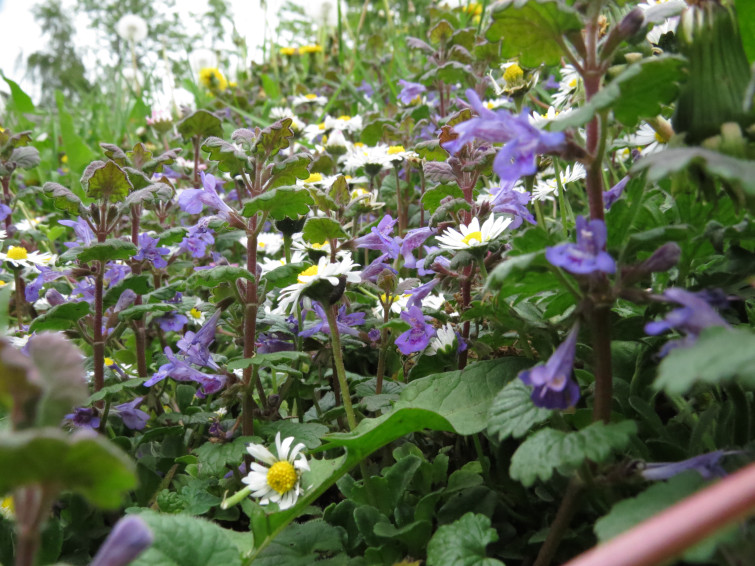
Without question, this plant is the best antidote I know of for treating nettle stings.

Simply crush and squeeze the leaves between your thumb and the other palm of your hands. Rub the expressed juice on the afflicted area. 

Rub the mashed plant material on  vigorously and you will soon sense the stinging sensation disappearing.

I have a hunch that it’s the thicker, less volatile, sesquiterpenes in the essential oil that are partly responsible for alleviating and soothing the reaction to the nettle stings.

These thicker oils need temperatures around 60 degrees centigrade to begin degrading / distilling / evaporating.  The temperatures reached whenrubbing

As a food, ground ivy makes a good addition to pies, soups or broths. Both stuffing mixes for roast meats, and my wild salsa verde are enhanced with some chopped ground ivy. Flowers can be added to salads.

Its aromatic and bitter leaves could be used in salads, but I think they a) require a good dressing, and b) need finely chopping before mixing in, because of their strong flavour.

This plant would have been especially welcome to our ancestors, and even more so in the late winter to early spring period, when fresh new leaves are scarce.

For the home brewer ground ivy is well worth foraging during spring. Formerly known as alehoof, the plant lends an aromatic bitterness and has renowned abilities to clarify ale, for which it was once popularly used. 

At a glance, ground ivy could superficially be mistaken for purple dead nettle (Lamium purpureum) and henbit dead nettle (Lamium amplexicaule).

Both of these two relatives from the mint family are edible, if not tasty, so this wouldn’t be the worst mistake you could make.

For more information on wild harvesting our medicines and foods, head on over to this article.

Happy foraging!

Foraging for Horseradish (Armoracia rusticana)

Horseradish (Armoracia rusticana) brassicaceae family.

Learn how to find, identify, and use the quintessential Sunday dinner favourite -horseradish.

Horseradish is best known as the basis of the fiery condiment  accompanying Sunday roast dinners every week here in Britain.

But it is another plant we do well to explore for its various tender young plant parts, as they develop over the year.

This is a long-lived perennial plant. When mature in the summer it can easily reach well over 1.5 m wide.

Horseradish was reportedly imported into Britain during the 16th century, specifically as a medicinal plant.

It is essentially a much stronger version of our traditional respiratory herb hedge mustard (Sisymbrium officinale), and is used in pretty much the same way.

The culinary use of horseradish didn’t kick off immediately, but by the 18th century, it was a cottage garden staple and replacing other native pungent brassicas in food.

Today the root or the classic sauce made from them is found on almost every supermarket and corner shop shelf.

Leaves: When crushed, they smell strongly of mustard. The shiny green leaves are very large,  ovate-oblong shaped, and round at the base. The prominent midrib is white and helps distinguish this plant from docks.
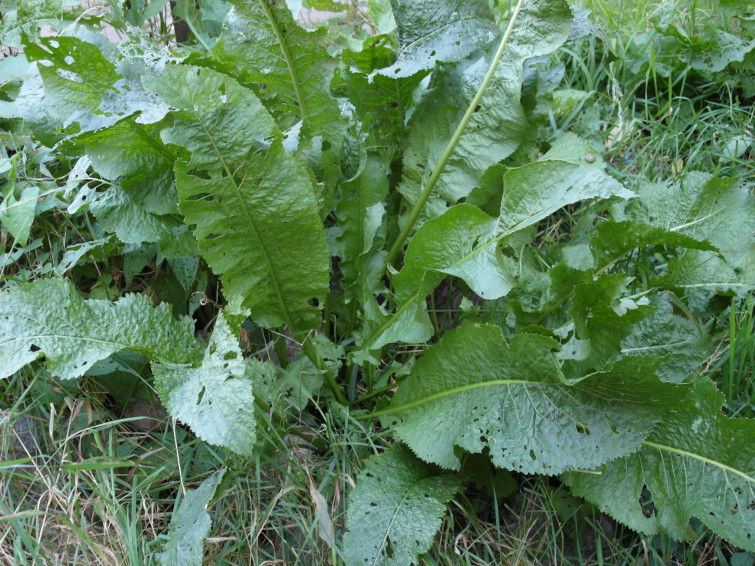
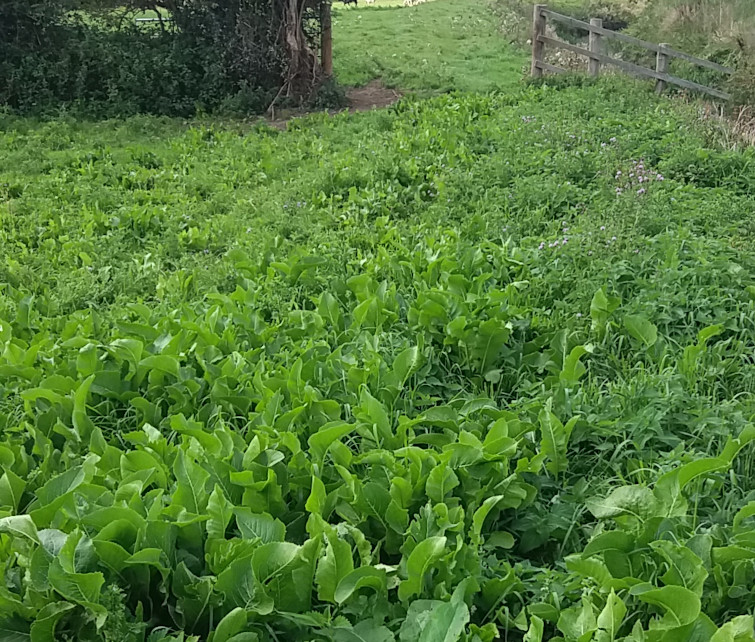
The leaves are potentially confusable with our dock family plants, until you either closely look, or crush and smell them! Horseradish leaves will always try and reach up vertically.

The initial basal leaves appear in mid-spring, and can typically grow larger than 40 cm long. Leaves up to 60 cm long are not uncommon on well-established plants.

Leaf margins are crenate-serrate (See glossary) and they undulate. Later leaves and stems leaves are lobed, sometimes deeply and pinnately, especially at the base.

Petioles: Typically 25 c-30 cm long. Can be found slightly sheathing at the base. The petiole has a ‘v’-shaped channel running up it.

Roots: Large tap roots. these will develop over time into a woody crown with numerous new growing points.

Stems: These can rise to around 1.2 – 1.5 metres during flowering. The alternate spaced stem leaves refine in form, to a linear or elliptic shape.

Flowers: They are borne on terminal panicles. The Horseradish is a little temperamental. Some specimens do not flower every year, and some hardly ever. When they do, the small white flowers appear in the shape of a cross.

Flowering season: Look for the flowers from late June onwards.

Habit: Clump forming, upright, spreading.

Habitats: Wasteground, scrub, coastal grassy sites, roadsides, and river banks in England and Wales borders.  Absent from higher ground in Devon and Cornwall. Absent or rarer into Scotland.

Near me on the Somerset levels along the rhines, the plant is frequently occurring.

Harvesting: Different plant parts can be harvested throughout the year. The roots are best harvested in the Autumn.

The very young leaves can be used chopped in salads. Older leaves can be boiled like spinach.

Tender young flowering stems are sweet and pungent. Flowers can be added to salads. I know some chefs who like to extract the petiole sap for use in froths and jus to go with fish.

Other notes: One of only four species in the genus, horseradish was at one time commonly called red-cole (cole is an old term for brassica plants) These days, the plant is found in different craft gins, adding a lovely warm tone and to the spirit.

If you do not have horseradish on your land and would like some root ‘thongs’ for next spring, then contact me as I have plenty growing in my garden.

You can discover hundreds more plants in my continually updated ‘weeders digest’! Happy foraging!


Parsley piert (Aphanes arvensis) Rosaceae family

Foraging for parsley piert (Aphanes arvensis) Rosaceae family

Learn how to identify one of our smallest and most useful antilithic herbal medicines -parsley piert.

Parsley piert can prove a little difficult to find. It can often take years of searching to find a particular plant. Then finally…!

When I eventually caught up with this plant a few years ago in Herefordshire, it was the culmination of more than 10 years of looking, or over-looking!

Please refer to my extensive forager’s glossary for any technical terms.

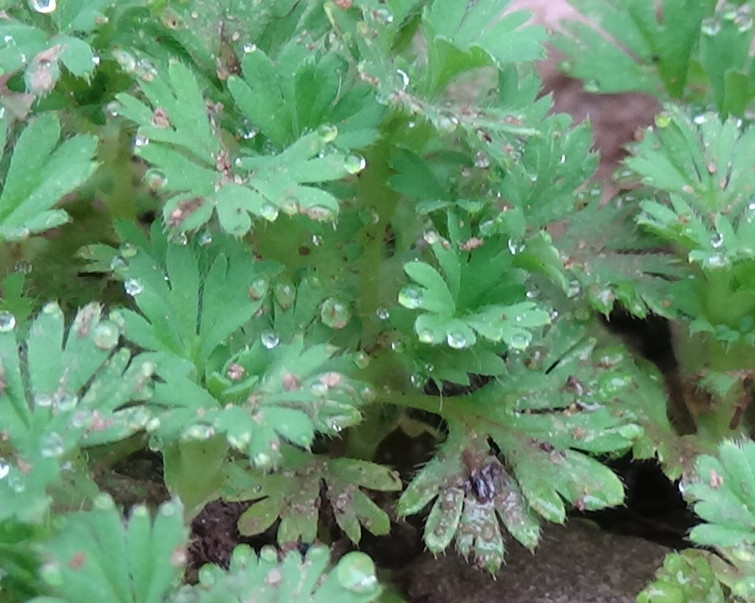
Leaves: Very small leaves are only between 0.2-1.5 cm.  Truncate at the base The leaves are 3-lobed. Each of the lobes then further divides into 3-5 oblong-shaped lobes.

Each of these lobes are toothed and have a reddish hydathode at the tip, similar to the other rose family herbs discussed here, such as Lady’s mantle (Alcehmilla mollis) 

The leaves are downy-hairy, with hairs on the margins.

Petioles: Very small and weakly channelled. Small stipules are present, and these wrap around the stem somewhat.

Roots: A fibrous and shallow root system. 

Stems: These are almost always less than 5 cm.

Flowers: Will require a lens to see properly. They form in the leaf axils; are yellow-green, and consist only of sepals and an epicalyx. 

Flowering season: Anytime from April through into September.

Habitats: On bare ground in dry grassy areas. Can tolerate a range of soils up to altitudes of around 600 metres.

Harvesting: For lots more information on wild harvesting,  you can peruse this article.

Other notes:  Also called parsley breakstone, parsley piercestone, and field lady’s mantle, the edible leaves are not something I would ordinarily eat in salads as they are quite hairy and astringent. Here is what PFAF says.

This herb has traditionally been prescribed for clearing kidney stones, urinary stones, and gravel. It is a powerful diuretic and a soothing demulcent for the urinary tract.

If you are a student of herbal medicine, you may want to read more about antilithic herbs, and the other major medicinal plant constituents and actions. 

Happy foraging!