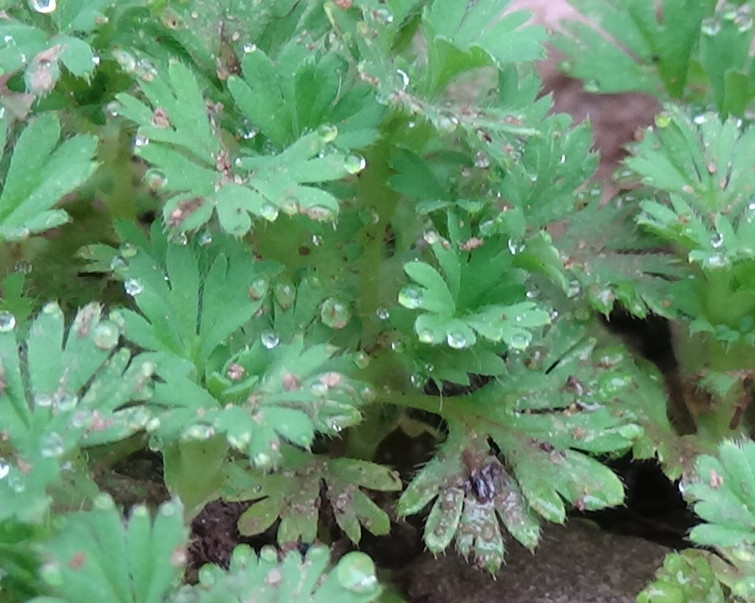
Foraging for parsley piert (Aphanes arvensis) Rosaceae family
Learn how to identify one of our smallest and most useful antilithic herbal medicines -parsley piert.
Parsley piert can prove a little difficult to find. It can often take years of searching to find a particular plant. Then finally…!
When I eventually caught up with this plant a few years ago in Herefordshire, it was the culmination of more than 10 years of looking, or over-looking!
Please refer to my extensive forager’s glossary for any technical terms.
Leaves: Very small leaves are only between 0.2-1.5 cm. Truncate at the base The leaves are 3-lobed. Each of the lobes then further divides into 3-5 oblong-shaped lobes. 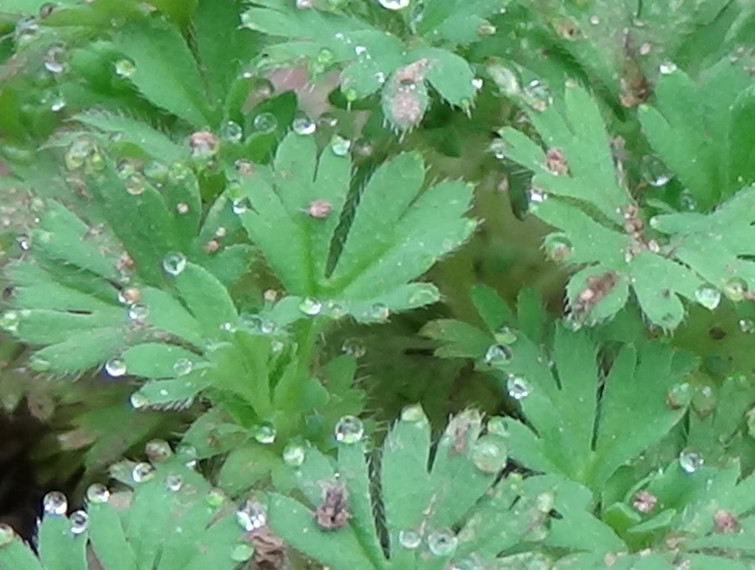
Each of these lobes are toothed and have a reddish hydathode at the tip, similar to the other rose family herbs discussed here, such as Lady’s mantle (Alcehmilla mollis)
The leaves are downy-hairy, with hairs on the margins.
Petioles: Very small and weakly channelled. Small stipules are present, and these wrap around the stem somewhat.
Roots: A fibrous and shallow root system.
Stems: These are almost always less than 5 cm.
Flowers: Will require a lens to see properly. They form in the leaf axils; are yellow-green, and consist only of sepals and an epicalyx.
Flowering season: Anytime from April through into September.
Habitats: On bare ground in dry grassy areas. Can tolerate a range of soils up to altitudes of around 600 metres.
Harvesting: For lots more information on wild harvesting, you can peruse this article.
Other notes: Also called parsley breakstone, parsley piercestone, and field lady’s mantle, the edible leaves are not something I would ordinarily eat in salads as they are quite hairy and astringent. Here is what PFAF says.
This herb has traditionally been prescribed for clearing kidney stones, urinary stones, and gravel. It is a powerful diuretic and a soothing demulcent for the urinary tract.
If you are a student of herbal medicine, you may want to read more about antilithic herbs, and the other major medicinal plant constituents and actions.
Happy foraging!