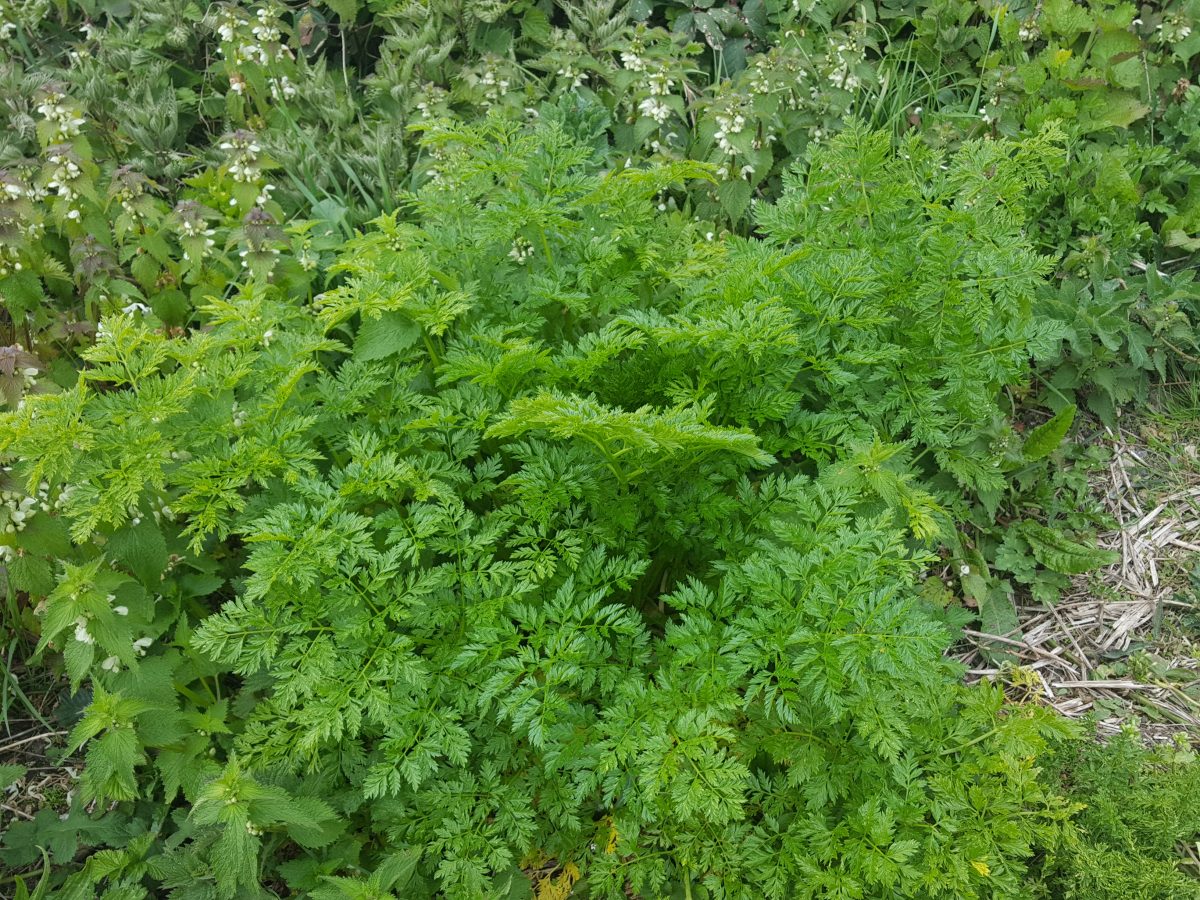
Learn how to identify hemlock and ensure you stay safe in the hedgerow!
Learning how to identify hemlock is something all aspiring foragers need to do. This is a weedy plant that you find in all manner of settings up and down Britain. It also pops up in gardens, looking a little like parsley,
This deadly poisonous plant has a dark and mysterious reputation, in part due to its narcotic properties and because of its toxic nervine alkaloid coniine. This is the plant that the ancient Greek philosopher Socrates was put to death with.
The plants in the carrot family are some of the trickiest to identify, yet critical and delightful to have in our herb and spice rack. But to acquire the full pleasure of Britain’s wild culinary plants, you will have to learn to identify them and have your mind bended, just like everyone else!
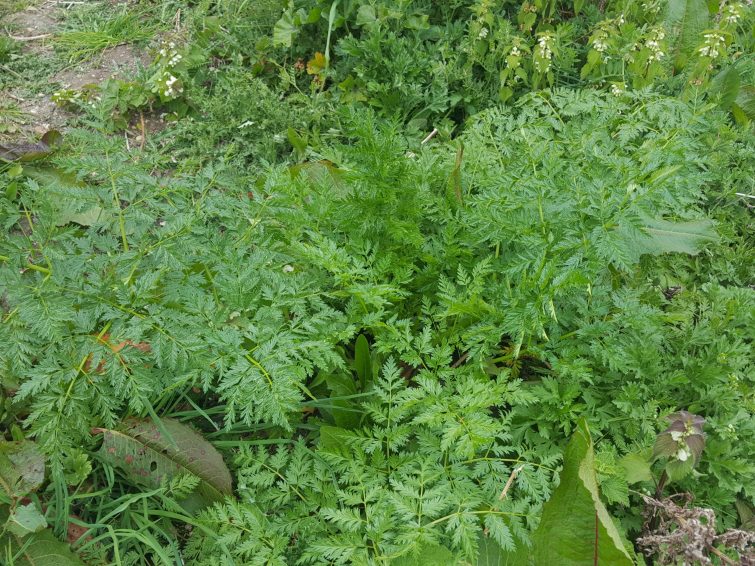
The fact that the plants in this family can look similar at first and second glance is reason enough to engage your other senses when working with them. Each of them smells unique. But nothing changes the fact that they are not easy plants for beginner foragers to work with.
Hopefully by the time you have read this article, you will confidently know how to positively identify hemlock, and tell it apart from its numerous lookalikes.
What’s in a name?
The generic part of the name Conium, comes from the old Greek ‘Kőneion’. It seems that the word is derived from the similar Greek word ‘konas’. This word means to spin or whirl, in reference to vertigo and the physical effects of ingesting hemlock.
The specific part of the name ‘maculatum’, as readers of my Lords and ladies article will already know, describes the spotted appearance that’s easily visible on hemlock leaf stalks and flowering stems.
Our name hemlock is beleived to be from the old Saxon English. The old Saxon word ‘Hem’ or ‘Hym’ means border or shore. The suffix ‘leac’ means plant or herb.
Botanical description
Newcomers to foraging may need the glossary, although I do try and keep the obscure tech speak to a minimum.
Leaves: The leaves and petioles give ample opportunity all year round to positively identify hemlock.
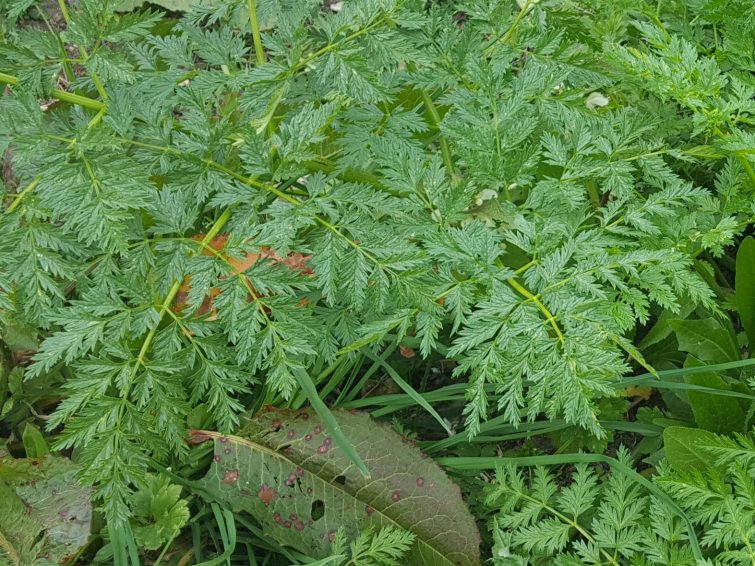
Hemlock has large, usually shiny dark green pinnate leaves; typically around 40 cm long in a triangular shape.
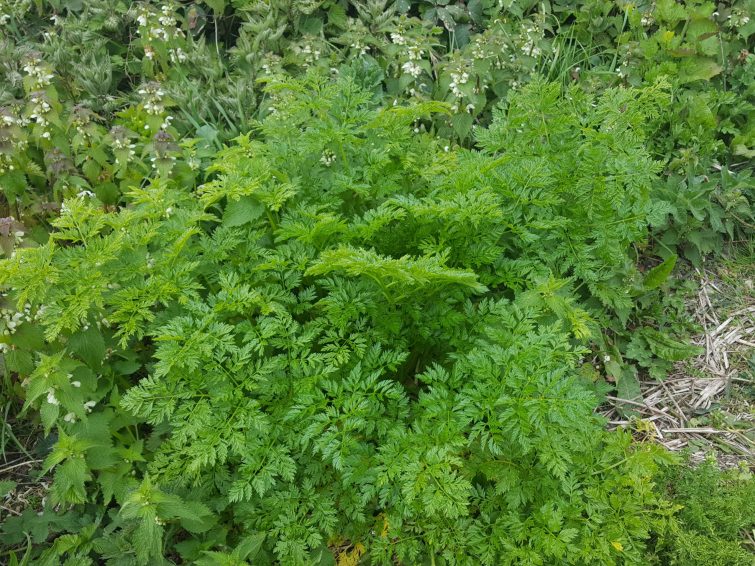
Each leaf has between 2 -5 pinnate divisions, with numerous leaflets, giving a feathery, fern-like appearance. The basal leaves are mostly 3- 4- pinnate.

Individual leaflets are lobed, with pointy tips. Leaflet tips produce a white hydathode. The leaflets are generally a 1 – 2 cm long.
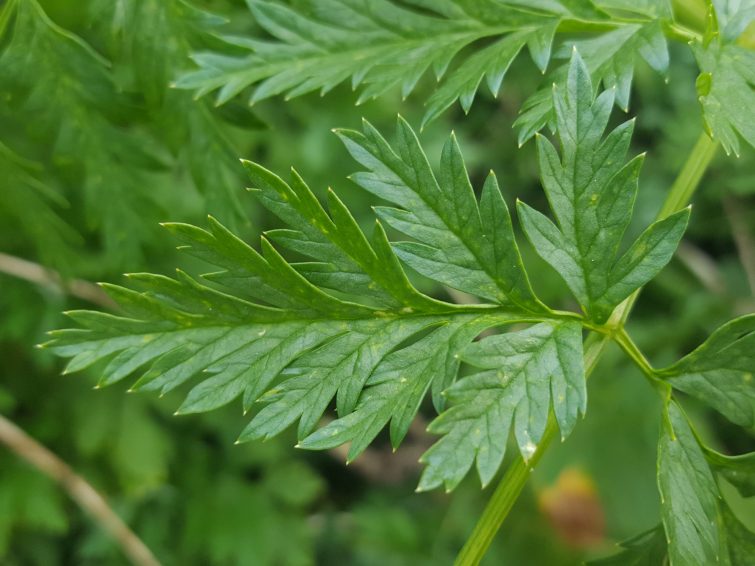
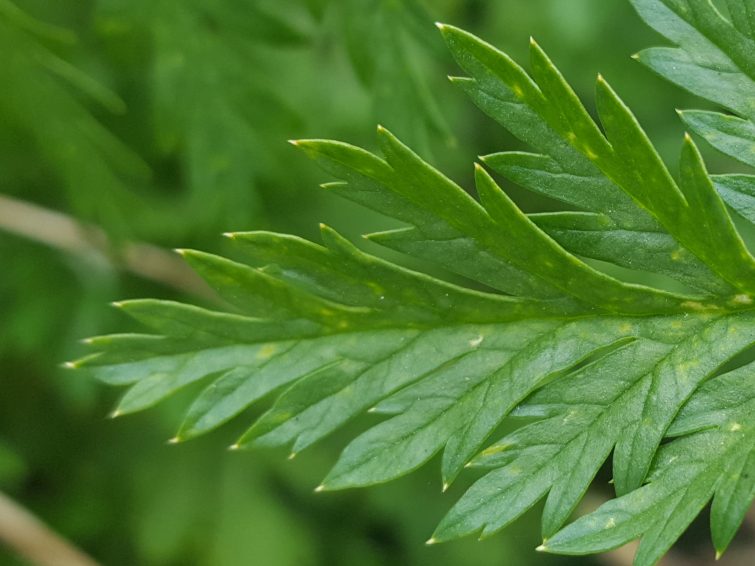
In contrast, wild chervil has far more rounded leaflet lobes. Another lookalike, the upright hedge parsley, has smaller leaves, with few leaflet divisions and hardly any smell to it.
Sweet cicely (Myrrhis odorata) should never be mistaken for hemlock because a) it smells of aniseed, and b) it has white spotting on dull green hairy leaves.
Other carrot family plants aren’t anywhere as big, apart from common hogweed and giant hogweed, and they have totally different foliage.
To my nose, hemlock stinks! Large stands of the hemlock produce a noticeably mousy, rank smell, especially on hot days. Crush and sniff a part of a leaf to reveal the aroma. Contrast this with wild chervil’s sweet, faint, parsley smell.
Petiole: The other key I/D feature here is the red-purple spotting. These can be specks or large streaks and blotches. Online chat rooms may mention specimens without spots, but in almost 25 years of studying plants I haven’t seen one yet.
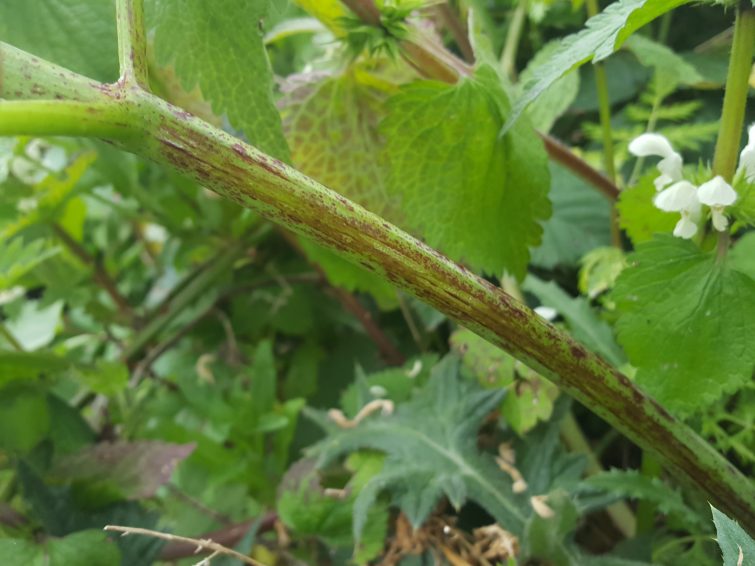
You will notice the petiole is hairless, hollow and almost cylindrical. You will see fine lines running down it.
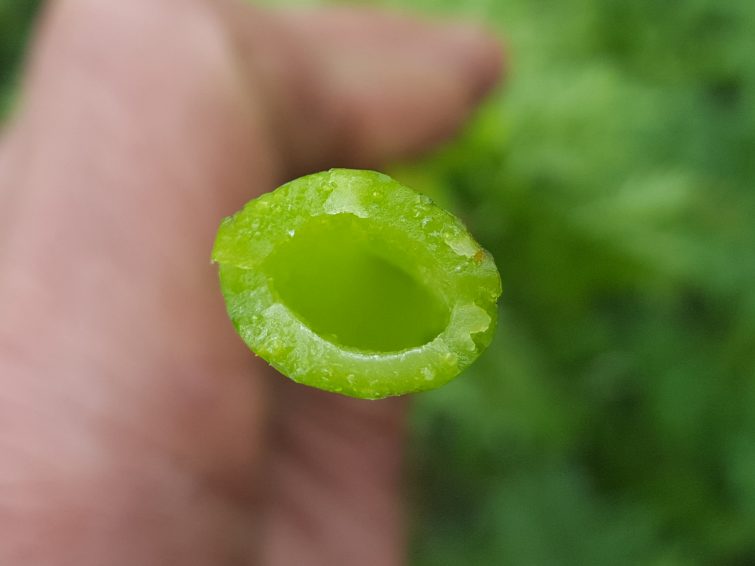
Theae few key charactsristics are markedly different to most other carrot family plants in Britain.
So as you are hopefully beginning to see, there are easy-to-spot differences between species, and its not that difficult to learn how to identify hemlock after all!
Roots: Hemlock has a long white tap root.
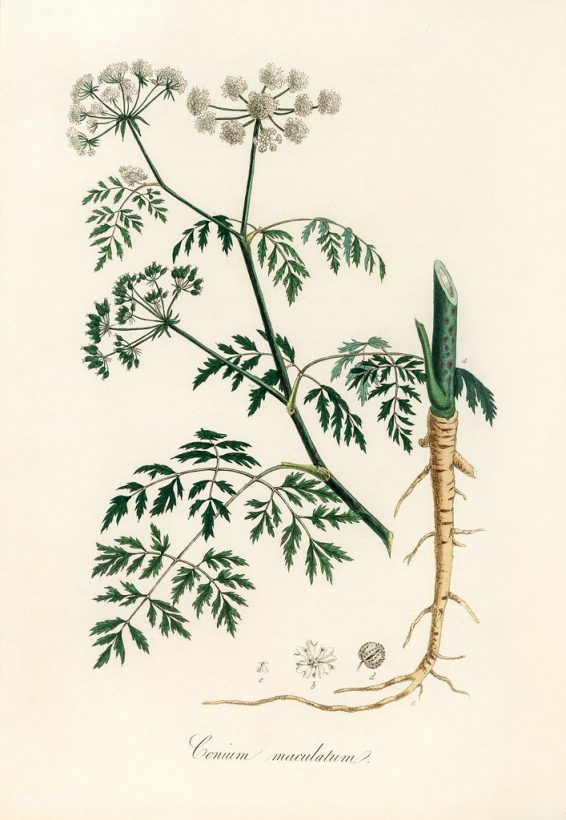
Stem: The plant can easily reach 2 metres and more. The stems are hollow, hairless, and gracefully branched toward the top.
Flowers: Although not the most critical factor in how to identify hemlock, its definitely worth knowing the detail of inflorescence.
Hemlock has white, lacy-looking flowers in numerous small compound umbels.
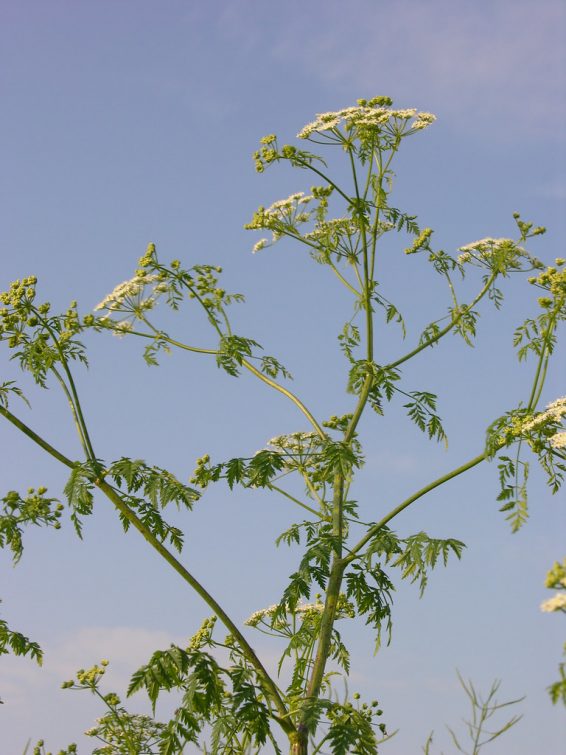
There are typically between 10 – 14 individual umbels. Each compound umbel is approximately 20 – 60 mm across. The individual umbels contain around 16 flowers each, and have bracteoles that can wither with age.
Individual flowers are very small (3 mm) with five lobed petals. The two-part stigma is surrounded by five stamens.
Flowering season: Hemlock flowering used to be the third great white wave of the season, following cow parsley and hogweed.
The plant now regularly flowers earlier than it did only 30 years ago. Find it in flower from late May / early June, through August.
Fruits: Small round ridged schizocarps.
Habitats: This plant is a lowland species, and only really found below 300 metres altitude. Hemlock loves wastegrounds, all manner of disturbed soils, roadsides, riverbanks and hedgerows. It happily colonises rivers and ditches that have been recently dredged. Discover the full extent of its geographic distribution in Britain with this BSBI map.
Harvesting: Only homeopathic practitioners should really consider harvesting hemlock. The powerful properties of hemlock are simply too dangerous for most western herbalalists to want to use internally, if at all.
Parts used: Traditionally all parts of the plant were used
Edible uses: None!
Medicinal uses: Traditionally this herb was used for pain relief. The alkaloid is a strong relaxant and sedative that acts on the motor senses of our nervous system. While coniine poisoning eventually produces respiratory collapse, it leaves the intellect and rational part of the brain functioning. The well known Finnish herbalist, Henriette Kress, does use the herb, and you can read about it in her excellent online herbal.
Other notes: The seeds of hemlock are, weight for weight, the most powerful part of the above ground parts of the plant, alongside the root.