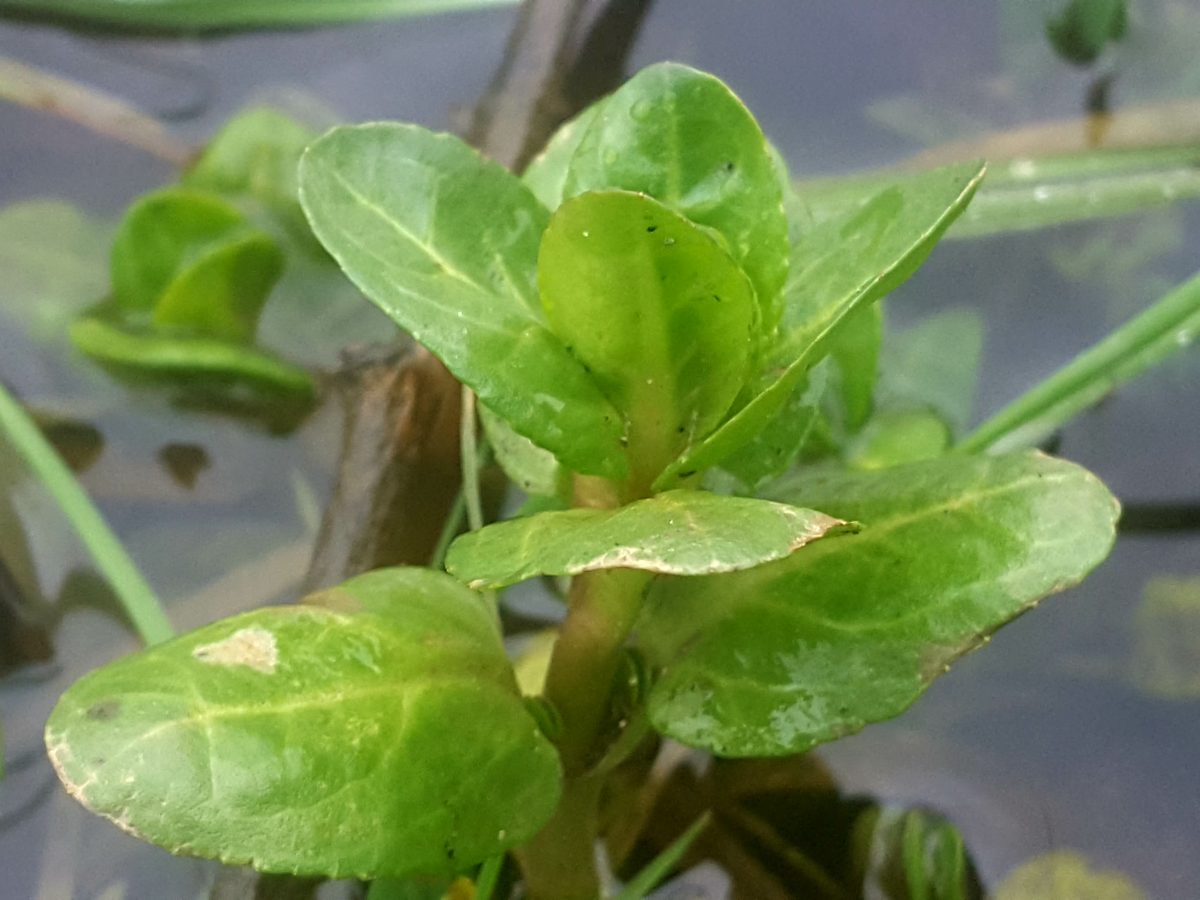
A UK guide to foraging for brooklime. Learn to identify, then discover its food, medicine and other uses.
There are certain plants I like to go foraging for, such as brooklime, that are never in the forefront of my mind when I leave home. Out of around 300 edible plants that I know, some of these will only ever come in to my mind a few times each year as and when I run into them.
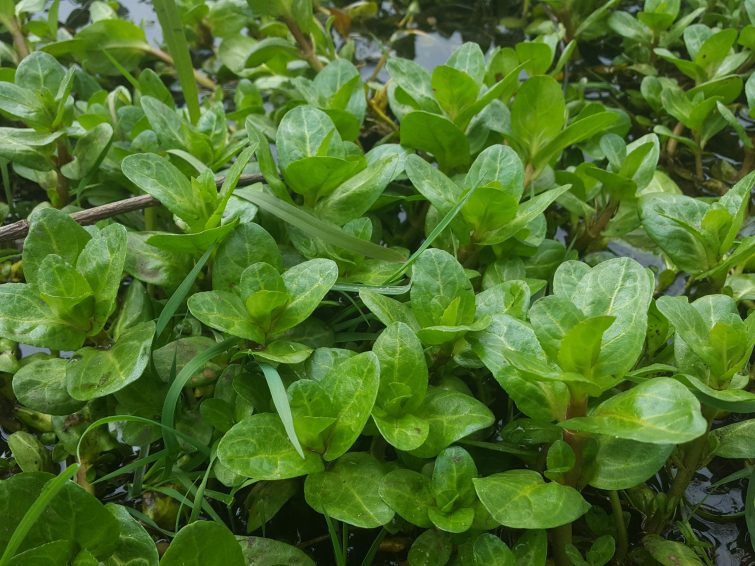
When I do randomly catch up with this plant, it’s usually in the spring, and at different locations each time. It’s as pleasant a feeling as when bumping into an old friend.
Before we get down to the business of I/D, it’s worth pointing you to my two part article on how to identify plants in a day! Beginners would also do well to spend five minutes reading this guide to starting out foraging.
Other essential reading here is my guide to Britain’s poisonous plants. Learning them helps you to leave them alone!
What’s in a name?
The generic part Veronica is the name given to around 500 species! Veronica is the Latin word for an older Greek name ‘Berenice‘. This name was familiarised by the ancient Greek Ptolomy family (circa 400 B.C.)
The word was originally spelt Pherenike and joins two words: ‘phero’ meaning to bear, to bring, or to carry; and ‘nike’ meaning victory. So the Greeks thought the speedwells ‘bring victory’.
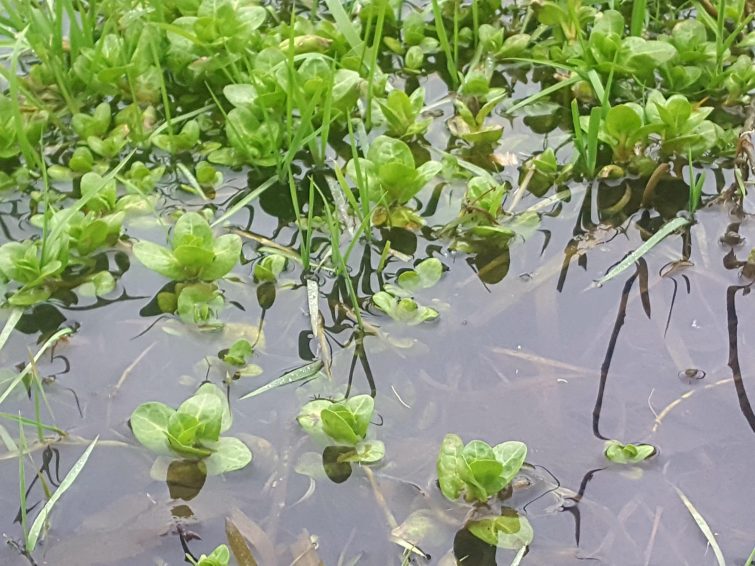
Beccabunga! The specific part of the name sounds like a cry from the Teenage Mutant Ninja Turtles. This word is apparantly derived from the old Germanic phrase ‘bachbunge‘ which means ‘brook-bunch’, or ‘a bunch of flowers from a brook’. Languages related to German, such as Danish, also reveal a similar phrase ‘bekkebunge’ meaning the same thing.
The common name brooklime was previously spelt brooklem. This name is from two older cojoined English words ‘brokelemke’.
The word Broke describes a marshy area, bog, or stream. The final part lemeke is a middle English word for speedwell. This itself comes from an older English word ‘hleomoce’ – speedwell.
Botanical description
If you come across difficult words here, simply refer to our foragers glossary.
Leaves: Small, glossy-looking, round to oval-shaped leaves. They are hairless, and in opposite pairs. When foraging for brooklime you could potentially mistake the plant for watermint. Your nose knows! Brooklime has whiteish veins visible on the surface of its fleshy leaves.
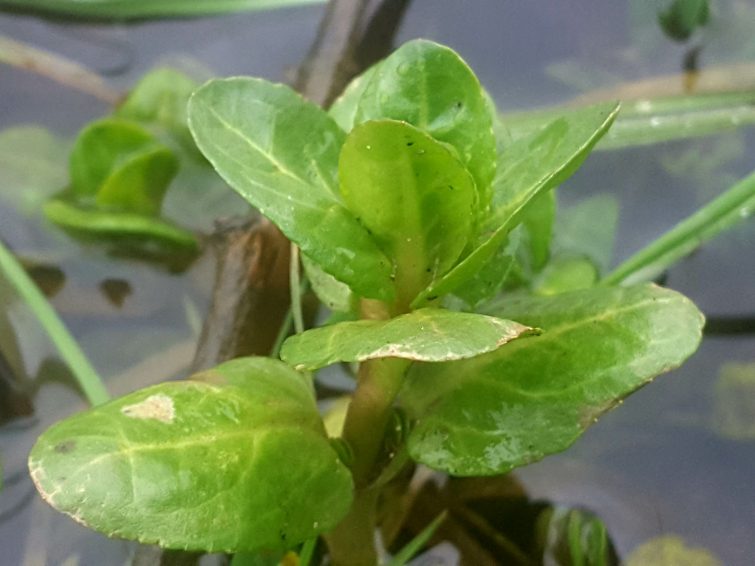
All leaves are borne on stems. Just the top few leaves are generally visible over the winter months.
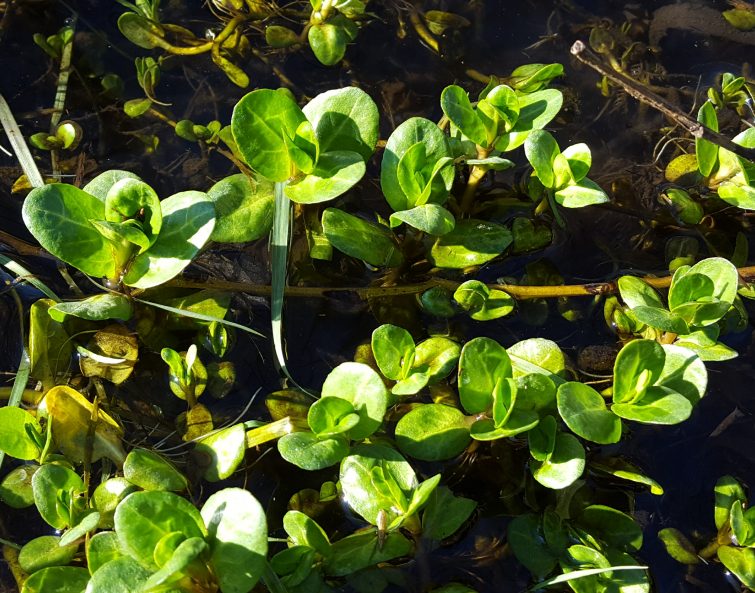
Petioles: Very small if at all. The leaves are mostly sessile and clasping the stems
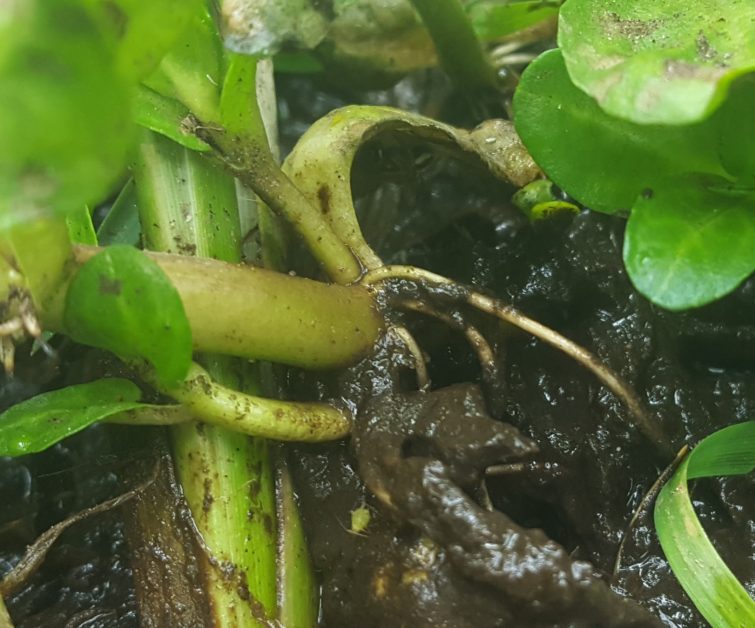
Roots: The creeping rhizomes ensure that brooklime always appears with numerous stems.
Stem: Round, branched above. Will grow up to around 60 cm high. The stem produces roots where underwater.
Flowers: Classic speedwell flowers. Four petals with one a different colour and shade to the others. Four anthers surround the two-part stigma.
Flowering season: Like many of its fast growing relatives, brooklime flowers quite early in the season. In the UK it comes into flower during late April and blooms through May and into June.
Fruits: Numerous tiny seeds are contained in a two-part seed capsule.
Habitats: This plant is adapted to grow in and around water. You can go foraging for brooklime in most of Britain. You can find it in and by shallow streams and brooks. It prefers damp and marshy settings where the water is slow moving. It also grows happily in regularly waterlogged woodland paths.
Parts used: Leaves. Young stem shoots. Flowers.
Harvesting: Start to collect the new ones as they begin to appear in March. Pinch off, or use scissors. For the young stems, simply cut off the top 10 cm or so. Get more foraging tips and tricks with my harvesting guide.
Edible uses: The leaves are more than suitable for all manner of salads and sandwiches. Layer the leaves in dishes like Lasagne. The flowers make a pretty garnish. Steam the young stem shoots. It is best used with other strong tasting herbs to compliment its bitter flavour.
Medicinal uses: In the past, Brooklime was used for a number of conditions, like many other Veronica species. Most of the former claims are not backed up by science.
The herb was chiefly employed as a remedy to prevent scurvy. Brooklime does have high concentrations of Vitamin C, as well as containing flavonoids and phenolic compounds, all useful to prevent chronic diseases.
Other notes: Possibly the easiest of the Veronica species to identify, and partly because of its habitat. This genus was recently reclassified as part of the plantain family.
More plant species coming soon. Happy foraging!