UK guide to foraging for silver birch. Learn to identify, then discover its food, medicine and many other uses.
Foraging for silver birch has been a regular feature of human life for pretty much as long as we have walked the planet.
We know that both the neanderthals and ancient Homo sapiens hunter gatherers used birch tar to fasten arrow heads, no matter how they stumbled on acquiring the knowledge. Archeologists have confirmed this type of activity was occurring approximately 200,000 years ago.
It seems to me that ever since humans learnt to exploit its abundant resources, birches have played a major role in our colonising of the planet.
What’s in a name?
Considering this plant has been used for such a long time, it may not be a surprise to learn that the name ‘birch’ is a suitably ancient word.
The scientific part of the name Betula stems from a Gaullish word for the various birch plants – betua. This word is beleived to be derived from an older word betuyā; which comes from an ancient proto-Celtic language.
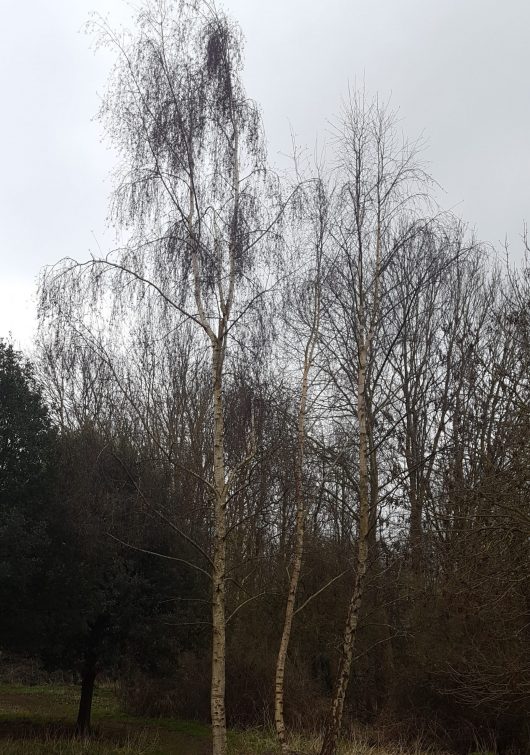
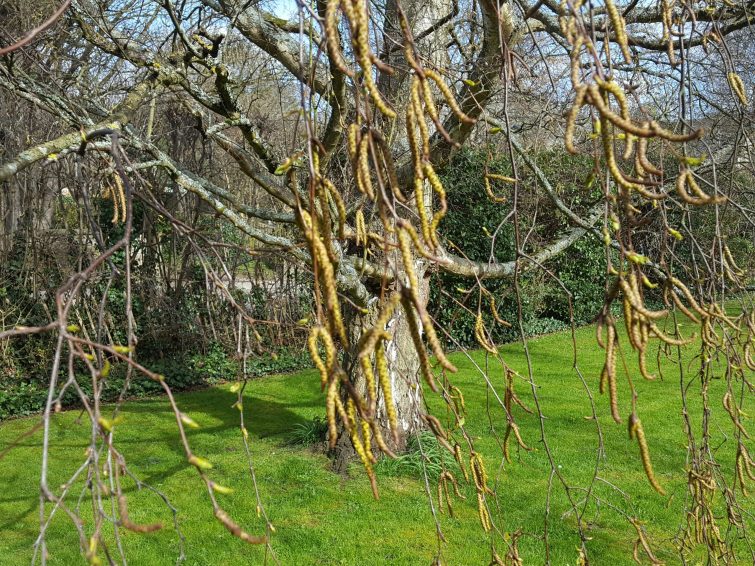
The specific part of the name pendula, usefully describes the instantly recognisable, drooping habit.
Its English common name ‘silver birch’, obviously tells us about the silver-white colour of the bark. Its worth noting that this bark colour is also found on a number of other species in its genus, such as the widely-planted white birch (Betula alba).
Botanical description
If you come across any unfamiliar words, try the foragers glossary of terms. It contains almost all that a budding gastronomical-botanist needs!
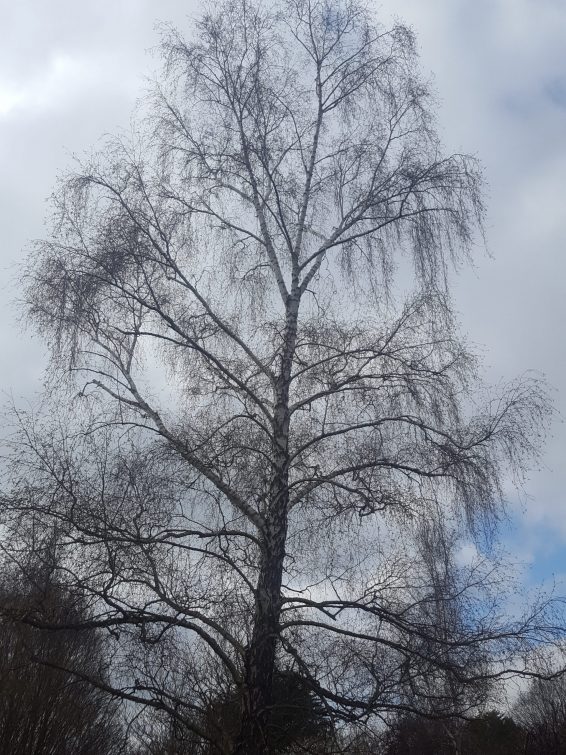
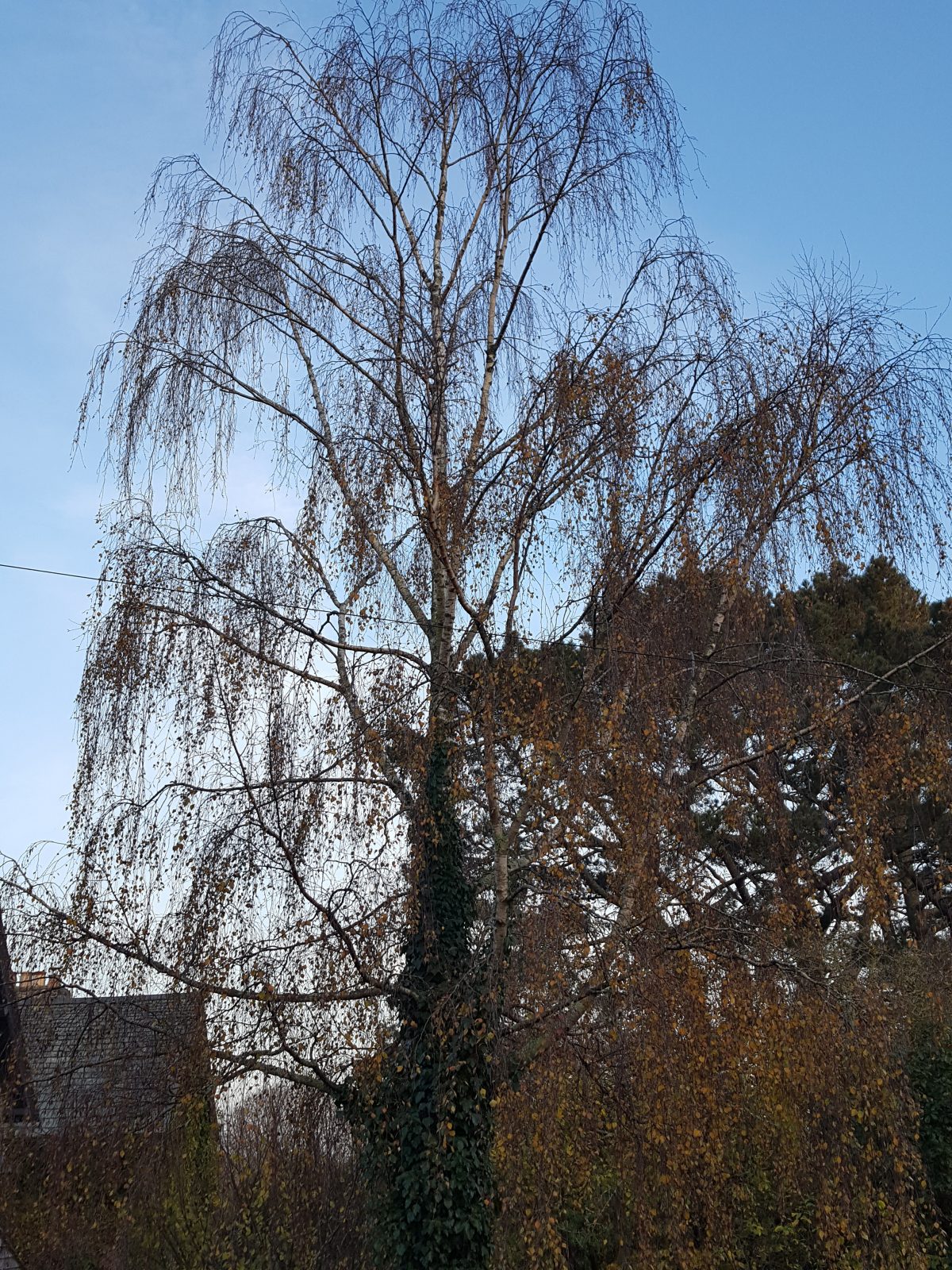
Silver birch is another really well-known plant. In fact, it could easily be argued that the plant hardly needs a description. Well, that’s true when you see it as a mature tree, and also until you study another common British native birch species, the downy birch (Betula pubescens).
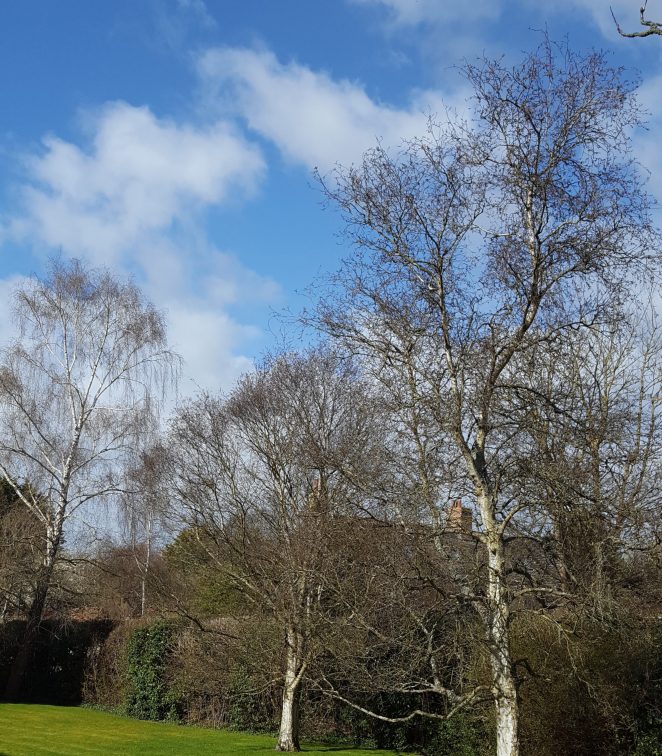
As a younger sapling tree, silvee birch can be more difficult to identify. When we go out foraging for silver birch though, we are looking for mature trees. In terms of their uses though, the birches can all be used in similar ways, so I/D to the species is mostly academic. However, lets take a look at the I/D features of this elegant tree, a plant that can grow to 25 – 30 metres in suitable settings.
Leaves: These tend to appear in April, but exactly when will depend on where you are foraging. The silver birch have triangular-ovate leaves. They sometimes have a flattened base and always come with a pointy tip. The small leaves are alternately spaced, and up to 6 cm long and 5 cm wide.
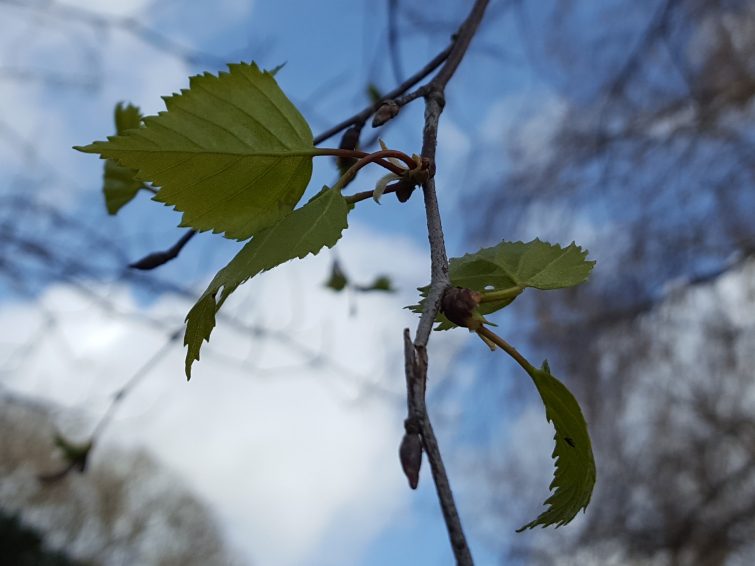
The shiny green leaves contain essential oil glands on both sides. The leaf margins are minutely and doubly serrated. In autumn the leaves turn, to give a glorious yellow glow.
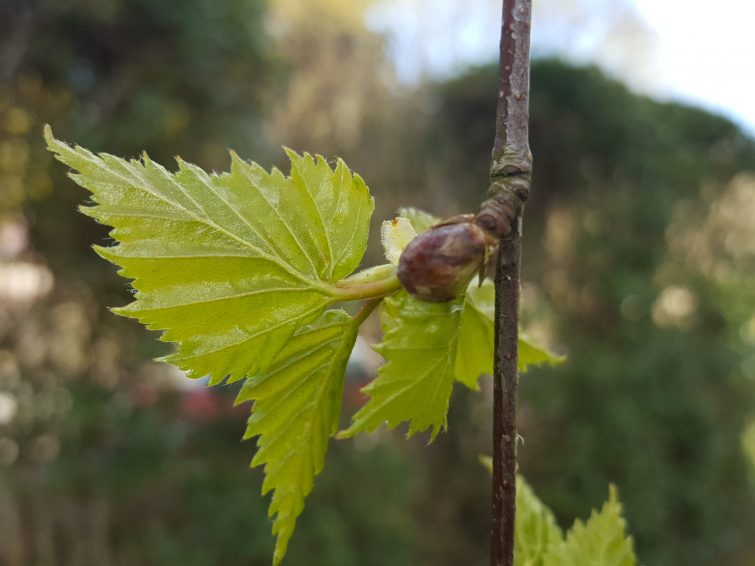
Petioles: Approximately 10 – 20 mm long. Generally around 2 mm wide and channeled.
Twigs: A shiny red-brown colour. The new twigs are round, smooth and reasonably straight, with numerous light brown lenticels.
After staring up into birch canopies for a while, you will start to notice that certain specimens produce a mass of stems here and there. It looks a little like a rooks nest. What you are seeing is an infection commonly caused by a fungus Taphrina betulina. This microscopic parasite makes the plant produce a mass of densely-packed stems. These are known as ‘witches brooms’.
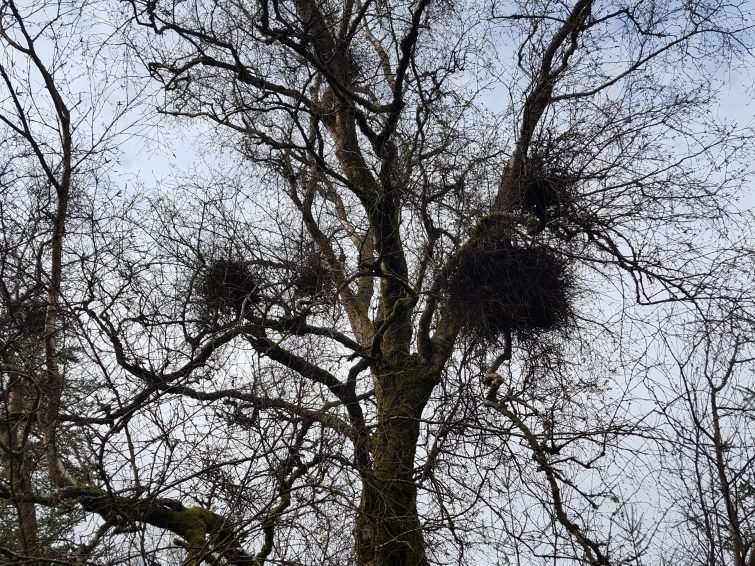
Although unsightly, this does not affect the plant too much. Owners of trees could prune them out during March.
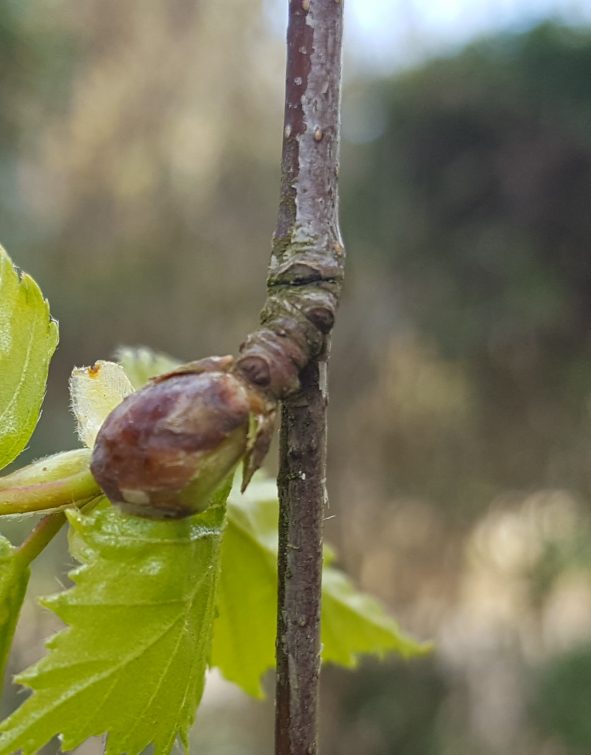
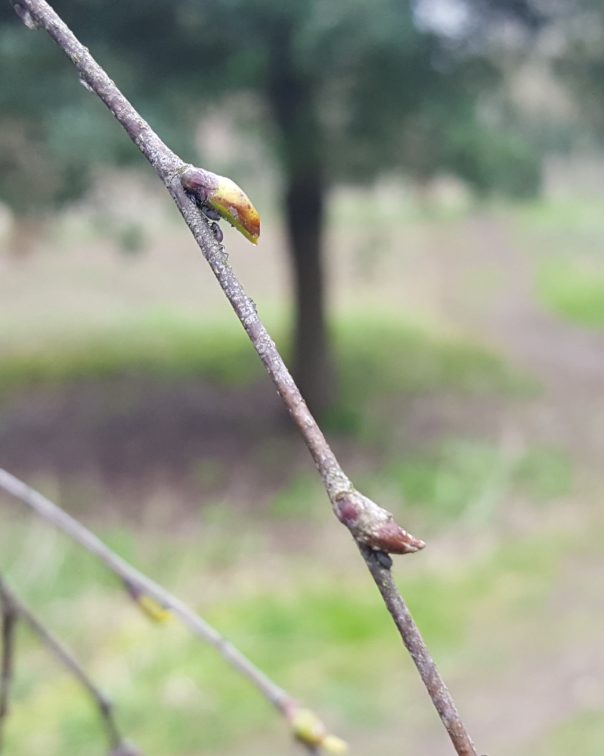
Buds: The 6 mm long buds are also alternate. They typically have between 4 and 7 scales. These are green-brown, thin, and occasionally found with hairs.
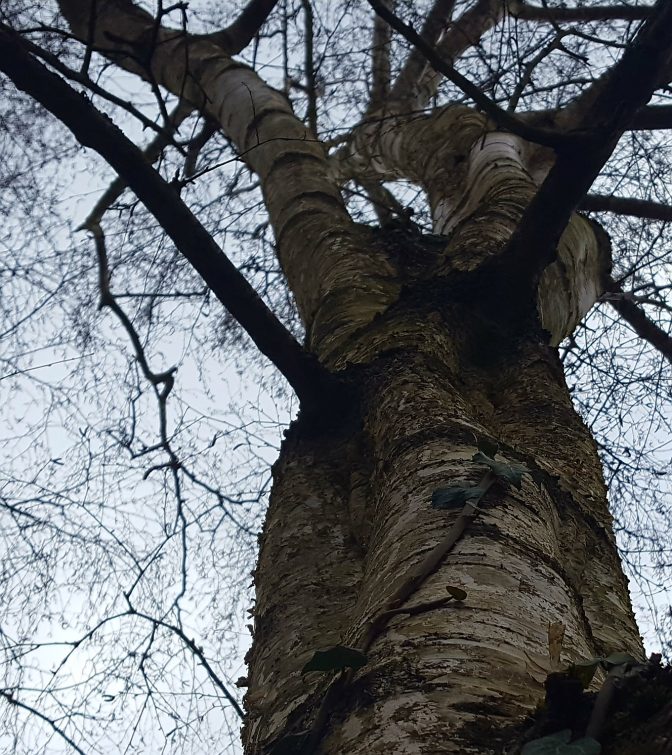
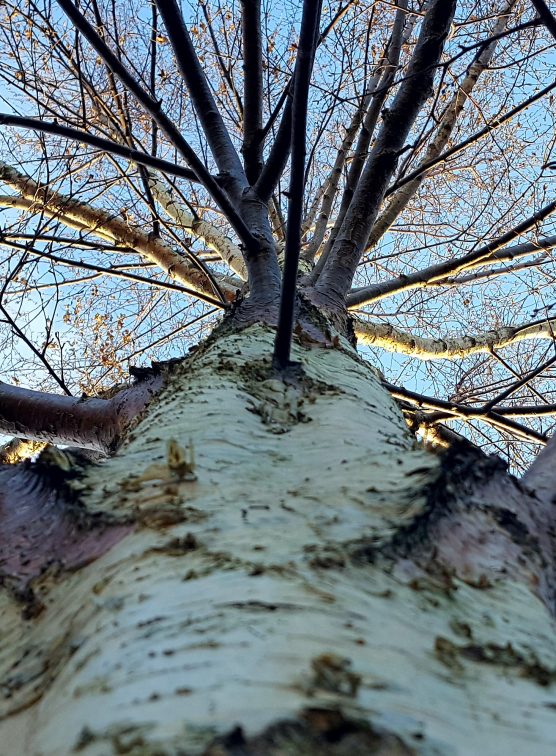
Bark: The bark is initially brown but with age the plant soon develops its silver -white colour. Silver birch will often be found with peeling bark.
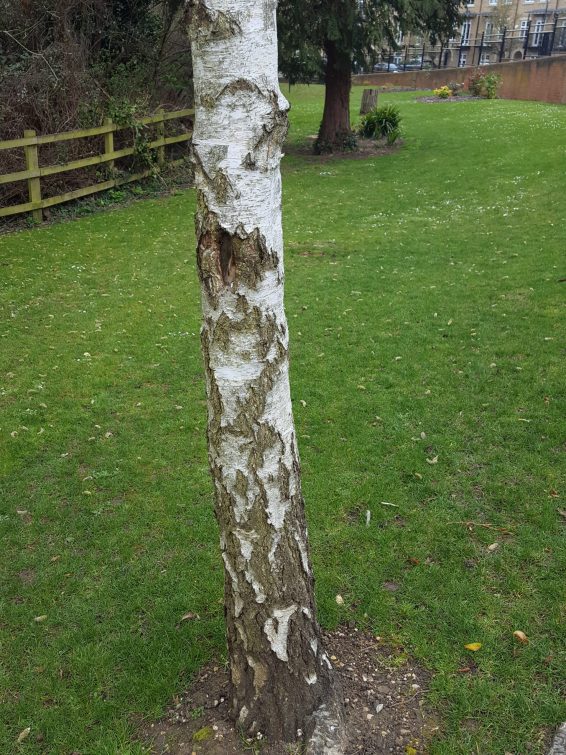
In contrast, when you come across a downy birch, you will find a smooth silver -white bark, almost all the way down the trunk. Downy birch will be covered here in due course. Numerous lenticels stud the bark of silver birch, aiding its survival in the coldest boreal forests of the arctic circle.
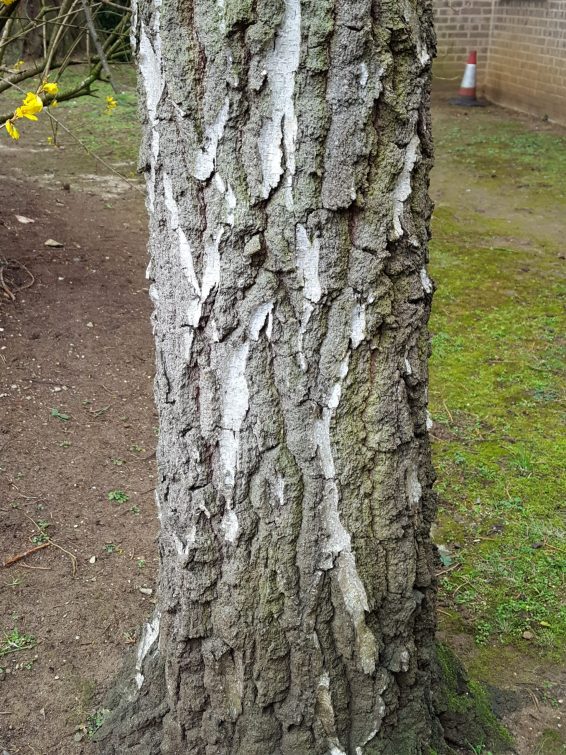
Trunk: Usually straight, with the lower branches discarded. The upper trunks are the classic silver-white colour. The lower trunk develops a rugged diamond pattern of grey-black angled fissures.
Flowers: The immature male catkins (25 – 30 mm) hang in large numbers all autumn and winter.
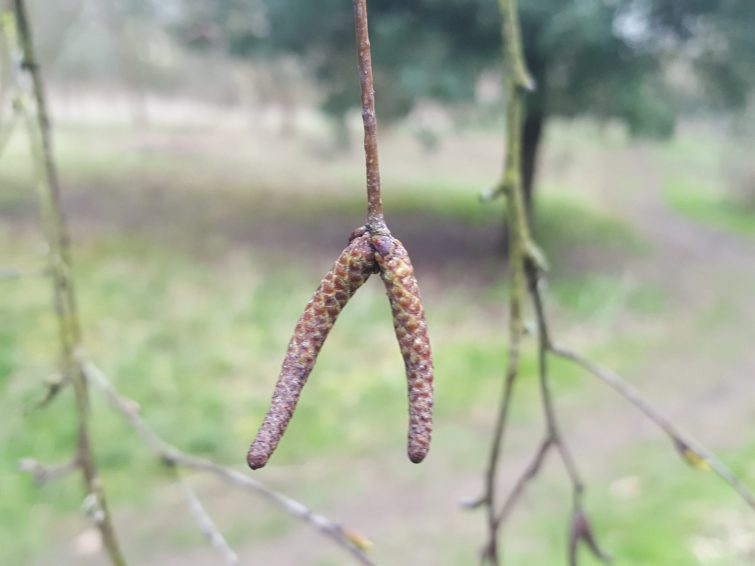
They begin to stretch, colour up and open in late April. The female flowers appear with the new leaf shoots.
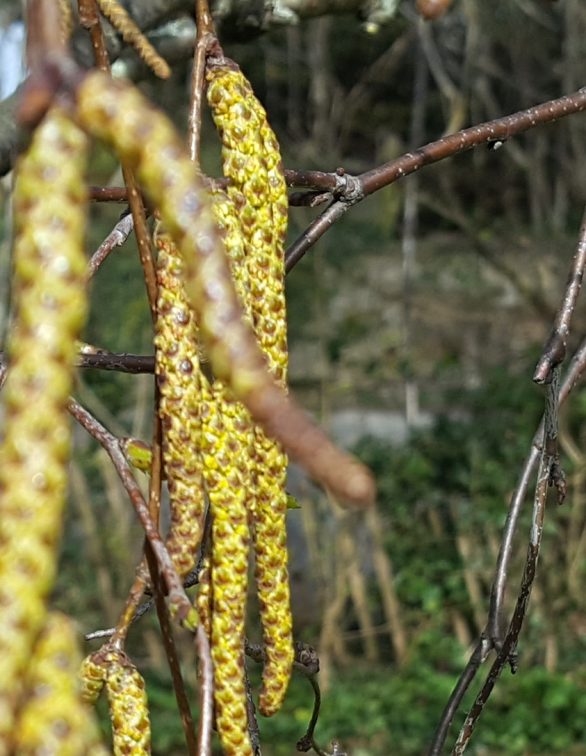
Flowering season: April into May.
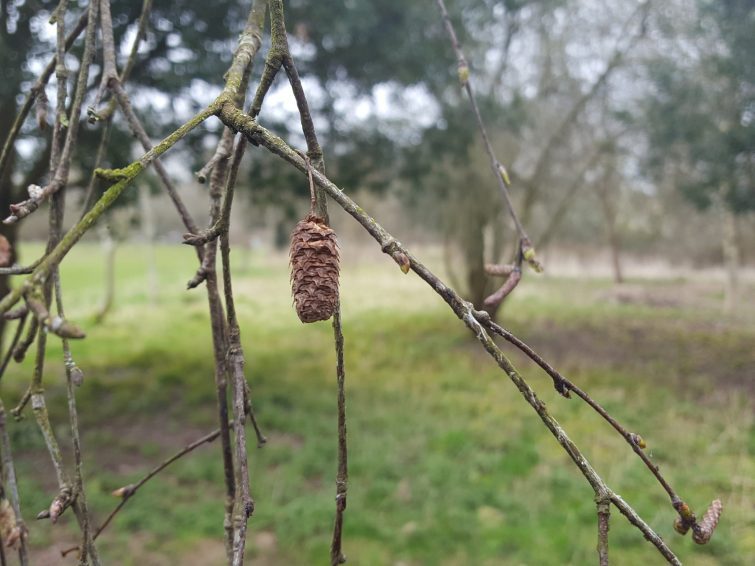
Fruits: The stubby cigar-shaped fruits ripen in the summer before it disperses thousands of seeds.
Habitats: Silver birch and its brother, downy birch, are the first trees to recolonise cleared land. These are both known as woodland pioneer species. After the last Ice age, Birch forests covered the land.
These days you can find silver birch all over the UK, both wild and planted. You see them on their own, or in large stands in newer woodlands. They are known to be a regular component of mixed woodland, especially on free-draining acidic soils. They are widely planted in parks and gardens, and as an amenity tree. This brilliant online resource has a map that shows the extent of its distribution.
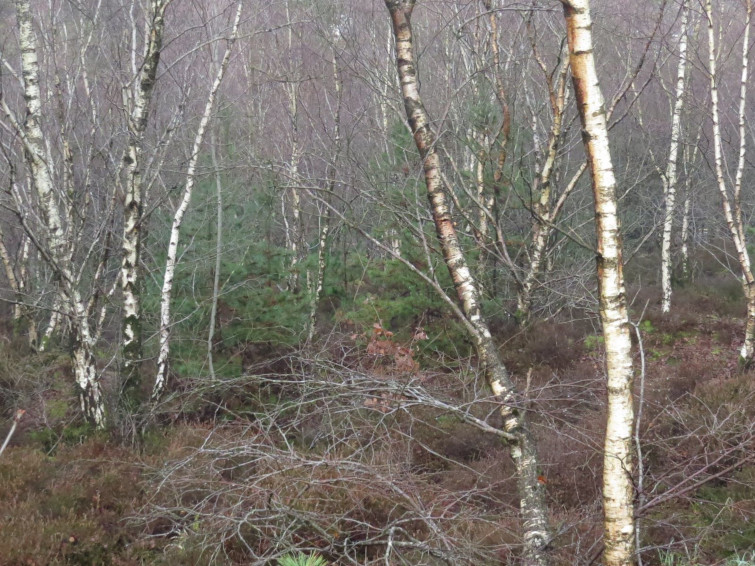
Parts used: So much of this plant is useful, whether it’s the sap, distilled sap, new twigs with leaves, the inner bark, outer bark, or the various processed material able to be gleaned from these products.
Harvesting: Tapping sap: This can only be harvested before the leaves are open, and is best attempted during mid March.
Please don’t drill holes, but snip off a suitable-sized branch instead. It’s far less invasive to the plant and close to replicating the natural wind-shedding of lower, less productive branches. The fantastic Fergus the forager makes the compelling case here for not drilling holes. I strongly recommend you read this informative article.
Edible uses: The sap can be drunk as it is, or reduced into a dark coloured syrup. You will need approximately 90-100 litres of sap to make 1 litre of syrup! The sap can also be fermented into birch wine.
Leaves and new twigs with the leaves have been used in cooking to add a subtle minty flavour to peas or new potatoes.
Medicinal uses: The leaves contain essential oils including volatile derivatives of methyl salacylates. In Arctic countries such as Finland, people lightly beat the leafy twigs onto the body befor a sauna. This bundle of birch twigs is known in Finnish as a ‘vihta‘ or in English as a birch whisk.
The use of the twigs is known to open up the pores of the skin, and to promote blood circulation. It helps relax muscles and joints after strenuous physical activity.
The sap contains a wide range of health-boosting minerals and trace elements. It is now commercially produced and popular across the globe.
Other notes: Bushcrafters will regularly go foraging for silver birch because they are likely to know of its many uses. Let’s just leave it with Ray Mears to show you one of them, the birch bark canoe.
And a quick reminder that you can use many of the Betula species in the same ways. As ever, this does not disregard the personal need to test your tolerance on any new wild food plant you put in your body.
While you are here, beginner foragers may want to get to know Britains poisonous plants. It’s always a good time to boost your plant I/D confidence.
And if you want to take your foraging to the next level, then you will want to read how to identify plants in a day!
This simple to learn, fast-track method of identifying plants can quickly help your plant I/D skills.
More plant species coming soon. Happy foraging!