Go foraging for garlic mustard and you can turn the malicious, delicious!
Garlic Mustard. (Alliaria petiolata) Brassicaceae
Wild food hedgerow walks in winter are almost guaranteed to throw up opportunities to go foraging garlic mustard. For me, it’s one of the best wild food resources you can find in the hedgerows.
Why go foraging for garlic mustard?
All year round abundance from a common plant that doesn’t really stop giving. There are 8 different plant parts you can use throughout its gradual metamorphosis, and as the season’s pass, you will almost always find something to harvest.
- Taproots
- Leaves
- Petioles (from new growth in spring)
- Stems when young and tender
- Flowering tops
- Flowers
- Seeds
- Microgreens
Foraging garlic mustard can offer us similar health benefits to those we know from some closely related species, such as horseradish (Armoracia rusticana), watercress (Rorippa nasturtium-aquaticum) and hedge mustard (Sisymbrium officinale).
What’s in a name?
Its generic name Alliaria comes from the resemblance in smell to the garlic tribe (Allium). There are a few similar compounds in the plants, especially the leaves and the tender-stem flowering tops.
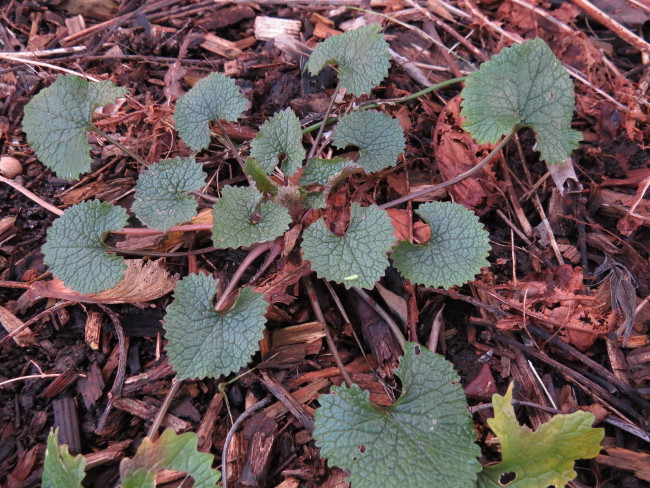
The species name petiolata points to the specific feature of its long leaf stalk, also known as the petiole.
This plant has two other widely used common names; Jack by the hedge and hedge garlic. You may also see the old botanical synonym Sisymbrium alliaria used.
How to identify Garlic mustard?
Smell would be the easiest answer to give, as with almost all the brassica family plants. When young it’s leaves give off a pungent aroma when crushed.
Leaves
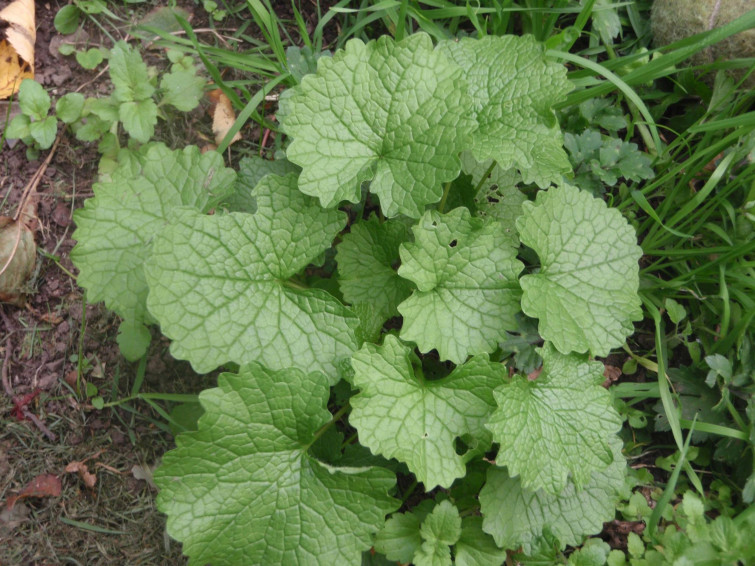
Its’s leaves give off pungent garlic/cabbage aromas when crushed. This is due to the presence of volatile sulphurous compounds.
In my watercress article and this medicinal plants constituents page, I showed how these molecules are able to arrest the growth of some common cancers.
A large number of the Brassica family plants are identifiable from smell alone. All are reportedly edible plants, except the wallflower (Erysimum cheiri,) although even this plant has been used as a medicine and a food colouring.
I sometimes smell the plants before I really notice them, if I’m walking nearby along fences or by hedges.
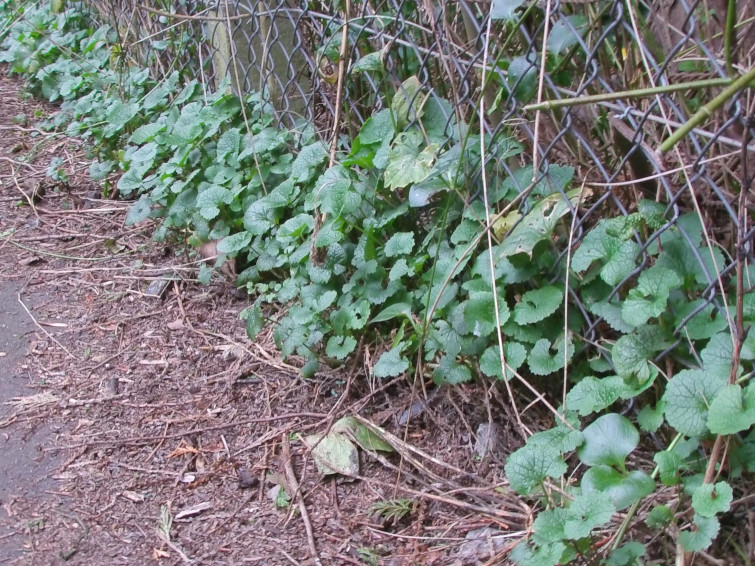
The leaves are soft to touch apart from in winter, when they are somewhat more coarse. For a plant, this is a necessity I suppose, given the lack of available sunshine coupled with the lower temperatures.
This is one reason attention turns to harvesting roots in winter. The change in focus is something worth noting for quite a few other hardy herbaceous species.
Flowers
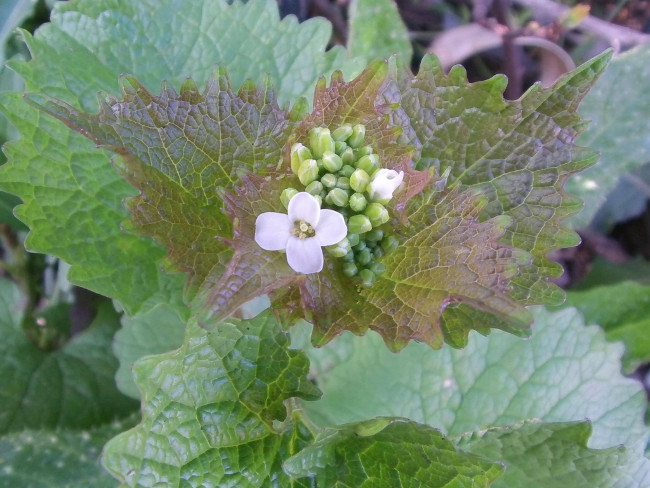
Just before flowering, you will see a recognisable flowering bud. It is basically a mini broccoli floret. The buds sit on top of tender edible stems and they soon open to reveal the pretty white flowers.
The flowers are approximately 10 mm across. I love pinching off the top 3 or 4 inches and munching them when out on trails. The tops are really sweet and juicy as well as pungent.
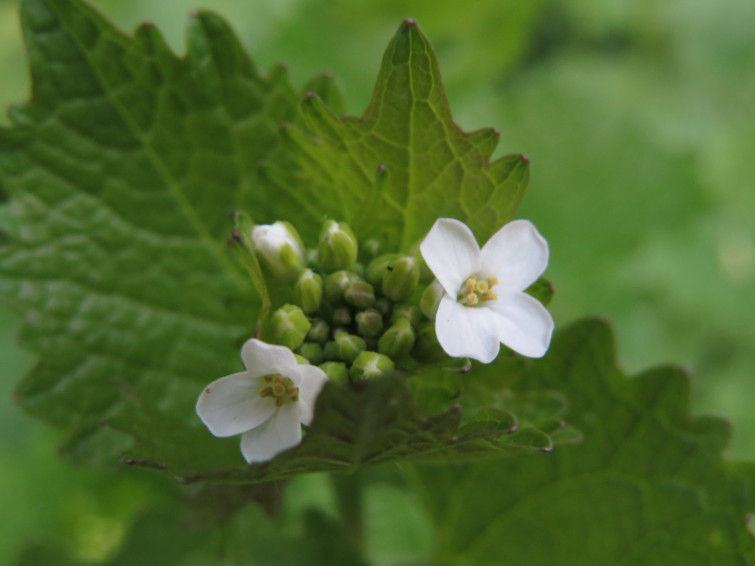
The family pattern of all Brassica family plants is four petals, in the shape of a cross. The petals are free, and not fused at the base. There are six stamens in the flower, with two shorter than the other four.
As the seasonal weather patterns change here in the UK, due to human’s increasingly stark effects on the climate, flowering times may become somewhat erratic.
Due to global heating, we see full blooms of garlic mustard earlier than the field guides say. Find the flowering tops from around Spring equinox into May.
On the flowering stems, leaves are alternately spaced and gradually become more refined in size and shape, with a much smaller leaf stalk.
Seed Pods and Seeds
Long, thin seed pods eventually form, which will split in two, revealing lines of brown seeds. These seeds are a mini cigar-shape, rather than round as found in many other family relatives such as mustard. Pods are held at angles on the flowering stem. The seeds give a peppery punch when crushed.
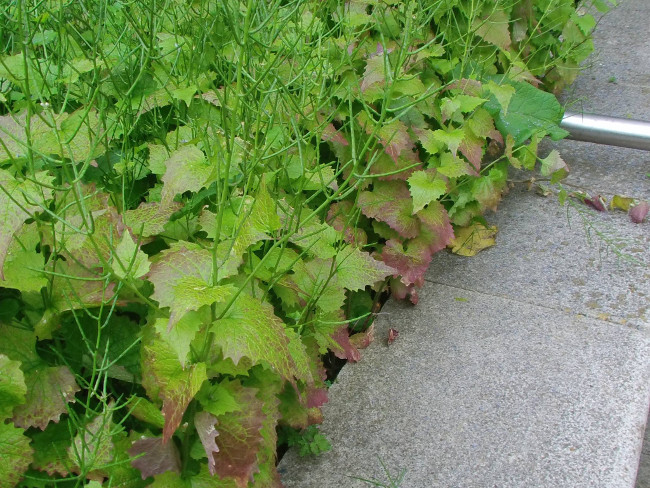
During the early summer the seeds mature, pods wither, and eventually split to reveal their treasure. As many as 8000 seeds per plant are produced, which reportedly converts to a staggering potential seed bank of 100,000 seeds per square metre!
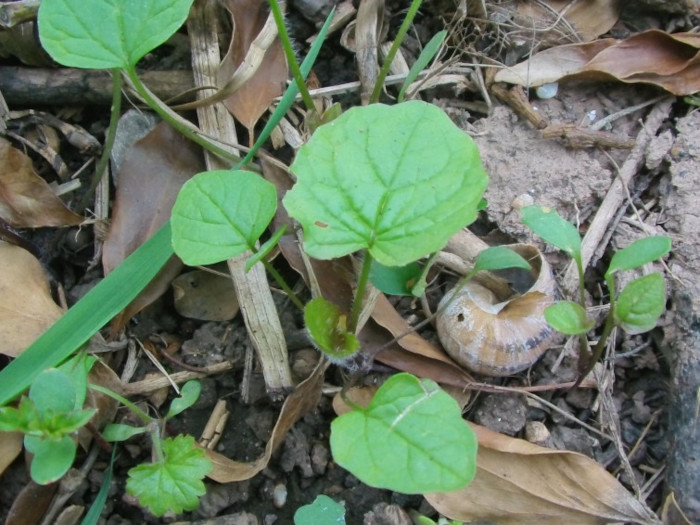
Germination en masse is the inevitable result of this tactic, by a plant from the superb brassica family, for these plants are well-known for their indifference to the soil, and without need for mycorrhizal, unlike the majority of plants.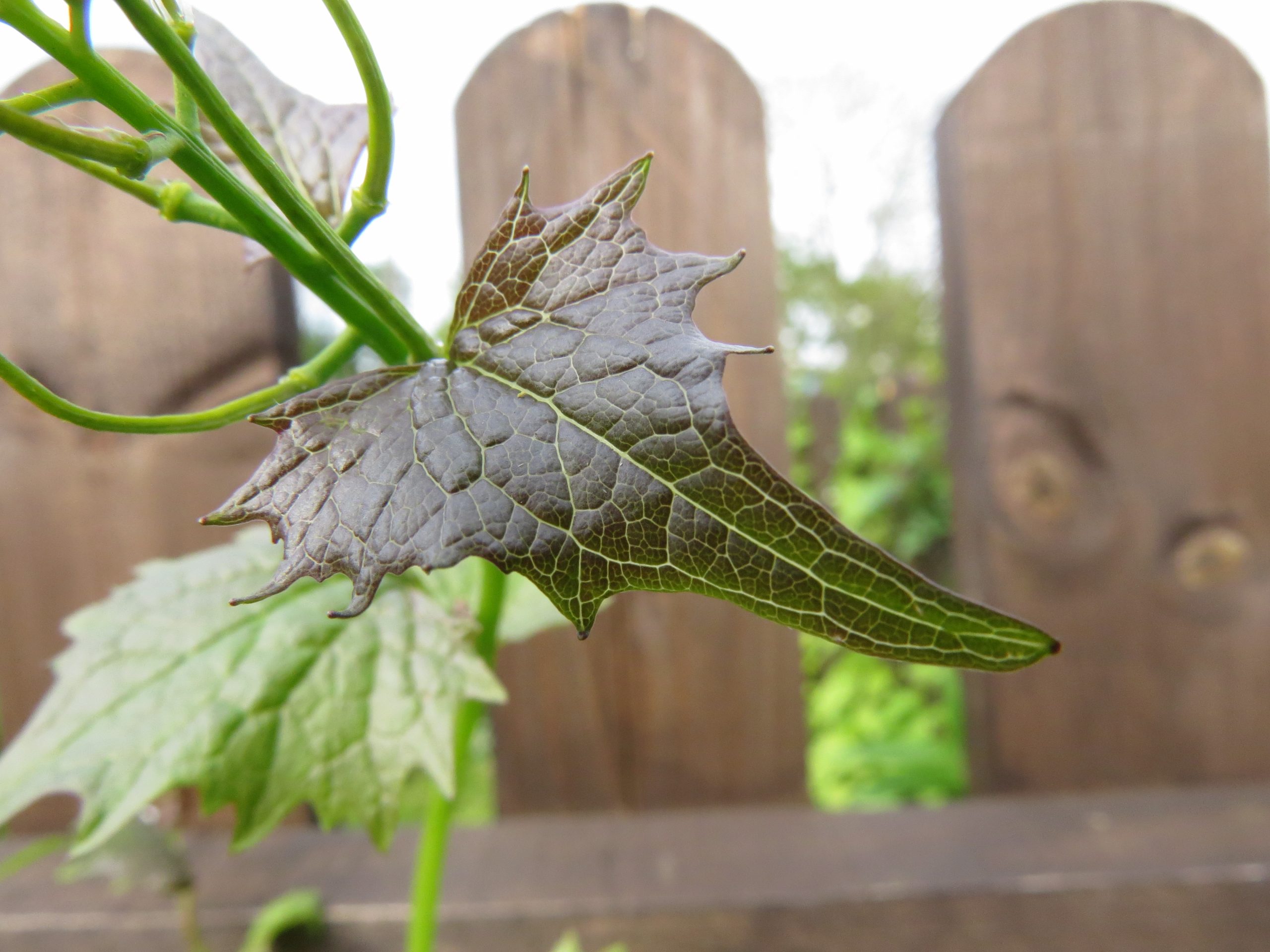
In the plant kingdom, you can forage for a multitude of these plants on poor soils by the sea and estuary, together with the Chenopodiaceae family of beets, goosefoots, oraches and samphires.
On these types of soil, mycorrhizae won’t be found, or for that matter, any soil humus. In this harsh environment, both these two plant families are reliable exponents of mass germination, and can sometimes offer a plentiful source of microgreens.
Habitats
This plant can be found in a number of settings. Unsurprisingly for a plant that has the word ‘hedge’ in a couple of common names, its favourite habitats are hedgerows.
You can also find it at woodland edges, shady grass banks, on waste-ground, at the base of walls and fences in urban settings, and as a common weed of cultivation.
Garlic mustard grows in most areas of Britain, apart from the very northwest of Scotland, as this map will show. Other information, including the plant’s ecological requirements, can also be found on this excellent online British and Irish flora.
Garlic mustard Lookalikes?
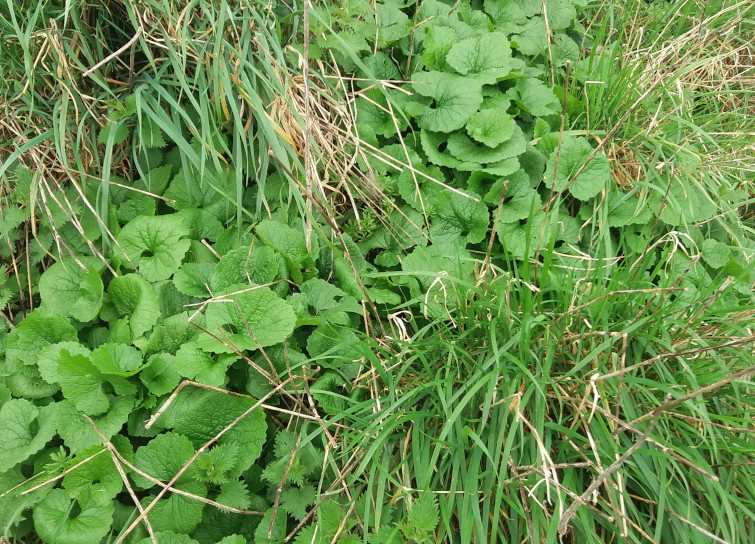
There quite a few wild plants in Britain that have similar shaped leaves with similar ripples around the edges, but none smell like it. This is why using all your senses while attempting identification is crucial in accelerating your learning!
Related plants like Honesty (Lunaria annua) and unrelated plants like the the different Violets, and others besides, can potentially, superficially, look like garlic mustard. Your eye can lie, your nose knows!
Another great Scientific resource for garlic mustard and other common plants is the centre for agriculture and biosciences international
Culinary uses
Cultures from around the world have long used this plant, primarily the European people, because the plant is native to the NorthWestern region. Its general abundance wherever happy to grow means that leaves or other parts are always available to add to the pot.
You may have already seen numerous recipes online for pesto, soups, and salads based on this ubiquitous plant. I like a pesto, but prefer the leaves of this plant as lightly cooked greens dressed with olive oil/butter and lemon juice.
At some points of the year, I inevitably throw them into a well seasoned and spiced gram flour batter, along with a dozen or so different plant leaves, to make a wild leaf pakora. Look out for mass germination carpets of microgreens during late summer/early autumn, or in spring.
From mid to late spring, the flowering spears appearing everywhere are fantastic, being juicy, sweet, crunchy, and peppery. I think they’re perfect raw, on the hoof, or chopped into salads. These were my favourite food until I tried the roots.
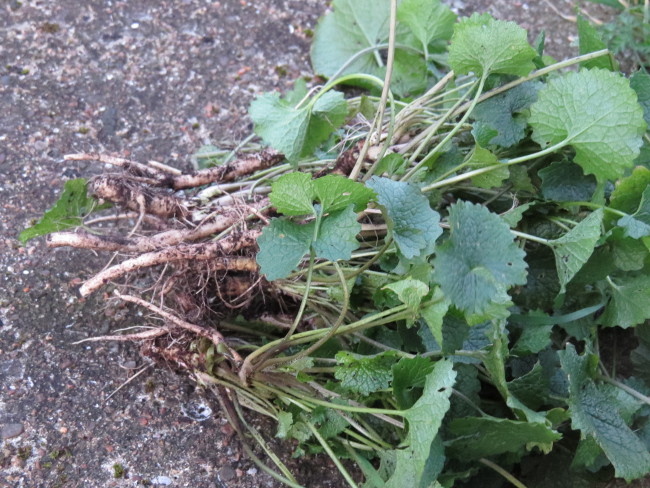
But the best medicinal part of the plant, given thier pungency, are the taproots. This then is my cream of the Garlic mustard crop.
The root has no garlic flavour though. Instead what you get is a really poky blast of horseradish-like, sinus-cleansing, microbe-killing heat!
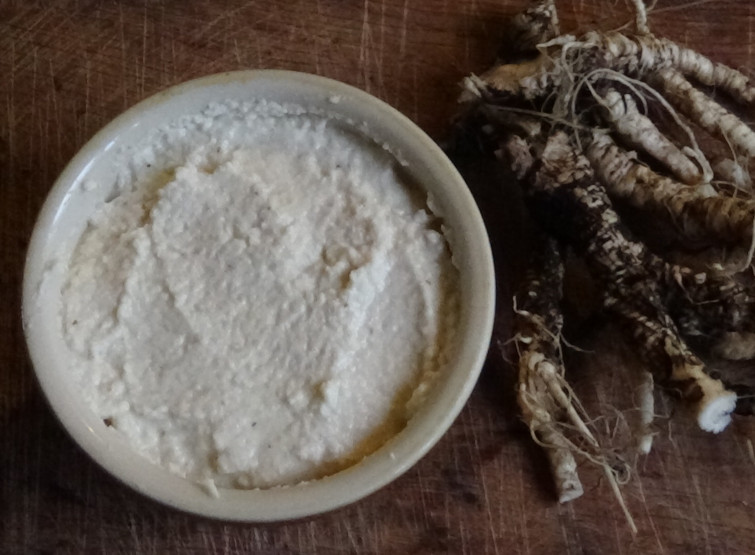
It takes just minutes to collect and only 15 mins or so to wash, scrub and chop the roots, before making something I reckon you will regularly want on your dinner table. Alliaria creme sauce.
If you like your cold meats and game, then try pairing up the garlic mustard creme with hawthorn ketchup!?