Discover the joys of foraging sweet chestnuts in the UK.
Sweet chestnut. (Castanea sativa) Fagaceae family.
One of the great delights of autumn is getting out and foraging sweet chestnuts. Its great fun and easy to lose yourself for hours hunting them down.
This article shows you how to identify, where to forage and what to do with your harvest. Before then, don’t forget to browse through all the other pages such as the guide to harvesting medicinal and edible wild plants. Of absolute importance, before you get your wellies on, is to brush up on the poisonous plants of Britain.
Sweet chestnuts are a really versatile and nutritious food. People in Europe have been collecting these spiky green parcels for thousands of years. When you know what’s in them, it’s easy to see why!
Aside from food, we have been using sweet chestnut wood for all sorts of building applications for milennia. To get the best wood, coppicing is employed to promote the growth of numerous stems. Carpenters and joiners like the wood for its grain and colour
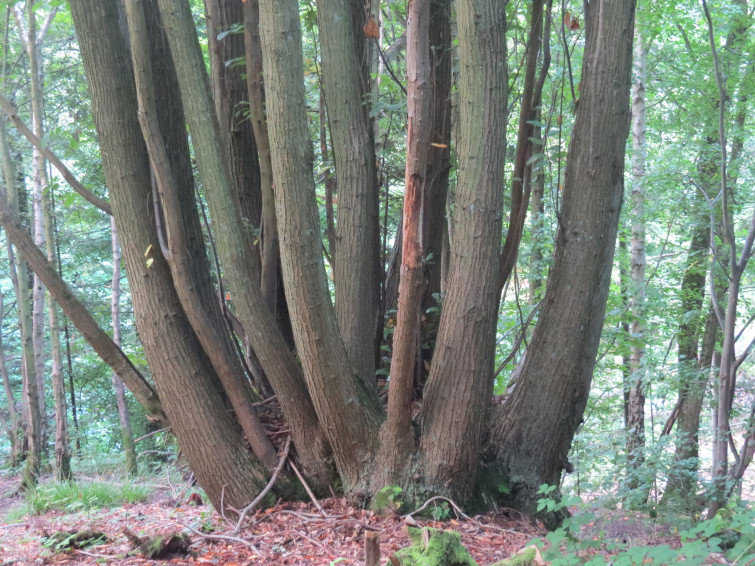
You can find both old and new sweet chestnut coppicing in various areas of Britain.
For as long as I can remember, sweet chestnuts have been a staple of autumn and winter evenings on our high streets. Fire-heated braziers start appearing from around the time of samhain/halloween in many major cities.
Whether this continues to be the case during the ongoing Covid-19 pandemic, we will have to wait and see. If the first six months of Lockdown and continuing restrictions on our freedoms is anything to go by, more people are set to go foraging sweet chestnuts in 2020.
Anyway, buying them can only ever offer a fraction of the pleasure that you get from foraging them for yourself. Foraging sweet chestnuts is a tremendously fun family day out.
It gets quite exciting, to scrape back the carpet of fallen leaves and open shells found under larger trees. And all the while, full concentration is needed, as well as a lot of looking around in expectancy, or hope.
If you have found the right tree, then soon enough the shiny dark brown fruits start to reveal themselves. It’s not long before your peripheral vision starts to register them, and then its really game on!
Sweet chestnut yields can be heavy in a good year, enabling you to find lots of them in a small patch of the ground directly under the tree. So foraging sweet chestnuts can be a fun and rewarding family day out.
What’s in a name?
The generic name Castanea, has interesting origins. This is the old Latin word for the tree. Our common name Chestnut, comes from an older English name ‘Chasten nut’, believed to be derived from the old French word ‘chastain’ (the new French word is chataigne).
From a quick search online, it appears this French word is derived from the old Latin name Castanea. This in turn seems to stem from the Greek word ‘Kastanon’.
The species name sativa, is a common plant species name as any gardener will know, and simply means cultivated.
The Spanish wooden percussion instrument – castanets, are typically made from this plant where it grows.
How to identify Sweet Chestnuts
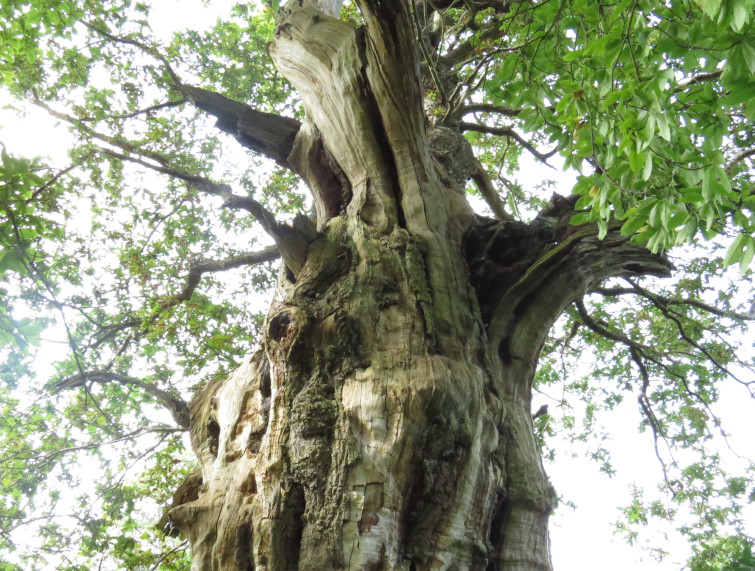
Sweet chestnut cuts a distinctive figure in many parklands. It can grow up to 35 metres. These trees are known for their broad crown, a sometimes massive trunk girth, and their longevity.
Bark
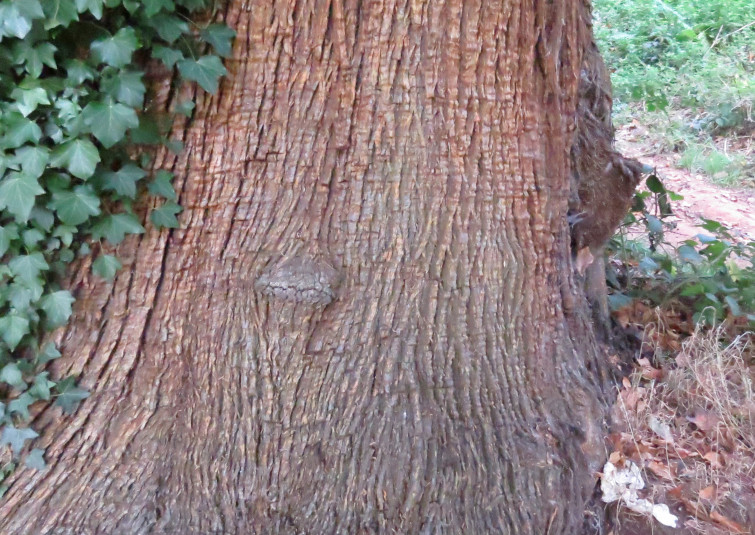
Tree barks can be tricky to positively identify a plant with because they change over time. You really need to get to know the plant over time as it ages.
Sweet chestnut bark has narrow fissured grey-brown bark occasionally reveals blueish-green colours. I would guess this comes from its stores of copper, given that the nuts have relatively high concentrations of this metal, weight for weight.
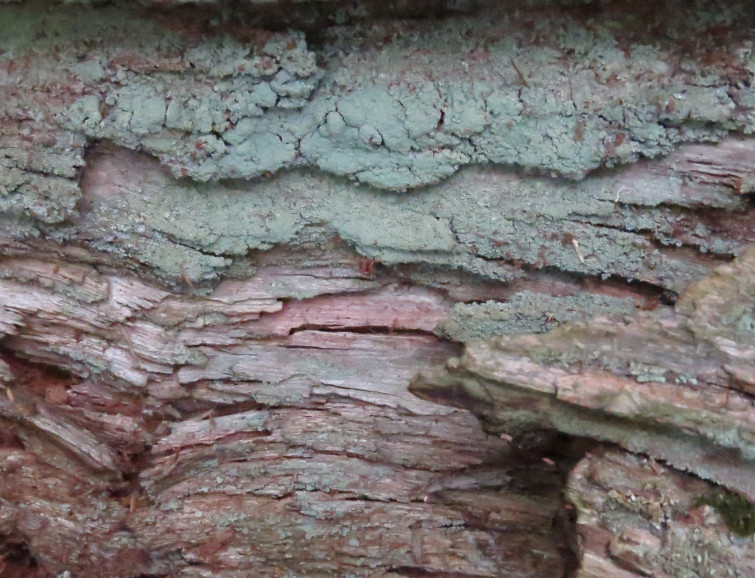

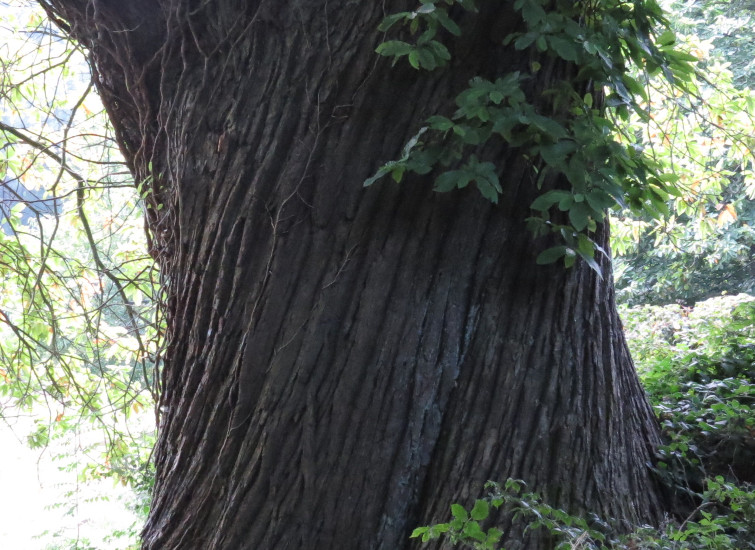
A variable habit you may come across is the plant producing a distinctive spiralling bark pattern.
Not all sweet chestnut trees you find will do this. Maybe its an adaptive response to allow ittocatch the most available light?
Later in old age, the plant can produce beautifully gnarled burrs into eye-catching shapes, sometimes even faces! In the extensive, council-owned parkland of Ashton Court, Bristol, I stumbled across a lovely old spcecimen.
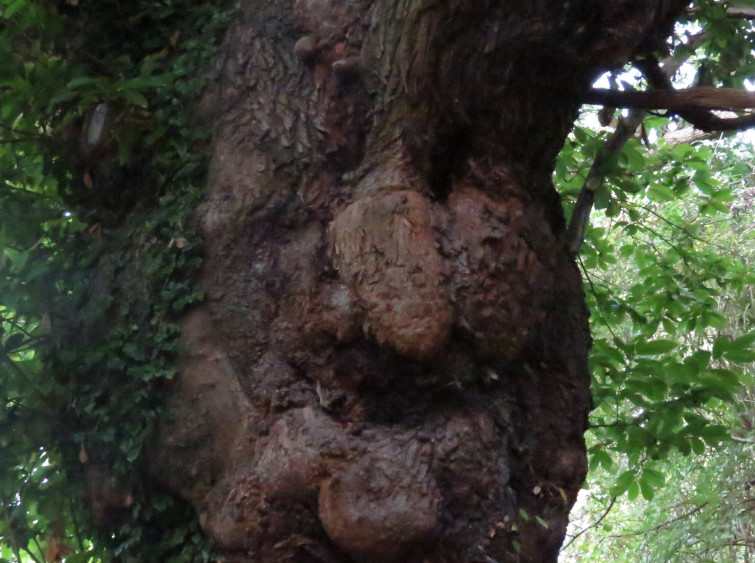
If you visit her, you should be lucky enough to take home a great haul.
Leaves and buds
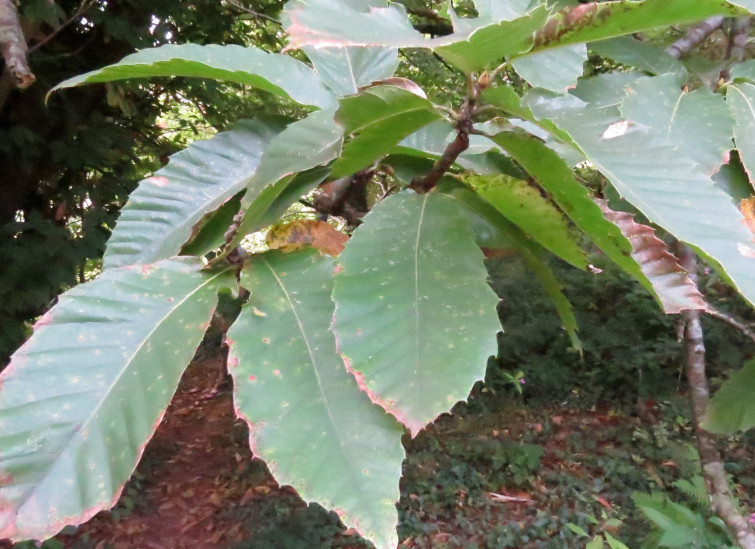
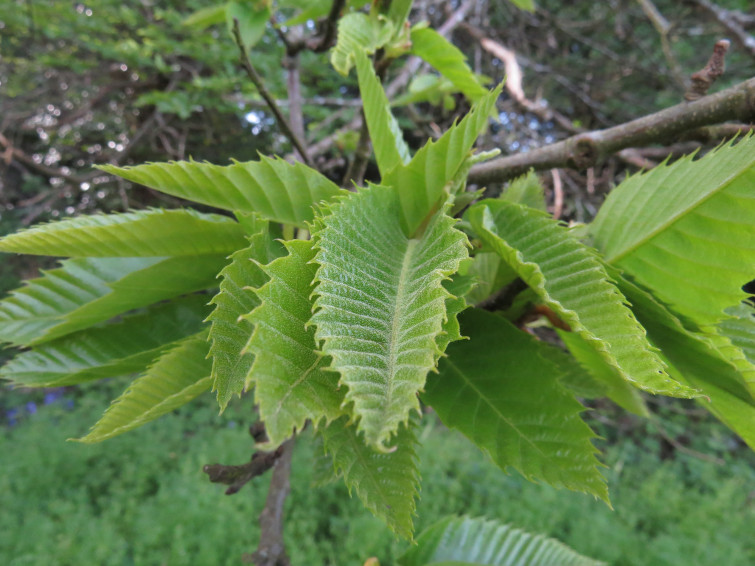
 Its glossy green leaves will reach 20 -30 cm long, with margins that are reportedly unique when comparing it with any other member of the widely found British flora.
Flowers
Habitats to go foraging sweet chestnuts
Sweet chestnut is found in the vast majority of the UK. As this distribution map shows, it is absent only in parts of central Wales, northern England and about half of Scotland.
The plant is widely planted, and ever since the Romans brought it over, has been naturalised in many of our woodlands.
So far I have found the larger more productive specimens will mostly be found in parklands and estate gardens.
The plant has been written about as an ‘honorary native’, due to the ease in which the plant seeds and grows here in the UK.
The nuts are the new joy of October for me, just when any seasonal adjustment disorder may begin to kick in.
During the last few years, I have travelled quite a bit around Britain, but in 2017 have I found a massive haul in Devon, which I’m hoping is replicated this year. Fingers crossed!
Harvesting sweet chestnuts
When it comes to harvest time, I have read some authors saying that September is the start of the season. I disagree and reckon there is really no point in foraging sweet chestnuts earlier than October.
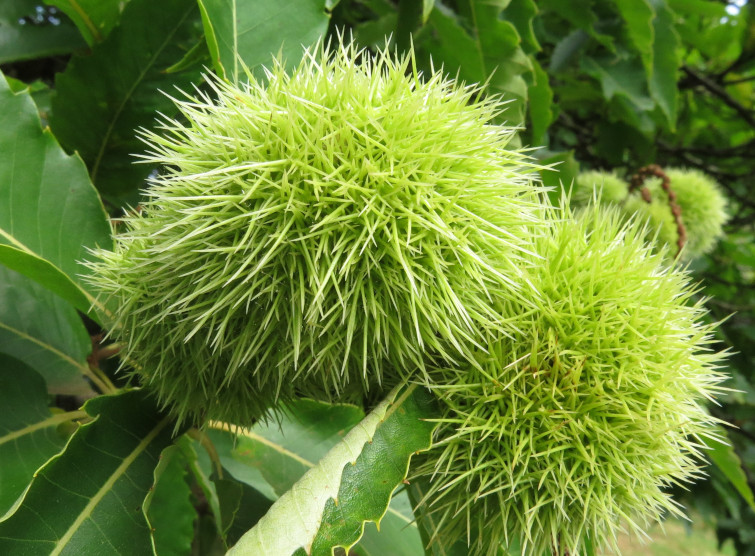
This is because any that have fallen will have no real flavour when green and unripe. If it was hazel trees and hazelnuts, then I would go a little earlier than prime-time, in order to rescue some of the harvest from the robbing rodents!
You can begin looking for the ripe chestnuts in early October following a period of windy weather, when numerous green spiny shells will be easily found under and around the base of the tree.
However, many of these may also contain nuts that haven’t yet quite ripened, and naturally require a period of a few more days in their shells to finish off their brown colouring.
Handily, the green nut shells begin to brown and split of their own accord when the fruits are pretty much ready for picking.
When foraging sweet chestnuts, you find them more easily on the floor although they will persist on the tree. If you want the nuts out of the bigger specimens, you will need to employ a stick, as always done with conkers.
Handling the spiny shells and freeing the prize can be a difficult business. You will likely need gloves, especially with the older fruits. A strong heal on sturdy boots greatly helps in breaking the freshly felled cases open.
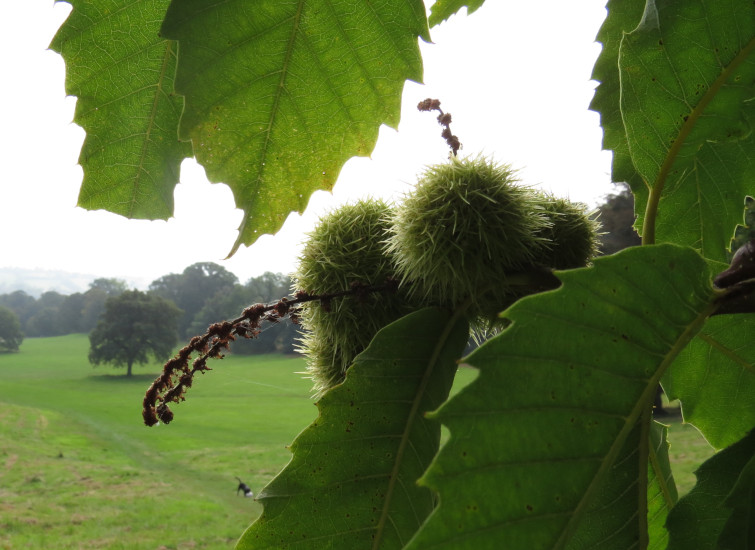
Inside the cases, the nuts from the true wild species will be present in twos or threes, whereas nuts gleaned from the cultivar known as ‘marron’, will be on their own and substantially larger than the wild ones.
Traditional and contemporary uses of Sweet chestnuts
In the kitchen, sweet chestnut is a superb and versatile ingredient. It is one of the few nuts that contain little fat; instead, they have a surprisingly large amount of water. This means they are not suitable for processing into oil, but they do produce a great flour.
If you have a sweet tooth you will love the Turkish recipe for ‘Karyoka’, a gorgeous, almost fondant like chocolate covered sweet.
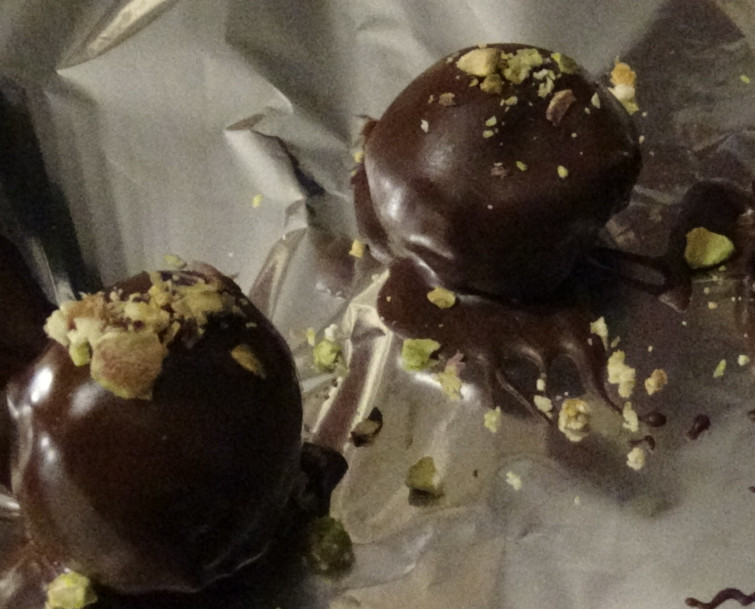
It is made by boiling the nuts for 10 mins or so, and mashing them once de-shelled, before making and adding enough sugar syrup to turn the mashed sugary chestnut mixture into a reasonably thick, dough-like consistency.
Then, after wetting your hands with water, take a spoonful of the creamy coloured mixture, and roll into a small ball in your hands, no bigger than a golf ball.
Melt some high coco chocolate in a bain marie or such like, and using a spoon or fork, dip the chestnut ball into the chocolate. I find that doing it twice ensures total coverage. place carefully onto tin foil to cool.
Rapidly follow this by sprinkling pre-chopped pistachio nutsonto the still melted chocolate. Put the tray into the fridge for a couple of hours. Oh my days they are good!
Sweet chestnuts are a great source of nutrients. They provide useful amounts of B Vitamins, and Vitamin C, unsaturated fats and dietary fibre, as well as copper, potassium, manganese, and selenium.
As a starchy food, I’ve seen them written about many times as comparable to tubers like sweet potato, yam and such like.
I can only imagine how important sweet chestnuts were to the survival of early humans in the mountainous areas of the Mediterranean Sea, and what was once called Asia minor.
I don’t think it would be too dramatic to argue that without this plant, humans would have struggled to the point of it being impossible to sustain themselves.
You can use chestnuts for a few delightful seasonal treats, including chestnut purée, chestnut paté; turning it into flour for pastries and cakes, making chestnut stuffing,
On a visit to Devon recently, I was inspired by a friend into researching and experimenting with chestnuts more. And so followed a great tasting wild mushroom and sweet chestnut paté.
This was only surpassed by our next effort, a sweet chestnut and port pate. Oh my days! Its so fantastic. Some how with the right amount of port, shallots, garlic and seasoning, it takes on lots of the flavours as well as the textures of a liver pate.
So in a few weeks time, just head to your local sweet chestnut trees and make like a squirrel. You would be nuts not to!
For all of you who live in towns or cities, this urban foraging guide tells and shows you what plants to look for and where to go foraging for them.
If you want to know more about herbal medicine plants, then take a look at the page on medicinal plants, constituents, and actions.
Happy foraging!