Foraging guide to identifying and using edible Magnolia flowers
When you go foraging for edible Magnolia flowers, you will hold in your hand something that has been on this planet for 100 million years! This is the world’s oldest flowering plant.
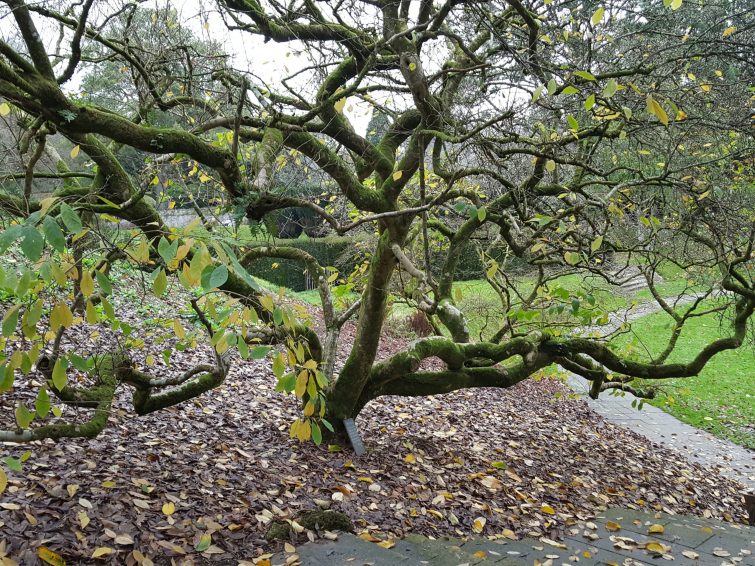
The various Magnolia species are special plants with no doubt. Although not in any way a wild or naturalised plant here, they are plentiful enough and interesting enough for foragers.
Their gorgeous, showy flowers evolved before bees appeared on the planet! Fossil records have proved that these trees existed in different sub-tropical regions approximately 100 million years ago, and were initially pollinated by beetles.
Given how much energy and nutrients that these large flowers need, it is of no surprise that our more recently evolved large trees have dramatically reduced the size, while increasing the numbers of flowers (see any catkin). Rather than rely on insects, many trees now use wind as their chief pollination method.
There are approximately 210 species of deciduous and evergreen shrubs and trees in the genus. Magnolia trees are known to be native in the Americas and sub-tropical Asia.
Edible use of Magnolia flowers has long occured in their natural range. Research from ethnobotanical records provides us with patchy knowledge regarding the total numbers of species used. In summary, only a small number of the Magnolia flowers have documented use as food.
The species listed here are reported to be edible from a range of ethnobotanical sources, so for all you owners of Magnolia plants, you will need to know the species before experimenting with them.
List of Edible Magnolia flowers
I’m not a garden owner or a Magnolia connessieur, but I am a plant hunter, researcher and avid photographer. So this list is not the end of the story. Photos of the species, when positively identified, will appear here in due course.
Magnolia coco (evergreen)
First grown in the UK in the 1780’s. This small shrub / tree grows to about 3 – 5 metres high. Flowers are found at the end of branches and not from the leaf axils.
Magnolia denudata
This deciduous shrub or small tree has fragrant, mid-size flowers approximately 8 cm long. Also known as the lily tree or Yulan Magnolia, this species can grow to a height of 9 or 10 metres. Regularly referred to as the prettiest of all the Magnolia species.
Magnolia grandiflora (evergreen)
Very large flowerbuds and flowers. This is a plant that will be seen trained up walls.
Magnolia hypoleuca (syn M ovata)
A deciduous tree that can reach more than 25 metres. Commonly called the whitebark Magnolia, this plant is hardy enough to be grown in most parts of the UK.
Magnolia kobus
A small and slender deciduous tree that grows to around 10 metres. Does not produce flowers until it reaches 12 – 15 years old.
Magnolia mexicana
This is a large evergreen tree that can reach between 25 – 30 metres high. The flowers have been used extensively as medicine for heart conditions, in thier native range. It is said the flowers mimic the actions of compounds from the well-known heart medicine foxglove (Digitalis purpurea).
Magnolia pterocarpa (evergreen)
A tall tree that can reach 20 – 25 metres high. The flowers generally open in April and are typically 12.5 – 15 cm across.
Magnolia x soulangeana
This hybrid Magnolia is probably the one you will find most often here in the UK.
What’s in a name?
Magnolia is one of a number of plants that has the same scientific name as its commonly used English name.
For me, the etymology of rhe name is disappointing because the name was simply given in honour of the French botanist and physician Pierre Magnol (1638 – 1715). Surely he tried eating them?
Botanical description
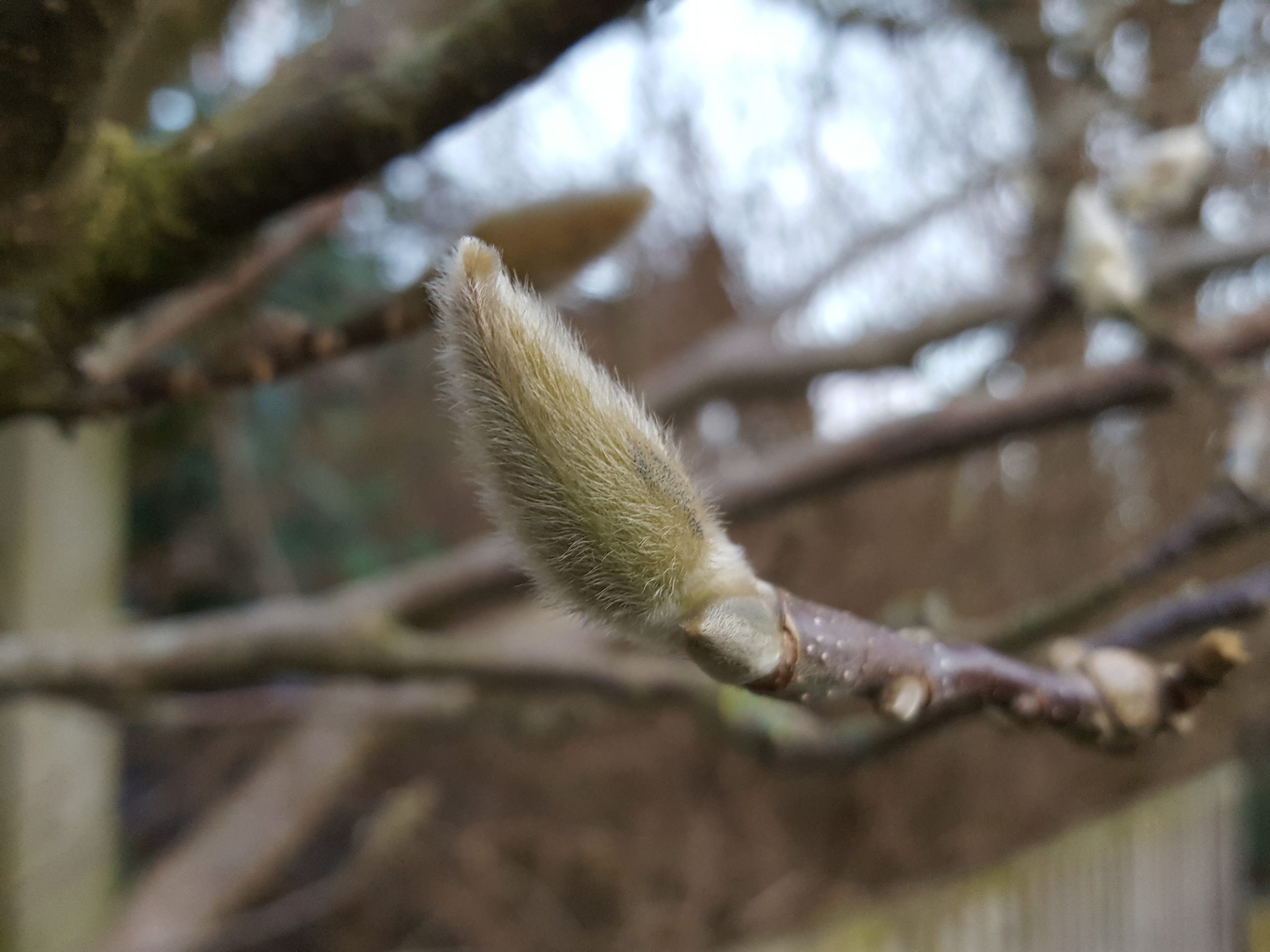
The deciduous Magnolia trees happen to be more distinctive and therefore easier to identify when they’re in bud and flower. The shape, size and smell are key. From my experience of foraging in Britain, nothing else looks like them. Should you need it though, my foragers glossary of terms will help.
Leaves: Most species have elliptical to oval-shaped leaves. They are usually a glossy green and often with a waxy cuticle layer and entire margins.
Petioles: Anywhere from 1 – 5 cm dependent on species.
Twigs: Young new twigs are red-brown or green coloured depending if it’s deciduous or evergreen. The twigs can be initially downy hairy when very young.
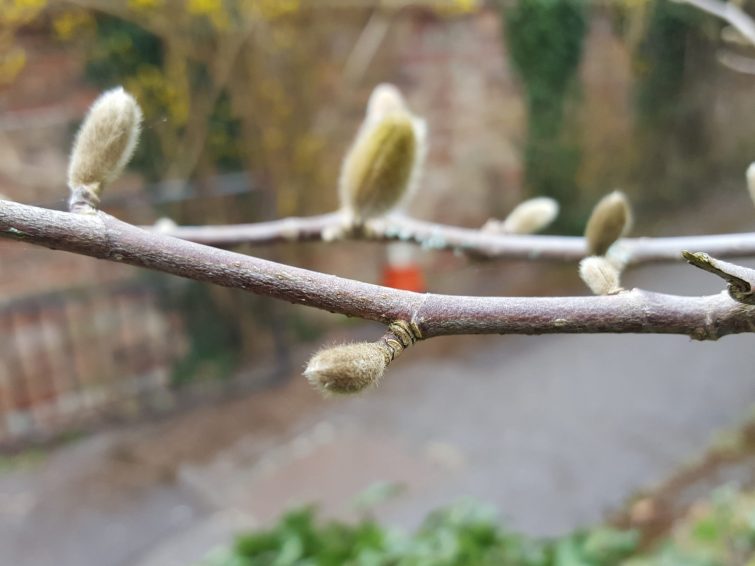
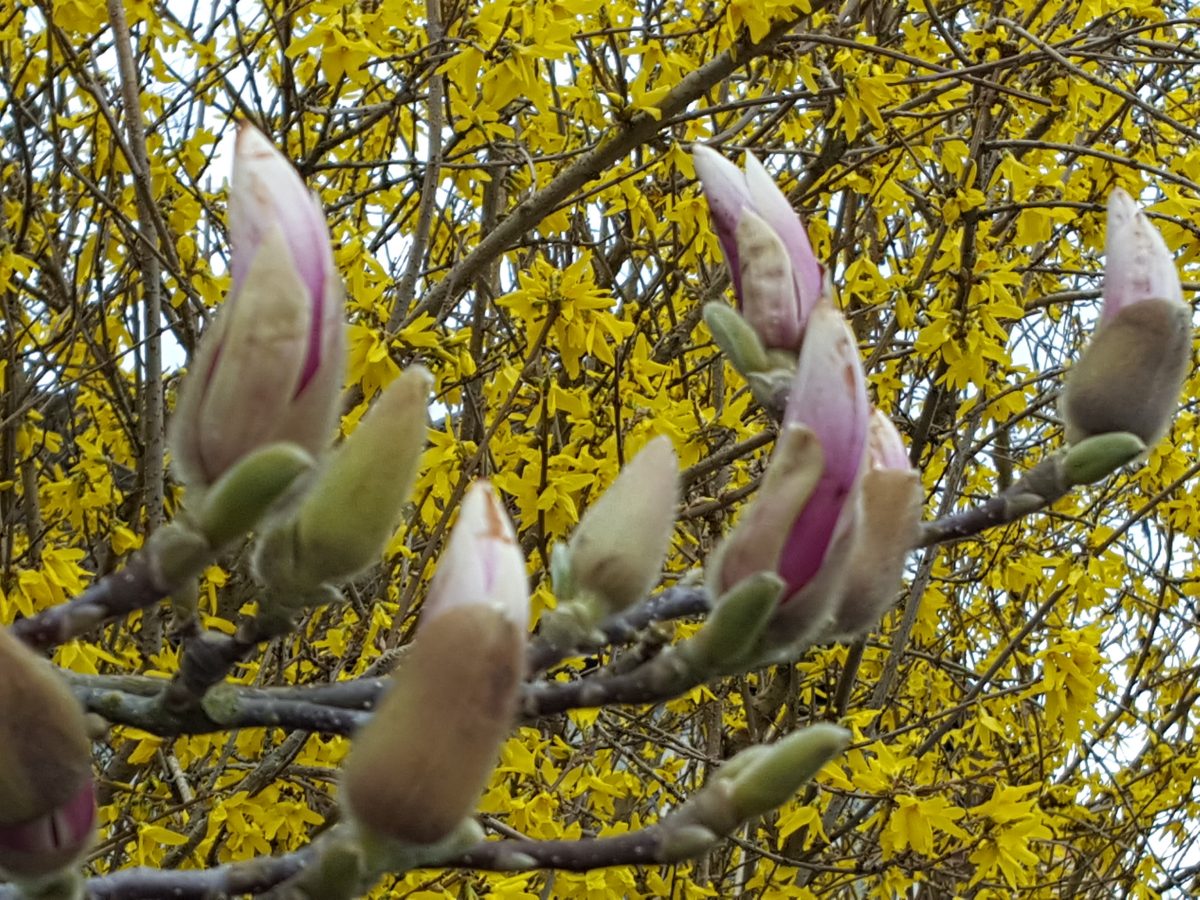
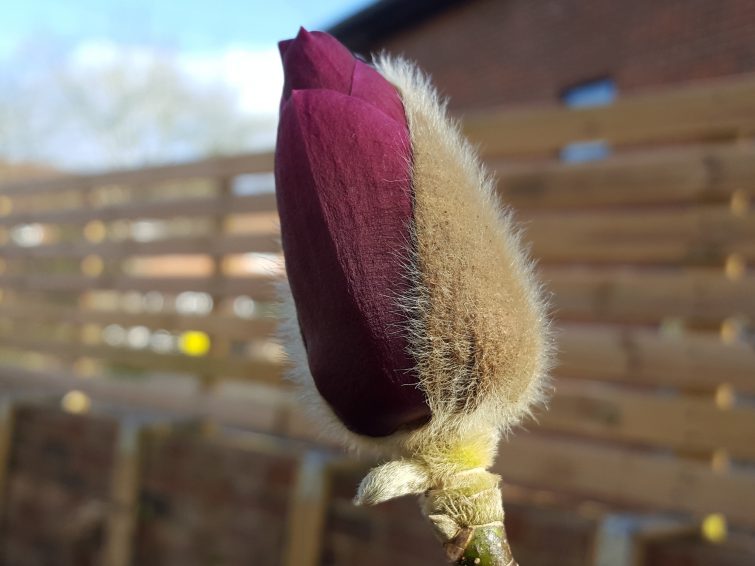
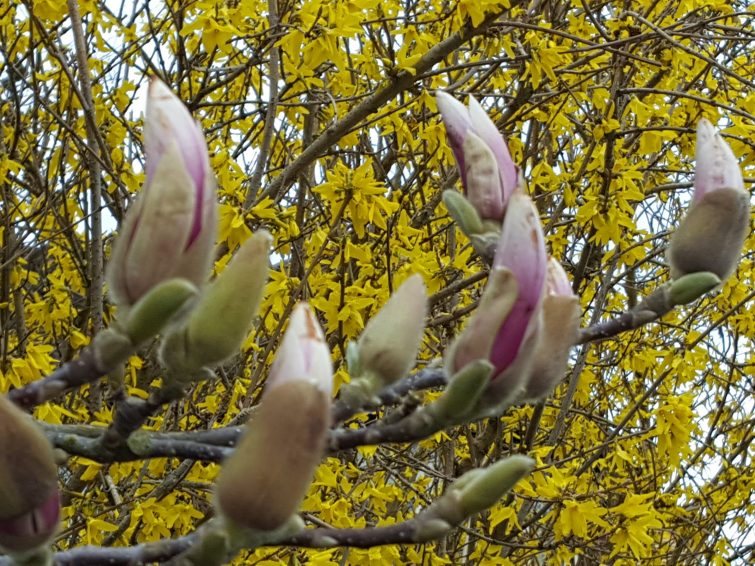
Buds: Large, yellow-brown, and more or less oblong to oval-shaped. They have a slightly curved and pointy tip and are covered in soft downy hairs. Some species have small buds, while others including Magnolia grandiflora, have large buds, around 5 -8 cm long.
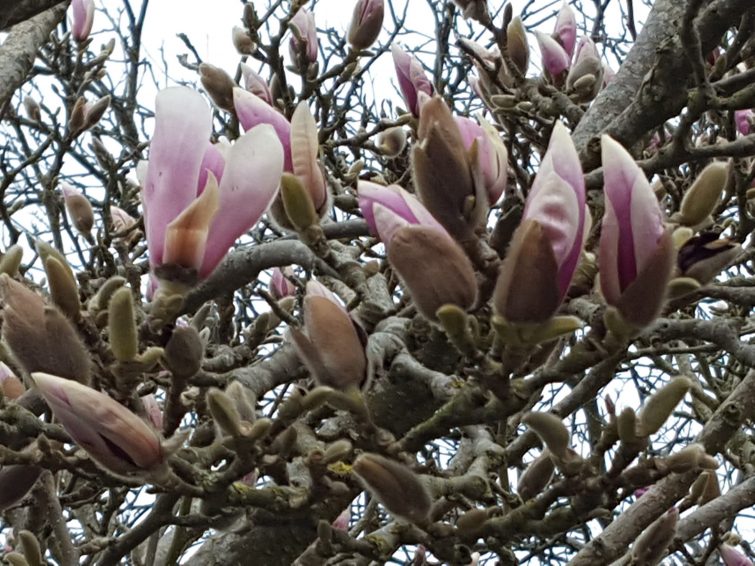
Branches and trunk: The younger branches have a pinkish tinge to their smooth grey-green bark. Numerous light brown lenticels can be seen all over the bark.
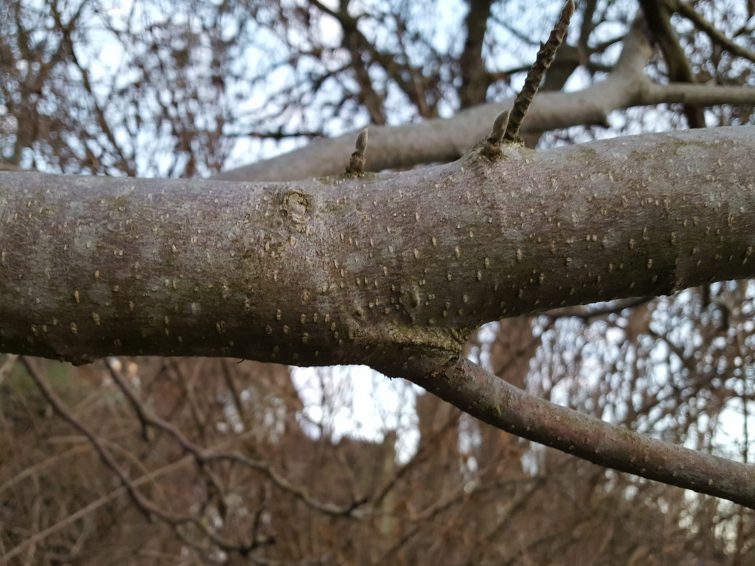
Mature bark: Mostly grey and smooth with occasional whiteish spotting. Some species develop a warty appearance.
Flowers: Huge, showy flowers, typically with 9 large pink-white coloured tepals.
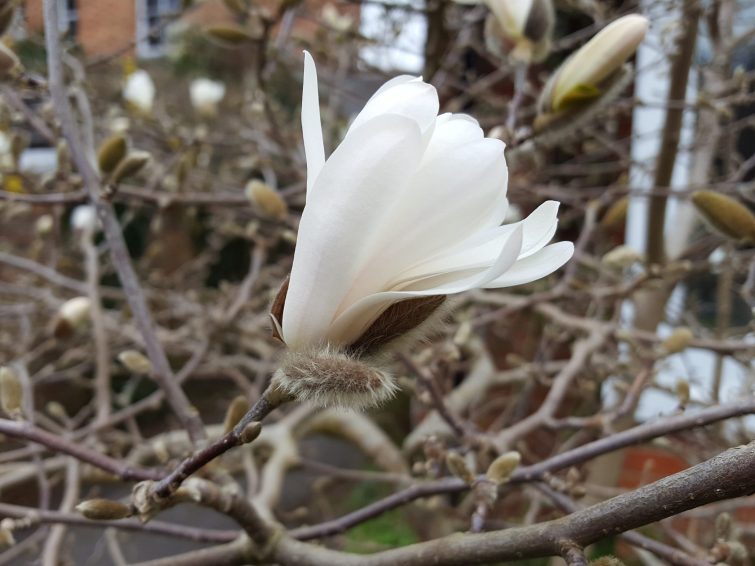
Flowering season: From around the spring equinox in March, through April and into May. The various species of Magnolia all come into flower with stunning effect.
Fruits: Conical, scaly and often described as like a pine-cone.
Habitats: This plant is only found in the British Isles in parks and gardens and as amenity plantings.
Parts used: Young flower buds. Flowers.
Harvesting: Snip off the flower buds just below the base. For open flowers, the kindest thing to so is to remove individual ‘petals’ from a number of different flowers.
Edible uses: The buds can be pickled as they are. Or made into sugar syrups, cordials and steeped in honey. They can be dried in a dehydrator and powdered. Try them finely chopped and sprinkled over salads. Flower petals can also be pickled and again made into cordials or vinegars.
Other notes: A quick reminder to always test your tolerance with any new wild food plant. Toxicity was previously discussed in this article on Britain’s poisonous plants. Beginner foragers can also add to or hone skills here.
More plants coming soon! Happy Foraging!