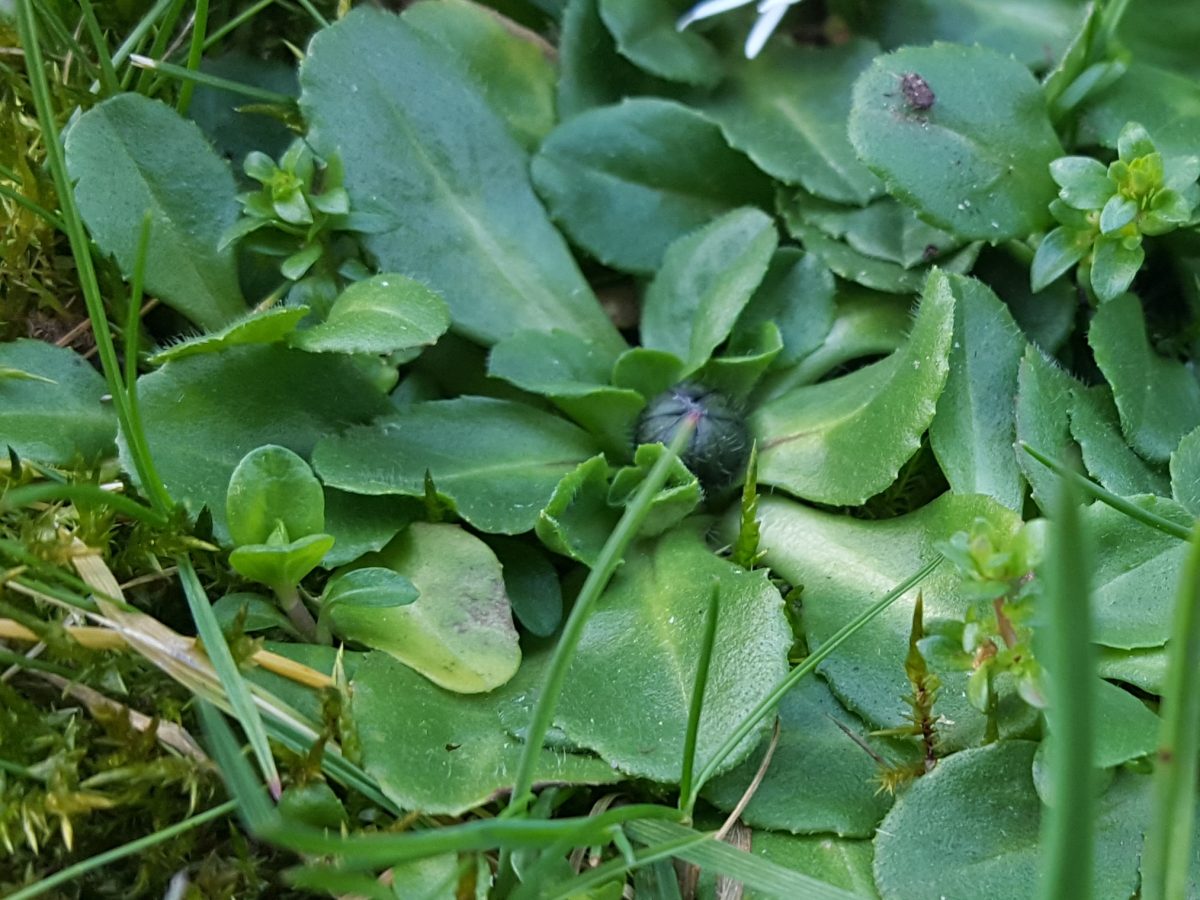
Learn how to identify common daisy without flowers, and discover its traditional medicinal use
You might think that this foraging guide to the common daisy wouldn’t really require much description. Well, yes that’s true. At least it is when the plant is flowering.
I have tested dozens of people’s knowledge of the plant, by showing them just a leaf or a leaf rosette without flowers. Less than half of them knew the plant.
These days, the daisy is generally our constant flowering plant companion. During the spring and into early summer, you can continuallly find, and probably have found, ridiculous amounts of them on show!
As the old country saying goes, when you can take a few steps with seven daisies underfoot, spring has truly arrived!
What’s in a name?
The English common name ‘daisy’, as many people will already know, is simply a corruption of the name ‘days eye’. Prefxing the name with ‘common’ helps distinguish it from other daisy species such as the ox-eye daisy.
Daisies are now ever-present flowers in a warmer climate. They open with the morning light and close whenever the sun goes.
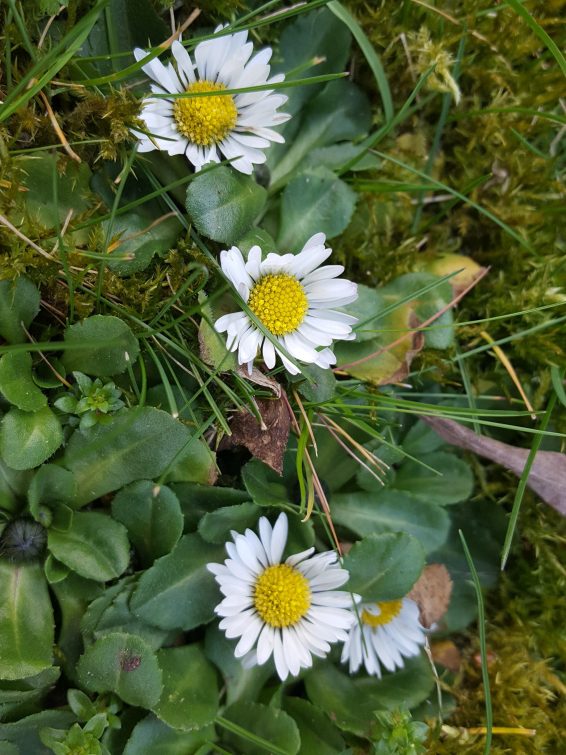
The generic part of the scientific name, Bellis, stems from the Latin word bella, meaning beautiful. Anybody who has made daisy chains knows this to be true. The specific name perennis, simply denotes the plant as a perennial species.
During the 16th and 17th centuries, herbalists knew it also as the ‘bruisewort’, testifying to one of its traditional medicinal uses.
I like the alternative common name in Scotland, where it used to be affectionately known as ‘bairnwort’. This relates quite how captivated children are with it, and how much they love playing with this bright little herb.
Botanical description to identify the common daisy without flowers
Leaves: Spoon-shaped leaves that taper towards the base. These are typically between 5 – 8 cm long and approximately 1 – 2 cm wide.
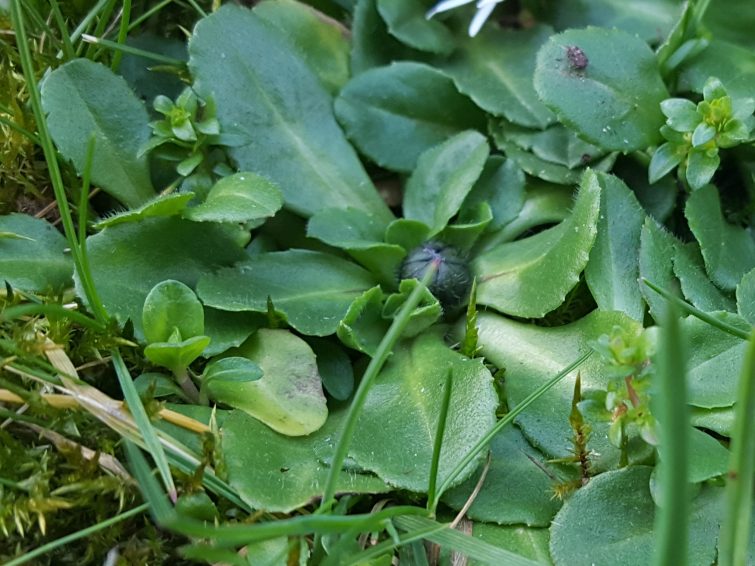
The dark green leaves are hairy with a few teeth (usually 4 – 7) on the margins. The central white vein widens at the base. On the undersides, the mid-rib is raised.
Daisy plant chemistry has evolved bitter and aromatic components, meaning that insects don’t like eating the leaves. In occasional and regular dietary amounts, this plant is not toxic to us. There are people with allergies to this plant family, who will not be consuming, of course.
The daisy will only be seen growing leaves in rosette form. It gains a competitive advantage from its growth habit because the prostate leaves are so flat and low to the ground, nothing else can grow underneath.
Petioles: Short with a flange of leaf either side. Often purplish at the base and always with fine ciliate hairs.
Stems: Daisy flower stems are short and round. They are always without leaves, and reach between 3- 12 cm. In common with all the daisy family plants, they evolved a flower stem producing a solitary, terminal flower.
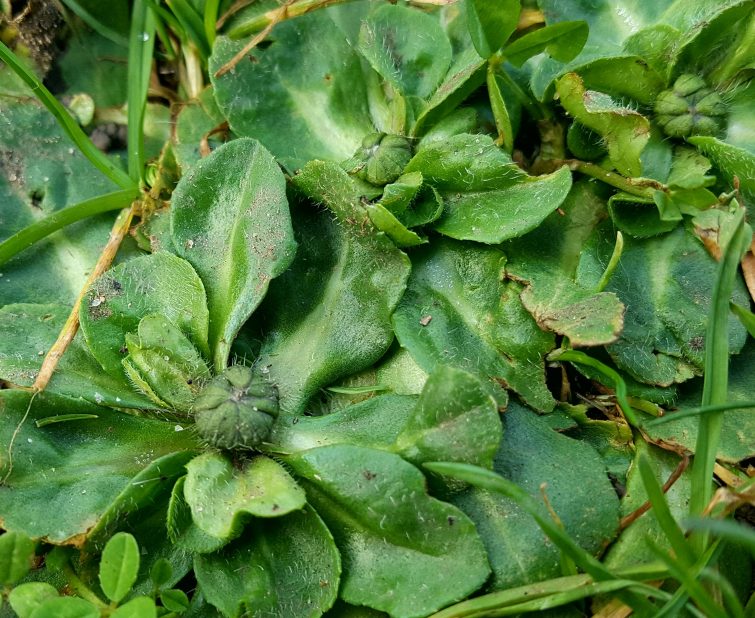
Roots: This is a herb wirh rhizomes and stolons, allowing it to continually spread and colonise large areas in grassland.
Flowers: Daisies have a composite inflorescence. The bud forms an involucre of narrow, black-tipped bracts. On opening, the white ray-florets are often beautifully crimson-tipped. These thin ray florets encircle more than a hundred yellow disc florets. The whole flowerheads are 12 – 20 cm across.
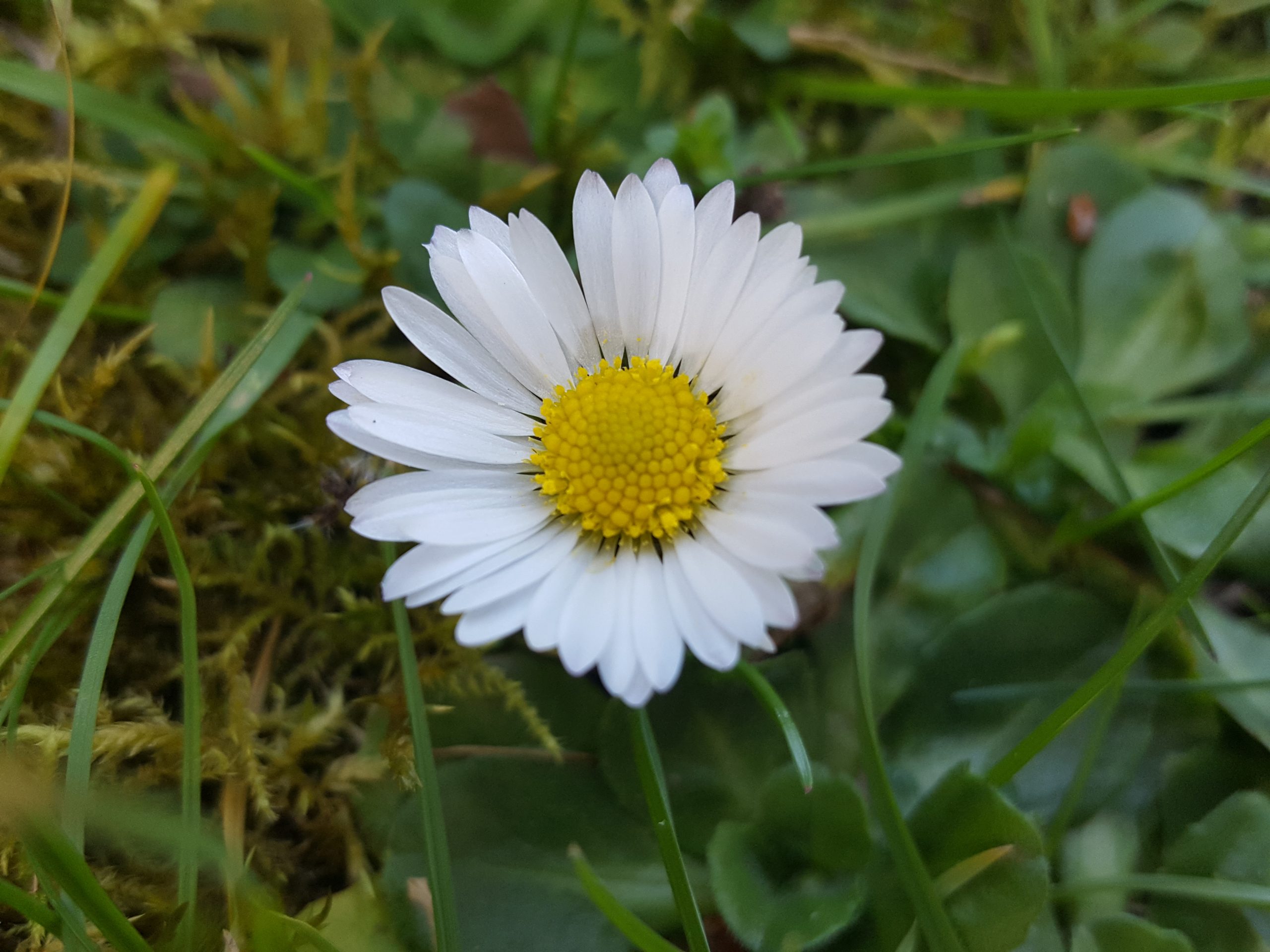
Fruits: After pollination the daisy eventually produces tiny dry achenes, without any white pappus hairs.
Habitats: Before humans invented lawns, the daisy evolved to populate various stream banks, edges of lakes, sand dunes, and any suitable and available setting in short grassland. In the British Isles this includes up to altitudes of 900 metres or so. These days you can find the plant in all manner of grasslands, also popping up in disturbed soils and wastegrounds.
Parts used: Leaves and flowers.
Medicinal use: Daisy has traditionally been used for wounds, fevers, numerous digestive ailments, and bruises. You can sense the aromatic medicinal qualities in its raw flavour. It is a little bitter and has astringency. Daisies can replace chamomile for topical use on young children.
Presumably we humans have been using the common daisy since those days 10,000 years ago, when ‘Cheddar Man’ was roaming around my manor in Somerset! On these islands the daisy is our native equivalent to the well-known herb Arnica montana.
Harvesting: You can collect leaves at any time of year. The leaves have a mild savory or some say, acrid taste, a little similar to the ox-eye daisy (Chrysanthemum leucanthemum). Simply pinch the petiole off at the base or snip off with small scissors. I then trim and discard the bottom 10 mm or so to reduce any stringy fibres.
Collect whole flower heads for medicinal and edible use. I sprinkle the white ray florets into salads and rice dishes. The flowerheads can be gently decocted or infused into water, alcohols or oils, to make teas, tinctures, salves and ointments.
Other notes: There is another really common daisy flower you may be seeing a lot of. The Mexican fleabane’ daisy (Erigeron karvinskianus) is an imported garden plant, reportedly first cultivated here during the 1830’s. I have yet to research much about the food or medicine uses of this alien exotic.
It quickly escaped into the wild, and can now be spotted in our towns and cities all over the place, especially on different types of old stonework. It loves various rocky settings, and therefore really enjoys life by the sea.
This plant has much longer, trailing stems (to around 40 cm), and much more narrow leaves. The flowers are slightly larger, and it grows in a somewhat sprawling mass in sunny spots.
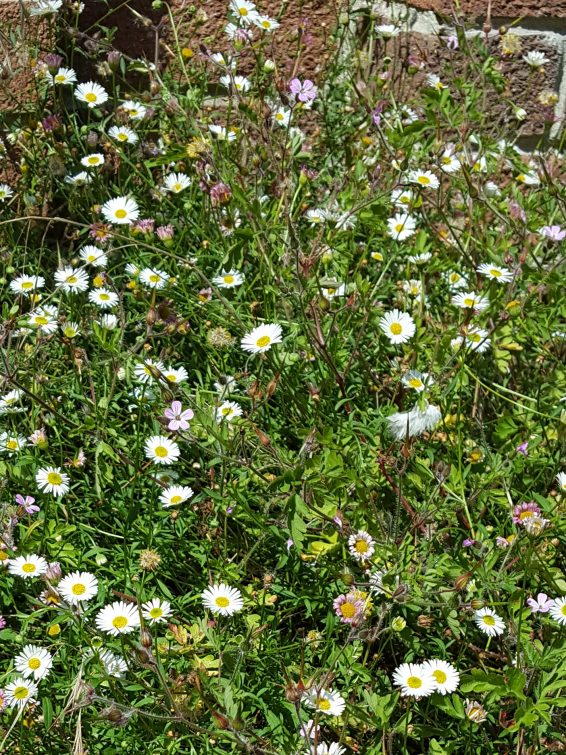
This particular plant usually appears in huge numbers growing from cracks and revices in stonework and concrete within urban areas.
More foraging guides are coming soon, on the UK’s most comprehensive foragers plant identification website.
Happy foraging!