Learn how to identify hairy bittercress and add some medicinal peppery punch to your winter salads.
Read our short wild plant guide and find out how to confidently identify hairy bittercress. This is a tasty but weedy species that divides plant lovers.
For gardeners, the plant can be a bain, what with it being a seemingly persistent presence. For foragers however, they are welcome edible plants, available during the barren winter months. Not only do they add some fantastic flavour and texture to salads, they also provide us with a welcome shot of needed and powerful brassica family medicinal constituents.
To be fair, you could skip all the following plant I/D and simply crush and sniff the plant. This will soon tell you if you have a brassica family species!
The mustard aromatics are common in this family. All mustard family plants are edible, bar the wallflower (Erysimum) species. So with all the relevant understanding about edibility, toxicity and dose, I am more than happy to know I can eat a member of this family these days without knowing the exact species.
Shock horror, Yes I eat plants without 100% positive I/D! Why? Because I can with what I know! This has taken many years of mistakes and research. I strongly advise you DO NOT DO THIS until you have met and know nearly 500 odd plant species in these islands, and know a hundred or so more down to the genus.
Acquiring positive I/D for a genus usually satisfies me these days. My interest in wild plants currently is much more in the experimental cookery and bushcraft domains, and my interest in wild foods leads me towards fungi, sea weeds and sea foods. In these realms, I always cross reference, at least twice over.
What’s in a name?
The generic part of the name Cardamine was apparantly first labelled by Dioscorides. The name stems from the old Greek word ‘kardamon’, meaning ‘a kind of cress’ although some reports also suggests it means a ‘spicy pepper plant’.
The specific epithet ‘hirsuta’, as any bearded man should know, means hairy.
The common name ‘bittercress’ tells you two important things about its flavour.
Botanical description to help identify hairy bittercress.
If any of the following few technical terms has you confused, dont fret; just pop over to our foragers glossary page.
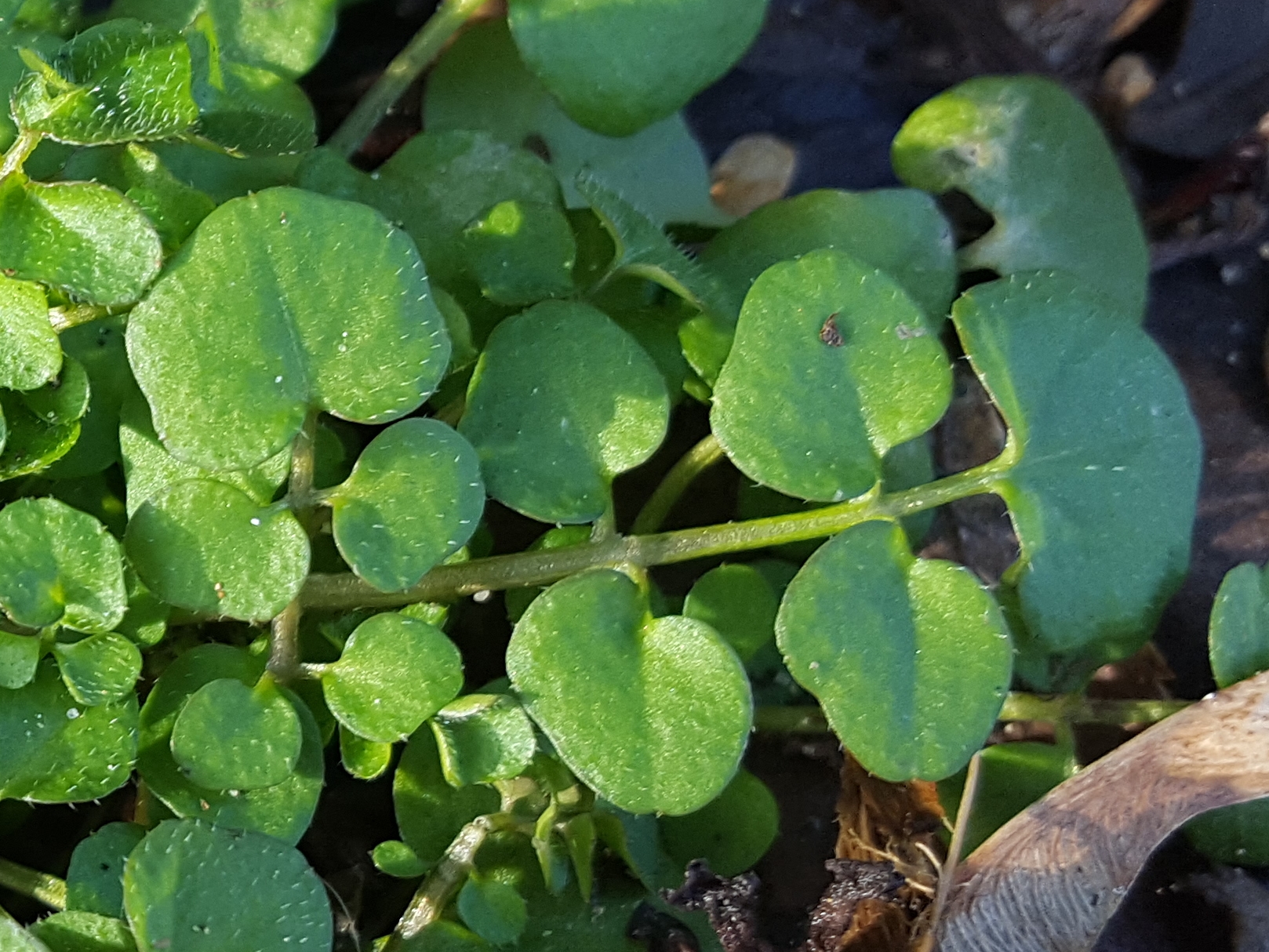
Leaves: This plant, like most of its relatives in the genus, has pinnate leaves made up of between 2-6 pairs of opposite leaflets.
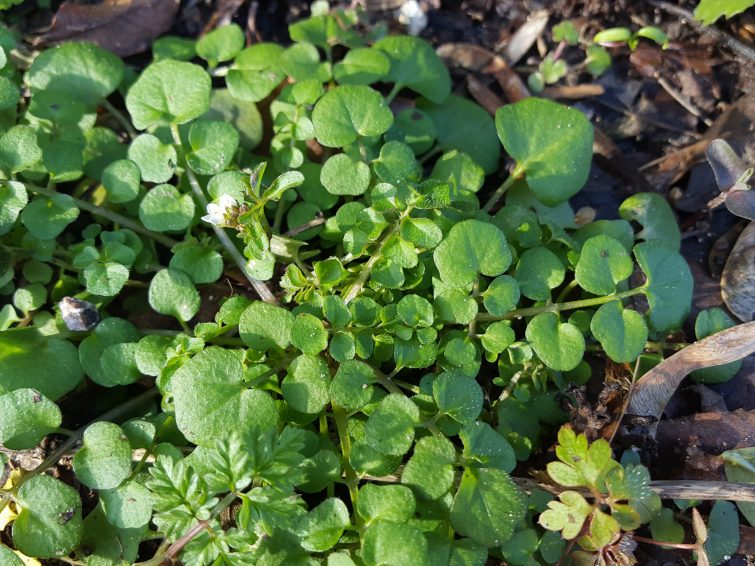
Hairy bittercress has small, hairy, oval-shaped leaflets, occasionally with mildly crenated or lobed margins. The terminal leaflet is always much larger than the others.
The leaves form attractive small rosettes, and you will typically find a number of specimens growing as rosettes together.
Petioles: Approximately 1-2 cm long.
Roots: The plant grows on a fibrous rootstock.
Stems: The small flowering stems usually reach between 8-20 cm tall. They are typically green-coloured with few branches. Their stem leaves are increasingly refined in form.
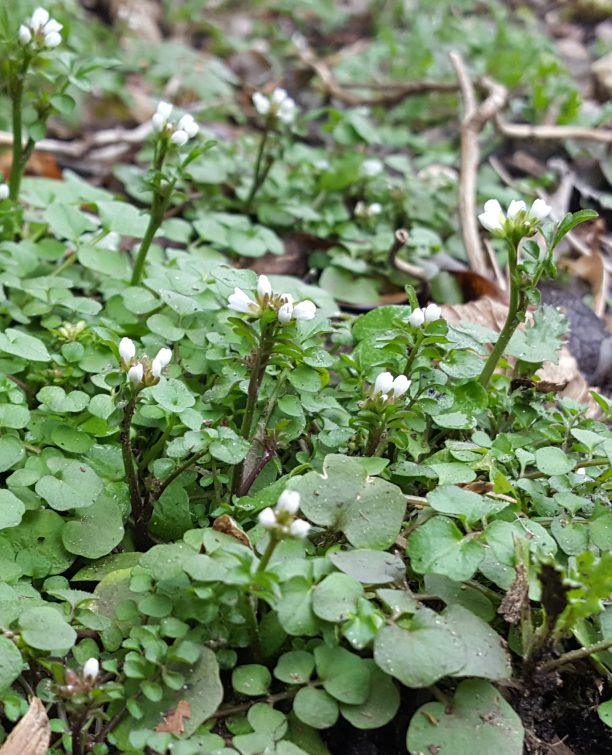
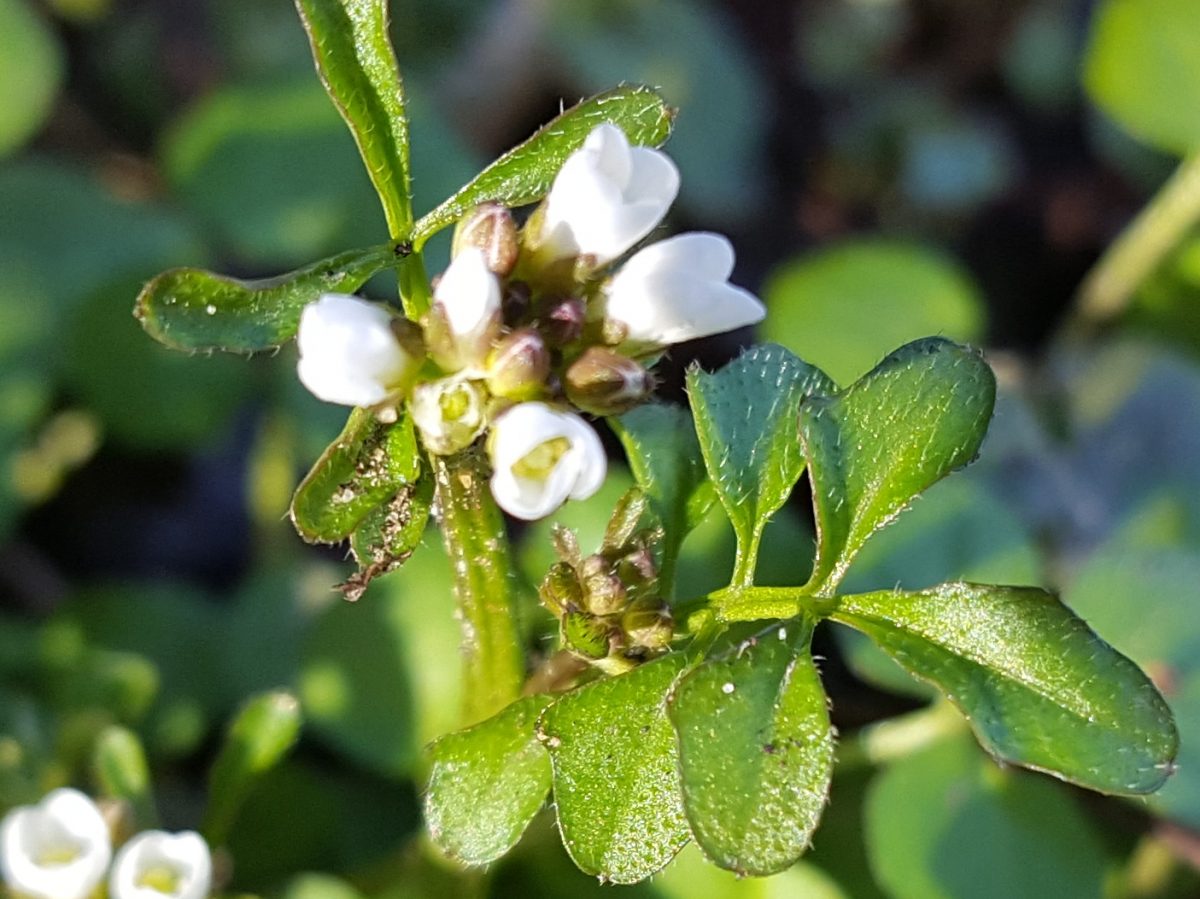
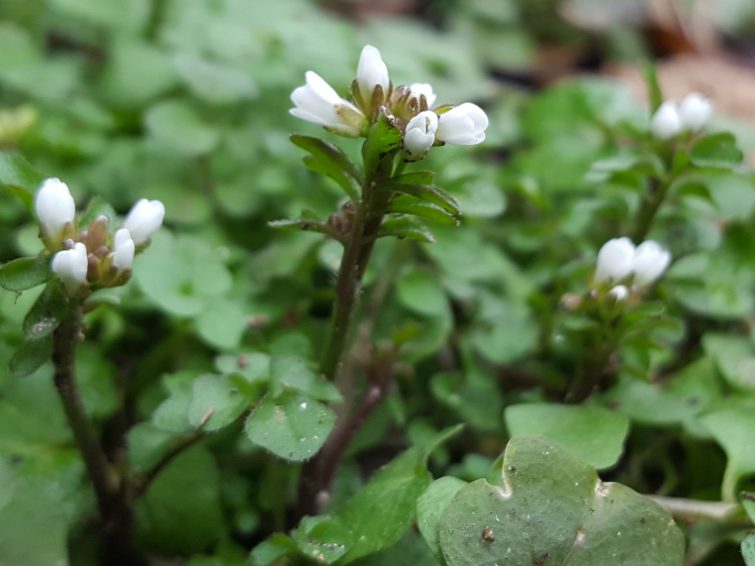
Flowers: The small inflorescence has the typical brassica family patterns. A miniscule ‘broccoli type’ raceme head forms, then stretches up and open to reveal the alternately-spaced, tiny white flowers (2-3 mm across).
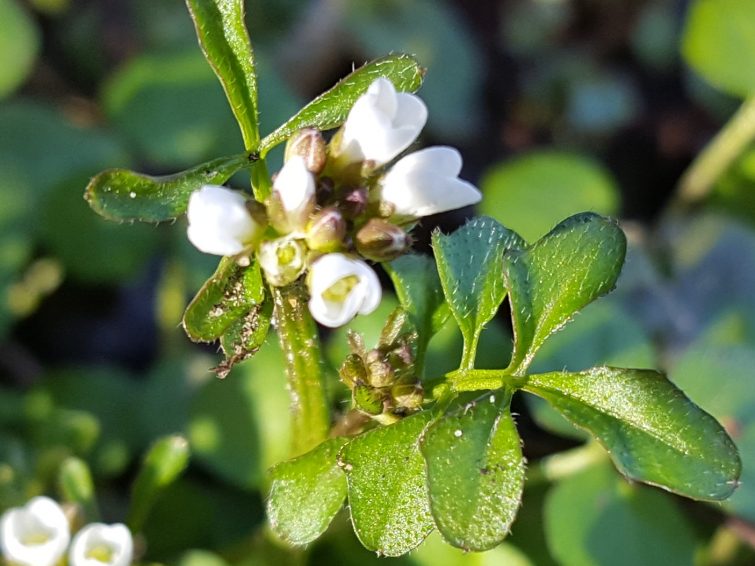
Hairy bittercress has four stamens inside the flower. Other plants in the genus, such as wavy bittercress (Cardamine flexuosa) have six.
Flowering season: This short-lived annual plant will flower as soon as it has put on enough growth, or if it gets stressed when young. When you are out foraging during February and March you can find it in flower in abundance.
Fruits: Hairy bittercress, like many brassicas, produces dry fruits. These are long thin pods with a flattened tip. They eventually split in two, revealing the tiny seeds.
Habitats: Urban foragers will notice that this ruderal species basically finds a home anywhere it can, especially liking bare and disturbed soils. During summer you can still find the odd specimen, but only in cooler, shady spots.
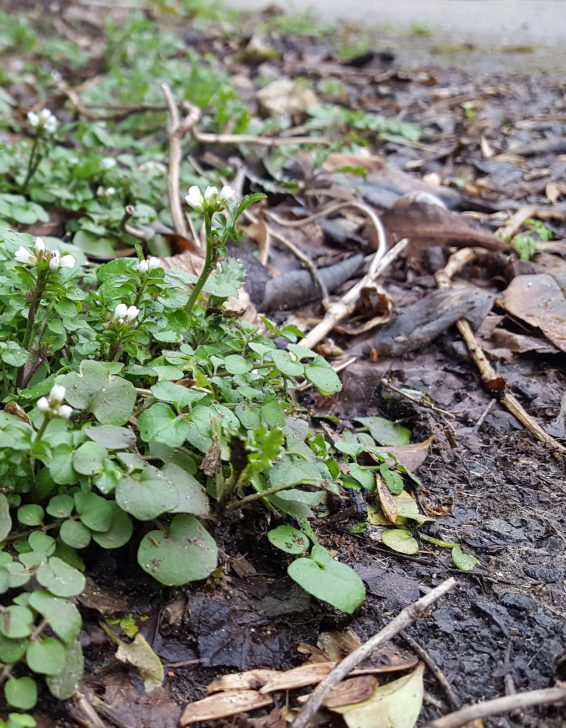
In the countryside, hairy bittercress particularly loves stream banks, old stone walls, and damp woodland clearances on suitable soils. It’s a hardy plant that can be found up to altitudes of around 1100 metres.
Parts used: The rosette leaves, and very young flowering tops.
Harvesting: You can potentially collect the basal rosette leaves during late winter, early spring, and autumn. I use a couple of methods to do this:
1) Cut the plant at the top of the roots just under the leaves, removing it just like you would a whole lettuce.
2) Pick the leaves individually, by pinching the base of the petiole with your thumbnail and forefinger.
Discover lots more wild plant harvesting tips here, with our wild crafting guide.
Other notes: All the bittercresses are edible, and the larger species found by streams are available in mid to late spring. Look out also for Lady’s smock (Cardamine pratensis), in damp meadows, and the narrowleaf bittercress (C.impatiens), with its exciting exploding seed pods!