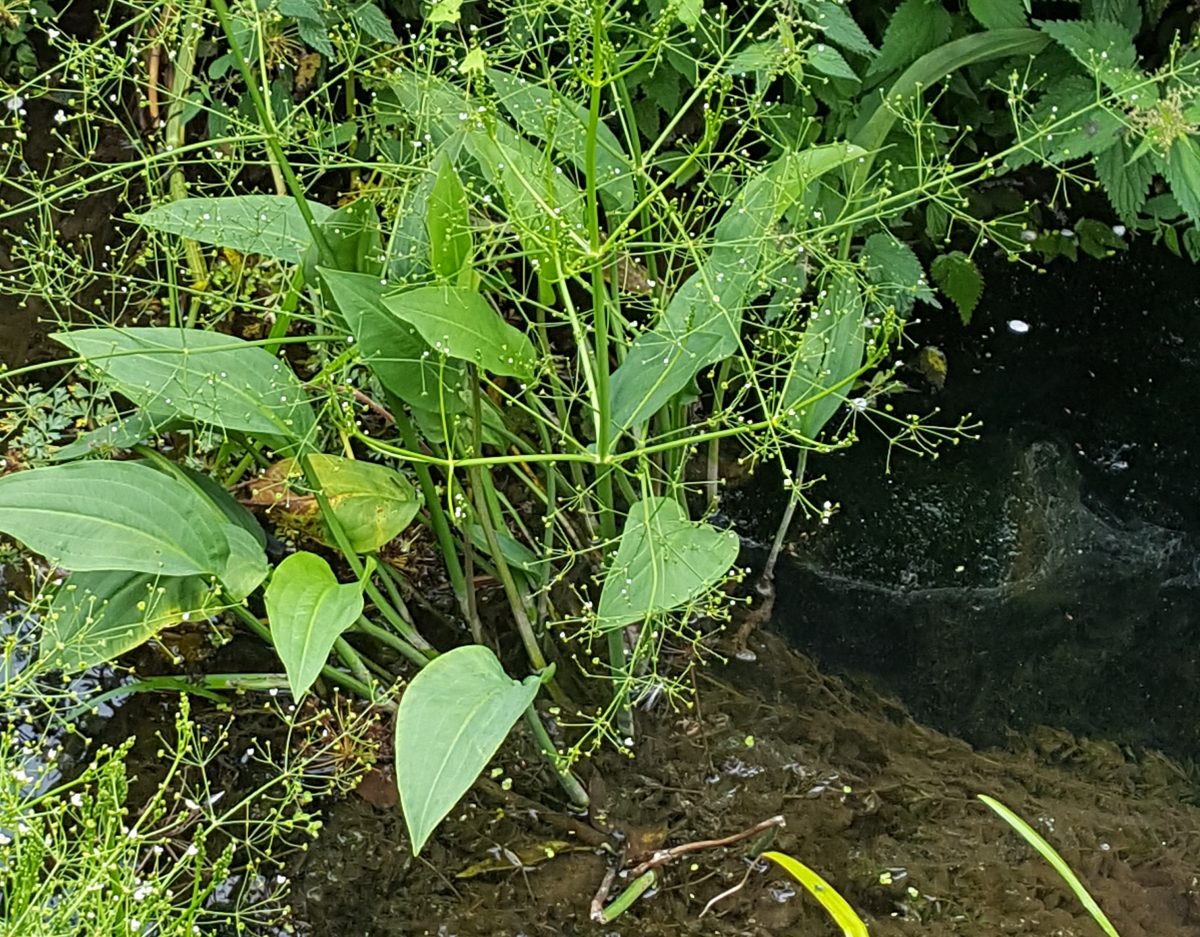
Learn how to confidently identify water plantain (Alisma plantago-aquatica) Alismataceae family.
Despite its name, water plantain is not related to the super-useful plantain herbs, previously covered here.
Unless you have a lot of running streams and drainage ditches near you, like the many rhines found near me on the Somerset levels, you may not get to meet water plantain too often.
What’s in a name?
It seems like this plant gets its common name from the similarity of the foliage to our land based plantains (Plantaginaceae family).
The generic part of the scientific name Alisma is the old Latin name for the plant, taken from the old Greek. The plant was recorded by both the Roman writer Pliny, and the Greek physician and author of the world famous ‘De Materia Medica‘ – Dioscorides.
The specific name ‘plantago -aquatica’ is derived from the Latin word ‘planta’ – meaning ‘sole of the foot’. This alludes to the size and width of the leaf. The word ‘aquatica’ simply reveals its chosen habitat.
Water plantain botanical description
A quick reminder that if you come across technical words that you are unfamiliar with, then this glossary for foragers will prove more than helpful.
Leaves: Long, broad, and elliptic to ovate-shaped. They appear rolled when first emerging. Each leaf can grow to around 25 – 30 cm long and between 4 – 10 cm wide.
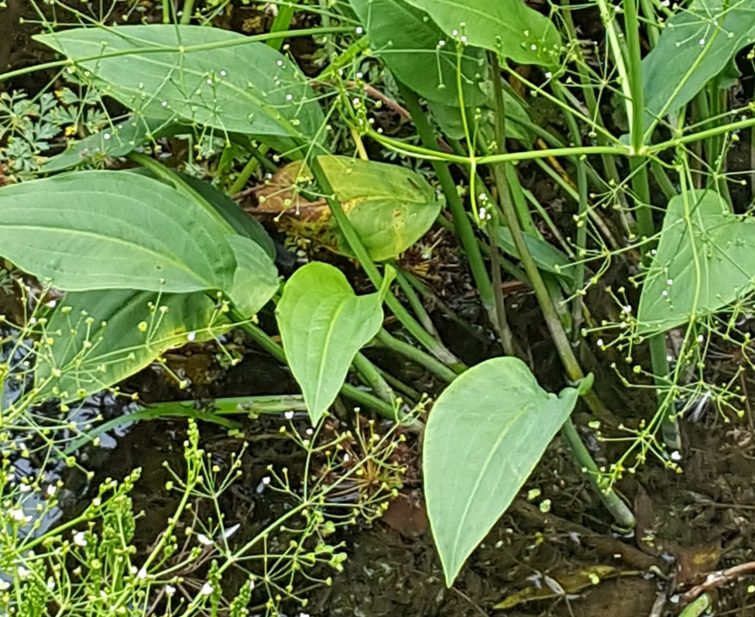
The leaves are hairless, and typically have between 2 – 4 secondary veins. These are slightly raised on the undersides of the leaf.
Petioles: Long, semi-cylindrical petioles are filled with a spongy pith. This characteristic is found in many aquatic and marginal water plants. The leaf-stalk contains numerous air-filled cells. The petioles are sheathed at the base.
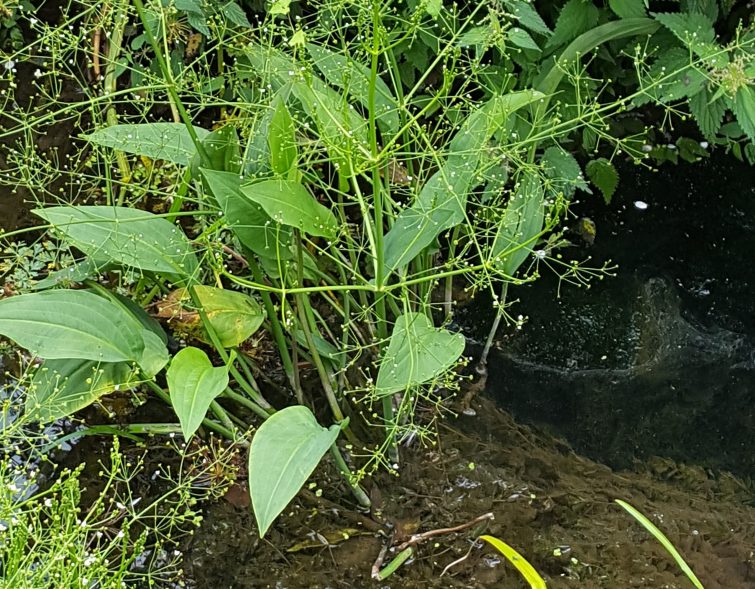
Roots: This plant has a fibrous perennial rootstock.
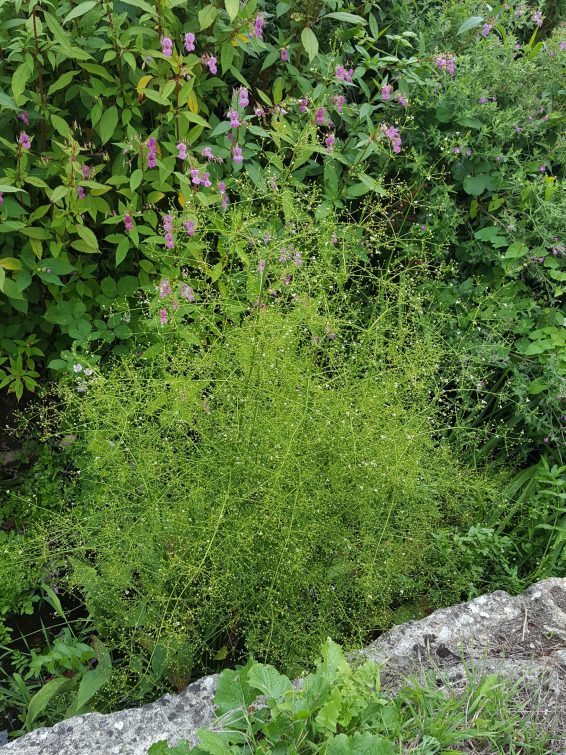
Stems: Water plantain has triangular flower stems with numerous branches. To the eye, this produces quite a messy, tangled display. No leaves appear on the flowering stems. The stems can easily reach up to around 1 metre high.
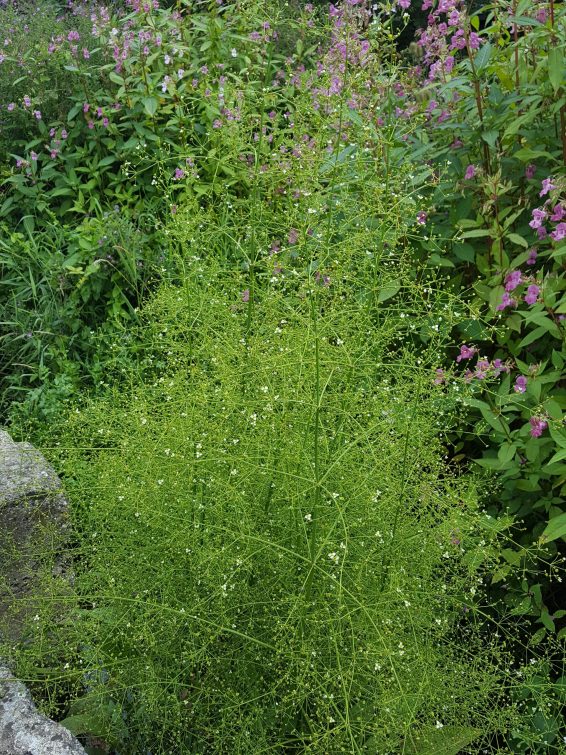
Flowers: The flowers are pretty little things. They have three triangular-shaped, green bracts, surrounding the three, round and somewhat torn-edged, white to pale lilac petals.
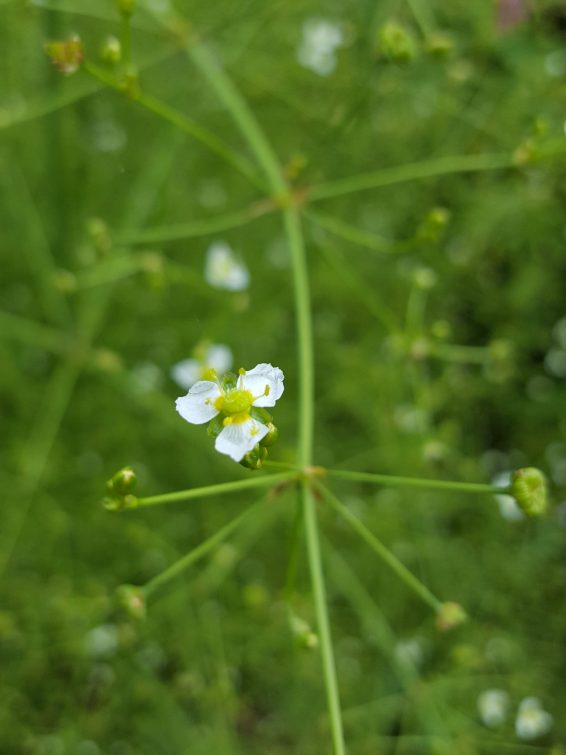
The petals have a little yellow spot at the base and are approximately 6 – 10 mm wide. Six yellow-tipped stamens surround the pistil.
Flowering season: Water plantain starts to flower in June, and carries on through into August.
Habitats: This plant is mostly aquatic, but loves it most where it is not totally submerged. This includes drainage ditches, shallow ponds, streams, marshes, and other damp waterside habitats. This map from the BSBI shows its geographic distribution in the UK.
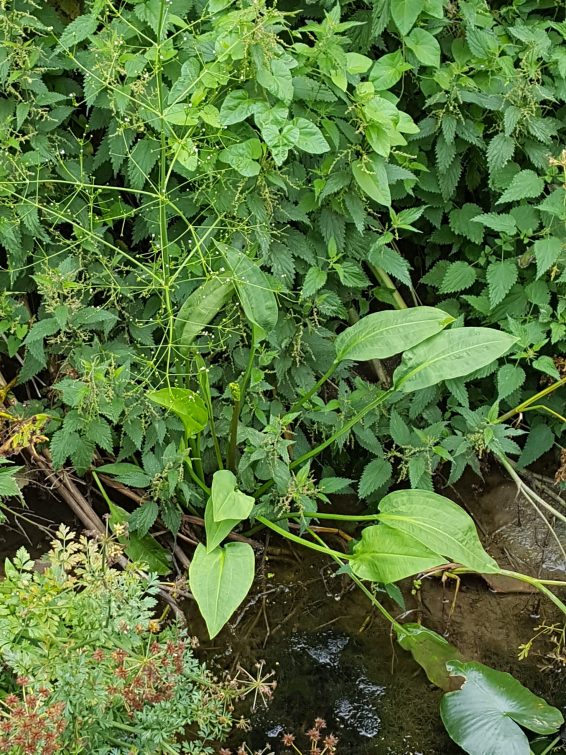
There is shed loads of this plant found in the slow-moving network of rhines on the Somerset levels. It can also be spotted throughout England, Wales, and lowland parts of southern Scotland, up to altitudes of 350 – 400 metres.
Other notes: The excellent Cornwall-based plant research organisation ‘Plants for a Future’ mention its edible uses. I am yet to experiment with this plant.
Various species of water plantains have traditionally been used in Chinese medicine and Homeopathy.
Now then, if you are just beginning your foraging adventures then you may wish to discover just how easy it ìs to learn how to identify hundreds of plants in a day.
Another extremely important tool in your armoury is to know Britains poisonous plants. As well as this, my guide to harvesting wild plants, together with this summary of the important medicinal plant constituents and actions should give you a thorough basic understanding of how to safely collect the medicinal magic contained in our fantastic flora!
Happy foraging!