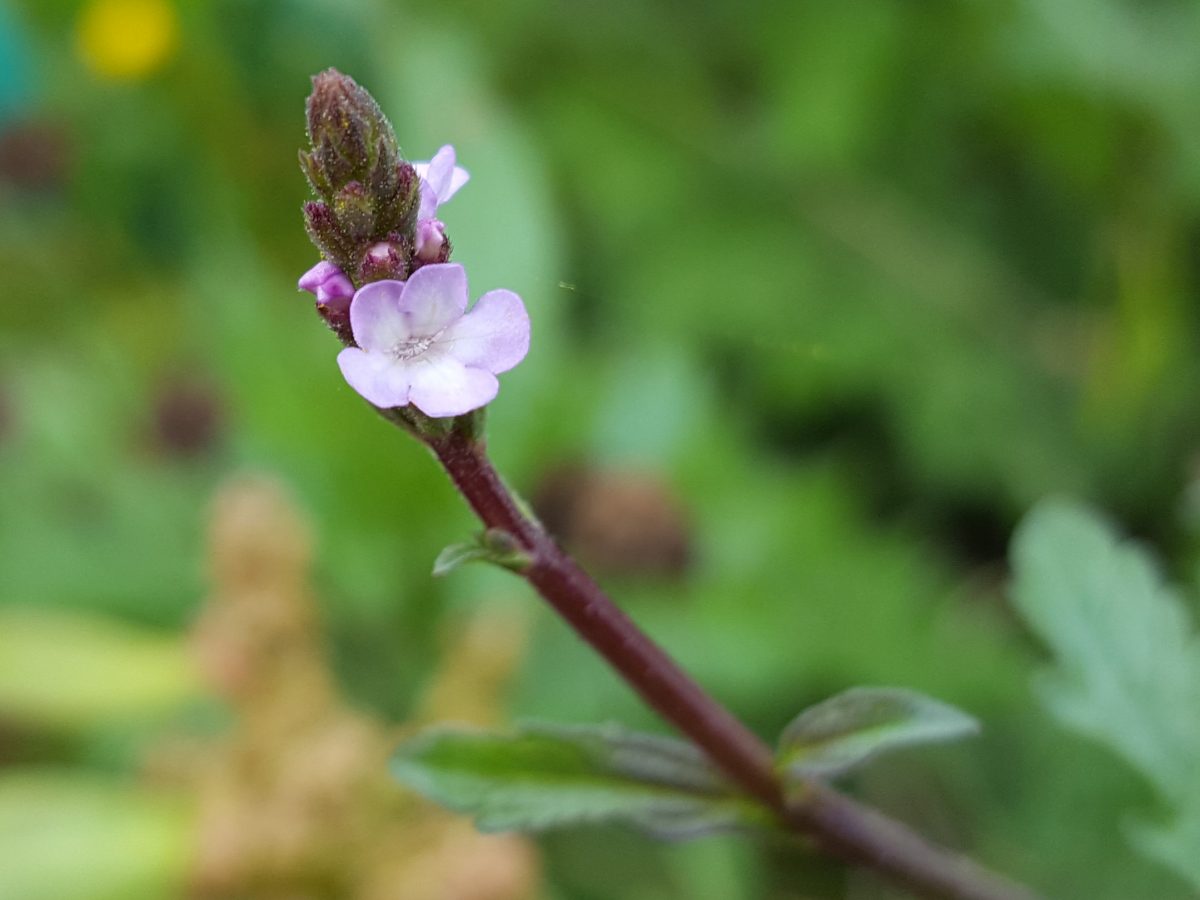
Learn how to find, identify and use the mysteriously magical vervain!
Verbena officinalis (Vervain) Verbenaceae
I often wonder long and hard about certain herbs and their fall from prominance and former reverance. The previously well-known and well-used herb, vervain, epitomizes this particular pondering.
Vervain was formerly one of the most sacred herbs in these islands, as well as across many different cultures througout the ancient world. Our relationship stretches back more than 4,000 years.
During the medieval period, vervain was known as the magicians herb. Its main magical properties and uses, were and are, for protection and exorcism.
It is one of the sacred herbs of numerous pre and post-Christian cultures that sprung up around the Mediterranraen sea and beyond.
Before we start you may first want to read my guide to starting out on your foraging adventures.
W hat’s in a name?
Vervain has always been associated with mysterious, magical practices. High priests and priestesses from the ancient Egyptians, Phoenicians, Cretens and Greeks, Celts, Druids, and Vikings are all known to have used Vervain in rites, and to adorn themselves and their alters with this herb.
The Egyptians believed vervain to be from the tears of the Goddess Isis, as she mourned the death of her husband Osiris.
What did they know that we don’t!? Following on from them, the Romans developed similar practices. They created a specific noun for sacred ceremonial twigs or branches used to adorn wreaths or alters during rituals; calling them ‘Verbena’.
The species names ‘officinalis‘ tells us that this herb was also an official apothecary herb.
During the medieval period the French were calling the plant ‘Verveine’ and it’s from here we can see how the middle English word ‘Vervain’ was derived.
Botanical Description
Vervain is a distinctive looking plant, but its slender form and habit can make it oh so elusive to find!
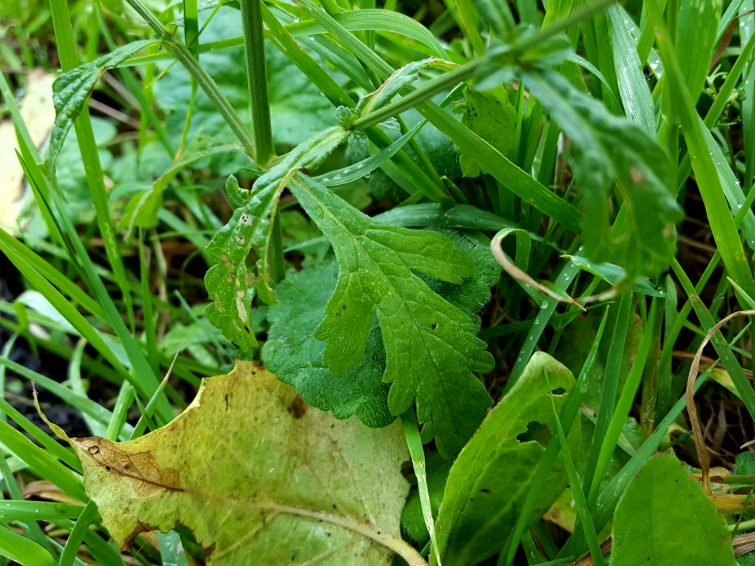
Leaves: This plant doesn’t produce much foliage. Its opposite leaves are simple and lobed, typically 3-lobed. They grow to approximately 12 cm long. The upper surface is coarse with tiny hairs. The leaf is net-veined, and the margins are dentate toothed.
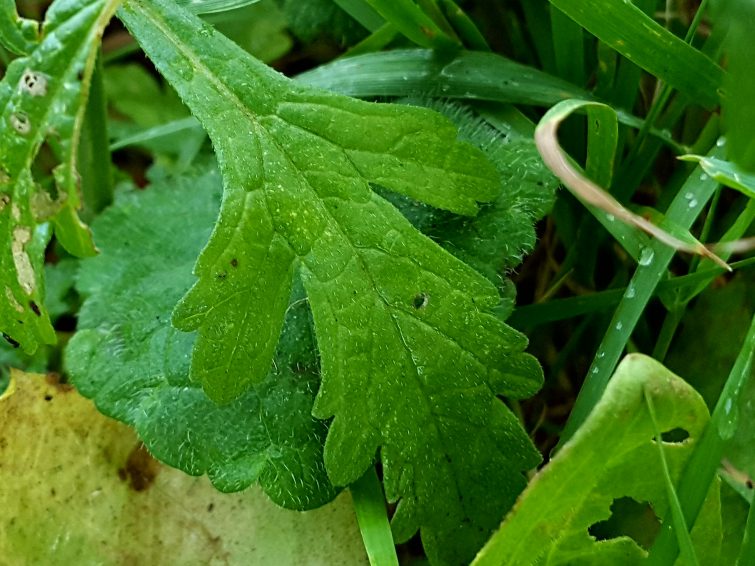
Petioles: The leaf blade tapers towards the base. Petiole from 12 – 25 mm long.
Roots: Vervain has a perennial rootstock. It is a yellow-white colour, thin and fibrous. The plant is not particularly deep rooting.
Stems: Typically these are sturdy and stiff, and rough to touch. Vervain produces many branched, four-angled, solid stems. They can reach anywhere from around 70 – 120 cm high.
Flowers: Borne on leafless spikes, from a distance these small, 3-4 mm, lilac-mauve flowers can look like tiny jewels suspended and sparkling in the air.
The corolla consists of five petal lobes and a long tapering corolla tube that sits in a purple-tinged, green calyx.
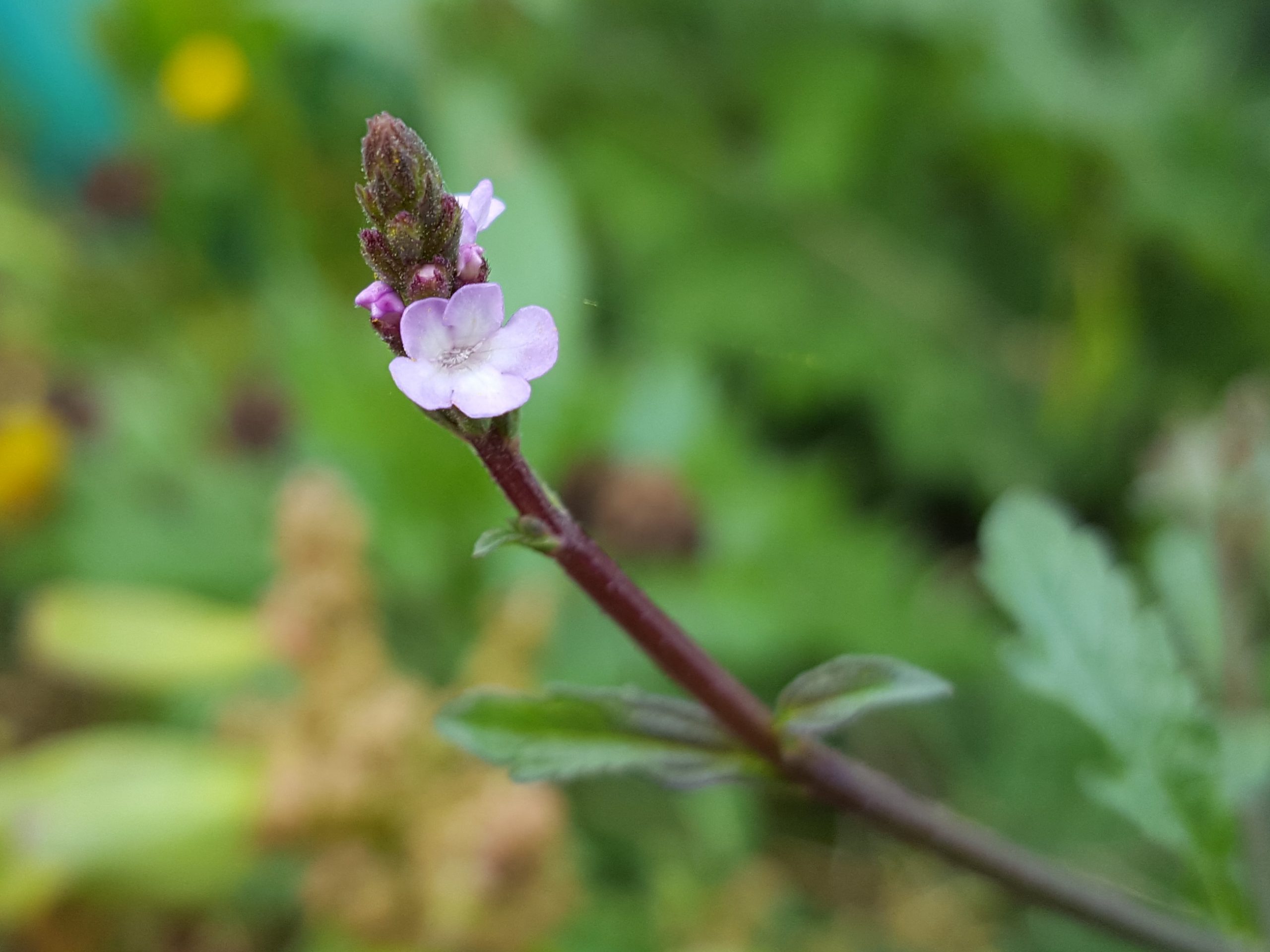
The two-lipped flowers contain four stamens and a pistil fused of four carpels.
Flowering Season: Depending on where you are in the country, vervain will be found in bloom from just after summer solstice through into early October.
Fruits: If pollinated, vervain produces up to four little nutlets.
Harvesting: You can harvest the whole plant above ground just as it comes into flower in late June and early July.
Follow the link to read a basket full of top tips on harvesting wild plants.
Parts used: All above ground parts are used. Although bitter, the plant is edible. An article on the poisonous plants of Britain can be found here.
Medicinal Constituents: Iridoid glycosides, caffeic acid glycoside verbascoside, flavonoids including luteolin,triterpenoids, tannins. This overview of our medicinal plant constituents and actions will help your plant chemistry understanding.
Actions: Astringent, bitter digestive tonic, diuretic.
Uses: Traditionally used as a herb to help wounds, digestive issues, depression, insomnia, jaundice and dysmenorrhea.
Legend has it that vervain was used on Jesus to cleanse and heal wounds from the crucifixition.
Habitats: Vervain is quite fussy and particular about soils. It prefers free-draining calcareous ground, in open settings or on bare ground. This map shows you if you are likely to have it in your area.
Other notes: Modern science has yet to discover evidence to support traditional uses. We know that many traditional herbal medicines simply haven’t had the research carried out, or experiments undertook and studies produced. Therefore we will definitely see a lack of evidence.
In my opinion, the ‘lack of evidence’ argument should not ride roughshod over thousands of years of anecdotal and historical evidence. One of the key factors with herbal medicines is that, properly prescribed they address the causes of the dis-ease within an individual, and not attempting to treat symptoms.
Medicinal herbs can work more effectively in certain individuals and less effectively in others, just like allopathic medicines. If one herb doesn’t work that effectively for a given condition, simply try another herbal remedy.
Vervain is listed in both the British Herbal Pharmacopeia and the Pharmacopeia of The People’s Republic of China.
An extract of vervain has been found to help prevent certain processes involved in the development of Alzheimer’s disease. For someone almost 50, I am now casting an eye over all I can to do with the prevention of, and remedies to alleviate, Alzheimers.
Previously, this plant belonged to the Verbenaceae family along with what used to be another 200 or so genera. With the advent of DNA technologies, a number of plants have been shuffled between different families. Hence today many plants previously in the Verbenaceae family are now placed in the Lamiaceae (mint) family. Nowadays the family has 35 genera and around 1,200 plants.
Keep your eyes peeled for exciting new website development in the next three months, as I continue to create Britain’s most comprehensive wild plant identification resource for foragers.
Happy foraging!