This is an evergreen plant that is far more popularly known from garden centres, even though it is a native to the UK and Ireland. Sometimes found as a multi-stemmed shrub and sometimes as a tree, on a single trunk. Can reach up to 5 metres high, with a spreading crown.
The strawberry tree is an acid-soil specialist. It belongs to the same family of plants as some of our heathers (Erica species), as well as our heathland and bogland fruiting shrubs, the bilberry and cranberry (Vaccinium species).
Leaves: Shiny dark green above, with a coarse, plastic feel. Paler and sometimes discoloured underneath. The elliptic-oblong leaves are 4-10 cm long, and 3.5 cm wide. Serrated with around 25 teeth on each side of the leaf.
Petioles: Small, not channeled. Approximately 6-12 mm long.
Twigs: Green to reddish colour, weekly angled.
Buds: Small, usually red. 1.5 – 2 mm long. Acute with numerous scales (up to 16).
Bark: Typically a red-brown colour. The rough bark begins to flake at the base as the tree gets older.
Flowers: 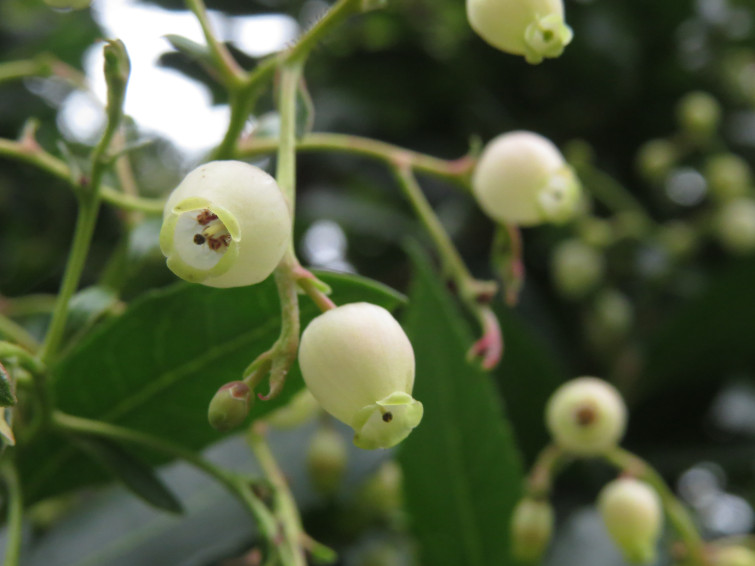 Bell-shaped, creamy white flowers, just like those found on other family members like heather and bilberry.
Flowering season: The flowers will tend to appear from Late October through November.
Fruits: Clusters or singularly found fruits ripen slowly from green through orange to red when ready. They can get sweet but usually this is accompanied by astringency.
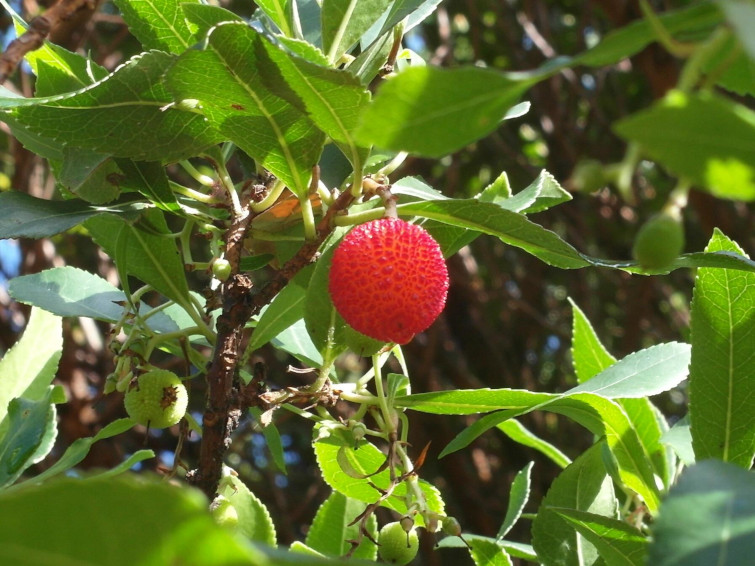
Ripening over the course of 12 months, the initially small and green pimpled fruits ripen to a lovely red colour, and enlarge almost to the size of a ping pong ball.
They were mealy and not particularly sweet when I have tried them, though some friends have said they thought them quite good. Recipes are available online for jams and liqueurs.
Habitats: Heath scrub and rocky hillsides, but more often found as an amenity plant in parks and gardens and as an escape from cultivation. This map shows how few records there are of the plant in the wild
Harvesting: Fruits can be harvested whenever found red, ripe, and ready. My harvesting guide will give you numerous tips and tricks for successful foraging.
Other notes: Its range in Ireland has shrunk considerably since the 17th century due to its popularity as charcoal.
Its scientific name ‘unedo’ apparently comes from Pliny the Elder, who is reported to have said “unum tantum edo” which translates as – “I eat only one!”
Native American Indians are said to have fermented them, and numerous recipes are available online for making liqueurs from the fruit.