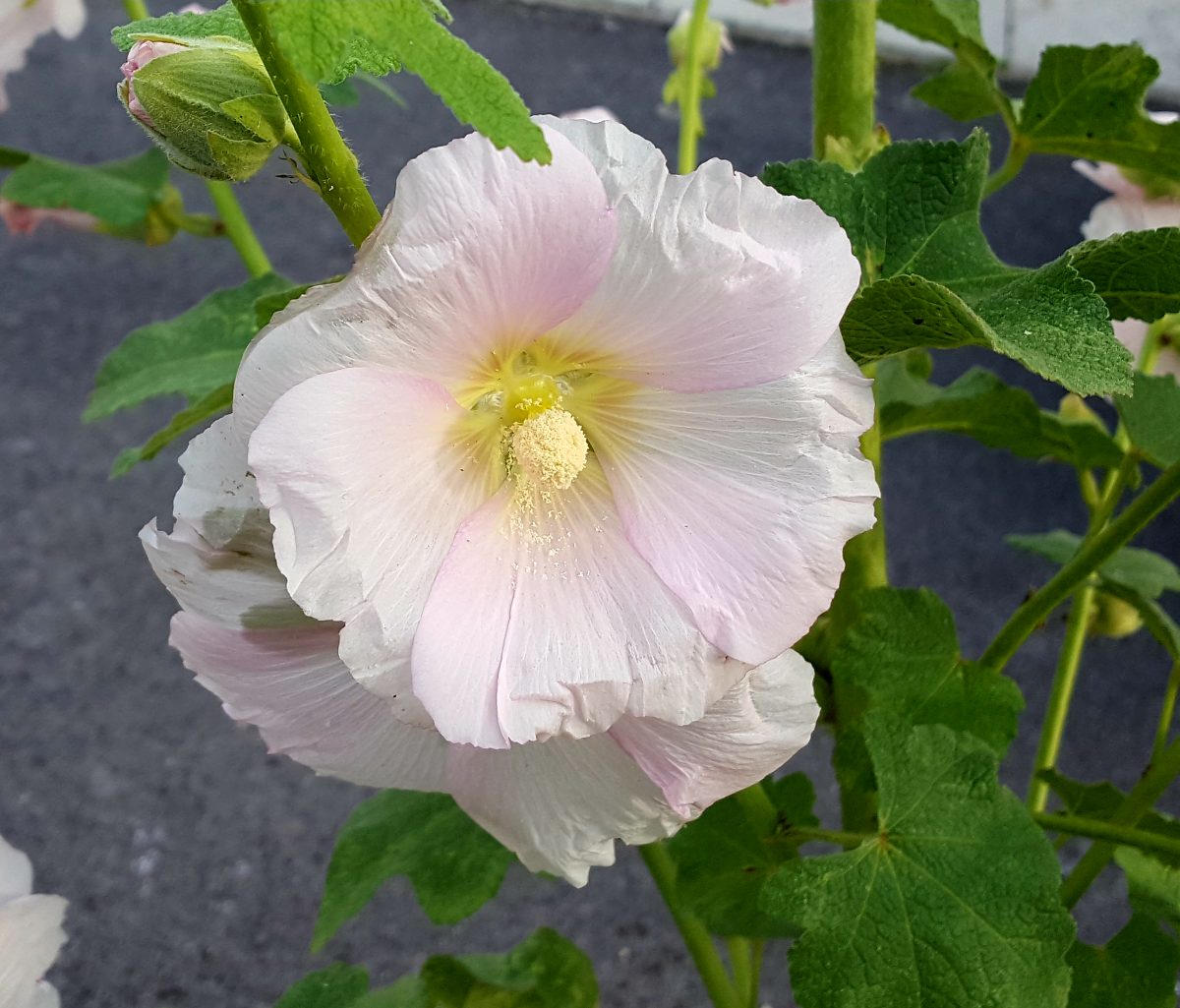
Get to know Hollyhocks. A favourite of many cottage gardens.
Learn how to identify hollyhocks in our short guide.
Hollyhocks is an old garden favourite that can easily be found all over the country, escaping from its confines and naturalising in any crack and crevice of the urban landscape.
It has always come across to me as resiliant and opportunist, so I reckon this plant can teach us a thing or two.
Hollyhocks come in all manner of colours, most usually different shades of reds, pinks, and purples, but nearly all colours of the rainbow can be seen during the course of a year, and it remains a very popular and easy to grow plant.
If you need to check any technical terms, remember our glossary is a click away.
Leaves: 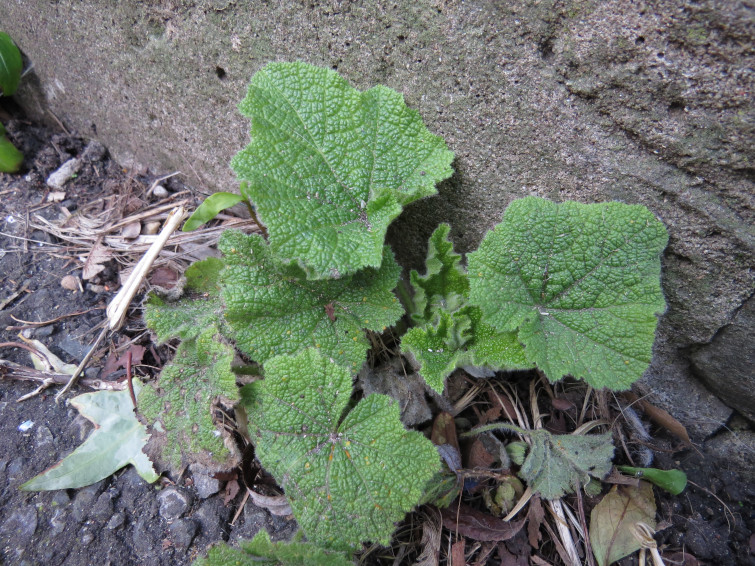 Large palmately-veined, simple leaves. 10-30 cm wide, sparsley hairy, and reasonably coarse to the touch. often 5-7 lobes. Crenate-dentate margins.
Petioles: Round, (more or less). Not channeled like other Malvaceae family plants
Stems: Up to 300 cm high, typically 200 cm or so.
Flowers: 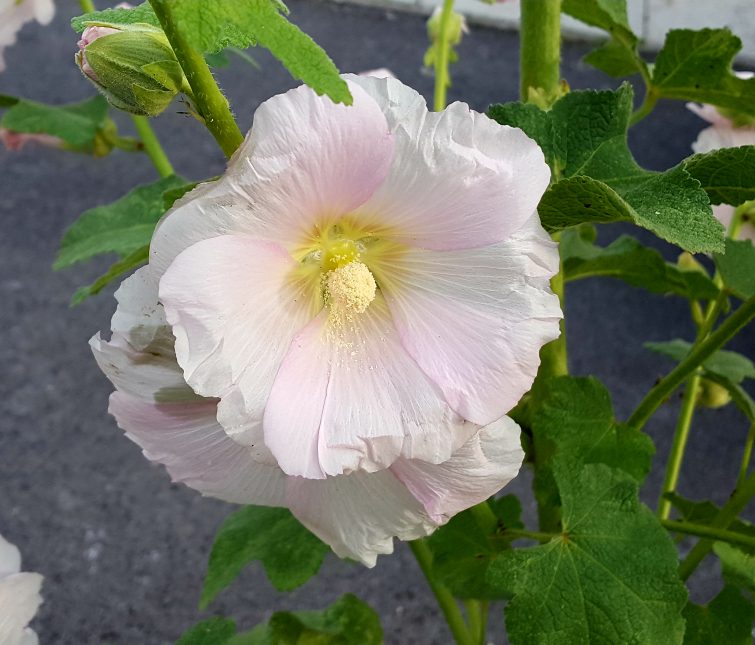 Large, with five green sepals, and five, partly-lobed petals. These are coloured anywhere from whites, pinks, and reds.
The centre of the flower reveals a mass of pollen-loaded stamens surrounding the central stigma.
Flowering season: Hollyhocks has a long flowering season, and you can find the plant in bloom anytime from late May through to October.
Habitats: Any suitable piece of disturbed soil, wasteground, open ground, and any cracks and crevices of the urban landscape.
Harvesting: Edible flowers and immature seed pods (cheeses) as soon as they appear. Numerous tips on how and when to harvest are available in this longer-read article.
Other notes: This plant is host to a moth known simply as ‘The Mallow’ (Larentia clavaria). The larvae feast on the plant during the late spring and early summer.
A word of caution if you are planning to eat the cheeses…a friend of mine with asthma had a reaction after eating just a few of them, so this should serve to remind, as ever, that before eating any new food, you should always test your tolerance.
The presence of relatively high concentrations of inulin, sugars and mucilage in this relative of marshmallow will make it useful as a demulcent herb, if that is for any strange reason you are without access to our most common mallow, Malva sylvestris.
Read more about the medicinal plant constituents and actions in my in-depth article, suitable for all herbal medicine students.