Foraging for hairy garlic. Add a welcome anti-viral garlic punch to winter salads
This uncommon wild relative of garlic can be difficult to find. A low-growing, thin-leaved plant, hairy garlic grows amongst grasses where it remains hidden where mown.
When not mown, and allowed to grow, hairy garlic produces a distinctive form; the leaves curing over at the tips and resembling the shape of rams horns.
Leaves: First appearing as leaf shoots. The leaves are a pale green colour, and when unfurled, they are flat or with three points (triquetrous), never cylindrical. Approximately 4.5 mm wide, often sheathed at the base. Tapering acutely at the apex.
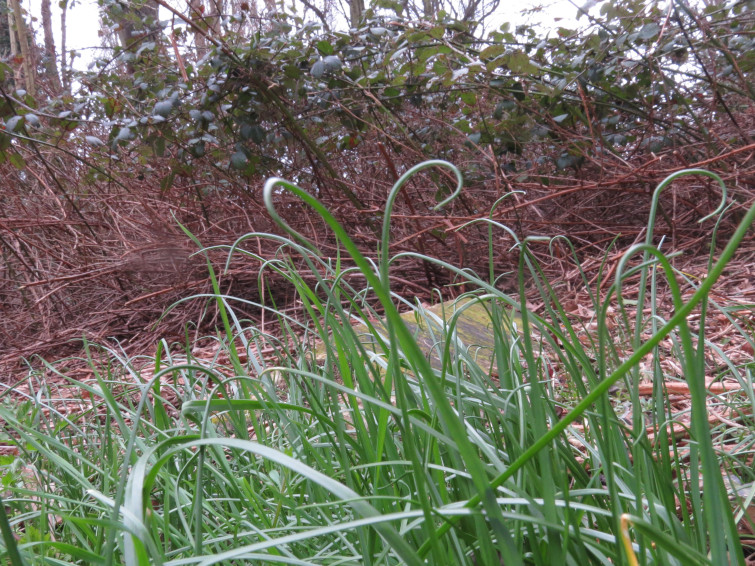
As a monocot, the plant has leaves with parallel veins. With close observation you will find fine ciliate hairs on the margins. The leaves curl over at the tip, giving rise to a distinctive ‘rams horn’ look
Petioles: Monocotolyden plants such as this don’t have a petiole. A sheath connects the leaf to the bulb.
Roots: The bulb has a corky base plate from which fibrous roots anchor and supplement nutrients to the developing bulbils.
Stems: The plant produces round flowering stems that typically reach around 30 cm high.
Flowers: Its inflorescence is more umbrella-shaped and not so spherical like other relatives. As a member of the lily family, each individual flower produces three sepals and three petals.
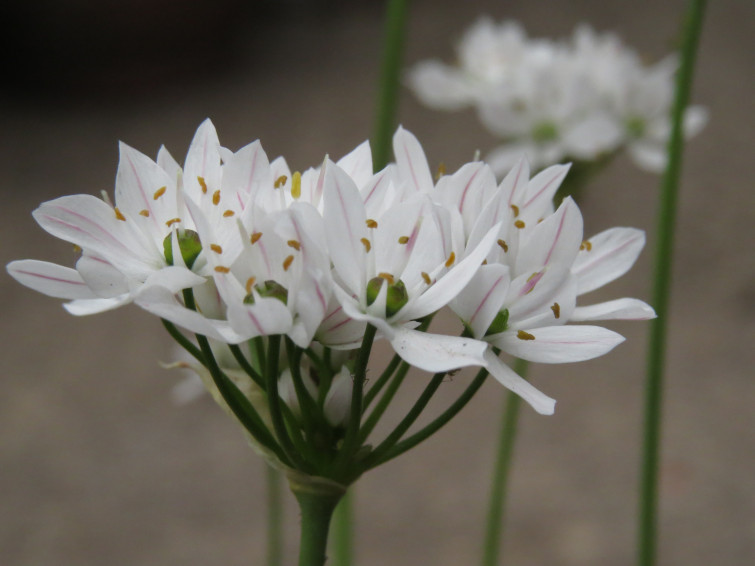
The sepals and petals are the same size and shape, and all are white-coloured, with a faint, but gorgeous pink-purple stripe. The flowers have six orange to yellow-tipped stamens surrounding the central pistil.
Flowering season: March-April
Habitats: This plant is native to the Mediterranean sea. I have found it in grassy areas away from tree cover on limestone soil in Bristol. It may be picky about pH.
Given where it originates from, hairy garlic will love the sun and free-draining sites. In the UK it is probably most commonly found as a garden escapee.
Harvesting: The leaves appear from November, just like a few other native garlic plants.
The flowers start appearing in late winter to early spring. Bulbs are available in the dormant period of the summer but are quite fiddly and small.
Other notes: Easy to grow, and would be great in a forest garden as a ground cover. here’s what PFAF say about it.
When you have finished reading about all the fantastic edible and medicinal plants growing all around you, remember that brushing up on Britain’s poisonous and toxic plants is just as important! Read about them here.