Foraging for Lady’s mantle (Alchemilla mollis) Rosaceae family
Learn how to find, identify, and use the famous Alchemist herb, and valuable traditional herbal medicine.
Lady’s mantle is an intriguing ‘rule-breaking’ plant, rich in folklore, and a powerful traditional medicinal herb. Discover how to identify the plant right here.
Leaves: Simple, oval to kidney-shaped, 10-14 cm diameter. They have toothed margins, and usually with 9-11 shallow leaf lobes that reach only a quarter of the way to the base. The leaves will be creased when young.
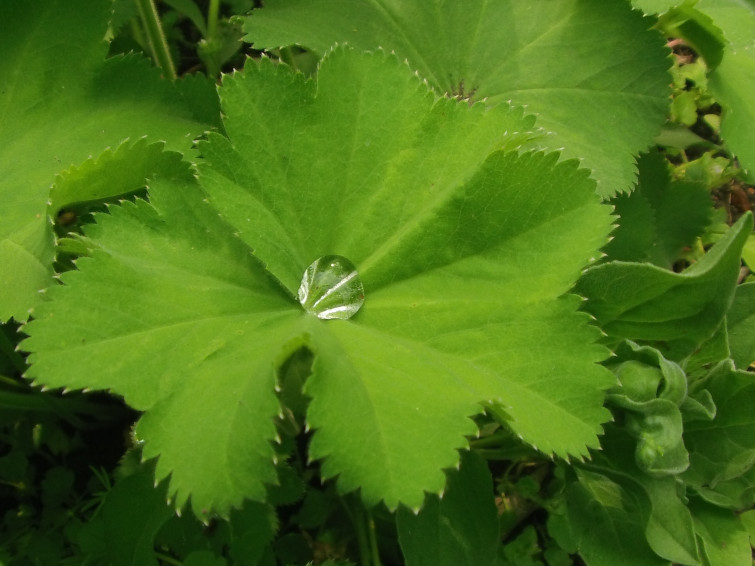
The leaves are hairy on both sides. They can be found over winter, becoming especially noticeable after rainfalls, when the leaves hold little jewels of water.
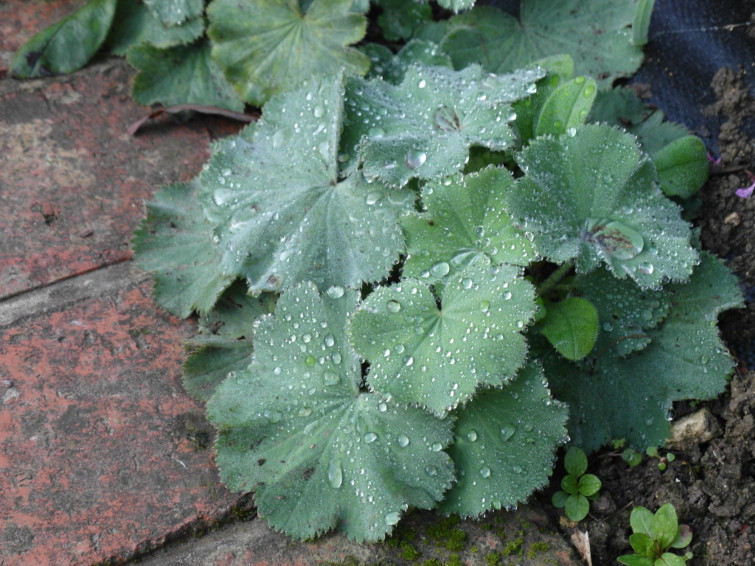
It was this phenomenon that enticed the medieval Alchemists to cherish the plant; for to them, it held a manifestation of the purest form of water. It was considered powerful enough to turn base metal into gold. This gave rise to another common name of the plant – ‘dew-cup’.
Petioles: Usually more than 10 cm long, held upright, and covered with hairs. Stipules are present in flower stalk axils.
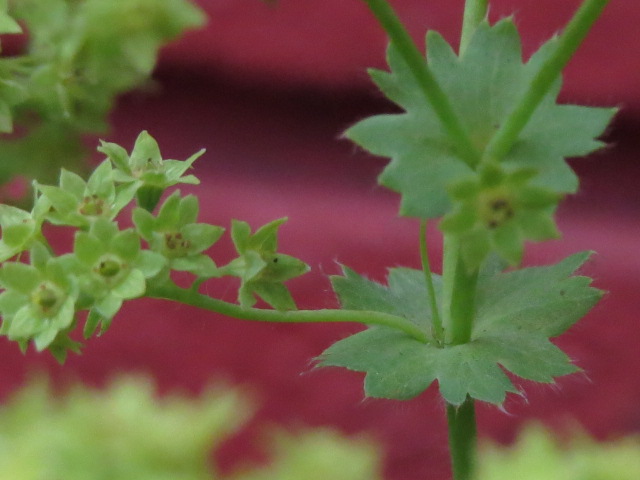
Roots: Rhizomes and fibrous roots enable this plant to colonise quite rapidly on new ground
Stems: The flowering stems start to form in late spring. Each clump of leaves will produce numerous, branched flowering stems. They eventually reach 30- 60 cm high. Stipules are found at the nodes.
Flowers: 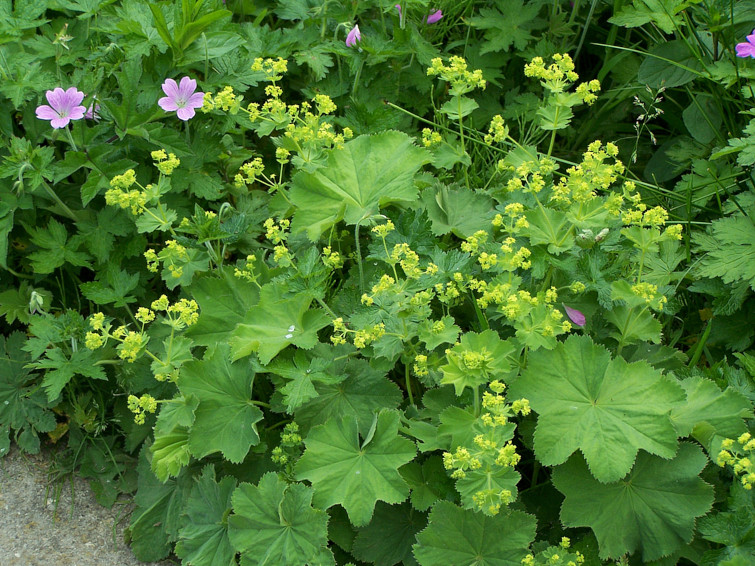 Lady’s mantle produces small sprays of yellow flower clusters. They are unusual rose family flowers. Rose plants are widely known for having 5 petals, five sepals, and numerous stamens in their flowers
Close up, the individual Lady’s mantle flowers look like an eight-pointed star. They have no petals; instead, they have a yellow-green, four-lobed epicalyx, with four yellow sepals. Inside the centre of the flower, you will see four, or occasionally five, stamens.
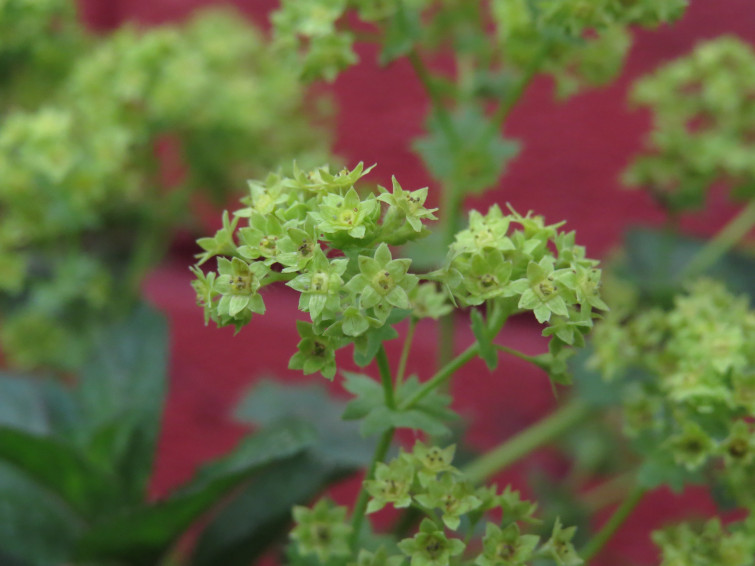
Flowering season: Historically anytime from June to September, although appearing earlier now with the tangible effects of global heating.
Habitats: A popularly grown garden plant that is found naturalised on roadsides, riverbanks, grassy banks, near refuse tips, and anywhere people throw garden refuse.
It spreads through seed and small pieces of rhizome roots. It has a recorded maximum altitude of around 520 metres.
Harvesting: Traditionally both the roots and leaves were harvested and used as medicine.
Most encounters with the plant in the wild will be on private land, and therefore the leaves are the part that foragers are mostly interested in.
If you want to know more about harvesting our edible and medicinal plants, then sit back for a few minutes with this article. Many of our toxic and poisonous plants were previously covered in this post.
Other notes: This is still a valuable medicinal herb for women. It can be used as a general wound staunching herb due to the presence of tannins and astringency in this herb.
Together with the salicylic acid-based compounds, this will begin to point to many of its traditional and contemporary uses. Please refer to my overview of medicinal plant constituents and their actions.
Happy foraging!