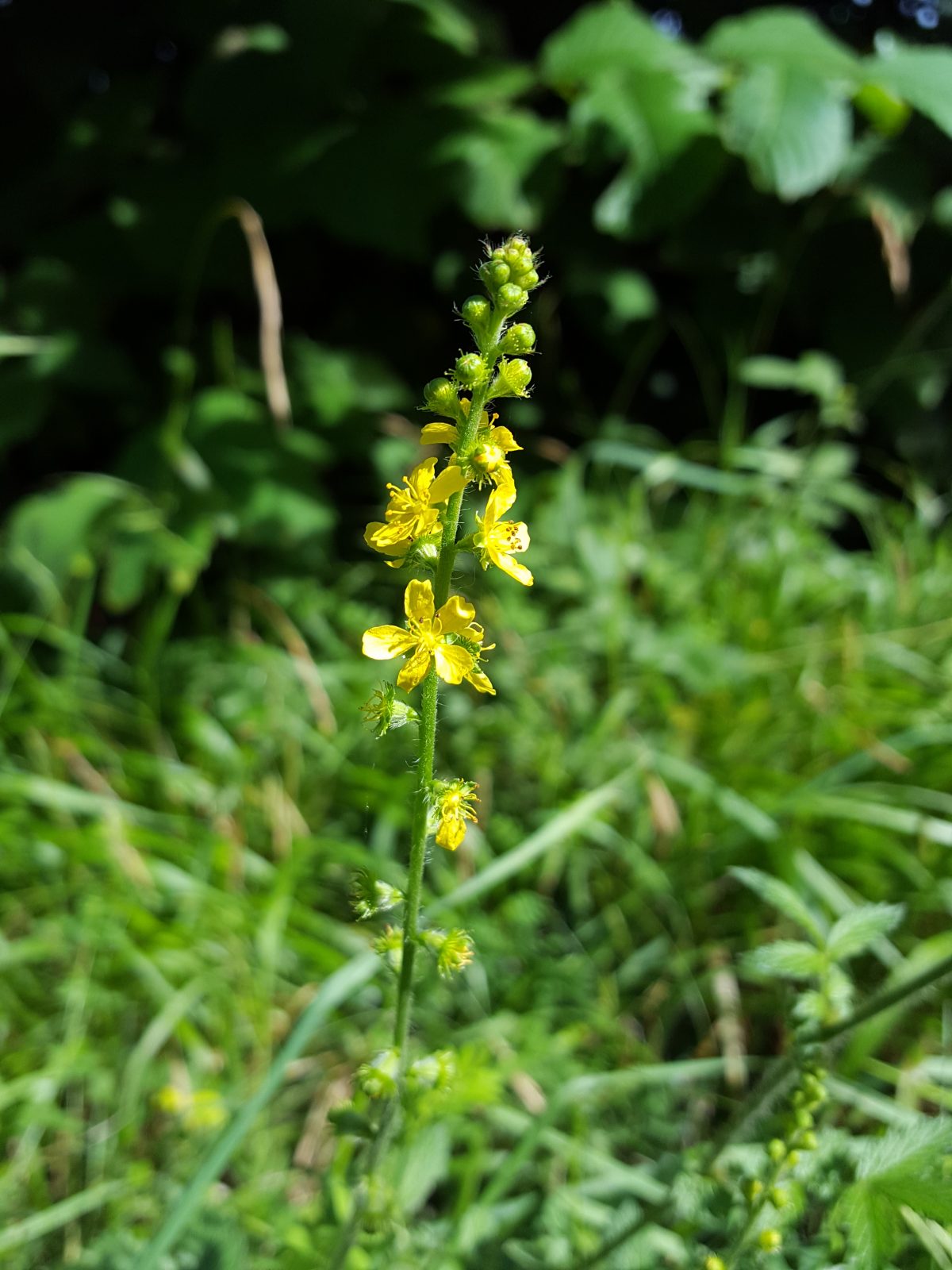
Foraging for common agrimony (Agrimonia eupatoria) Rosaceae family.
Learn how to find, identify, and use, the sacred Druid herb common agrimony. Discover its history, as well as its traditional and current uses in medicine.
This pretty little perennial plant can easily be overlooked or mistaken for something else. This is partly due to its relatively demure stature, and becuase of its passing resemblance to a few other plants.
Common agrimony botanical description
You will come across some technical terms here, just like the ones used in botanical field guides. Have no fear, because this glossary will be your friend! Being comfortable with a new language takes practice. It will also help kick start your foraging adventures!
Leaves: Common agrimony has dark green, compound-pinnate leaves. They are oval to elliptic-shaped, with oppositely-faced leaflets.
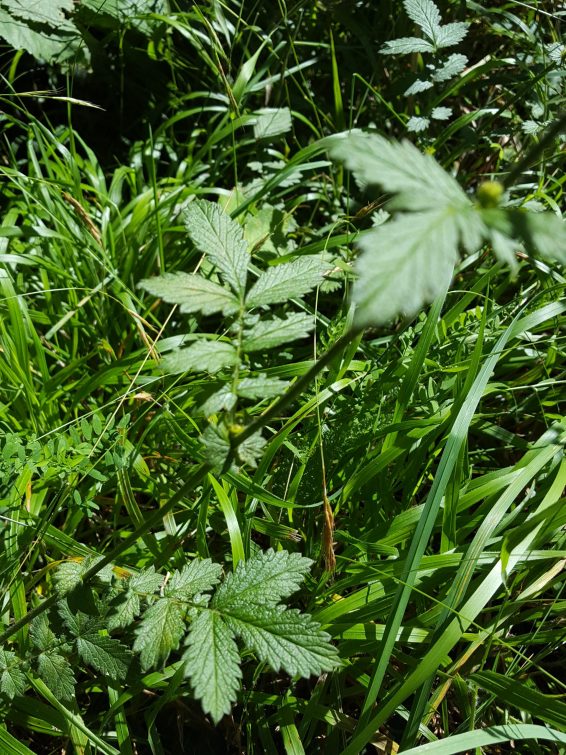
Two or three pairs of small intercalary leaflets are found between each pair of larger leaflets. The terminal leaflet is often the largest.
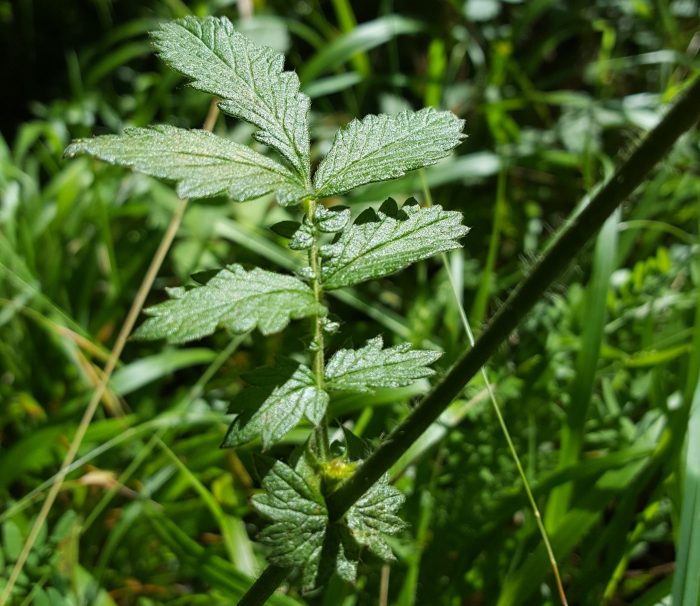
The leaf margins are deeply serrate or serrate-dentate. The leaves are aromatic, but not strongly so. They are hairy above and below.
Petioles: Hairy, approximately 3-5 cm long.
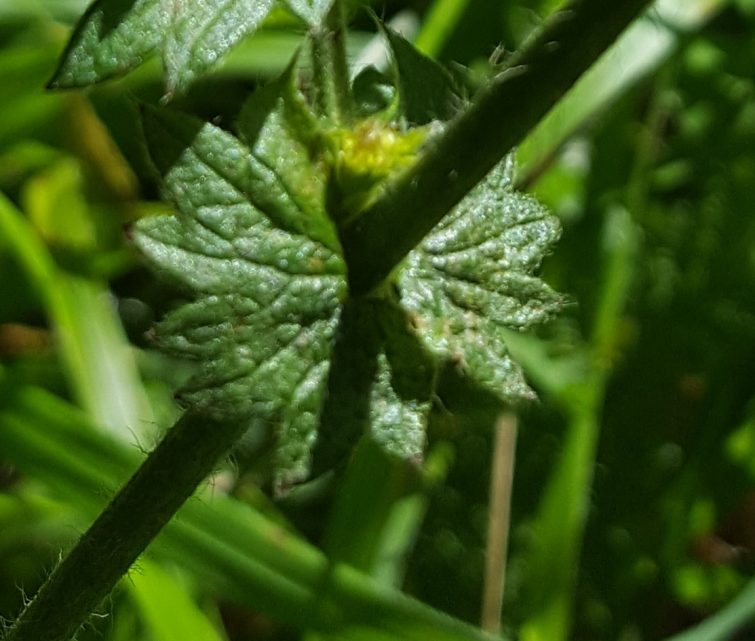
Stipules: These are present at the base of the leaf as is common with the vast majority of Rose family plants.
Roots: Agrimony has a perennial rootstock. Their starch-laden rhizomes sustain the plant through its winter dormancy. The rhizomes have a brown-coloured skin.
Stems: The stems can reach anywhere from 30-60 cm high. They are rough to the touch and covered in glandular hairs.
Flowers: Spikes of small yellow flowers with the rose signature of 5 green sepals, 5 petals, and a mass of stamens. It is these spikes that gave rise to one of its other common names, ‘churchsteeples’.
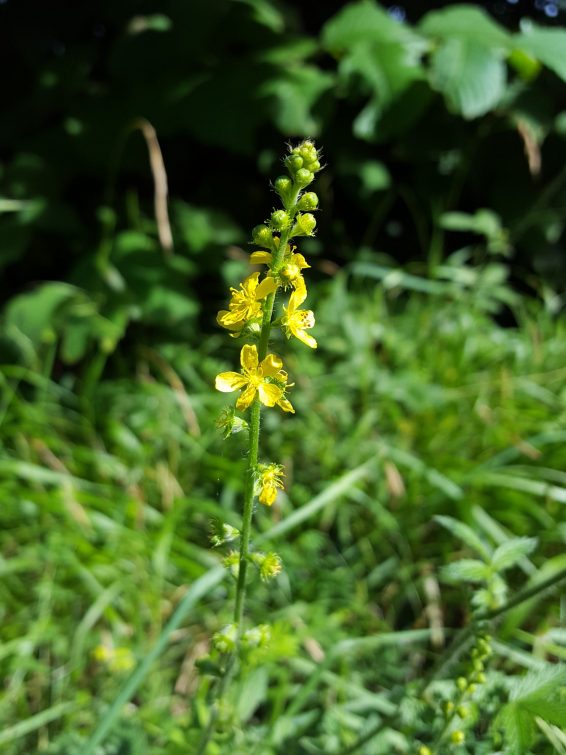
Flowering season: Any time from May throughout the late spring and summer into October.
Fruits / Seeds: The small fruits are approximately 5 mm across and covered in hooked hairs.
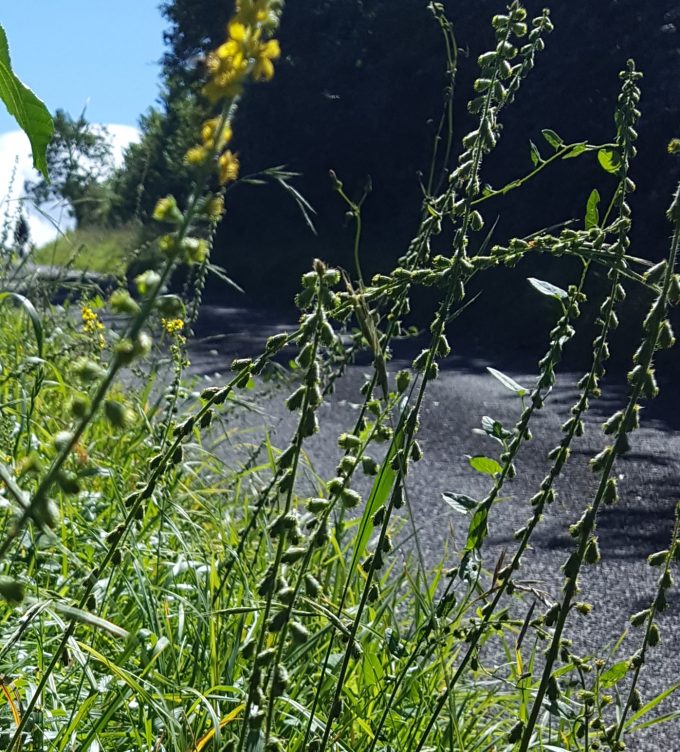
Agrimony obviously evolved to utilise the different animal furs, similar to burdock, to successfully spread their seeds around.
Habitats: This plant will most easily be found in grasslands, hedgerows, grassy banks and woodland rides, on limestone and other calcareous ground.
Its definitely one of the plants that urban foragers in our larger towns and cities are unlikely to see a lot of without getting into the countryside!
While it is common to much of the southern half of the UK, common agrimony is essentially a lowland plant. It won’t be found much at all at heights above 300 metres. This BSBI map shows agrimony is absent from large parts of Scotland, North England and Wales.
Parts used: Leaves and flowering tops.
Harvesting: The best medicine will be had from the flowering tops when most of them are just opened. You can use all above ground parts for tinctures. Check out this guide to harvesting edible and medicinal plants.
As a food I will occasionally toss some flowers in a salad. As far as the leaf is concerned, well, agrimony has astringent, tough ones that are only really fit for a post-apocalyptic pottage broth. There are many better edible leaves out there! Corn salad anyone?
Other notes: Formerly much used as a herbal medicine, both here and in Europe. Agrimony is approved for use by the E.U on the basis of its long standing traditional use for certain disorders.
Agrimony can be usefully prescribed by physicians and herbalists for gastric disorders, mouth and throat disorders, and to be used topically, applied on minor wounds and inflammations.
The Druids of ancient Britain are beleived to have held this plant as sacred, alongside another 12 or so herbs. From our knowledge of the Celts and contemporary historians such as Dioscorides, the plant was known to be infused into an oil and used alongside juniper (Juniperus communis) as an annointing herb.
Agrimony is one of the 38 Bach flower remedies. It is used for anxiety, inner tensions, and hidden emotions. It reportedly gives relief from extreme anxiety disorders and post-traumatic stress syndrome.
More identification guides are coming up soon on the UK’s most comprehensive foragers plant identification website.
Happy foraging!