Discover the powerful medicinal benefits of conkers / horse chestnuts
How to find, identify, and use Horse Chestnut (Aesculus hippocastanum) Hippocastanaceae family
The horse-chestnut is an elegant tree that belongs to a genus of 13 species, all of them deciduous trees and shrubs.
How to identify Horse chestnut
Most people over thirty will easily recognise this tree and it hardly needs a description here. But because conkers has been removed from the Oxford English childrens dictionary, and for readers after 2020, here goes…
Leaves: 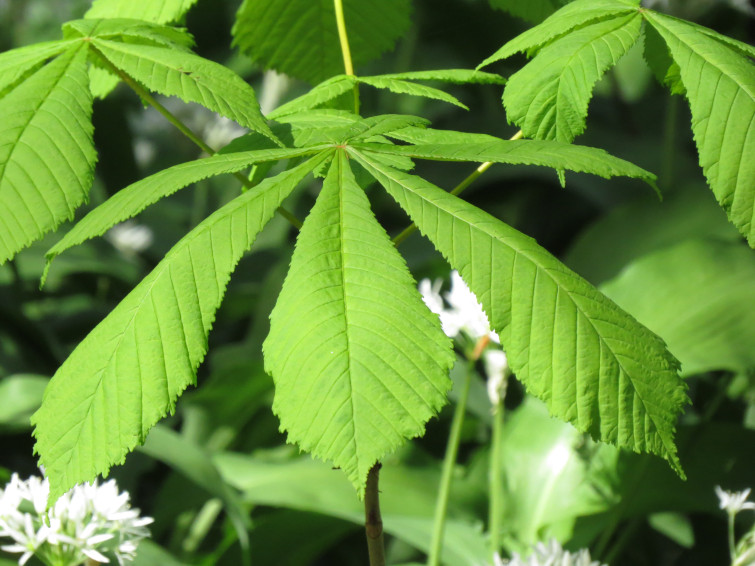
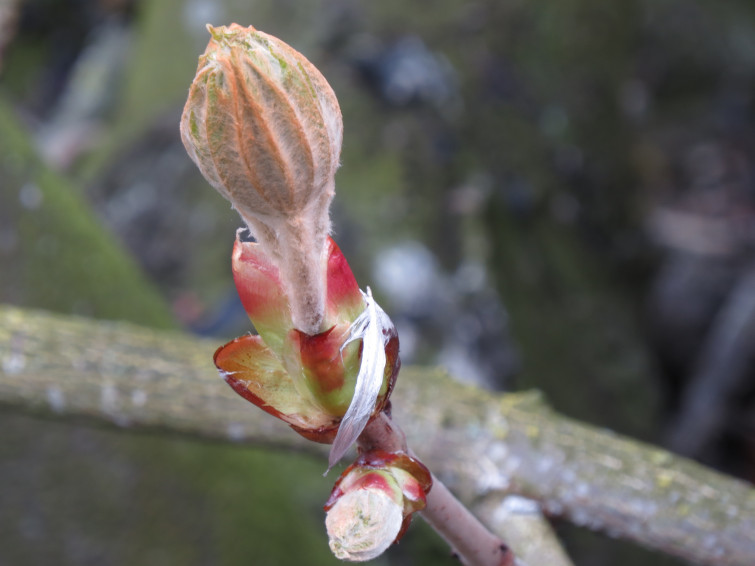
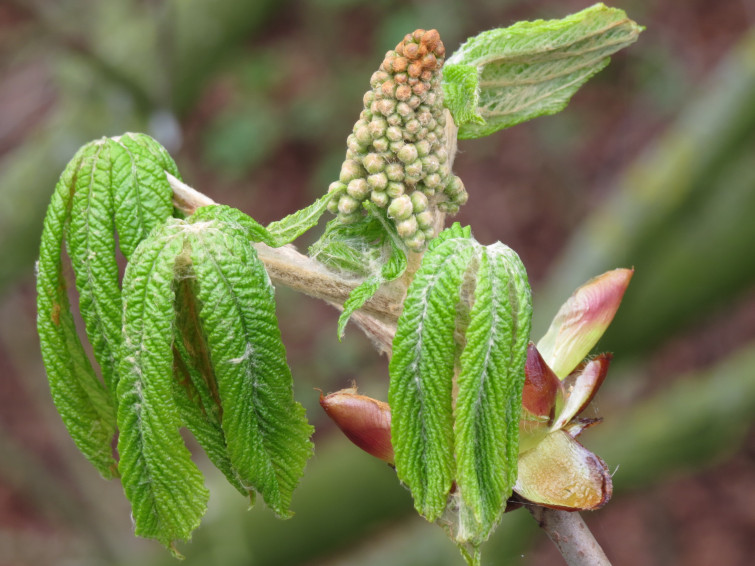
The buds break open in early spring to reveal their initially lime-green, compound palmate leaves. These are attached to the stem on long petioles.
The leaves are often very large (up to 40 cm across in the common horse-chestnut found here), especially so in shadier areas. They commonly consist of 5-7 obovate-shaped leaflets, and have quite obvious serrated margins.
Twigs: The hairless new twigs terminate with large sticky buds, which are one of the characteristic identification features of this tree.
Another is the noticeably large, horseshoe-shaped leaf-scar on the previous year’s stem. According to some authors, this feature has given us both the scientific and common names.
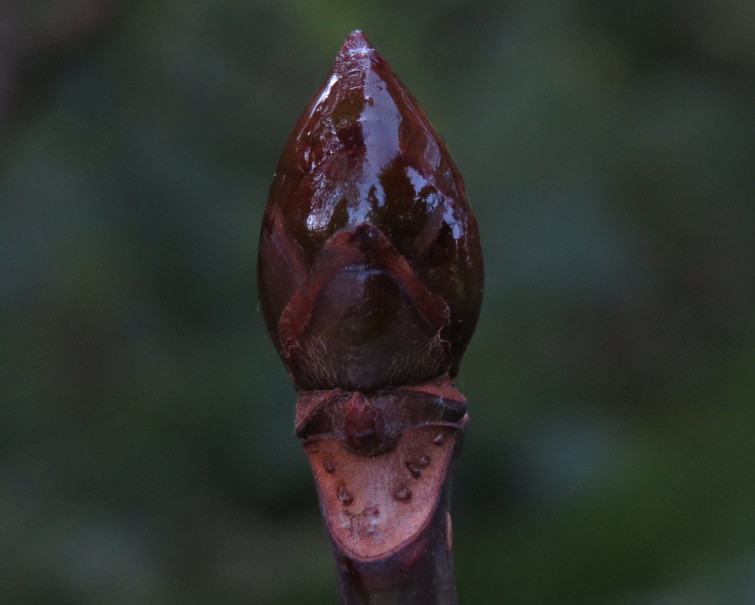
Buds: The horse chestnut has large, noticeably glossy, and sticky brown leaf buds.
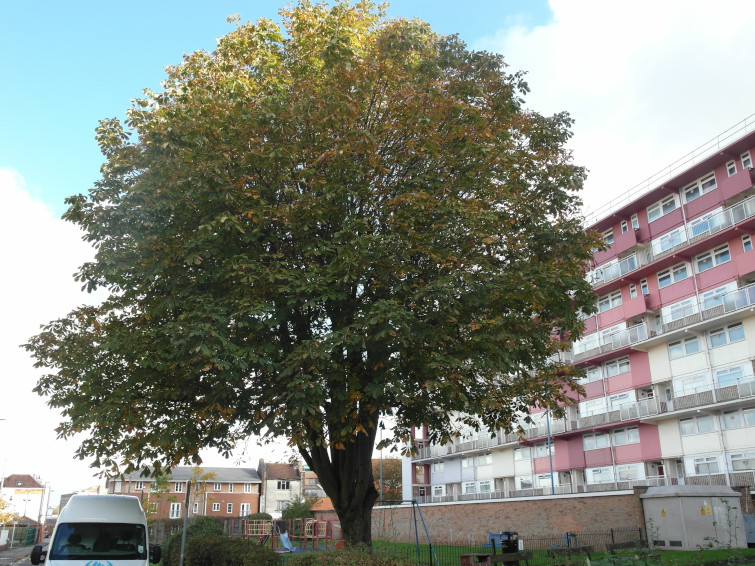
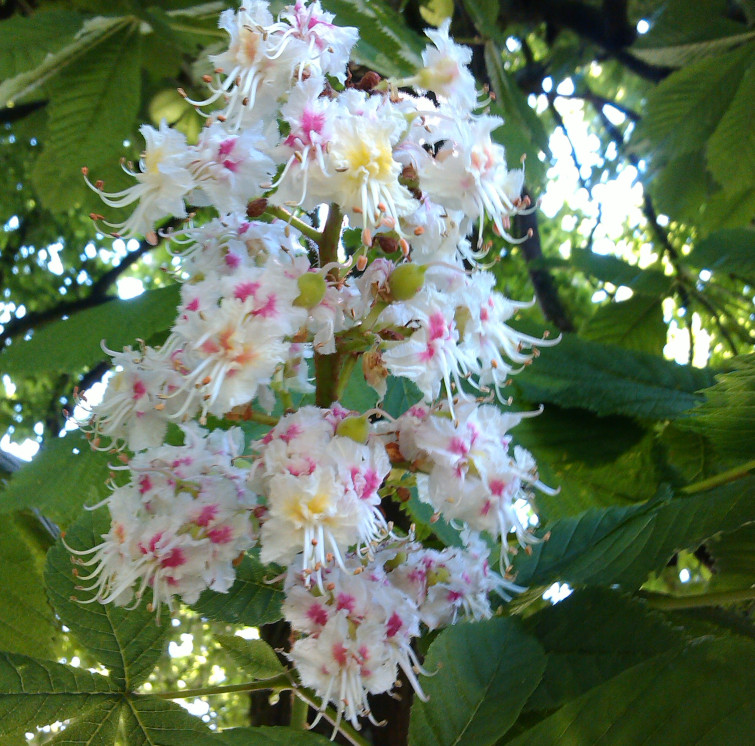
Sweet chestnut bark is grey-brown and more tightly fissured. Look around the woodland floor wherever you are and the leaves may well match the trees around you.
In reality, the differences are so stark as to ensure that there should be no real danger of misidentifying them.
Pests and diseases attacking horse chestnut
With rapidly increasing global temperatures, micro-organisms can find homes in places previously unsuitable. And so, in the last thirty years and more, the horse-chestnut has begun to badly succumb to the ravages of a few pathogenic organisms.
Two species of mould fungi from the Phytophthora genus (Phyton is Greek for plant, and phthora is Greek for destruction) are known worldwide for their mass killing of horse-chestnuts.
Their infection results in ‘bleeding canker’. These mould fungi are mostly pathogens of dicotyledons and reportedly responsible for approximately 11% of all bleeding canker incidences in Britain.
Since 2003, a different species of bacterium, known as Psuedomonas syringae, has swept through horse-chestnut trees in Western Europe with a new spate of bleeding canker.
Over half of all horse-chestnut trees in Britain are reported affected and showing symptoms of some kind.
This particular pathogen initially infects the cambium around the trunk and main branches. As it spreads, it cuts off the water supply to the crown.
Trees weep from the bark, with the gradual erosion of tissues. When the infection encircles the trunk, the plant will die.
The other major pest is a moth known as the horse-chestnut leaf miner (Cameraria ohridella). Many horse-chestnut specimens now show the tell-tale spotted and brown crinkled leaves which become visible early in the summer.
These infections may well be the result of an exotic plant suffering the eventual fate of all exotic introductions, i.e. a population being brought under control by organisms to which there are either no natural predators or to which the plant has no natural defence mechanisms. Enjoy them while you can.
Habitats to look in when foraging horse chestnuts
Harvest: When the fruits fall, or by lobbing a stick into the canopy to knock them off!. They will usually start dropping from mid-September to early October.
Key constituents: Saponins (including ‘aesin’ – a mixture of compounds); triterpenoid glycosides; coumarin glycosides (including aesculin); tannins; flavonoids; plant sterols (including sitosterol, stigmasterol and campesterol).
Actions: Astringent, anti-inflammatory, anti-oedema.
Pharmacology and uses: Anti-inflammatory activity has been documented for the whole fruit as well as the extracted saponin fraction.
Extracts excluding aescin also provide this action. The anti-inflammatory effect is thought to be due to a ‘sealing’ action on capillaries as well as by reducing the number and or diameter of capillary pores. The seed extract is also known to induce contractions in veins.
Because of these effects, horse chestnut seed extract has been clinically compared to allopathic medicines for chronic venous insufficiency of the lower legs. It has shown to be just as effective as many of the pharmaceutical medications available.
Preparations made from the horse-chestnut seed are used principally against circulatory disorders. It is documented to help tone and increase the strength of the veins especially.
The renowned German Commission E approved its use for the treatment of chronic venous insufficiency in the legs.
Used internally and externally, the horse-chestnut assists the body with inflammatory, circulatory problems such as varicose veins and haemorrhoids.
This has been partly ascribed to the inhibition of the action of hyaluronidase in the body (an enzyme that decreases the permeability of the veins), and as a result, venous fragility is lowered.
Externally it may be used as a cream or ointment for the same conditions as well as for leg ulcers and oedema (fluid retention and swelling under the skin).
Some studies have shown it to be effective in treating eczema. Sunscreen creams manufactured in Europe often have aesculin as an integral component.
Consulting with a professional health care worker before any self administered dosage of horse-chestnut is definitely advisable, as the circulation disorders and physical trauma associated with any swelling may be the sign of an underlying serious condition, which may not be treatable using the plant alone.
There is lots more information on medicinal plant constituents and actions in my overview of plant chemistry. To help you with harvesting wild plants, here are some valuable tips tricks and techniques to unearth.
Happy foraging!