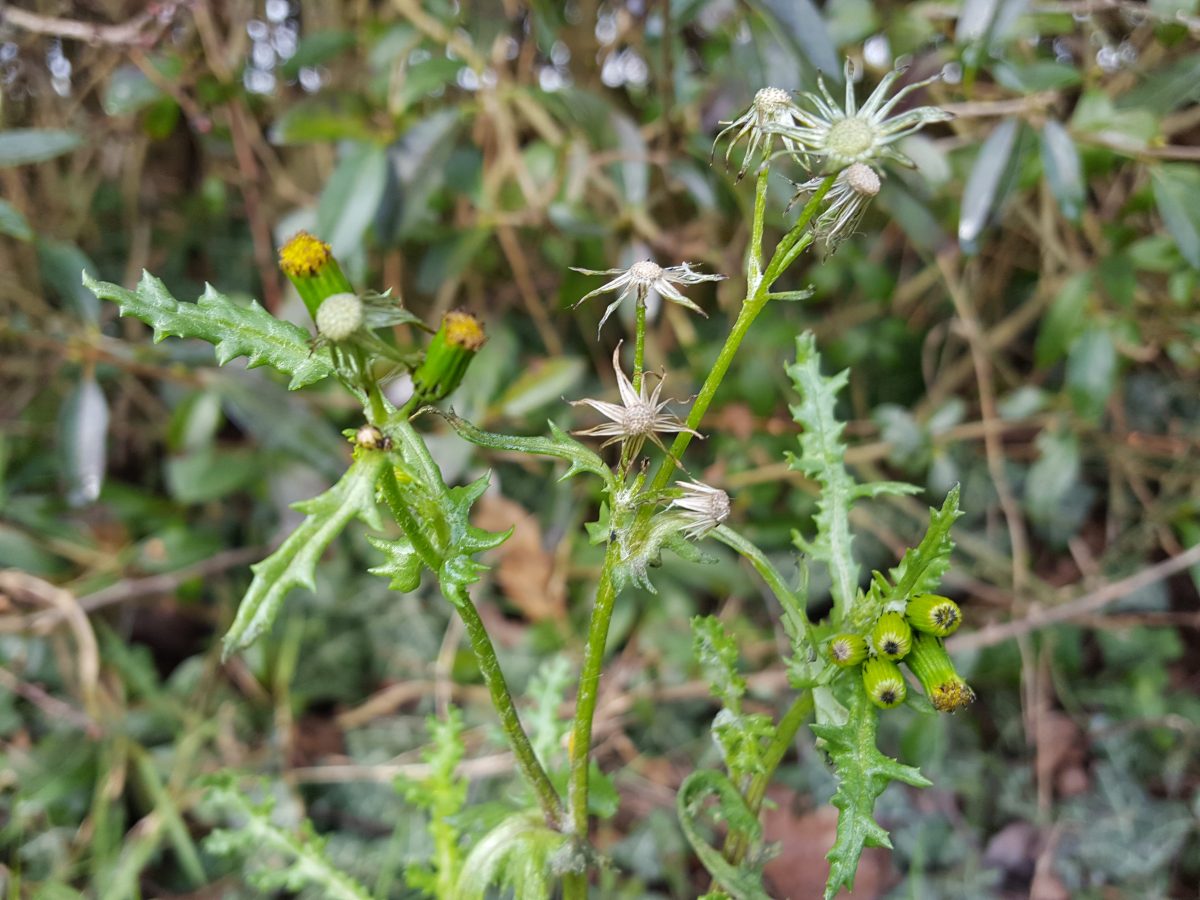
Learn how to identify Groundsel, with the forager’s guide to identifying Britain’s wild plants.
Groundsel (Senecio vulgaris). Asteraceae family
It really won’t take you long to know how to identify groundsel. This weedy plant is so common that you will already know it, whether you have put a name to it or not.
Those of you in the country may already recognise this plant as a weed of cultivated and disturbed soils. Whereas foragers in urban settings will notice it can be found all year, poking up all over the place in the concrete jungle.
So, just like many hundred of Britain’s wild plants, it will prove easier than you may have thought to identify groundsel.
What’s in a name?
The generic part of the scientific name Senecio comes from the old Latin word – senex for ‘old man’. This is in allusion to the wispy white hairs atrached to the tiny seeds of all the plants in this genus.
The specific part of the name vulgaris means ‘common’ or ‘garden’. Regular readers and plant lovers will know that many plants carry this sobriquet.
The common name groundsel is thought to be derived from the old English name ‘gundæswelgiæ‘. The prefix ‘gund’ being an old English word for pus.
The -sel part of the name groundsel, is believed to stem from the old English word for swallow – ‘swelgen‘. Therefore the name directly translates into ‘pus swallower’. The plant does indeed have a long history of use in herbal medicine as a poultice, to draw pus from wounds. In Scotch language it is known as ‘grundy swallow’.
Botanical description to identify groundsel.
Leaves: Dark green, pinnately lobed and noticeably downy hairy when emerging. The mid ribs are typically pink or red tinged.
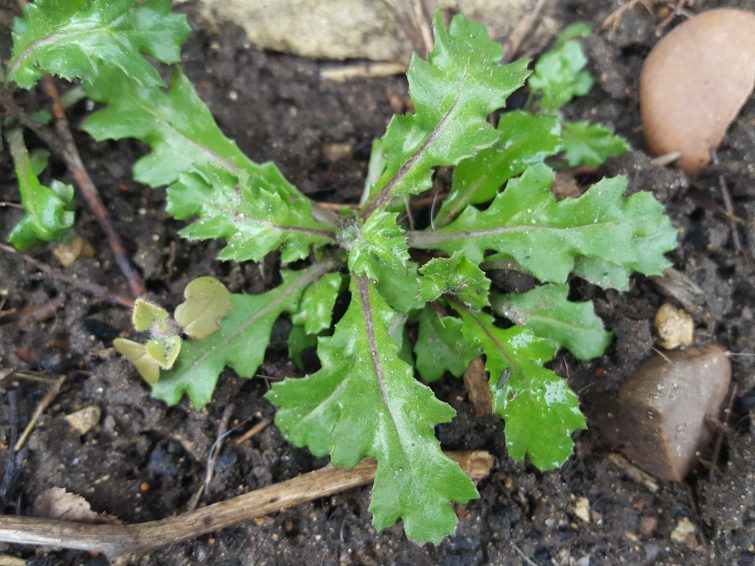
You will see it growing as small rosettes, looking a lot like its close relative, ragwort (Senecio jacobea). The leaf undersides are often purplish-coloured, and taper towards the base.
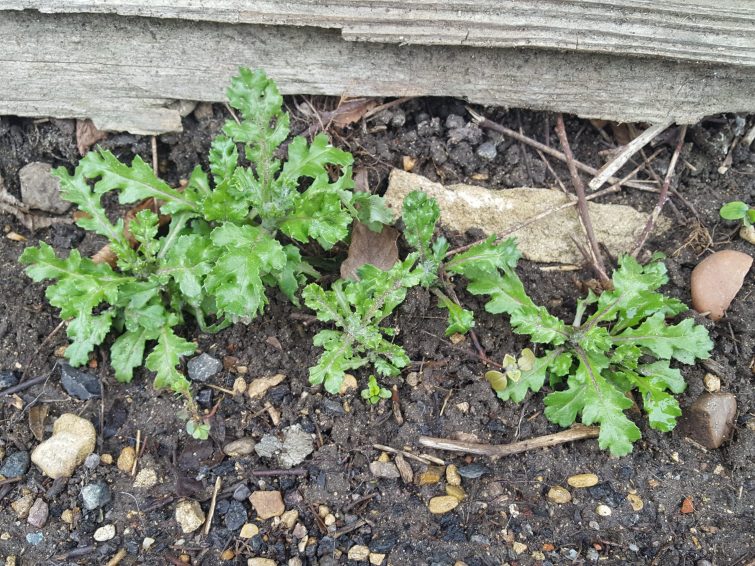
Petiole: Short or sessile. Often red-tinged.
Roots: Groundsel has a fibrous rootstock.
Stems: This is a small plant. Its green, downy-covered, branched stems can grow to around 40 cm high.
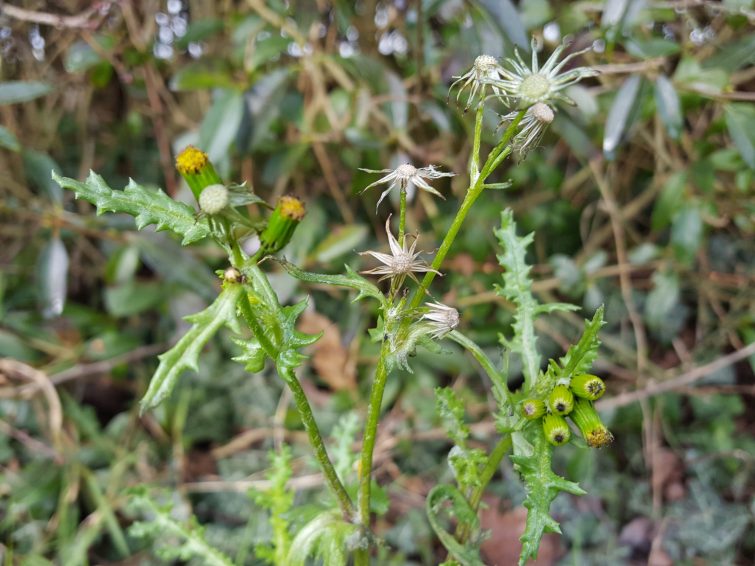
Flowers: Small yellow composite flowers with an involucre of long, narrow, and pointy green bracts. The bracts have black spots at the base and the tips. The flowers consist of disc florets only.
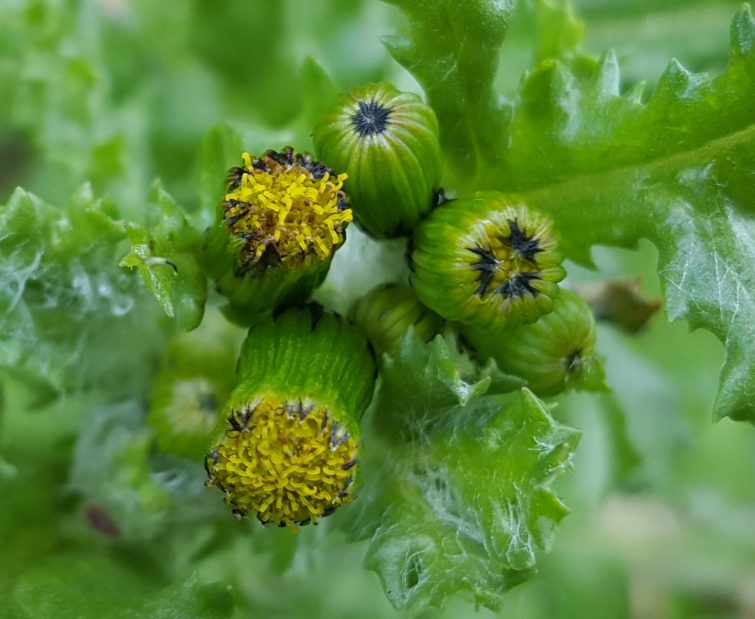
Flowering season: This plant is ephemeral in nature, only taking a few weeks to grow from seed to flowering. So it will happily grow and flower whenever it can.
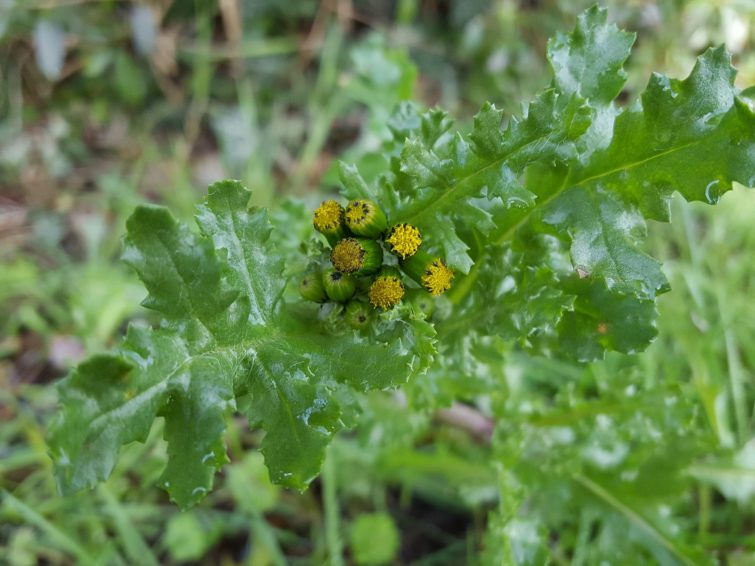
Fruits: Tiny achene fruits are attached to the familiar pappus hairs. This design aids their dispersal on the wind.
Habitats: Everywhere! It especially loves any disturbed soil and open ground, hence anywhere it can find room in all the various nooks, cracks, crannies and crevices, in every UK town and city.
Parts used: All the above ground parts are used in herbal medicine.
Harvesting: Whenever you find it ready to pick…which is almost all the time! You may want to take ten minutes to read my harvesting tips, tricks, and techniques.
Medicinal use: This herb was formerly used a lot in herbal medicine as Mrs Grieves reveals . Its chief uses are as a poultice for wounds, as well as being used internally for colic and worms.
Other notes: Contains pyrolizidine alkaloids, which are known to be toxic and carcinogenic to the liver. The standard advice about plants containing them is to not use them frequently and to avoid ingestion.
If you are wondering what to harvest during the winter months, then take a look at our at-a-glance guides to the best foraging in January and February.
If you have any questions about Britain’s wild plants, please do not hesitate to contact me.
Happy foraging!