Learn how to confidently identify the spicy water pepper, with the UK’s most comprehensive online foraging guide.
Water pepper (Persicaria hydropiper) Polygonaceae family.
When I finally got to know water pepper about 10 years ago, it was one of those great foraging moments. You know…when you discover a new edible wild plant and quickly realise it will immediately become a permanent fixture in your yearly hunting.
This fantastic peppery-tasting plant looks like a number of its relatives, such as the common weed of cultivation – red shank (Persicaria maculosa), but in its favourite habitat, water pepper will always stand out from the rest of the crowd.
What’s in a name?
The generic part of the name Persicaria – comes from the old Latin word for Peaches. This points to the similarity of the leaf shape.
Its specific name hydropiper – translates from the old Greek word for water – ‘hydro’, and the old Latin word for pepper – ‘piper’.
I love its other English common name ‘arsesmart’. Collectively, the dock family plants are known as smartweeds in North America. As my article on sorrel and other useful docks mentioned, the compound chrysophonic acid, found on the leaves, is responsible for any tingling or smarting. You can guess from its name where the tinging may arise!
If you are a student or practitioner of herbal medicine, you might want to take ten minutes to flick through this overview of other medicinal plant constituents and their actions. Moreover, all readers should get to know our common poisonous plants while you are here!
Water pepper botanical description.
If you do get stuck on any of the technical words and phrases here, then simply pop over to our glossary for foragers.
And if you are new to foraging, then you may also like to know that this quick guide is full of tips, tricks, and techniques to help you when you are starting out on your foraging adventures.
As a member of the dock family, this plant produces distinctive and easy-to-spot characteristics that help you identify them. You can now easily access the quick-to-remember plant patterns for all of Britain’s most common plant families, from my ‘how to identify plants in a day’ articles (parts one and two).
Leaves: Lanceloate-shaped leaves typically reach about 7- 15 cm long. The leaf narrowly tapers towards the base. They have slightly undulating, entire margins. The margins always have fine ciliate hairs.
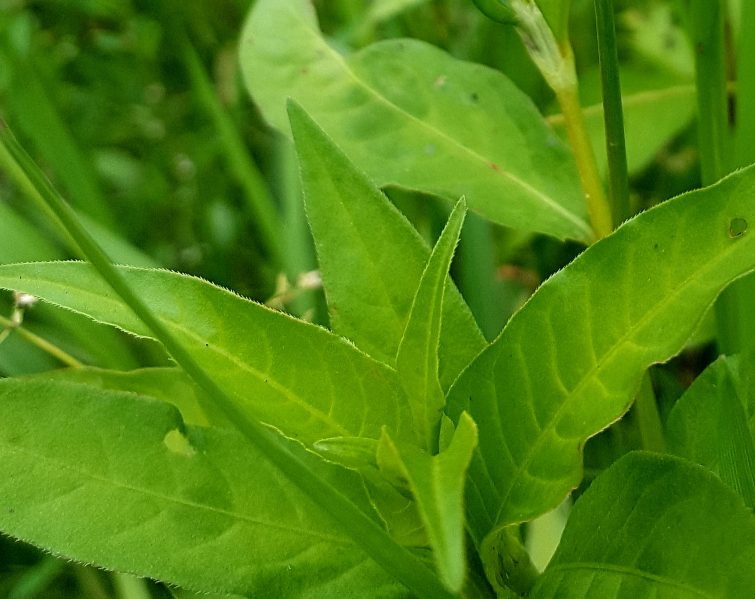
Unlike its close relative redshank, (Persicaria maculosa), the waterpepper does not have any large dark smudges, or spots, on its leaves. Lovers of Latin names may have already learnt that the name ‘maculosa’ comes from the word ‘maculate’ meaning spotted or stained.
Petioles: Short. They are not usually much longer than 2-5 cm.
Roots: The plant grows on a fibrous rootstock.
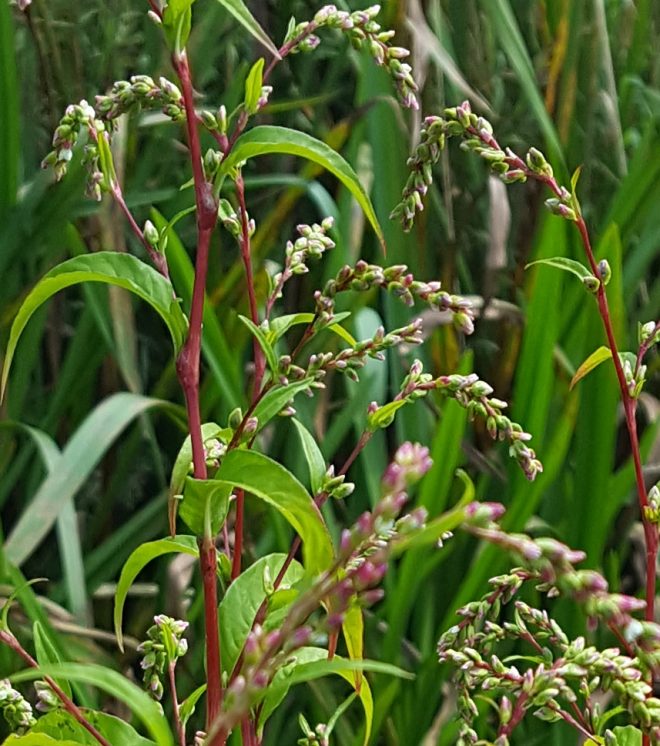
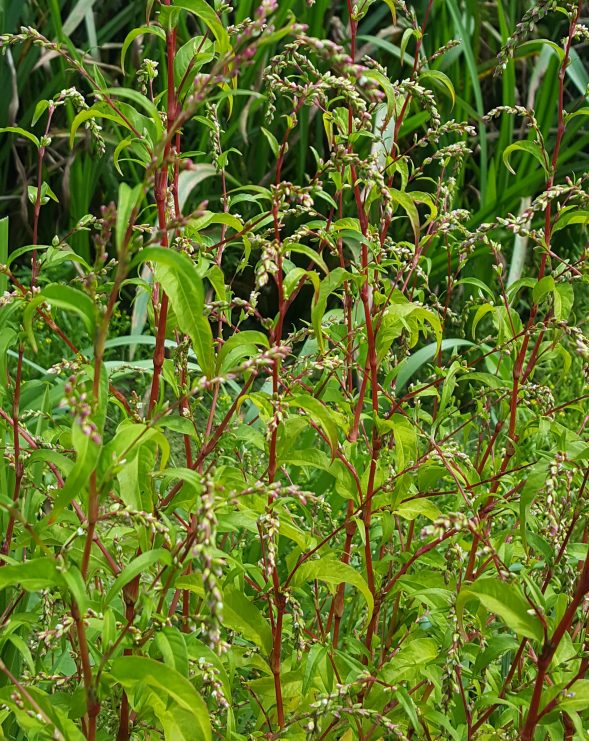
Stems: The stems can reach up to around 80 cm in flower. They can be quite red all over, or coloured just below the nodes.
A major identifying family feature is found on the stems. If you look at the node you will find a papery sheath surrounding it. This eventually turns brown, and can wither and fall off as the plant matures.
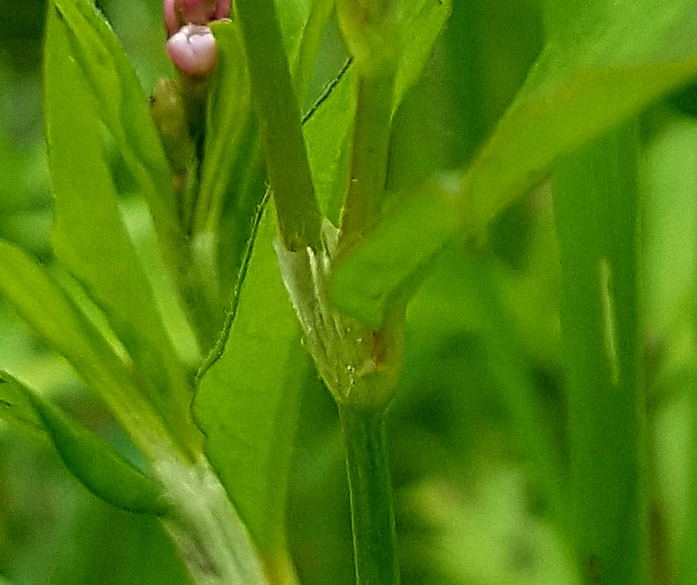
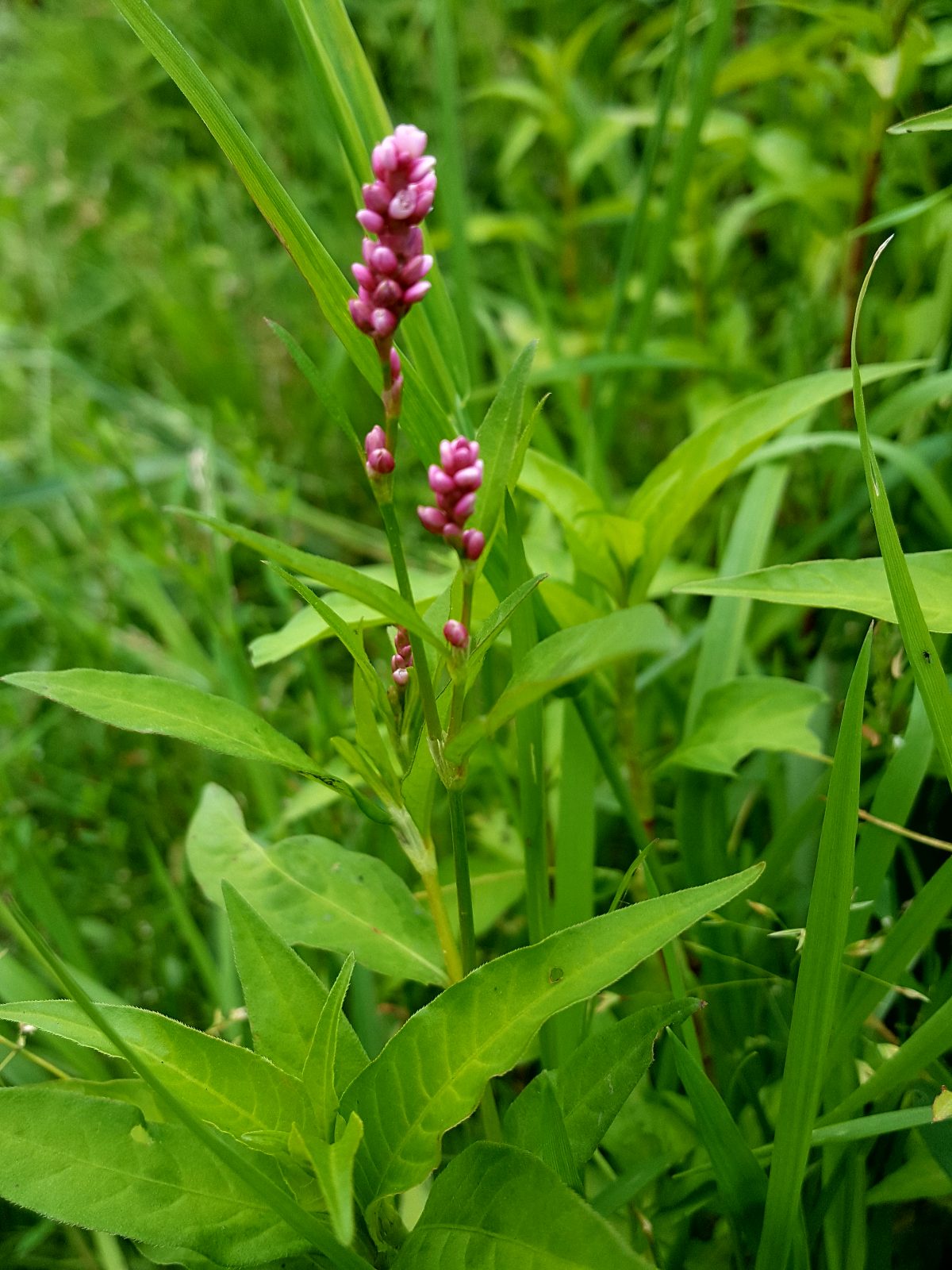
Flowers: The pretty flowers are produced on a loose, drooping raceme, that initially looks like a spike. I find the flowers generally coloured pink in this country, or occasionally white.
The flowers have no petals and 5 sepals only. Inside the centre of the flowers are 3 styles and anywhere from 4 to 6 stamens.
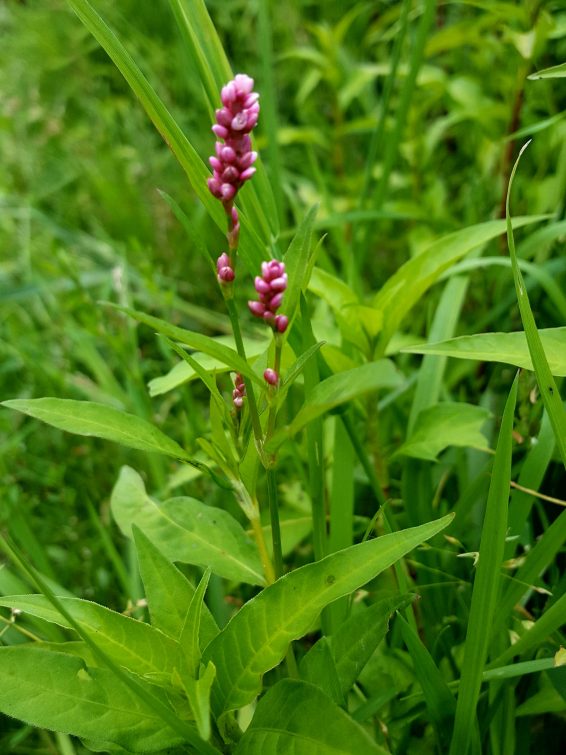
Flowering season: You can usually find the plant in bloom from June to September.
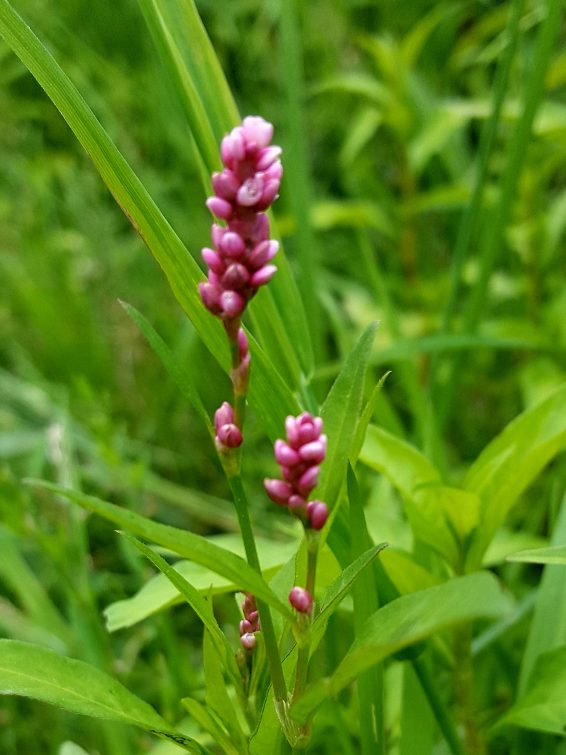
Fruits: The small fruits are tiny little nuts, coloured almost black, russet brown or copper. They have three-angled edges.
Habitats: Water pepper is a plant favouring damp muddy soils. It loves the edges of slow-moving water courses, such as streams, rivers, and ponds.
It will also be found in fields that endure quite a bit of winter flooding, as well as by wet woodland paths and streams that dry in the summer months. This is essentially a lowland plant that wont be found above altitudes of 500 metres.
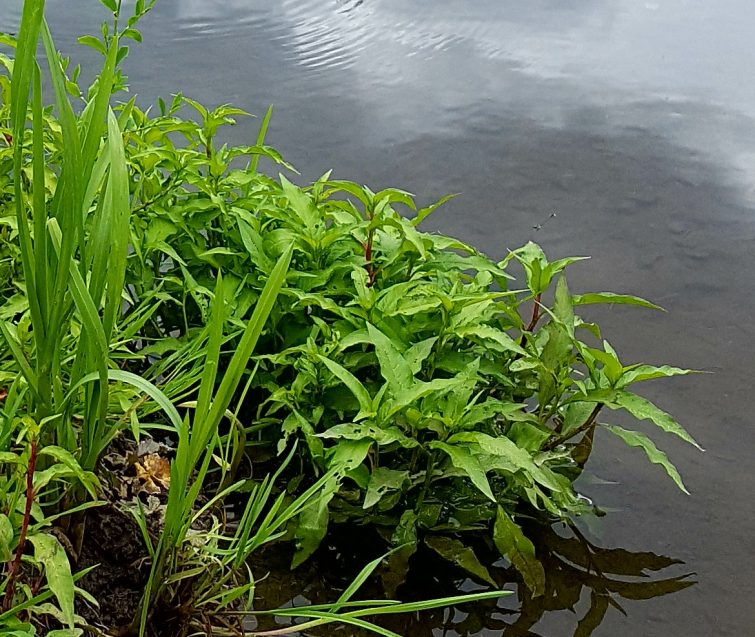
Parts used: Leaves and pre-flowering tops.
Harvesting: The leaves are best in spring and early summer. You can use them fresh, or dried and powdered, as you would other spices. The flower buds and young stem tops can be harvested when they are still drooping.
Other notes: This plant is used in many different countries cuisine, especially in the Far East. Similar looking plants such as the Vietnamese coriander (Persicaria odorata) are also widely used in cooking in Asia.
Stand by for more plant identification help coming up here on Wild Plant Guides. Until then, happy foraging!