How to identify Lords and Ladies (Arum maculatum) Araceae family

Ensure you never pick the leaves of this poisonous plant by mistake, with our UK foraging guide to identify Lords and Ladies !

This article on how to identify lords and ladies could save your life! How? Because this plant is an ever-present danger for novice foragers everywhere in the UK.

For complete beginners I will take you through all its stand-out features, and its little-known characteristics, helping you to get to know and positively identify it, no matter where you find it. To keep you safe all year round, this website also shows you Britain’s other poisonous plants.
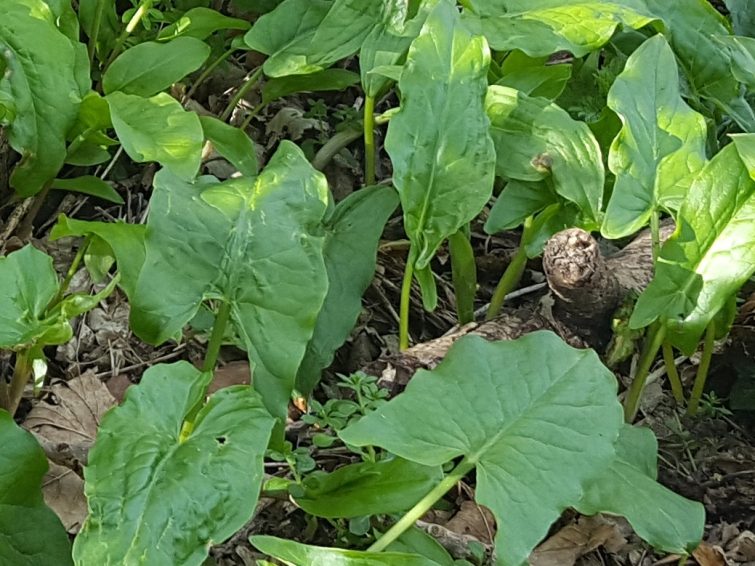
It's easy to identify Lords and Ladies if you pay close attention to the features of its leaves.
It’s easy to identify the poisonous Lords and Ladies if you pay close attention to its leaves.

Interestingly, this plant has also been used as a food source. Only a few hundred years ago people were extracting the starch from the corm of the plant. Portland sago was the name commonly given to the product made on the island many years ago.

Quite how tbey managed to extract the abundant starch without the potentialy deadly calcium oxalate crystals, I’m still not completely sure. I did read many years ago that it was a hugely labororious and time consuming process, and surely one driven by a lack of other food, as well as economic factors.

If our an ancestors used and valued it as a food source then this begs a couple of questions…how little food did they have? Or maybe more importantly, what skills and knowledge did they have that we do not?

Until armageddon, I am happy to treat this plant as a poisonous plant that I leave alone. For that is what the raw plant is. All of it!

What’s in a name?

The generic part of the name Arum comes from the old Greek word ‘Aron’, the name which they called the plant.

l cannot seem to find any other explanation about the origins of the name.

The specific part – maculatum, comes from the word maculate, meaning spotted. Many, but not all of the specimens you will find, have spotted leaves.

Botanical description to identify Lords and Ladies.

Leaves: The leaves are broad, and arrow-shaped, with large, rounded basal lobes. These are always present. The plant is hairless.
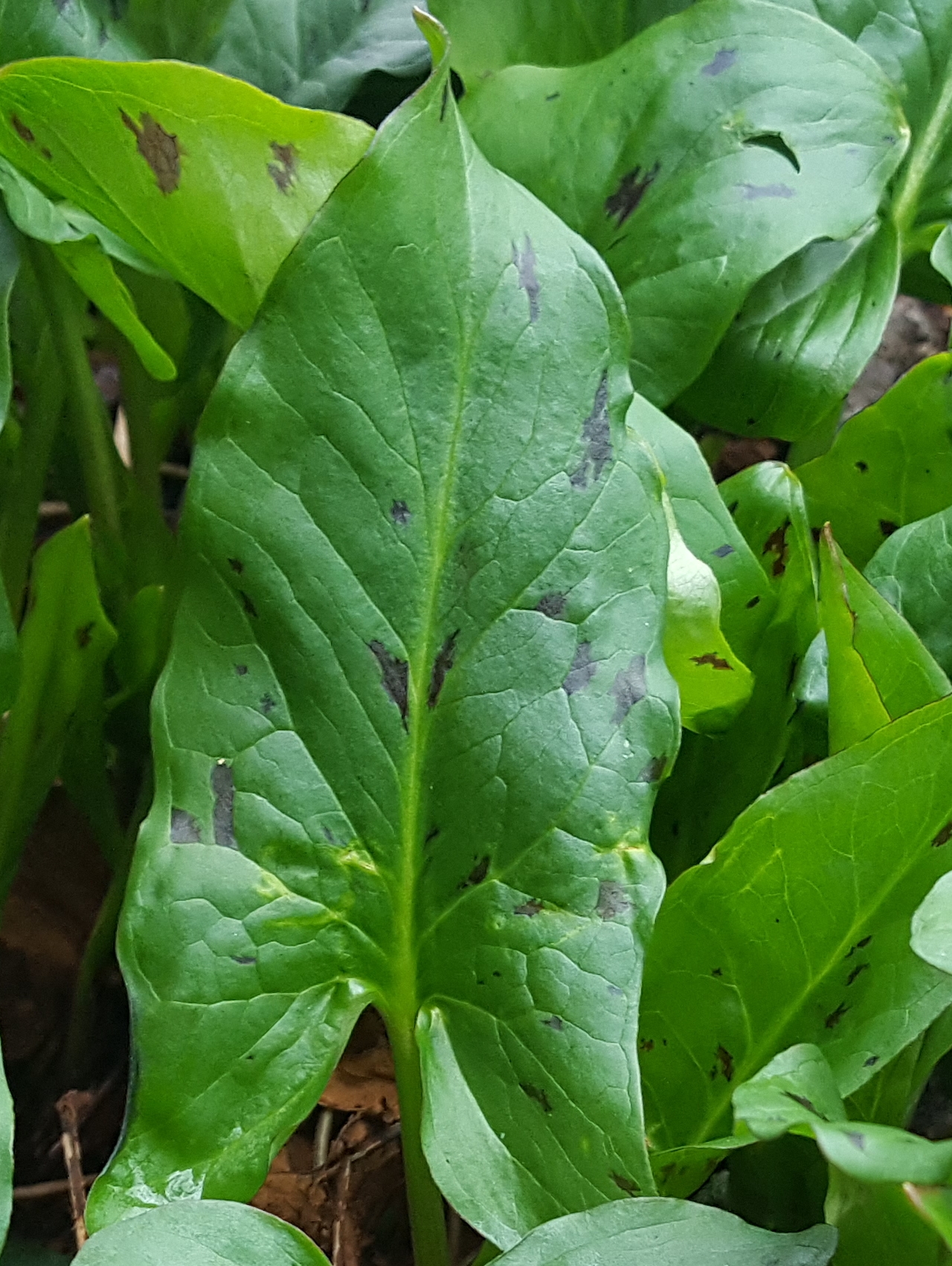
Broad, glossy, and hairless, arrow-shaped leaves emerge in January.
The broad, glossy, and hairless, arrow-shaped leaves help identify Lords and Ladies when appearing in January.

Leaf veins are in a net pattern, with anastomising veins at the margins. As you can see, the veins join together forming a single vein running around the leaf about 5 or 6 mm from the edge. This feature helps to differentiate it from common sorrel, which also has arrow-shaped leaves and can be found sharing the same hedgerow or shady field margin.
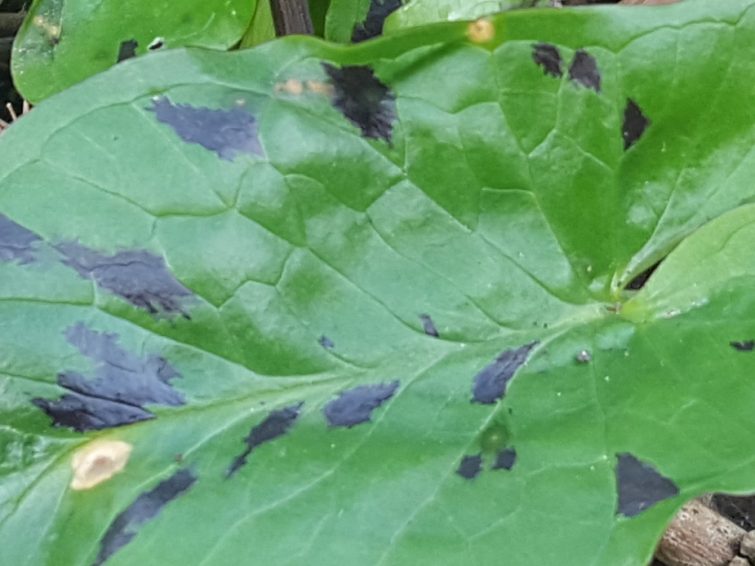
The anastomising veins help to identify Lords and Ladies, and differentiate it from similar-looking plants.
The distinctive anastomising veins help to identify Lords and Ladies, from similar-looking plants.

When mature, a leaf will typically reach up to 20 cm long. In some places you will find carpets of leaves.
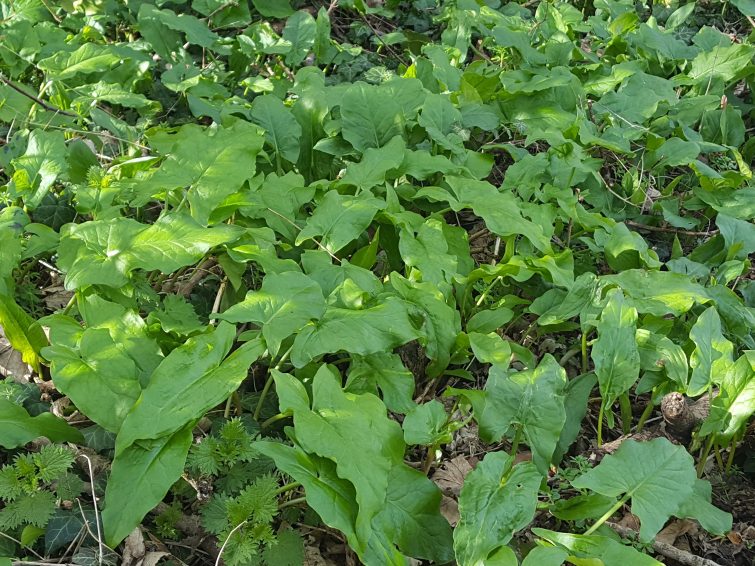
Carpets of Lords and Ladies adorn our woodland floors in February.

As mentioned previously, the leaves will often show dark spots or streaks.
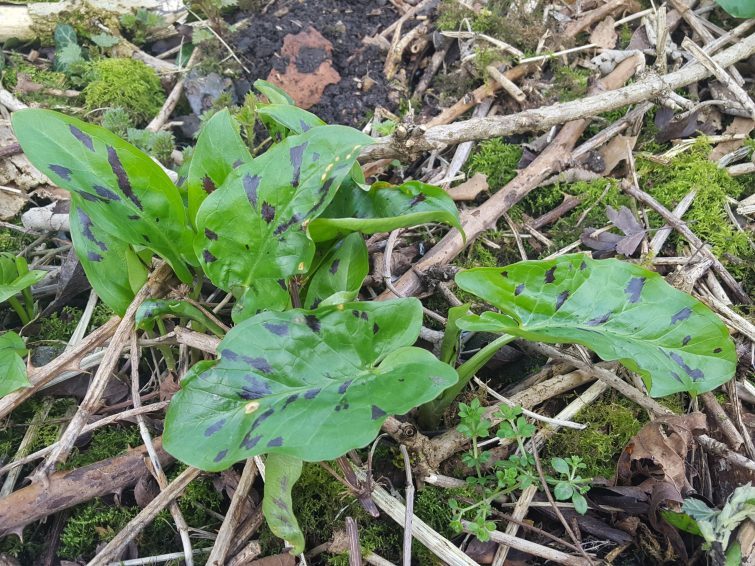
The spotted leaves are not always but often present on Lords and Ladies, and give rise to its scientific name.
The spotted leaves are not always but often present on Lords and Ladies.

Every now and again, especially in urban settings, you may see a very similar-looking, but variegated plant. This will be the garden escapee and close relative A.itallicum.
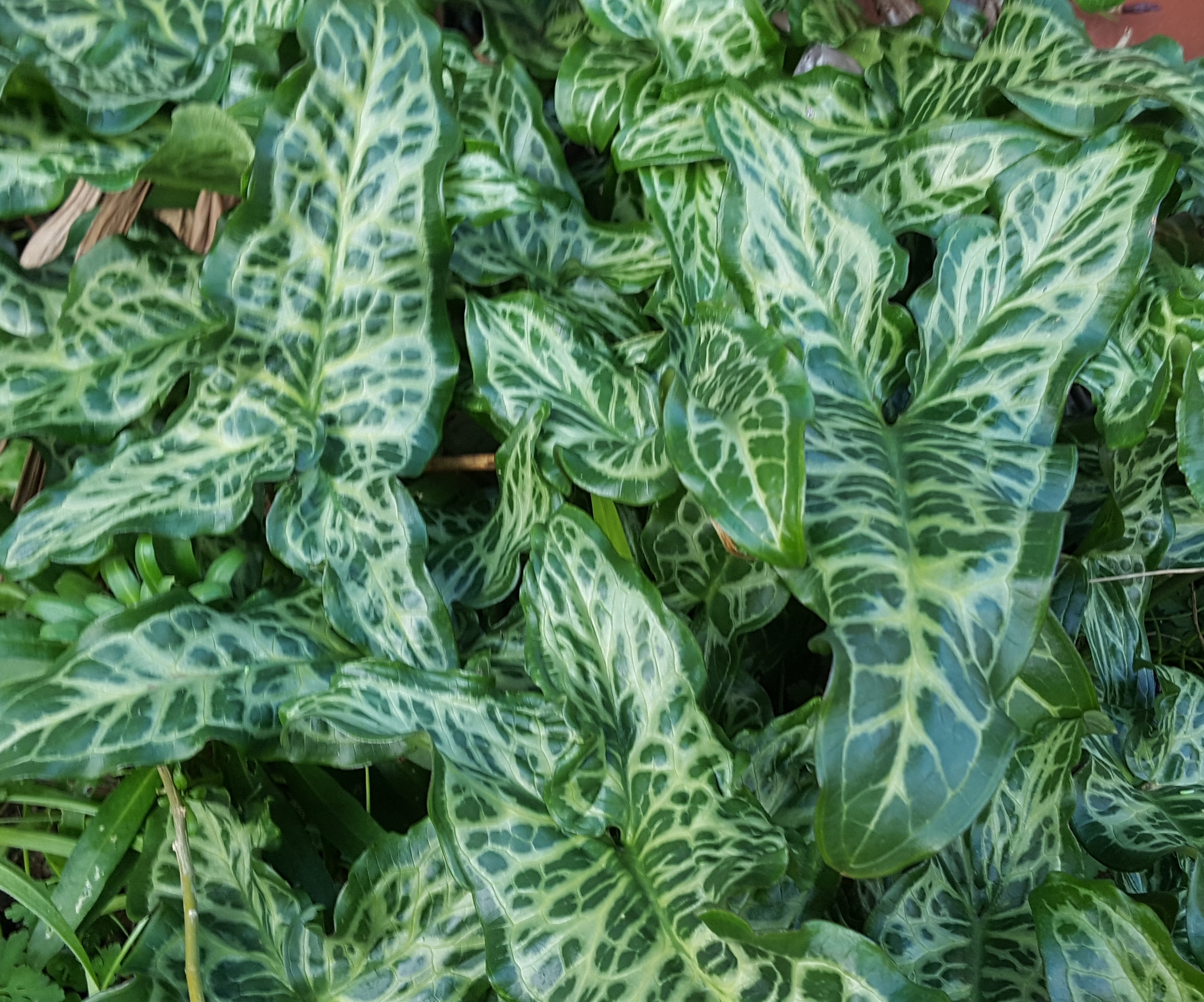
If you find an Arum with variegated leaves it will be the closely related species A.itallicum
If you find an Arum with variegated leaves, it will be the closely related species A.itallicum.pq

When first emerging, the leaves are rolled, and it is at this early stage when you could potentially mix it up with wild garlic (Allium ursinum).
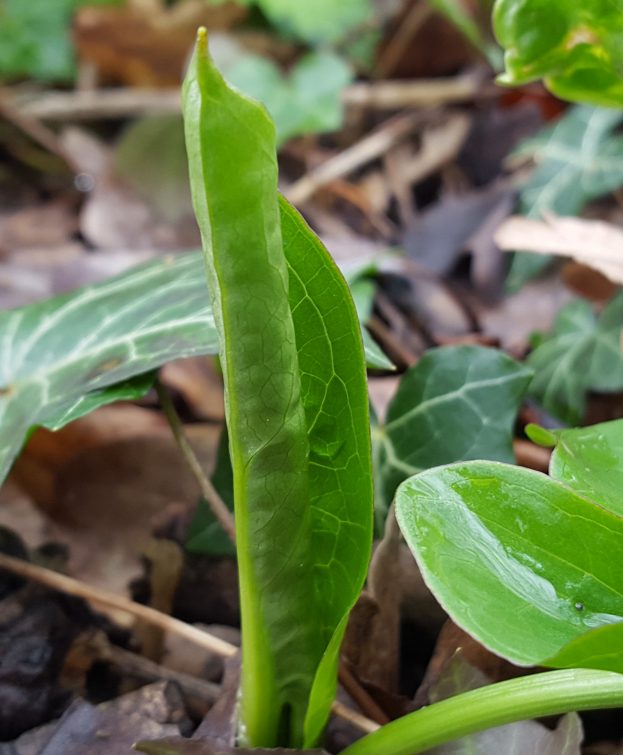
When emerging, the leaves are rolled and potentially mistaken for wild garlic which emerges with similar energetics.
When emerging, the leaves are rolled and potentially mistaken for wild garlic.

Lords and Ladies will regularly be found in amongst patches of wild garlic. Please  note that it is of no use, and simply not safe, to listen to online ‘know it all’s, who simply say “if a plant smells of garlic it must be garlic”!

This is because handling some garlic leaves will obviously mean your hands smell of garlic! It is important that you know what to look out for that sets them apart from each other.  So, in order to further your plant identification skills and fast track your foraging, I have published the articles ‘how to identify plants in a day’, parts one and two.
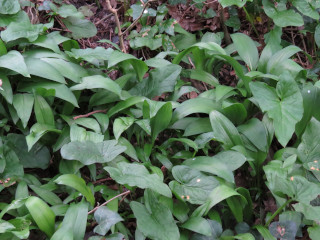
Lords and Ladies nestling amongst wild garlic. Make surexyou know the features that help you identify Lords and Ladies.
Lords and Ladies is often found nestling amongst wild garlic patches.

Petioles: Grows to approximately 10 – 20 cm long, and sheathed at the base of the leaf.

Roots: Small turnip-shaped corms. Like other bulbs, these brown-skinned, starchy roots produce new leaves in winter and spring, then set flower and seed by summer.  The plants are dormant from late summer to mid winter.

Stems: A single flower stem rises from the plant  during April and May. Usually no more than 20 – 25 cm high.

Flowers: Botanically this type of inflorescence consists of a hooded spathe, and the reproductive organs of the phallic-shaped spadix. The spathe is pale yellow-green and sometimes spotted, while the oblong-shaped spadix is purple or yellow. You can see why the minds of country folk started calling it Lords and Ladies!
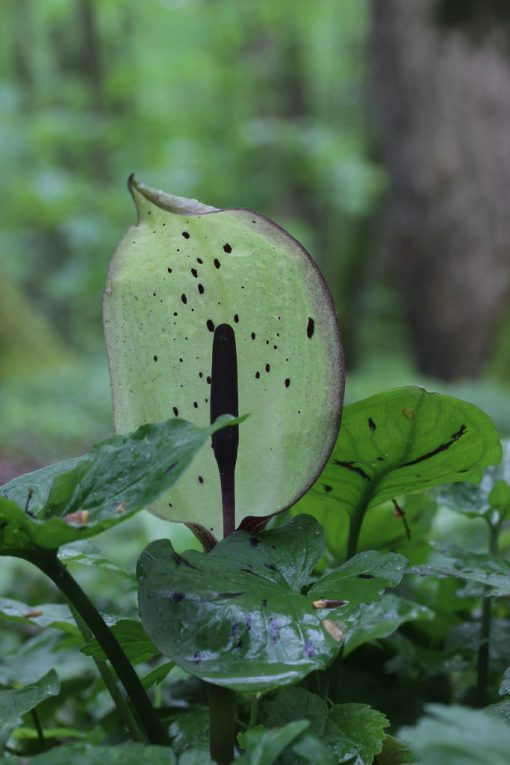
The hooded spathe and spadix of “Wild Arum – Arum maculatum” by Björn S… is licensed under CC BY-SA 2.0

Flowering season: Field guides will tell you it can be found in bloom from April to June.

Fruits: Clusters of orange-red berries tightly held to the stem. These are one of the few plants my mum warned me about, as they are at so accessible and look so shiny and appealing. You will start to see lots of them from June.
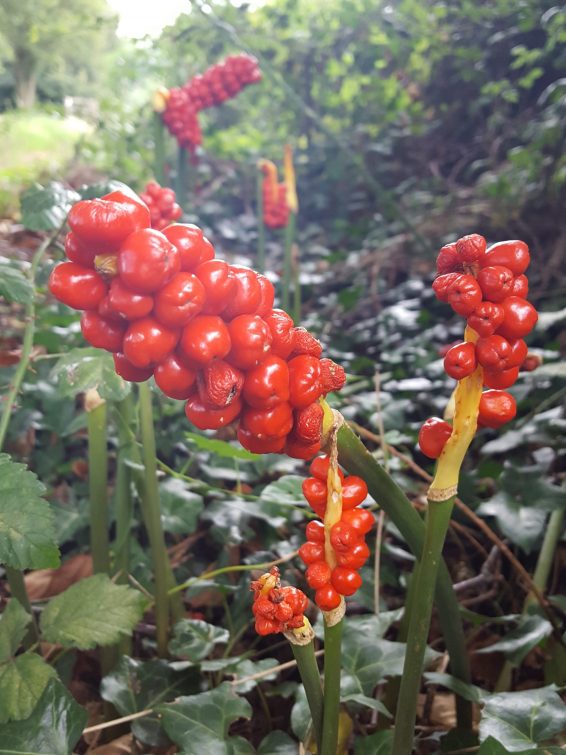
Clusters of bright orange-red berries make it easy to idemtify Lords and Ladies in late spring and summer.
Clusters of bright orange-red berries make it easy to identify Lords and Ladies.

Habitats: A natural lover of woodlands, copses and shady hedge-banks. As you can see from this map, the plant grows in all lowland areas of our islands up to around 425 metres, so you can learn how to identify Lords and Ladies pretty much anywhere in the UK.

Other notes: The plant is also full of saponins which can be toxic to us in large concentrations. Like other Arum family plants, this plant is pollinated by flies and midges.


Foraging Primrose Flowers (Primula vulgaris) Primulaceae family

A guide to foraging primrose flowers in Britain. Learn how to identify and use these delicately-scented early spring blooms

I would guess that people have been foraging primrose flowers for as long as we have known them. These universally popular plants are one of the most beautiful of all our woodland flowers here in Britain.

You cannot help but find this plant in most parts of the country. Its gorgeous yellow and orange-centred flowers often appear in large carpets when you are foraging in March and April.

The best time to go foraging primrose flowers is mid to late March and early April
Foraging for primrose flowers is quick and easy in March and April.

There aren’t a huge number of plants with which people have an unbroken relationship. Blackberries, sloes, rosehips, nettles, and wild garlic all spring to mind as plants that country people have always made time for harvesting. Primroses are surely another of these plants, whose lives intertwine with ours at least once a year.

Primrose flowers are a sweet scented delight to find when you are out foraging
The delicately-scented primrose flowers are popular bedding plants, always available at Easter.

Primroses, or at least primrose bedding plant sales, are often associated with Easter. I like to think that our Western European pagan ancestors would also have gone foraging primrose flowers, to celebrate the much more ancient spring festival honouring the goddess Eostre.


What’s in a name?

Both the English common name and the scientific name tell us of its early season flowering habits. The generic part of the botanical name – Primula, comes from the Latin word ‘primus‘, meaning first.

The specific part if the name – vulgaris, simply means common or garden.

Our English common name ‘primrose’ is therefore self-explanatory…even though it’s not a rose family plant.

Botanical description to identify primrose

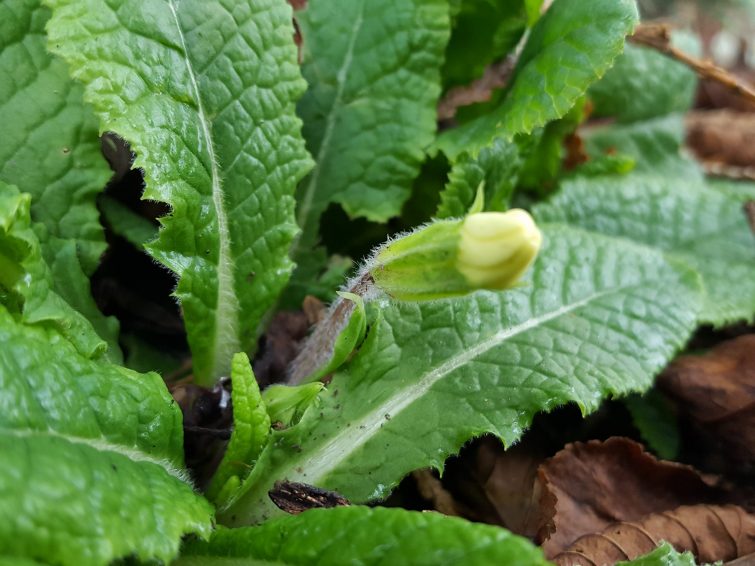
Leaves: The leaves on mature plants will overwinter as untidy-looking  rosettes, although new leaves also start to appear in the late winter.

Primrose leaf rosettes can be found over-wintering
Primrose happily over-wintering in Wolvercote, Oxford, in mid January.

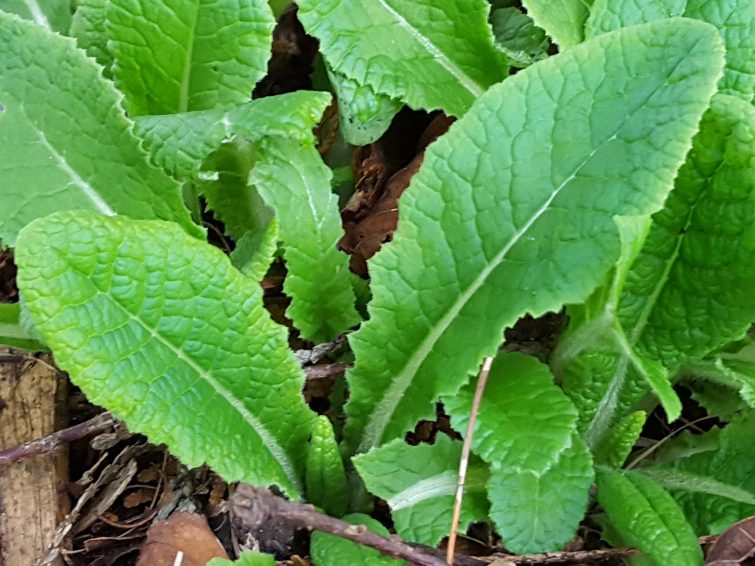
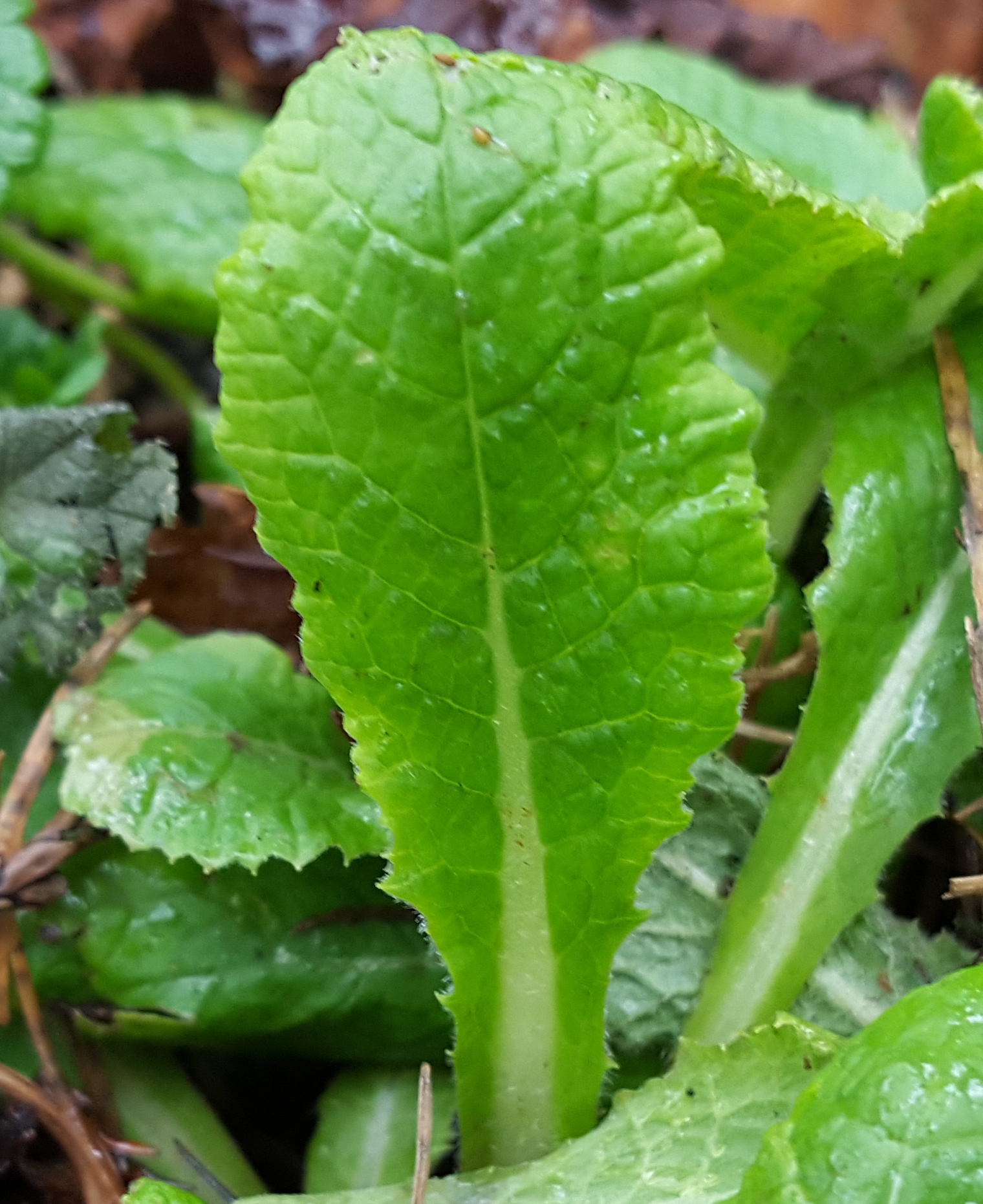
The leaves emerge rolled. When unfurled, they are typically obovate to spathulate-shaped. Their white mid-rib is broader at the base and tapers off near the apex.

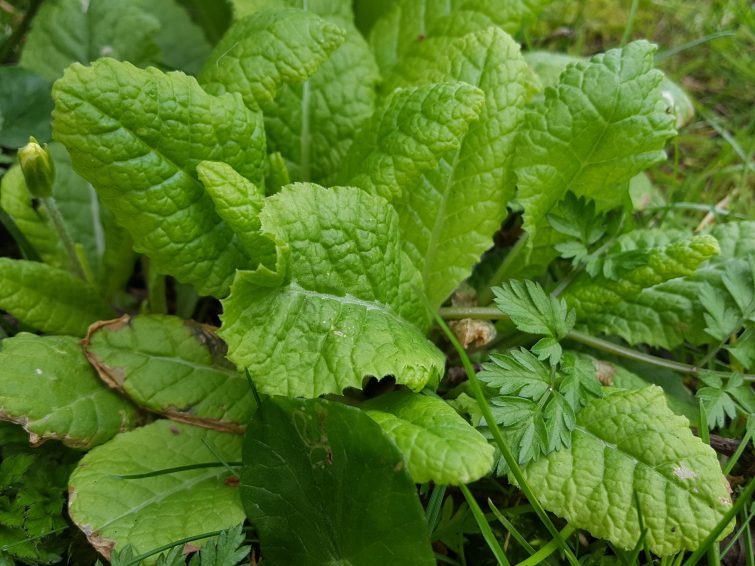
primroses have broad, hairy and wrinkled leaves
Primroses have broad, hairy and wrinkled leaves that l emerge rolled.

The hairy leaves are often wrinkly and a little crinkly at the edges, a bit like myself. The margins have numerous teeth and tiny white hydathodes at their apex.

The wide leaves taper towards the base, while the distinctive white mid-rib tapers towards the apex.
Primrose has a distinctive white mid-rib that tapers towards the apex.

Petioles: No.

Roots: A perennial rhizomous rootstock.

Stems: Each flower is held on a thin and hairy, drooping flower stalk. This extends to approximately 10 – 15 cm long. Each plant produces numerous flower stalks.


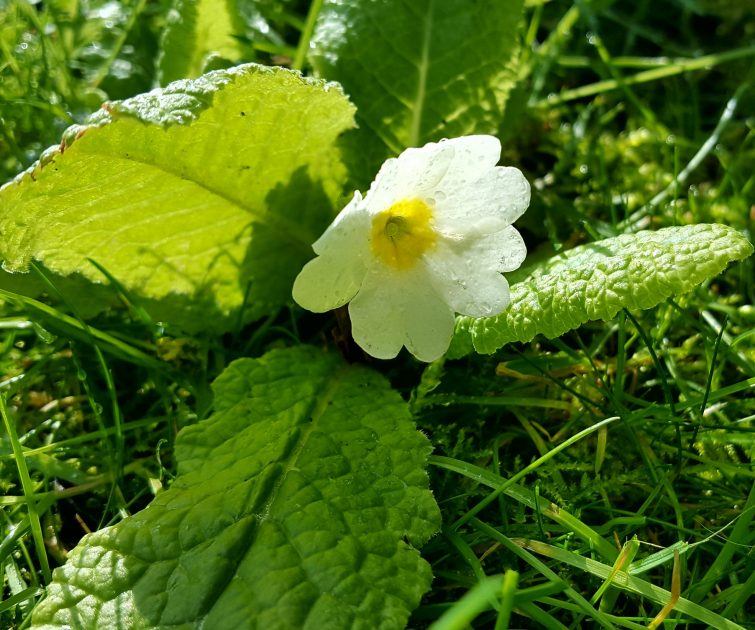
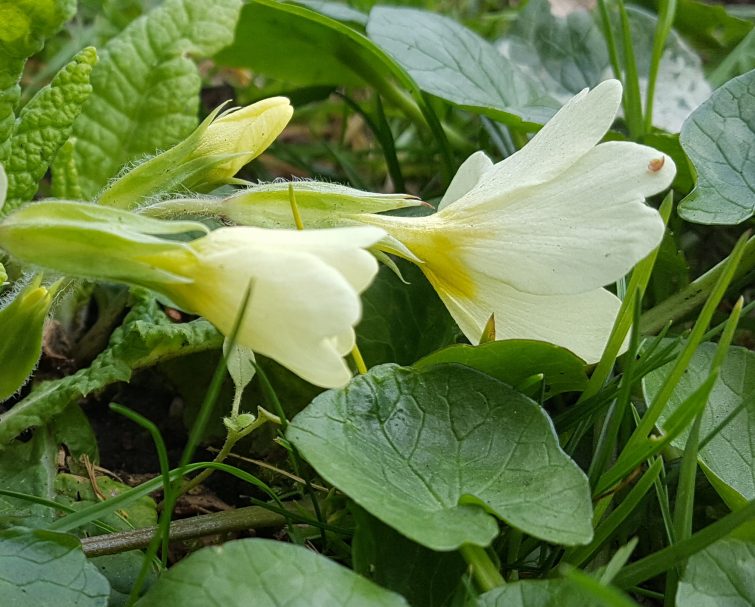
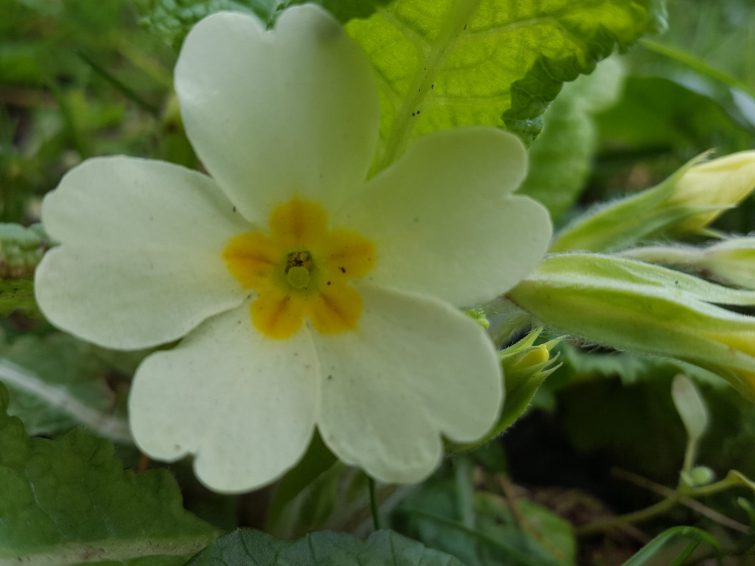
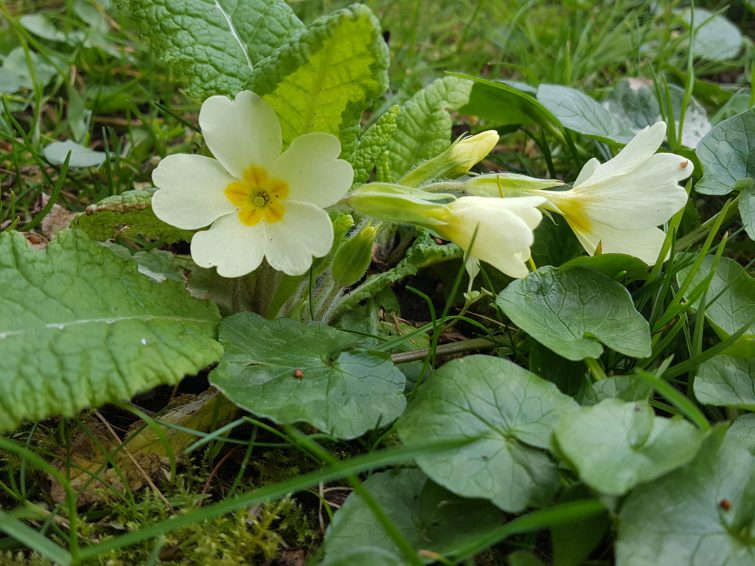
Flowers: The flowers are delicate-looking, but hardy enough to survive the sometimes biting-cold March weather. Primrose flowers have stunning light-yellow, notched petal lobes, fused together in a corolla tube.

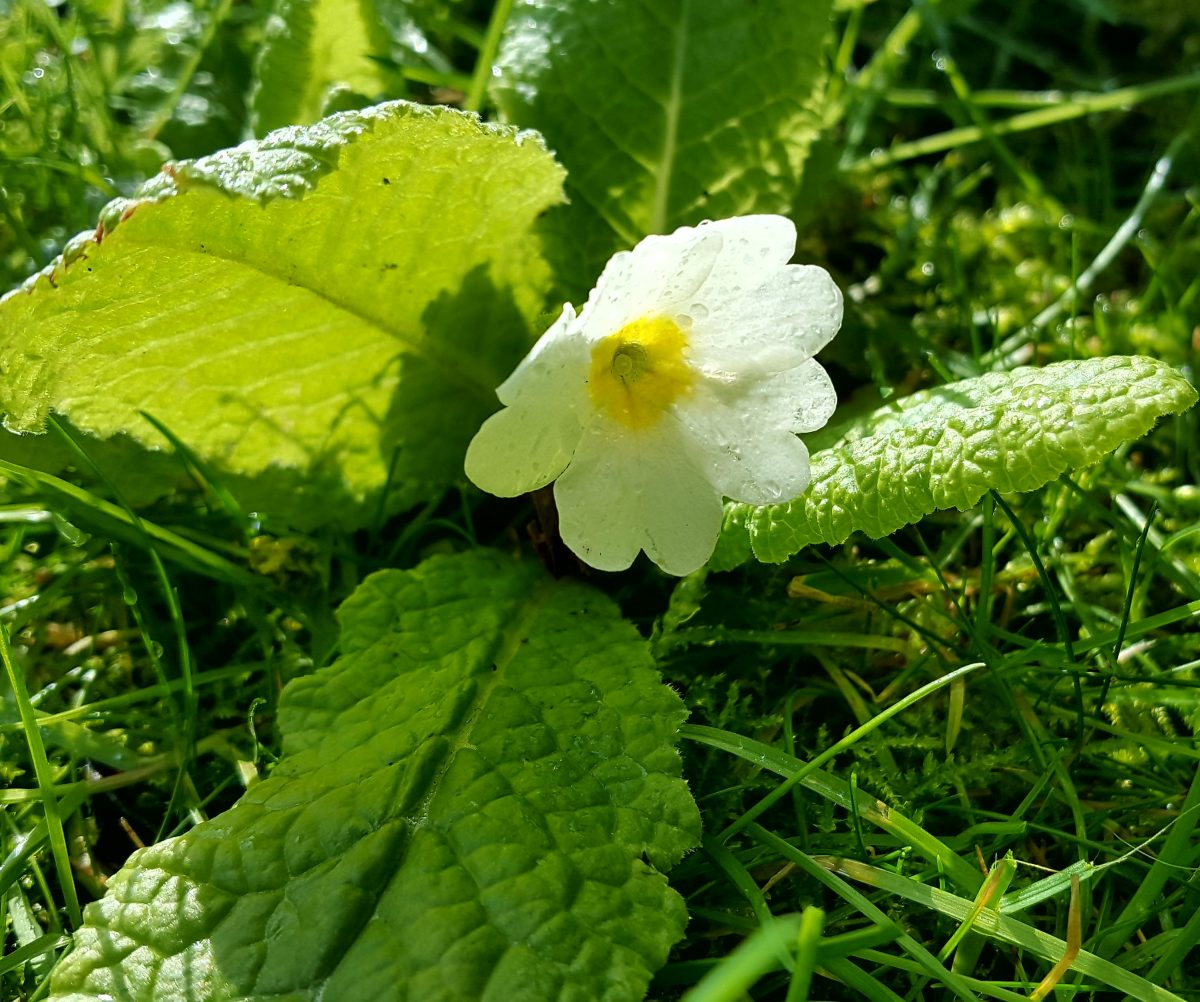
In the centre of the flower is the beautiful two-tone orange spot. The corolla sits in a long, green and hairy calyx with five pointed lobes.

Primrose flowers are held in a long, hairy calyx tube with pointed lobes
Primrose flowers are held in a long, hairy calyx tube, with pointed lobes.

A yellow, flat and round-headed stigma is visible in the centre of the flower. Sometimes the pollen-loaded anthers are found above the stigma, sometimes below.

The notched, fused petals of primroses with their two-toned orange spot in the centre
Primroses have five petal lobes and a two-toned orange spot in the centre.

Flowering season: March and April. During flowering they are a food source for butterflies.

Fruits: The small seeds ripen to a black colour, maturing in round seed pods. The seeds are distributed by ants.

Habitats: This plant loves a damp and shady spot. These will include woodlands, copses, hedgerows, grassy banks, parks and gardens. It can be found in all areas, but for the highest mountains of Britain. The plant is an indicator of ancient woodland.

Parts used: The flowers and young leaves.

Harvesting: Collect the young almost-open flowers by pinching them about halfway below where the petals fit in the calyx tube. The corolla should slide out easily enough. Leaves are best harvested when very young and tender. In my harvesting guide you can discover more tips and tricks on picking our wild plants.

Edible uses: The flowers can be tossed into salads. They are popularly used to make crystalised sugar flower treats, using egg white and sugar syrup. These are often added as decoration to cakes. Many country wines are made from the flowers. I like to make infused vinegars and cordials with them too.

The leaves can be added to salads when young. Otherwise, they get too tough and bitter. To my palate there are hints of lemon in the baby leaves.

Medicinal uses: Traditionally used for a range of conditions. The whole plant has been used to treat all manner of muscular cramps, spasms, and rheumatic pains. More information on primrose can be read here in Mrs Grieves’ classic “Modern Herbal”. You may also like this overview on medicinal plant chemistry.

Other notes: Primrose can occasionally hybridize with other common relatives such as the cowslip (P.veris) and the oxslip (P.elatior).

If you liked this article and are just starting out foraging then why not dive in and discover how you can identify thousands of plants in a day!


Happy foraging!


Foraging in March for Britain’s Wild Foods.

At-a-glance UK wild food guide to foraging in March.


Foraging in March starts to get me really excited, because the long winter wait for abundant fresh new growth is almost over… almost!

Hopefully, by the time we reach the spring equinox, with the days and nights of equal length, we are able to pick and choose from many dozens of wild plants. We also know that summer is only three months away.

So, now we are rapidly returning to one of the busiest times of the foraging year (unless that is, we are experiencing bitterly cold ‘beast from the east’ winds and its associated snowy conditions).

As ever, the weather in Britain is extremely changeable and dominates what we will or won’t be foraging.

If you have watched my video on violet flowers then you will know some plants react in their developmental stages solely to daylength, rather than temperatures.

This means we will generally find them doing their thing, pretty much right on cue, no matter the weather. Other plants are the opposite and will be slowed and checked by low temperatures. 

One of the finest flavours for me at this time of year will be found on the flowering currant…a plant I immediately started calling the ‘thyme n sage’ currant a few years back, for reasons that will soon become apparent.

None of the following March plants are too tricky to identify, especially when using my handy, waterproof, field-guide style, I/D cards. These pocket-sized cards should help fine tune your field skills, and make you more confident when identifying unknown plants in the wild.

Learning the easy-to-remember plant family patterns in part one and part two of  my ‘how to identify plants articles will also increase your abilities to positively I/D plants when out foraging this spring. As will knowing Britain’s poisonous and toxic plants.

So then, what plants can be easily found when foraging in March?

Wild food foraging in March

Get stuck in with these nine tasty wild plants to find and try! Beginners can be helped on their way with my guide to starting out on your foraging journey.

To help you and the plants, there is a basket full of useful harvesting tips and tricks that can be accessed here.


Wild chervil  (Anthriscus sylvestris) Apiaceae family.

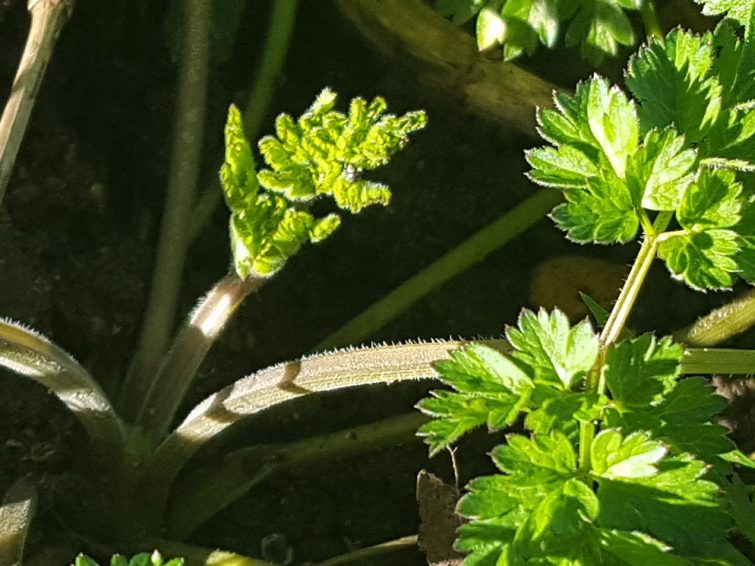
wild chervil is so common that it is practically unavoidable when you are out foraging in March
Wild chervil is practically unavoidable when you are out foraging in March.

The tender young pre-flowering stems of wild chervil are one of my all time favourite wild food trail snacks. This full length article shows how to confidently identify this most common of all our wild umbellifers.

Common hogweed  (Heracleum sphondylium) Apiaceae family.

For me hogweed is one of the yearly foraging treats, and a plant that should be abundant by the end of March.
Hogweed is one of the yearly foraging treats, and should be abundant by the end of March.

Another fantastic wild vegetable that you can find in abundance when foraging in March. The young leaf stalks are a truly delicious wild food, as Roger Phillips mentions in his classic “Wild Food” book, now reprinted as a hardback.

Hogweed can easily be found and identified all over the country, and provides numerous other tasty plant parts during the year. Watch this space for an upcoming full length article!


Nettles (Urtica dioica) Urticaceae family.

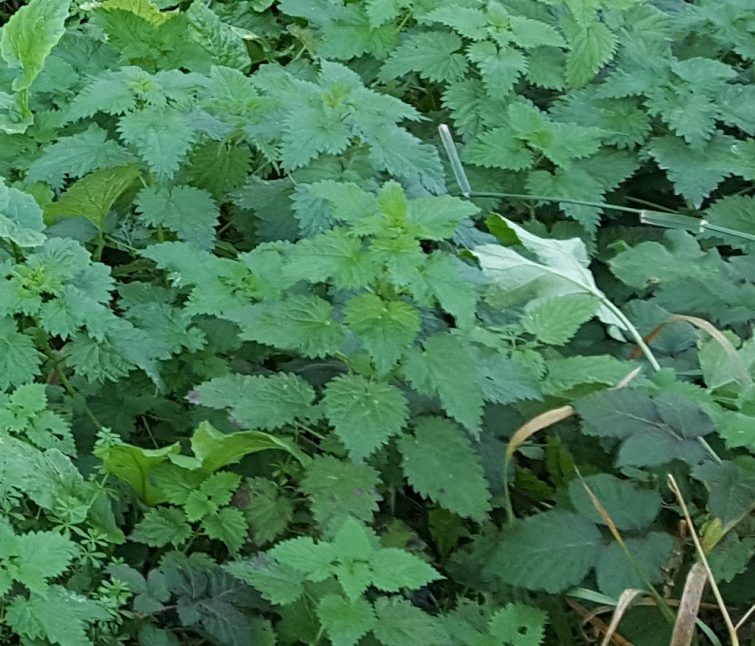
Nettles appear in.huge numbbers during March, and the top sets of leaves are used.
Nettles start to appear in huge numbers during March. The top two sets of leaves are best.


This is a brilliant wild plant. Not only is it a nutritious food and valuable medicine, it is great when made into a liquid manure for the garden, as well as providing strong fibres to make an excellent string and rope substitute.

Known by everyone, nettles will never be hard to find. This is a fantastic plant that has a high nutritional content, being rich in iron, protein, Vitamin E and calcium, amongst others.

As a food it makes a great cooked green. Try replacing spinach with nettles in a saag aloo, and have a go at using the leaves to make a crisp, refreshing, and tasty beer.

As a medicine nettles can help pregnant and breast feeding mums keep their own mineral levels up. For us men, it can keep the prostate healthy, as my upcoming article will reveal.

Clove root / wood avens (Geum urbanum) Rosaceae family.

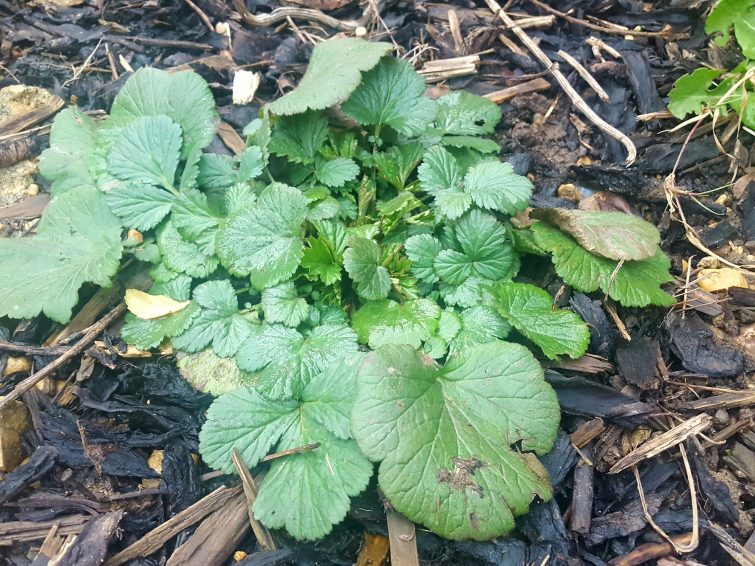
Clove root is easy to find when foraging in March. You will need landowner's permission to harvest roots, which need to be used fresh.
Clove root is easy to find when foraging in March. The aromatic, fibrous roots need to be used fresh.

This small herb has roots with big flavour. You can find the plant growing happily over winter. During the colder months it grows as rosettes, both in woodlands, and in any available nook and cranny in the urban environment.

March is likely to be the last good month in which you will be able to harvest its aromatic fibrous roots as it will begin to flower during April and May. Due to the magic of plant chemistry, these thin, creamy white roots smell very similar to cloves. This warming flavour can only be captured when the roots are fresh. Once dried, the flavour all but disappears.


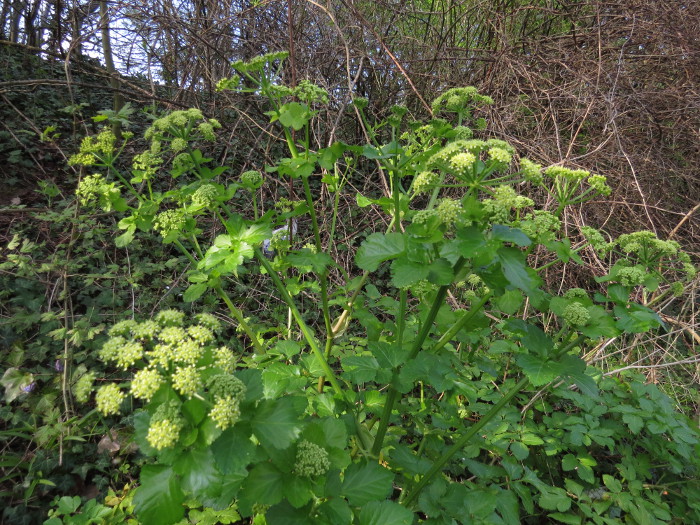
Alexanders (Smyrnium olusatrum) Apiaceae family.

Àlexanders stems need to be harvested before the flower buds open, while the stems are tender.
Harvest alexanders stems before the flower buds open, while they are tender.

Such a versatile and welcome wild food, as my recent article showed. As this is an invasive plant, you shouldn’t have any problem getting landowner’s permission to uproot the plant in winter, for its large taproot, if you wanted to.

Try making rhubarb and alexanders jam from the tender young pre-flowering stems. Quite how they combine to develop such an exquisite and unique flavour I don’t know! The taste of this jam is similar to kiwi fruit or watermelon !


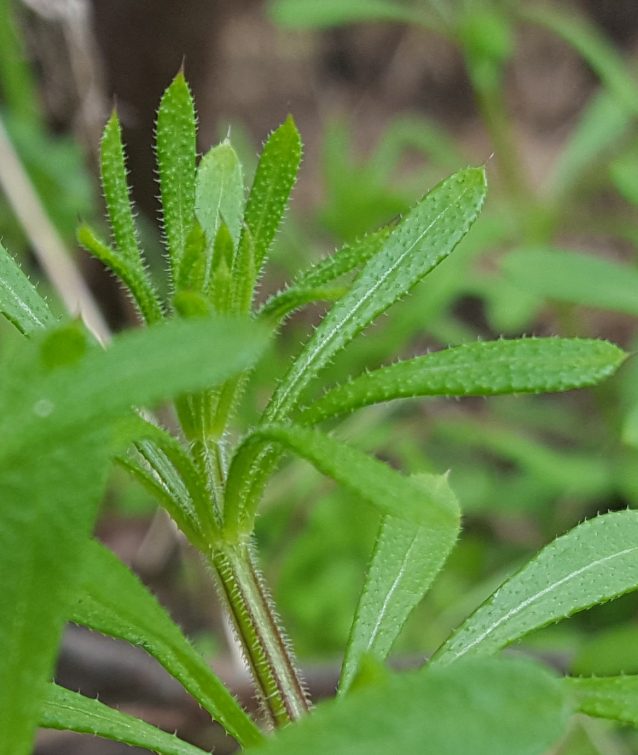
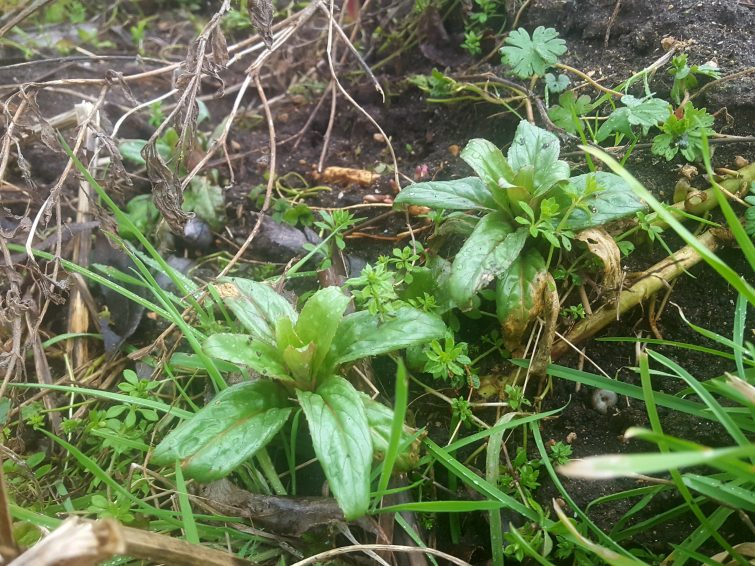
Cleavers / Goosegrass / Stickywilly (Galium aparine) Rubiaceae family.

The top whorl of leaves of cleavers can be added to soups and stews. The rest is to stringy.
Only the top whorl of leaves of cleavers are worth adding to soups and stews.

You may have already read about this plant’s long-standing traditional medicinal benefits. Herbalists know it as one of the best spring tonics there is. Cleavers acts on the lymphatic system, helping to rid the body of accumulated waste products that can build up over the winter months when we are more sedate.

Pick all of the above ground parts for medicine, but only the very top whorl of leaves for food, unless you can be bothered to strip off the leaves. This is because the plant quickly gets fibrous and inedible.


Rosebay and greater willow herbs (Chamerion angustifolium / Epilobium hirsutum)  Onagraceae family.

Willowherbs begin re-appearing from their perennial roots during March.

Either the rosebay or greater willow herb shoots can be used, although the flavour of rosebay is less astringent. Greater willowherb has square stems, and opposite leaves. The rosebay has round stems and a spiralling leaf arrangement. Remove the shoot by cutting with a knife, an inch or so below ground. Strip the leaves off before using. Try steaming, frying, or lacto-fermenting. 

Cherry plum blossom (Prunus cerasifera) Rosaceae family.

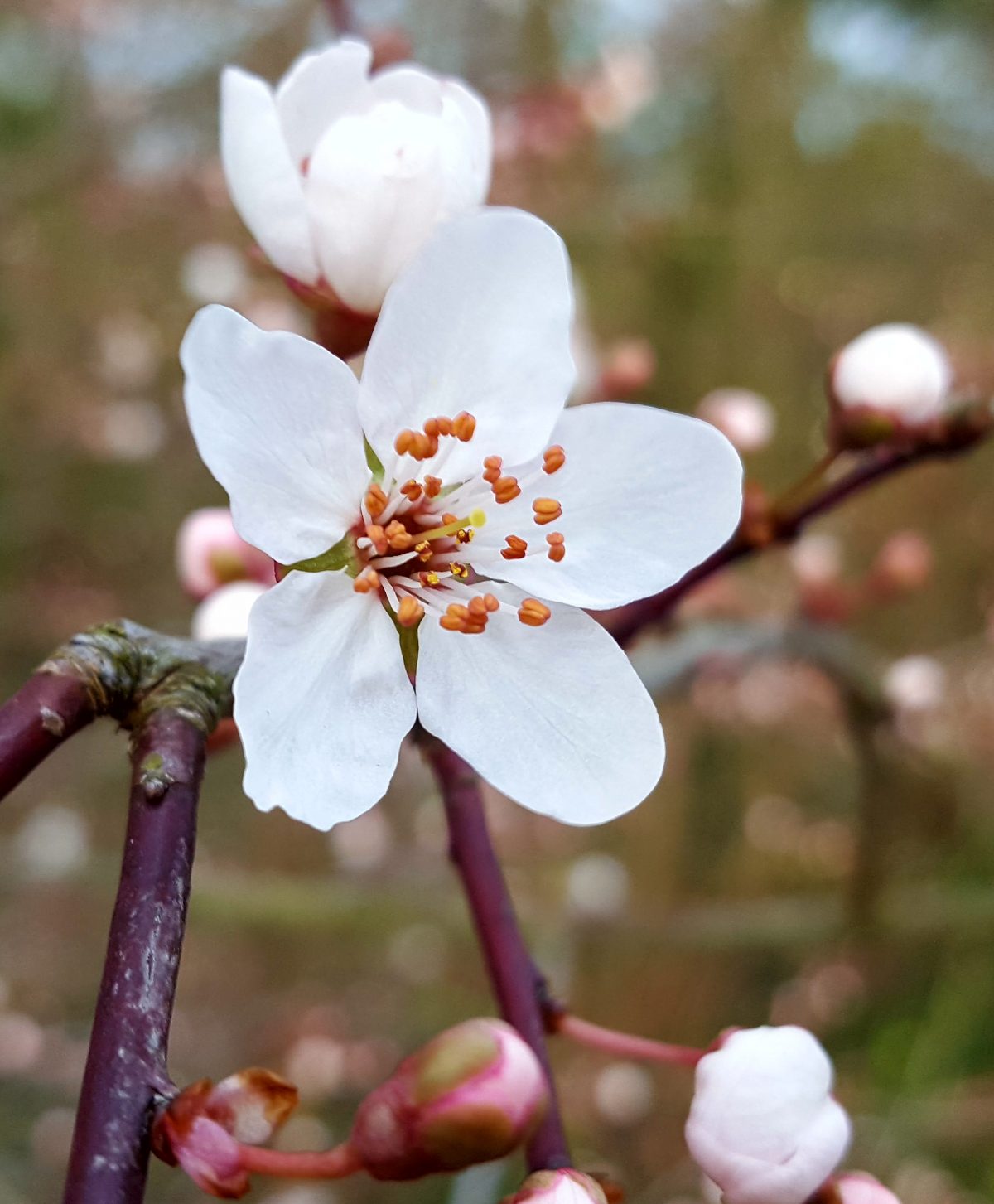
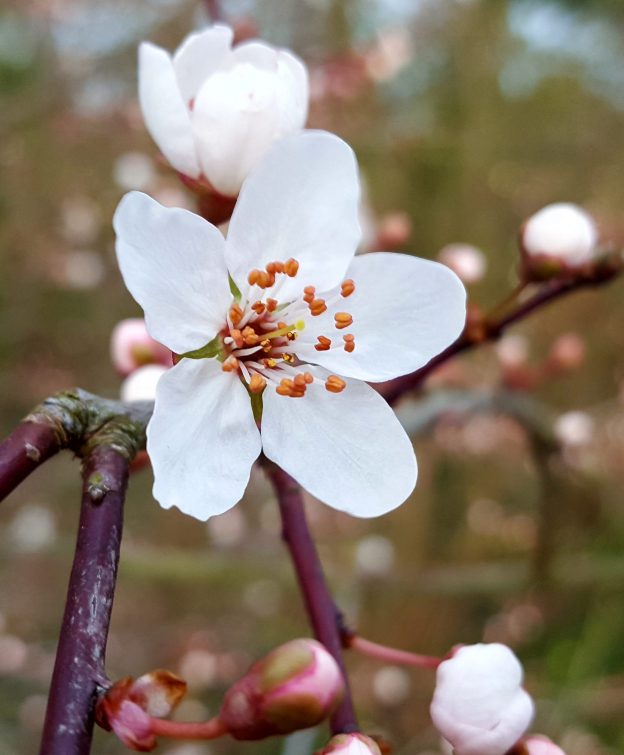
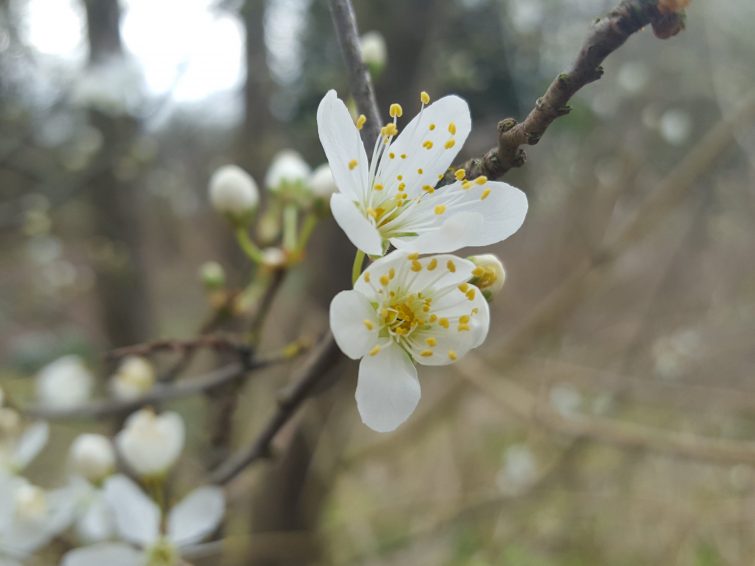
The pink flushed buds and orange-tipped stamens of cherry plum help to distinguish it from its close relative, blackthorn.
The pink flushed buds and orange-tipped stamens of cherry plum.

One of two beautifully almond-scented Prunus species available, as we turn into March.  The cherry plum has pink flushed flower buds, and sometimes very pink petals and orange tipped stamens. Compare this to the white petals and yellow tipped stamens displayed currently on blackthorn flowers.

Blackthorn flowers showing their yellow-tipped stamens.


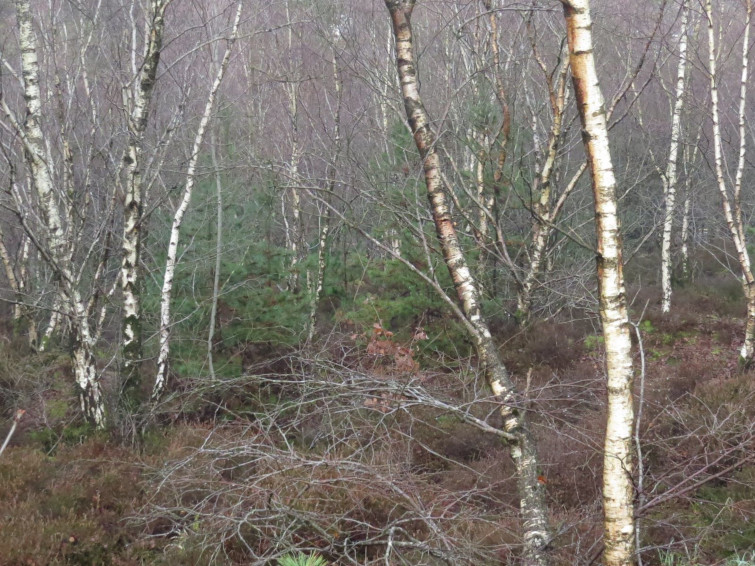
Silver birch sap and twigs. (Betula pendula) Betulaceae family.

Silver birch offers plentiful supplies of sap to tap in early spring
Silver birch offers plentiful supplies of sap to tap in early spring.

My travelling lifestyle has usually meant me not having many possessions and nowhere to store them close to where I live. So I have yet to tap birch. For a fantastic appraisal on the pro’s and cons of tapping birch, and the alternative method of using the thinner branches, instead of drilling invasive holes into the trunk, take a look at the one and only ‘Fergus the forager’s’ article.

March mushroom of the month

Oyster mushroom (Pleurotus ostreatus)

An easy to I/d edible mushroom, although there are a number of closely related edible species in the genus Pleurotus.

This fine edible mushroom can be found all year round, and it’s often easier to find when there isn’t so much else growing.

Being a bracket fungus, you will probably find it ‘shelving’, with one fruiting body directly above another, on both the standing and fallen trunks and boughs.

The oyster mushroom cap is grey and its closely spaced gills are creamy white. It can easily grow as large as your hand. The spore print should be white.