Learn how to find and identify our common alder tree and discover its fascinating history and uses.
Alder (Alnus glutinosa) Betulaceae family
Without the common alder, there would be no Venice. This water-loving plant gives its name to a specific type of wetland habitat- ‘alder carr’, where it will be a principal component.
In sub-aquatic conditions, such as were previously found in the East of England’s fenlands, and some parts of the Somerset Levels, the plant is able to thrive where others cannot.
Alder can do this due to its fascinating symbiotic relationship with a species of filamentous, single-celled microbe, the actinomycetes. These organisms are able to ‘fix’ nitrogen gas (N2) from the air, converting it into a form that can adsorb directly into the roots.
It is this ability ro harvest Nitrogen that means alder is one of the best trees to interplant in agroforestry planting schemes. This tree can produce 150 kg of niteogen per year for you, literally out of thin air!
Botanical description to help identify alder.
Leaves: 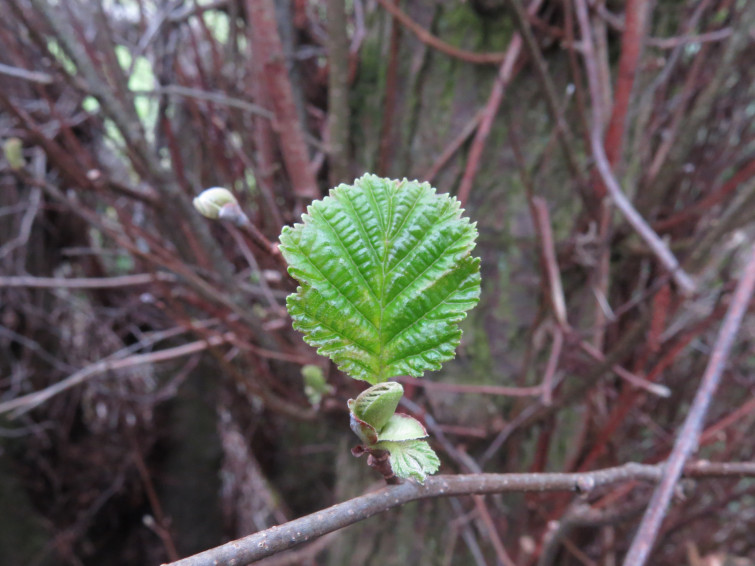 Obovate-shaped leaves, like an upsidedown egg, always wider at the tip than at the base. From
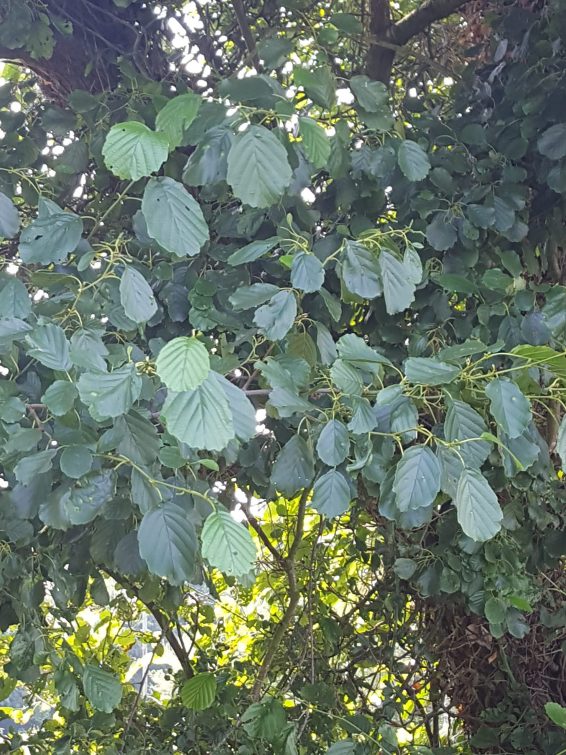 3-12 cm long. Folded and shiny light green when young.
Just after bud burst, the leaves are quite creased in appearance. They have 1-2 serrated margins, and can occasionally be found slightly lobed. Initially shiny light green before darkening.
The leaves are rough to the touch, dark green in the summer months, and with minute orange glands on both sides. Some hairs can occasionally be found in the leaf axils.
Petiole: Typically 3 cm long, hairless.
Buds: 6-10 mm. A light mauve to purplish colour, they are rounded at the tip, and stand proud and away from the twig. A large resinous outer scale more or less hides the inner scales.
Twigs: These are purple-brown, slightly ridge when young. orange lenticels dot the twigs.
They are pretty much hairless and somewhat sticky to the touch. This viscid quality gives rise to the species epithet, glutinosa.
Bark: Smooth and grey when young. Developing dark grey fissures as it matures.
Flowers: 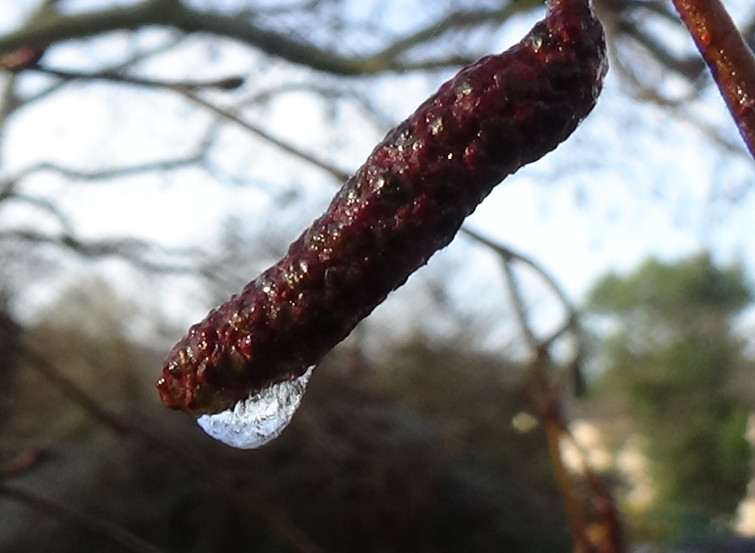 Male catkins are approximately 22 mm before opening, extending to 70 mm or so during pollination.
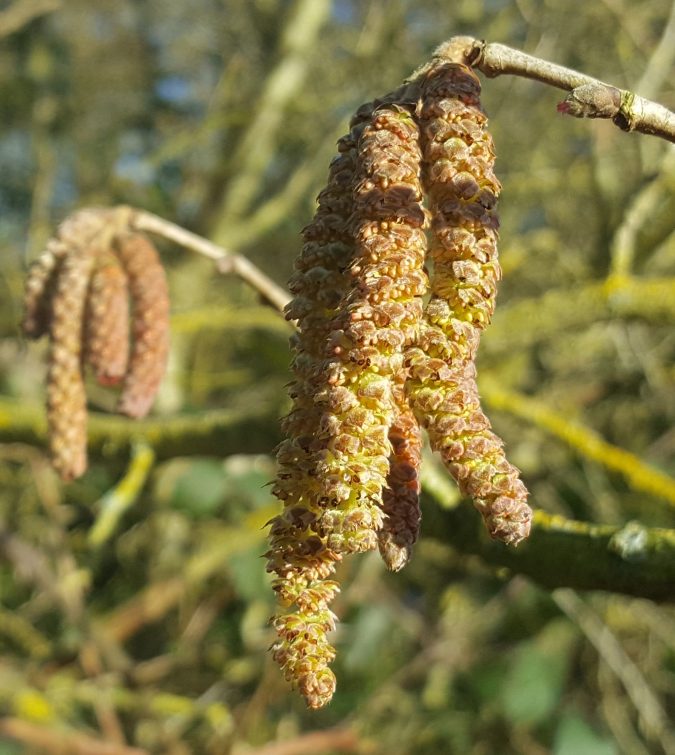
They are a dark brown-purple colour during early winter. before shedding, and yellow-redish colour during pollination.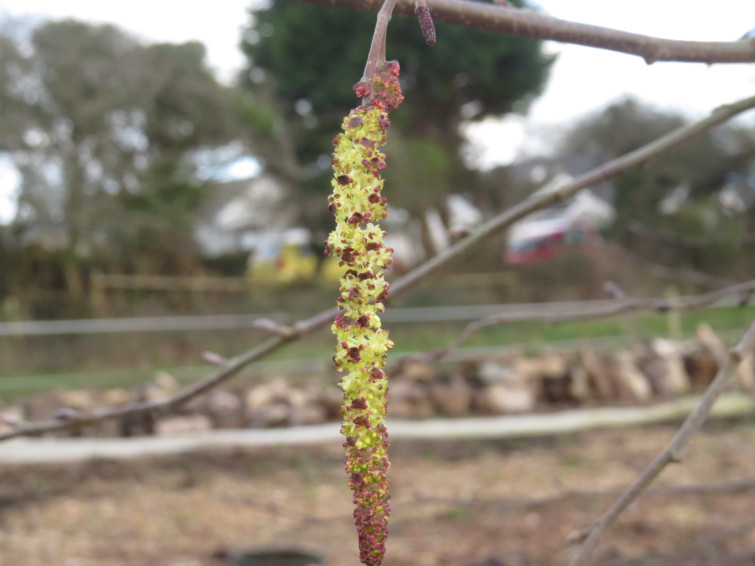
Female flowers are so small that it took me ages to photograph them! They are very similar to Hazel flowers (Corylus avellana) in dorm and colour.
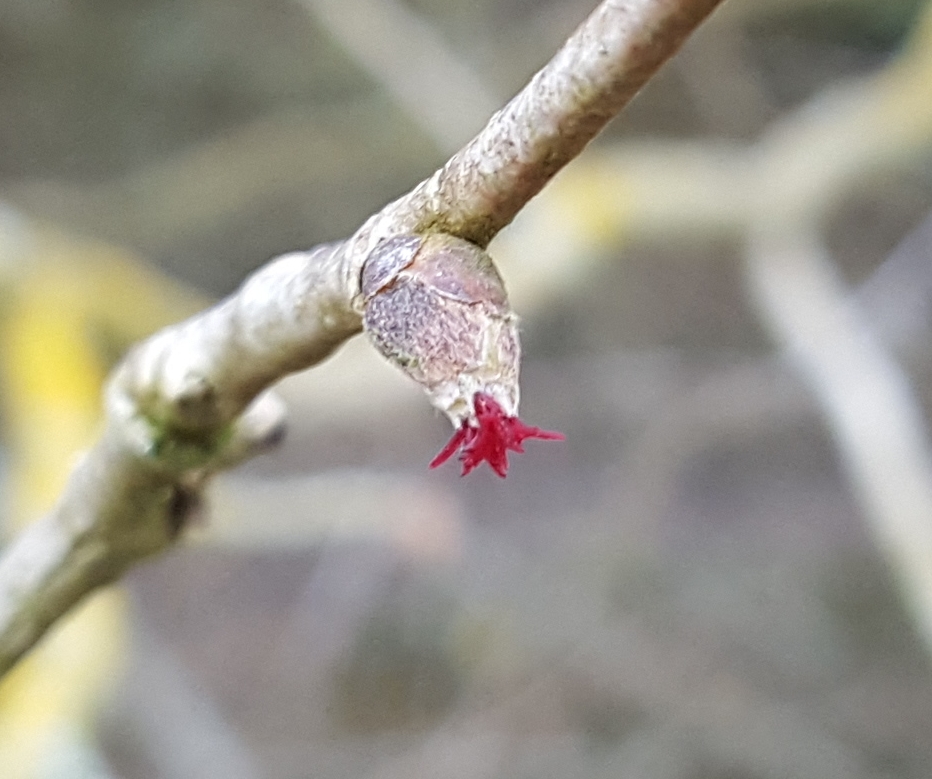
Flowering season: February-March
Fruits: A cone-ike structure, approximately 2.5 cm long. They come in clusters or on their own.
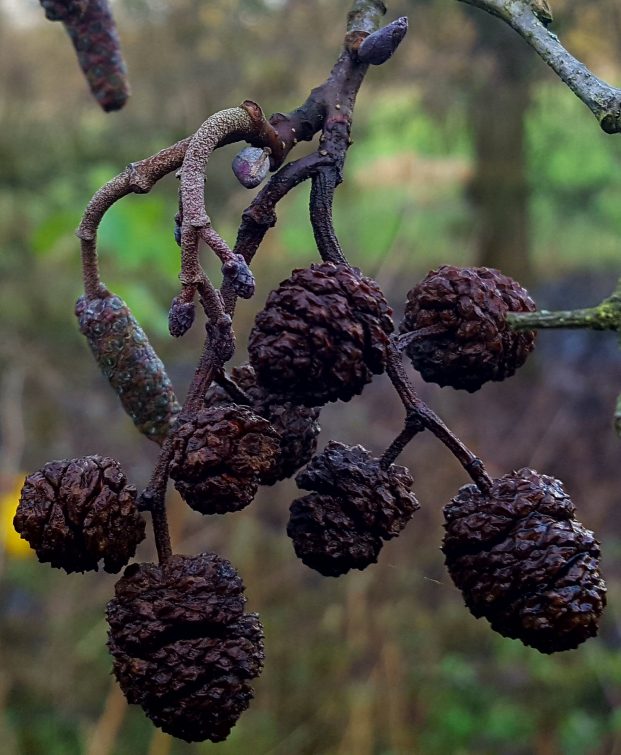
Habitats: All manner of wetlands and by different watercourses on all but the most extreme acid soils and boggy heathlands. Alder can be found all over the UK except for the very highest peaks.
Other notes:
When cut and dried and then driven into waterlogged ground, alder timber almost petrifies and hardens like concrete!
When this was first discovered by humans, I’m not sure, but this has allowed us to build in marshes.
Early Venetians soon discovered alder’s remarkable abilities, and by the 14th century, were starting to build a remarkable concrete city on 120 islands.
Anyone who has visited Venice will agree it is a remarkable place and achievement, and it’s all thanks to the alder!