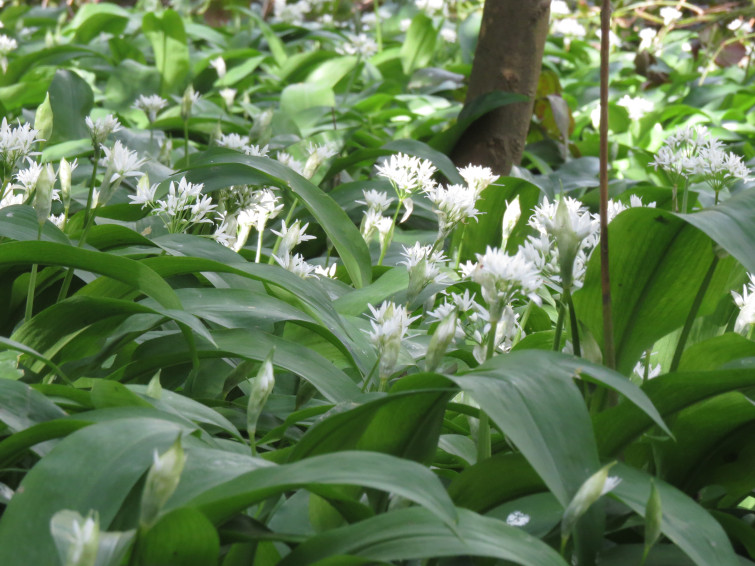
Go foraging for wild garlic…the vampire and virus killing, heart-boosting herb!
Allium ursinum. Wild garlic (ramsons). Liliaceae
Every spring in North America, when the wild bears first wake from their winter slumber, they head straight out and go foraging for wild garlic.
Only comparatively recently have the British public embraced garlic, a plant renowned globally for its culinary uses. Before the 1980’s it wasn’t used anything like it is today.
In this article, I deal with the similar culinary and medicinal aspects of both our native wild garlic (Allium ursinum), commonly known as ‘ramsons’, while touching on the many virtues of bulb garlic (A.sativum).
Although you won’t come across the bulb-garlic in the wild in Britain, aside from the occasional garden escapee, it can be easily grown and acquired most everywhere.
The garlic plants are some of the many thousands of lilly family members, grouped together in a large genus comprising no fewer than 700 species of bulbous and rhizomous biennials and perennials.
They are native to the northern hemisphere and are believed to have originated in Asia. Bulb garlic is certainly one of the most ancient of medicinal herbs, documented in Babylonian times (c.3000 BC), and found in the tomb of Tutankhamun (c.1370-52 BC).
Both the bulb-garlic and its wild version are naturally biennial, taking two years to complete their life cycle.
What’s in a name?
The generic name Allium is the old Latin word for the garlic tribe of plants. The specific name ursinum stems from the Latin word – ‘Ursus’, meaning Bear.
The bulb garlic bears the species name sativum, which as previously mentioned always denotes a cultivated garden plant.
The common name garlic comes from the old English name for the cultivated plant, probably brought here before Roman times -‘Garleac’.
The word comes from two root words. ‘Gar’ is an old English word for spear, (in allusion to the pointy end of the clove looking like a spear tip), and leac – is the old English word for leek. So it became known as the ‘spear-leek’, or garleac – garlic.
Identifying ramsons
Ramsons is a similarly pungent plant to the cultivated bulb-garlic but looks very different in appearance. However, all the Allium species will have leaves with parallel veins.
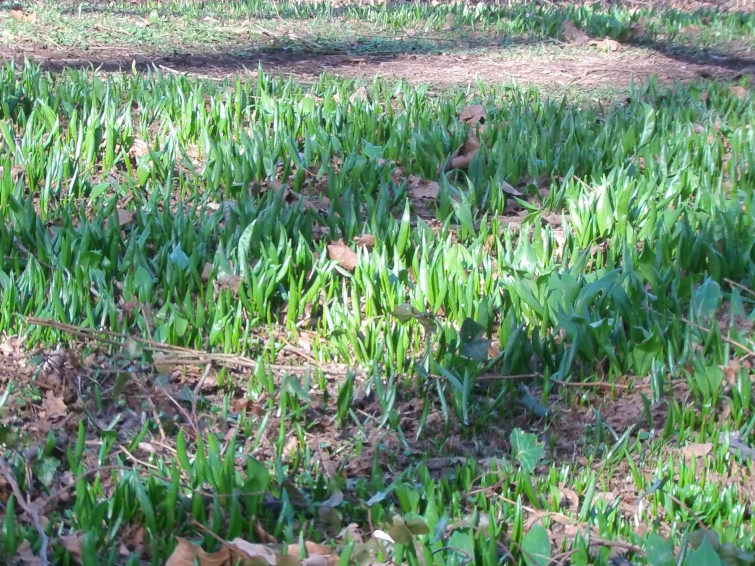
Leaves: Ramsons have very broad lanceolate leaves. It begins to poke out its leaves from small underground bulbs during the first, warmer and longer days of January.
The average size of the leaf blade is approximately 6-10 cm wide and commonly around 25 cm long. A discussion on lookalike plants will be found below.
Petioles: These come directly from the bulb. In some shady areas the large succulent leaf stalks on ramsons will be up to 20 cm in length.
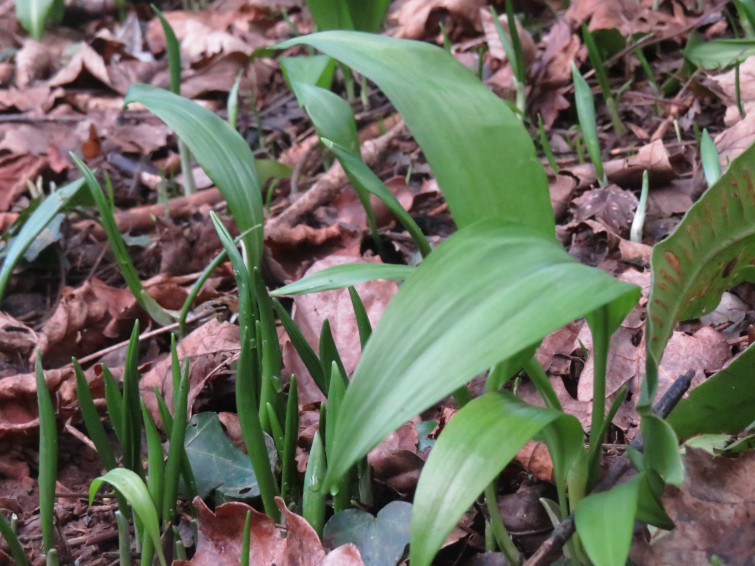
Roots: The plant produces shallow fibrous roots from the base plate of their bulbs. The bulbs are longer than shop bought garlic cloves and sometimes longer than elephant garlic cloves.
Stems: The terminal umbel of flowers are borne on solitary stems.
Flowers: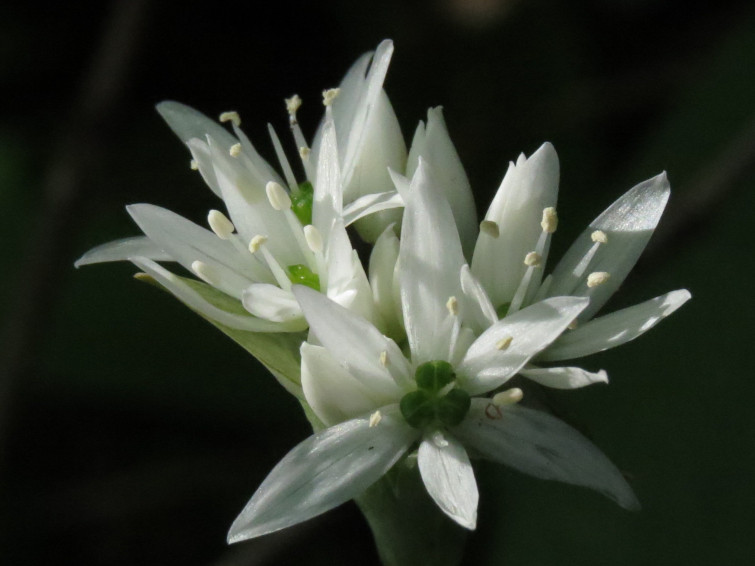
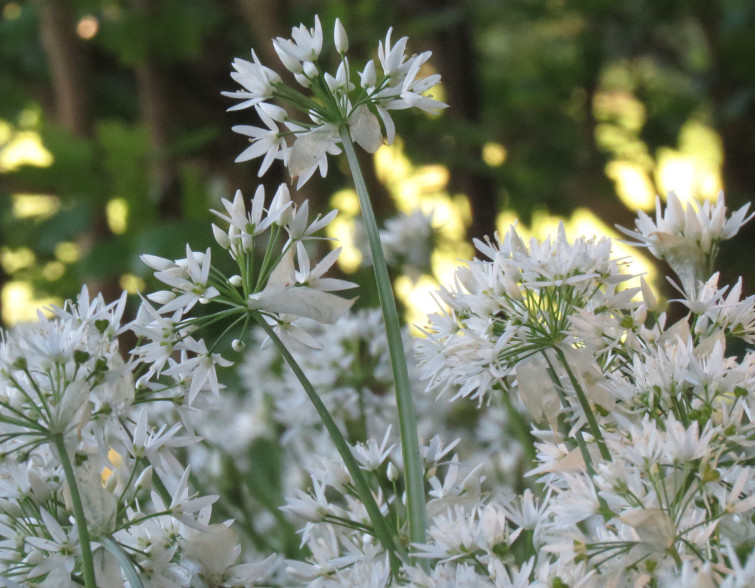
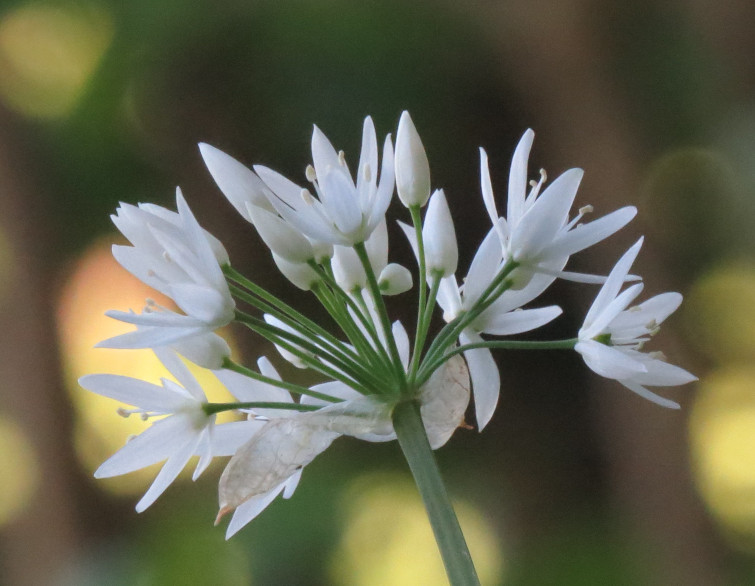
The flowers are a creamy-white colour, with 3 sepals and 3 petals. The small, star-like individual flowers are borne into an overall spherical shape.
Flowering season: From March into early May you can find the elongated pointy flower buds bursting into flower.
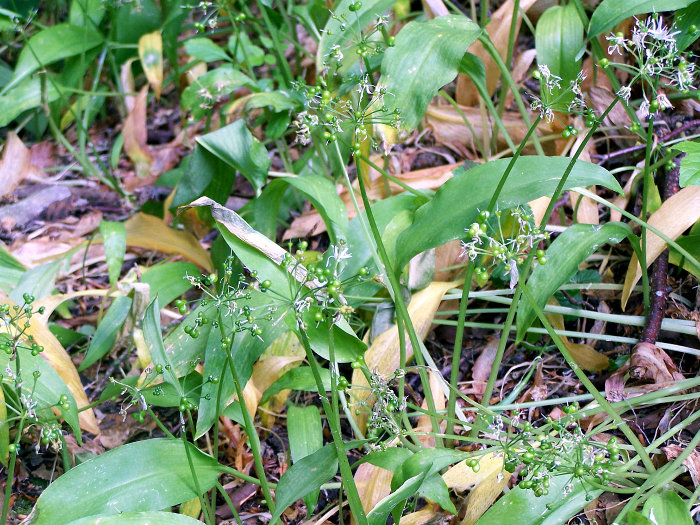
Typically their flowers open and set seed from March through May, with seeds maturing late June to July.
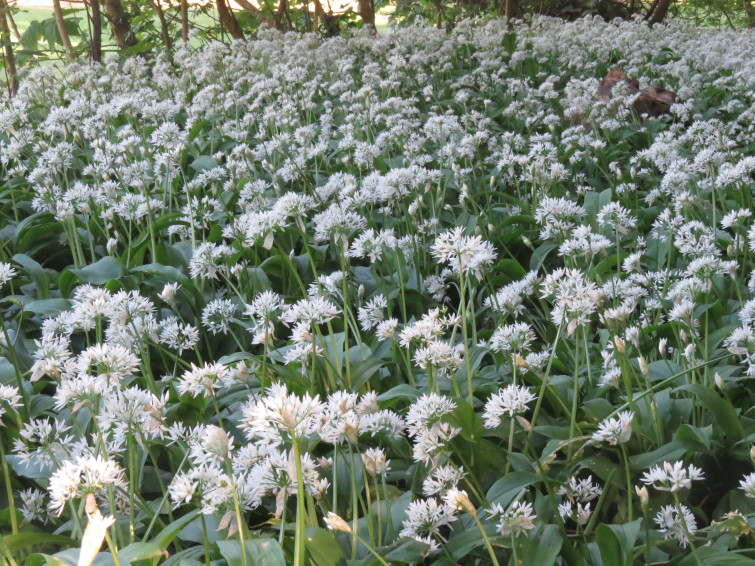
When immature, these are crunchy and make great capers, as this recipe I shared with Hedgeucation CIC will show.
Habitats to look in when foraging for wild garlic
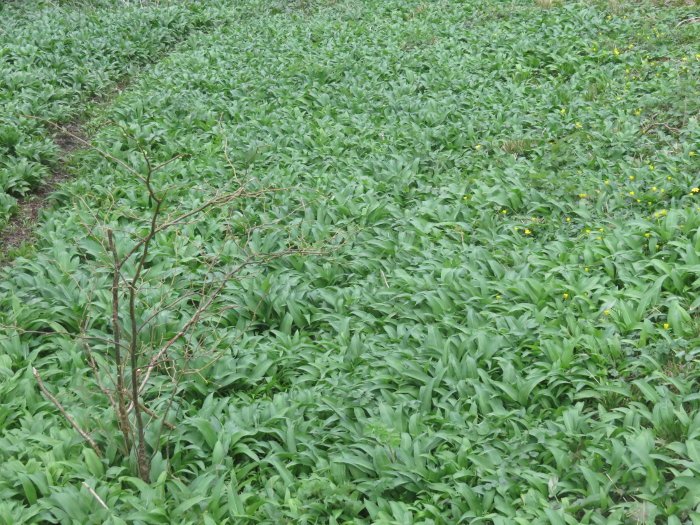
Wild garlic is indicative of ancient woodland and easily found throughout March and April where it often creates extensive carpets.
At least it does in woodland in the more western and southern areas of Britain. It can be found at altitudes up to 450 metres.
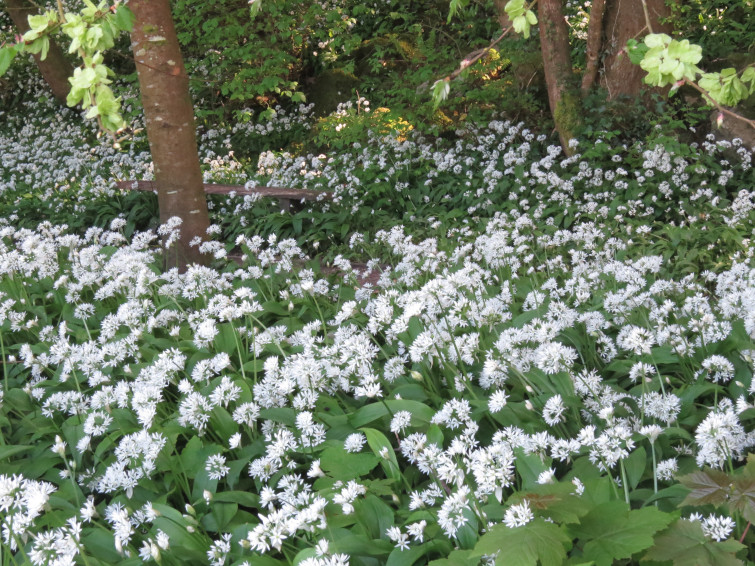
Ramsons is an ephemeral bulb, flowering before the woodland canopy trees are fully open in spring.
Wild garlic lookalikes
Care should be taken before harvesting that you have identified the plant correctly, as wild garlic has a couple of similar-looking plants. These imposters were discussed in a previous article on poisonous plants.
Make sure you aren’t harvesting the poisonous look-a-likes known as lords and ladies (Arum maculatum), or Lily-of-the-valley. The former is far more common than the latter. Both can be found in woodland habitats.
Lords and ladies will grow amongst wild garlic, but has arrow shaped leaves with two rounded lobes at the base of the leaf, as well as having a net-veined leaf pattern, which helps easily distinguish it from ramsons when looking closely.
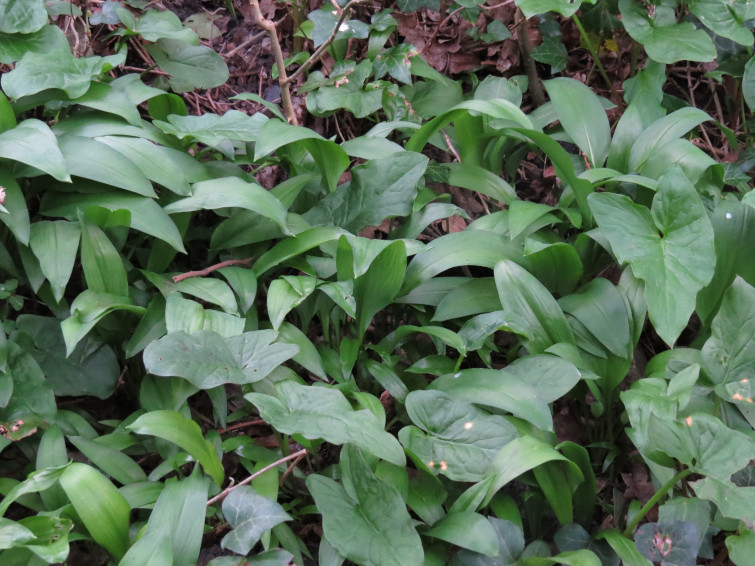
Knowing and observing this will save you from disaster if solely listening to the often-heard advice about “…if it smells like garlic, it is garlic”.
Anyone who has handled ramsons, will know that the garlic smell will easily transfer onto your fingers ,and therefore it is possible to hold a leaf of lords and ladies to your nose and smell garlic! Far better to learn how to identify each plant!
Lily-of-the-valley on the other hand, has leaves that are pretty much the same shape as wild garlic, although without the long leaf stalk, or the clump habit that ramsons does, plus it has a very different inflorescence. I’ve not actually come across ramsons and lily-of-the-valley together, but that’s not to say I won’t tomorrow!
As with all edible wild plants, we get at least three opportunities to ensure we have identified the right plant. First is the point of harvesting, second is during the preparation of the material, and the third is before adding to the pot or pan.
Harvesting and using wild garlic
Parts used Raw cloves are best, as they maintain all the medicinal potency which otherwise rapidly diminishes with cooking. For medicinal use, the advice will always be to use raw cloves. Leaves of wild garlic can be picked as soon as found in the early spring.
Harvest: Leaves; Feb-April. Flower buds; March-April. Flowers: March-May. Green seeds; April-may. Black seeds; May-June. Bulbs; June-December. Lots of my harvesting tips and tricks are available in this previously posted article.
Key constituents Garlic cloves: Volatile oil (containing alliin, which after crushing or chewing is enzymatically converted to alliciin, one of the major active components of garlic); germanium; selenium; saponins; mucilage; amino acids. You can learn more about medicinal plant constituents, and their actions, here.
Actions Anti-bacterial, anti-septic, anti-fungal, anti-viral, expectorant (due in part to the mucilage), anti-platelet, anthelmintic, hypo-lipidaemic, vaso-dilatory.
Pharmacology and uses Much of the pharmacological activity of this plant stems from the many acrid, volatile sulphurous compounds. These molecules are known to prevent cholesterol synthesis as well as fatty acid and triglyceride synthesis.
Therefore, regular use leads to less chance of fatty deposits on artery walls, and with it, less chance to develop the serious condition – atherosclerosis.
The compound allicin is responsible for many effects, as well as the much documented anti-microbial effects.
Antioxidant effects have been shown in animals (in vivo) and the test tube (in vitro). Garlic enhances the activity of free radical scavenging enzymes such as superoxide dismutase, whilst protecting lipo-proteins from oxidation.
Both these factors point to its use in treating conditions such as atherosclerosis. Bulb garlic is known as ‘lashuna’ in ayurvedic medicine; being used for whooping cough, heart trouble, flatulence, dyspepsia, and colic.
Immuno-stimulatory actions have been recorded for high-molecular-weight proteins extracted from Garlic. These compounds reportedly stimulate the activity and production of some of our immune system defence cells known as macrophages, lymphocytes, and natural killer cells.
Another long-standing and well documented traditional use of garlic is as an expectorant, to help clear coughs and colds. The saponins are almost always linked to this effect.
Garlic is also used in dietary control of diabetes and hypoglycaemia because of the resultant improvement in pancreatic abilities to produce insulin.
Ramsons also contain alliciin, so will therefore be anti-septic, anti-bacterial, anti-fungal, and anti-inflammatory, just somewhat milder so.
Throughout the countryside in southern parts of Britain and Ireland, wild garlic has historically been noted as good at defeating coughs, colds, and other ailments.
“Nine diseases shiver before the garlic”, was a saying in Sligo, Ireland, only 100 years ago. This points to the faith people placed in Garlic to ward off many illnesses. This belief may have been reinforced during the 1918 global flu pandemic when people carried around a piece of wild garlic in their pocket for protection.
Garlic is well known to thin the blood and will interact with aspirin, and could increase bleeding, as well as interacting with HIV drugs such as protease inhibitors.
It also interacts with ‘warfarin’, and may potentiate the drug as well as increasing the chances of internal bleeding. More than 5 grams of garlic per day when taking warfarin can reportedly lead to problems.
The fiery nature of garlic brings with it some contra-indications for use. Namely, conditions of chronic or acute stomach inflammation, and low thyroid activity.
Many harmful micro-organisms are destroyed by Garlics, including Staphylococcus aureus, Escherichia coli, Proteus and Salmonella spp.
As a food, wild garlic lends itself very well to a pesto, in place of bulb garlic. It also goes well in white sauces with fish, and as a salad leaf, chopped as you would chives.
Raw wild garlic can add an extra healthy punch to the salad bowl. To reduce the strong flavour, just blanch slightly, or steam for a minute or two.
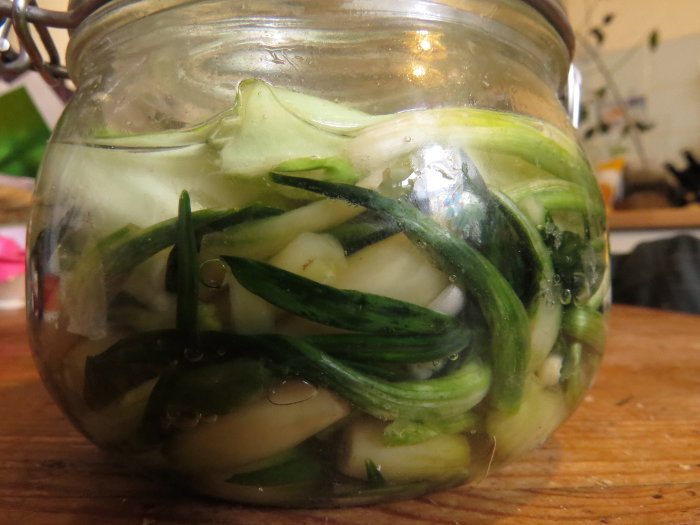
Pretty much all parts can all be preserved by lacto-fermentation (my favourite method of preserving food, using salt and water). I rate all of these really highly when treated this way.
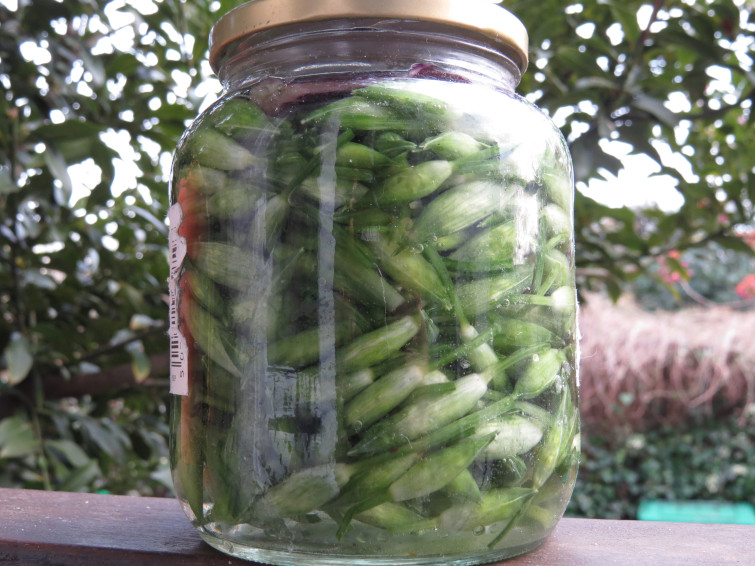
The bulbs will stink when preserved as a ferment, but after a few months their flavour mellows to something similar to roast garlic.
The flowers make an interesting garnish, especially if dried, when their flavour takes on something akin to cheese and onion crisps! These plants then, are quite simply, fantastic!
Don’t forget to take full advantage of my numerous foraging tips tricks and hacks, available from my guide to starting out foraging.
Happy foraging!