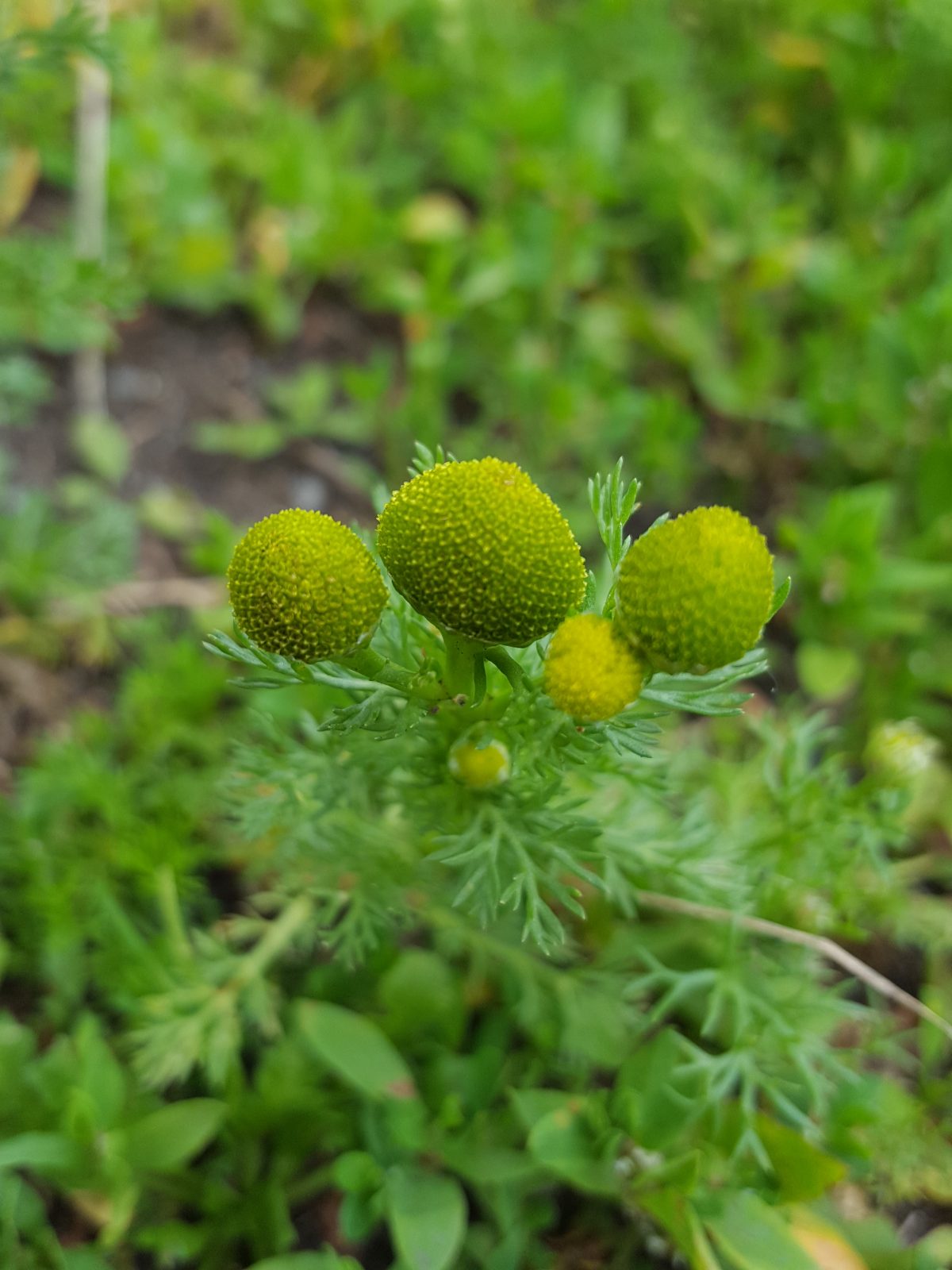
UK guide to foraging pineappleweed. Learn how to identify, then discover its food, medicine, and other uses.
Foraging pineappleweed is a post industrial phenomenon! It simply would not have been possible here 150 years ago.
This small aromatic herb was first recorded in the wild here in 1871. During the 20th century it then spread extrememly rapidly. Today it can be found in pretty much all lowland areas of Britain.
In flower, and in your hand, pineappleweed is a distinctive little thing. After reading this guide, all beginner foragers will have no trouble confidently foraging pineappleweed.
What’s in a name?
Why pineappleweed? Well, the reasons behind naming this herb will soon become apparant when crushing and smelling the plant. Its flowerhead somewhat resembes a tiny, squat pineapple.
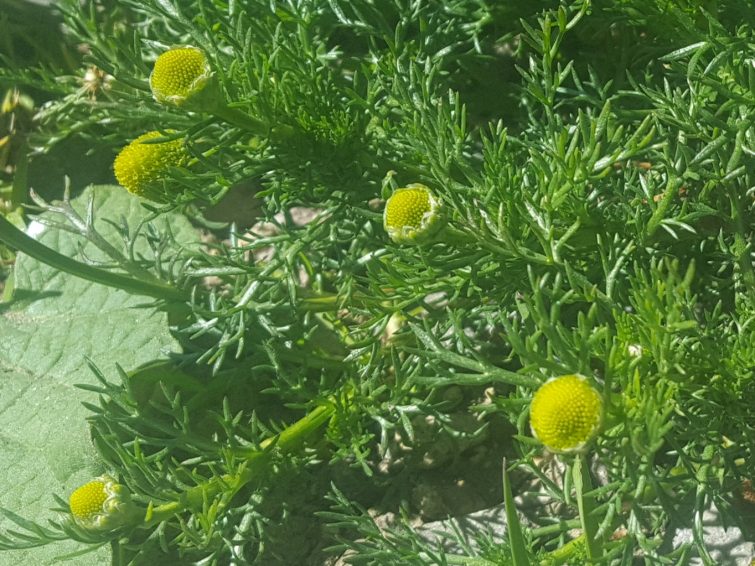
The second part of the scientific name gives us clues to its appearance; translating as ‘rayless disc flowers’.
The generic part of its scientific name Matricaria, comes from the old Latin root word – ‘matrix’, meaning womb. The old Latin word for mother is ‘matrice’.
The closely related species, German chamomile (Matricaria recutita), is a well-known medicinal herb. This annual plant is prized for its abilities to help regulate the menstrual cycle. It is also a superb central nervous system relaxant sedative herb. Pineappleweed is the best of the genus in the kitchen though!
Botanical description
If a few of the words are unfamiliar to you, don’t panic, because our forager’s A-Z glossary will explain all. I work on an assumption that readers are looking to learn as much as possible!
Leaves: Bright yellowish green, 2 – 3- pinnate. Up to 5 cm long, and looking much like the other notable species in the genus, German chamomile (Matricaria recutita).
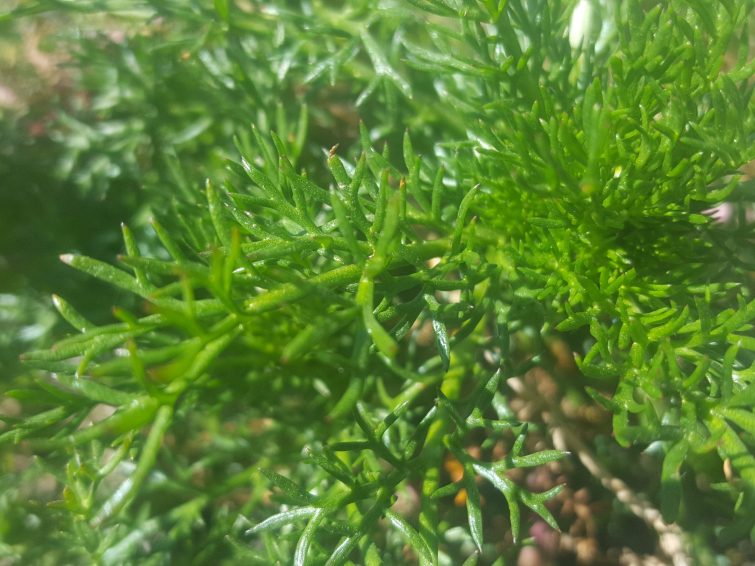
The thread-like, fleshy leaflet lobes are almost cylindrical, and grow to around 1 mm x 10 mm. The plant produces a crowded bushy habit.
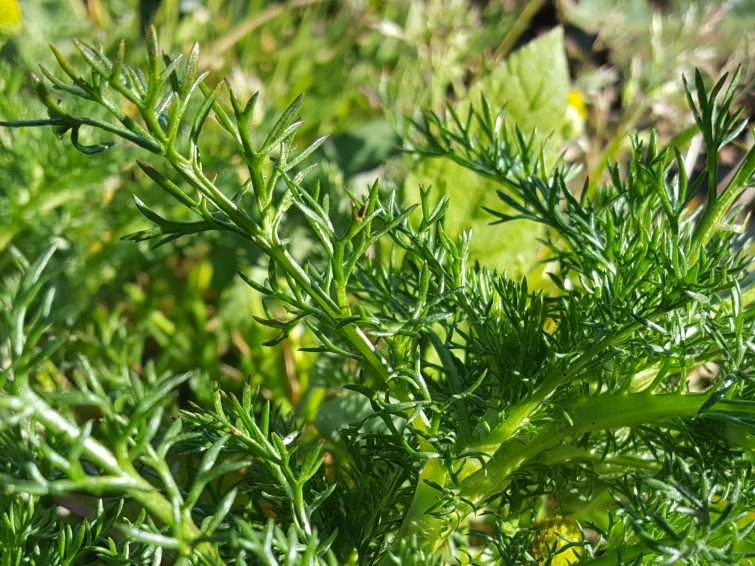
Petioles: This plant tends to be sessile, or with a very short petiole.
Roots: Tap root and a fibrous root system.
Stems: Hairless, almost round, and pretty small, reaching about 20 – 30 cm in flower.
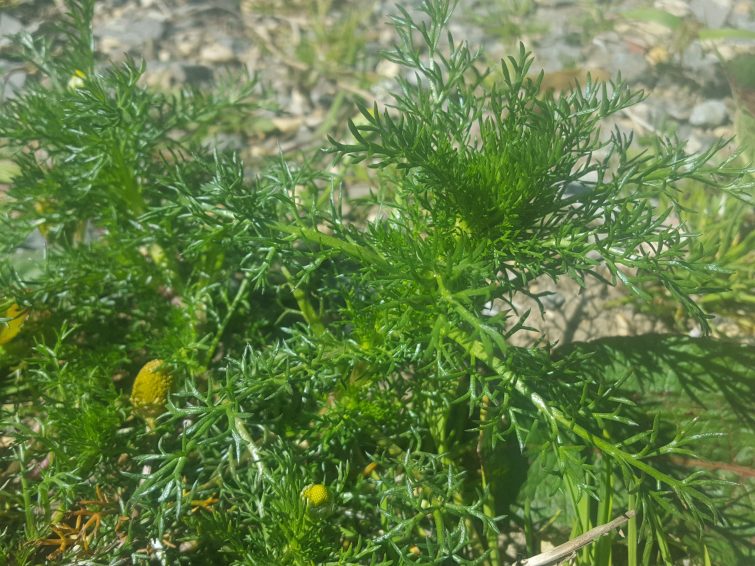
The stems can grow erect, or where under pressure from grazing or footfall, become more prostrate.
Flowers: Their flowers are distinctive for a daisy plant, because they have no ray florets; just hundreds of tiny yellow disc florets on a cone-shaped, composite head. Each flowerhead is approximately 10 – 15 mm.
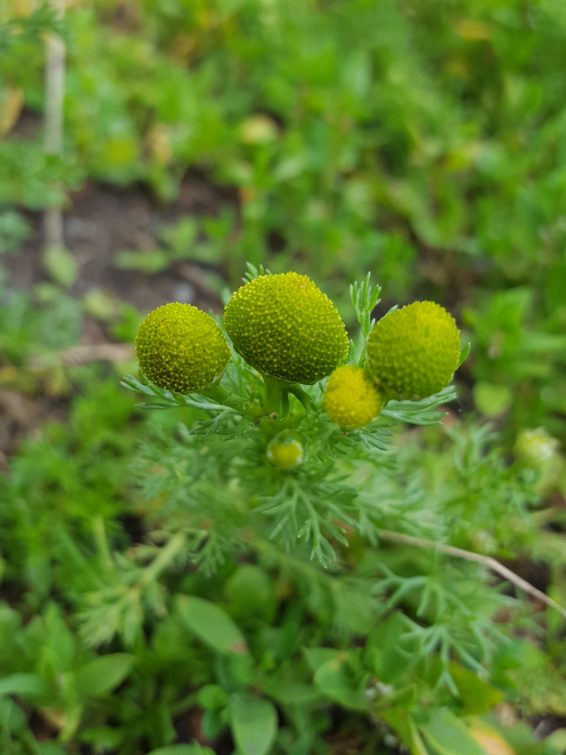
Flowering season: Find this plant in flower from late April through into September.
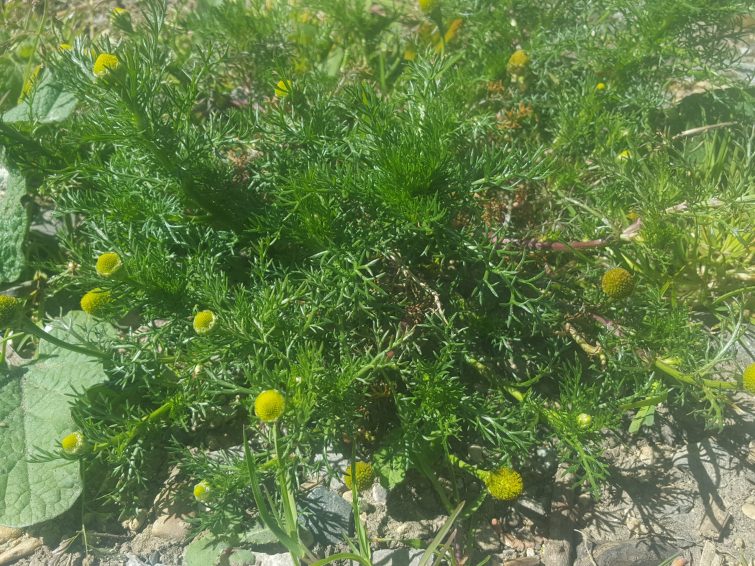
Fruits: Tiny dry, brown-coloured achenes.
Habitats: Pineappleweed’s success in establishing here was due to its small seeds being wind and railway assisted. By utilising high velocity gusts of wind along the freshly built railway lines, plants had found a new helpful seed dispersal method.
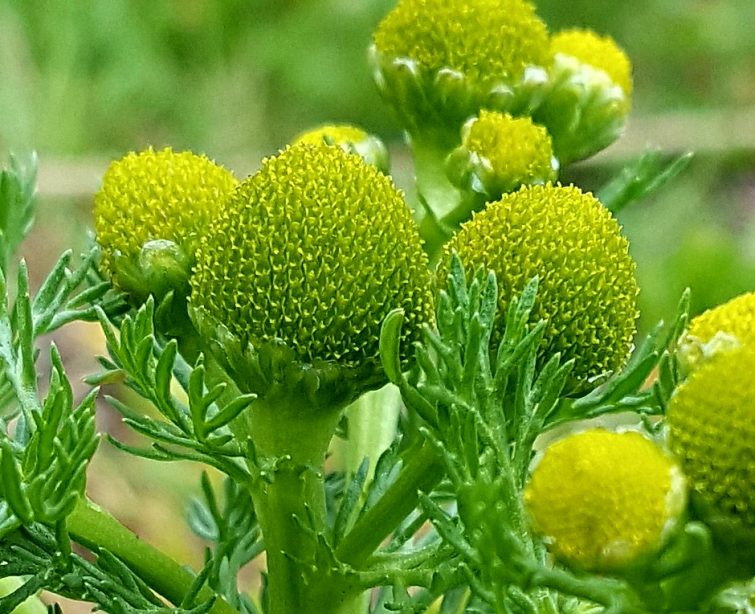
This novel competitive advantage enabled the plant to quickly spread across Britain. Today it finds a home in any suitable and sunny, free-draining, fertile soil.
Pineappleweed especially likes field entrances, rough trackways, wasteground and roadsides, as well as the numerous nooks and cracks in the urban environment. This annual plant is now found in all areas of Britain up to around 840 metres above sea level.
Parts used: Leaves and flowers.
Harvesting: Pinch the younger leaves off at the base, or snip off with scissors. Snip or pinch off flowers at the base of the receptacle, on a warm sunny morning. Its worth reminding everyone here that you can learn many more wild crafting tips and tricks with my harvesting guide.
Edible uses: Pineappleweed is a tasty and aromatic addition to our wild culinary larder. The flowers make a pleasant tea, and you can use the chopped leaves sparingly in salads. The flowers can be infused into vinaigrettes for a fruity dressing.
More adventurously, the flowers make a great ingredient in desserts and cocktails. Try infusing sugar syrups, custards, and creams with the flowers.
Medicinal uses: Although a close relative of chamomile, there is no scientific evidence to suggest pineappleweed can replace chamomile medicinally.
Other notes: During mild winters you can sometimes find it in flower through the darker months.