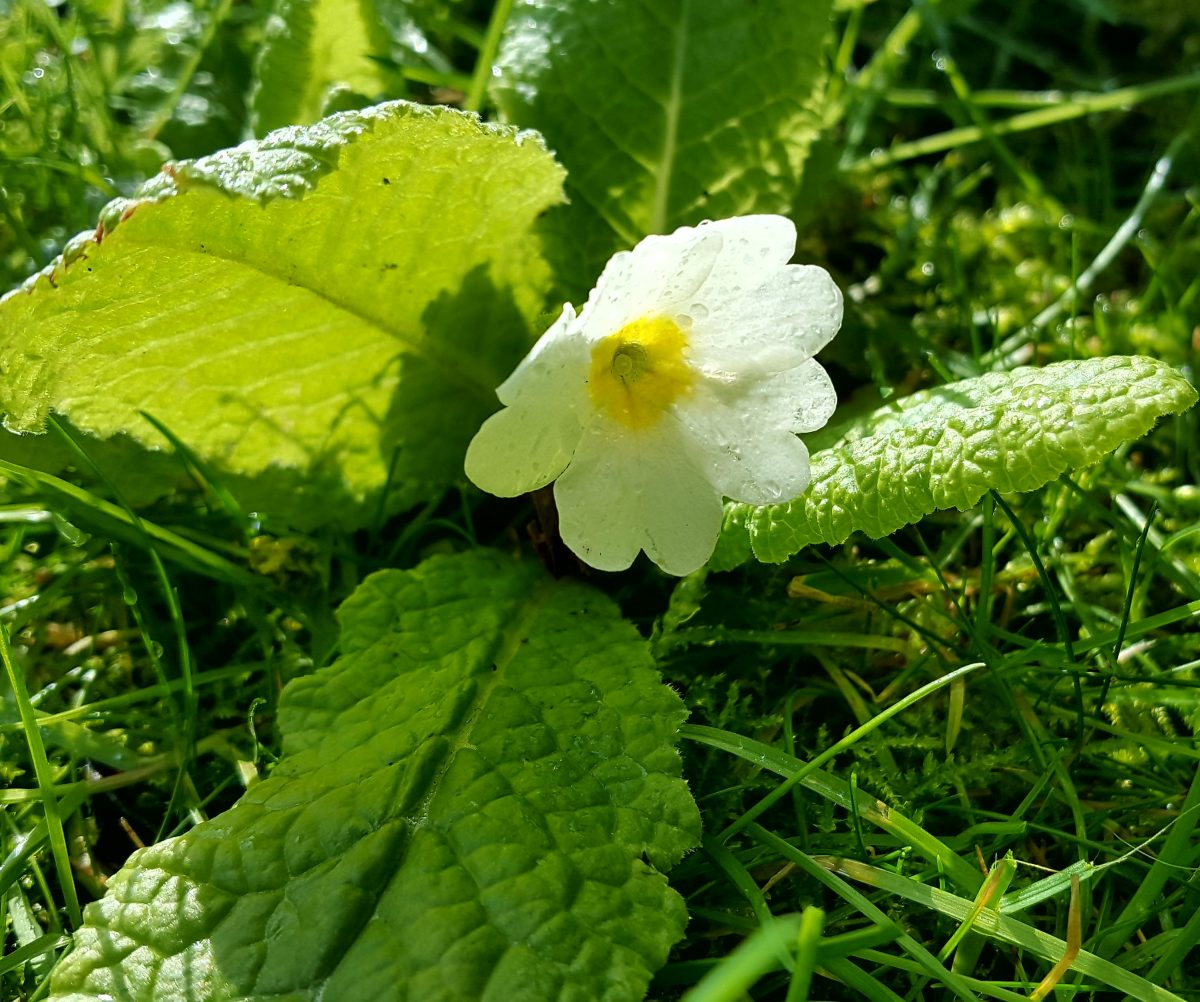
A guide to foraging primrose flowers in Britain. Learn how to identify and use these delicately-scented early spring blooms
I would guess that people have been foraging primrose flowers for as long as we have known them. These universally popular plants are one of the most beautiful of all our woodland flowers here in Britain.
You cannot help but find this plant in most parts of the country. Its gorgeous yellow and orange-centred flowers often appear in large carpets when you are foraging in March and April.
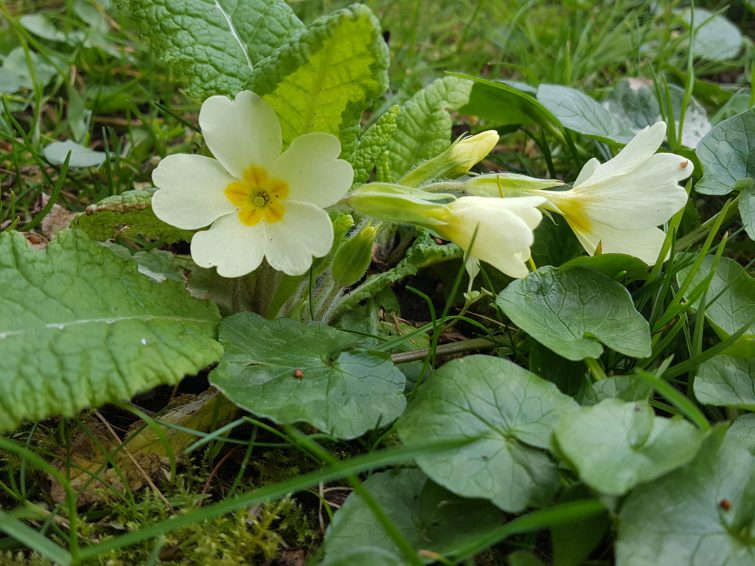
There aren’t a huge number of plants with which people have an unbroken relationship. Blackberries, sloes, rosehips, nettles, and wild garlic all spring to mind as plants that country people have always made time for harvesting. Primroses are surely another of these plants, whose lives intertwine with ours at least once a year.
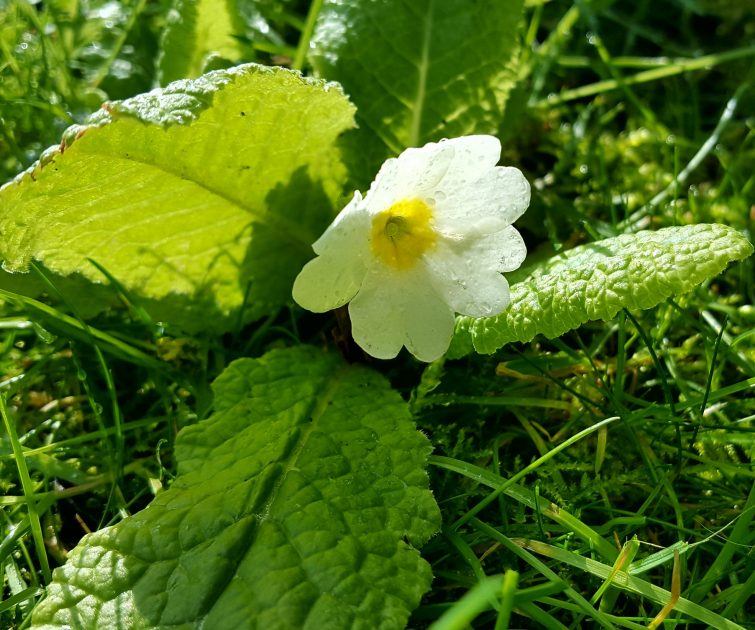
Primroses, or at least primrose bedding plant sales, are often associated with Easter. I like to think that our Western European pagan ancestors would also have gone foraging primrose flowers, to celebrate the much more ancient spring festival honouring the goddess Eostre.
What’s in a name?
Both the English common name and the scientific name tell us of its early season flowering habits. The generic part of the botanical name – Primula, comes from the Latin word ‘primus‘, meaning first.
The specific part if the name – vulgaris, simply means common or garden.
Our English common name ‘primrose’ is therefore self-explanatory…even though it’s not a rose family plant.
Botanical description to identify primrose
Leaves: The leaves on mature plants will overwinter as untidy-looking rosettes, although new leaves also start to appear in the late winter.
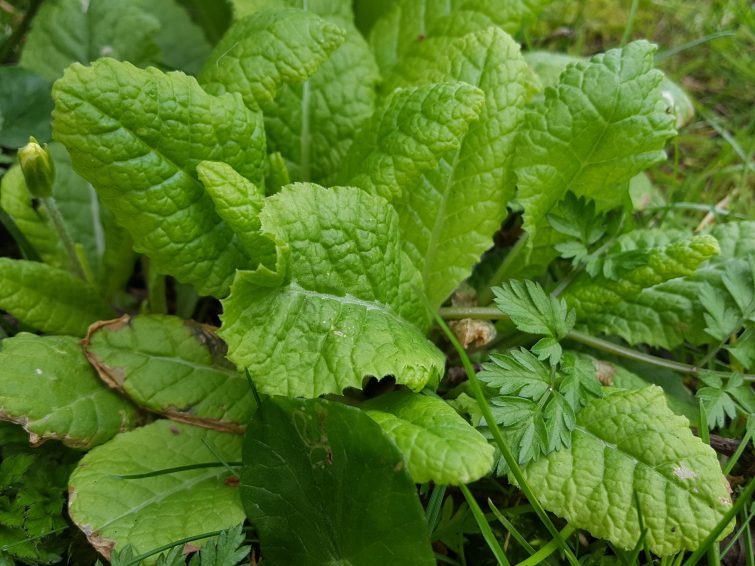
The leaves emerge rolled. When unfurled, they are typically obovate to spathulate-shaped. Their white mid-rib is broader at the base and tapers off near the apex.
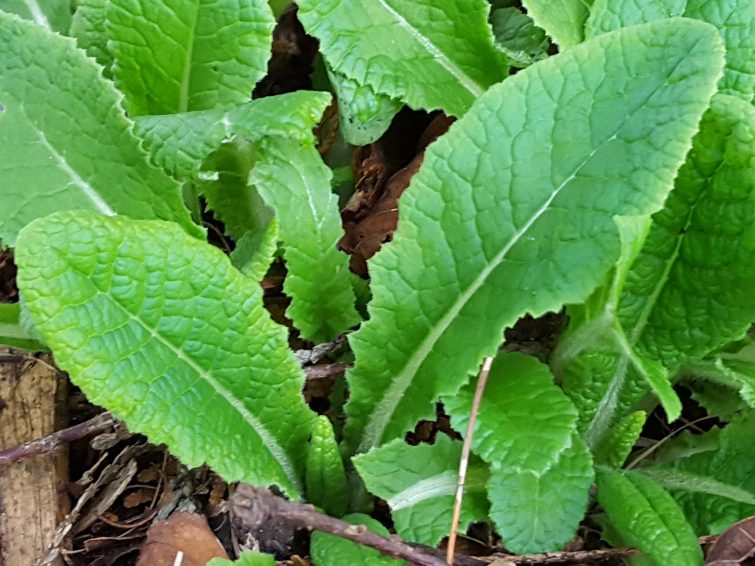
The hairy leaves are often wrinkly and a little crinkly at the edges, a bit like myself. The margins have numerous teeth and tiny white hydathodes at their apex.
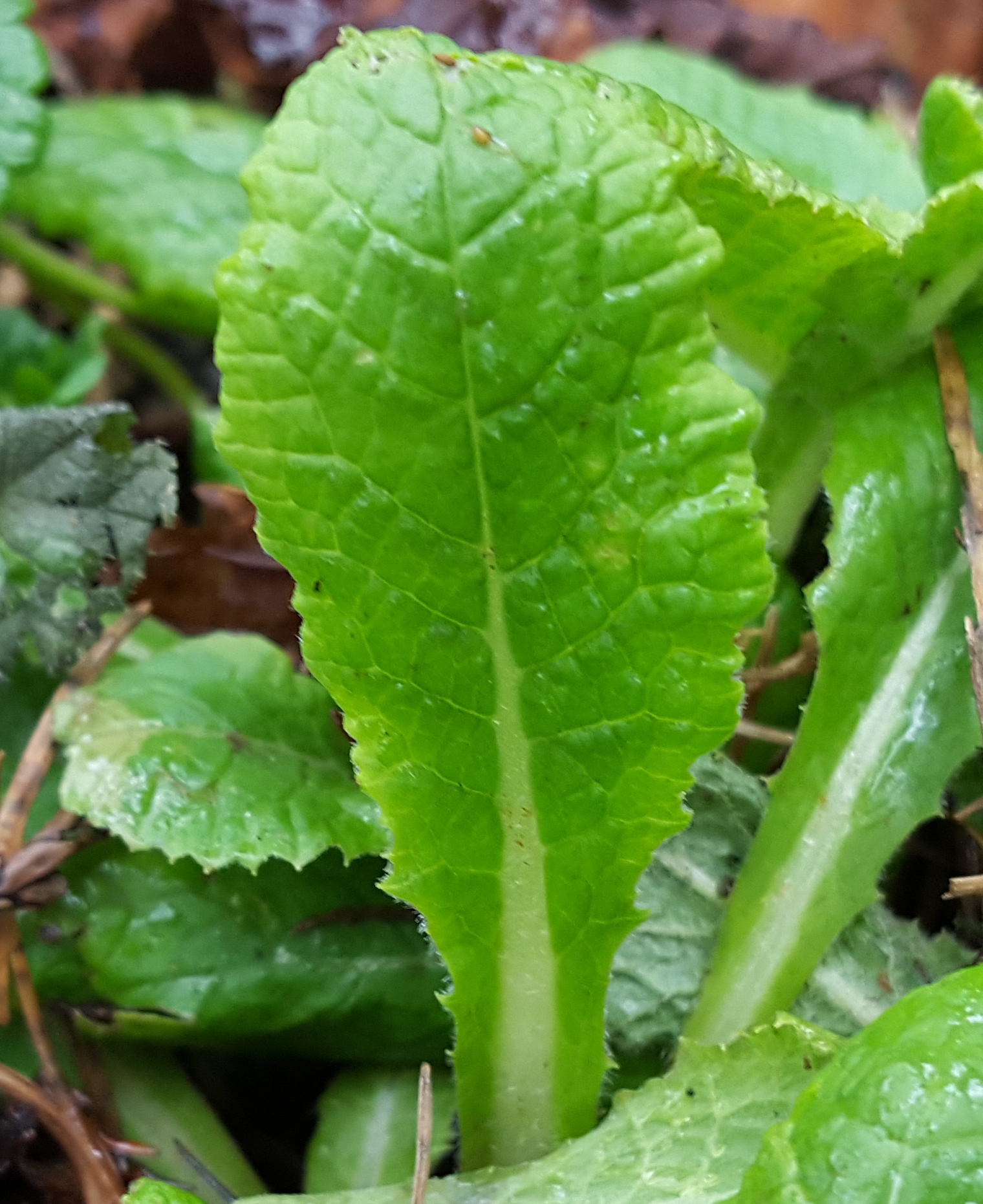
Petioles: No.
Roots: A perennial rhizomous rootstock.
Stems: Each flower is held on a thin and hairy, drooping flower stalk. This extends to approximately 10 – 15 cm long. Each plant produces numerous flower stalks.
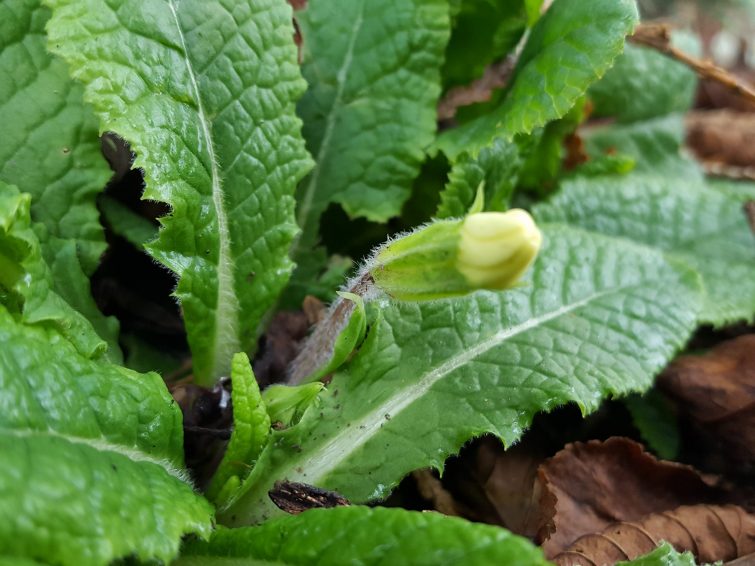
Flowers: The flowers are delicate-looking, but hardy enough to survive the sometimes biting-cold March weather. Primrose flowers have stunning light-yellow, notched petal lobes, fused together in a corolla tube.
In the centre of the flower is the beautiful two-tone orange spot. The corolla sits in a long, green and hairy calyx with five pointed lobes.
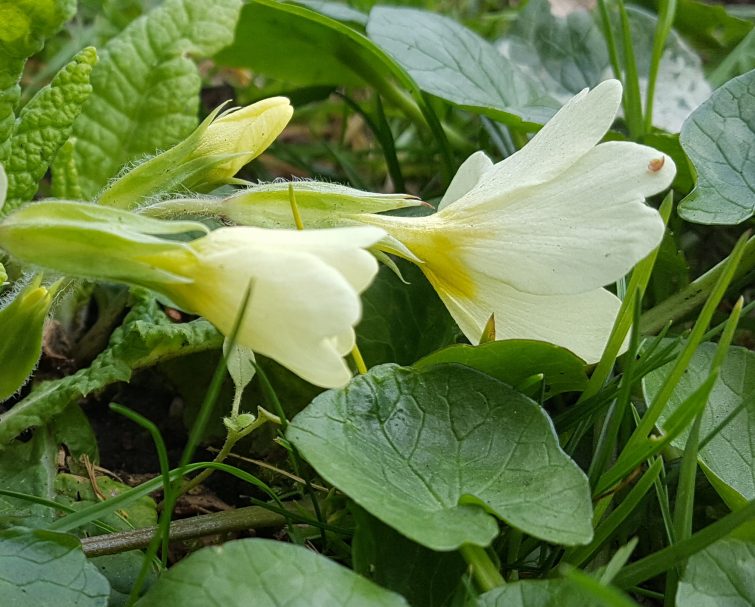
A yellow, flat and round-headed stigma is visible in the centre of the flower. Sometimes the pollen-loaded anthers are found above the stigma, sometimes below.
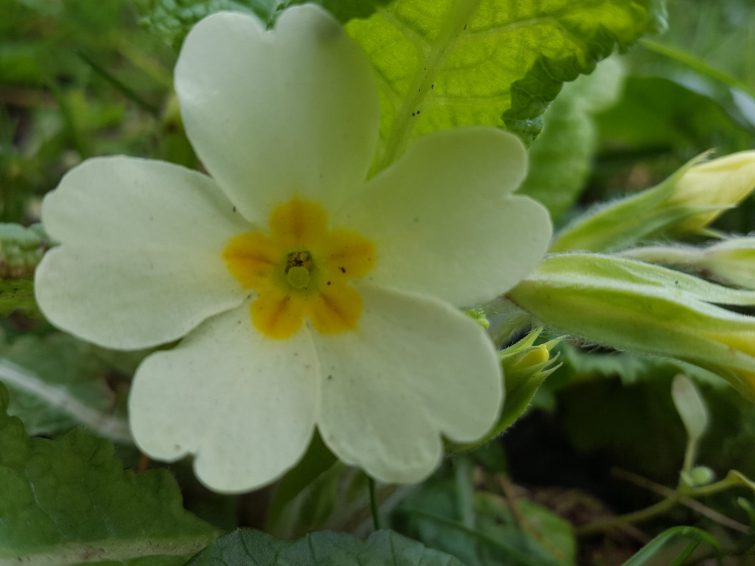
Flowering season: March and April. During flowering they are a food source for butterflies.
Fruits: The small seeds ripen to a black colour, maturing in round seed pods. The seeds are distributed by ants.
Habitats: This plant loves a damp and shady spot. These will include woodlands, copses, hedgerows, grassy banks, parks and gardens. It can be found in all areas, but for the highest mountains of Britain. The plant is an indicator of ancient woodland.
Parts used: The flowers and young leaves.
Harvesting: Collect the young almost-open flowers by pinching them about halfway below where the petals fit in the calyx tube. The corolla should slide out easily enough. Leaves are best harvested when very young and tender. In my harvesting guide you can discover more tips and tricks on picking our wild plants.
Edible uses: The flowers can be tossed into salads. They are popularly used to make crystalised sugar flower treats, using egg white and sugar syrup. These are often added as decoration to cakes. Many country wines are made from the flowers. I like to make infused vinegars and cordials with them too.
The leaves can be added to salads when young. Otherwise, they get too tough and bitter. To my palate there are hints of lemon in the baby leaves.
Medicinal uses: Traditionally used for a range of conditions. The whole plant has been used to treat all manner of muscular cramps, spasms, and rheumatic pains. More information on primrose can be read here in Mrs Grieves’ classic “Modern Herbal”. You may also like this overview on medicinal plant chemistry.
Other notes: Primrose can occasionally hybridize with other common relatives such as the cowslip (P.veris) and the oxslip (P.elatior).
If you liked this article and are just starting out foraging then why not dive in and discover how you can identify thousands of plants in a day!
Happy foraging!