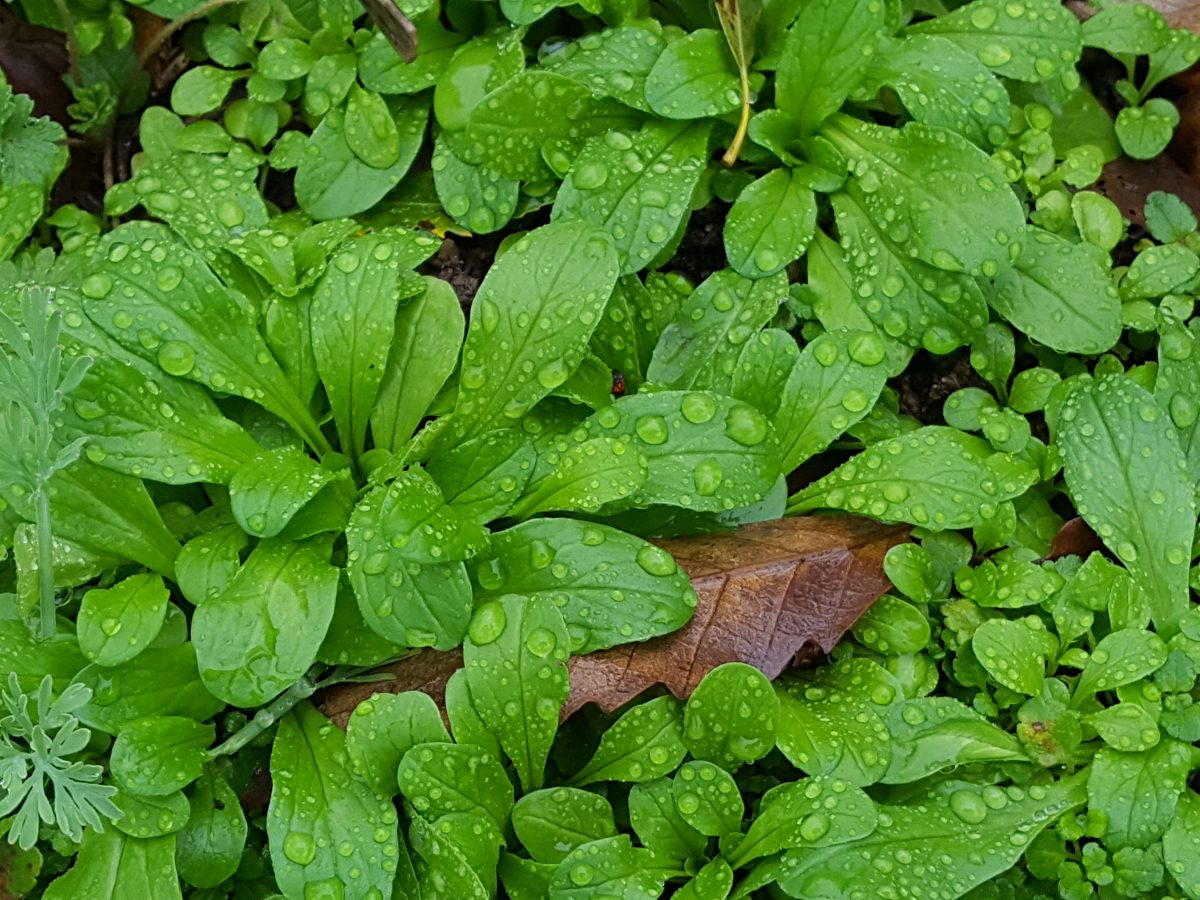
Learn how to identify, and successfully go foraging for corn salad (Valerianella locusta) *Valerianaceae family
For years I got increasingly frustrated at being hopeless at foraging for corn salad.
It’s all too easy to walk past edible plants. Especially low-growing, small annual plants. After all, one of the mechanisms that a static organism can employ in order to stay alive, is to mimic other organisms in the hope of being overlooked.
Corn salad is small enough, and looks enough like a few other small herbs to have stopped me finding and grazing on it for many a year!
I finally got to know the plant in 2004 when growing it as a winter salad crop at the large East London squat I lived in at the time. It’s sweet with a somewhat nutty flavour, which together with its soft texture, makes it a winning salad plant.
Only a few wild plants are deemed worthy of serious commercial cultivation. Corn salad, also known as lambs lettuce, is for some reason, not just one of these, but is often one of the more expensive salads, weight for weight, that you can buy!
Dont let this little plant pass you by! Learn here, and in my beginners guide, how to confidently and quickly identify and successfully go foraging for corn salad.
Before you pick, make sure you read up on Britain’s poisonous plants.
What’s in a name?
The generic part of the scientific name – Valerianella suggests it was simply named as the ‘little Valerian’. This well known and closely related medicinal plant got its name from the latin verb ‘valere‘, which means ‘to be healthy’.
The specific name locusta is Latin for grasshopper. Maybe these insects enjoy foraging for corn salad?
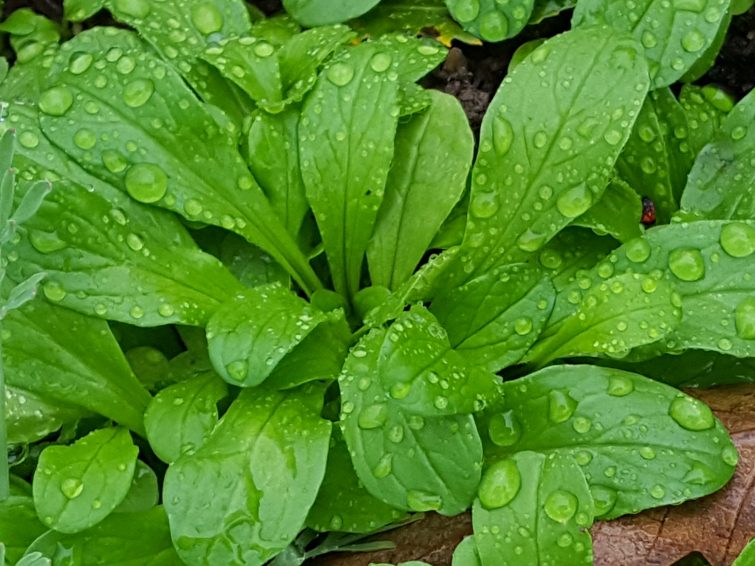
The common name corn salad, today seems like a misnomer because it won’t really be found in corn fields! I dare say many hundreds of years ago it may well have been found there with a number of other weeds amongst the grain.
The name lambs lettuce implies to me how soft and tasty the plant is!
Botanical description
While I endeavour to keep the technical language to a minimum, some terminology is unavoidable. Have no fear though, for a full glossary is available for those readers unused to botany chit chat.
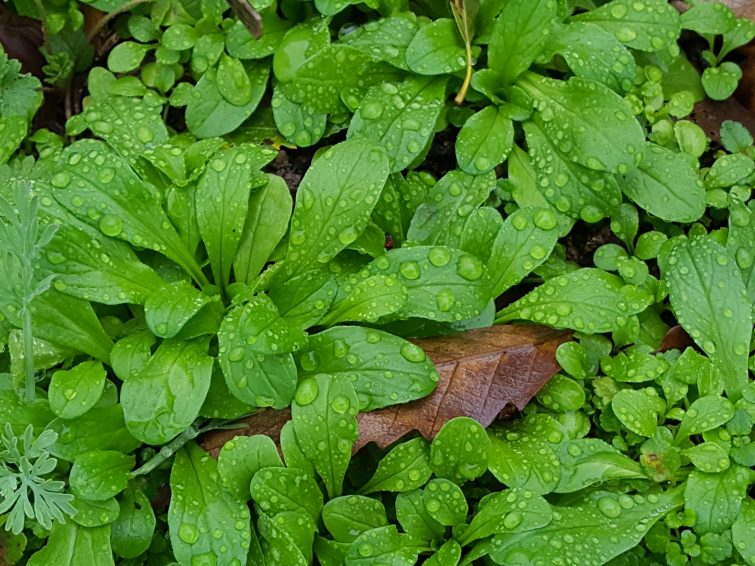
Leaves: Bright green, small, simple and opposite; Basal leaves often in rosettes. Anywhere from 3 – 10 cm long, and 0.5 – 1.2 cm wide. Spathulate to linear-lanceolate-shaped.
The margins are entire or occasionally with teeth. The leaves are mostly hairless, though some rough hairs are found on the surface and on the margins towards the base. Tiny white hydathodes are present at the leaf tips. (Use a hand lens if you want to see these).
Its worth bearing in mind that our top botanists say that one of the characteristics of corn salad and other Valerianella species is the lack of uniformity in their vegetative traits.
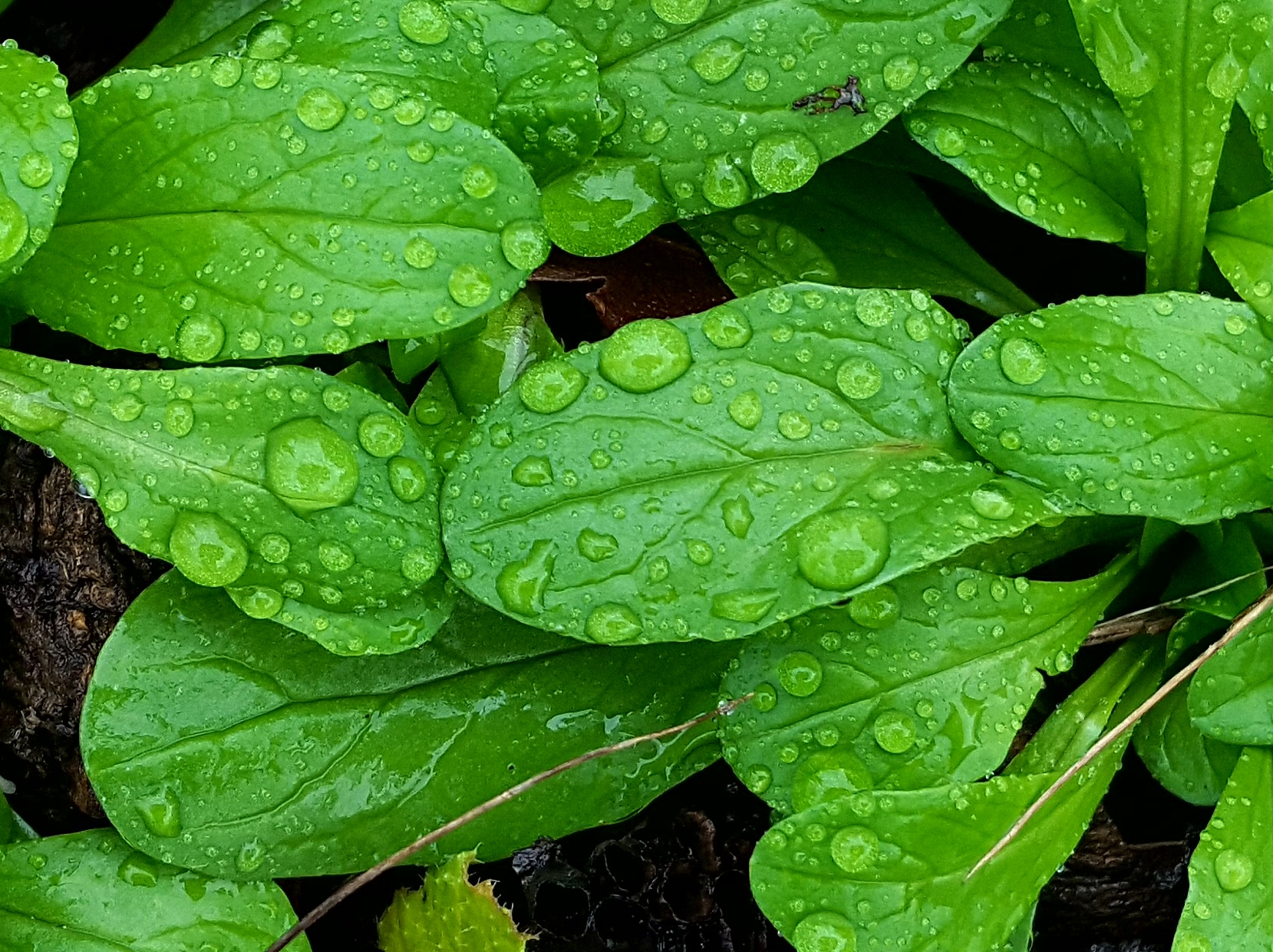
The leaves emerge slightly rolled at first, typically going somewhat limp pretty soon after unfurling. When crushed the leaves are a little aromatic.
Petiole: Pretty indistinct, because the base of the leaf is usually tapered cuneate.
Roots: The fibrous roots are creamy-coloured and weakly aromatic.
Stems: These grow to around 30 to 40 cm high on a good specimen. There are anywhere from 3-15 stems per plant. The plants are dichotomously-branched, hollow and ridged, with some hairs on the ridges.
No leaves are produced in the stem axils, but leaf-like bracts will be found subtending the small flowers. The inflorescence is a branched cyme type.
Flowers: White to light mauve or light blue. Small with five fused petals, forming a corolla tube that is held within the calyx. Three stamens are found around a three-lobed stigma in the centre of the flower.
Flowering season: Corn salad is an annual species. It flowers quite early in the year, especially with our milder winters here in Britain. You will find them blooming in the South West towards the end of March and through April.
Habitats: Scree, waste grounds and disturbed soils, dunes, gardens and allotments. Valerianella locusta will not be found at altitudes much greater than 350 m.
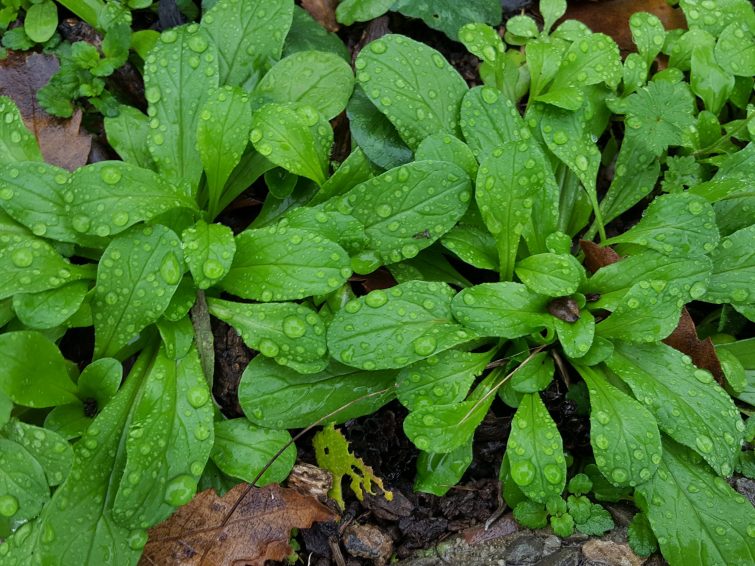
Parts used: Leaves.
Harvesting: The best leaves are gathered in the autumn and winter, from basal rosettes, or anytime before flowering. A basket full of my harvesting tips can be found here.
Other notes: From my experience, I have always found it more in towns and cities than anywhere else.
*This plant has now been reclassified as part of the Caprifoliaceae family (elderflower and honeysuckles).
Subscribe today for email alerts on my next plant species article coming up, on the most comprehensive foragers plant identification in the UK!
Happy foraging!