It really doesn’t matter what time of year you go foraging for dandelion, there is always something to harvest.
Discover the medicinal benefits of eating Dandelion (Taraxacum officinale) Asteraceae
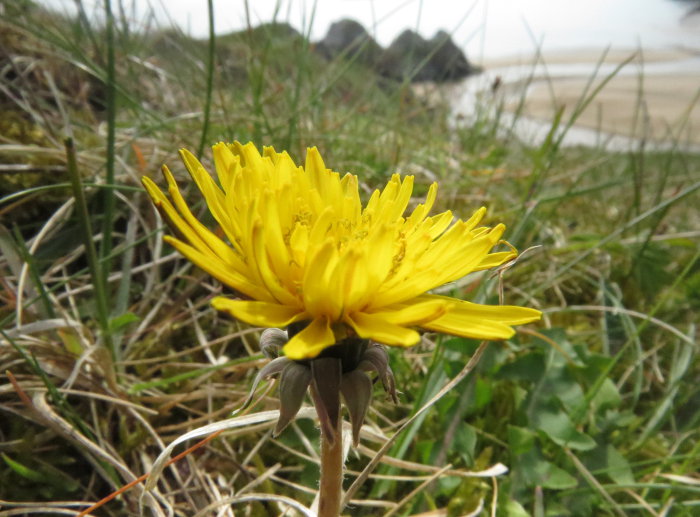
This has to be one of our most commonly found flowers here in Britain. Dandelion will easily be recognised by almost everyone, no matter their age.
Dandelion is one of our most accessible and highly esteemed medicinal plants. It has been used for centuries to treat the urinary system and the liver.
Some writers have discussed the possibility that the Arab alchemist-apothecary physicians are likely candidates to have introduced this plant’s medicinal virtues (along with many others) to the famed Welsh herbal healers of the 13th century, the ‘Myddfai’ physicians of Glamorgan.
The ‘Myddfai’ tradition of traditional herb-lore drew its name and emanated from a small village in Glamorgan, South Wales, where a physician during the 13th century called Rhiwallon became famed for his prowess with herbs, honey, roots, and waters.
Rhiwallon is said to have passed on his knowledge only to his
sons, and thereby a word of mouth lineage began which is reported to have finally ended with the last known descendent dying in Aberystwyth in 1842.
What’s in a name?
Dandelion is thought to have originated in Asia. The generic name Taraxacum is believed to have come from the Persian name – ‘Tarakhsaqun’, a name also reportedly bestowed on its close relative chicory (Chicorium intybus). The specific name officinale points to its use as an official apothecary herb.
Our English common name dandelion is from the French ‘dent de lion’, or ‘tooth of the lion. Other common names include the French name ‘pis en lit’ which means ‘wet the bed’ in English. This alludes to the powerful diuretic properties of dandelion, of which we discuss later.
Dandelion Botanical description
Dandelion is such a common plant it hardly needs a description here. However, it can often be mistaken for some of its almost look-a-like close relatives that also grow here.
 These include the ‘hawkweeds’ and the ‘hawkbits’ which often have similar, indented leaves, although these plants are usually hairier, with smaller, yellow flowers.
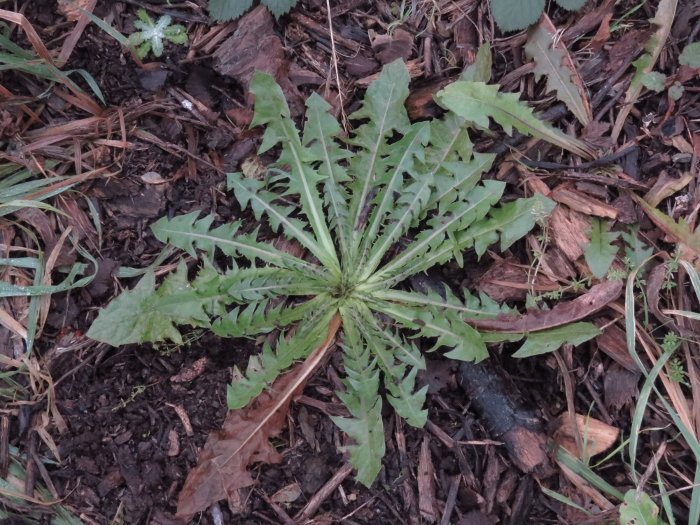
Leaves: Dandelion is technically another aggregate species, and the variability in leaf shape testifies to this.
The leaf form can change from almost fully lanceolate, having mere ripples rather than dents at the leaf edge, to what is classed as deeply pinnately-lobed, with 3-6 often backward pointing lobes, likened to lions teeth.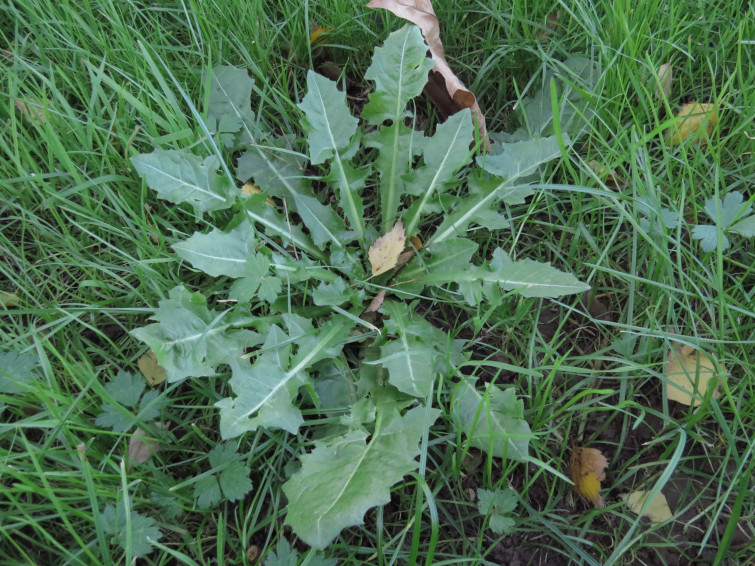
It is this shape that’s recognised by most of us as the classic dandelion leaf shape, and gave rise to its common names’.
The leaves can grow as large as 25 cm long. The mid-vein can be white, pink or a dark, almost red colour. No hairs or stipules are present.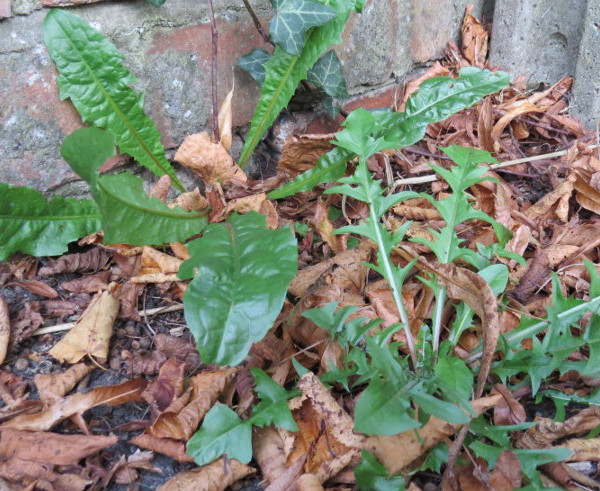
Petioles: The length of the petiole is variable, and sometimes quite long. It usually has a slight flange of leaf on either side of the hollow petiole.
Roots: Dandelions are perennial plants with deep tap-roots, always growing as a ground-level rosette of leaves, right the way through flowering.
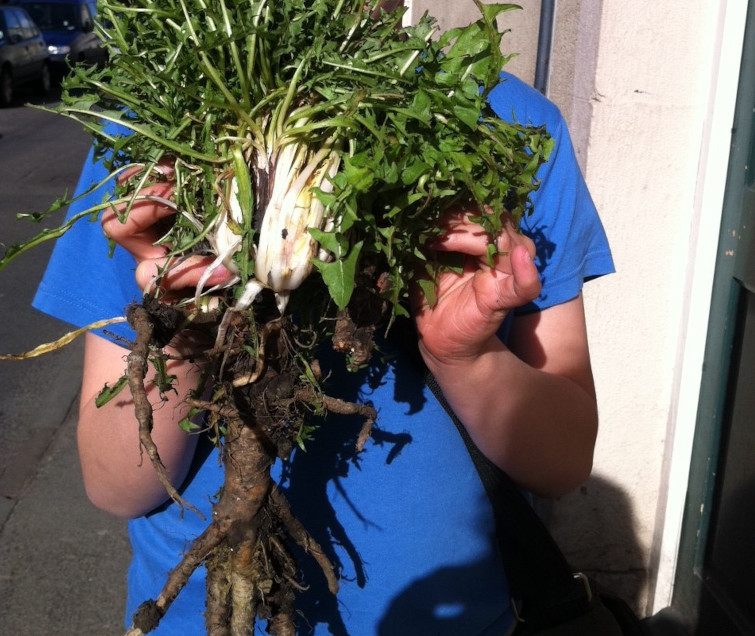
Dandelion’s long tapering taproot enables it to successfully mine for nutrients in the sub-soil, especially for potassium. It can accumulate nearly five times more potassium within its root storage cells than most other plants!
Stems: The smooth, hollow stem is a specific feature for you to distinguish dandelion from some of its look-a-likes. The stem and leaves exude a bitter-tasting milky-white sap when broken.
Flowers: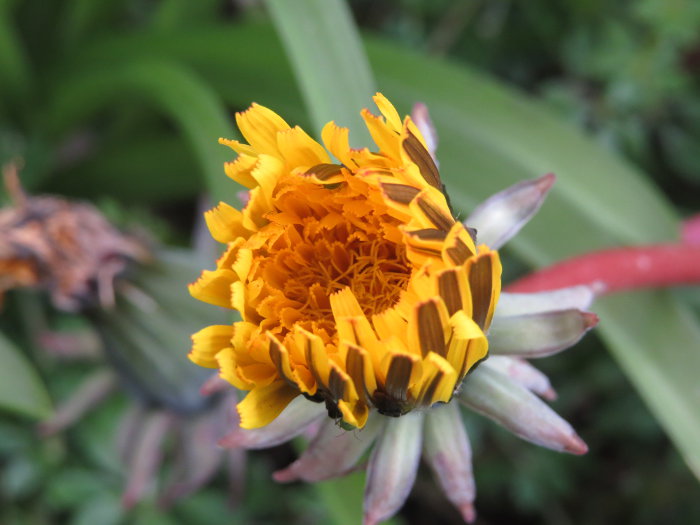
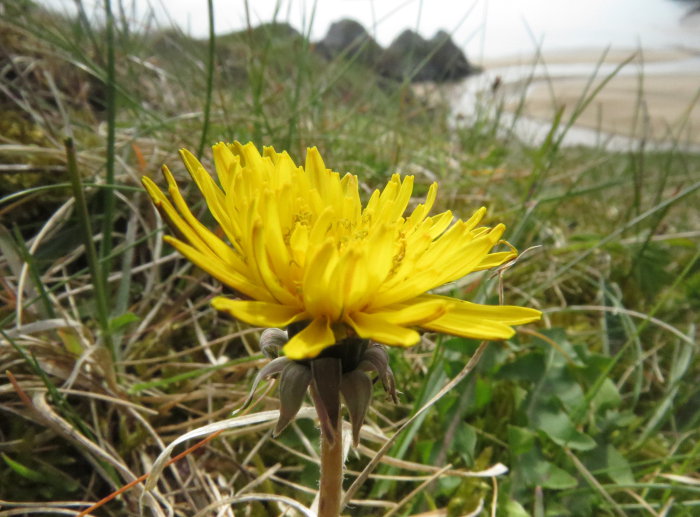
From the centre of the rosette comes it’s single, hairless, terminal flowering stem, upon which sits the well-known golden-yellow flower.
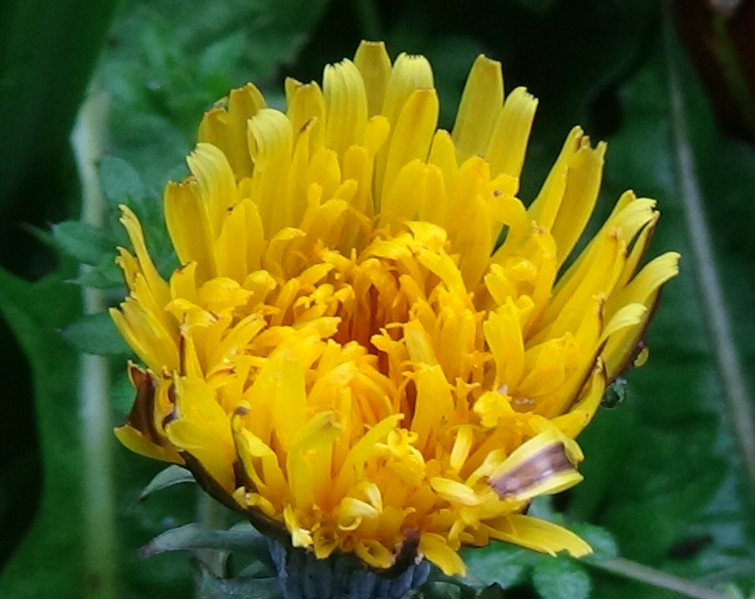
The inflorescence is made up of 200 or more individual, strap-like, yellow, bi-sexual florets. The flowers are apomictic, meaning they have evolved to reproduce asexually.
A number of plant species do this, including some Senecio species (the groundsel and ragwort genus) as well as the plants in the Eupatorium (hemp agrimony) genus.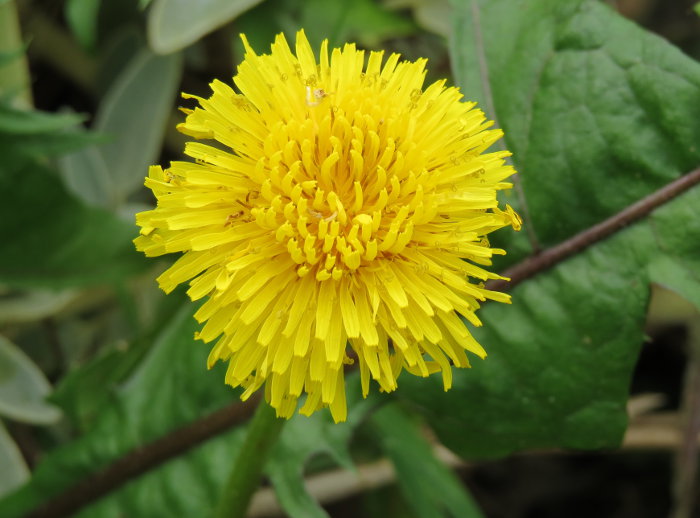
Flowering season: The main flowering season is late March through April. Dandelion can and will flower at other times throughout the year.
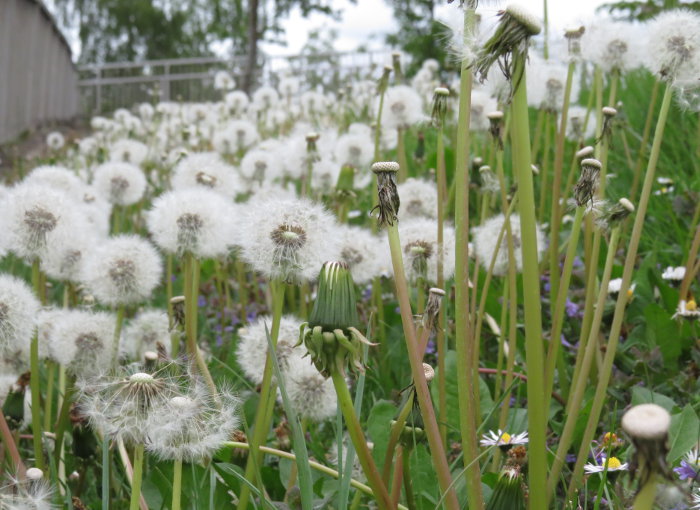
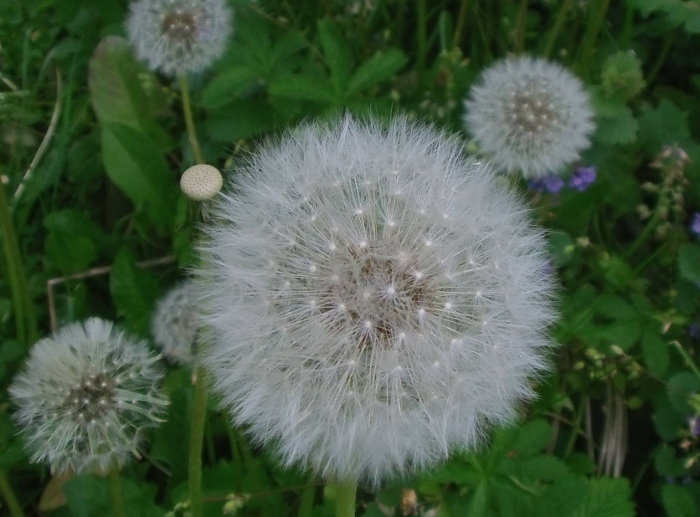
Seeds: Each flowerhead soon gives way to the spherical mass of the familiar ‘fairy clock’ pappus holding the seeds. We’ve all seen the seeds fly on the wind and know how they travel far and wide.
Habitats to look in
Dandelion grows almost anywhere and everywhere! Find it on wastegrounds, grassy fields and meadows, and all manner of sites and settings up to 1200 metres.
Parts used: Leaves, roots, flower buds, flowers
Harvest: Roots: Best in autumn for medicine, spring for food. Leaves best young from late winter-early spring and in the late summer months.
Small Leaves are less bitter, as are leaves from specimens with red mid-veins. Flower buds when they appear and are tight. Flowers as and when.
Key constituents: Carotenoids; sesquiterpene lactones; tri-terpenes; tannins; volatile oil; phyto-sterols; Vitamins A, B, C, D; taraxcoside; calcium; potassium (approx 4%).
Actions: Diuretic, choleretic, saluretic, bitter, aperient, mild laxative, liver-tonic.
Pharmacology and uses: Dandelion has surprisingly not been subjected to much pharmacological research by drug companies.
Notwithstanding the lack of scientific evidence; this plant remains a cornerstone of western herbal medicine. You will often find dandelion in health food stores and herbal shops as an ingredient in a number of patent medicines.
Alongside the elder tree and nettles, dandelions are the wild herbs most popularly employed in folk medicines in Britain.
This plant has been chiefly employed as a diuretic. The French and English common names ‘piss-en-lit’ and ‘piss-a-bed’ gives us a clue to dandelion’s efficacy! Dandelion’s specific diuretic action is known as saluretic. These types of diuretics are medicinally valuable because potassium salts are always lost in urine.
Many prescribed diuretic herbs will deplete reserves of this important nutrient in the body. Yet because of the large amounts of potassium dandelion contains, levels in the body actually increase when taking it.
 Compare this to taking pharmaceutical diuretic drugs which often require the taking of potassium supplements or worse, potassium blocking drugs!
So-called ‘potassium-sparing’ pharmaceutical diuretics act either by antagonising the hormone aldosterone (which stimulates sodium reabsorption in the kidneys) or by blocking sodium channels (thereby reducing potassium secretion).
An example of an aldosterone antagonist is ‘spironolactone’, the use of which is now limited due to carcinogenicity in rats. ‘Amiloride’ is a sodium channel blocker. Both of these drugs may cause severe hyperkalemia (high blood potassium levels).
Dandelion root is much used as a bitter tonic in a-tonic dyspepsia, and as a mild laxative in habitual constipation. Tests have repeatedly shown the root to increase bile secretion. It has also traditionally been used as a treatment for jaundice and rheumatism.
The German Commission E approved use of the root for disturbance of bile flow, stimulation of diuresis, loss of appetite and dyspepsia.
Dandelion’s milky white sap can be used to treat verrucas and warts. Simply snap a flowering stem and topically apply the latex.
As a preventative measure, all people who suffer from allergic hypersensitivity are advised to undergo a consultation with someone who knows about these things.
Caution should also be exercised if you are thinking of taking dandelion in cases where gallstones are thought to be present, because the action of this plant in increasing bile secretion may aggravate.
 Dandelion has been contra-indicated by herbalists in conditions such as acute stomach inflammation as well as bile duct closure.
The leaves are increasingly popular as a salad vegetable. Usually, this will be ‘red-ribbed dandelion’, which is in fact a variety of chicory.
You can also find blanched dandelion leaves that have been grown without light. Both of these salad plants, especially the younger, more luxuriously grown, taste much less bitter than wild dandelion.
One of the most popularly advised food uses is as a coffee substitute. This can be made from roasted, ground roots and is seemingly much liked, judging by its appearance in almost every health food store.
Dandelion also has documented use as a famine vegetable; whereby the roots were boiled and or roasted. I think this is massively underplaying its uses as food. Most of the bitterness of the root can be leached out by soaking in cold water for 24 hours or so, before parboiling and then roasting in oil or butter.
Treated like this, the outer skin will caramelise, and the inner flesh should turn gloopy and sweet, as the inulin converts to fructose, just like the flesh of its relative – Jerusalem artichokes
I hope you found this article useful. More plant species are on their way soon.
Happy foraging!