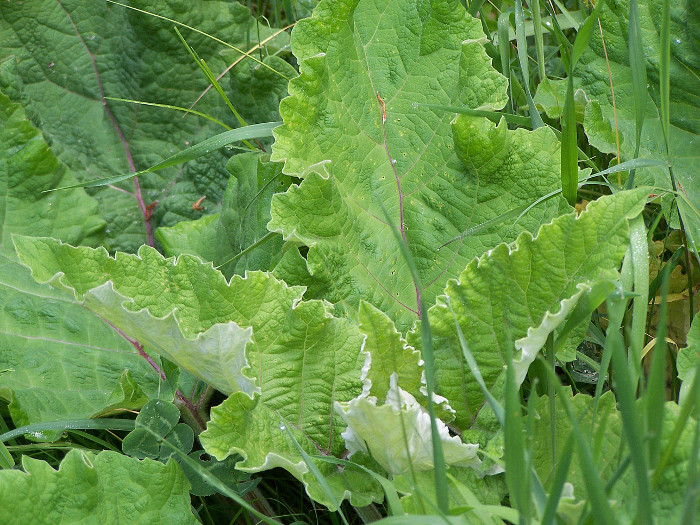
Learn all about this herbal medicine and staple vegetable, ignored by us in Britain but loved by the Japanese.
Foraging for burdock. (Arctium lappa, Arctium minus) Asteraceae family
You may find that when first out foraging for burdock they appear as one species. There are subtle differences that reveal themselves with close observation but the two plants are very similar. You can use the plants interchangeably, so it’s not of huge importance.
The greater burdock (Arctium lappa) and lesser burdock (Arctium minus) both have a long-standing tradition of use as a medicine and food.
What’s in a name?
These two plants belong to a genus of about 10 species. The generic name Arctium seemingly comes from the Greek word- arktion or arktos, meaning ‘Bear’, which alludes to the rough-coated fruits.
The specific name of greater burdock – lappa, is derived from the Latin word lappare – ‘to seize’, referring to the clinging ability of the burs.
It is this unfailing ability to attach to passing fur or clothes that allegedly gave a Swiss scientist – George de Mestral, the idea for Velcro during 1948. His idea is an example of ‘bio-mimickry’, or man copying nature’s designs.
The species name for ‘lesser burdock – minus, relates to a number of size differences between these two species when compared with each other, be this leaf size or fruiting stalk size.
The common name ‘burdock is from the old English word ‘docce’ – meaning a broad and coarse-leaved plant. The word ‘burr’, describing the prickly seed vessel, is thought to be of Scandinavian origin and is close to the Danish word ‘Burre’.
Leaves: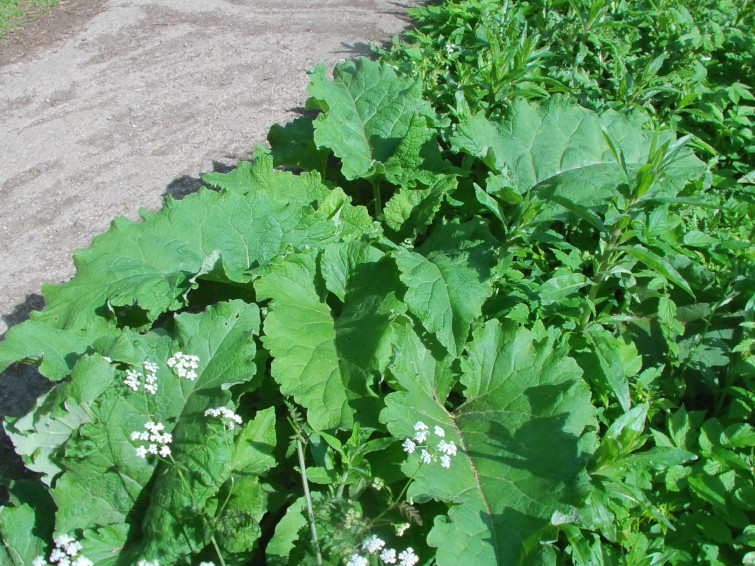
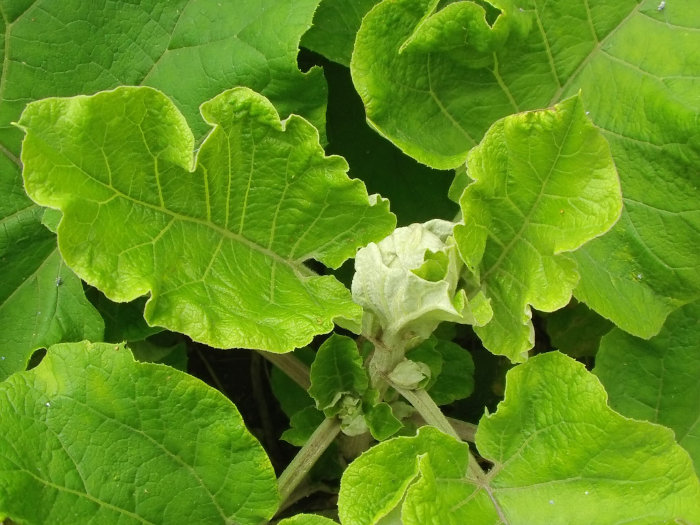
Burdocks grow as a rosette in their first year, before producing flowering stems with leaves in the second. The leaf shape can be classified as broadly ovate, or cordate, with wavy, undulating, entire margins.
The leaves can easily grow to around 45 cm long and up to around 30 cm wide, although I’ve seen them growing larger in shady spots.
White-pinkish leaf veins run on an approximate 45˚ angle parallel to the pinkish mid-vein. Underneath, the leaves are a much lighter colour.
Petioles: Burdocks have relatively wide and long petioles up to 20-25 cm. They are channelled, with fine downy hairs.
A notable difference between species can be seen in the leaf stalks, which on the lesser burdock are hollow, but on the greater burdock are solid. The more you go out foraging for burdocks, the more you will notice.
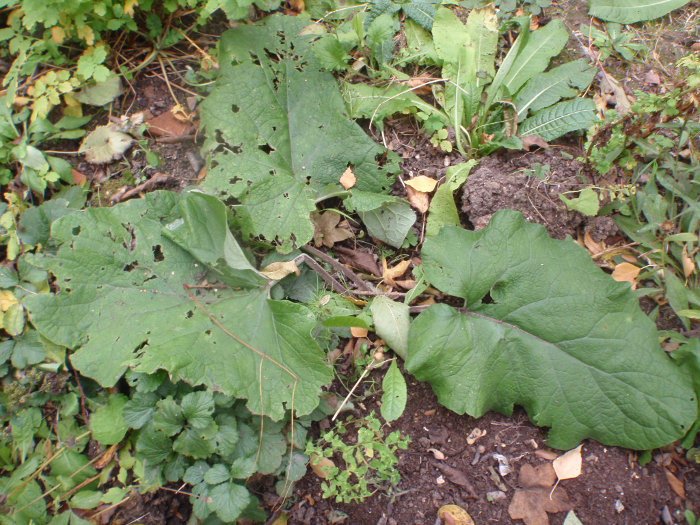
Roots: Long tapering tap roots. A number of different burdock cultivars are commercially grown in the far-east for the long roots. The taproots from one year old plants are harvested by digging up in the autumn or early spring.
Stems: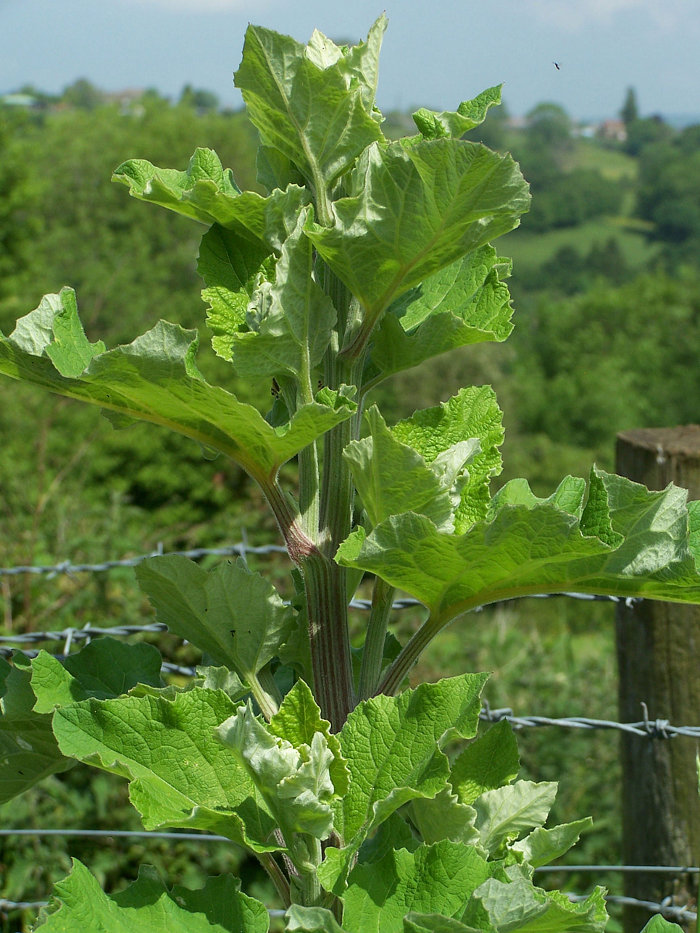
The Burdocks have erect, branched, flowering stems that will reach 150 cm or so tall, and are conspicuous for their spiky flowers. The stems are ridged, downy hairy, and eventually turning hollow.
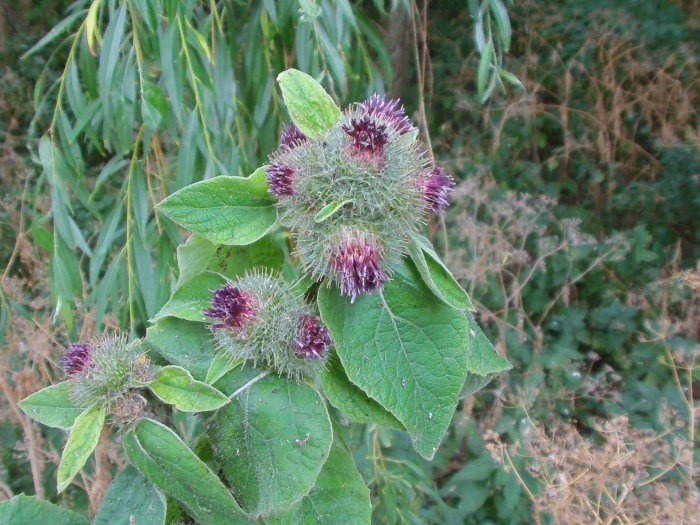
Flowers: The individually delicate, purple or rose-pink coloured flowers are produced in a composite flower head, borne on terminal clusters. They are unusual looking, globular-shaped flowers and much like the inflorescence of a thistle.
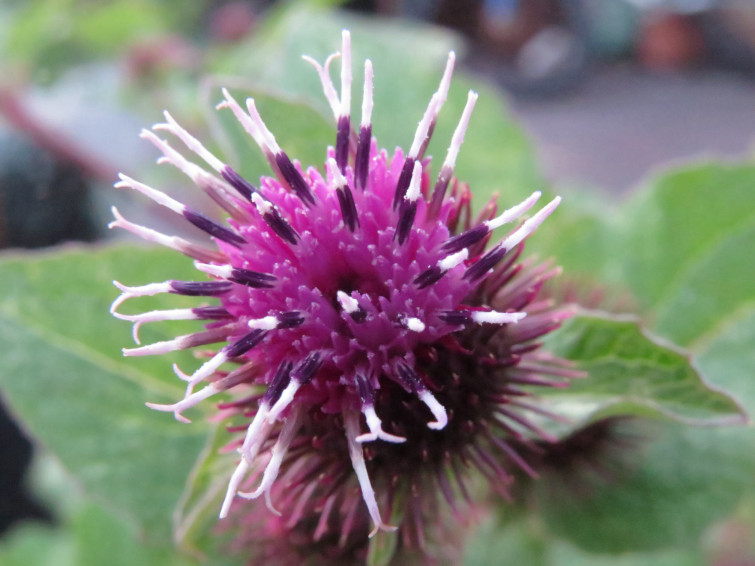
The colour we see in the flowers emanates from the numerous stamens. Burdocks’ flowers can grow to 4 cm across and wither to leave the common ‘burs’ that are deeply ingrained in many childhood memories.
Flowering season: Anytime from late May through into August.
Fruits: Burrs.These are easily collected unawares on clothing or in hair when playing and tramping through unkempt land. Who hasn’t brought them home !?
Habitats to look in when foraging for burdock
In the wild, burdock’s thrive near hedges, on roadside verges, on waste-grounds and around old building sites, as well as liking the edges of cultivated fields and sunny spots in woodland edges.
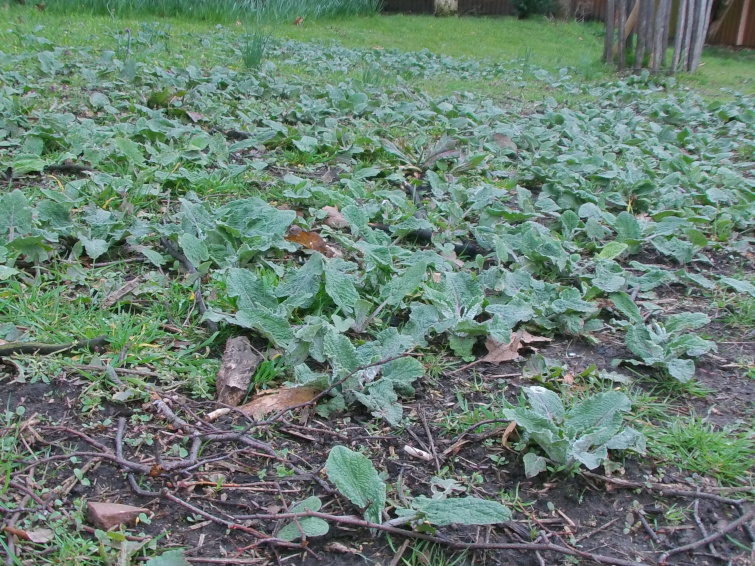
Burdocks are essentially lowland plants and will be found all over most of England at elevations no higher than about 390 metres.
Parts used: Root mainly used for medicine in Britain. Leaves, flowers (in Chinese medicine), and seeds are also used.
Harvest: Roots – In the autumn or spring. Leaves – before flowering. Flowers – when first opening. Seeds – When ripe.
In this previously published post you can find out lots more about harvesting our wild plants.
Key constituents: Acids (including butyric acid, linoleic acid, linolenic acid, oleic acid); aldehydes (including isovaleraldehyde, valeraldehyde); carbohydrates (including up to 45% inulin, mucilage, pectin, sugars, fats); volatile oils (including sesquiterpene lactones); bitters (lappatin); resin; phytosterols (stigmasterol and sitosterol); tannins.
An overview of the commonly occurring medicinal plant constituents and their actions can be found here.
Actions: Detoxifying, alterative, lymphatic, and blood purifier.
Pharmacology and uses: Burdocks have numerous uses. These are examples of very common planta, previously much used in days gone by, now little employed and subsequently with scarce available scientific literature to back up any traditional uses.
Burdocks are used medicinally in most continents where they are naturalised. For the last 200 years or so, burdock has been chiefly employed in this country as an alterative medicine.
Whole burdock extract has been reported to cause a sharp reduction in blood sugar levels. The roots and leaves are recognised diuretics and hypo-glycaemics.
The compound arctiin is a C.N.S stimulant and muscle relaxant as well as being anti-bacterial and anti-fungal.
The anti-microbial activity is attributable to bitter components. Internally burdock has been traditionally used as a treatment for a number of skin diseases and disorders, as well as inflammatory conditions. These include: eczema, psoriasis, rheumatism, gout, and boils.
Topically applied, the leaves are similarly used for a host of dermatological problems.
Burdock helps our general elimination processes by assisting the liver function, the circulation, and the elimination of toxins via the kidneys, urine, and skin. It can therefore assist all manner of skin disorders, such as acne and boils.
In Chinese medicine, the seeds are used for similar conditions and are also employed to treat colds, pneumonia, and throat infections.
Although currently out of fashion in this country, burdock has had a long-standing use as a food plant. In Japan, this is still the case where it is known as a prized vegetable and ingredient of the staple dish ‘gobo’.
It wasn’t long ago that folk in England were foraging for burdock in large numbers, to be included in a well known soft drink, still made today.
Dandelion and burdock is made from the roots of both plants, and is a useful springtime cleansing tonic. It was formerly made and drunk in many counties here in Britain, especially in Northern England.
Burdock’s long petioles and immature pre-budding flowering stems can also be eaten when blanched to reduce bitterness and fibrousness. They will need the outer skin peeled off beforehand.
I can’t make the petioles taste good and only use the flowering stems. In the summer I make a wild food chutney using these stems, together with hogweed and willow herbs.
If you are wanting to know more about the arts and crafts of foraging, then more than 20 years of hacks, tricks, and tips can be unearthed in my beginners guide.
Happy foraging!