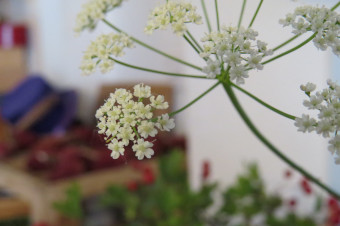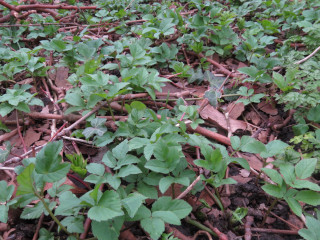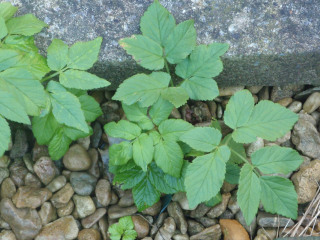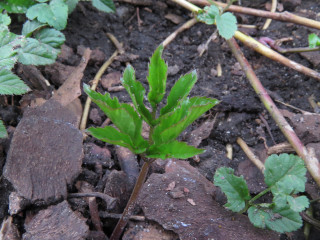
Ground Elder (Aegopodium podagraria) Apiaceae

Foraging for Ground elder / Bishops weed (Aegopodium podagraria) Apiaceae

Learn how to confidently identify ground elder from other carrot family plants.

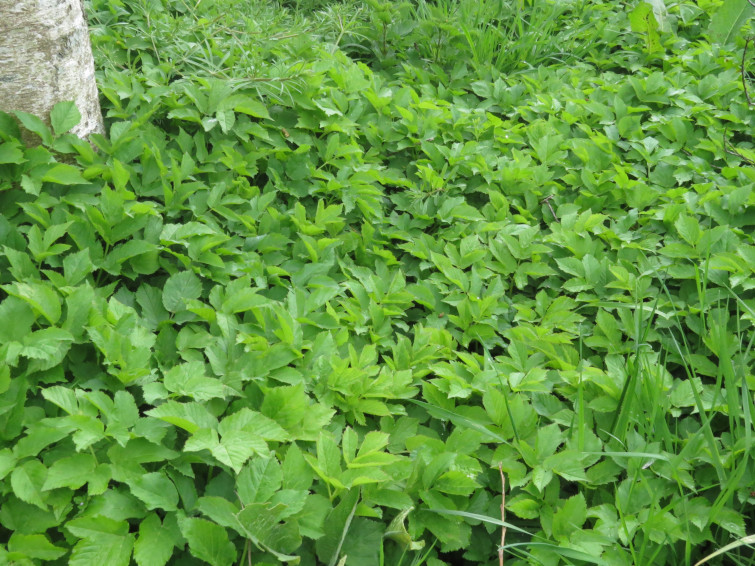
To gardeners, ground elder is an absolute pain. This low-growing herbaceous perennial plant spreads quickly and can suppress other plants, creating dense carpets of triangular-shaped leaves.

This edible wild plant was reportedly introduced by the Romans. It is now found all over the British Isles except for the highest barren mountain peaks, and patches of Cornwall.
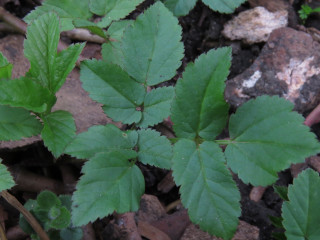
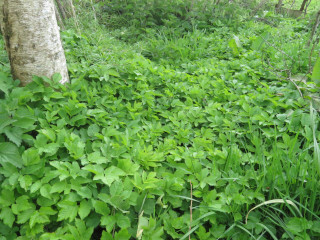
Leaves: Triangular-shaped, dull green, with leaflets grouped in sets of threes. This tri-ternate arrangement is also found on alexanders.

The 3-8 cm  leaflets are lanceolate-ovate. Each leaflet is irregularly serrated. They may be found on stalks or are sessile. Essential oils are present in the leaves, giving it a unique, if recognisable, aroma when crushed.

Petioles: Solid and up to 15 cm long. Sheathing at the base, and with tufts of hairs in leaf axils. Somewhat channeled.

Stems: The hollow stems have ridges. They reach up to 60 cm high. These also contain essential oils.

Flowers: White compound umbels. They have almost symmetrical flowers with 5 petals

Flowering season:  April-June

Fruits: Two fused barrel-shaped seed pods, each with a persisting drooping stigma, giving the appearance of wings.

Habitat: Numerous settings throughout the country

Harvesting: The leaves are best used in salads as soon as they appear. When they get older, the foliage gets markedly tougher and are then only suitable if chopped and used as a pot herb.

Other notes: Contains high concentrations of the polyacetylene compound falcarindiol. This molecule is of interest to pharmaceutical companies, because it has demonstrated anticancer activity, and stops fungal spores germinating.

It has been reported that up to 9% of the dry weight of ground elder flowers will be falcarindiol. It has a range of other volatile components, giving it that somehwat recognisable smell of somewhere between parsley and celery. An overview of medicinal plant constituents was presented in this article.

Before you browse through more than 600 plants in our A-Z wild plant guide database, you might want to discover my foraging tips, tricks and hacks, distilled for beginners from more than 20 years foraging experience.

Don’t hesitate to contact me with any queries or question.
Sycamore (Acer psuedoplatanus) Aceraceae

Foraging for Sycamore (Acer psuedoplatanus) Aceraceae family

Learn how to identify sycamore from other maples, and discover its uses in the kitchen and why horses should avoid it!

It’s easy to think of the sycamore as a native because there are so many trees around here in Britain, yet it wasn’t brought here until the 16th century. It was first recorded in the wild here in 1632.


This is a fast-growing, deciduous broadleaf tree. It can reach heights of 25-30 metres and is found all over the UK, up to altitudes of 580 metres.

Remember to use the glossary for any difficult technical terms.

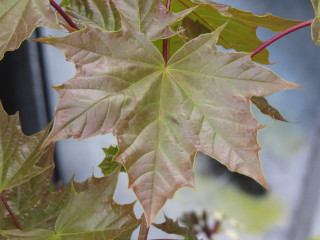
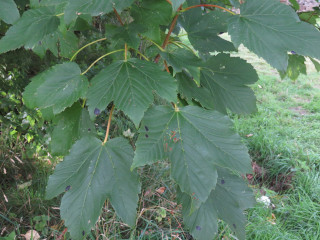
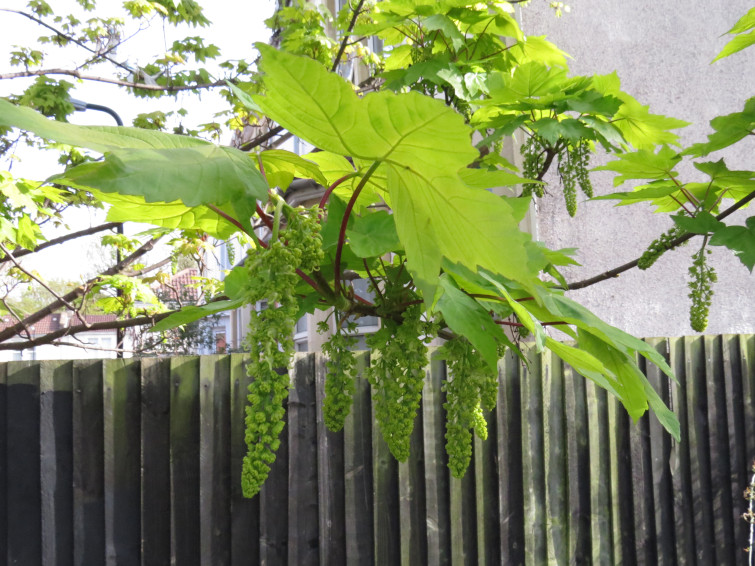
Leaves: Palmately-lobed with a long petiole (10-20 cm). The leaves are approximately 9-17 cm from petiole to tip.

Sycamore leaves are notable for their lovely bronze colour when young. They soon become dark green once fully open (purple-leaved varieties exist as well).

The leaf can be sparsely hairy when young, but any hairs on the leaf tend to quickly wither with age. The leaf lobes are cut halfway into the leaf, and are acute. The leaf edges are irregularly crenate to serrate.

Twigs: These are smooth, grey-brown with occasional light pink(ish) lenticels.

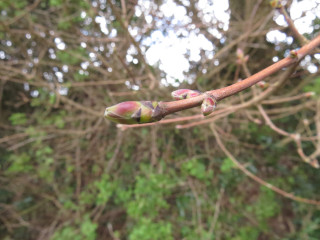
Buds: Green bud scales. A single bud is found at the top of the twigs, with opposite pairs of buds found below.

Bark: Smooth and grey with occasional whitel spotting. Develops flakes and plates as the bark matures.

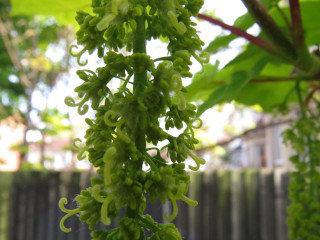
Flowers: Long drooping yellow racemes. The individual flowers are pollinated by insects and the wind. The stigma in the centre of the flower has two reflexed parts.

The flowers are nectar-rich, sweet to taste and can be nibbled on, or better still, harvested when a third of the flowers are open, and battered and fried, then dusted in icing sugar.

Due to their yellow colour, we can deduce the presence of lutein and other bioflavonoids. Read more about medicinal constituents and actions in this article.

In season: The sycamore comes in to bloom from late April until early June, depending on where you live in the UK.

Fruits: A two-winged Schizocarp, also known as a samara, or more affectionately by many of us, ‘propellers’.

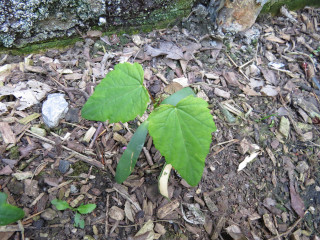
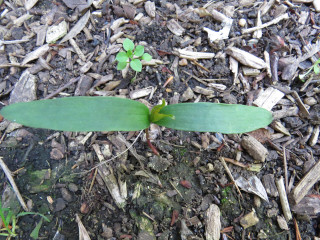
Seedlings: The newly germinated seeds have two long thin seed leaves

Other notes: This plant is poisonous to horses. Usually, the animal avoids sycamore in preference of other plants, but poisonings are common, so landowners should clear the plant from areas they wish to set horses in to graze pasture.

Have a browse through more of the most comprehensive foraging database of wild plant species in our A-Z weeders digest.